Seeing in a New Light

Reflexion of a lunar path in water.Scripture Text:  Psalm 85: 8-13

Let me hear what God the Lord will speak, for he will speak peace to his people, to his faithful, to those who turn to him in their hearts. Surely his salvation is at hand for those who fear him, that his glory may dwell in our land. Steadfast love and faithfulness will meet; righteousness and peace will kiss each other. Faithfulness will spring up from the ground, and righteousness will look down from the sky. The Lord will give what is good, and our land will yield its increase. Righteousness will go before him, and will make a path for his steps.


We’ve talked a lot about waiting and preparation, about opening ourselves to what God holds for us.  For what are we preparing though?  Well, of course, for the coming of God’s Kingdom in its fullness.  But what does that look like.  Today’s psalter is a good depiction–steadfast, unconditional love intersecting with faithfulness, becoming faithfulness; righteousness and peace being so close that they touch, linking and embracing.  The fullness is pervasive–from the ground to the sky.  The land, all of creation, will finally be what it is meant to be and the way, already prepared, will be found to be paved with righteousness.  So how does that fit into today’s world?  In this world filled with heartache and poverty, with the recent race riots exploding throughout our nation, with the fear of war or terrorism all over the globe, and with humanity’s fear of deadly disease as it leaps the oceans’ edges, how do we see love and faithfulness, peace and righteousness.  How do we see that pathway on which God can break through?


The truth is, a good part of faith includes a little imagination.  It has to do with letting ourselves look beyond where we are, with learning to see things in a different light. The French Impressionist painter, Claude Monet, is probably best known for his incredible landscapes and works of nature as well as for his paintings of those things that were a normal part of his own life. But the most fascinating part of Monet’s work are those paintings that he did as part of several series representing similar or even the same subjects—his own incredible gardens, poppy fields, a woman with a parasol, and those unusual haystacks.


The paintings in this series of haystacks were painted under different light conditions at different times of day. Monet would rise before dawn, paint the first canvas for half an hour, by which time the light had changed. Then he would switch to the second canvas, and so on. The next day and for days and months afterward, he would repeat the process. In each painting, the color of the haystack is different not because it is a different haystack, but because the amount and quality of the light shining on the haystack is different. The subject is the same but the perspective from which it is viewed changes with the light.  Up until this time, color was thought to be an intrinsic property of an object, such as weight or density. In other words, oranges were orange and lemons were yellow, with no variation as to the lens through which they were viewed. But with Monet’s studies in light and how it affects our view of life, that all changed. As Monet once said, “the subject is of secondary importance to me; what I want to reproduce is that which is in between the subject and me.” Monet’s study was one in seeing things differently.  Beyond just painting the subject that was in front of him, he began to paint the light that illumined it.


You see, as we walk through the Advent, the light changes.  The dawn is just beginning to break.  Can you see it?  Aren’t things beginning to look a little different?  That’s the whole idea.  Maybe rather than waiting for the glory of God to come, we are called to begin to see the world as it is illumined by the coming light.  God is in our midst.  God’s glory surrounds us.  What would it mean for us to begin to imagine the world bathed in its light?


For the enlightened few, the world is always lit. (Scott Russell Sanders)


FOR TODAY:  Look toward the light.  See the world differently.  Be light.


Grace and Peace,

Shelli
 

This Act of Preparation

Moses at the Promised LandScripture Text: Malachi 3:1

See, I am sending my messenger to prepare the way before me, and the Lord whom you seek will suddenly come to his temple. The messenger of the covenant in whom you delight—indeed, he is coming, says the Lord of hosts.

Preparation…we keep talking about, keep touting this season as the one of preparation.  So, if it’s not about decorating and shopping and wrapping then what is this act of preparation that we are supposed to do?  Our culture tells us to be prepared for whatever may happen.  The Gospels tell stories warning us against being unprepared for what is to come.  And this season…this season of waiting is also laced with exhortations to get ready–for the coming of the Lord but, as hard as we try to ignore the culture closing in on us, for that big day ahead.  I mean what would happen if we awoke unprepared on Christmas morning–without the required number of gifts perfectly wrapped and under the tree, without all the luscious foods prepared, without a decorated house, and, most of all, without a ready heart prepared to receive our Lord.  Whew!  That’s a lot on our plates!  No wonder we’re stressed.  What, pray tell, are we supposed to be doing to get prepared?


For what exactly are we preparing?  Maybe that’s our whole problem.  We live lives that are so results-oriented that we don’t see life itself.  What if everything we did, every act we lived, every breath we breathed was not so that we could have a good result or count it as something done, but, rather, was part of who we are, part of the very journey itself?  What if it was our journey, our living, in which the Lord delighted, rather than merely the result it attained?


You know, I love Thanksgiving. It is the one family holiday that I can truly take the time to do right. Sure, I cook way too much food. And, this year, I probably spent more than twenty hours preparing for a 30 minute meal. I planned the menu. I put the leaves in the table. I planned what the table would look like. I drug out all of Aunt Doll’s china and Grandmother’s silver (you know, all that stuff that has to be hand washed!) I set the table. I arranged the centerpiece. I straightened the house and rearranged the back porch. I carefully picked out which bowl or which plate would hold which dish.   I chopped and I rolled and I mixed and I stirred and I cooked and I cooled. There were no shortcuts. Everything was made from scratch.   Because you see, for me, the preparation for the meal is for me as gratifying an experience as the meal itself.


And now as the Thanksgiving meal’s leftovers begin to wain,  we prepare for the next big thing.  But it’s hard to remember that act of preparation.  It’s hard to look upon it as a thing in and of itself rather than merely a way to the next thing.  And yet, the passage tells us that it is the messenger in whom the Lord delights.  It says nothing about where the messenger ends up or how many people the messenger gets to the end or whether or not the messenger did a good job.  God delights in the messenger; God delights in our acts of preparing the way.  Don’t you remember Moses standing on the edge of the Promised Land?  All of the journeying, all of the heartache, all of the wilderness wanderings, all of the frustrations with covenants and golden calves and burning bushes and parted waters…all of that…that whole journey to the one moment…when he looked at the Promised Land that he would never enter.  There are those that would look upon that as a failure, as if he had not completed his mission.


Then Moses went up from the plains of Moab to Mount Nebo, to the top of Pisgah, which is opposite Jericho, and the Lord showed him the whole land: Gilead as far as Dan, all Naphtali, the land of Ephraim and Manasseh, all the land of Judah as far as the Western Sea, the Negeb, and the Plain—that is, the valley of Jericho, the city of palm trees—as far as Zoar. The Lord said to him, “This is the land of which I swore to Abraham, to Isaac, and to Jacob, saying, ‘I will give it to your descendants’; I have let you see it with your eyes, but you shall not cross over there.” (Deuteronomy 34: 1-4)


But Moses did exactly what he was supposed to do:  he prepared the way.  That is what we are called to do.  Results are great but it is the way, the journey, the preparation that teaches us, that gives us life.  Our salvation does not come in one moment because we’ve done all the things we’re supposed to do but rather in a lifetime of preparing the way for God, making our way toward a promised land that we may or may not enter.  Advent is not about the results; it is about what we become on the way there.  God calls us to a journey of preparation–preparing our hearts, preparing the way, being open to that act of preparation to which we’re called.  Advent ends on Christmas morning.  Whether or not we are fully prepared is probably of lesser importance than the journey that we had to the moment when we looked over and saw the promised land, when we knew in the very depth of our being that God was in our midst.


Well, I don’t know what will happen now. We’ve got some difficult days ahead. But it doesn’t matter with me now. Because I’ve been to the mountaintop. And I don’t mind. Like anybody, I would like to live a long life. Longevity has its place. But I’m not concerned about that now. I just want to do God’s will. And He’s allowed me to go up to the mountain. And I’ve looked over. And I’ve seen the promised land. I may not get there with you. But I want you to know tonight, that we, as a people, will get to the promised land. And I’m happy, tonight. I’m not worried about anything. I’m not fearing any man. Mine eyes have seen the glory of the coming of the Lord. (From “I’ve Been to the Mountaintop”, a speech by Dr. Martin Luther King, Jr., April 3, 1968. Dr. King was assassinated the next day.)


FOR TODAY:  Look at your journey.  Look at your preparation.  Live it.  God is there.  You may get there and you may not, but, oh, what a ride!  Live a life of holy preparation because the Promised Land is already prepared for you.


Grace and Peace,

Shelli


You Start at the Very Beginning…

Dawn in the wildernessScripture Text:  Mark 1: 1-8

The beginning of the good news of Jesus Christ, the Son of God.  As it is written in the prophet Isaiah, “See, I am sending my messenger ahead of you, who will prepare your way;
the voice of one crying out in the wilderness: ‘Prepare the way of the Lord, make his paths straight,’”

John the baptizer appeared in the wilderness, proclaiming a baptism of repentance for the forgiveness of sins. And people from the whole Judean countryside and all the people of Jerusalem were going out to him, and were baptized by him in the river Jordan, confessing their sins. Now John was clothed with camel’s hair, with a leather belt around his waist, and he ate locusts and wild honey. He proclaimed, “The one who is more powerful than I is coming after me; I am not worthy to stoop down and untie the thong of his sandals. I have baptized you with water; but he will baptize you with the Holy Spirit.”

Do you remember the song from “The Sound of Music”?  “You start at the very beginning.  A very good place to start.  When you read, you begin with A-B-C; when you sing you begin with Do-Re-Mi.  The first three notes just happen to be Do-Re-Mi. Do-Re-Mi-Fa-So-La-Ti…..oh let’s see if we can’t make it a little bit easier…”  (Yeah, I’m a Sound of Music dork.)  We’re used to that…starting at the beginning, learning our A-B-C’s before we jump headlong into reading Tolstoy or something.  But, the writer of the Gospel According to Mark seemed to just sort of want to get this show on the road.  We’ve become so accustomed to the beauty and poetry of the nativity that somehow that becomes the season for us.  But here…”The beginning of the good news of Jesus Christ, the Son of God.”  That’s it.  That’s all you get.  No announcement of Jesus’ birth, no birth story, no stable, no inn, no manger, no Mary and Joseph and the babe, no shepherds, no magi.  Just that.  It’s sort of like the Gospel writer is saying “refer to the previous volumes”.  But, of course, most Biblical scholars will tell you that there WERE no previous volumes of the Gospel but that this one was the first.  So, what is that beginning?


Then it goes on:  As it is written….Essentially, the beginning of the good news of Jesus Christ, the Son of God, is everything that came before–all the prophets, all the judges, all the Wisdom, all the kings, Elijah, Moses, Ruth, Jacob, Abraham, Sarai, all the exiles returning home, all the burning bushes and parting waters, all the covenants, all those generations upon generations of people who wandered in the wilderness.  And now…now appearing in the wilderness is this wild, somewhat unkempt, bear of a man who clothes himself in camel’s hair and eats what appears to be whatever crosses his path in the brush.  There were certainly those with “proper” upbringing and “acceptable” expression of their religious beliefs that probably would have been a bit embarrassed by the display.  I mean, maybe it would have gone down easier if it had been someone a tad bit more “traditional”.  (But then, really, was Jesus all that status quo?)  And yet, I’m fascinated with this character of John the Baptist.  He knew who he was.  He knew his place.  He was called to prepare the way.  He was called to BE the voice crying out in the wilderness.  He was called to prepare the way of the Lord.


The beginning of the good news of Jesus Christ, the Son of God.  Here we are, in the wilderness of our lives, wandering a little aimlessly at times, trying our best to connect to God, to feel God’s Presence in our lives.  And yet, we know that God did not plunk down in the middle of the bustling city of Jerusalem.  God did not come in the way that was planned or imagined.  The Son of God emerged into the wilderness that was already there, already so full of God that the very earth shook.  The truth is, God had been there all along.  The good news of Jesus Christ was always beginning.  The same is true for us today.  What we are living is not some sort of prelude of a life to come; it is the very beginning of the story.  Maybe that’s our shortcoming.  Maybe we live lives limited by the chapters surrounding us.  But God…God came and comes over and over and over again, beginning, recreating, starting us over.  Advent is the season of beginnings–the beginning of the church year, the beginning of us, the beginning of what comes next.  Advent is not a preface to the high holy day on which we celebrate the Savior’s birth.  Advent reminds us that we, even now, are the beginning of the good news of Jesus Christ, the Son of God.  “See, I am sending my messenger ahead of you, who will prepare your way; the voice of one crying out in the wilderness: ‘Prepare the way of the Lord, make his paths straight.”  The truth is, the story ALWAYS is at the beginning!


When you come to the end of all the light you know, and it’s time to step into the darkness of the unknown, faith is knowing that one of two things shall happen: Either you will be given something solid to stand on or you will be taught to fly. (Edward Teller)


FOR TODAY:  How are you called to prepare the way for Christ?  How are you called to begin again?


Grace and Peace,

Shelli


Holy Patience

PatienceScripture Text (Advent 2B): 2 Peter 3:8-9

But do not ignore this one fact, beloved, that with the Lord one day is like a thousand years, and a thousand years are like one day.  The Lord is not slow about his promise, as some think of slowness, but is patient with you, not wanting any to perish, but all to come to repentance.


I must admit that I am not the most patient person I know.  I think it’s safe to assume that, really, few of us are.  The world just moves too fast.  The patient ones, the ones who wait, tend to get left behind.  And yet, those of us of us who are always on the move don’t really get there any sooner.  What is that about?  And then we read this passage that describes God as patient.  Have you ever thought of the Divine, the Holy, the Creator, the One who is always and forever on the move, compelling us to go forward, to live into this glorious Vision that God has, as “patient.”  I suppose the impatient ones of us want God to get this show on the road, already.  After all, where IS peace?  Where IS righteousness?  Where IS this promise of no poverty, no hunger, no suffering?  But wait, it doesn’t say that God is sitting back on the holy laurels and being slow about things happening.  God is not slow to fill the world with glory; God is waiting for us, patiently waiting for us, to catch up.


So perhaps our impatience, our living life full-throttle, without stopping, just stopping to see what God is doing, to hear where God is calling, is what is slowing this whole thing down.  After all, God knows where God is going.  God is waiting for us, waiting for our response, waiting for us to perhaps wait to see, wait to hear.  Oh, shoot!  It’s back to that waiting thing.  We CAN’T hurry this along.  We CAN’T live for the next thing.  We CAN’T live as if we are in a season that is not quite yet.  God is waiting for us to stop, to wait on God, so that we can catch up to what God envisions us to be.  It’s back to the Sabbath ideal.  God created times for us to stop, to wait, to let ourselves sort of regroup so that we could move forward down the way we are called to go.


You’ve heard the story of the American traveler on safari in Kenya.  He was loaded down with maps, and timetables, and travel agendas.  Porters from a local tribe were carrying his cumbersome supplies, luggage, and “essential stuff.”  On the first morning, everyone awoke early and traveled fast and went far into the bush.  On the second morning, they all woke very early and traveled very fast and went very far into the bush.  On the third morning, they all woke very early and traveled very fast and went even farther into the bush.  The American seemed pleased.  But on the fourth morning, the porters refused to move.  They simply sat by a tree.  Their behavior incensed the impatient American.  “This is a waste of valuable time.  Can someone tell me what is going on here?”  The translator answered, “They are waiting for their souls to catch up with their bodies.”


This Advent time is a time of waiting for God.  But it is also a time when God waits on us–patiently and lovingly waits for us to awake to God’s Presence, awake to God’s beckoning, awake to finally see where we were meant to be all along.  We cannot do that if we are too busy impatiently moving through life, always reaching and grasping for the next thing and missing that God is waiting for us now.  If we would be a little more patient, if we could just for a moment stop and breathe in that Holy Patience of God, perhaps God would no longer have to wait another day or another thousand years for the promises to come to be.


Earth’s crammed with heaven, And every common bush afire with God; But only [they] who see, take off [their] shoes—The rest sit round it and pluck blueberries. (Elizabeth Barrett Browning, from “Aurora Leigh”)


FOR TODAY:  Stop moving so fast.  Be patient.  Look.  Listen.  Take off your shoes and be.  God is waiting.


Grace and Peace,

Shelli


Comfort, O Comfort My People


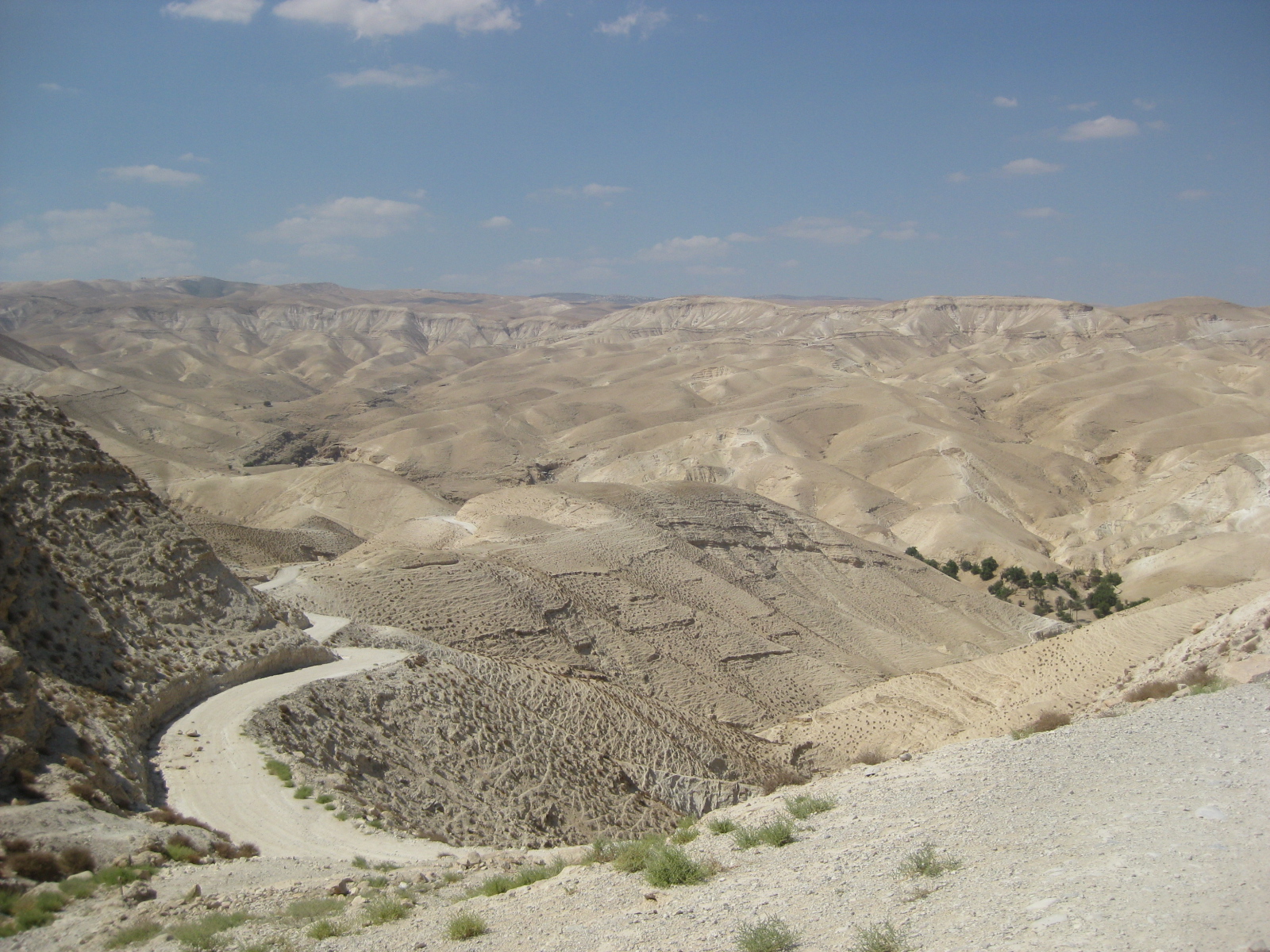
Scripture Text:  Isaiah 40: 1-5Road through the desert

Comfort, O comfort my people, says your God. Speak tenderly to Jerusalem, and cry to her that she has served her term, that her penalty is paid, that she has received from the Lord’s hand double for all her sins.  A voice cries out: “In the wilderness prepare the way of the Lord, make straight in the desert a highway for our God. Every valley shall be lifted up, and every mountain and hill be made low; the uneven ground shall become level, and the rough places a plain. Then the glory of the Lord shall be revealed, and all people shall see it together, for the mouth of the Lord has spoken.”

“Comfort, O Comfort my people.”  That sounds nice.  It sounds warm and inviting, something that we can just sort of fold ourselves into and relax and let God take care of us.  Well, maybe.  But then what happens?  What we do with our lives after that?  The truth is, as much as we like to imagine a warm and fuzzy God that heaps everything we desire and everything we need to make our lives easy and comfortable on us, that’s not exactly the way it always is.  Here, comfort is not solace; here comfort is transformation.  God is promising something new.  These words begin with God’s initiative–to bring the exiles home.  Sure, it will mean ending their suffering and making their lives better.  But it is more.  It means that they will become something new–a new creation.  The former things have passed away.  God is not in the habit of rebuilding or “fixing” the way it is easy for us to imagine could happen.  God is the Creator, the great I AM, the one who brings newness and life.


So, God prepares a highway through the wilderness.  Now, don’t think that there wasn’t already a road there.  In the year 539 BCE, Cyrus of Persia conquered the Babylonians. Now he tended to be sort of a benign and tolerant ruler and so he allowed those who had been previously exiled from Jerusalem the chance to return home. So the people are beginning to return home, but to a home that was nothing like it was before. If you can imagine, these waves upon waves of people on this highway that leads toward Jerusalem—a Jerusalem that now lies in ruins without the Temple that used to be in the center of its life. This highway, a highway through the desert that, typical of the ancient world, was originally built to accommodate royal processions. Everything was done to make the highway smooth and clear.   The road was there, already made straight and smooth for the royals to travel.  And so the exiles, returning to “who knows what?” were on this road.


But, wait, look, over here.  God also promises a highway, smoothed and cleared of mountains and deep, treacherous valleys that would impede the journey.  God promises a holy highway built for a grand procession led by the Almighty God.  It’s still a road that you have to travel, but, rather than leading you to the ruins of the life you once knew, THIS road leads you Home.  And as we travel this road, God is creating and creating and creating the whole time, unfolding our life before us as long as we keep our eyes open to see what God is doing.  This is the way that the Glory of the Lord shall be revealed.


This is the road that Advent shows us.  It’s not one that takes us to the place that we’ve always known.  Advent shows us the newness that God is offering.  In the Advent season, we remember those generations upon generations that waited for a Savior.  We also prepare ourselves to remember once again how Christ came and comes.  But there’s another part of Advent that we miss.  It is this road, this road that we’re on that leads us to finally see things in a different light.  There is a Maori proverb that says “turn your face to the sun and the shadows will fall behind you.”  “Comfort, O Comfort my people.”  The Light is changing and you, even you, even now, are being made new.  “Then the Glory of the Lord shall be revealed, and all people shall see it together.”


Learn to see and then you’ll know there is no end to the new worlds of our vision.  (Carlos Castaneda)


FOR TODAY:  What newness has God created in your life?  During this Advent, what newness can you find on the road?


Grace and Peace,


Shelli

Anticipation


The Top of the MountainScripture Text:  Mark 13: 32-37

But about that day or hour no one knows, neither the angels in heaven, nor the Son, but only the Father. 33Beware, keep alert; for you do not know when the time will come. 34It is like a man going on a journey, when he leaves home and puts his slaves in charge, each with his work, and commands the doorkeeper to be on the watch. 35Therefore, keep awake—for you do not know when the master of the house will come, in the evening, or at midnight, or at cockcrow, or at dawn, 36or else he may find you asleep when he comes suddenly. 37And what I say to you I say to all: Keep awake.”


You know that feeling when you’re driving up a really big mountain (or maybe climbing the tallest loop of the roller coaster)?  You can see behind you (although that’s probably not a good idea if you’re actually driving!) and you can see ahead–but only to the top.  You can see where the top begins to round out its shape and give way to the other side but in your view, there is no other side.  It almost looks like you’re just going to keep climbing and be propelled into the open sky, to lose control, to lose footing altogether.  At this point, there is no way to plan at all.  You just trust–trust that the mountain will gently curve its way to the other side and give way to another view, trust that the road on which you’re traveling actually DOES continue and that you will not fall into nothingness, and trust that, in just a moment, in just a moment…this climbing will end.


Advent reminds us that we’re sort of on that road.  We feel it under us.  We see it up ahead.  But it continues beyond what we can see, beyond where we can comprehend at this point.  And so we trust and we anticipate that what is up ahead and where we are called to go.  The Scripture text (which we Lectionary readers read this past Sunday) exhorts us to keep alert, to stay awake.  Maybe it could just as easily tell us to anticipate what is up ahead.  I mean, weren’t you told that by your driving instructor all those years ago?  Anticipate the road. I don’t think that means become a psychic or a mind-reader.  After all, the Scripture reminds us that we do not know, that, in fact, we CANNOT know, that we are not at this point in our being, capable of knowing what is up ahead.  Anticipating is not about knowing; it is about readying oneself, preparing oneself, maybe even feeling the road a little more deeply.  Perhaps living with anticipation is about being so awake and so aware that you can actually taste the Presence of the Divine and know that Presence so deeply that life changes.  If one begins to anticipate what is up ahead, one begins to live life as if the road is beginning to curve.  As if…what would it mean to live “as if”?  What would it mean to live as if peace were the norm?  What would it mean to live as if poverty ceased to exist?  What would it mean to live as if God’s Presence was so real that it literally permeated every thread of your being?


Advent is our calling to wake up, to anticipate and begin to live as if God has already come into our midst, because that’s EXACTLY what has happened.  The call to keep alert is not a threat; it’s God’s gift to us.  Stay awake, my child, for you do not want to miss it.  Life is coming, a Life that you cannot even fathom how incredible it is.  The road is beginning to round and another view is just up ahead.  Be alert.  You don’ want to miss it.


A dreamer is one who can find [his or her] way in the moonlight, and [whose] punishment is that [he or she] sees the dawn before the rest of the world. (Oscar Wilde)


FOR TODAY:  What does it mean to be alert?  What does it mean to allow yourself to be awakened to the presence of God in our midst?  What does it mean to anticipate life, to live as if?


Grace and Peace,

Shelli


Expectant Hope

cropped-dreamstimefree_2365100.jpgScripture Text: Hebrews 11:1

Now faith is the assurance of things hoped for, the conviction of things not seen.

I remember when I was little, going to bed on Christmas Eve was the hardest and the most amazing thing to do.  I would lay there so excited about the next morning that I couldn’t sleep.  There were things that I hoped against hope would be under the tree when I awoke.  But, the main thing, is that I knew deep down that, regardless of what I hoped would be there, there was always something wonderful there.  I knew that.  I thought sure that there was no way I would ever go to sleep but at some point, I would drift off.  Then in the morning, I would lay there for a little awhile.  Even at a young age, I understood that there was this moment–this wonderful glorious moment when I would get my first look at the Christmas tree (post-Santa’s visit) and I would savor it, push it until I could not stand it anymore.  Then, there it was–this moment filled with beauty and wonder and hopes fulfilled before the tree stood a short time later in a barren wasteland of discarded wrapping paper.  But in that moment was hope alive.


I think we have lost the meaning of the word hope.  We’ve become like that young child, attaching it to a list of needs or wants that we have somehow conjured up in our head.  We have gotten hope confused with wishing.  I think, though, that hope is more.  It is not what we want to happen or what we wish would happen; hope is what we expect will happen.  The young me had somehow gotten that part of it too–that understanding that hope was not merely wanting something, but daring to expect it, daring to imagine that it would actually come to be.


As Christians, we are given hope.  Oh, hope was always there.  We just believe that it became more tangible that night in the manger and that it could no longer even be denied as we stood before an empty tomb.  But what we do with that hope is up to us.  Living with hope is not about merely wishing things were different and it’s certainly not about wanting things to be better for us.  Living with hope is living with the conviction that somehow, some way, even though it doesn’t make sense to us and even though we don’t understand it, we dare to expect that that moment will come to be–filled with beauty and wonder and hopes fulfilled.


This season of Advent gives us hope.  In our waiting, in this season in which we have to let go of our need to control what is going to happen, our need to plan, our need to jump ahead to the next season, we find hope.  And as the passage implies, hope feeds our faith, gives it life.  Hope is not wishing; hope is expecting.  Dare to expect what seems to be beyond hope and there you will find hope.  Hope is alive.  It is more than a dream; it is the story into which we live.  Living with hope is daring to live as if what you are expecting has already come to be.


Hope holds with it the promise that God always answers our questions by showing up, not necessarily with what we ask for but with remarkable gifts that change our lives and the world. (Mary Lou Redding, “While We Wait”)


FOR TODAY:  For what do you hope?  What do you expect?  What would it mean to live with expectant hope?

Grace and Peace and Advent Blessings,

Shelli