LENT 4A: You’re the One!

Lectionary Text:  1 Samuel 16: 1-13
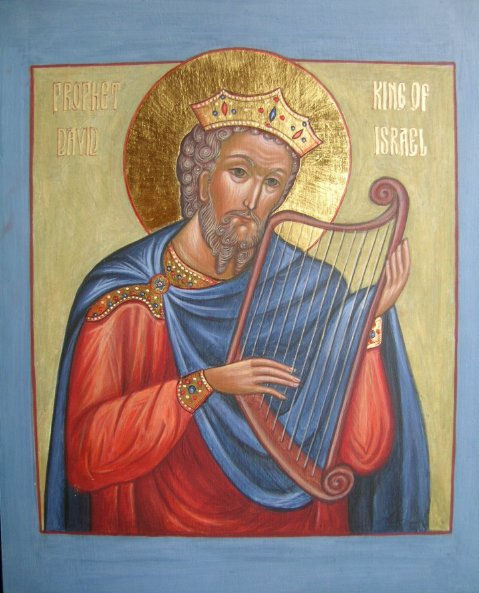
The Lord said to Samuel, “How long will you grieve over Saul? I have rejected him from being king over Israel. Fill your horn with oil and set out; I will send you to Jesse the Bethlehemite, for I have provided for myself a king among his sons.” Samuel said, “How can I go? If Saul hears of it, he will kill me.” And the Lord said, “Take a heifer with you, and say, ‘I have come to sacrifice to the Lord.’ Invite Jesse to the sacrifice, and I will show you what you shall do; and you shall anoint for me the one whom I name to you.” Samuel did what the Lord commanded, and came to Bethlehem. The elders of the city came to meet him trembling, and said, “Do you come peaceably?” He said, “Peaceably; I have come to sacrifice to the Lord; sanctify yourselves and come with me to the sacrifice.” And he sanctified Jesse and his sons and invited them to the sacrifice. When they came, he looked on Eliab and thought, “Surely the Lord’s anointed is now before the Lord.” But the Lord said to Samuel, “Do not look on his appearance or on the height of his stature, because I have rejected him; for the Lord does not see as mortals see; they look on the outward appearance, but the Lord looks on the heart.” Then Jesse called Abinadab, and made him pass before Samuel. He said, “Neither has the Lord chosen this one.” Then Jesse made Shammah pass by. And he said, “Neither has the Lord chosen this one.” Jesse made seven of his sons pass before Samuel, and Samuel said to Jesse, “The Lord has not chosen any of these.” Samuel said to Jesse, “Are all your sons here?” And he said, “There remains yet the youngest, but he is keeping the sheep.” And Samuel said to Jesse, “Send and bring him; for we will not sit down until he comes here.” He sent and brought him in. Now he was ruddy, and had beautiful eyes, and was handsome. The Lord said, “Rise and anoint him; for this is the one.” Then Samuel took the horn of oil, and anointed him in the presence of his brothers; and the spirit of the Lord came mightily upon David from that day forward. Samuel then set out and went to Ramah.

Once again, God has called the most unlikely, the most unexpected, and the most unprepared candidate to do God’s work.  There seems to be a pattern here.  This time, God’s choice is a young, but apparently good-looking, shepherd, an eighth son, from the village of Bethlehem, and from a family with no real pedigree or appropriate ancestry at all.  And with this person, God lays the road for the hope of the world.  No pressure there!  But the unlikeliness doesn’t stop there.  What about Samuel? God called him to go to Jesse the Bethlehemite and anoint a new king. Well, I’m pretty sure that Saul (i.e, the King!) would not have been impressed with that had he found out. What if Samuel had just said, “You know, God, I would really rather not. That just doesn’t work into my plan.”?

In this Lenten season, what would change about our journey if we knew where we would end up, if we thought that we might end up in a place that we didn’t plan? And what would change about our life if we knew how it was all going to turn out? I mean, think about it…the boy David is out in the field just minding his own business and doing what probably generations of family members before him had done. He sees his brothers go inside one by one, probably wandering what in the world is going on. Finally, he is called in. “You’re the one!” “What do you mean I’m the one?” he probably asked in his teen-age sarcasm. “What in the world are you talking about? Don’t I even get a choice?” “Not so much.” And so David was anointed. “You’re the one!”

What would have happened if David has just turned and walked away? Well, I’m pretty sure that God would have found someone else, but the road would have turned away from where it was. It would have been a good road, a life-filled road, a road that would have gotten us where we needed to be. But it wouldn’t have been the road that God envisioned it to be.  We know how it all turned out. David started out by playing the supposed evil out of Saul with his lyre. He ultimately became a great king and generations later, a child was brought forth into the world, descended from David. The child grew and became himself anointed—this time not for lyre-playing or earthly kingship but as Messiah, as Savior, as Emmanuel, God-Incarnate. And in turn, God then anoints the ones who are to fall in line and follow him. “You’re the one”.

Do we even get a choice, you ask? Sure, you get a choice. You can close yourself off and try your best to hold on to what is really not yours anyway or you can walk forward into life as the one anointed to build the specific part of God’s Kingdom that is yours. We are all called to different roads in different ways. But the calling is specifically yours. And in the midst of it, there is a choice between death and life. Is there a choice? Not so much! Seeing the way to walk is not necessarily about seeing where the road is going. So just keep walking and enjoy the scenery along the way!

So, on this Lenten journey, look for the unexpected and walk toward it!

Grace and Peace,

Shelli
First Rest

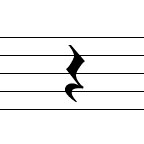
Quarter Rest

If you read music, you know that it is seldom composed of a never-ending stream of notes.  There are rests, spaces between.  The spaces are not places to stop.  They are places to rest, to breathe, to soak in and soak up what has happened, and to prepare oneself for the rest of the song.  The point is that they are part of the music.  Journeys are no different.  We need rest.  We need breathing room. We need to cease journeying and look back at where we’ve been.  That is part of the journey.

This journey that we call the Season of Lent has become more and more important to me over the past few years.  I have learned that I need to intentionally do something during or give up something.  I need to change what is usual and routine about my life.  I need to insert a rest and just take a breath.  Some of us give something up and some of us add something on.  I don’t think it matters which and I don’t think it matters what.  We just need to do something different.  I think that each of us has to do what is best for our life and our own way of living.  Maybe a good rule to use when figuring that out is to lose something that ensnares or contains you, that keeps you safe and comfortable and dependent, or gain something that gives you freedom, that pushes your boundaries and gives you life.  What is it that contains you?  What is it that gives you freedom?

This year I’ve chosen to write each day on this blog as my Lenten discipline.  About one-third of this season is behind us, so it is time for our “first rest”.  It is time to look back at our journey.  I love to write.  It truly does give me freedom; it truly does give me life.  This time of intentional, sometimes “ritualistic” writing (as in when I don’t have time–I’m sure you can recognize those!) has given me a new perspective.  It has made me look at things differently.  Ordinary things like missing exits and seeing funny little handmade signs on the backs of pianos have become new journeys through life.  Extraordinary occurrences like Supermoons have become glimpses of the unknown, glimpses of what God has in store.  And those difficult things that are going on in our world–tsunamis and bombings and wars–have somehow been made anew into life-giving phenomena.  This journey is somewhat planned and, yet, part of the plan is to be open to the way the Spirit moves.  That’s what it’s all about!  (But I do wish that the Spirit would not inspire Maynard quite so much.  I’m running out of Bibles!)

So, on this Lenten journey, take your first rest.  Look around.  What is it that contains you?  What is it that gives you freedom?

Grace and Peace,

Shelli

Meanderings

We spend a lot of this Lenten season talking about roads, journeys, wandering, pathways, and “getting back on track”.  Do you sense that there is a theme?  The truth is, life is full of roads, whether it’s a 40-year long road through a desert wilderness, a leisurely afternoon drive through the Texas wildflowers, or a quick drive to the grocery store.  I just completed a three-day meeting (that was close enough for me to stay at my house) and in the six times that I was in the car, I actually took six different routes.  One included a side errand to Target, one took me out of my way enough to drop Maynard off at Yuppie Dog (yes, “Yuppie Dog”–I supposed I’ve become completey urbanized!), one involved lunch at a Chinese restaurant, two involved “alternate” routes than that nice woman on my GPS told me to go, and two were because I was talking to my friend who was with me and missed the exit. (As a matter of fact, yes, that does happen to me often!)  But the point is, life is full of roads and there are probably more moments than not that present us with the choice of whether to take the one that will get us there the fastest, the one that will provide the most scenic route, the one that will avoid the traffic, the one with which we’re most familiar, the one that will get us back on track, or the “one less traveled by”.

I don’t really think that God lays down some road at the beginning of our existence and then expects us to stay walking straightly down the center.  In other words, I don’t necessarily think that veering from the road in front of us is wrong.  Truthfully, if anyone tries to tell you that they have stayed on one straight road or have walked it with one focus or one thought their whole life, I would propose that they are probably standing not far from where they began.  The Scripture passsages that involve roads seem endless (no pun intended)–wilderness roads, roads to Jerusalem, roads to Emmaus, roads to Bethlehem, roads through Galilee, the road to the Cross, and the roads home.  Perhaps all those roads are not necessarily there to show us the right one to walk; perhaps instead they are there to show us that no matter what path we’re one, we’ll eventually end up returning home.

And upon returning, we will perhaps be a little weary, maybe even worse for the wear.  But roads tend to make us wiser, certainly with a new perspective of home and of those we’ve met along the way.  And often, when I’ve gotten completely off the path that is best for me, God has gently nudged me back, dusting me off and setting me on my way.  But more often, and, I think even more profound in my life, are those times when God, with infinite grace and mercy, somehow brings the meandering path to me. (Oh, good grief, I missed the exit again…!)

So, on this Lenten road, travel with an awareness of all the choices you have and the way God brings a road through them all.

Two roads diverged in a yellow wood, And sorry I could not travel both
and be one traveler, long I stood and looked down one as far as I could
to where it bent in the undergrowth;

Then took the other, as just as fair, and having perhaps the better claim,
because it was grassy and wanted wear; Though as for that the passing there
had worn them really about the same,

And both that morning equally lay in leaves no step had trodden black.
Oh, I kept the first for another day!  Yet knowing how way leads on to way,
I doubted if I should ever come back.

I shall be telling this with a sigh!  Somewhere ages and ages hence:
Two roads diverged in a wood, and I–I took the one less traveled by,
And that has made all the difference.
(“The Road Not Taken”, Robert Frost, 1920)

Grace and Peace,

Shelli       

Patiently Waiting

Today’s Lectionary Scriptures:
         Joshua 5: 9-12
         2 Corinthians 5: 15-21
         Luke 15: 1-3, 11b-32

Today’s Gospel passage is a familiar one.  The story of the two sons and their father is one of our favorites.  It reminds us that no matter how prodigal we may be, God always welcomes us home.  We like this story.  It gives us an assurance to which we can cling even in the most distant countries of our lives.  We take comfort in its themes of forgiveness and reconciliation no matter what we do.

But I want to back up a minute.  Today’s prescribed lectionary starts at the beginning of the fifteenth chapter of Luke and then it skips several verses.  I think those verses are important for the context of our story.  First Jesus tells of a lost sheep and the rejoicing of the master at its finding.  Following that is the account of a woman who loses a coin.  And now this…a father loses his most precious thing–his son and then rejoices at his finding.  But notice that the father does not go in search of the son the way the other two did.  When a coin is lost, the owner searches for it to bring its home.  As important as it obviously is to the owner, it is still an inanimate object.  The coin cannot choose to come home.  And the sheep, while a living being, does not possess the gift of free will.  The sheep will follow when its master comes to find it.  But the son is different.  The father does not stop what he’s doing and leave the older son and his property and home behind to chase after him.  The son, as opposed to the coin and the sheep, must choose to come home.

 Perhaps the point of this familiar story is not simply that God forgives us; perhaps the point is that we must choose to come home.  After all, God’s forgiveness, grace, and unconditional love are always there for us whether or not we choose to claim them.  Our journey of faith is not about God finding us but, rather, about our return to God.  I don’t think these are three related stories of loss and finding.  I think that instead the first two point to the third.  God’s deepest desire is that we are indeed all found.  But God, filled with love and compassion, is patiently waiting for us to decide once and for our deepest desire is to return home.

Grace and Peace,

Shelli

A Journey of Thirsting

Today’s Lectionary Old Testament Text:  Isaiah 55: 1-3, 6

Ho, everyone who thirsts, come to the waters; and you that have no money, come, buy and eat! Come, buy wine and milk without money and without price. Why do you spend your money for that which is not bread, and your labor for that which does not satisfy? Listen carefully to me, and eat what is good, and delight yourselves in rich food. Incline your ear, and come to me; listen, so that you may live. I will make with you an everlasting covenant, my steadfast, sure love for David…Seek the Lord while he may be found, call upon him while he is near…(NRSV)

None of us like to thirst.  In fact, much of our life is about chasing something that will quench our thirsts–our thirst for knowledge, our thirst for acceptance, our thirst for recognition, our thirst for security, our thirst for gratification.  Thirst is an interesting thing.  It is a powerful and undeniable signal to us of what we need, a reminder of those things that sustain us.  And yet, the point seems to be to rid ourselves of it, to live perfectly-quenched lives so to speak.

And yet God is not really calling us to “perfectly-quenched” lives.  God has never said to us, “Get yourselves together, people, so that you can come to me.”; never, “Hurry, people, I don’t have time to wait for you anymore.”  That’s not what it’s about.  That’s not who God is.  Instead, God is inviting everyone who thirsts to come.  Timothy Shapiro claims that “hope is preceded by longing”.  God’s desire is not that we perfect our lives but that we desire so deeply to be with God, long for that relationship as the very source of our being, that we can do nothing other than to come to God.  God is inviting all who thirst to come. It is our thirst that draws us closer to God.  It is that thirsting for God at the very core of who we are that is the journey to God itself. As we long for God, our thirst is quenched by the very thirst for God itself.  

Alexander Stuart Baillie says that this age needs to become more realistic. It needs to listen again to the words of Jesus, who said, ‘I thirst.” He who is the Son of Man, the Son of God, is our example. He is the great pioneer in every realm of life. Surely if he thirsted, how much more do we? Humanity needs to get away from the world of “things as they are” into the world of “things as they ought to be.” This means that men and women must learn to live for others. It is only when we can live a life of self-forgetfulness that we get our truest joy out of life. One needs to keep on thirsting because life grows and enlarges. It has no end; it goes on and on; it becomes more beautiful. When one has done his best there is, he finds, still more to learn and so much more to do. [One] cannot be satisfied until [one]attains unto the stature of Jesus, unto a perfect [human], and ever thirsts for God(Alexander Stuart Baillie, “Thirsting”, in Bread and Wine: Readings for Lent and Easter (Maryknoll, NY: Orbis Books, 2003), 242-243.)

It is only through our thirsting for God that we will find God.  It is only when we thirst that we will truly drink from the cup.

Grace and Peace,

Shelli

Picture:  The Dead Sea, Israel, 2010

Looking Through

We are accustomed to thinking of Lent as a journey–a journey of penitence and perspectives, of crosses and crossings, of giving up and giving over.  But in those times that we dare to stand still, to really think about things, to really contemplate the place to which we’ve walked, what then?  Then Lent is a space through which we look beyond–beyond Lent, beyond the cross, beyond ourselves, beyond to what it is that we will become once this season has ended.

We 21st century journeyers not only want to know where we’re going; we also want to get there–fast!.  We are not really programmed to just stand still and look through something.  We’d rather keep moving, even though some of the steps along this road are painful.  At least when we’re moving, we have some sense of control, some sense that we can change things–if we only keep moving.  But when we stop–when we stand still–it is as if all the control leaves us.  We stand, exposed to the elements, vulnerable to others who are comfortably and successfully moving through life, and suddenly acutely, and often painfully, aware of our own place on the journey.

And yet, part of Lent and part of life is indeed about standing still.  A journey is seldom completed with constant motion.  We are just not made for that. (You can look up that seventh day concept when you have time!) Sometimes we are meant to move; sometimes we are meant to stand still and savor what God has shown us.  Behold!  There is the cross.  There you are.  And if you stand still long enough, you will be able to look through and see where you are headed.  We are not called to walk blindly into the unknown, never looking, never questioning, never contemplating where we are or where we’re going or where we’ve been; we are called to journey toward that which God has illumined in our lives.  So stop–stand still–and look through it all.  Behold!  And then start walking again…

Grace and Peace on the Journey–the walking and the standing,

Shelli

Picture:  Capernaum, Israel (February, 2010)   

Unless You Repent…

This Week’s Lectionary Gospel Passage:  Luke 13: 1-9
At that very time there were some present who told him about the Galileans whose blood Pilate had mingled with their sacrifices. He asked them, “Do you think that because these Galileans suffered in this way they were worse sinners than all other Galileans? No, I tell you; but unless you repent, you will all perish as they did. Or those eighteen who were killed when the tower of Siloam fell on them—do you think that they were worse offenders than all the others living in Jerusalem? No, I tell you; but unless you repent, you will all perish just as they did.” Then he told this parable: “A man had a fig tree planted in his vineyard; and he came looking for fruit on it and found none. So he said to the gardener, ‘See here! For three years I have come looking for fruit on this fig tree, and still I find none. Cut it down! Why should it be wasting the soil?’ He replied, ‘Sir, let it alone for one more year, until I dig around it and put manure on it. If it bears fruit next year, well and good; but if not, you can cut it down.’” (NRSV)

Hmmm!  Maybe we should try the Psalm.  They’re usually a little more friendly, not quite as prickly to the touch, right?  The truth is, we do not like to be threatened and this sounds very threatening.  We’d rather listen to the soothing melodies of assurance and unconditional love and grace.  Repentance is just too stressful, just too harsh and unyielding.  But, unless you repent…
 
I think the problem is that we look at repentance as something negative.  We envision repentance as some sort of self-denial.  We think that we can no longer be who we are but instead we must become some sort of stamped-out “stepford” Christian in order to “measure up” to Jesus Christ.  To quote the old, much-overused, and oft-abused slogan “What Would Jesus Do?” (WWJD), we use Christ as some sort of divine measuring stick of what is good and what is evil, what is right and what is immoral, and, more importantly, what is it that would win us favor and life with God?  So, what would Jesus do?  Well, I’m convinced that he’d throw that rot out with that batch of bad figs!  Because repentance is not negative.  It does not mean losing who you are.  It means discovering the wonder of who you are meant to be.
 
The Greek word that is usually translated as “repentance” is metanoia.    In Classical Greek, it meant to change one’s mind, one’s heart, one’s soul, one’s life.  Penance was not a part of it.  It simply meant to follow a different road.  I think that IS what Jesus would do.  Why is that so difficult for us?  Is the road that we’re on so grand?  For most of us, probably not.  It is just comfortably familiar.  But don’t we deserve more than comfortable?  We are told of a new life, a new creation, an existence of perfect harmony and shalom.  I don’t think that’s necessarily limited to our next life, or heaven, or the other side of the rainbow, or however you envision it.  I think it’s down that road.  But…unless you repent…unless you change course, let go of the life that you’ve created, and listen to the road that beckons before you, you will remain comfortable and secure and right where you are. And then you will die! But, oh, what you will miss!
 
The road ahead looks dark now and even a little bleak.  The skies are blackening and there’s this awful hammering of metal against wood up ahead.  There is shouting and chaos.  It IS tempting to pull the covers over our head and just stay in for the day.  But just beyond that hill, just ahead, through those rocks and trees, there is a tiny flicker of light.  Let us go and see this thing that has happened.  Frederick Buechner says, “To repent is to come to your senses. It is not so much something you do as something that happens. True repentance spends less time looking at the past and saying, “I’m sorry,” than to the future and saying, “Wow!” (Buechner, Wishful Thinking, 79)  But, unless you repent…
 
So, repent and believe the Gospel!
 
Shelli

Picture: Israel (February, 2010)