Take Joy

dancing-joyScripture Text:  Romans 16: 25-27

Now to God who is able to strengthen you according to my gospel and the proclamation of Jesus Christ, according to the revelation of the mystery that was kept secret for long ages but is now disclosed, and through the prophetic writings is made known to all the Gentiles, according to the command of the eternal God, to bring about the obedience of faith–to the only wise God, through Jesus Christ, to whom be the glory forever!  Amen.


The words in this short Scripture pretty much say everything.  When it is all said and done, when there is nothing else left, when you don’t know where to step next, there is God.  There is the God who came and comes and will come over and over again.  This is the God of mystery and revelation, the God of strength and gentleness, the God of what will come and what is.  Some think that it might be possible that these words that come at the end of Paul’s great treatise known as The Letter to the Romans were sort of attached later as a doxology.  It is indeed a statement of response, a doxology acknowledging what God has done and what God is doing.  It is true.  The Incarnation of God, the Coming of Jesus Christ, invokes our response, elicits something from us in response to God or, really, it would be meaningless.  As the words say, the response is our faith.  God comes not as an answer to generations upon generations of want and need; God comes as a question, an openness, to which we are asked to respond.  God comes and invites us into this mystery, to walk where we haven’t dared walk before and to know what we wouldn’t let ourselves know before.  The whole of the Gospel–the proclaimed Coming of Christ, Jesus’ birth, ministry, life, death, and resurrection–are made full by our response.  If that were not the case, the Gospel would not have continued to write itself into people’s lives.


In 1513, Fra Giovanni Giacondo, a Franciscan Friar, wrote a letter to Countess Allagia Aldobrandeschi on Christmas Eve.  Here are the incredible words:

I salute you. I am your friend, and my love for you goes deep.  There is nothing I can give you which you have not. But there is much, very much, that, while I cannot give it, you can take. No heaven can come to us unless our hearts find rest in it today. Take heaven! No peace lies in the future which is not hidden in this present little instant.

Take peace! The gloom of the world is but a shadow. Behind it, yet within our reach, is joy. There is radiance and glory in darkness, could we but see.  And to see, we have only to look. I beseech you to look!

Life is so generous a giver. But we, judging its gifts by their covering, cast them away as ugly or heavy or hard. Remove the covering, and you will find beneath it a living splendor, woven of love by wisdom, with power. Welcome it, grasp it, and you touch the angel’s hand that brings it to you.

Everything we call a trial, a sorrow or a duty, believe me, that angel’s hand is there. The gift is there and the wonder of an overshadowing presence. Your joys, too, be not content with them as joys. They, too, conceal diviner gifts.

Life is so full of meaning and purpose, so full of beauty beneath its covering, that you will find earth but cloaks your heaven. Courage then to claim it; that is all! But courage you have, and the knowledge that we are pilgrims together, wending through unknown country home.


Take heaven!  Take peace!  Take joy!  It is what the words from Romans were saying.  God came and comes but God does not desire to dance alone.  The fulfillment of God’s promise, the culmination of God’s Vision of what Creation will be lies in us.  It lies in our response.  It lies in our faithful response.  Its meaning and its purpose come when we claim it for ourselves.  It lies in our stepping up and taking all of the gifts that God offers.  We must take heaven.  We must take peace.  We must take joy.  Perhaps it means that we have to lay down the things we are holding.  Perhaps it means that we have to make room.  Always it means that we respond by saying “yes” to God.  God comes toward us with arms outstretched, inviting us to dance.  God does not desire to force us into mindless obedience; God does not pick us up and carry us away to places that we do not want to go; God desires that we respond with arms outstretched and, even when our steps are faltering and filled with doubt and fear, we dance as one who has taken and embraced joy, one who has taken God into one’s life.  Take heaven! Take peace! Take joy!


Faith can be described only as a movement of flight, flight away from myself and toward the great possibilities of God. (Helmut Thielicke)


FOR TODAY:  Put down what you are holding.  Take heaven.  Take peace. Take joy.  Breathe them in and dance.


Grace and Peace,


Shelli

Be a Dwelling


Making room for GodScripture Text:  Psalm 132:3-5

I will not enter my house or get into my bed; I will not give sleep to my eyes or slumber to my eyelids, until I find a place for the Lord, a dwelling place for the Mighty One of Jacob.


We don’t usually think of the Lord as having a dwelling place.  God is bigger than any structure, any way we have of limiting this limitless God, any attempt to keep the Lord within boundaries.  So, how, then, do we find a dwelling place?  How do you prepare a place for a God that cannot be held, that cannot be contained?  How do we prepare for this coming?


God came into this world when perhaps the world was not fully prepared for God’s coming.  Oh, we probably thought we were.  We had worshipped the Lord, designating altars and laying down offerings.  We had called places holy with the hopes that they might hold God for us, make God accessible.  We had made dwelling places for the Lord.  But then God came.  There were no processions of grandeur, no announcement fit for royalty.  There was no pomp.  There was no flash.  To be honest, there was no warning.  And we were not ready.  Why didn’t you tell us you were coming, so that we couldn’t have been ready?  We had not made room for God in this world.  And so God came in silence, peacefully slipping into the back corner of our world while kings and princes and priests alike made their usual noises out front.  God came.  There really wasn’t room.  And so God laid down in the darkness and made a dwelling for the Godself.  God took what was there–a little bit of hay, perhaps some cast away cloths, and a dark and dank room filled with the stench of animal dung.  And God made a dwelling.  God made a dwelling in the most primal, most humble place imaginable.  And the kings and princes and priests noisily laid down in their soft beds and went to sleep.  There didn’t seem to be any room for God.  We just weren’t prepared.  We just weren’t ready.  Maybe we just weren’t paying attention.  And so we slept.


God still comes.  Every year, every day, every moment, God comes.  God comes into this world that is probably not ready.  How do we find a place for the Lord?  How do we prepare the way?  I think the problem is that God does not show up in those things that we have built or those things that we have collected over the year.  And now that I’ve spent hours putting all those decorations all over my house, I am hit with the realization that they don’t make God come any faster.   The truth is, God probably still slips into to the dark corners of our lives, the places that are not so full of our plans and our things and our make-readies.  God is probably more likely to again show up in the primal parts of my life, those parts that are not stacked to the brim with things that I think God will like, things that make me feel like I’m ready for God, but rather in the places that I have cleared away the debris and made room.  God comes into hearts and lives that have room for God to dwell.   Oh, don’t get me wrong.  God’s deepest desire is to be everywhere, to be there for all of God’s children, to be there for you and for me.  But sometimes, there still just isn’t room.


In this Advent season of waiting and preparing, somewhere between the cheesecakes I made for yesterday’s Open House and the Christmas decorations that so brightly adorn my home, somewhere in the midst of the buying and the wrapping and the bulletin-making and the worrying, somewhere…somewhere I have to make room.  Because God wants to come.  God desires more than anything to dwell in my life.  So how do I prepare a dwelling place for God?  I clear a path.  I make room.  As the Scripture says, before we slumber, before we sleep, we make room.  We make a dwelling.  We become one with room in our lives for God to come and God to work and God to create us once again.


Making Room:  When I first met him, I knew in a moment I would have to spend the next few days re-arranging my mind so there’d be room for him to stay.  (Brian Andreas, “The Story People”)


FOR TODAY:  Make room.  Clear everything away.  Be a dwelling.  God so wants to stay.


Grace and Peace,

Shelli

A Moveable Feast


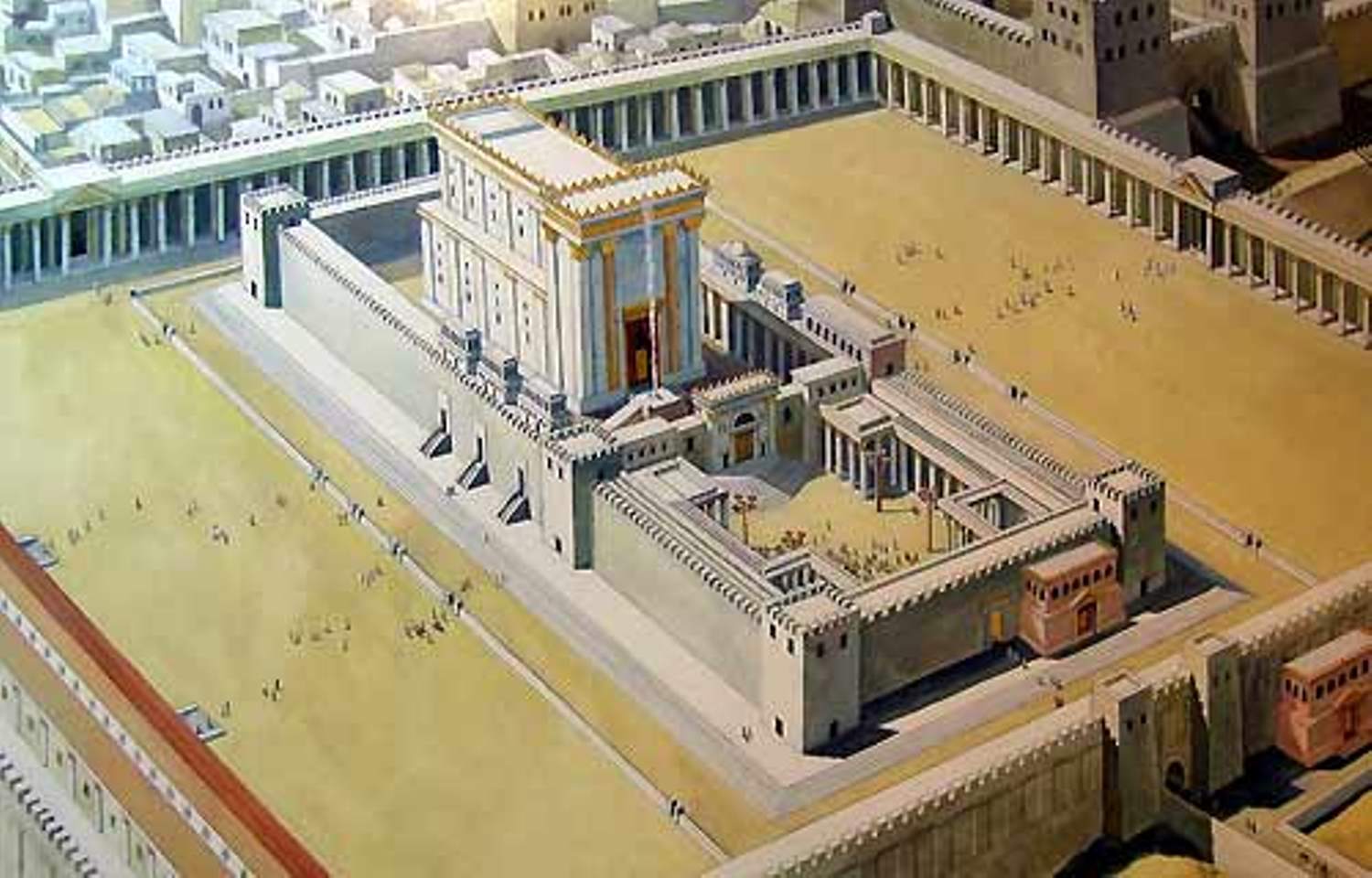
Solomon's TempleLectionary Text:  2 Samuel 7: 5-7, 10-11
Go and tell my servant David: Thus says the Lord: Are you the one to build me a house to live in? I have not lived in a house since the day I brought up the people of Israel from Egypt to this day, but I have been moving about in a tent and a tabernacle. Wherever I have moved about among all the people of Israel, did I ever speak a word with any of the tribal leaders of Israel, whom I commanded to shepherd my people Israel, saying, “Why have you not built me a house of cedar?”…And I will appoint a place for my people Israel and will plant them, so that they may live in their own place, and be disturbed no more; and evedildoers shall afflict them no more, as formerly, from the time that I appointed judges over my people Israel; and I will give you rest from all your enemies. Moreover the Lord declares to you that the Lord will make you a house.


Didn’t something like this happen before?  Weren’t there those way back in our history that wanted to encase God, wanted to build something so big and so grand that it would literally touch the heavens?  That really didn’t work out all that well.  And yet, David envisions now a more permanent structure to house the ark o the Lord.  In other words, David now desires to build a temple in Jerusalem.  Surely that will go better!


But that night the Lord intervenes by way of Nathan with a promise not necessarily of a permanent “house” but, rather a permanent dynasty, an everlasting house of the line of David.  David has risen from shepherd boy to king and has apparently felt God’s presence through it all.  He now sits in his comfortable palace and compares his “house” to the tent that “houses God” in his mind.  So he decides that God needs a grand house too.  God, through the prophet Nathan responds by asking, in a sense, “Hey! Did you hear me complaining about living in a tent? No, I prefer being mobile, flexible, responsive, free to move about, not fixed in one place.” God then turns the tables on David and says, “You think you’re going to build me a house? No, no, no, no. I’M going to build YOU a house. A house that will last much longer and be much greater than anything you could build yourself with wood and stone. A house that will shelter the hopes and dreams of your people long after ‘you lie down with your ancestors.'” God promises to establish David and his line “forever,” and this is a “no matter what” promise, even if the descendants of David sin, even if “evildoers” threaten.


The truth is, we all desire permanence; we want something on which we can stand, that we can touch, that we can “sink our teeth into”, so to speak.  We want to know the plan so that we can plan around it.  Well, if this was going to make it easier to understand God, go ahead.  The truth is, this is a wandering God of wandering people.  This is not a God who desires or can be shut up in a temple or a church or a closed mind.  This is not a God who desires to be “figured out.”  This God is palatial; this God is unlimited; this God will show up in places that we did not build.  (and sometimes in places that we really wouldn’t go!)  Now don’t get me wrong.  I LOVE church buildings as much as the next person.  They hold a beauty and a sacredness that is not found anywhere else.  I love grand old structures (even the one that we’re having to repair quite a bit right now).  But, really, the structures we build are not for God; they are for us.  They are built to bring us back, to bring us to a place where we realize that God was there all along, to, hopefully, re-instill some sense of awe, some sense of knowing that there is something beyond us.  Because, after all, this God does not live in a house; this God dwells with us—wherever we are.  This God comes as a traveler, a journeyer, a moveable feast.  And this God shows up where we least expect God to be—in a god-forsaken place on the outskirts of acceptable society to a couple of people that actually had other plans for their lives.  This God will be where God will be.  And it IS a permanent home.


In this Advent season, we know that God comes.  That is what we celebrate; that is what we remember; that is what we expect.  After all, this God we worship is the one that is with us, Emmanuel.  But have we perhaps confused preparing for the coming of God with planning the way that God comes?  Prepare, rather, to be surprised.  Prepare to be carried along in what is certainly a moveable feast, swept up into the building of a cathedral such that you have never seen.


God is always bigger than the boxes we build for God, so we should not waste too much time protecting the boxes. (Fr. Richard Rohr)


FOR TODAY:  How would you prepare for this moveable feast?  How do you prepare for God’s coming without making plans for how it happens?


Grace and Peace,


Shelli

Be the Story

the_nativity_story_08

Scripture Text:  Genesis 1: 1-3, 31a

In the beginning when God created the heavens and the earth, the earth was a formless void and darkness covered the face of the deep, while a wind from God swept over the face of the waters.  Then God said, “Let there be light”; and there was light…God saw everything that he had made, and indeed, it was very good.

There is not one of us that does not love The Christmas Story.  It’s got it all–heartache, darkness, intrigue, danger, animals, innocence, an oppressive government, and a baby to boot.  It’s got all those things that make great tales.  No wonder it’s a bestseller!  No wonder there are so many songs written about it (that we at this moment cannot WAIT to sing and for some are even irritated that we are NOT!)  But for all the romantic notions of a baby born into a cold desert night in a small town on the other side of the world to poor, struggling parents, this story is not about a birth.  It’s not just a story about Jesus.  This is the Story of God.


It began long before this.  It began in the beginning.  It began when God breathed a part of the Godself into being and created this little world.  And as the story unfolded, as God’s Creation grew into being, God remained with them, a mysterious, often unknown Presence, that yearned to be in relationship with what God had breathed into being.  And once in a while, God’s children would stop what they were doing long enough to know and acknowledge the incarnations of God.  Once in awhile, they would encounter a burning bush or a parting sea or an unfathomable cloud on the top of a mountain.  Once in awhile they would stop, take off their shoes, and feel the holiness beneath their feet.  But more often than not, they struggled in darkness, they struggled in war, they struggled in oppression and injustice because they didn’t see the Light that was with them.  God called them and God sent them and some were prophets and some were wise and some were yearning themselves to be with God.  Some wrote hymns and poetry telling of their yearning and others just bowed and hoped that God would notice.


This wasn’t enough.  It wasn’t enough for the people and it wasn’t enough for God.  God yearned to be with what God had created.  God desperately wanted humanity to be what they were made to be, to come home to the Divine, to be part of the unfolding story.  And so God came once again, God Incarnate, into this little world.  But this time, God came as what God had created.  And so God was born into a cold, dark night.  But the earth was almost too full.  There was little room for God.  But, on that night, in a dark grotto on the outskirts of holiness, God was born.  The Divine somehow made room in a quiet, little corner of the world.  God came to show Creation what had been there all along.  And, yet, there was Newness; there was Light; there was finally Meaning; there was God Made Known.


The Incarnation (the “big I” one!) is God’s unveiling.  It is God coming out of the darkness and out of the shadows and showing us what we could not see before.  God became one of us to show us how to be like God in the world.  So, in this season, we again hear the story.  We hear the story of God.  But unless we realize that it is our story, it still won’t be enough.  God came as God Incarnate into this little world to tell the story that goes back to the beginning.  In the beginning was the Word, and the Word was with God, and the Word was God.  He was in the beginning with God.  All things came into being through him, and without him not one thing came into being.  What has come into being in him was life, and the life was the light of all people.  The light shines in the darkness, and the darkness did not overcome it.  (John 1: 1-5)  And the story continues…BE the Story.


God delights in the human imagination.  No one person can claim to hold the key to unlock what God intended, because what God intended was for each generation to read its story into the text.  (Sandy Eisenberg Sasso)


FOR TODAY (OR YESTERDAY!):  BE the Story.  What does that mean?  God did not come into this world so you could celebrate Christmas; God came so that you would know it is your story.  BE the Story.


Grace and Peace,


Shelli


Be Light

Being LightScripture Text:  John 1:6-9

There was a man sent from God, whose name was John. He came as a witness to testify to the light, so that all might believe through him. He himself was not the light, but he came to testify to the light. The true light, which enlightens everyone, was coming into the world.


John again?  John the Baptist, this brash camel’s hair-wearing, locust-eating, wilderness wandered, is back.  But here we are told that John is but a witness to something bigger, there to point to the Light of Christ that is coming.  But what makes John’s message uncomfortable is that he is always pointing to that which the light illumines.  For the writer of the Gospel According to John, the Logos was the true light bursting forth into humanity.  Rather than an angel announcing the birth of a baby, the writer is using John as a witness to point to that light as well as the purpose of that light.  We love the image of light but sometimes we are uncomfortable with full illumination.  I mean, here’s John, running around like a wild man in the wilderness preaching repentance, calling for us to change, and just being really loud.  Our reaction in this season is to respond with:  “John…shhhh!  You’ll wake the baby.”


We don’t really want to hear this during this season.  We’d rather hear the tales of a baby being born, of shepherd’s visits, of angel’s callings.  This is just too hard.  This is just too uncomfortable.  The season is just too dark for such a bright light.  So John sort of gets in the way.  And there we can’t help but look at the light.  But, good grief, it’s so bright!  How in the world can we be prepared for THIS?  Well, don’t you remember how you prepare yourself to look at light?  You prepare yourself to look at light by looking at light.  So this Light of Christ, this radiant, fully-illuminating light, has now begun to peek into our lives in the form of a witness by this wild wilderness man.  But the way that John witnessed (if you read on) was by pointing the light away from himself and toward the Light itself.  John became a reflection of the Light.  (Yeah…talking in circles again!  It’s this light thing!)


Maybe that’s it.  We are called to bask in the light and then deflect the light toward the light.  We are called to illumine the Light of Christ for the world.  We are called to be light by reflecting the Light.  And the world will never be the same.  You see, the reason that light is so incredibly uncomfortable is that, contrary to what we’d like to conjure up in our heads, this light is not warm and cozy.  It is not a light that merely adds a little needed ambiance to an already-shadowed room.  This light is BRIGHT, UNCOMFORTABLY BRIGHT.  This is the kind of light that shines into the darkest corners and then bends itself around the turn.  This is the kind of light that shines into the shadows that were trying desperately to remain hidden.  This is the kind of light that shows the hidden shadows for what they are.  Darkness cannot exist with this light.  This light casts no shadows.  This Light changes the way we see, changes the way we live.  This Light exposes the world to itself.


It is that for which we’ve been waiting.  We’ve been waiting for something to not just light our way but to illumine the darkness.  The darkness will be no more.  The Light will come.  And we, like John, are called to be witnesses to that light, to shine a light toward it.  We are called to be light, the light that shines toward the Light.  And the world will be forever different.  No longer are the shadows able to exist unnoticed.  You see, this light exposes everything for what it is.  This Light makes us realize that poverty and homelessness, violence and war, greed and injustice are not just things that exist.  This Light shines such a light that they become unacceptable, unimaginable, undone.  This is the Light that calls us to see not just a dream of the way we could be, but the notion that we are called to be nothing less.  Here’s the deal.  The baby is already awake, already basking in the Light of the Eternal.  So, we need to wake up, rub the sleep out of our eyes, and be a reflection of that light.  Be Light.


Faith is the bird that feels the light and sings when the dawn is still dark.  (Rabindranath Tagore)


FOR TODAY:  Look for the light.  Then reflect it toward the world.  Be light.  Be the Light.


Grace and Peace,

Shelli


Be Coming

Be the Coming Scripture Text:  Isaiah 43: 15-19

I am the Lord, your Holy One, the Creator of Israel, your King.  Thus says the Lord, who makes a way in the sea, a path in the mighty waters, who brings out chariot and horse, army and warrior; they lie down, they cannot rise, they are extinguished, quenched like a wick:  Do not remember the former things, or consider the things of old.  I am about to do a new thing; now it springs forth, do you not perceive it?  I will  make a way in the wilderness and rivers in the desert.


We have talked and talked about preparing the way, about being the ones to make a way for the Coming of the Lord.  So what exactly does that mean?  What are we REALLY supposed to be doing during this Season of Holy Waiting?  Do we clean up around us, perhaps making the place in which we reside a bit more presentable?  Do we pull out the good dishes and the best linens?  Do we prepare a meal fit for a king?  Do we throw all that we have into decorating our lives for the season?  No, it’s probably something more.  Do we prepare ourselves to welcome God, perhaps to be open to what surely will be a massive change in the way we think and the way we live?  Do we clear ourselves of the debris in our minds and hearts so that we are prepared for God to come into our lives unhindered?  What does all that mean?


Perhaps this season, in the midst of our waiting, in the midst of our preparing, is a season of becoming.  Not just becoming something better or something different; not just becoming someone more versed in the ways of the Lord; it means becoming–learning to BE the Coming of the Lord.  What if our lives, rather than being spent looking for something or someone outside of us to come, someone to come and “fix” things or “change” things or set things right, were spent becoming the Coming?  (I know…I’m talking in circles.)  God is not waiting in the wings of our lives to come.  God is not holding out on us until we “get it” or until we “do something right” or even until we “become who God envisions that we can be.”  God is here, now, in this moment, waiting…waiting…patiently waiting for us to see and to hear and to know.  God is waiting for us to realize that we, even we, can BE the Coming of God into our world, can BE the very image of God, the very likeness of Jesus Christ.


We are not called to become God.  God is God.  We are not destined to become Divine.  But we are already holy and sacred, a gift of God.  As the Scripture says, God is about to do a new thing–even with us.  God is even now making a way in the wilderness, clearing a path, for the Reign of God to come in its fullness.  Even now the darkness in our lives is being pushed back.  The Light is beckoning us forth.  Follow the path.  BE the Coming of God into this world.  In other words, BE the Light.  Be the change.  Be Coming.


The noblest prayer is when [one] who prays is inwardly transformed into what [one] kneels before. (Angelus Silesius, 1624-1677)


FOR TODAY:  Imagine what it means to BE the Coming of God.  What do you need to do to prepare for that?


Grace and Peace,

Shelli

Always

Presence of God Scripture Text:  Thessalonians 5: 16-19
Rejoice always, pray without ceasing, give thanks in all circumstances; for this is the will of God in Christ Jesus for you. Do not quench the Spirit.  Do not despise the words of prophets, but test everything; hold fast to what is good; abstain from every form of evil.  May the God of peace himself sanctify you entirely; and may your spirit and soul and body be kept sound and blameless at the coming of our Lord Jesus Christ.  The one who calls you is faithful, and he will do this.

Pray without ceasing?  Are you kidding me?  Think how much we have to do in this season!  I mean, prayer is a good thing, a great thing in fact.  We all know that.  But pray without ceasing?  As in ALWAYS?  So, what do we do with those distractions, with all those who need us to do something?  What do we do with life?  What do you do with all the preparations that the season holds?  How do you fit that in?  Uh oh…Spirit effectively quenched!  Not good…I hate it when that happens!


The truth is, Paul was not telling us that we had to spend our days body-bent and knee-bowed.  The truth is, there is WAY too much work to do.  We’ve got some Kingdom-building to do, after all.  Paul was not calling us to a life spent in prayer but rather to a prayerful life, a life that is sacred, hallowed, a life lived in the unquenchable Spirit of God.  This has nothing to do with counting the number of hours or minutes or nano-seconds that you spend in prayer.  A prayerful life is one that sees everything as hallowed and holy, sees everything as of God, embraces life as a gift rather than a vessel to be filled with things and to do lists and results.  Praying without ceasing is not about “doing”; it is about being. Olga Savin says that “[the Scriptures] tell us that ceaseless prayer in pursuit of God and communion with [God] is not simply life’s meaning or goal, the one thing worth living for, but it is life itself.”  And a life lived the way it is called to be lived is the very will of God, the very will of, as the Scripture says, the one who is faithful.  It is prayer–ceaseless prayer.


Wouldn’t it be wonderful if in our Advent waiting, we found a time of prayer, we found a time, as Mary did, to ponder (Luke 2: 19).  Maybe THAT’S what’s wrong with us.  Maybe we’ve lost our ability to ponder, to be attentive to what resides in the deepest part of our soul, to be aware of God’s Presence in our lives.  Maybe this time of waiting is so that we’ll take the opportunity to do some serious pondering, to pray without ceasing.  After all, what in your life is NOT holy?  What in your life is NOT positively bursting with the Divine?  What in your life is NOT a gift from God?  Well, the answer is nothing.  There is NOTHING in your life that is not full to the very brim–spilling-over-chock-full-seemingly-unable-to-put-anything-else-in-brim–with the presence of the one who calls you, the one who is faithful, the one who is ALWAYS there.  Make everything you do an offering to God.  Let everything you have and everything you are be a preparation for God’s coming.  Offer it to God.  G.K. Chesterton once said “let your religion be less of a theory and more of a love affair.”  Praying without ceasing is probably more about living, about loving, about holy waiting, than it is about prayer as we often define it.  It has little to do with the words we say and everything to do with tuning ourselves to the conversation that God is already inviting us to live.


The day of my spiritual awakening was the day I saw—and knew I saw—all things in God and God in all things.  (Mechtilde of Magdeburg, 13th century)


FOR TODAY:  Pray without ceasing.  Look around you.  EVERYTHING that you see, EVERYTHING that you touch, EVERYTHING that you imagine, EVERYTHING that you let loose, EVERYTHING that you pick up, EVERYTHING that you eat, EVERYTHING that you love, EVERYTHING that is you…EVERYTHING is full to the brim with God.  Pray without ceasing.


Grace and Peace,

Shelli