Entering This Wilderness Week

?????????????Scripture Text:  Mark 11: 1-11

When they were approaching Jerusalem, at Bethphage and Bethany, near the Mount of Olives, he sent two of his disciples 2and said to them, “Go into the village ahead of you, and immediately as you enter it, you will find tied there a colt that has never been ridden; untie it and bring it. 3If anyone says to you, ‘Why are you doing this?’ just say this, ‘The Lord needs it and will send it back here immediately.’” 4They went away and found a colt tied near a door, outside in the street. As they were untying it, 5some of the bystanders said to them, “What are you doing, untying the colt?” 6They told them what Jesus had said; and they allowed them to take it. 7Then they brought the colt to Jesus and threw their cloaks on it; and he sat on it. 8Many people spread their cloaks on the road, and others spread leafy branches that they had cut in the fields. 9Then those who went ahead and those who followed were shouting, “Hosanna! Blessed is the one who comes in the name of the Lord! 10Blessed is the coming kingdom of our ancestor David! Hosanna in the highest heaven!” 11Then he entered Jerusalem and went into the temple; and when he had looked around at everything, as it was already late, he went out to Bethany with the twelve.


Here we are—bustling city, Passover festival, and a parade!  It seems that we’re not in the wilderness anymore!  As Jesus comes into Jerusalem, there is excitement and joy.  He is here!  And they honor him.  But, to be honest, we probably read a little bit more into this parade than is there.  From the time I was little, I had this sense that Jesus came into the middle of the city, flanked by the all of the crowds.  He was “it.”  (But then it didn’t make much sense as to why it went so badly so fast.)  The truth is, Jesus was not “it” in Jerusalem.  Jesus was heading what was then a small fledgling movement on the outskirts of established religion.  He was coming down a narrow road that winds down Mt. Olivet and was then entering through the eastern gate of Jerusalem, the “back door” of the city, for all practical purposes.  Hmmm!  It seems that Jesus makes a habit of coming in the back door—into forgotten grottos and wilderness baptisms and ministries that begin around a lake rather than a Holy City.  So this seems only fitting.  Maybe that’s the point.  God doesn’t always enter in the way we expect, doesn’t always show up when it fits the best into our schedule.  Instead, God slips in through the back door of our wilderness lives when we sometimes barely notice and makes a home with us.

So the onlookers stay around for just a little while.  And then the parade fizzles.  As the road goes by the Garden of Gethsemane and down toward Bethany and the outer walls of Jerusalem, many leave and go back to their lives.  Maybe they had something to do; maybe they didn’t want to contend with all the holiday traffic in downtown Jerusalem; or maybe they were afraid of what might happen. So Jesus enters the gate of the city almost alone, save for a few of the disciples.

Where are we in this moment?  Jerusalem is here.  The wilderness through which we’ve traveled is behind us.  But it has prepared us for a new wilderness of sorts.  As followers, we know that the road is not easy.  It will wind through this week with the shouts of “Crucify him” becoming louder and louder.  The road is steep and uneven.  And the shouting stones and clanging iron against wood will be deafening.  But this is the way—the way to peace, the way to knowing God.  This is our road; this is our Way; this is the procession to life.  The way to the Cross, through the wilderness of this week is our Way to Life.

Life is not about waiting for the storm to pass.. it’s about learning to dance in the rain. (Vivian Greene)

FOR TODAY: Keep walking. Keep following. There is no way around. Walk with Jesus all the way to the Cross. For there, you will find life.

Grace and Peace,

Shelli

The Wilderness is Where We Changed Our Course

Change-DirectionScripture Text:  Matthew 15: 21-28

21Jesus left that place and went away to the district of Tyre and Sidon. 22Just then a Canaanite woman from that region came out and started shouting, “Have mercy on me, Lord, Son of David; my daughter is tormented by a demon.” 23But he did not answer her at all. And his disciples came and urged him, saying, “Send her away, for she keeps shouting after us.” 24He answered, “I was sent only to the lost sheep of the house of Israel.” 25But she came and knelt before him, saying, “Lord, help me.” 26He answered, “It is not fair to take the children’s food and throw it to the dogs.” 27She said, “Yes, Lord, yet even the dogs eat the crumbs that fall from their masters’ table.” 28Then Jesus answered her, “Woman, great is your faith! Let it be done for you as you wish.” And her daughter was healed instantly.


So Jesus travels to a place that is not his, to an unfamiliar place some distance away.  It’s not the wilderness the way we normally define it with deserted pathways and dangerous hideouts and such.  But it IS a wilderness.  When we journey through unknown territory, through places that are not our home, through places that are not ours, places that we have not planned or planted, there is a certain wilderness aspect to them.  In Jesus’ defense, he has to be tired.  He has to be craving some time along to regroup and reflect on his mission (OK, maybe that’s what the introvert in me is projecting!).  But then, all of a sudden, this woman comes up and she’s shouting at him with a foreign accent—not just a loud shout but one that is incessant and wailing and very annoying.  She is begging and begging him to heal her daughter.  But what could Jesus do?  After all, his mission as he understood it was to the Jews and here was this Canaanite Gentile wanting some of his time. Truthfully, this woman had everything working against her—gender, race, religion, class, and nationalism.  In the first century, she was the “outcast of the outcasts”, an outcast even in this wilderness in which Jesus finds himself.

Put yourself in Jesus’ place.  “Perhaps if I ignore her, she will go away.” But, then, the disciples get involved.  “Good grief,” he probably thought, “if they would only be quiet.”  And the woman keeps on—shouting and wailing like some sort of banshee.  What do you do with a pushy Canaanite woman who won’t shut up? “Don’t you understand…I am not here for you…I must first attend to the Jews…the chosen ones…the children of God…the people to which I was promised…it would not be right to abandon their mission for another.”  (I will tell you, the reference to “dogs” is not a nice one.  Without offense to the dog-lovers or dogs among us, in Jewish society, dogs were looked upon as unclean, as scavengers.  To compare someone to a dog was to lower them to the bottom of society.)

But the woman responds, “Yes, Lord, yet even the dogs eat the crumbs that fall from the masters table…Even I, the Gentile, knows that you are Lord.”  All of a sudden Jesus’ tune changes.  This woman has a faith that will not quit.  This woman DOES get it!  The mission is indeed to the Jews. But this woman’s faith has brought her to Jesus as a sign of what is to come. This moment is, in effect, a sort of turning point for Jesus’ whole mission.  In fact, at the risk of overstepping, you could almost say this was a sort of “conversion point” for Jesus.  You also have to consider that this turning point is the reason we’re sitting here.  We are not the “children of Israel” but rather those to whom Jesus’ mission was broadened to include.

I’m actually grateful that the writer that we know as Matthew didn’t try to clean up the story.  This is a powerful statement on Jesus’ humanness, his searching, his exploring, his changing.  In this moment, there, in the wilderness, in the place that was not his, Jesus saw a broader vision of God than even he had had before.

I think that’s why Lent tends to be this sort of wilderness journey.  Traversing through places with which we are unfamiliar, places that perhaps do not feel like home, perhaps will never feel like home, gives us a new perspective.  Maybe we’re not called to make ourselves at home at all.  Maybe we’re rather called to continuously journey through newness, continuously open our minds and our hearts just a little bit more with each turn of the pathway.  I don’t believe that God calls us to stay planted where we are; otherwise, there wouldn’t be so many of these pesky wildernesses in the stories of faith and in our own lives.  You see, the wilderness is where we change our course, where the road turns if only one small degree and unsettled though we are, we turn with it and continue our journey.

But whether small or great, and no matter what the stage or grade of  life, the call brings up the curtain, always, on a miracle of transfiguration-a rite, or moment, of spiritual passage, which, when complete, amounts to a dying and a birth.  The familiar life horizon has been outgrown, the old concepts, ideals, and emotional patterns no longer fit; the time for the passing of a threshold is at hand. (Joseph Campbell)


FOR TODAY:  Look at your lives as if you were visiting.  What is out of place?  What doesn’t fit?  And what is calling you to change your course, to walk in a new way toward a new place?

Grace and Peace,

Shelli

The Wilderness is Where We Found Who We Are

Diving into watersScripture Text:  Mark 1: 4-11

4John the baptizer appeared in the wilderness, proclaiming a baptism of repentance for the forgiveness of sins. 5And people from the whole Judean countryside and all the people of Jerusalem were going out to him, and were baptized by him in the river Jordan, confessing their sins. 6Now John was clothed with camel’s hair, with a leather belt around his waist, and he ate locusts and wild honey. 7He proclaimed, “The one who is more powerful than I is coming after me; I am not worthy to stoop down and untie the thong of  sandals. 8I have baptized you with water; but he will baptize you with the Holy Spirit.”  9In those days Jesus came from Nazareth of Galilee and was baptized by John in the Jordan. 10And just as he was coming up out of the water, he saw the heavens torn apart and the Spirit descending like a dove on him. 11And a voice came from heaven, “You are my Son, the Beloved; with you I am well pleased.”

So Jesus was born in the wilderness.  So Jesus, even as a small child, was whisked off into the wilderness to surely save his life.  And now, Jesus goes into the wilderness and is baptized by John.  You see, Jesus wasn’t baptized at the beautiful marble or wood font that is in the front of your sanctuary.  Jesus wasn’t baptized surrounded by the comforts of air conditioning and pew cushions.  When Jesus knelt, there was no altar cushion beneath his knees.  There was no celebratory lunch after his baptism.  Jesus went into the wilderness and made his way into the cold water of the Jordan, feeling it first with his foot and then slowly, ever so slowly, making his way to the place where John stood.  And as he walked into the water, his clothes and his body were consumed by the waters and the chill overwhelmed him.  And then John, clothed in stinky wet camel’s hair with a sagging leather belt around his waist, gingerly took Jesus and pushed him beneath the swirling waters of the river.  “In the Name of God, I baptize you.”  And as Jesus rose out of the water, gasping for breath, he looked up and the heavens were torn apart, torn apart never to be put back in quite the same way again, never capable of going back to the way they were.  And from this gaping opening in the heavens, the Spirit seemed to descend like a dove.  And they all heard it.  “You are my Son, the Beloved; with you I am well pleased.”

In that moment, there in the wilderness, Jesus found who he was.  There in the wilderness with the wild animals and the blowing sands and the swirling waters of the river Jesus found who he was.  There in the wilderness where life is wild and unpredictable, where the path is not as worn as the one we frequent in the city, where the dwelling place is open to the sky and not walled in, where nothing can be controlled and nothing can be held, Jesus found who he was.  It seems to me that Jesus keeps returning to the wilderness, keeps returning to the place where we don’t expect him to be.  Perhaps our cue is that we are called to do the same.  Perhaps the wilderness is where we find who we are.

You see, in the comforts of our homes, in the security of our lives, in the places where we close our doors and lock them off to the world, we are told what we should be.  We are told that we should pursue success and affirmation, that we should climb the ladder with our accomplishments and our resume’.  We are made to believe that if we mingle with the right people and show up in the right places and post cute little pictures and statements on social media, we will get somewhere.  But in the wilderness, where the pathway is unpredictable and not well-trodden, where we experience some discomfort and disillusionment with who we are, where we experience crises of identity and crises of faith, where we feel like we don’t fit and we don’t belong, where we feel, sometimes, like we can’t even connect with God there, there, we find who we are.  We are pushed down into the waters of unknowing and we emerge with a new perspective.  We are immersed in something that we do not control and cannot stop and find new ways to be.  And the heavens open and the very Spirit of God spills onto us.  And we hear it.  We hear who we are, a daughter or son of God, God’s Beloved, with whom God is well pleased.

Maybe we’re beginning to see a pattern here.  Jesus’ life was not exactly charmed in the worldly sense of the word.  It seems, rather, that the wilderness kept cropping up, somehow pulling him into its grip.  I don’t think it was a test.  I think it was God’s way of pulling us toward freedom, God’s way of releasing us from the expectation of others, from the assumptions that the world hands us of who we are supposed to be, that there is a certain path and a certain way that our life has laid out for us.  Jesus’s life was mostly about walking in the wilderness, walking the way that was not the expected, that was not the norm, walking the way that opened himself to being immersed so that, finally, he could find who he was.

Perhaps that’s the point of our Lenten journey.  It is not just a denying ourselves of something; it is not just doing something different, walking a different walk for a short season.  This Lenten journey forces us into the wilderness, with cold water and murky pathways and hands us a mirror so that we take a good hard look at our lives and finally, finally find who we are:  A daughter or son of God, God’s Beloved, with whom God is well pleased.  And knowing who we are, everything has changed.

It is in the act of offerings our hearts in faith that something in us transforms…proclaiming that we no longer stand on the sidelines but are leaping directly into the center of our lives, our truth, our full potential. (Sharon Salzberg)

FOR TODAY:  Let yourself go into the wilderness.  Immerse yourself.  Find who you are—a daughter or son of God, God’s Beloved, with whom God is well pleased.

Grace and Peace,

Shelli

The Wilderness is Where We Came to Be

nativity-story_282_resizedScripture Text:  Luke 2: 1-7

In those days a decree went out from Emperor Augustus that all the world should be registered. 2This was the first registration and was taken while Quirinius was governor of Syria. 3All went to their own towns to be registered. 4Joseph also went from the town of Nazareth in Galilee to Judea, to the city of David called Bethlehem, because he was descended from the house and family of David. 5He went to be registered with Mary, to whom he was engaged and who was expecting a child. 6While they were there, the time came for her to deliver her child. 7And she gave birth to her firstborn son and wrapped him in bands of cloth, and laid him in a manger, because there was no place for them in the inn.


Oh not this!  How can you call this beautiful story the wilderness?  But the truth is, Jesus was born into a wilderness.  Joseph and Mary had had to travel some distance to get to this place.  And the setting, for all the wonder and awe that it holds for us was not idyllic—forced occupation, taxation without representation, poor couple, long trip under less than favorable circumstances, and, then, no room when they got there.  See, in our haste to welcome the child each year and celebrate once again his arrival into the world, we forget the circumstances into which he came.  We forget that he first appeared in the dim lights of a grotto drenched with the waters of new Creation, with the smell of God still in his breath.  We forget that Mary was probably in tears most of the night as she tried to be strong, entering a realm that she had never entered.  And we forget that Joseph felt oh so very responsible and that the weight of that responsibility, the responsibility for essentially birthing God into this world, was heavy on his shoulders.  We remember Jesus’ birth, the moment when we came to be.  But we forget that the wilderness is where we came to be.

Now this is, of course, not the first time that God has appeared in the wilderness.  Incarnations were happening all along.  God came as winds sweeping across the waters, burning bushes, and thick clouds that shrouded mountains.  God came in dreams and whirlwinds and strange manna appearing in the wilderness.  God always came.  Perhaps we were too busy with our lives to notice.  So, on this particular night in this particular place, God called us into the wilderness of our lives so that we would finally notice.  God seeks us out, showing us the sacredness that had been created for us, the holy that we had missed all along.  On this silent night, in the thick wilderness of night, God comes and dances with humanity, crossing the line between the ordinary and the Divine if only for a while.  God comes to us.

Haven’t you always thought that it would have made more sense for Jesus to born into the establishment, perhaps into at least moderate wealth, in a place where it all would have been noticed?  OK, really?  So what would have happened if Jesus had been born into a single-family McMansion in the suburbs?  See, God always comes into the wilderness.  God chooses to call us into the wild where we will notice that God is there.  God calls us away from what we know, away from those places where we get comfortable and close ourselves off.  God calls us to the place where we are open to newness, open to encounter, open to walking toward rather than closing off.  And on this night, on this beautiful silent night with angels singing and stars shining, the walk to the Cross began.  The wilderness is where we can come to be because it is the place where we know nothing else other than to walk forward.  This season of Lent, this season of walking to the Cross did not just begin this last Ash Wednesday.  It began long ago on that silent night in the wilderness.  It began in the darkness of the wilderness when we came to be.
It gets darker and darker…and then Jesus is born. (Ann Lamott)

FOR TODAY:  Leave the comforts of your life and walk into a wilderness.  What do you see?  Who do you encounter?  Now keep walking.

Grace and Peace,

Shelli

Vision Quest

Vision QuestScripture Text:  John 12: 20-33

 20Now among those who went up to worship at the festival were some Greeks. 21They came to Philip, who was from Bethsaida in Galilee, and said to him, “Sir, we wish to see Jesus.” 22Philip went and told Andrew; then Andrew and Philip went and told Jesus. 23Jesus answered them, “The hour has come for the Son of Man to be glorified. 24Very truly, I tell you, unless a grain of wheat falls into the earth and dies, it remains just a single grain; but if it dies, it bears much fruit. 25Those who love their life lose it, and those who hate their life in this world will keep it for eternal life. 26Whoever serves me must follow me, and where I am, there will my servant be also. Whoever serves me, the Father will honor. 27“Now my soul is troubled. And what should I say—‘Father, save me from this hour’? No, it is for this reason that I have come to this hour. 28Father, glorify your name.” Then a voice came from heaven, “I have glorified it, and I will glorify it again.” 29The crowd standing there heard it and said that it was thunder. Others said, “An angel has spoken to him.” 30Jesus answered, “This voice has come for your sake, not for mine. 31Now is the judgment of this world; now the ruler of this world will be driven out. 32And I, when I am lifted up from the earth, will draw all people to myself.” 33He said this to indicate the kind of death he was to die.


In some Native American cultures, a vision quest is a rite of passage, a time of coming of age. In many tribes, a vision quest requires that a person spend at least four to five days secluded in nature, in the wilderness, so to speak. During that time, the person participates in what is characterized as deep spiritual communion. It is a time of transition, perhaps of “finding oneself”. It is a time of finding one’s direction, a turning toward who one is supposed to be.


We know this Scripture passage well. It is the point where Jesus metaphorically, if not literally, turns toward the Cross. It is the point where Jesus begins walking and beckons others to follow, to let go of all to which they are holding and follow. But I think I have often sort of skipped over the first two verses. What an odd interplay. Greeks, outsiders, come to worship at the festival. Now I guess you could assume that they were Jewish if they were coming to worship. But they are still not part of Jesus’ inner circle. And they head right up to Philip. The passage makes it clear that Philip, too, was on some level an “outsider”. He was from Bethsaida, the “house of fishing”, the place on the Galilean Lake where Jesus had probably called him to follow, along with some of the other disciples. And to Philip, the Greek questors make their request: “We wish to see Jesus.”


On the surface, it is a simple enough request. But when you consider that they were Greeks, accustomed to knowledge and learning, probably used to the more pragmatic way of looking at things, the notion of “seeing” Jesus is interesting. And there is no answer given. Jesus goes right into laying out what is about to happen. Maybe the idea is that wishing to see is a way of seeing, that desiring to be close to Jesus brings one closer, that one’s awakening to Jesus’ Passion is what brings one into it.


What if this season of Lent became our vision quest? What if here in the wilderness that leads to the Cross, where our plans go awry and we are at the mercy of circumstances that we cannot seem to control to our liking, we see life, we see Jesus, we see ourselves in a different way? What would it mean here, in a place to which we are unaccustomed, we were to ask to see Jesus—not just assume that Jesus is there, not just walk through Passion and Holy Week the way we always have, but to truly, in the deepest part of our being, desire to see Jesus, to know Jesus (not the Jesus that picks us up, not the Jesus who we like to call our brother or our friend or whatever word implies a close friendship, but the Jesus who has turned and walked away toward the Cross and now beckons us to follow.)? Now is the time. Now is the time for your own vision quest.


Every question in life is an invitation to live with a touch more depth, a breath more meaning. (Joan Chittister)

FOR TODAY:  Go on a vision quest.  Learn to see anew.  Wish, in the deepest part of your being, to see Jesus—not the one that you’ve been so comfortable seeing, but the one who beckons to you to follow.

Grace and Peace,

Shelli

Turned Inside Out


Inside OutScripture Text: Jeremiah 31: 31-34

 31The days are surely coming, says the Lord, when I will make a new covenant with the house of Israel and the house of Judah. 32It will not be like the covenant that I made with their ancestors when I took them by the hand to bring them out of the land of Egypt—a covenant that they broke, though I was their husband, says the Lord. 33But this is the covenant that I will make with the house of Israel after those days, says the Lord: I will put my law within them, and I will write it on their hearts; and I will be their God, and they shall be my people. 34No longer shall they teach one another, or say to each other, “Know the Lord,” for they shall all know me, from the least of them to the greatest, says the Lord; for I will forgive their iniquity, and remember their sin no more.


Most of us know this passage well. It speaks of a new covenant, one that is written not on tablets or in rainbows but woven into the very being of the people. The context in which this was written is probably following the exile. The cities have been breached, the temple has been totally destroyed, nothing is left of the people’s lives. They have become subjects of the Persian king and have lost everything that they had before. But God through the Prophet Jeremiah gives a vision of reconstruction and renewal. But this time things will be different…


We Christians like to read this with our Easter-colored lenses on. We Christians like to put on our post-Resurrection lens and read this with the view of Jesus, the Cross, and the empty tomb in our mind.  Ah…we think, Jesus, Jesus is the new covenant.  Jesus is the covenant that is written on our hearts.  Jesus is the one. Is he?  I mean, yes, Jesus IS the embodiment of the New Covenant. So we try our best to follow, to do what Jesus would do, to act like Jesus would act. We profess that we believe in Jesus Christ as our Lord and Savior. And then we sort of wait…we wait until Jesus comes or we go or whatever our belief system tells us is going to happen sometime up ahead. But, in the meantime, this covenant sort of eludes us. What happened to it being written on our hearts? What happened to it being part of us?


You know, when you think about it, did Jesus come as Emmanuel, God-With-Us, as one among us who took himself all the way to the Cross out of love for us just so that our belief system would change? Or did Jesus come to show us the Way to God, the way to write the covenant into our very being and become the embodiment of it ourselves? In other words, perhaps this life of faith, this way of being Covenant People, with hearts tattooed and all, is not just a life of profession of belief but one of following and living this Way to God so intently that we become it. Maybe it’s a way of living inside out.


So in this Lenten wilderness, we find our beliefs. They are there, time-tested and comfortable. We can memorize them; we can recite them; we can even talk about them on a good day when we think it’s appropriate and the audience is receptive. But the wilderness shows us that there is more. The wilderness exposes our heart. And there’s that covenant written into it. The wilderness shows us how to turn ourselves inside out and become the Way to God. So, the days are surely coming…maybe when that begins to be is up to us.  Maybe, as we’ve said, we are the ones that we’ve been waiting for.


We live like ill-taught piano students. We are so afraid of the flub that will get us in dutch, we don’t hear the music, we only play the right notes. (Robert Capon)


FOR TODAY: Imagine the covenant written on your heart. Imagine BEING the embodiment of the Way to God. Now dance to the music.


Grace and Peace,

Shelli

With My Mind Stayin’ on Jesus


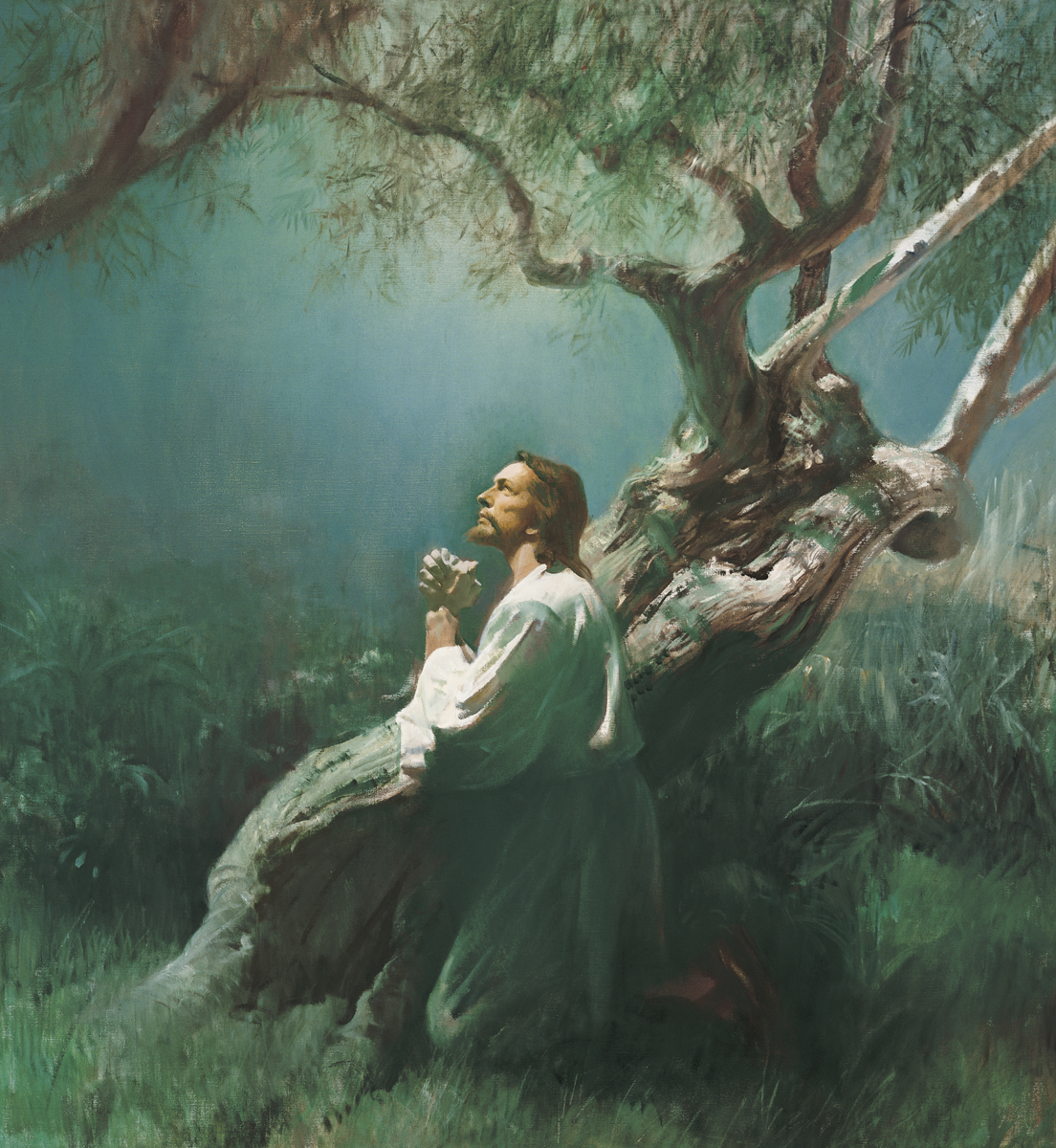
Kneeling at the CrossScripture Text: Mark 8: 31-38

31Then he began to teach them that the Son of Man must undergo great suffering, and be rejected by the elders, the chief priests, and the scribes, and be killed, and after three days rise again. 32He said all this quite openly. And Peter took him aside and began to rebuke him. 33But turning and looking at his disciples, he rebuked Peter and said, “Get behind me, Satan! For you are setting your mind not on divine things but on human things.”  34He called the crowd with his disciples, and said to them, “If any want to become my followers, let them deny themselves and take up their cross and follow me. 35For those who want to save their life will lose it, and those who lose their life for my sake, and for the sake of the gospel, will save it. 36For what will it profit them to gain the whole world and forfeit their life? 37Indeed, what can they give in return for their life? 38Those who are ashamed of me and of my words in this adulterous and sinful generation, of them the Son of Man will also be ashamed when he comes in the glory of his Father with the holy angels.”

So many of us are like Peter. We want to “fix” things, to make sure that everything and everyone is safe and alright. We want things to be OK. We want to get this wilderness place cleaned up and ready for show. But that was never part of the promise. I think Peter actually DID understand that Jesus was the Messiah. He just didn’t fully grasp what that meant. For him, the Messiah was here to fix things, to make it all turn out like it was supposed to turn out. And now Jesus was telling them that the way they had thought it would all turn out was not to be, that instead this Messiah, this one who was supposed to make everything right, was to be rejected and would endure great suffering.  “No, this can’t be!” yelled Peter.  This cannot happen.  We have things to accomplish.  We are not done.  This ministry is important. It cannot go away.  You have to fix this. You have to fix this now! We are not ready to do it alone. We are not ready to be without you. 

Now, contrary to the way our version of the Scriptures interprets it, I don’t think Jesus was accusing Peter of being evil or Satan or anything like that.  More than likely, this was Jesus’ way of reprimanding Peter for getting hung up on the values of this world, getting hung up on our very human desire to save ourselves and the way we envision our lives to be, to fix things.  But what God had in store was something more than playing it safe.  I think that Peter, like us, intellectually knew that.  We know that God is bigger and more incredible than anything that we can imagine.  And yet, that’s hard to take.  We still sort of want God to fix things, to make things comfortable, or at least palatable.  We still sort of want God to lead us to victory, to lead us to being the winning team.  Face it, we sort of still want Super Jesus in the story.  And, of course, Peter loved Jesus.  He didn’t even want to think about the possibility of Jesus, his friend, his mentor, his confidante, suffering, of Jesus dying.

You know, there is a danger in our thinking that God is here to make life easier for us, to keep us safe and warm and free from harm. After all, there’s that whole Cross thing that gets in the way. If we think that God came into this world, Emmanuel, God-with-us to make life better or easier or grander for us, then what do we do with a crucified Savior? What do we do with the cross?  Well, let’s be honest, most of us clean it up, put it in the front of the sanctuary, and, sadly, go on with the security of our lives.  So, what does it mean to “take up your cross and follow”? What does it MEAN to follow God not just to the altar where that gleaming, cleaned-up cross sits, but to follow Christ to the hills of Golgotha, to walk with Jesus all the way to the Cross?  I think it means that sometimes faith is hard; sometimes faith is risky; in fact, sometimes faith is downright dangerous. And, to be honest, faith rarely makes sense in the context of the world in which we live. After all “denying ourselves”, “losing our life to save it”, and “letting go to gain” make absolutely no sense to us. They don’t make sense because we are setting our minds on the human rather than the Divine.

There’s a old Gospel song with these lyrics:  (Hear it at https://www.youtube.com/watch?v=Xit39G0lIk4)

Well, woke up this mo’nin with my mind, stayin’ on Jesus

Woke up this mo’nin with my mind, stayin’ on Jesus

Well, woke up this mo’nin with my mind, stayin’ on Jesus

Halleluh, halleleluh, halleleluh


In all probability, none of us will be physically crucified for our faith.  But it doesn’t mean that we should clean it up and put it out for display either.  Sometimes our journey will take us through waters that are a little too deep and torrential; sometimes we will find ourselves bogged down by mud; and sometimes faith takes us to the edge of a cliff where we are forced to precariously balance ourselves until we find the way down.  The promise was not that it would be safe; the promise was that there was something more than we could ever imagine and that we would never journey through the wilderness alone. The promise was that a Savior would come, not to save us from the world or to save us from evil, but to save us from ourselves.

On this Lenten journey, this journey that takes us through the wilderness all the way to that place beyond the wilderness, to the Cross, we are called to follow Christ. We are called to begin to wake up in the morning with our minds “stayin’ on Jesus”. It will not lead you to safety; it will lead you to Life.

He comes to us as One unknown, without a name, as of old, by the lakeside…He speaks to us the same word:  ‘Follow thou me!” and sets us to the tasks which He has to fulfill for our time…And to those who obey, whether they be wise or simple, [God] will reveal {Godself] in the toils, the conflicts, the sufferings which they shall pass through in this fellowship, and, as an ineffable mystery, they shall learn in their own experience Who [God] is.  (Albert Schweitzer)

FOR TODAY:  Put your plans aside.  Let go of the images of God that you have conjured up.  Let go of the notion of a Savior who will fix things.  Close your eyes.  Then wake up…wake up with minds stayin’ on Jesus…all the way through the wilderness of Golgotha to Life.

Grace and Peace,

Shelli