Open Table

Lectionary Passage:  Mark 7: 24-37
To read this passage online, go to http://bible.oremus.org/?ql=213945074.

I love being a United Methodist.  I probably take what could be considered an almost unhealthy sense of pride in the fact that we believe in an open table, that we believe that the Feast of Holy Communion, the Eucharist, is not “Methodist” but is instead an open table to which all are welcome.  It sounds good.  It makes us sound like a community in which one would want to be.

But this week’s Gospel reading begins to make us squirm a bit.  After all, we look to Jesus for this model of open invitation, for the depiction of compassion and mercy to which we all aspire.  And then we read this.  I mean, really, is he calling her a “dog”?  Now, with apologies to Maynard, my four-legged roommate, this was NOT a nice thing to say.  And yet, remember, Jesus understood his mission (in fact, EVERYONE understood his mission) as Messiah, the one promised to the chosen people.  Jesus’ mission was to the people of Israel.  There was nothing bad or closed-minded about that; that’s the way it was. So does that mean that this passage depicts a turning point, a veritable transformative moment for even Jesus?  Well, that’s bothersome.  After all, if Jesus needed transformation, where does that leave us?

Well, really, did we think that Jesus was just plunked down on this earth in ready-to-wear form?  After all, remember, he was human, “fully human” we are told.  Transformation is part of our humanity, being transformed is how we become fully human, fully made in the image of God.  It is how we become who we are supposed to be.  Maybe that was the point.  Maybe Jesus was not pushing us at all here, but leading us out of the box that we have built, leading us to who God calls us to be.  Maybe Jesus was showing us that even well-meaning and well-constructed boxes are meant to come crashing down when the time is right.  And the time was right.  This was not a diminishment of Jesus’ power; it was an expansion.  At this moment, the mission began to move and God’s Kingdom began to spread beyond the tight shores of the Galilean Lake and into the Decapolis region.  The Kingdom of God was at hand!

God cannot be contained.  Perhaps this story was Jesus’ realization and affirmation of that very notion.  After all, if Jesus experienced transformation, we are called to do the same.  Once again, Jesus takes a cultural norm (actually several of them!) and turns them on their ear.  It was his awakening to a new reality.  And it was the impetus that pushed the morality police known as his Disciples right out of the box with him.  The walls crash down, the table is set, and all are invited.  Come and feast with your Lord!

But it’s still a hard Scripture.  I mean, really, who did this foreign nameless immigrant think she was?  She was the voice, a voice for all foreign nameless immigrants that dare to claim their crumb at the table, that dare to go where God calls.  You see, the table is really open–not merely to us but by us.  We are the inviters, the ones transformed by relationships with “them”.  What do you bring to the table?  And who do you invite to sit down with you and share the bread and drink the cup?  Who belongs in the Kingdom of God? The Body of Christ given for you. The Blood of Christ poured out for you. And you and you and you and you and you and you and you…..Well, you get the idea.  Did we think this was about us?

Go therefore and make disciples of all nations, baptizing them in the name of the Father and of the Son and of the Holy Spirit, and teaching them to obey everything that I have commanded you.  And remember, I am with you always, to the end of the age. (Matthew 28: 19-20, NRSV)

Grace and Peace,

Shelli

Dancing in the Rain

Image from “Singing in the Rain” (1952)
(with Gene Kelly)

Lectionary Passage:  John 6: 1-21
To read this passage online, go to http://bible.oremus.org/?passage=John+6:1-21&vnum=yes&version=nrsv

We love this story.  (And they must have loved it in the first century because the writers of all four gospels chose to include it their unique account of the Good News of Jesus Christ.) Yes, we like the notion of Jesus providing everything we need, bursting in just when we are at the end of our ropes, just when we need help the most, and fixing the ails of our life (or at least feeding us lunch!).

But notice (don’t you hate that…yes, I’m about to ruin your image of super-hero Jesus pulling lunch out of a hat or whatever we thought he did!) that the story never says that the boy’s lunch was the ONLY food there.  Perhaps there were some people holding back what they had brought, afraid to offer it for community consumption because, after all, what if they ran out?  What if they needed it tomorrow or the next day or after they retire?  So, perhaps the miracle lies not in some sort of image of Jesus creating something from nothing but rather in the little boy himself.  He was first, freely offering what he had to Jesus and the Disciples to do whatever they needed to do with it.  Now, note what was in the little boy’s lunch–barley bread and fish.  Barley is a very inexpensive and somewhat “unglamourous” grain and fish were plentiful.  After all, they were right next to this huge lake.  (Just to get it in your head, the “Sea” of Galilee is actually a huge lake.)  In other words, this was the lunch of the poor.  The little boy was more than likely not from a family of means.  Perhaps his mom had lovingly packed all they had into his lunch so that her son could have this experience of seeing this great man Jesus of whom they had only heard.  But before that ever happened, the little boy stood and offered everything he had.

And, then, well you know how it goes.  The person next to him saw what he had done, thinking that no longer could he now with a clear conscience keep what he had brought tucked away.  And then the person next to that person saw him offer what he had.  It went on and on, a veritable Spirit moving through the crowd.  The message is right.  It WAS a miracle!  And when they had finished eating, they realized that it wasn’t that there was enough for all.  There was more!  There were leftovers that were then gathered into baskets.  Maybe they were for later.  Maybe they were for those who needed it.  Or maybe they were offered as holy doggie bags to remind us that God always gives us way more than we really need. 

So what about those of us who feel that we need to be prepared for the next storm that is coming around the bend?  Well, keep reading.  The passage goes on to say that the disciples started across the lake in the darkness.  And, sure enough, the storm began to rage–blowing winds, crashing waves, beating sheets of rain bearing down upon them.  Wouldn’t you know?  See, this is what we were afraid of!  But, there is Jesus.  “Do not be afraid.  Do not be afraid.”  What is interesting is that the account never says that Jesus calmed the storm.  Jesus calmed the disciples.  Jesus reminded the disciples that no matter what, no matter how hungry or unprepared they are, no matter what storms come up unexpectedly, they are not alone.  It is truly a story of extraordinary abundance.

I was going to write today on the David and Bathsheeba story but I got up early this morning to get a drink of water.  And standing at the window in my kitchen, I saw the words on a plaque I have on the window sill:  “Life isn’t about waiting for the storm to pass.  It’s about learning to dance in the rain.”  (I looked it up and the quote is attributed to Vivian Green.)  It’s a great thought.  Jesus is not a super hero that performs unexplainable miracles or plucks us out of the storms of life.  Jesus is much more.  When the storms come, when the winds rage, and when we just think we just don’t have enough for what’s coming, God invites us to dance, holding us until we find the rhythm that is deep within us and know the steps ourselves.

So, keep dancing!

Grace and Peace,

Shelli

For those of you who are reading this through the St. Paul’s ESPACE link, welcome!  And for those who get this as a “blog” email, yes, I’m finally back!  I’m going to try to maybe do this 2-3 times a week.  Keep on me!  🙂  Shelli

LENT 1B: Reordering Chaos

Lectionary Passage:  Genesis 9: 8-13 (14-17)
Then God said to Noah and to his sons with him,“As for me, I am establishing my covenant with you and your descendants after you,and with every living creature that is with you, the birds, the domestic animals, and every animal of the earth with you, as many as came out of the ark. I establish my covenant with you, that never again shall all flesh be cut off by the waters of a flood, and never again shall there be a flood to destroy the earth.”  God said, “This is the sign of the covenant that I make between me and you and every living creature that is with you, for all future generations:  I have set my bow in the clouds, and it shall be a sign of the covenant between me and the earth.

OK, so I’ve dusted off my little greenish translucent marble thing and it’s sitting here beside me.  According to what I told the world in yesterday’s blog, this is supposed to remind me how much I’m cherished by God.  So why do I feel like I’m drowning?  Why do I feel mired in chaos?  Why do I sometimes wish, just for a moment, the world would stop?  Enter…the ark.  I wonder how I would fare on an ark.  I used to like sailing–the wind in my hair, the sun on my face, the coolness of Galveston Bay when the sun on my face got to be too much, and the smell of fried shrimp and hushpuppies as we sailed back into Kemah.  But, somehow, I’m thinking it looked different.  Personally, it sounds pretty chaotic to me–howling elephants, uncontrollable zebras (I hear they’re not that well-behaved), and a vast array of odd amphibious creatures that I don’t even know.  Good grief, I can barely handle one 85-lb. black lab that eats Bibles, puts the throw pillows underneath the cushions on the loveseat, and turns down the covers on the bed and burrows underneath them before I can get in.  Chaos seems to abound whether or not you own an ark…

This passage is actually the end of a really long story that most of us know.  You know…Noah gets wind (pun intended!) of one of those severe weather warnings and is told to pack up the ark with all the earth’s animals and then he and this holy menagerie sail around until the rain stops and the water subsides.  And then they begin to load off the ark.  Who knows what they would find?  And, finally, God speaks.  God makes a promise.  This will not happen again.  In fact, the earth will be made anew.  All of creation will be made anew, recreated.  Chaos has not been wiped out.  It has been reordered.  It has been recreated into life.  It’s not a new Creation as in a DIFFERENT one .  God doesn’t erase the chalkboard and begin rewriting history.  Rather, God takes what is there and makes it new, gives it life.

So why does chaos abound?  Why is life still sometimes filled with darkness and despair that almost chokes it away?  Why does my greenish translucent marble thing even get dusty at all?  Maybe it’s because if life were easy, we’d never look at the rainbow.  You see, this story is not about the ark. It’s not about the flood.  I don’t even think it’s about human sinfulness or chaos.  It’s about the promise.  God stretched a bow across the darkness to remind us that it is hope and life, rather than sin and darkness, that are the permanent reality.

In this Lenten season, we will often find ourselves surrounded by darkness.  We may find ourselves mired in despair.  We might somehow turn up on a road that we never intended to travel.  In fact, sometimes we find ourselves in hell.  But these are never the final word.  Even when tales of a place called Golgotha begin to swirl around us, there is always something more.  When we come to the end, God will be there to beckon us into the arms of grace that we might begin again.  God has promised recreation.  But, you see, we have to let go of the chaos.  And maybe THAT’S the point of this Lenten journey.

So, continuing with our act of giving up so that we can take on, on this second day of Lent, let go of chaos.  Spend 15 minutes (just 15 minutes!) and sit down and listen to the sounds of Creation being recreated.

Grace and Peace on this Lenten Journey,

Shelli
Not only is another world possible, she is on her way.  On a quiet day, I can hear her breathing. (Arundhati Roy)

Grace and Peace on Your Lenten Journey,

Shelli    

ADVENT 4B: The Holiest of Words

Lectionary Gospel Text:  Luke 1: (26-27) 28-38
And he came to her and said, “Greetings, favored one! The Lord is with you.”But she was much perplexed by his words and pondered what sort of greeting this might be. The angel said to her, “Do not be afraid, Mary, for you have found favor with God. And now, you will conceive in your womb and bear a son, and you will name him Jesus. He will be great, and will be called the Son of the Most High, and the Lord God will give to him the throne of his ancestor David. He will reign over the house of Jacob forever, and of his kingdom there will be no end.” Mary said to the angel, “How can this be, since I am a virgin?” The angel said to her, “The Holy Spirit will come upon you, and the power of the Most High will overshadow you; therefore the child to be born will be holy; he will be called Son of God. And now, your relative Elizabeth in her old age has also conceived a son; and this is the sixth month for her who was said to be barren. For nothing will be impossible with God.”Then Mary said, “Here am I, the servant of the Lord; let it be with me according to your word.” Then the angel departed from her.

Of course, this was not in the plan.  She was supposed to get married, have children, and live our her life in quiet anonymity with the quiet and little-known Joseph.  She knew what her life was going to hold. So, when God’s Presence suddenly is revealed, breaking into her quietly-orchestrated little world, of course she was afraid.  After all, things were never going to be the same.  There would be no going back and the way forward was murky at best.  And so, Mary hesitates, if only for a moment.  The angel, God, all of Creation, the existence of all who would come after her, hangs, suspended, not moving.  The world stops, straining to hear the Word. Things would never be the same again.  History was at this moment shifting and swaying, not sure of what it would become.  So, she takes a breath–one last breath as the quiet girl Mary.  And with a voice that shakes all of eternity, she responds, “Here am I, the servant of the Lord; let it be with me according to your word.”  “YES.”  Nothing would ever be the same again.

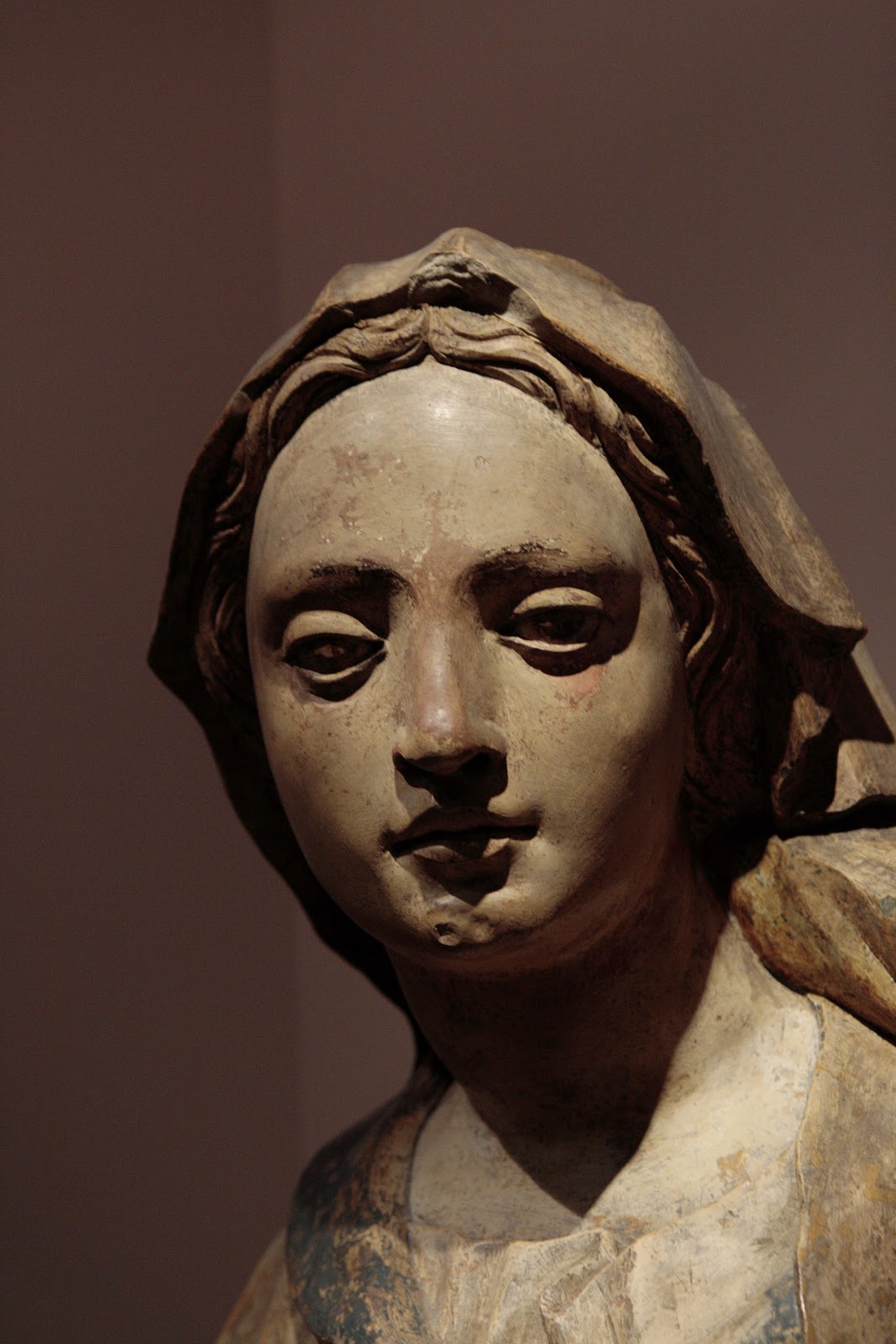
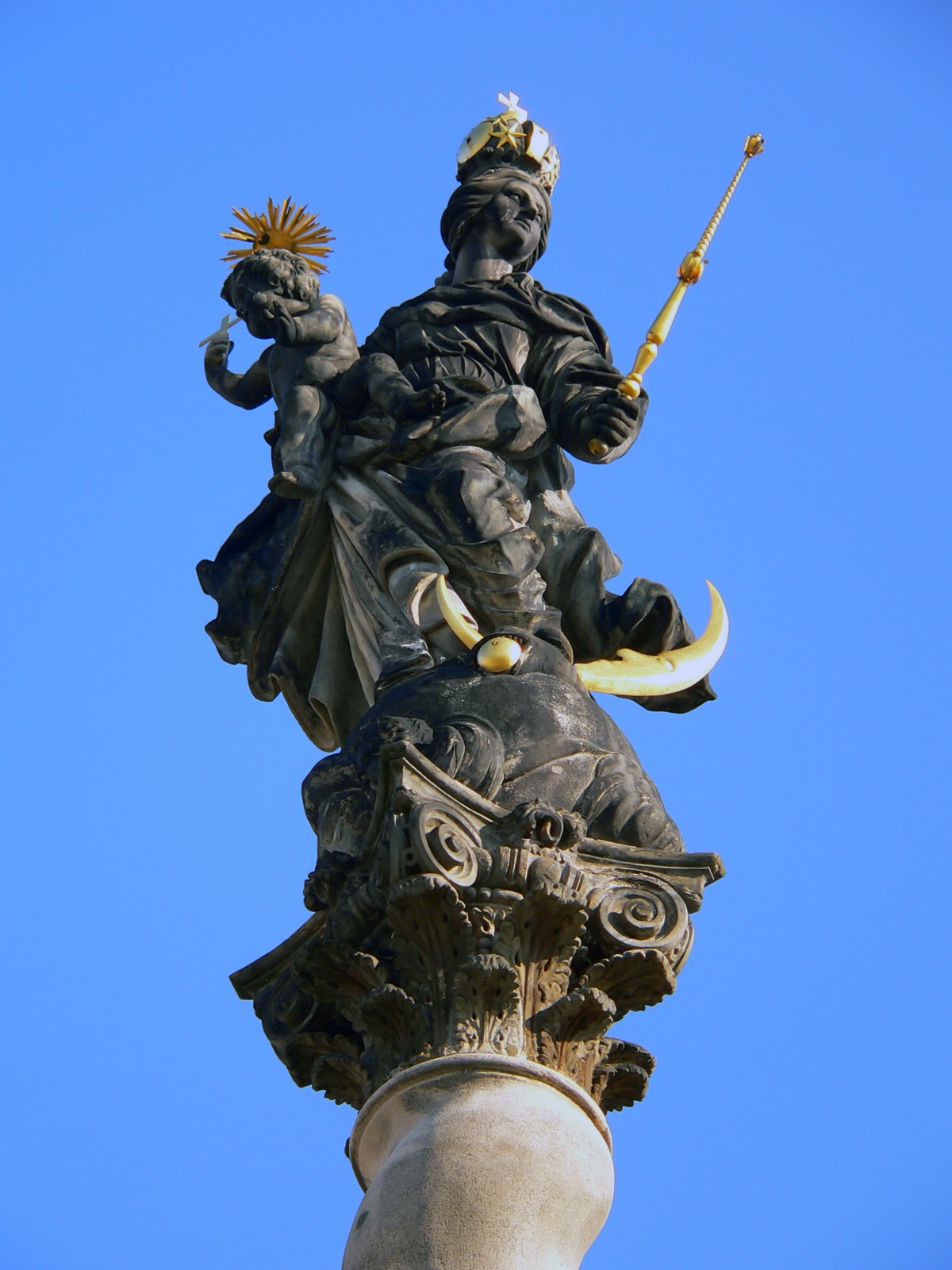
On some level, the word “Yes” is perhaps the holiest word of all. It is what changes things; it is what moves us forward; it is our response on this journey that we call faith; it is our way to God.  God calls us, asking us to go a different way, to change our lives and shift our plans, and for one step, or one lifetime, or one eternity, to follow a sacred road that we did not see before.  For this child Mary, when the mystery of God broke into her consciousness, into her plans, she probably did hesitate.  Good grief, who wouldn’t?  Don’t you think God expects that to be our initial response?  I mean, you’d have to be completely naive or so incredibly self-absorbed and arrogant to not know what was happening to you.  But Mary was anything but naive and nothing near arrogant.  She DID know.  Oh, not the details.  She didn’t know how this would alter not only her world, not only her community, but all worlds and communities that ever were and ever would be. She didn’t know how difficult and frustrating her life would be.  She didn’t know that a little more than three decades later, she would be standing at the foot of two cross-boards helplessly watching this life that she was bringing into the world slip away.  She didn’t know how incredibly blessed she would be.  She didn’t know what she would become–the lovely subject of artists and sculptors, the namesake of great cathedrals and small house churches, the mother of the world.  She didn’t know.  She just knew that it was the way that was hers.  So, yes. “Here am I, the servant of the Lord; let it be with me according to your word.”

Christmas Eve is only a week away, when the wildly spinning world will stop, if only for a moment and once again welcome hope and peace into the world.  But that moment is not the holiest one.  The holiest moment of all is the one that comes next, the one that after the initial hesitation, after the initial, “How can this be?”, when we put down our carefully-packed baggage filled with plans and preconceptions, when we open our closed minds and and our cynical hearts, and become virgin enough to birth the Christ into our little world.  It is the moment when we say “Yes”, knowing that it will change us forever. “Here am I, the servant of the Lord; let it be with me according to your word.”

When I find myself in times of trouble, Mother Mary comes to me
Speaking words of wisdom, let it be
And in my hour of darkness she is standing right in front of me
Speaking words of wisdom, let it be
Let it be, let it be, let it be, let it be
Whisper words of wisdom, let it be

And when the broken hearted people living in the world agree
There will be an answer, let it be
For though they may be parted, there is still a chance that they will see
There will be an answer, let it be
Let it be, let it be, let it be, let it be
There will be an answer, let it be
Let it be, let it be, let it be, let it be
Whisper words of wisdom, let it be
Let it be, let it be, let it be, let it be
Whisper words of wisdom, let it be

And when the night is cloudy there is still a light that shines on me
Shine until tomorrow, let it be
I wake up to the sound of music, Mother Mary comes to me
Speaking words of wisdom, let it be
Let it be, let it be, let it be, yeah, let it be
There will be an answer, let it be
Let it be, let it be, let it be, yeah, let it be
Whisper words of wisdom, let it be

(“Let it Be”, Words by John Lennon and Paul McCartney, 1970)

http://www.youtube.com/watch?v=0X_Gd1y2MFo&feature=related

“Here am I, the servant of the Lord; let it be with me according to your word.”

 
In this season of Advent, give yourself the gift of being virgin enough to move forward, of being open to birthing the Christ into your life, of forming the holy and the sacred on your lips and then speaking the “Yes” that God and the whole world is waiting for you to speak.

Grace and Peace,

Shelli

A Call to Revolution

Scripture Text:  Luke 1:45-55
And blessed is she who believed that there would be a fulfillment of what was spoken to her by the Lord.”And Mary said, “My soul magnifies the Lord,and my spirit rejoices in God my Savior,for he has looked with favor on the lowliness of his servant. Surely, from now on all generations will call me blessed; for the Mighty One has done great things for me, and holy is his name.His mercy is for those who fear him from generation to generation. He has shown strength with his arm; he has scattered the proud in the thoughts of their hearts. He has brought down the powerful from their thrones, and lifted up the lowly; he has filled the hungry with good things, and sent the rich away empty. He has helped his servant Israel, in remembrance of his mercy, according to the promise he made to our ancestors, to Abraham and to his descendants forever.”

It’s called The Magnificat or the Song of Mary.  It is a young girl’s realization that life will never be the same again, her affirmation that God has called her to be a part of something that will turn the world upside down.  Our Christian tradition has probably overly-domesticated the image of Mary a bit, giving her characteristics of one who is young and meek and downtrodden, a scared young girl that became the mother of Christ.  But these words are not meek; in fact, they are downright radical for the first century and for us today.  It is a call to take those who are on top–the rich, the haughty, the successful, the powerful and bring them down.  It is a call to elevate those who are poor, hungry, the very bottom of our society.  Who are we kidding?  In our burgeoning political climate, this is NOT the way to get elected.  This is NOT the way to gain support.  This is anything but politically correct.  In fact, this is a call to revolution.  I’m betting these words will not show up in any of the 584 presidential debates (doesn’t it seem like there are about that many?) between now and next November.

E. Stanley Jones calls The Magnificat, “the most revolutionary document in the world”.  It is said that this document terrorized the Russian Czars.  In fact, for a time during the 1980’s, the government of Guatemala banned its public recitation.  After all, if someone actually paid attention to this stuff, who knows what could happen?  Why, this might be downright dangerous to our acceptable of way life!You know, I think that’s the point.  We are called to DO something. We are called to pay attention. We are called to no longer accept society’s “acceptable” way of life.  The Christian movement did not begin as a comfortable and affirming religious tradition of the majority.  Just like we have domesticated and calmed our image of Mary, we have done the same with our tradition.  You see, Christianity began as a revolution, a revolution against the way the world rewards money and status and power, against the way the world leaves behind those that do not have the resources to care for themselves, and against the way the world sets up standards and rules for the way things should be.  It is a revolution against a world that has lost its sense of grace and compassion and justice.  It is a revolution that followed the Way of Christ.  After all, if someone actually paid attention to this stuff, who knows what could happen?

In this Season of Advent, we are becoming more and more aware of the mystery of God’s Presence and God’s Love that is even now breaking into our way of being.  God With Us, Emmanuel, was not born into our little world to tell us what a stupendous job we are doing!  God came, born as one of us, to show us the Way to something different, to call us into revolution.  Where are you now?  How full do you feel today?  How can you be ready to birth God into your life when you are so full of this world?
 
In this season of Advent, give yourself the gift of answering the call to revolution, of being hungry enough to be filled with God.

Grace and Peace,

Shelli


How Can This Be?

We are told over and over in the Scriptures “do not be afraid” or “be not afraid” or “do not fear”.  Well, in my humble experience of the Bible, it strike me that when God or an angel or some other instrument uses these words, one should be extremely concerned!  After all, God is preparing you for something really big.  The world as you know it will start shaking and quaking and the foundation that you’ve so carefully built for yourself will become mere quicksand.  Nothing will ever be the same again.

But of all the “be not afraids” in the Bible, surely the one to a young Galilean girl at the beginning of what we now call the “first century” takes the cake!  “Excuse Me, Mary, I have something for you to do.  I’d like you to give birth to a son even though you haven’t married Joseph yet and even though none of your family or your friends or your community will understand it and even though the world will struggle with this birth so much that it will initially not end well, and, oh yeah, there’s one other small little detail…you will be essentially birthing the salvation of the world!  But, do not be afraid!  So, let me know what you think!”  I think Mary’s initial response (as its translated in our Scriptures) is one of the most profound phrases ever:  “How can this be?” It is the question of faith.  Because, you see, it CAN’T be–not without God and, interestingly enough, not EVEN without Mary.

But in Mary’s defense, she had other preconceptions working against her. (Oh…so we’re not the only ones with that problem!)   There is a folktale that is told in the Book of Tobit (you’ll find it in the Apocrypha) that tells of a jealous angel who would appear on a bride’s wedding night each time she married and killed her bridegroom.  This story, of course, was probably part of the culture in which Mary lived.  So, don’t be afraid?  Good grief…she was terrified!  But she listens to the reassurance that she is given and take it “under advisement”.

And then God waits…(boy, God’s good at waiting–maybe THAT’S part of the lesson!)…God waits patiently for Mary to respond.  The world hangs suspended if only for a time, its very salvation teetering on the brink of its demise.  Oh, sure, if Mary said no, God could have gone to someone else.  God could have found SOMEONE to birth the salvation of the world.  But it wouldn’t have been the same.  After all, the Divine did not just plunk a far-removed piece of the Godself into a womb.  Our understanding is that, yes, the Christ was fully Divine; but Jesus was “born of a woman”, fully human and, as a human, Jesus carried Mary’s unique and specific DNA with him.  Mary was not just a container through which God came into this little world.  Mary’s DNA, Mary’s response, Mary’s “how can this be?”, Mary’s “yes” is all through the salvation of the world.

So, how can this be?  I do believe in the omnipotence of God.  But I also believe that God, in God’s infinite wisdom, chose to give up part of that power.  It’s called free will.  God gave a piece of the Godself to each of us that we might choose to respond in faith.  How can this be?  Certainly not without God and not even without us.  Our faith journey is a partnership with God, a dance between the human and the Divine.  And so God waits…How can this be?…Only if you respond.  Remember, Mary said “yes” and the Divine began to spill in to the womb of the world.  Salvation began. 

In this season of Advent, give yourself the gift of responding to the God that calls you to birth part of the earth’s salvation.  How can this be?  I don’t know…it’s your calling!  What is your response?

Grace and Peace,

Shelli

And They Took Joseph to Egypt

Lectionary Text:  Genesis 37: (1-4, 12-22) 23-28:
So when Joseph came to his brothers, they stripped him of his robe, the long robe with sleeves that he wore;and they took him and threw him into a pit. The pit was empty; there was no water in it.Then they sat down to eat; and looking up they saw a caravan of Ishmaelites coming from Gilead, with their camels carrying gum, balm, and resin, on their way to carry it down to Egypt.Then Judah said to his brothers, “What profit is it if we kill our brother and conceal his blood?Come, let us sell him to the Ishmaelites, and not lay our hands on him, for he is our brother, our own flesh.” And his brothers agreed.When some Midianite traders passed by, they drew Joseph up, lifting him out of the pit, and sold him to the Ishmaelites for twenty pieces of silver. And they took Joseph to Egypt.

And they took Joseph to Egypt…so matter-of-fact, so simple, so explanatory.  But far from being merely historical data, this six word sentence represents a turning point in the story.  With these words the Genesis story turns the corner, moving from a story of a somewhat dysfunctional family as their lives are intricately woven with the breath of God to the story of a people growing into God’s people.  We begin to prepare for the Exodus story.  Nothing will ever be the same again.  We know what is to come–slavery, plagues, wilderness, and, finally, deliverance, redemption.  This is the stuff of transformation.

When this Scripture (sorry, I cut off the first part!) was read this morning, I was struck by these words.  I know that I’ve passed them over time and time again. After all, this is an important story and there’s a lot to grasp–favorite sons, dreams, beautiful coats, family squabbles, murder, intrigue, conspiracy, enemies, slavery, lies.  (And just for the record, I would like it to be noted that no matter what I did to my brother Donnie growing up, I NEVER sold him into slavery!)  And then you take a breath and, oh yeah, “and they took Joseph to Egypt.”  What struck me is how similar those words are to some others:

Text:  Matthew 17: 1-9
Six days later, Jesus took with him Peter and James and his brother John and led them up a high mountain, by themselves.And he was transfigured before them, and his face shone like the sun, and his clothes became dazzling white.Suddenly there appeared to them Moses and Elijah, talking with him.Then Peter said to Jesus, “Lord, it is good for us to be here; if you wish, I will make three dwellings here, one for you, one for Moses, and one for Elijah.”While he was still speaking, suddenly a bright cloud overshadowed them, and from the cloud a voice said, “This is my Son, the Beloved; with him I am well pleased; listen to him!”When the disciples heard this, they fell to the ground and were overcome by fear.But Jesus came and touched them, saying, “Get up and do not be afraid.”And when they looked up, they saw no one except Jesus himself alone.As they were coming down the mountain, Jesus ordered them, “Tell no one about the vision until after the Son of Man has been raised from the dead.”

Today is the Feast of the Transfiguration.  When I realized that earlier this week, I thought it was just odd.  I mean, really, don’t we celebrate that right before Lent begins?  But the abrupt ending to today’s Old Testament Scripture made me think a little bit more about it.  In this Matthean account of the Transfiguration, the writer has Jesus and the disciples headed down the mountain.  They were talking.  Jesus warned them to be quiet about what they had just seen.  And in the same breath, he gave them a foretaste of what would come.  So, we have Jesus walking down the mountain.  Where is he going?  He’s going to Jerusalem.  And we know what happens there.  This is the turning point.  There is no going back.  A new way of being has begun.

And they took Joseph to Egypt…And they took Jesus to Jerusalem.

We all have Egypts.  We all have Jerusalems.  They are those watershed moments in our lives that are bumpy and rough and uncomfortable.  They are that way because it means that we have changed.  We have been through a transition; we have been transformed; we have been transfigured into something else.

We don’t know what Monday morning will hold for our economy.  There are those who will say that our “best years” are behind us, those who yearn for the 40’s and the 50’s when the United States was “on top of the mountain.”  Really?  I’m pretty clear that our African-American brothers and sisters will disagree with you.  Are our “best years” the ones in which only some of us are on top?  That’s sad.  I don’t think so.  Perhaps we’re being sold to Egypt.  I don’t know.  Maybe we’ve got a long wilderness ahead.  Maybe we are walking down that mountain headed for who knows what.  Maybe we will find ourselves in Egypt.  Maybe we will find ourselves in Jerusalem.  Maybe we will find ourselves enslaved by something we never saw coming or crucified by those who want to maintain things the way they are.  Maybe there is a rough road ahead.  Maybe not.  Maybe our stocks will pop back up tomorrow and everything will be hunky dory.  Maybe not.  Whatever happens, we are in the midst of change. The road to change is not always an easy one.  But somewhere on that road, we will find transformation.  We will find deliverance.  We will find redemption.  But right now we’ve got to come down from the mountain…After all, I think it’s WAY too cloudy to see what’s going on up here.  (Hmmm!  Maybe that’s our whole problem.)

And they took Joseph to Egypt…and you know what?  No one was ever the same again.  We’ve been to the mountaintop…now is the time to move on.

Grace and Peace,

Shelli