The Winds of Change

Wheat and WindsScripture Text:  John 12: 20-36 (Holy Tuesday)

Now among those who went up to worship at the festival were some Greeks. They came to Philip, who was from Bethsaida in Galilee, and said to him, “Sir, we wish to see Jesus.” Philip went and told Andrew; then Andrew and Philip went and told Jesus. Jesus answered them, “The hour has come for the Son of Man to be glorified. Very truly, I tell you, unless a grain of wheat falls into the earth and dies, it remains just a single grain; but if it dies, it bears much fruit. Those who love their life lose it, and those who hate their life in this world will keep it for eternal life. Whoever serves me must follow me, and where I am, there will my servant be also. Whoever serves me, the Father will honor.  “Now my soul is troubled. And what should I say—‘Father, save me from this hour’? No, it is for this reason that I have come to this hour. Father, glorify your name.” Then a voice came from heaven, “I have glorified it, and I will glorify it again.” The crowd standing there heard it and said that it was thunder. Others said, “An angel has spoken to him.” Jesus answered, “This voice has come for your sake, not for mine. Now is the judgment of this world; now the ruler of this world will be driven out. And I, when I am lifted up from the earth, will draw all people to myself.” He said this to indicate the kind of death he was to die. The crowd answered him, “We have heard from the law that the Messiah remains forever. How can you say that the Son of Man must be lifted up? Who is this Son of Man?” Jesus said to them, “The light is with you for a little longer. Walk while you have the light, so that the darkness may not overtake you. If you walk in the darkness, you do not know where you are going. While you have the light, believe in the light, so that you may become children of light.” After Jesus had said this, he departed and hid from them.

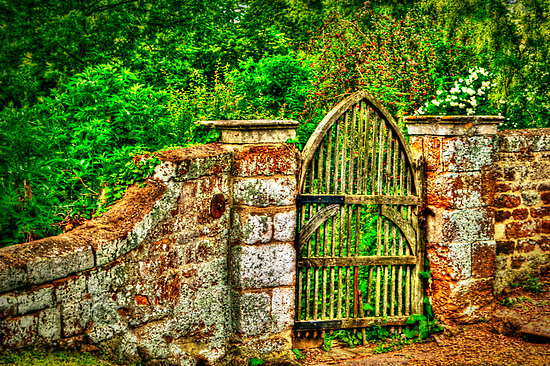
And now the conversation turns to this talk of death and loss.  We’d like to run now, to hastily make our exit back through that heavy gate behind us.  We’re not sure that our journey really prepared us at all.  But it is too late.  The hour has come. 

The reading starts by telling us of the arrival of some Greeks. Now this may seem to us to be sort of periphery to the point of the story but it’s not. For you see, this arrival of the Greeks is something new. It marks the beginning of an entirely new section of the Gospel. These are not merely Greek-speaking Jews, but Gentiles who have made the pilgrimage to Jerusalem for the Passover feast. These are non-Jews, Gentiles from across the sea who wanted to meet the Hebrew holy man. This is the beginning of the world seeing Jesus and knowing who he is.  They approach Philip and request to “see” Jesus, to have a meeting with him. Perhaps they want to know more of who this Jesus is. Perhaps they just want to talk to him. Or perhaps they want to become disciples. But regardless of why they are here, their arrival points to the fulfillment of the church’s future mission—to make disciples of Jesus Christ for the redemption of the world. This is the decisive dividing line between Jesus coming as a Jewish Messiah and Christ, through his death and resurrection, fulfilling God’s promise for the renewal and redemption of all of Creation. Now is the time for the Son of Man to be glorified.  Jesus did not just come to save you and me.  Remember, Jesus is the Savior of the World.  Jesus has begun to draw the world into the Cross.

Change is all around us.  Our world is beginning to shake a bit.  Sure, we could run, go back to our old ways, to the comfort and safety of home.  We could yell and scream and demand that someone put it back the way it was.  The problem is that nothing stays the same.  Even if we could return, it would not feel like home.  For you see, this journey has changed us.  We have lived this season of clearing and surrender.  We are different.  We don’t look different but we do see differently.

But what is this thing with wheat?  (OK, to the end, Jesus seemed to continue speaking in confusing parables!)  Well, wheat is a caryopsis, meaning that the outer “seed” and the inner fruit are connected. The seed essentially has to die so that the fruit can emerge. If you were to dig around in the ground and uproot a stalk of wheat, you would not find the original seed. It is dead and gone. In essence, the grain must allow itself to be changed.  So what Jesus is trying to tell us here is that if we do everything in our power to protect our lives the way they are—if we successfully thwart change, avoid conflict, prevent pain—then at the end we will find that we have no life at all.  He goes on…”Those who love their life lose it, and those who hate their life in this world will keep it for eternal life. Whoever serves me must follow me, and where I am, there will my servant be also. And whoever does this, God will honor.” This is the only time that the Gospel speaks of God honoring someone. And we begin to see the connection unfolding. Whoever follows Jesus through his death, will become part of his everlasting life.

You, we can’t go back to what we know because it is not longer ours.  The Light has become part of us.  Jesus wanted us to understand not just that he was leaving, not just that his death was imminent, but that this journey to the cross was not just his to make, but ours. This lifting up and this drawing in is all ours.  We ARE the Children of the Light.  Now is the time to walk with Jesus to the cross.

Discipleship is not limited to what you can understand – it must transcend all comprehension. Plunge into the deep waters beyond your own understanding, and I will help you to comprehend. Bewilderment is the true comprehension. Not to know where you are going is the true knowledge. In this way Abraham went forth from his father, not knowing where he was going. That is the way of the cross. You cannot find it in yourself, so you must let me lead you as though you were a blind man. Not the work which you choose, not the suffering you devise, but the road which is contrary to all that you choose or contrive or desire – that is the road you must take. It is to this path that I call you, and in this sense that you must be my disciple. (Martin Luther)

This Lenten journey was not preparing us for this by building us an armor to protect us.  It was preparing us by stripping away all that we know, all that we have planned.  It was preparing us to truly see Jesus and to realize that the journey to the Cross is not something that we watch, not something that we just walk along offering Jesus moral support; rather, the journey to the Cross is ours.  What does it mean to you to die to self?  Of what do you need to let go?  What must you put down so that you can pick up the Cross?  The air has changed.  Jesus is walking to the Cross.  Where are you?

Grace and Peace,

Shelli

Seeing What is Hidden From View


The Wizard of Oz (Revealed)

Scripture Passage:  John 9: 1-12 (13-41) (Lent 4A)

As he walked along, he saw a man blind from birth. His disciples asked him, “Rabbi, who sinned, this man or his parents, that he was born blind?” Jesus answered, “Neither this man nor his parents sinned; he was born blind so that God’s works might be revealed in him. We must work the works of him who sent me while it is day; night is coming when no one can work. As long as I am in the world, I am the light of the world.” When he had said this, he spat on the ground and made mud with the saliva and spread the mud on the man’s eyes, saying to him, “Go, wash in the pool of Siloam” (which means Sent). Then he went and washed and came back able to see.  The neighbors and those who had seen him before as a beggar began to ask, “Is this not the man who used to sit and beg?” Some were saying, “It is he.” Others were saying, “No, but it is someone like him.” He kept saying, “I am the man.” But they kept asking him, “Then how were your eyes opened?” He answered, “The man called Jesus made mud, spread it on my eyes, and said to me, ‘Go to Siloam and wash.’ Then I went and washed and received my sight.” They said to him, “Where is he?” He said, “I do not know.”

Go and wash.  It sounds so simple.  So there must be something fishy about it, right?  Inherently, we are just distrusting creatures, are we not? It’s interesting that the first thing that people address here is sin. The man has been apparently blind from birth and their first thought is sin? Did he commit the sin? What an odd question! Was he supposed to have committed some sin in the womb that was apparently terrible enough to blind him for life? Or did his parents sin? It’s an odd line of questioning to us. They see a man that has missed out on so much of what life holds, that has never seen what you and I take for granted every day, and they immediately want to know what he did wrong or what his parents did wrong to deserve that.  (Ok, now don’t get too self-righteous about our own reaction.  We do the same thing.  I mean, what went wrong in that person’s life?  It must have been SOMEONE’S fault.)

But Jesus doesn’t see a sinner; Jesus doesn’t even see a blind man; Jesus sees a child of God. And so he reaches down into the cool dirt and picks up a piece of the earth. He then spits into his hand and lovingly works the concoction into a sort of paste. And then, it says, he spreads the mud into the man’s eyes and tells him to go wash in the Pool of Siloam. And the man’s eyes were opened and he saw what had been always hidden from his view.

We love this story.  But there are so many that ask why we don’t hear accounts of healing such as this.  Maybe it’s because we’re looking for miracles with ordinary eyes, with the eyes of our world that need to explain and extract.  Maybe it’s because we do not see something new.  At the risk of destroying the story for you, does the blindness have to be physical?  It never says that, nor does it say that the blind man was “fixed”‘ or “cured”.  If it wasn’t a physical healing, would that lessen the story?  How miraculous it is for someone to see in a different way, to open one’s vision to what God has envisioned for us.

I couldn’t help (again) but think of the Wizard of Oz.  You see, everyone imagined what they would find–courage, heart, mind, and home–imagined what it would look like, how it would come.  But the curtain was torn back and revealed that the miracle-worker was part of this world.  He was just an ordinary person.  So how could he give them courage, heart, mind, and home?  It had to do with seeing what is hidden from view.

This season of Lent is as much about showing us our blindness, our darkness, as it is about bringing us light. For that is the way we see as God sees. It is a way of seeing anew, seeing beauty we’ve never seen before, seeing the Way of Christ. Rainer Maria Rilke said that “the work of the eyes is done. Go now and do the heart-work on the images imprisoned within you.” That is the work of Lent—to release us from our spiritual blindness, from our old way of seeing, frozen in time, and to light the way for a vision of eternity.  We are called to see that which is hidden from view.  It is the work that allows us to see, finally, what has always been hidden from view.  You see (pun intended), it is time for the heart-work.

There are two ways to live:  you can live as if nothing is a miracle; you can live as if everything is a miracle. (Albert Einstein)

Much of this Lenten journey is about seeing, about seeing through our spiritual blindness, our own often self-imposed darkness.  Now is the time for our heart-work.  What does that look like?  What heals you from your won spiritual blindness?

Grace and Peace,

Shelli

Unmasking

UnmaskingScripture Passage:  2 Corinthians 5: 16-21

From now on, therefore, we regard no one from a human point of view; even though we once knew Christ from a human point of view, we know him no longer in that way. So if anyone is in Christ, there is a new creation: everything old has passed away; see, everything has become new! All this is from God, who reconciled us to himself through Christ, and has given us the ministry of reconciliation; that is, in Christ God was reconciling the world to himself, not counting their trespasses against them, and entrusting the message of reconciliation to us. So we are ambassadors for Christ, since God is making his appeal through us; we entreat you on behalf of Christ, be reconciled to God. For our sake he made him to be sin who knew no sin, so that in him we might become the righteousness of God.

So what does that mean to no longer look at others or even Christ from a human point of view?  I mean, how can we do anything different?  We ARE human.  And we are meant to be human, human as Christ was human, fully human. It means that, once again, we are called not to jump away from this world but to look at things differently, to bring this perspective of this “new creation” into not only our lives but the lives of others as well.  We have been reconciled with God through Christ, according to Paul.  The Divine presence of God has come to dwell with humanity for all.  We have been given that which will sustain us beyond what we perceive as our wants, our desires, and even our needs.

I think that most of us sort of pretend to be human.  We know what is right and good and we try but fear and our need for security seeps in when we least expect it.  So we once again don our masks so that we will look faithful and righteous.  But we read here that we are called to look at everything with a different point of view, something other than a “human” point of view.  It’s about a change in perception.  That’s what this journey does.  It changes our perspective.  Where we once believed in Jesus as the one to emulate, the one who came to bring us eternal life, we now view Christ as the Savior of the world, the one that has ushered the Kingdom of God into everything, even our humanness.  It changes not only the way we view Christ, but also the way we view the world.  We live as if the Kingdom of God is in our very midst–because it is. Our change in perception means that we unmask, that we find our real self, that self that sees Christ’s presence even now and sees all of God’s children as part of that Presence.

Andre Berthiame once said that “we all wear masks and the time comes when we cannot remove them without removing some of own skin.”  In other words, sometimes it is hard and perhaps a little painful, but it is the way to reveal who we are called to be.  No longer do we live our lives with some faint vision of a “someday” or a “somewhere” that is out there and to which we’re trying to journey.  God’s Presence, God’s Kingdom, is here, now.  And as God’s new creation, we see that the air is thick with its presence.  And as God’s children, our very lives are so full with God’s Presence that we can do nothing else but journey with it.

In his book, “Simply Christian“, N.T. Wright contends that “Christians are those who are already living “after death,” since Christ has raised us from the grave.  We ought more properly to speak of the world to come as “life after life after death.”  This is the change in perception.  It is looking beyond, living “as if” the Kingdom of God is here in its fullness, because that is how it will be.  It means that we live open to what God is showing us rather than walking through life with our eyes masked because we already know the way.  There is a story from the tradition of the 4th century Desert Mothers and Fathers that tells of a judge who goes into the desert looking for Abba Moses, who could provide him spiritual direction.  But he returned disappointed, complaining that the only person he met was an old man, tall and dark, wearing old clothes.  And he was told, “that was Abba Moses.”  He had been so affected by his perceptions, his view of what he should find through his human view, that he wasn’t open to all that the Kingdom held for him to learn.  That is what we are called to do on this Lenten journey–change our perceptions, unmask, begin to view our life “as if”, as if the Kingdom of God were already in our midst (because it is.)

There is no creature, regardless creature, regardless of its apparent insignificance that fails to show us something of God’s goodness. (Thomas A’Kempis)

As you journey through this Lenten season, begin to look at things differently.  Rather than limiting yourself to a human view with your pre-conceived perceptions, open yourself to what God is showing you and begin to live “as if”.

Grace and Peace,

Shelli

Re-Patterned

RoundaboutScripture Passage:  Romans 4: 1-5, 13-17 (Lent 2A)

What then are we to say was gained by Abraham, our ancestor according to the flesh? For if Abraham was justified by works, he has something to boast about, but not before God. For what does the scripture say? “Abraham believed God, and it was reckoned to him as righteousness.” Now to one who works, wages are not reckoned as a gift but as something due. But to one who without works trusts him who justifies the ungodly, such faith is reckoned as righteousness…For the promise that he would inherit the world did not come to Abraham or to his descendants through the law but through the righteousness of faith. If it is the adherents of the law who are to be the heirs, faith is null and the promise is void. For the law brings wrath; but where there is no law, neither is there violation. For this reason it depends on faith, in order that the promise may rest on grace and be guaranteed to all his descendants, not only to the adherents of the law but also to those who share the faith of Abraham (for he is the father of all of us, as it is written, “I have made you the father of many nations”) —in the presence of the God in whom he believed, who gives life to the dead and calls into existence the things that do not exist.

We are creatures of habit.  We cling to our patterns of life sometimes for our very identity.  And it is no different with our faith.  Our ways of believing, our ways of worship, our ways of practicing our faith are, for most of us, virtually untouchable.  (If any of you have ever tried to make any changes in a worship service, you know EXACTLY what I’m talking about!)  We are open to change as long as WE don’t have to change.  We are open to doing things differently as long as it doesn’t affect us.  Does that sound a little bit uncomfortably familiar?

The audience to whom Paul was probably writing were really no different.  They had grown up with norms of what was “right” and “righteous”, what made them acceptable before God and as people of faith.  For them, their revered patriarch Abraham was blessed because he followed God and did the right things (which also happened to of course be the things that they were doing).  And now here is Paul daring to write that that’s not what it meant at all, that it had nothing to do with what Abraham did or whether he lived and practiced his faith in the right way but that he had faith in a God that freely offered relationship, in a God that freely and maybe even a little haphazardly offered this relationship to everyone.  Faith is not something that you define or check of your list of “to do’s”; faith is something that you live.

In this Season of Lent, we talk a lot about giving up old ways and taking on new patterns in life.  Lent is a season of re-patterning who we are and how we live.  Maybe it’s a time to let go of the things that we assume, those habits that are so ingrained in us that we don’t even realize that they are there, things that have somehow become so much a part of our lives that they have by their nature changed who we are.  Think of Lent as the season that asks us to drive on the other side of the road.  I remember the first time I did that.  It was in New Zealand.  Now if you’ve been to New Zealand, you understand that the miles and miles of rolling hills patterned only by sheep farms is a good place to learn to drive on the other side.  There is lots of room for “correction”, shall we say.  That wasn’t the problem.  The problem was the more heavily populated areas where we had to deal with other people’s habits and ways of being.  (As in when you had to worry about other people on the road!)  And in the middle of every town was what they call a “round-about”.  It was sort of fun to get on but getting off was a completely different story.  My brain did not work that way.  I couldn’t make myself turn the right way (or the wrong way) while I was driving on what was to me the “wrong” side of the road.  (So, needless to say, we would just drive around that circle several times!)  It was one of the scariest things I’ve ever done.

Paul was trying to get people to look at things differently, to think differently, perhaps even to drive on the other side of the road.  “Leave the old patterns and the old rules and the old ways of thinking behind,” he was saying, and get on.  It’s a little scary and you might have to drive around it a few times.  But just do it.  Open your eyes and look at things differently.  Open your lives to faith.  Oh, don’t get me wrong, our rules and our patterns can help us at times.  They give us foundations, sort of a tangible guide to support us on this journey.  They are necessary.  They are a means of grace.  But the passage reminds us that these rules and foundation are just that.  They are not an end unto themself.  It takes faith to breathe life into them, to make them come alive.  It takes faith to give us the ability to back away from ourselves sometimes and figure out in what ways our life needs to be re-patterned.  (Otherwise, we just keep driving around in circles!)  Lent calls us to look at all of our life with a critical eye, to discern what is purely habit and what is truly a way of living out our faith.  Lent calls us to look at things differently, to really see rather than just assume.  Lent calls us to have enough faith to drive on the other side of the road.

In faith there is enough light for those who want to believe and enough shadows to blind those who don’t. (Blaise Pascal)

As we continue on this Lenten journey, take a look at your habits, at those things that you just take for granted.  Which ones are life-giving?  Which ones hinder faith and openness?

Grace and Peace,

Shelli

Gate

Garden Gate-2


The future enters into us, in order to transform itself in us, long before it happens.  (Rainer Maria Rilke)


Scripture Passage for Reflection:  Isaiah 62: 10

Go through, go through the gates, prepare the way for the people; build up, build up the highway, clear it of stones, lift up an ensign over the peoples.


I heard today that “selfie” is the word of the year for 2013.  Amazing, really, that the most prevalent part of our lives as a people and as a culture has to do with taking a picture of oneself; in other words, the thing that we have elevated to the most descriptive part of who we are is a focus on our selves.  But look, look up ahead!  There is so much out there.  There is beauty that we’ve never seen and things that we’ve never experienced.  There are those that can teach us, those that can lead us, and those that can walk with us.  There is more to us than our selves that we have fabricated, the selves that we think are “photo-ready” for the world.

Once again, we find ourselves standing at the gate of a new year.  We’ve done this before.  We’ve made resolutions and with every part of our being have meant to change our course, to do things differently, or to make our lives better or more fulfilling.  Perhaps our problem is that as we enter the gate each year, we enter something new but we somehow manage to drag our own baggage with us.  We step through the threshold still harboring regrets of past failures or fears for what may lie ahead.  We don’t really want to let go of those selves that we have worked so hard to show to the world.  Our eyes are still inwardly focused.

This gate is a place of liminality, where our eyes are opened to both the past and the future.  It is the place where we connect to both.  Now I don’t think that we can possibly separate one time from the next, nor do we want to.  God has placed us in a world that was here long before any of us came to be and one that will more than likely be here long after any of us are gone.  We do not exist in a vacuum.  Each of our years builds upon the ones before and our lives build upon lives that came before us, some of which we never knew.  Each of us are called to be builders, one brick at a time, to build this road that God lays before us.  So which brick is yours to place?  What part is yours to build?  And what parts do you have to set down and leave behind so that your hands will be free to build?

In her book, There Is a Season, Sr. Joan Chittister tells a story that goes: Once upon a time some disciples asked their rabbi, “In the book of Elijah we read: ‘Everyone in Israel is duty bound to say, “When will my work approach the works of my ancestors, Abraham, Isaac, and Jacob?”’ But how are we to understand this?  How could we in our time ever venture to think that we could do what they could?”  The rabbi explained:  “Just as our ancestors invented new ways of serving, each a new service according to their own character—one the service of love, the other that of stern justice, the third that of beauty—so each one of us in our own way must devise something new in the light of the teachings and of service and do what has not yet been done.”

Devising something new…no pressure there!  But maybe it’s not a “thing”.  Maybe it’s just a new way of looking at one’s life, a way of looking at the world and one’s place in it.  It means oh so much more than a selfie!  (Which I guess is no longer put into quotes since it is apparently an actual word!)  This gate is the place where we embrace what we’ve been handed from those that came before us as well as the self of our past.  This gate is the place where we can peer into the unknown.  The gate is the place where we begin our new selves.

I stand at the gate of this new year.  I do not know what the other side will show me or what the road will hold.  I know that there are things that I love, things that I think  in this moment that I cannot live without, that I will leave behind and people and things that I do not know that will become part of me.  I know that I will feel joy and grief.  I know that there is beauty that I have not seen and lessons that I have not learned.  I know that there are things that I will discover, things that I will write, and things that I will make my own.  I know that there are new dances to dance.  I know that there are those things that will bring me closer to God.  But, above all, I know that the other side of the gate holds God’s vision for me, the vision of the self that I am supposed to become.

Sacred Mystery,  Waiting on the threshold of this New Year, you open the gates and beckon to me:  “Come! Come! Be not wary of what awaits you as you enter the unknown terrain, be not doubtful of your ability to grow from its joys and sorrows.  For I am with you.  I will be your Guide.  I will be your Protector.  You will never be alone.”

Guardian of the New Year,  I set aside my fears, worries, concerns.  I open my life to mystery, to beauty, to hospitality, to questions, to the endless opportunity of discovering you in my relationships, and to all the silent wisps of wonder that will draw me to your heart.

I welcome your unfailing Presence and walk with hope into this New Year.  Amen.

(Joyce Rupp,  Out of the Ordinary:  Prayers, Poems, and Reflections for Every Season)


Have a wonderful and blessed New Year!

Grace and Peace,

Shelli

Wishing to See Jesus


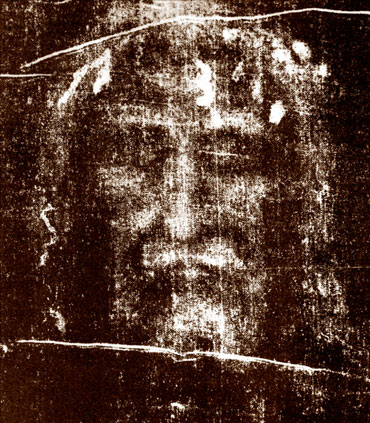
The Shroud of Turin

 Lectionary Passage From Today: John 12: 20-21 (22-36)
Now among those who went up to worship at the festival were some Greeks. They came to Philip, who was from Bethsaida in Galilee, and said to him, “Sir, we wish to see Jesus.”

“Sir, we wish to see Jesus.”  Hmm!  I supposed you and everyone else!  We ALL wish to see Jesus.  But somehow that often eludes us.  Oh, we know that Jesus existed.  We have the stories and all.  But what does it mean to see Jesus, REALLY see Jesus?  It’s got to mean seeing more thatn Jesus as a prophet, or a mighty king or a high priest.  It’s got to mean more than standing alongside Jesus the teacher, Jesus the healer, or even Jesus the friend (Although I would be careful with that one–careful that we do not somehow pull the very human Jesus down to our level.  Jesus was FULLY human.  Jesus was what we’re called to be.)  No, seeing Jesus means beoming a part of The Way that is Christ, entering the mystery, the awe, the very essence that is God.  It means being lifted up and gathered in.

So, when these Greeks came asking to see Jesus, what were they seeking?  Do you think they wanted someone to lead them?  Probably not…they had their own leaders.  They had their own teachers.  They had their own friends.  What they desired was what we all desire–for it all to mean something.  They wanted to understand.  They wanted some sort of proof.  They wanted to see Jesus.

There is a story that is told in Feasting on the Word (Year C, Volume 2) of Anthony the Great, the fourth-century leader of Egyptian monasticism:  A Wise older monk and a young novice would journey each year into the desert to seek the wisdom of Anthony.  Upon finding him, the monk would seek instruction on the life of prayer, devotion to Jesus, and his understanding of the Scriptures.  While the monk was asking all the questions the novice would simply stand quietly and take it all in.  The next year the well-worn monk and the young novice again went into the desert to find Anthony and seek his counsel.  Again the monk was full of questions, while the novice simply stood by withouot saying a word.  This pattern was repeated year after year.  Finally, Anthony said to the young novice, “Why do you come here?  You come here year after year, yet you never ask any questions, you never desire my counsel, and you never seek my wisdom.  Why do you come?  Can you not speak?”  The young novice spoke for the first time in the presence of the great saint.  “It is enough just to see you.  It is enough for me just to see you.”

We all wish to see Jesus.  But seeing Jesus is not about seeing with our eyes.  It is not about information-collecting.  It is not about understanding.  It is not about proof.  It is, rather abut Presence.  The vision is that all would see Jesus and finally have their thirst quenched by the Divine.  But you have to realize for what it is you thirst.  We thirst for the Divine; We thirst to see Jesus.  The Cross is the instrument through which we see Jesus.  It is ont the Cross that Jesus becomes transparent, fully revealed.  Seeing Jesus means that we see that vision of the world that God holds for us.  And seeing Jesus also means that we see this world with all of its beauty and all of its horror.  We see the way that God sees.  And we finally see who we are.  And, finally, we are whole.  Seeing Jesus makes us whole and being whole means that we can finally see Jesus and we see everything else that way that it was meant to be.

In The Naked Now:  Learning to See as the Mystics See, Fr. Richard Rohr talks of the experiences of three ment who stoop by the ocean, looking at the same sunset.  As he relays, one man saw the immense physical beauty and enjoyed the event itself.  This man…deals with what he can see, feel, touch, move, and fix.  This was enough reality for him…A second man saw the sunset.  He enjoyed all the beauty that the first man did.  Like all lovers of coherent though, technology, and science, he also enjoyed his power to make sense of the universe and explain what he discovered.  He thought about the cyclical rotations of planets and stars.  Through imagination, intuition, and reason,, he saw…even [more].  The third man saw the sunset, knowing and enjoying all that the first and the second men did.  But in his ability to profess from seeing to explaing to “tasting,” he also remained in awe before an underlying mystery, coherence, and spaciousness that connected him with everything else.  He [saw] the full goal of all seeing and all knowing.  This was the best.  It was seeing with full understanding.

In order to see Jesus, you have to lay yourself aside and breathe in the mystery of it all.  You have to open yourself to being recreated with the eyes of the Divine.

On this fifth Sunday of Lent, close your eyes and breathe in the mystery that surrounds you.  Close your eyes and feel the Presence of Christ that pervades your life.  Close your eyes that you might see.

Grace and Peace,

Shelli

Mapquest

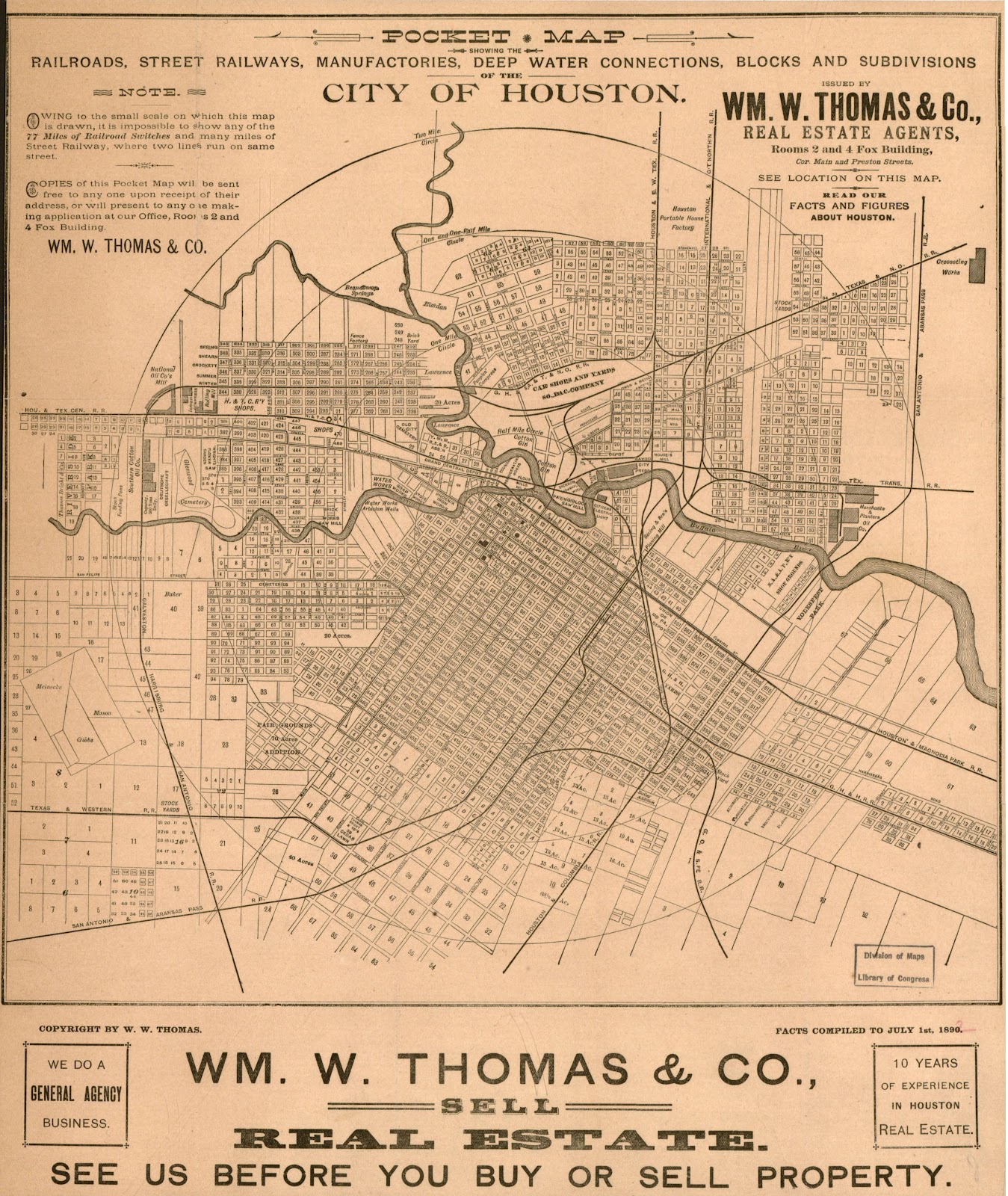
Houston Map, c. 1890

I’ve always had some level of fascination with maps.  What an amazing thing to think that beginning as early as 1,000 years before the birth of Christ, cartographers would lay down on stone or paper or, today, even computer images a depiction of the world that they saw.  In truth, part of my fascination comes from sheer unadulterated dependence on maps to get to places where I’ve never been before.  For you see, I have very little sense of natural direction.  Once I turn a couple of corners, I really can’t tell you in what direction I’m heading.  It just doesn’t happen.  Hence, my fascination with the fact that not only can someone find their way somewhere but can then depict it in a way that can lead even me to the same place.

It is amazing to me that we can look at a map and see things pretty much the way they are—interstates, state roads, farm-to-market roads, railroad tracks, rivers, bayous, even county lines and airports.  So we can follow this detailed map that someone has drawn and get to that place that we need to be.  A map will give you a view of the world that will enable you to go places that you’ve never been.  So you follow the map, knowing that you’re nearing your destination.  The interstate that you’re on is pretty true to scale.  The exit onto the smaller farm-to-market road is exactly where the map says.  But then you start to see things that aren’t on the map—schools, stores, county seat buildings, town squares, houses, dirt roads, smaller creeks.  (My Mom and I often take a trip to Fredericksburg and on the way we cross over Woman-Hollerin Creek—not on the map—but something that has become a humorous and important landmark for us to find our way.)  And all along the road are these smaller bodies of water over which someone has at some point built a bridge—unimportant, even non-existent, according to the map, but without which the journey would stop.  Because, you see, once we get to a place, our view starts to become bigger and more encompassing than what is possible to show on a map.  We begin to sense the familiar, perhaps even creating our own landmarks along the way.  We move from being dependent solely on what someone else has told us to our own view of what surrounds us.

But go a step farther.  We’re only moving through this place.  There are things that even we cannot see.  We do not see the group of smiling, rowdy six-year old girls in the first house past the filling station celebrating a birthday by wearing paper dresses and decorating cupcakes.  We do not see the little boy crying on the porch behind the next house because his intoxicated father hit him and threw him outside for accidentally spilling the whole bottle of bourbon on the living room rug.  And we do not see the elderly woman sitting alone, missing her children and grandchildren and desperately still grieving over the loss of her husband and her sister over the last six months.  The map will not show us that.  Driving through will not show us that.  The only way to see these things is to become part of them, to actually experience them, to stop and share one another’s lives, to realize our shared experiences and our shared history with each other.  That is the only way to broaden our view enough to see the world.

You know, Christianity has given us a wonderful map, a foundation on which our lives can be built, a tradition of belief that has stood the test of time.  But maps and signs are not what grow our faith.  That is not enough.  A map will only get you to the point where you need to start being, to the place where you have to start seeing.  And at that point, we begin to walk the road.  We begin to live our faith through rituals and liturgy, through Scripture and tradition, through prayer and discipline.  We begin to see those things along the road, those things that make up this journey.  And we also begin to see those things that influence us and pull us away from the road on which we need to be.  But even that is not enough.  For even though our eyes have been opened, we are limited by our own view of the way the world is, by our own personal experiences that affect how we look at things.

So it is on this Lenten journey that we hear the call to change our view, to a new way of seeing and a new way of being, to a way of seeing beyond our view, even beyond what we expect to see.  It is a way of seeing the world in an unleavened way.  Marcel Proust says that “the true voyage of discovery does not involve finding new landscapes but in having new eyes.”  Those new eyes can only be attained through our experiences with others, for it is through others’ eyes and our shared experiences that we truly start to see things as they really are.  And seeing our lives through others enables us to see God through our own lives.   We are not called to just follow the map or to walk through life looking only at what appears to be.  Rather, we are called to see as Christ sees.  And the only way to do this is to experience the world through others’ eyes, to open our lives and our hearts to others with a sort of radical, unchecked, even risky hospitality. We cannot just drive by and look at the houses on the road.  It is what is inside that really counts.  We have to be willing to enter the doors of others’ lives and be just as willing to invite them into ours.  We have to open our eyes to the needs and the experiences of others and truly receive each and every one in the name of Christ. It is entering and experiencing the lives of others and inviting them to experience ours.  It is taking the hand of someone else and offering healing in the name of Christ, that they, too, might clearly see.

Lent calls us to see the world for the first time in a new way, not as something that is, but as something that could be.  Lent calls us to see the world with Easter eyes, full of promise and hope and eternal life.  Lent calls us to step back and look at the world the way God envisions it, as brothers and sisters walking together in peace and harmony and love for each other, not ignoring diversity of lifestyles, cultures, races, views, and even faiths, but embracing them as a part of the landscape of this incredible earth that God created.  The map that we’ve been given only gets us to the place.  It is through our experiences with Christ and our experiences with each other, though, that we will see the way to go and that our eyes will be opened so that we might finally see everything clearly.

K…I guess this can count as one of those “extra” posts I promised!…So, as part of this Lenten journey, think about the map you follow.  What is on the map?  What does it not include?  Where does it call you to look with new eyes?
Grace and Peace on this Lenten Journey,

Shelli