Who Do You Say That I Am: Lord

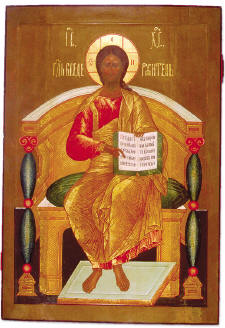
“The Lord Almighty”
Russian Icon, c. 1900

Scripture Text:  Luke 6:46-49
“Why do you call me ‘Lord, Lord,’ and do not do what I tell you? I will show you what someone is like who comes to me, hears my words, and acts on them. That one is like a man building a house, who dug deeply and laid the foundation on rock; when a flood arose, the river burst against that house but could not shake it, because it had been well built. But the one who hears and does not act is like a man who built a house on the ground without a foundation. When the river burst against it, immediately it fell, and great was the ruin of that house.”

Who do you say that I am?  What does it mean to call Jesus Lord?  The title “Lord” is a funny thing.  We Americans are not really used to it, so, to be honest, we probably don’t even think about what it means.  A “lord” is a designation of a ruling class.  It is used for someone who has power and authority over others.  In a feudal system, the lord was essentially the ruling landowner, one who had control over others simply by the fact that they were probably in some way indebted to the landowner.  The power, the control, was not bestowed by loving subjects but rather was probably coerced through economic subjugation.  The title “lord” was a top-down designation. 

And yet, we freely used the word “Lord” to talk about God, to talk about Jesus.  Titles are funny things.  So are we using the term as a freewheeling synonym for God–God, Lord, YHWH, etc.?  Or are we designating Jesus as “Lord” to make him sound more to us like God (because this whole fully human-fully divine thing is difficult enough for us to grasp)  But, really, who DO we say that Jesus is?  What is the Lordship of Jesus Christ?  After all, if it’s a feudal system that coerces us into its realm, then faith as we understand it doesn’t even exist.  There is not “choice” there.  But it’s also got to be more than a sort of fan club.  (OK…here’s an aside…I just went on Facebook and typed in “Jesus Christ’.  Apparently, Jesus has a Facebook page, several friends, and 4,389,465 “likes”.  Well, there you go…)  But, seriously folks, did you read the Scripture?  We do not enter the Lordship of Jesus Christ by signing up (or “friending”) Jesus. 

The coming of God into our midst in the form of Jesus Christ redefined a lot of things.  The idea of “Lord” and “Lordship was one of them.  I do not think that God desires to coerce us into anything.  God desires us to be in relationship with the Divine, to be a part of this community that, for want of a better word, we have called a lordship.  But just calling Jesus “Lord” is not enough.  Entering this Lordship is about becoming who God calls us to be as children of God.  It is about BEING a follower of Christ, in thought, word, and deed.  And it is about our choosing to do that, choosing to follow Christ, choosing to be Christ, to BE this Lordship in the world.  The Lordship of Jesus Christ is God’s active self in the form a living and new humanity.  We are not members of a fan club (this is not “Team Jesus”!); we are part of a Lordship that reigns over all of Creation.  It is a Lordship that we do not enter but one that we become.  To say that Jesus is Lord means that we affirm that we are no longer who we were before.  We are part of God’s work–part of the doing, part of the welcoming, part of the affirming, part of the loving–in the world.

So, who do you say that I am?  Then, I guess we need to get to work.  And THEN you can post what you did on Facebook if you feel like you need to!

On this thirtieth day of Lenten observance, ask yourself the question, “Who do you say that Jesus is?”, and then ask “And what does being a part of the Lordship of Christ call me to be, call me to do?

Grace and Peace,

Shelli
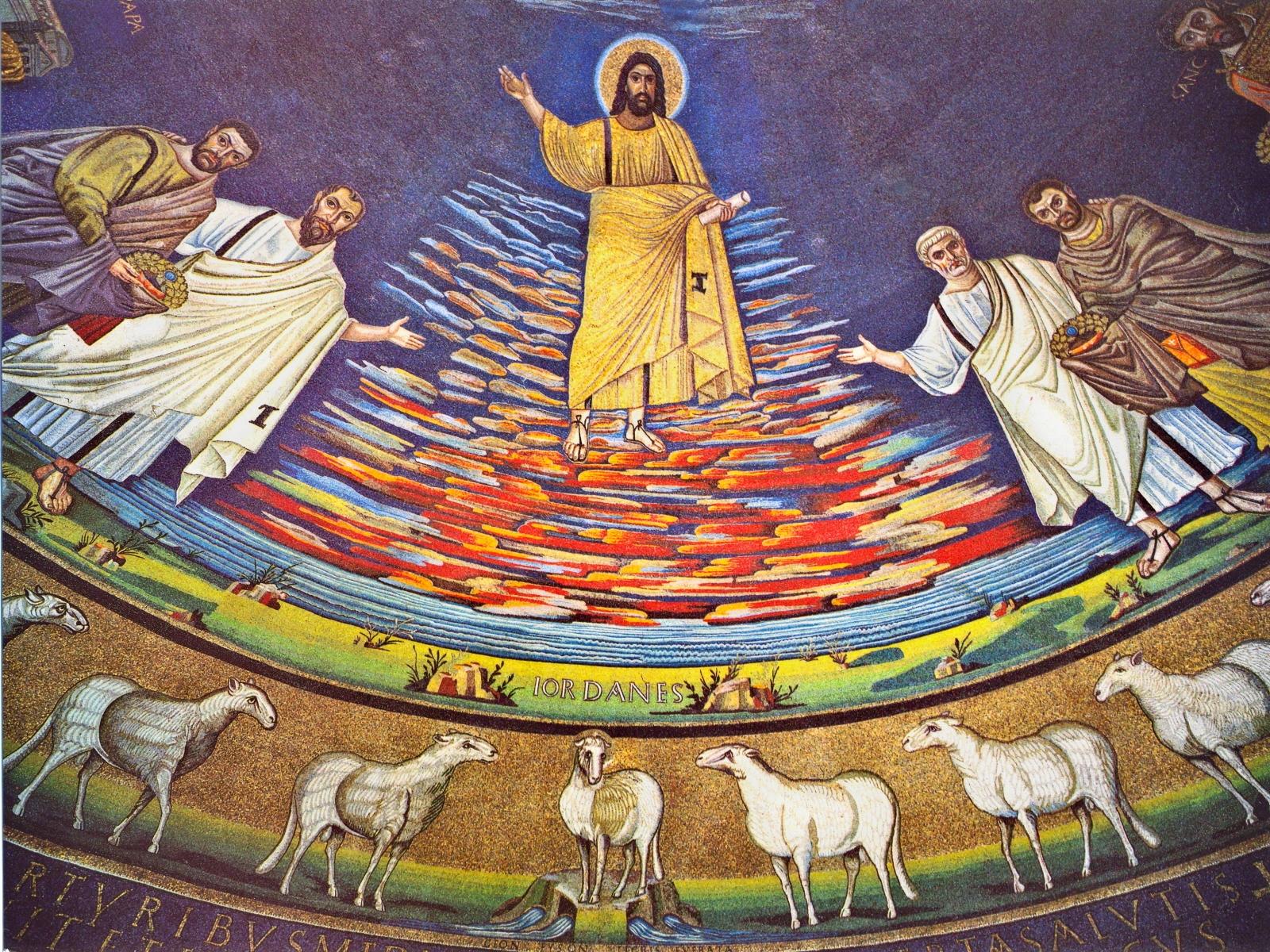
Who Do You Say That I Am: Messiah

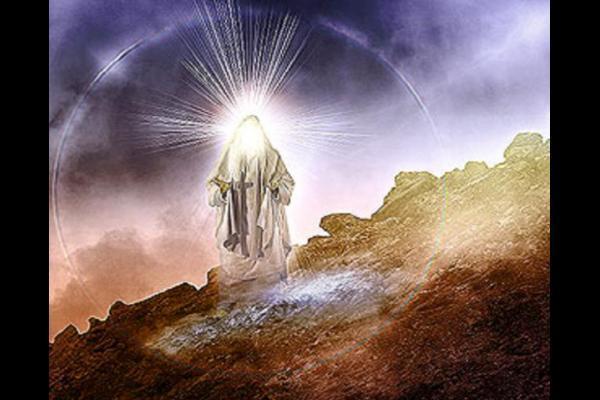
7th Century, Unknown artist

Scripture Passage:  Matthew 16: 13-16
Now when Jesus came into the district of Caesarea Philippi, he asked his disciples, “Who do people say that the Son of Man is?” And they said, “Some say John the Baptist, but others Elijah, and still others Jeremiah or one of the prophets.” He said to them, “But who do you say that I am?” Simon Peter answered, “You are the Messiah, the Son of the living God.”

Who do you say that I am?  The question seemed harmless enough.  But how would you answer it?  Who do YOU say that Jesus is?  We are approaching Holy Week.  The tide has already turned toward Jerusalem.  In just six days, Jesus will enter the city of Jerusalem for the last time.  In just six days, the end will begin.  We are all the same.  As we see the end of something approaching, we begin to scramble a bit.  We try our best to glean everything we can, to absorb all of that person, all of their essence, into our lives.  This is no different.  How do we in this short time get to know the person Jesus?  Realizing, of course, that there was an historical figure known as Jesus who was documented and made a part of history, sketchy as it might have been.  But Jesus was something more.  Jesus represented more.  Who do YOU say that Jesus is?

This interaction between Jesus and the disciples is probably the writer’s way of trying to clarify understandings of Jesus and his work and perhaps clear out some of the “misunderstandings”. Keep in mind that in 1st century Judaism, the name “Mashiah” (Messiah) had several different meanings. It essentially means “anointed”, or “one who is anointed” for a specific purpose and vocation. That could mean a prophet, a king, a warrior, or a savior. From that standpoint, the “Messiah” probably meant to each person whatever it was that would fulfill the needs and fears of that person. Also keep in mind that this version of the Gospel was probably written after the destruction of the temple and the devastation of Jerusalem. There were real fears present. There were real questions. OK, then, who IS the Messiah? Who is going to help us now? And what does that mean? Some people saw Messianic qualities in John the Baptist; others in Elijah; others in Jeremiah or others. They saw in those people the answer to their questions, the answers to their own unique array of issues, problems, and fears. But those people were gone. (And, at the point of this writing, so was Jesus!) And yet Jesus, as Messiah, lives as God’s Spirit moves and works through the community of faith building the kingdom of God. The meaning was not one that could be “nailed down”; instead it has to be lived out in one’s life.

This passage also characterizes an understanding of what the church itself is supposed to be. The word “church” is seldom used in the Gospel accounts. In fact Matthew uses it only here and in the 18th chapter of Matthew. The church is not merely an institution. This is not meant to be the beginning the Christian church as we know it. Rather, church here is referring to the foundation that spawns the continuing work of Jesus Christ in the world. It is a foundation that is so strong that nothing else can overcome it—not even death itself. The work of Christ has begun and nothing can stop it. The “key” image in rabbinic thought primarily refers to authority that is given to Peter (and to the church) to BE the church. This really has nothing to do with apostolic succession or “church authority” as we know it today. (That will come MUCH later!) It has nothing to do with building great big congregations; it has to do with being swept into the Kingdom of God and being a part of ushering it into its fullness.

The passage ends with Jesus’ directive to keep what is called the “Messianic Secret”. Why? One would think that he would want it shouted from the rooftops. And yet, the truth is not revealed until well after the Resurrection. It, again, has to be lived into. This writing is pointing to what is to come. As the story continues, Jesus’ earthly life will come to an abrupt and painful end. And, yet, the story continues, bound in heaven and heard on earth. You just have to live into it to get the full meaning and realize that God’s creative power is always and forever loose in the world. There are lots of understandings of God in this world. (Actually, who are we kidding? There are several understandings among those of us who are reading this!) Some understandings resonate with us; some challenge us; some make us uncomfortable; and, frankly, others probably just get in the way. This is not a God to be explained but one to follow. So, then, who do you say Jesus is? Jesus is not a model of the way we should be; rather, Jesus lives through us. So how does that change the answer to the question?

So, what is your understanding of “Messiah”?  What needs do you envision Jesus filling in your life, in the world?  If we say that Jesus is the Messiah, the anointed one, and we say that we are called to follow, then who are we?  Who do you say that you are as a follower of Christ?  What needs do you envision you filling in the world?

On this twenty-ninth day of Lenten observance, ask yourself the question, “Who do you say that Jesus is?”, and then ask “And who does that call me to be as a follower of the Messiah, the anointed One.”?

Grace and Peace,

Shelli

Wishing to See Jesus


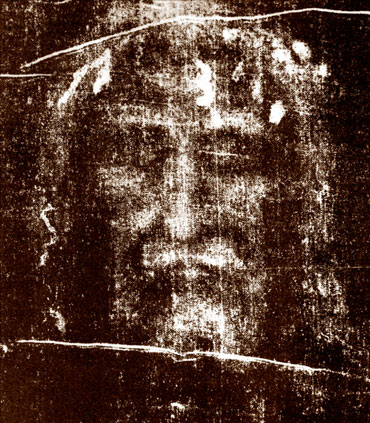
The Shroud of Turin

 Lectionary Passage From Today: John 12: 20-21 (22-36)
Now among those who went up to worship at the festival were some Greeks. They came to Philip, who was from Bethsaida in Galilee, and said to him, “Sir, we wish to see Jesus.”

“Sir, we wish to see Jesus.”  Hmm!  I supposed you and everyone else!  We ALL wish to see Jesus.  But somehow that often eludes us.  Oh, we know that Jesus existed.  We have the stories and all.  But what does it mean to see Jesus, REALLY see Jesus?  It’s got to mean seeing more thatn Jesus as a prophet, or a mighty king or a high priest.  It’s got to mean more than standing alongside Jesus the teacher, Jesus the healer, or even Jesus the friend (Although I would be careful with that one–careful that we do not somehow pull the very human Jesus down to our level.  Jesus was FULLY human.  Jesus was what we’re called to be.)  No, seeing Jesus means beoming a part of The Way that is Christ, entering the mystery, the awe, the very essence that is God.  It means being lifted up and gathered in.

So, when these Greeks came asking to see Jesus, what were they seeking?  Do you think they wanted someone to lead them?  Probably not…they had their own leaders.  They had their own teachers.  They had their own friends.  What they desired was what we all desire–for it all to mean something.  They wanted to understand.  They wanted some sort of proof.  They wanted to see Jesus.

There is a story that is told in Feasting on the Word (Year C, Volume 2) of Anthony the Great, the fourth-century leader of Egyptian monasticism:  A Wise older monk and a young novice would journey each year into the desert to seek the wisdom of Anthony.  Upon finding him, the monk would seek instruction on the life of prayer, devotion to Jesus, and his understanding of the Scriptures.  While the monk was asking all the questions the novice would simply stand quietly and take it all in.  The next year the well-worn monk and the young novice again went into the desert to find Anthony and seek his counsel.  Again the monk was full of questions, while the novice simply stood by withouot saying a word.  This pattern was repeated year after year.  Finally, Anthony said to the young novice, “Why do you come here?  You come here year after year, yet you never ask any questions, you never desire my counsel, and you never seek my wisdom.  Why do you come?  Can you not speak?”  The young novice spoke for the first time in the presence of the great saint.  “It is enough just to see you.  It is enough for me just to see you.”

We all wish to see Jesus.  But seeing Jesus is not about seeing with our eyes.  It is not about information-collecting.  It is not about understanding.  It is not about proof.  It is, rather abut Presence.  The vision is that all would see Jesus and finally have their thirst quenched by the Divine.  But you have to realize for what it is you thirst.  We thirst for the Divine; We thirst to see Jesus.  The Cross is the instrument through which we see Jesus.  It is ont the Cross that Jesus becomes transparent, fully revealed.  Seeing Jesus means that we see that vision of the world that God holds for us.  And seeing Jesus also means that we see this world with all of its beauty and all of its horror.  We see the way that God sees.  And we finally see who we are.  And, finally, we are whole.  Seeing Jesus makes us whole and being whole means that we can finally see Jesus and we see everything else that way that it was meant to be.

In The Naked Now:  Learning to See as the Mystics See, Fr. Richard Rohr talks of the experiences of three ment who stoop by the ocean, looking at the same sunset.  As he relays, one man saw the immense physical beauty and enjoyed the event itself.  This man…deals with what he can see, feel, touch, move, and fix.  This was enough reality for him…A second man saw the sunset.  He enjoyed all the beauty that the first man did.  Like all lovers of coherent though, technology, and science, he also enjoyed his power to make sense of the universe and explain what he discovered.  He thought about the cyclical rotations of planets and stars.  Through imagination, intuition, and reason,, he saw…even [more].  The third man saw the sunset, knowing and enjoying all that the first and the second men did.  But in his ability to profess from seeing to explaing to “tasting,” he also remained in awe before an underlying mystery, coherence, and spaciousness that connected him with everything else.  He [saw] the full goal of all seeing and all knowing.  This was the best.  It was seeing with full understanding.

In order to see Jesus, you have to lay yourself aside and breathe in the mystery of it all.  You have to open yourself to being recreated with the eyes of the Divine.

On this fifth Sunday of Lent, close your eyes and breathe in the mystery that surrounds you.  Close your eyes and feel the Presence of Christ that pervades your life.  Close your eyes that you might see.

Grace and Peace,

Shelli

A Return to Silence

Being the church is about being in community, about being together and working together to spread the Gospel for the transformation of all the world.  Most of our church seasons reflect that–Advent draws us together around the manger, Epiphany is our time of manifestation as a people of God, and Pentecost (that l-o-n-g Pentecost season) is the season in which we as a people are called out to BE the church, to BE the Body of Christ in the world.  But so much of this season of Lent is depicted alone, in the wilderness, struggling as we spend 40 days in penitence and renewal as we approach the Cross.  So much of Lent is depicted in solitude and silence, an intentional time with God as we retreat and prepare ourselves for who we are called to be and what we are called to become.

But how can you serve the world in solitude?  How can you help all those that need help when you are alone?  Think about planting things in your garden.  You do not just take them out of the temporary pot and place them on top of the earth and then wait to see what happens.  You have to dig first.  You have to clear away the loose top soil that easily gets strewn about with the winds and the rains and you have to dig deep down into the firm, nutrient-rich undersoil.  It is there that the roots can be nurtured and fed.  It is there that the water can be held long enough to quench thirst.  And it is there that the plant can root itself, becoming strong enough to hold for what is to come.

Lent is like that rich soil underneath.  We have to dig down to find who we really are, to find those gifts and those graces that God has placed deep within us.  We have to dig down that we might tap into that sacred center that exists in each of us.  That cannot be done in a flurry of activity.  It must be done alone, in solitude.  And I think, particularly, in this world in which we live that is often filled with frenzy and busyness, it is important, once in awhile, to give yourself the chance to dig deep, to give yourself some solitude that you might find yourself once again.

But solitude is not solitary confinement.  It must be intentional.  And there, in the midst of the solitude, you will see the community that way it is meant to be known.  Those in monastic orders that feel called to live in solitude and silence are never completely alone.  They see themselves as a part of the community and they see the community the way it is meant to be.  And when they go into their room to pray, they pray for us all.  The community is there with them–in silence.  13th century German mystic, Meister Eckhart said that “nothing is so like God as silence”.  It’s like that rich soil that exists deep underneath what we see.  But we have to dig.

Creation began in silence.  THAT was the beginning.  Before God spoke Creation into being, God was in silence.  Let us return.

So, on this twenty-eighth day of Lenten observance, go into a room and close the door and, if only for awhile, sit in silence.  Do not worry about needing to connect with God or find God.  (Remember God is not lost!)  Just dig…and let God show you what you are meant to find.

Grace and Peace,

Shelli

LENT 5B: This Talk of Death

Lectionary Passage:  John 12: 20-33:
Now among those who went up to worship at the festival were some Greeks. They came to Philip, who was from Bethsaida in Galilee, and said to him, “Sir, we wish to see Jesus.” Philip went and told Andrew; then Andrew and Philip went and told Jesus. Jesus answered them, “The hour has come for the Son of Man to be glorified. Very truly, I tell you, unless a grain of wheat falls into the earth and dies, it remains just a single grain; but if it dies, it bears much fruit. Those who love their life lose it, and those who hate their life in this world will keep it for eternal life. Whoever serves me must follow me, and where I am, there will my servant be also. Whoever serves me, the Father will honor.   “Now my soul is troubled. And what should I say—‘Father, save me from this hour’? No, it is for this reason that I have come to this hour. Father, glorify your name.” Then a voice came from heaven, “I have glorified it, and I will glorify it again.” The crowd standing there heard it and said that it was thunder. Others said, “An angel has spoken to him.”30Jesus answered, “This voice has come for your sake, not for mine. Now is the judgment of this world; now the ruler of this world will be driven out. And I, when I am lifted up from the earth, will draw all people to myself.” He said this to indicate the kind of death he was to die.

You can tell it’s getting closer.  As we move through these last weeks of Lent, the time seems to increase to warp speed.  It is almost more than we can take.  I mean, wasn’t it just a few months ago that we were talking about stars and the birth of a child?  Wasn’t it just a few weeks ago that we were following Jesus around Galilee as he built his ministry, as he spread the first real notion of hope that we had ever seen?  And now the talk turns to touble and death.  What are we to do with that?  And what is this thing about wheat again?

First, the wheat must die so that it can grow and bear more fruit.  This is sort of confusing if you do not know what wheat is.  Wheat is what is called a caryopsis, meaning that the outer seed and the inner fruit are connected.  The seed essentially has to die so that the fruit can emerge.  If you were to dig around and uproot a stalk of wheat , there is no seed.  It is dead and gone.  The grain must, in essence, allow itself to be changed.  What this tells us in that in order for something new to happen, in order for a “new” or “renewed” creation to come about, we must allow ourselves to be changed.

So what Jesus is trying to tell us here is that if we do everything in our power to protect our lives the way they are—if we successfully thwart change, avoid conflict, prevent pain—then at the end we will find that we have no life at all.  So why, then, is death so hard for us to talk about, so hard for us to deal with in our life?  In fact, we do everything that we can to postpone it or avoid it altogether.  So maybe that’s why the cross bothers us so much if we really think about it.  Oh, we Christians can focus on the Resurrection and just let the cross somehow disappear into the background, covered in Easter lilies.  But then we have forgotten part of the story.  We have forgotten that God does not leave us to our own devices, does not leave us until we have “figured it out”, does not wait in the wings until we have covered it all up with Easter lilies.  God is there, in the suffering, in the heartache and despair.  And God in Christ, there on the cross, bloodied and writhing in pain, is there not in our place but for us and with us.

Whether you believe that God sent Jesus to die, or that human fear and preoccupation with the self put Jesus to death, or whether you think the whole thing was some sort of colossal misunderstanding…the point of the cross is that God took the most horrific, the most violent, the worst that the world and humanity could offer and recreated it into life.  And through it, everything—even sin, evil, and suffering is redefined in the image of God.  By absorbing himself into the worst of the world and refusing to back away from it, Jesus made sure that it was all put to death with him.  By dying unto himself, he created life that will never be defeated.  And in the same way, we, too, are baptized into Jesus’ death and then rise to new life. 

Yes, in these weeks we turn to death.  It is the way that we turn to life.  And life is the whole reason we started talking about stars and the birth of a baby anyway, right?  After all, without the cross, I think the manger is just a feed trough. All of life makes sense in light of the end.  Brazilian Catholic Archbishop Dom Helder Camera once said “why fear the dark?  How can we help but love it when it is the darkness that brings the stars to us?  What’s more:  who does not know that it is on the darkest nights that the stars acquire their greatest splendor?”  


So, on this twenty-seventh day of Lenten observance, think about what the cross means to you.  What does the cross call you to do?  Who does the cross call you to be?

Grace and Peace,

Shelli  

Drought

It may seem a little strange to talk about drought after all the torrential rains we’ve had this week, but the effects of last summer’s drought are just now starting to come to be.  Estimates are now at $7.6 billion in losses to forestry and livestock.  So, needless to say, last year’s drought is deep and everlasting.

I have to confess that I thought of the notion of “drought” because last night, I could not for the life of me, decide what to write about for today.  I felt like I was in a “drought”.  So, why not go with it?  Lent is often characterized with drought.  We practice giving up and letting go.  Our worship is more reserved, void of celebratory “Alleluia’s” (although if we were REAL Lenten practicioners, we would live in drought during the week and then Sundays would still be celebratory!).  To a certain degree, we who have much have to force ourselves into a 40-day season of drought.  Why?  Because it makes us realize who we are and what we need.  It makes us vulnerable, open, receptive.  It gets us out of ourselves.  (It gets us away from what we WANT to do, what we think we SHOULD do, and listen…)  It shows us what we need.  Besides, maybe a little drought now and then does us good.  After all we are drowning–drowning in work, drowning in our home lives, drowning in our relationships.  We are drowning with too much to do and too much to pay.  We are drowning in an image of someone whom we are not.  And so, God gave us thirst; God gave us drought.  Because when we thirst, we will look for what quenches our thirst.  When our need is the highest, we will reach for something else.

I just had my crepe myrtles in the backyard trimmed.  And once everything was cleared away, I realized that they had done what so many trees had done around us last summer.  Thirsting and unable to quench their need in the deepest part of their being, they took their roots, their very foundation, and began to reach up and out, spreading themselves along the flowerbed.  (And interestingly enough, even joining themselves with other trees, as if they are holding hands through the turmoil.)  Even trees realize when they cannot fend for themselves.  It’s a shame we have such difficulty doing the same.

So, on this twenty-sixth day of Lenten observance, think about what makes you feel like you’re drowning.  And then think about what it is for which you thirst.  And then thirst…

Grace and Peace,

Shelli

LENT 5B: Re-Ordering

Lectionary Passage:  Hebrews 5: 5-10
So also Christ did not glorify himself in becoming a high priest, but was appointed by the one who said to him, “You are my Son, today I have begotten you”; as he says also in another place, “You are a priest forever, according to the order of Melchizedek.” In the days of his flesh, Jesus offered up prayers and supplications, with loud cries and tears, to the one who was able to save him from death, and he was heard because of his reverent submission. Although he was a Son, he learned obedience through what he suffered; and having been made perfect, he became the source of eternal salvation for all who obey him, having been designated by God a high priest according to the order of Melchizedek.

The order of who?  Melchizedek is mentionted twice in the Old Testament Scriptures–once in Genesis and then again in Psalm 110.  He was a priest of the Most High in the time of Abraham.  The name means “righteous king” or “King of Righteousness.”  Some have claimed that these passages refer to a literal human; others claim that it is a priestly order superior to even the Levitical priests.  But it’s not an apostolic designation that is handed down through the church.  It is an eternal one.

Essentially, here, it probably refers not to a “priestly” order of the world but rather an ongoing continuation of God’s relationship in humanity.  In Genesis, Melchizedek came to the side of Abraham when Abraham needed help the most.  And Abraham is blessed and offered bread and wine.  This is God’s plan.  God desires to be in relationship with humanity. And as part of that relationship, we, too, are brought into this ongoing priesthood.  We, too, are blessed and offered bread and wine.  And as priests of this highest order, we serve each other.  We enter relationship with humanity just as God has entered humanity in the form of Christ.  This is the order into which we are born, into which God brings us to be.  And this is the order that we fully enter, relinquish our perceived self, and emerge new and recreated.  This is the highest order of the priesthood.  And this is the one to which we are all invited.

Iraneus (2nd century bishop in Gaul) is supposed to have claimed that “the glory of God is humanity fully alive.”  What does that mean?  What does that mean to be “fully alive”?  I think it means that we embrace everything that God has given us to make our lives be what they are called to be.  That means that we all have gifts, that God calls us all, that we all have a part in building and being the Kingdom of God.  Our only hope of becoming “fully alive” is a humanity, a whole humanity, “fully alive.”

But this is dreadfully hard for us.  Face it–we are a hierarchical people.  We want whatever is due us.  We operate based on tenure rather than gifts, youth rather than wisdom, and power rather than calling.  But, despite what we try to project onto the Creative force that is God, God is not hierarchical.  There are not levels of God’s love or classes in God’s Kingdom.  And, Dante notwithstanding, I don’t even think that there’s an “either / or”.   (What if we someday find that Judas and Brutus are right there with the rest of us?)

The thing is, this “order of Melchizedek” is not hierarchical.  It is an order of those who are called.  It is an order of all of us.  We are all moving to perfection in Christ.  And perhaps the goal is not to reach the height of it all, but to reach the point at which we are fully alive, the point at which we realize that we are part of a whole and the whole is the Kingdom of God.  It is a new order, something we’ve never seen before.  So open your minds and open your hearts and quit trying to get ahead!

So on this twenty-fifth day of Lenten observance, think about what it means to be “fully alive”.  What is is that “gives you life”?  And what is it that gives your neighbor life?  Do something to bring life!

Grace and Peace on this Lenten Journey,

Shelli