Imagining Hope in the Wilderness

With all this talk about wildernesses and wanderings, turmoil and temptations, drought and devastation, it is hard to imagine hope.  But the whole point of this journey of faith is not some sort of perverse satisfaction in denying ourselves or in the morbidity of suffering in the wildernesses of our lives.  The point of it all is the promise of life that we have been given and for which we hope.  When we venture into a wilderness, it is not limited to morose sadness and despair.  There is so much more to life than that!  The Scriptures are full of wildernesses.  Some of them are deep and foreboding, some are long and difficult journeys, and some are little more than an unwelcome inconvenience.  But always, always, in Scripture they are a way to somewhere else–parting seas, burning bushes that encounter the holy, or wrestling dreams.  They all lead home.  Beyond the wilderness, on the other side, just over the mountain or just through the trees, is the light, the newly-created dawn.  We just have to imagine it for now.

Maybe that’s what faith is about–imagining the dawn, imagining hope.  After all, if it were clear and always present, we would need no faith.  But even on a clear day, the way is murky and often wrought with danger.  So as we travel, we are called to imagine what is beyond, to imagine what we have yet to see.  It’s the way we find joy in suffering and and hope in despair, not by taking morose satisfaction in our dilemma but in learning to look toward something that we do not see.  There is always something more.  So when you find yourself in a wilderness of pessimism or hopeless, a wilderness in which you just can’t seem to find the way, a wilderness where every turn provides yet another obstacle or yet another challenge or yet another temptation for which you were not prepared, close your eyes and imagine hope.

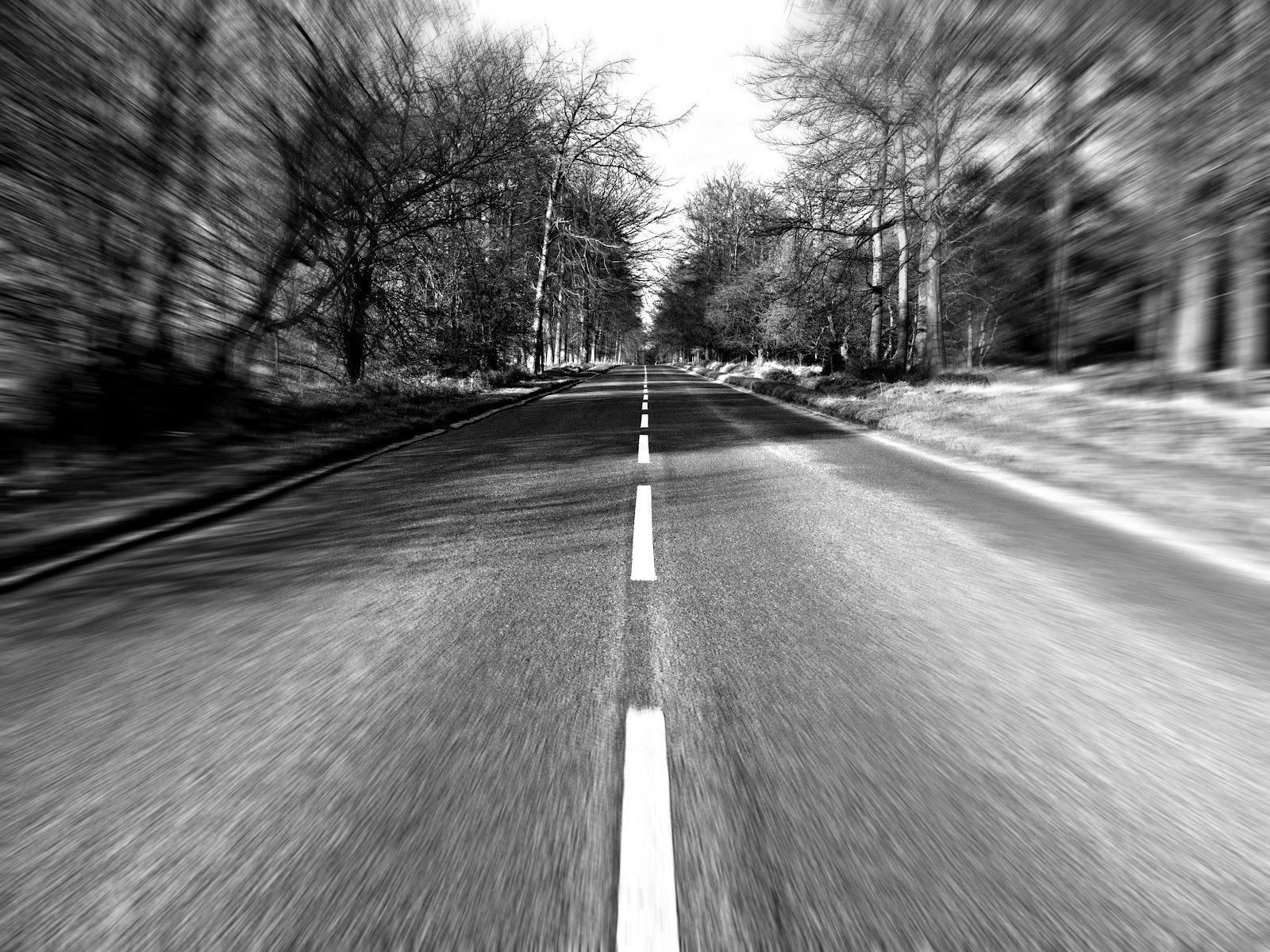
Think about it.  If you get in your car to drive somewhere don’t you have at least some semblance of where your are going?  Haven’t you sort of imagined what is up ahead?  Why should our faith journey be that much different?  Not that we’re trying to get to a physical destination but rather to a place on the journey where the promise of life is so profoundly evident that we do nothing else but imagine what’s up ahead.  And in our imagination of hope is found life.  Imagining hope brings freedom and joy and strength for the journey.

To be honest, it is this Lenten wilderness that takes us through the desolation of the cross and Golgotha that teaches us hope.  To believe in the cross is to believe that there is something else beyond it.  To live this Way of Christ is to imagine hope.

Hope looks ahead for that which is not yet.  (Henri Nouwen, in Seeds of Hope)

So, continuing with our act of giving up so that we can take on, on this Second Sunday of Lent, let go of somethng about which you are worried, let go of feeling like there’s no way out, let go of feeling like you’ve lost your way, and imagine hope. 

Grace and Peace on this Lenten Journey,

Shelli

Whose Deeds and Dreams Were One

We live in a society that separates.  So much of our language is based more on notions of “either / or” rather than “and”.  We talk about either “this” political party or “that” political party, either “conservatives” or “liberals”.  We talk about either “this” way of doing religion or “that” way of doing religion (and I guess, that, too, is somewhat loosely based on “conservatives” or “liberals”).  We talk about either the “haves” or the “have-nots”, the “legals” or the “illegals”, the “rich” or the “poor”.  And through it all, we talk about the “secular” and the “sacred”, the “things of this world” and “the things of God”, the “human” and the “Divine”.

And, yet, we are told that Jesus came into our midst, both human and divine.  There was no separation; rather there was a gathering of all into the Kingdom of God.  This holy gathering is a new creation unlike anything we’ve ever seen before.  And, yet, we are determined to keep it apart.  We are determined to separate ourselves from each other, compartmentalizing our lives and drawing boundaries through our world, through our neighborhoods, and even through ourselves.

God does not call us to be someone that we are not.  We are human, always and forever human.  But until humanity becomes human unity, we are lost.  And so we search for something that we know God can show us.  We search for an eternity or a heaven or whatever you want to call it “out there” when our eternity waits for us here.  God came into our midst, both human and Divine, that the two might come together, that what we do and who we are will join.

Ever Sunday morning, we profess that we believe in the holy catholic church.  We are professing that we believe and indeed that we desire unity, a universal church not created out of sameness or conformity but out of love and respect for each other and for every part of the world around us.  Both diversity and unity live together in this new Creation.  It is a place of “both-and” rather than “either-or”.  It means being part of a world that strives to live in unity.  But it also means recognizing that sometimes we’ll have to live with a little bit of tension as we try to work differences through.  I am clear, though, that even in the midst of those tensions, God is there, walare called to king us through it.  God doesn’t cram anything down our throats and I don’t think we’re supposed to do that to other people either.  William Sloan Coffin claimed that “diversity may be both the hardest thing to live with and the most dangerous thing to be without.”  I think he was right.  Because you see, that diversity is part of this new Creation.  It is part of what is calling us to grow and change and become more like Christ with each step we take.  And when we allow ourselves the opportunity to experience and share our diversity and perhaps even learn from it a little, we gain an experience of God that is unlike anything that we could have gained on our own.

In this Season of Lent, we are called to recognize those things in our lives that are not Christlike, that are not the way that God calls us to be.  It is our calling to reflect on those things that make us less than human.  Jesus walked this earth as a human to show us how to be human, to show us how to bring together who we are with what God calls us to be.

Dear Jesus, in whose life I see all that I would, but fail to be,
let thy clear light forever shine, to shame and guide this life of mine.
Though what I dream and what I do in my weak days are always two,
help me, oppressed by things undone, O thou whose deeds and dreams were one!

John Hunter, 1889, The United Methodist Hymnal, # 468
So, continuing with our act of giving up so that we can take on, identify those areas of your life that are divided, and give up that division.  How can you reconcile those things in your life into a more perfect and holy union? 
Grace and Peace on this Lenten Journey,

Shelli

Sorry, this is actually the post that should have happened yesterday, so I guess you’ll get two today!

LENT 2B: Safe Travels

Lectionary Passage: Mark 8: 31-34 (35-38):
Then he began to teach them that the Son of Man must undergo great suffering, and be rejected by the elders, the chief priests, and the scribes, and be killed, and after three days rise again. He said all this quite openly. And Peter took him aside and began to rebuke him. But turning and looking at his disciples, he rebuked Peter and said, “Get behind me, Satan! For you are setting your mind not on divine things but on human things.”  He called the crowd with his disciples, and said to them, “If any want to become my followers, let them deny themselves and take up their cross and follow me.

We want to be safe.  We want everything to turn out alright.  We want some minimal guarantee of what is going to happen in our life.  We want safe travels on this journey.  But that was never part of the promise.

We’re just like Peter.  Sure, Peter got that Jesus was the Messiah.  He knew the words.  He had been taught the meaning probably from his childhood.  He knew that that was what they had been expecting all along—someone to be in control, someone to fix things, someone to make it all turn out like they wanted it to turn out.    And now Jesus was telling them that the way they had thought it would all turn out was not to be, that instead this Messiah, this one who was supposed to make everything right, was to be rejected and would endure great suffering.  “No, this can’t be,” yelled Peter.  This cannot happen.  We have things to accomplish.  We are not done.  This ministry is important. (To whom?)  It cannot go away.  You have to fix this. You have to fix this now! 

Now, contrary to the way our version of the Scriptures interprets it, I don’t think Jesus was accusing Peter of being evil or Satan or anything like that.  I doubt that Jesus would have employed our semi-modern notion of an anthropomorphic view of evil.  More than likely, this was Jesus’ way of reprimanding Peter for getting hung up on the values of this world, getting hung up on our very human desire to save ourselves and the way we envision our lives to be, to fix things.  But what God had in store was something more than playing it safe.  I think that Peter, like us, intellectually knew that.  We know that God is bigger and more incredible than anything that we can imagine.  And yet, that’s hard to take.  We still sort of want God to fix things.  We still sort of want God to lead us to victory, to lead us to being the winning team.  Face it, we sort of still want Super Jesus.  And, of course, Peter loved Jesus.  He didn’t even want to think about the possibility of Jesus suffering, of Jesus dying.

Safety can be a good thing.  I would advocate that we all wear seat belts.  I think having regulations for how children are to ride in vehicles is a prudent practice. (In fact, I’m not real impressed when I see an unrestrained dog in the back of a pick-up!)  And I lock my doors at night.  But our need to be safe can also paralyze us.  It can prevent us from moving forward on this journey as we settle for taking cover from the darkness rather than journeying toward the light.  And in our search for safety, for someone to save us, what do we do with a crucified Savior?  What do we do with the cross?  Well, let’s be honest, most of us clean it up, put it in the front of the sanctuary, and, sadly, go on with the security of our lives.  So, what does it mean “take up your cross and follow”?  I think it means that sometimes faith is hard; sometimes faith is risky; in fact, sometimes faith is downright dangerous. 

In all probability, none of us will be physically crucified for our faith.  But it doesn’t mean that we should clean it up and put it out for display either.  Sometimes our journey will take us through waters that are a little too deep and torrential; sometimes we will find ourselves bogged down by mud; and sometimes faith takes us to the edge of a cliff where we are forced to precariously balance ourselves until we find the way down.  The promise was not that it would be safe; the promise was that there was something more than we could ever imagine and that we would never journey alone.  And along the way, we encounter a Savior that will save us from ourselves.

So, continuing with our act of giving up so that we can take on, on this ninth day of Lent, give up that thing in your life that is keeping you safe and secure on this journey of faith.  Begin to move forward into what God has promised for you. 

Grace and Peace on this Lenten Journey,

Shelli

Heightened Awareness

Lent is depicted as a 40-day journey, a pilgrimage into the one that we are called to be.  It is a paradoxical season of pruning for growth, letting go to gain, and dying to live.  It’s sometimes dark, often difficult, and usually completely disconcerting to those of us who live in this “save yourself first”  “American Dream” that worships power and closes its eyes to greed and shuts its doors to need.  We don’t know what to do with Lent.  If we can just get through these 40 days, we can go back to life as we know it.  We can go back to a life in which we are not called to give things up or look at our shortcomings or stare helplessly into death.  Just 40 days…and it will all be over.  And we look ahead to that.

But, alas, then we would have missed the point.  Lent is not about having 40 days of good behavior.  It’s not about proving that one has the willpower to give something up or take on something for 6 1/2 weeks.   I don’t think it’s even about repentance, although penitence and turning are part of it.  I think Lent has to do with heightening awareness of what is right there in front of us.  It has to do with learning to see–really see.  And the point is that that awareness doesn’t leave when we roll out the Easter lilies and allow ourselves once again to sing Alleluias.  We do not return to life as usual.  (At least that is the hope!)  Instead, the usual changes.  It takes on new meaning, new significance.  It changes the way we live our life.  And, more importantly, we are changed.  Our eyes have been opened.  These forty days are not temporary.  Rather, they are a journey to another place (or maybe to the place where we are!).  And at the end of the journey, at the end of all we know, when we have lost all that we have built, all that we have counted on, and all with which we are comfortable–it is then that the dawn will break and we will see it all.

Lent is not about teaching us to live for 40 days; it is about teaching us to live.  It is about opening our eyes and allowing us to see for the first time that we are not journeying toward God; rather, we are journeying into an awareness of the God who is already here and an awareness of the person that God has already created within us. Truth be told, it is never over.

And yet, I tend to move pretty fast through life.  I drive too fast, I pack my calendar too full, and I probably miss a lot of what is going on.  It’s hard to be fully aware when you’re speeding down the road.  Maybe Lent’s darkness is meant to slow us down, is meant to make us work to see, is meant to hone our other senses so that we can truly see in every way.  This is not life as usual.  Maybe we need to slow down and look at what is going by.

So, continuing with our act of giving up so that we can take on, on this eighth day of Lent, what is it that you see for your life?  Give up the image of what you think you see.  And slow down.  Open your eyes to the encounter with God that awaits you if you are only aware. 

Grace and Peace on this Lenten Journey,

Shelli

LENT 2B: Religiosity on Life Support

Lectionary Text:  Romans 4: 13-17 (18-25):
For the promise that he would inherit the world did not come to Abraham or to his descendants through the law but through the righteousness of faith.If it is the adherents of the law who are to be the heirs, faith is null and the promise is void.For the law brings wrath; but where there is no law, neither is there violation.For this reason it depends on faith, in order that the promise may rest on grace and be guaranteed to all his descendants, not only to the adherents of the law but also to those who share the faith of Abraham (for he is the father of all of us,  as it is written, “I have made you the father of many nations”) —in the presence of the God in whom he believed, who gives life to the dead and calls into existence the things that do not exist.

In our pragmatic 21st century minds, sometimes it is much easier to grasp at the obvious and to make that the basis of our belief.  But, as Paul reminds us, if our whole faith system depends on nothing more than adhering to the set of laws or interpretations that have been laid down by those that came before us, what good is faith?  Remember that faith is about relationship.  The law is not bad.  In fact, it’s usually a necessary construct to help us understand, to help us point to that which we believe.  But it is not the end all.  It is not the God who offers us relationship.

Now, that said, I personally struggle with those who profess to be “spiritual and not religious”.  Really?   For me, it’s a little like traveling without baggage, which can mean that your not weighted down and are essentially free to do what you want, but, chances are, at some point you’re going to find yourself virtually unprepared for what you encounter.  To put it another way, how many of you really want to go to dinner with someone who always leaves their wallet at home?  They may be fun to talk to and all, but is that really the way we live?

There is a story told among Zen Buddhists about a nun who one day approached a great patriarch to ask if he had any insight into the Nirvana sutra she had been reading. “I am illiterate,” the man replied, “but perhaps if you could read the words to me I could understand the truth that lies behind them.” Incredulous, the nun responded, “If you do not know even the characters as they are written in the text, then how can you expect to know the truth to which they point?”  Patiently the patriarch offered his answer, which has become a spiritual maxim for the ages: “Truth has nothing to do with words. Truth can be likened to the bright moon in the sky. Words, in this case, can be likened to a finger. The finger can point to the moon’s location. However, the finger is not the moon. To look at the moon, it is necessary to gaze beyond the finger, right?” (from a commentary by Daniel G. Deffenbaugh, available at http://www.workingpreacher.org/preaching.aspx?lect_date=3/4/2012&tab=3, accessed 27 February, 2012.)

Now I don’t think Paul would in any way dismiss religion or even the rules.  He’s just reminding us that they have their limitations.  They are not God.  In fact, it is easy for them to become idols of worship in and of themselves (and last I read that was frowned upon!).  But they have their place.  They provide a systematic way of at least attempting to understand something that, in all honesty, really makes no sense to us.  (And, to turn it around, professing to be “spiritual and not religious” actually has a good chance of becoming a religion in and of itself.)  An authentic faith, it seems, is one that weaves what doesn’t make sense into understanding, laughter into prayer, and a grace-filled encounter of the Divine into our everyday life.  It is about both transcendence and meaning and, on a good day, the weaving together of the two into a Holy Encounter with the Divine Presence that it always in our life. 

You cannot practice religion for religion’s sake.  That would certainly be the death of your being.  You need to somehow breathe life into it.  That’s where spirituality comes in.  But spiituality cannot stand alone because it has nothing on which to stand.  Together they are religiosity on life support—a practice of faith, an embrace of the faith community, a recognition of one’s call to help and serve others, all with the Spirit of God, the life of your being, breathed into onself. 

G.K. Chesterton said to “let your religion be less of a theory and more of a love affair”.

On and on…continuing with our act of giving up so that we can take on, on this seventh day of Lent, think about the rules that you follow in your life and in your faith.  Which of them give you life?  Which of you them do not?  Let go of those rules that do not give you life, even if they are the “untouchable” ones!  It’s not about rules; it’s about life! 

Grace and Peace on this Lenten Journey,

Shelli

Without

It is often said that Lent is a journey within, a pilgrimage into the very depths of oneself to reflect honestly on where we are and where we need to go.  I think that is true.  But it could also be said that Lent is about being without and doing without for this practice too is incredibly soul-exposing.  It’s also completely foreign to anything to which we are accustomed.  After all, we are a collecting and using people.  We are overfed, overfurnished, overdriven, overworked, overspent, overdressed and, often, overexposed.  We do not know how to do without.  We do not know how to be without. And so, if you’re like me, you buy more books on how to do Lent, how to do without during this wilderness season.  (Because, after all, you can never have enough books!)  But what we’re really called to do is to learn to do without.

I saw a feature on one of the morning news shows the other day about nomophobia, one of the newest phobias.  The claim is that if you can’t be without your cell phone for long periods of time, then you may possibly suffer from nomophobia.  According to a survey 70% of women and 61% of men live in fear of losing their phone or not having it available when they need it.  The survey found that people check their phones 34 times each day and 75% of those polled have used their phone while in the bathroom.  Warning signs include obsessively checking for your mobile device, worrying about losing your phone or being without it, never turning it off (you can turn it off???) , and being anxious if you lose reception.  In all seriousness, though, I have to admit that this is me.  I don’t think that I can do without my cell phone.  But, really, surely there’s an “app” for that!

But, seriously, I don’t think the message of Lent is necessarily to deprive ourselves of what we need or even what we think we need. God doesn’t necessarily call us to live some sort of stoic life that it totally devoid of things that we enjoy.  The created world holds too much beauty for that to be the case. But it is true that we surround ourselves with the things that define us.  And, hopefully, that’s more than a bunch of stuff.  So perhaps Lent is more about realizing what is important and affirming what it is in your life that you cannot do without, realizing what it is that defines you.  And all of that is within.   And I’m betting that the list is a lot shorter than any of us think it will be.  Think about it.  What could you do without?  Really?  You can’t let that go?

Richard Byrd once said that “half the confusion in the world comes from not knowing how little we need.”  Lent is not about adjusting what we have; it is not about deprivation; it is about perspective, about determining what it is in our life that we cannot do without and then taking it deep within.  Think of it as clearing away the clutter to make room for what is important, to make room for what it is that defines you.

OK, no one ever promised that this would be easy…continuing with our act of giving up so that we can take on, on this sixth day of Lent, think about the one material thing in your life that would be the hardest to do without.  Now take a sabbath from it.  Just a sabbath–a seventh of the day.  Go without it for, oh, about 3 1/2 hours today.  

Grace and Peace on this Lenten Journey,

Shelli

Well, I found this very interesting…I did find the button on top of the phone that shut the whole thing off.  And when I turned it back on, there was, of course, the familiar apple logo on it.  Have you ever looked at that?  It’s an apple with a bite out of it.  And, get this, the bite is about 1/7 of the apple.  Like I said, it’s not about deprivation, just perspective.

Overreaching

The Temptations of Christ, 12th century mosaic,
St. Mark’s Basilica, Venice, Italy

Lectionary Passage:  Mark 1: (9-12) 13 (14-15):
He was in the wilderness forty days, tempted by Satan; and he was with the wild beasts; and the angels waited on him.

And (Alternatively!):  Matthew 4: 1-11:
Then Jesus was led up by the Spirit into the wilderness to be tempted by the devil. He fasted forty days and forty nights, and afterwards he was famished. The tempter came and said to him, “If you are the Son of God, command these stones to become loaves of bread.” But he answered, “It is written, ‘One does not live by bread alone, but by every word that comes from the mouth of God.’” Then the devil took him to the holy city and placed him on the pinnacle of the temple, saying to him, “If you are the Son of God, throw yourself down; for it is written, ‘He will command his angels concerning you,’ and ‘On their hands they will bear you up, so that you will not dash your foot against a stone.’” Jesus said to him, “Again it is written, ‘Do not put the Lord your God to the test.’” Again, the devil took him to a very high mountain and showed him all the kingdoms of the world and their splendor; and he said to him, “All these I will give you, if you will fall down and worship me.”  Jesus said to him, “Away with you, Satan! for it is written, ‘Worship the Lord your God, and serve only him.’” Then the devil left him, and suddenly angels came and waited on him.

The Gospel writer known as Mark doesn’t seem to be that worried about Jesus being tempted.  In fact, he’s almost dismissive of it–acknowledging that it happened but not delving into it too much.  And yet, surely temptation is something with which we can all identify and connect.  After all, it happens to the best of us!  The Matthean Gospel, though, seems to be extremely concerned about it, going into great detail.  First, Jesus is tempted to turn stones into bread, to guarantee that he had what would sustain him.  It is the temptation to live with a theology of scarcity, filling and filling (and filling!) our lives with stuff and hoarding what we need that we might always be prepared, always be sustained, always have enough.  Next Jesus is tempted by his need to be validated, his need to be liked.  We all have that.  We want people to like us.  We want people to like who we are and what we do.  And, finally, Jesus is tempted with the American Dream–the desire to be in control, to have all the power and glory that we need.  Jesus was tempted with greed, with affirmation and impressiveness, and with power.  And, to be honest, think what Jesus’ ministry in which he was entering would look like if he had these things.  Think of all the good we could do if we had all the resources we need, if people looked upon has the authority, and if we had the power to change the world. (So, at your next Church Council retreat, maybe that’s, after all, not the best question!)

Now, when you read this, do not imagine a little red man with horns running around disturbing Jesus on his wilderness retreat.  The truth is, that wild and fantastical personification of evil is, in the big scheme of things, a pretty modern (and pretty far-fetched) notion.  On some level, it makes it easier, shifting the blame of our human overreachings and our spiritual shortcomings to something other than ourselves.  Rather, Scriptural writers probably envisioned more of a constructive adversary, perhaps a compelling force of some sort (probably something other than a third party entity!) that would empower us to look at ourselves and our own lives, to look at those things that drive us and center us.  It calls us to an honest reflection of who we are and who we are meant to be.

And so Jesus was tempted.  That’s bothersome for us.  After all, he is the one we look to for the model life.  And if Jesus is tempted, what hope do we have for figuring this all out?  Temptation is an interesting thing.  Think of it as a turn, a fork in the road.  Do we choose to follow our wants, our needs, our desires?  Or do we let them go and follow who we really are called to be?  That’s uncomfortable.  And so, it is easier to blame it on that little red man with horns or, to be totally inclusive, the phantom seductress who wiles her prey into what she wants.  Really?  So it has nothing to do with us?  We’re just pawns on a game between good and evil, between the holy and the ways of this world, between God and this imaginary personification of evil.  Really?

Well, that would neatly wrap it up, wouldn’t it?  But I don’t think that’s the way it works.  I think this very human Jesus (thanks be to God!) went out into this wilderness to pray, to search, to discover who God called him to be.  And while he was there, he was tempted to overreach.  Dr. Albert Outler once said something to the effect that sin is not falling short, but overreaching.  It is not being more human (as if being human, being made in the image of God, could be bad!) than we are called to be, but attempting to be more Divine.  Maybe sin and tempation are about our dabbling in God’s business.  It is about letting ourselves be controlled by greed and insecurity, by the need to be affirmed and liked, and by the lust for power.  (So have you listened to the political rhetoric lately?  I rest my case.) But the truth is, sustenance is short-lived, affirmation and being “spectacular” is really hard to maintain (after all, don’t you sometimes just want to wear your warm-ups and no make-up and sit in the back of the sanctuary?), and, as Lord Acton put it, “power corrupts.”  So, on that note, this passage is not an historical narrative about Jesus’ altercation with the devil; rather, it is a lesson of the wilderness:  Instead of yielding to your fears and your desires, follow that which is everlasting sustenance, that which is gracious and unconditional love, and that which is life-giving.

Jesus wasn’t showing us how not to be tempted or even that temptation is evil.  Rather, once again, it’s about perspective.  We are not expected or called to be anything other than human–nothing less and nothing more.  That’s the lesson that this Lenten Wilderness teaches us.  It’s not about us.  It’s about The Way.  So, where do we find ourselves on The Way?

So, continuing with our act of giving up so that we can take on, on this First Sunday of Lent (oh yeah, did you know we don’t count the Sundays?), take a look–where are you tempted by greed, by the need to be affirmed, by the desire to control?  Give them up.  Become human–nothing more, nothing less.  (OK, then, just pick one!)

Grace and Peace on this Lenten Journey,

Shelli