Threshold

Journey to Bethlehem-colorScripture Passage for Reflection:  Luke 2: 1-5

In those days a decree went out from Emperor Augustus that all the world should be registered. This was the first registration and was taken while Quirinius was governor of Syria. All went to their own towns to be registered. Joseph also went from the town of Nazareth in Galilee to Judea, to the city of David called Bethlehem, because he was descended from the house and family of David. He went to be registered with Mary, to whom he was engaged and who was expecting a child. 

There is a word that we do not use much called “liminality”.  It is from the Latin word for threshold and is used to describe a state of being “betwixt and between”a point of being suspended between what has happened and what will be.  It is likened to being on an airplane flying over the ocean between two continents.  For a few hours, it is as if you are suspended between times, cultures, and nations.  It is as if you are nowhere and everywhere at the same time.  It is a place of enlarged vision, enlarged perspective and no real place to put down roots.  Liminality is a place that our souls crave, a place where our spiritual sense is somehow heightened, a place where se can see both who we are and who we will become.  On this eve of the Great Eve, we find ourselves a little “betwixt and between”.

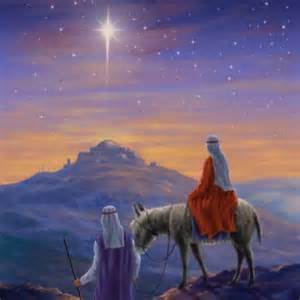
Think of this day so long ago.  Bethlehem was in reach for this scared young couple who were so unsure of exactly what the world held for them.  They were rounding the final peaks of their journey.  But this day they found themselves no longer a part of their old lives and yet they didn’t really know what tomorrow would hold. But now, now they were traveling through a foreign land.  It was the land of Joseph’s family.  He had been there often as a child.  But the place was different somehow, full of those who followed this emperor, nothing like he really remembered.  The road was packed with travelers returning to the place of their ancestors to make their presence known to the government.  Joseph felt like he should know these people and, yet, they were all strangers to him.  Mary and Joseph did not feel like they were part of this new world and yet their old world did not exist.  There didn’t seem to be any room for them at all.

We are indeed standing on the edge of a brave new world.  Oh sure, we do this once a year whether we’re ready or not. Once a year, the night of nights comes and we sing Silent Night and we light our candle and once again welcome the Christ Child into our lives.  Why is this year any different?  Because, in this moment, standing on this edge between who we are and who we will be has the possibility of changing everything.  This is the moment when we decide whether or not to turn toward Bethlehem or to turn and go back.  Standing in this place of “betwixt and between”, we see both, fully in our view.

We are not that different from that scared young couple.  We find ourselves pulled between the life we’ve so carefully created and the life we’ve been promised.  It is hard to not hold so tightly to those structures that give us power and prestige and security.  And yet, God doesn’t call us to leave our lives behind but to live all that we are and all that we have within that vision that God holds for us.  And it is in this moment, standing here between the two that allows us to see how to do that, that allows us to see our lives the way that God sees them and journey on.  It is in this moment that God gives us new eyes and asks us to follow the star.  And if we do that, this year WILL be different.  We are standing in the threshold between a waiting world and one in which the Divine has already poured into our midst.  We live in the already and the not yet.  But for those who see with new eyes, the road ahead is the only one that makes sense anymore.  Because that is the way to Bethlehem.  Let us go and see this thing that has happened.  There’s a world about to be born.

This text speaks of the birth of a child, not the revolutionary deed of a strong man, or the breath-taking discovery of a sage, or the pious deed of a saint.  It truly boggles the mind:  The birth of a child is to bring about the great transformation of all things, is to bring salvation and redemption to all of humanity.

As if to shame the most powerful human efforts and achievements, a child is placed in the center of world history.  A child born of humans, a son given by God.  This is the mystery of the redemption of the world; all that is past and all that is to come.

All who at the manger finally lay down all power and honor, all prestige, all vanity, all arrogance and self-will; all who take their place among the lowly and let God alone be high; all who see the glory of God in the lowliness of the child in the manger:  these are the ones who will truly celebrate Christmas. (From Christmas With Dietrich Bonhoeffer, ed. By Manfred Weber)

Reflection:  On this eve of Eve’s, name those things that are holding you back from THIS year being different.

Grace and Peace,

Shelli
Behold, A Mystery!

Mystery ForestScripture Passage for Reflection: 1 Corinthians 15:51

Listen, I will tell you a mystery! We will not all die, but we will all be changed.

This Season of Advent is ripe with mystery.  I guess it’s conventional and comfortable to take all the stories as they are written, to make sure that Jesus was born the way we assume him to be born, to make sure that there was nothing that might be in question.  And so we spend the season praying over and over to God that God will somehow get our perspectives straight; in other words, that God will swoop in and finally clear it all up for us once and for all.  But mystery still remains!  There are oh so many questions.  Why this way?  Why Mary?  Why that time? (I mean the world wasn’t any more ready for it than it is now!)  Why NOT now?  Why THIS man?  Why THIS place?  Was it in a manger or a grotto or the back room attached to the house that was built for the animals in that century?  And why didn’t they have room?  I mean, really, if God was coming into the world, why didn’t God at least make reservations for the occasion?  So much of this doesn’t make sense at all.  Wouldn’t it have been more efficient of God’s coming into the world was better documented, perhaps well-explained so that we’d have something with which to work?  It would definitely be oh so much easier.

The truth is, surety and doubt, belief and questions are all a part of our faith.  They are all a part of the story.  They are the way the story unfolds. When I was in seminary, Perkins arranged for students to participate in a small question and answer type discussion with noted author and screenwriter, John Irving.  One of the questions that someone asked him was how he went about constructing his stories.  The question was, of course, not surprising.  The answer, though, might have been to some.  Irving said that when he sat down to write, he always wrote the ending first and then backed through the story, creating characters, plot, and theme.  The point of the story is, after all, that with which we are left.  Regardless of where it’s located in the work, the point is usually realized at the end.  I think that’s what God has done.  God wrote the ending first, the recreation of all there is, the Kingdom of God in its fullest, and then began to back through the story.  So this coming of the Godself into our midst becomes the turning point that leads us that Way.

Eternal life was already there for us written into the deepest part of our being, the very image of God within us.  But the way to that life is murky at best.  So God came not as one wielding weath and power and the things of this world but as one holding nothing, a tiny baby with nothing but the love of two people who had promised to show him the Way.  God never intended that this way would be one of certitude.  The journey is one of seeking, of questioning, of wrestling, until one finds his or her way to God.  Having all the answers would have shut us down long ago.  It is the mystery that invites us to journey.  Another noted author, Andrew Greeley, once wrote, “Life is prodigious,  overwhelming. In that there is mystery, hint, and perhaps sacrament…The excessiveness of life is the best sacrament we could ask for, a hint of how powerful, how determined, and how excessive You are.”  Maybe God’s plan was not to bring the Divine down to our understanding but to give us something to journey toward.  Mary’s part was a journey into the unknown.  So was Joseph’s.  So is ours.  But it is only unknown until we embrace it as Home.

God…leads us step by step, from event to event.  Only afterwards, as we look back over the way we have come and reconsider certain important moments in our lives in the light of all that has followed them, or when we survey the whole progress of our lives, do we experience the feeling of having been led without knowing it, the feeling that God has mysteriously guided us. (Paul Tournier)

Reflection:  What part of this mystery is the hardest for you?  Where do you need to journey?

Grace and Peace,

Shelli

Advent 3A: We the People

Upside Down WorldLectionary Passage for Reflection:  Luke 1:47-55
“My soul magnifies the Lord, 47and my spirit rejoices in God my Savior, for he has looked with favor on the lowliness of his servant. Surely, from now on all generations will call me blessed; for the Mighty One has done great things for me, and holy is his name. His mercy is for those who fear him from generation to generation. He has shown strength with his arm; he has scattered the proud in the thoughts of their hearts. He has brought down the powerful from their thrones, and lifted up the lowly; he has filled the hungry with good things, and sent the rich away empty. He has helped his servant Israel, in remembrance of his mercy, according to the promise he made to our ancestors, to Abraham and to his descendants forever.”

We love this passage.  It is Mary’s Song, the poetic rendering of her realization that she has truly been blessed, that she has been called to do what no one else has done, what no one else will do.  She has been called to give birth to God in this world, to deliver the promise that her people have always known.  But, lest we overly-domesticate the young girl that we know as Mary, these words attributed to her are downright radical.  This is a strong and faithful young woman who is responding to her call not just to birth a baby into the world, but to also open the doors to the eternal as it comes flooding in.  She is the forerunner, the one who opens the door that so many have tried desperately to nail shut then and even now.  She has brought God’s Presence into something that we can see, that we can fathom.  But it comes with a price.  No longer can we continue to live our lives as we have.

E. Stanley Jones called The Magnificat “the most revolutionary document in the world”.  It is said that The Magnificat terrified the Russian Czars so much that they tried to dispel its reading.  It is an out and out call to revolution.  Less subversive language has started wars.  Edward F. Marquart depicts it as God’s “magna carta”.  It is the beginning of a new society, the preamble to a Constitution that most of us are not ready to embrace.  We’d rather chalk it up to the poetry of an innocent young woman.  But this…

God will scatter the proud, those who think they have it figured out, those who are so sure of their rightness and their righteousness.  In other words, those of us who think that we have it all nailed down will be shaken to our core.  The powerful–those with money, those with status, those with some false sense of who they are above others–will be brought down from their high places.  The poor and the disenfranchised, those who we think are not good enough or righteous enough, will be raised up. They will become the leaders, the powerful, the ones that we follow.  The hungry will feel pangs no more and those who have everything–the hoarders, the affluent, those are the ones whose coffers will be emptied to feed and house the world.  God is about to turn the world upside-down.  Look around you.  This is not it; this is not what God had in mind.  And God started it all not by choosing a religious leader or a political dynamo or even a charismatic young preacher but a girl, a poor underage girl from a third-world country with dark skin and dark eyes whose family was apparently so questionable that they are not mentioned and whose marital status seemed to teeter on the edge of acceptable society.  God picked the lowliest of the lowly to turn the world upside down.

We try so hard to do things right, to do what we can to fill the needs of the world.  But the Magnificat does not call us to fix things.  It does not call us to share what think we can with the less fortunate.  It calls us to change, to turn our lives upside down.  So, who is supposed to make this happen?  We are.  You know…”We the People”.  What does this mean?  Well, you know that vision that we keep talking about?  This is it.  This is the beginning.  This is the cracking open of the locked door so it can flood into our lives and into our being.  And if we just listen, just let it be, think what it would like:

There will be no more days like today when we remember the first anniversary of the worst mass school killing in our history.   Never again will we remember 20 children and 6 adults who did not have to die before their lives were filled.  The woman who came through my neighborhood Wednesday night looking through the trash cans for food will have more than the meager pasta and sauce and peanut butter and apples and bananas and crackers that I hastily threw in a bag for her.  No more soldiers and no more children that were just in the wrong place at the wrong time will die in needless violence as we fight for control of this world or attempt to insure that weapons of mass destruction will not be used against us.  There will be no more illness or death because someone could not afford medical care or because they live in a place that does not provide it.  There will be no young people who cannot get a good and solid education with the best resources and technical support that our world and our brains now offer.  Our earth will no longer cry in pain as we consume resources beyond what we need and throw the rest away.  And each of God’s creatures–human and others–will have what they need and the relationships that they need to become what God calls them to be.  In other words, everyone will know, finally, that they have a home.

Aren’t we supposed to be looking toward Christmas?  Isn’t this supposed to be a joyous time?  Why in the world, you ask, am I depressing everyone?  Because, you see, God did not wait to come into the world until everything was right.  God chose instead to come and show us how to be who we were created to be.  And that, that is pure joy beyond anything that we can imagine.  That is our blessing.  Now it’s our turn…“We had the option to do nothing, or to do something.  And then when you think of it like that, we didn’t have any options.” (Mark Barden, whose 7-year old son, Daniel, was killed at Sandy Hook Elementary one year ago today.)

We the People…in Order to form a more perfect Union, establish Justice, insure domestic Tranquility, provide for the common defence, promote the general Welfare, and secure the Blessings of Liberty to ourselves and our Posterity, do ordain and establish this Constitution…

Blessed be the God of Israel, who comes to set us free;
he visits and redeems us, he grants us liberty.
The prophets spoke of mercy, of freedom and release;
God shall fulfill his promise and bring his people peace.

(Michael A. Parry)

Reflection:  What part of God’s vision are you called to bring?  What in your life do you need to turn upside down?  In other words, what do you plan to do with this life you’ve been given?

Grace and Peace,

Shelli

Advent 3A: Not Quite What We Were Expecting

995-103100Lectionary Gospel Passage for Reflection:  Matthew 11: 2-11

When John heard in prison what the Messiah was doing, he sent word by his disciples and said to him, “Are you the one who is to come, or are we to wait for another?” Jesus answered them, “Go and tell John what you hear and see: the blind receive their sight, the lame walk, the lepers are cleansed, the deaf hear, the dead are raised, and the poor have good news brought to them. And blessed is anyone who takes no offense at me.”  As they went away, Jesus began to speak to the crowds about John: “What did you go out into the wilderness to look at? A reed shaken by the wind? What then did you go out to see? Someone dressed in soft robes? Look, those who wear soft robes are in royal palaces. What then did you go out to see? A prophet? Yes, I tell you, and more than a prophet. This is the one about whom it is written, ‘See, I am sending my messenger ahead of you, who will prepare your way before you.’ Truly I tell you, among those born of women no one has arisen greater than John the Baptist; yet the least in the kingdom of heaven is greater than he.

We usually think that we have it all figured out.  We walk through our lives with grand plans and grand illusions of what the world should look like and what we should look like to the world.  John was no different.  He loved Jesus, loved the things that Jesus represented–freedom, peace, righteousness.  And so he had set to work telling everyone how he saw it.  But then all of a sudden, he realized that Jesus was doing things differently. Essentially, what Jesus was doing was not in the mold of what John had envisioned.  John was going around preaching repentance in the face of what was surely the Kingdom of God coming soon.  And here was Jesus healing and freeing and raising the dead.  John probably didn’t see it as wrong—just sort of a waste of time.  After all, in his view, there were people that needed redeeming, and redeemed NOW!  We need to get busy. “Jesus, really, this was not quite what we were expecting!”  So, he asks Jesus, “OK, are you the one who is to come, or are we to wait for another?”  (As if to imply that we may need to wait for someone that will get this show on the road and make everyone get on board the way we think it should be.)

Well, the truth as we know it is that Jesus WAS Emmanuel, Jesus WAS God Incarnate, Jesus WAS the Savior for which the world had waited for so long.  The problem was that the world (and even John) could not see Jesus standing right in front of them because they were too busy looking for what they had expected.  They had expected a mighty warrior.  (Well, where was he?)  They had expected a king to whom everyone would box.  (Well, that wasn’t happening!)  They had expected someone who would clean things up and make life easier.  (And you want me to do WHAT?  Hob-knob with the unacceptables and give up my place to those who haven’t worked for it and share my fortune with the less fortunate and essentially begin to go back down the ladder of progress to find what I’ve been missing?)  Truth be told, the world was expecting a warrior politician and got a baby.  Surely, THIS can’t be right!  I mean, really, how can we put our trust and our faith in one who is essentially one of us?  So, should we wait for another?

A few years ago, the Today Show had a feature story about some young Panda bears who had been brought up in captivity.  But the plan was to eventually return them to their natural habitat.  So, in order to prepare them for what was to come, their caretakers thought that it would be better if they had no human contact.  So to care for them, the people dressed up like panda bears.  In order to show them how to live the way they were supposed to live, they became them.  Well, isn’t THAT interesting!  I think that’s been done before!  In its simplest form, the Incarnation is God’s mingling of God with humanity.  It is God becoming human, dressing up like a human, and giving humanity a part of the Divine.  It is the mystery of life that always was coming into all life yet to be.  God became human and lived here.  God became us that we might see what it means to change the world.   God became like us to show us what it meant for us to be like God in the world.  The miracle of the birth of the Christ child is that God now comes through us.

Jesus really didn’t “fit in”.  Jesus was not anything that any of us were expecting.  That’s the whole point.  Perhaps Jesus calls us to be what the world does not expect.  God did not come into this world to calm and affirm how well we were conducting things.  God came to show us a different way of living, a different way of being.  God came as one of us, Emmanuel, God With Us, to show us how to be one of us, to show us how to be human, fully human.  Who would have ever come up with that?  That was NOT what we were expecting.  Because you see, the miracle of God is here, dwelling in our midst, dwelling in us.  This is the mystery of the redemption of the world.

This text speaks of the birth of a child, not the revolutionary deed of a strong man, or the breath-taking discovery of a sage, or the pious deed of a saint.  It truly boggles the mind:  The birth of a child is to bring about the great transformation of all things, is to bring salvation and redemption to all of humanity.  As if to shame the most powerful human efforts and achievements, a child is placed in the center of world history.  A child born of humans, a son given by God.  This is the mystery of the redemption of the world; all that is past and all that is to come.  All who at the manger finally lay down all power and honor, all prestige, all vanity, all arrogance and self-will; all who take their place among the lowly and let God alone be high; all who see the glory of God in the lowliness of the child in the manger:  these are the ones who will truly celebrate Christmas. (From Christmas With Dietrich Bonhoeffer, ed. By Manfred Weber)

Reflection:  So, what were you expecting?  Where is God in your midst today?  What is God calling to be?

Grace and Peace,

Shelli

What God is About to Do

HorizonPassage for Reflection:  Isaiah 65: 17-18

For I am about to create new heavens and a new earth; the former things shall not be remembered or come to mind. But be glad and rejoice forever in what I am creating; for I am about to create Jerusalem as a joy, and its people as a delight.

I know…more visioning.  I guess that’s where I am this year.  I’m sorry if you were tuning in hoping to feel good about where you are!  No really, I don’t think God is disappointed in us; God just wants the best for us.  Isn’t that just like God?  There is nothing wrong with where we are.  I love this earth.  I love this country.  I love this state and the fact that I’m generations into it.  I love this city.  I love St. Paul’s.  I love my house.  I love my life.  But in case you think I am nothing more than an annoying cheerleader, I also count on the fact that there is always something more, something just over the horizon.  I think that Advent does a good job of reminding us of that horizon, reminding us that what we have and what we hold is really not “it”.  No, regardless of where we think we’ve been headed, we have not “arrived”.

This passage for today is not some unrealistic pipe dream.  It is not something that slashes our view of the life that we’ve created.  It just shows us something more.  It is real.  It is what God is about to do–maybe not tomorrow, maybe not next week, maybe not even in the next ten centuries.  But we are people of faith.  We are people of what God, always, is about to do.  The question is do we live our lives holding on to what we have or do we live our lives looking for what God is about to do.

There is a Native American tale of a chief who had three sons.  He knew that he was nearing the end of his life and had not yet decided which of his sons would succeed him as chief.  So, he gathered them together and pointed to a mountain in the distance.  “I want you to journey to that mountain, climb to its summit, and bring back the thing you think will be most helpful in leading our people”.  After several days, the first son returned with a load of flint stones, used to make arrow tips and spear points.  He told his father, “Our people will never live in fear of their enemies.  I know where there is a mountain of flint.”  The second son climbed to the top of the mountain, and found forests rich with wood for making fires.  When he returned, he said to his father, “Our people will never be cold in winter.  I know where wood can be found in abundance to keep them warm and to cook their food.  The third son returned late and empty-handed.  He told his father, “When I got to the summit, I found nothing worth bringing back.  I searched and searched, but the top of the mountain was barren rock and useless.  Then I looked out towards the horizon, far into the distance.  I was astonished to see new land filled with forests and meadows, mountains and valleys, fish and animals—a land of great beauty and perfect peace.  I brought nothing back, for the land was still far off and I didn’t have time to travel there.  But I would love to go there someday; I delayed coming back because I found it very difficult to return after seeing the beauty of that land.”  The old chief’s eyes blazed.  He grasped his third son in his arms, proclaiming that he would succeed him as the new chief.  He thought to himself, “The other sons brought back worthy things, necessary things.  But my third son has a vision.  He has seen a better land, the promised land, and he burns with the desire to go there.”

As I said, this is not something that God is dangling out there like some sort of teaser knowing that we will never reach it.  God really means for us to glimpse what God is about to do, to move toward it, to love and desire it so much that we can do nothing else but go toward it.  I do not know what my future holds.  None of us do.  But I know that just over the horizon is something so incredible that I burn with desire to go there.  It is the place that God means for me to go.

Today is the twelfth day of Advent.  (Wait, wasn’t that supposed to be the twelfth day of Christmas?)  We are halfway through this waiting, halfway through this season that calls us to put a hold on our plans, to look to the horizon, to strain and squint for a glimpse, just a glimpse of what will be.  Today is the twelfth day of the twelfth month.  The symbolic meaning of twelve is completeness, whole.  That’s right.  The vision has not come to fruition, but that doesn’t mean that it is not complete.  It is there, just as it should be, just over the horizon.  And now…now we will start living into what we see.  Because, you see, it is about what God is about to do…

Reflection:  What does that place just over the horizon look like to you?  What would you give up to take the time to go toward it?  What do you see that God is about to do?

Grace and Peace,

Shelli

Advent 3A: Hurry Up and Wait!

Seeded FieldLectionary Passage for Reflection:  James 5: 7-10

Be patient, therefore, beloved, until the coming of the Lord. The farmer waits for the precious crop from the earth, being patient with it until it receives the early and the late rains. You also must be patient. Strengthen your hearts, for the coming of the Lord is near. Beloved, do not grumble against one another, so that you may not be judged. See, the Judge is standing at the doors! As an example of suffering and patience, beloved, take the prophets who spoke in the name of the Lord.

OK, I have to admit that I am not the most patient person in the world.  (Like THAT’S a big surprise!)  So, this whole Advent notion of waiting and waiting some more is almost too much to bear.  And don’t you hate it when someone tells you to “be patient”.  Grrrr!  Look, you just don’t know what all I have going on in my life.  You just don’t know how hard that is!  (Yeah, I know, that sounds way too familiar for comfort!)  And something about this season makes it even harder.  We have to hurry up and get the tree up!  And then we have to hurry up and get all the shopping done!  And then we have to hurry up and get the gifts wrapped!  And then we have to hurry to the party and hurry with the cooking and hurry with the hurrying.  And, please, please tell us what will happen next so that we can get ready!  So, how in the world with all this hurrying are we expected to be patient, to wait for God’s time to be our own. 

There is a story that you’ve probably heard of an American traveler on safari in Kenya.  He was loaded down with maps, and timetables, and travel agendas.  Porters from a local tribe were carrying his cumbersome supplies, luggage, and “essential stuff.”  On the first morning, everyone awoke early and traveled fast and went far into the bush.  On the second morning, they all woke very early and traveled very fast and went very far into the bush.  On the third morning, they all woke very early and traveled very fast and went even farther into the bush.  The American seemed pleased.  But on the fourth morning, the porters refused to move.  They simply sat by a tree.  Their behavior incensed the American.  “This is a waste of valuable time.  Can someone tell me what is going on here?”  The translator answered, “They are waiting for their souls to catch up with their bodies.”

Maybe that’s what this Advent season is–a season of waiting for our souls to catch up.  (So why did they put it in the busiest season of the year!  That doesn’t make sense!)  Whoever wrote this short epistle buried toward the back of the New Testament knew exactly what our problem was.  He or she knew that when we get something in our head, when we set our sights on something, we want it immediately if not last night sometime.  And so, many of us are running around with bodies and souls that are dangling, disconnected, not quite able to reach other, not able to connect.  Stop.  Stop what you’re doing.  Like the farmer, all that you are is planted and fertilized.  Now you have to wait.  You have to wait for God’s Spirit in God’s Time to rain in, drenching the thirsty soil.  Your soul knows how to wait.  There is a Divine Wisdom planted deep within.  The soul moves slowly soaking up everything in life.  Oh, what our minds and bodies could learn from that!  But we have be patient.  Sometimes we have to wait.  And sometimes we might even have to step back and be led to the next place. 

Perhaps rather than living life with the words “hurry up” always on our lips, we should live a life of “Amens”, “so be it”.  Life will be what life will be.  God knows that this is not easy.  There are things that we must finish and there are patches that we want to quickly run through so that we don’t experience the pain or the heartache.  God knows that it is hard to wait.  It is not God’s will that we suffer or that we have difficulties in life.  It is God’s will that we become who God envisioned us to be, that Creation becomes what God meant it to be.  It is all there, planted and fertilized.  But it takes time.  You have to wait.  The time is near but it is not yet right.  There is still more to come.

And ye, beneath life’s crushing load, whose forms are bending low, who toil along the climbing way with painful steps and slow, look now! for glad and golden hours come swiftly on the wing, O rest beside the weary road, and hear the angels sing!

For lo! the days are hastening on, by prophet seen of old, when with the ever-circling years shall come the time foretold, when peace shall over all the earth its ancient splendors fling, and the whole world send back the song which now the angels sing.

Edmund H. Sears, 1849

Reflection:  Why are you such a hurry?  What are you missing by hurrying through life?  What is your soul trying to teach you?

Grace and Peace,

Shelli

Searching for Home


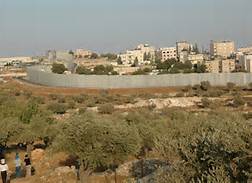
Modern-Day Bethlehem and the West Bank wall

Passage for Reflection:  Ruth 1:16b

“Do not press me to leave you or to turn back from following you! Where you go, I will go; Where you lodge, I will lodge; your people shall be my people, and your God my God.

What does “home” mean to you? Is it the place that keeps you safe?  Is it the place that encourages you to grow, to pursue your dreams, to become better than you are?  Is it the place to which you return or the place that you’re trying to find?  Is it the place you know or the place where you are known?  Robert Frost said that “home is the place where when you have to go there, they have to take you in.” (Personally, that sounds a lot like grace to me!)  Emily Dickinson said “where thou art, that is home.”  Ann Danielson said that “home is where your story begins.”  So when did home turn into something that we protect, something that we “own”, something that we use to close the doors and shut out the world?  When did home become something that keeps us where we are?  When did home become our stopping point?

These words of Ruth’s are not, as popular culture’s wedding traditions often assume, about a married or a marrying couple.  They are a daughter-in-law’s words to her mother.  And perhaps buried deep within their meaning is something even more.  They are also the words of a displaced, homeless wanderer desperately searching for home.  They are the words of one who lives in poverty and exile who is looking for a new story, a new life.  They are the words that begin a journey to Bethlehem.  So, Ruth, the Moabite, the foreigner, the one who really does not belong in the story travels with Naomi in search of a home.  And she becomes a part of the story, a story that also happens in Bethlehem.  Generations later, the Gospel writer known as Matthew will name Ruth as the ancestor of Jesus.

We will read the story of Jesus’ birth in a few weeks and we will bemoan the fact that there was no room for him, no home for him to begin his life on this earth.  Maybe that was the point.  Maybe it was because the world as it was, a world full of homelessness and poverty, a world full of empires vying for control, a world full of those who would shut the doors of their homes to others, was never really going to be home.  There was never really room for Jesus in this world the way it was.  And he lived a little more than three decades, we are told, wandering, never really settled, in search of a home.

Maybe that is what this season of Advent with of its stories of exiles and wild men in the wilderness, stories of misfits and rebels that are searching for a place to belong, a place that makes sense, a place that fits with the vision that they have been shown, teaches us.  (Good grief, ANOTHER Advent lesson?!?)  13th and 14th century theologian Meister Eckhart once said that “God is at home; it is we who have gone out for a walk.” Maybe, then, home is not the place where we hide under the covers all warm and toasty; maybe it is not the place to which we return but rather the place to which we are drawn.  Our faith journey is an incredible act of searching for home.  It is not the place that makes us comfortable but the place that gives us meaning, the place that makes us real, the place that makes us become who God calls us to be.  That vision that God holds for us is not one that draws us into the unknown but rather one that brings us home.  “Home is where your story begins.”  It begins now.  Have you ever thought that Advent is not about making room for Christ in the midst of what you know but rather following Christ in search of God’s vision of Home, not a home in some far off place in your next life, but home with God even now?  Advent is not about making room for God in your life but rather following God into the life in which God has made room for you.  But sometimes, like Ruth, you have to leave what you know behind.

Reflection:  What does “home” mean to you?  What places do you need to leave behind to search for home?

Grace and Peace,

Shelli