When Things Began to Change


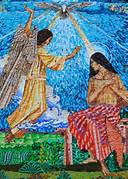
Church of the Annunciation, Nazareth, Israel

Scripture Text:  Luke 1: 30a-38

“Do not be afraid, Mary, for you have found favor with God. And now, you will conceive in your womb and bear a son, and you will name him Jesus. He will be great, and will be called the Son of the Most High, and the Lord God will give to him the throne of his ancestor David. He will reign over the house of Jacob forever, and of his kingdom there will be no end.” Mary said to the angel, “How can this be, since I am a virgin?” The angel said to her, “The Holy Spirit will come upon you, and the power of the Most High will overshadow you; therefore the child to be born will be holy; he will be called Son of God. And now, your relative Elizabeth in her old age has also conceived a son; and this is the sixth month for her who was said to be barren. For nothing will be impossible with God.” Then Mary said, “Here am I, the servant of the Lord; let it be with me according to your word.” Then the angel departed from her.

Think back.  Think back to that time when things began to change.  Think back to the announcement.  Think back to the point where our world as we know it was rocked to its foundations as God revealed the very Godself to us, bursting into our world, the world that we thought was the one.  For us, it began the mystery that is Jesus Christ, the mystery that brought us here, the mystery that will take us to Jerusalem.  But in this moment we remember, the fog lifted and there before us was the bridge between the human and the Divine.  This IS the beginning of Jesus Christ.  We often sort of skip over that sometimes, choosing not to get much beyond that night of mangers and stars and visiting field hands.  Think about it.  Jesus was fully human and this human Jesus, like all of us, had to be grown and nurtured in the womb before the miracles started.  March 25th (that would be nine months before Christmas) is celebrated as The Feast of the Annunciation, the veritable turning point of all human history.  It is was in this moment that God stepped through the fog into humanity and, just like every human before and every human since, must wait to be fully birthed into this world.

In the beginning when God created the heavens and the earth, the earth was a formless void and darkness covered the face of the deep, while a wind from God swept over the face of the waters.  Then God said, “Let there be light”; and there was light. (Genesis 1: 1-3)

And in some traditions, March 25th is regarded as the first day of Creation.  (Now, really, I don’t even begin to see THAT as a real date!  But it’s a good thing to remember and that date is as good as any, right?)  So, let’s go with it.  March 25th marks the beginning, when God’s Spirit moved across the face of the waters bringing Light into the Darkness.  So the Annunciation…the announcement of the coming of Christ, the coming of God, into our little world…is that day when once again the darkness begins to fill with Light.  So, begin at the beginning and count forward…to the birth of God into the world. Like Creation, the coming of Christ was the Light pushing the darkness away.  It was when things began to change.  The world was with child.

So on this 29th day of Lent, we realize how close we really are, realize that, once again, things are about to change.  It is scary as the ground beneath us begins to shift and the shadows around us begin to move about.  But think about that moment when things began to change.  Can you imagine what Mary must have thought?  She was young, she had plans, she had her whole life ahead of her.  “How can this be?” we read.  In today’s vernacular, it would read, “Are you kidding me?  I had my whole life planned.  It was safe.  It was known.  It was figured out.”  And, if only for a moment, God and the world waited expectantly in the silence.  And so as everything she knew and everything she planned toppled around her, she said “yes” and entered the mystery of God.  And we, those who would follow, those who come into this sometimes maddening, always-changing world, those who are tempted to play it safe and planned, will also say yes.  And in that moment, once again, God’s Spirit will sweep over the face of the waters and bring Light into the darkness.

Hope holds with it the promise that God always answers our questions by showing up, not necessarily with what we ask for but with remarkable gifts that change our lives and the world.   (Mary Lou Redding)

So as things begin to change, envision Light, envision the Light as it moves into the darkness.  What does it mean to follow?  What does it mean to say “yes” when the world is rocking on its foundations?

Grace and Peace,

Shelli


Returning Home

Returning HomeScripture Text:  Joel 2: 12-13

Yet even now, says the Lord, return to me with all your heart, with fasting, with weeping, and with mourning; rend your hearts and not your clothing. Return to the Lord, your God, for he is gracious and merciful, slow to anger, and abounding in steadfast love, and relents from punishing.

By my count, this is the 28th day of Lent.  We are coming closer.  Our journey’s footprint is beginning to narrow, honing in on our destination.  Things are beginning to change.  You can feel it in the air.  If you listen, really listen, you can hear the voices growing louder.  There’s a part of us that wants to go back, perhaps hide away until it is all over but we know that’s not the way it works.  The journey with all of its twists and turns are part of life.  We speak of going out into the world, of “broadening” our mission, often with a sense of leaving home behind.  But Lent teaches us something different.  Our journey’s map is one of widening circles as we gather the world in and, yet, the point of it, the center, tends to become a little clearer with each step.  We begin to sense the center of all these circles.  We begin to feel at home.

I have several times had the wonderful gift of sharing final journeys.  It is a time of remembering, yes, but it is more.  In the last few years of my grandmother’s life, she seemed to be gathering her memories around her, trying to recap them, trying to capture what was important so that she could leave it behind intact.  Maybe that’s what we should do when things begin to change.  Rather than walking blindly and fearlessly into the unknown as if we have some sort of prideful martyr complex, maybe we are called to gather what we have learned, those whom we have loved, those memories that are part of us, and claim them.  God calls us forward on this journey to leave behind things like material items and things to which we hold to our detriment, things that are not ours to hold.  God calls us forward not to leave our selves behind but to claim the real self that we are.  And those memories, those things we have learned, those we have loved are part of our real self.  They are part of God’s way of returning us to God.

Ann Danielson said that “home is where your story begins“.  I don’t think that’s limited to the place that you were born, the place in which you began.  Home is not meant to be a place.  It is meant to be a way of being.  Maybe that means that each new beginning, each time our story begins, is home.  Our journey is not one of going to a place we do not know but one of returning, returning to who we are called to be, returning to God.  That is what Lent teaches us.  It is a season of reflection and introspection.  It is a season of gathering and pruning, of knowing which things we are called to release and what we are called to hold.  Lent is the season when we reset our journey once again so that it is calibrated with our story, so that the journey is one both of returning home and being home.  It is a journey of returning and re-turning.  Lent is a season when we finally know what it means to be home, to know what claims us, to know what give us life.

Our true home is in the present moment.  The miracle is not to walk on water. The miracle is to walk on the green earth in the present moment. Peace is all around us–in the world and in nature–and within us–in our bodies and our spirits. Once we learn to touch this peace, we will be healed and transformed. (Thich Nhat Hanh)

On this 28th day of Lent, as the pathway begins to turn, remember from where you’ve come.  Gather what is important, what is part of you, those things you need to claim.

Grace and Peace,

Shelli


So I Wait

Waiting on the journeyScripture Passage:  James 5: 7-10

Be patient, therefore, beloved, until the coming of the Lord. The farmer waits for the precious crop from the earth, being patient with it until it receives the early and the late rains. You also must be patient. Strengthen your hearts, for the coming of the Lord is near. Beloved, do not grumble against one another, so that you may not be judged. See, the Judge is standing at the doors! As an example of suffering and patience, beloved, take the prophets who spoke in the name of the Lord.

Patience…probably not my strong suit!  And isn’t waiting something that we talk about in Advent?  I thought Lent was supposed to be a journey, a time forward.  But journeys also include standing still, contemplating, thinking, perhaps waiting on change (or at least the traffic to clear).  You see, most of us probably not only want to know where we’re going but we also want to get there fast.  Waiting is not part of our make-up.  We’re programmed to keep moving, even though some of the steps may be painful.  We’re rather traverse the jaggedness of the path than stand and wait for something that we do not control.   It’s as if when we keep moving, we think we have some control, a sense that we are somehow responsible for changing things.

So I wait.

The Scripture talks about the farmer waiting for the crop. We probably understand that better than in most years.  This winter has been hard.  I’m still wondering if some of my plants will come back from the cold pain of the freezing temperatures.  I’ve done what I can.  Now I just wait.  It’s hard.  I like to know what direction things are moving.  But I wait.  My crepe myrtles in my back yard are always good for building patience.  They seem to take forever to come back, almost taunting me with their bare limbs.  I find myself looking to see if crepes are blooming around the neighborhood, wondering if there’s something wrong with them–or maybe something wrong with me.

So I wait.

Standing still–our lives don’t really encourage that–exposed, out of control, just waiting.  Maybe this vulnerability reminds us of our place or, more importantly, makes us appreciate the journey.  Part of this season and part of life is indeed about standing still.  A journey is seldom completed with constant motion.  We are just not made for that. (You can look up that seventh day concept when you have time!  You know…on the seventh day…) Sometimes we are meant to move; sometimes we are meant to stand still and savor what God has shown us.  Behold!  There is the cross.  There you are.  And if you stand still long enough, you will be able to see where you are headed.  We are not called to walk blindly into the unknown, never looking, never questioning, never contemplating where we are or where we’re going or where we’ve been; we are called to journey toward that which God has illumined in our lives.

So I wait.

We must be willing to let go of the life we have planned so as to have the life that is waiting for us.  (Joseph Campbell)

By my count, this is the 20th day of the season (remember, not counting Sundays!).  We are halfway through.  Stop.  Wait.  From where have you come?  What have you learned about the journey that you can take forward?

Grace and Peace,

Shelli

Light Exposure


Long-exposure Star Photography, by Lincoln Harrison

Scripture Text:  Ephesians 5: 8-14 (Lent 4A)

For once you were darkness, but now in the Lord you are light. Live as children of light— for the fruit of the light is found in all that is good and right and true. Try to find out what is pleasing to the Lord. Take no part in the unfruitful works of darkness, but instead expose them. For it is shameful even to mention what such people do secretly; but everything exposed by the light becomes visible, for everything that becomes visible is light. Therefore it says, “Sleeper, awake! Rise from the dead, and Christ will shine on you.”

This passage essentially contends that to “walk in the light” means that we are no longer naïve.  It is not about being happy or “blessed” in terms of how this world sees “blessed”.  The world is illumined by our faith.  We now must own a commitment to justice and compassion for all of Creation.  Light is goodness and justice and truth.  It is not about merely living a moral and righteous life; it is about witnessing to the light that is Christ.  Light and darkness cannot exist together.  As the passage says, light makes all things visible and then all things visible become light.  The Light of Christ makes that on which is shines light itself.  The passage exhorts us to wake up and see the light and then live as children of that light;  in essence, we are called to become light.

I don’t really think of this light of Christ as a bright, blinding spotlight.  It’s really much more nuanced and subtle than that.  Think illuminating, rather than blinding.  And it doesn’t dispel or destroy the darkness but rather illumines it.  It casts a different light, a light that illuminates all.  God, with infinite wisdom, gave us the power and the desire to see through the darkness and glimpse the light shining through, to see the Light that is Christ.  It is a light that is always present regardless of our view, that exposes all that is visible and makes that on which it shines light itself.  There is a Maori proverb that says “turn your face to the [light] and the shadows will fall behind you.”  They are not consumed; they are still there, light streaming into their midst.  Shadows do not exist without light.  Light is what makes them visible.  We are like that.  Exposed by the Light of Christ, we become visible; and by becoming visible, we become light, children of light, images of the Light that is Christ, the Light that is God.

Light exposure changes the thing that is exposed.  When something is exposed to light, it takes on some of those light particles.  Colors lighten and change.  We are no different.  Faith is about light exposure.  When exposed to the Light that is God, we change.  We take on part of that Light.  We become a ray of that Light, a light that becomes visible to all.  We are not meant to live in darkness.  We are created to be children of Light.  We are created to be changed.  There is still darkness.  There are still injustices and prejudices and suffering and pain.  There are still parts of the world begging for Light.  That is where we come in, those who have been exposed, forever changed, and who can do nothing else but shine forth.
I cannot create the light. The best I can do is put myself in the path of its beam. (Annie Dillard)
On this Lenten journey, there is darkness all around.  Go and be Light.  Be that to which you have been exposed.
Grace and Peace,
Shelli

Unmasking

UnmaskingScripture Passage:  2 Corinthians 5: 16-21

From now on, therefore, we regard no one from a human point of view; even though we once knew Christ from a human point of view, we know him no longer in that way. So if anyone is in Christ, there is a new creation: everything old has passed away; see, everything has become new! All this is from God, who reconciled us to himself through Christ, and has given us the ministry of reconciliation; that is, in Christ God was reconciling the world to himself, not counting their trespasses against them, and entrusting the message of reconciliation to us. So we are ambassadors for Christ, since God is making his appeal through us; we entreat you on behalf of Christ, be reconciled to God. For our sake he made him to be sin who knew no sin, so that in him we might become the righteousness of God.

So what does that mean to no longer look at others or even Christ from a human point of view?  I mean, how can we do anything different?  We ARE human.  And we are meant to be human, human as Christ was human, fully human. It means that, once again, we are called not to jump away from this world but to look at things differently, to bring this perspective of this “new creation” into not only our lives but the lives of others as well.  We have been reconciled with God through Christ, according to Paul.  The Divine presence of God has come to dwell with humanity for all.  We have been given that which will sustain us beyond what we perceive as our wants, our desires, and even our needs.

I think that most of us sort of pretend to be human.  We know what is right and good and we try but fear and our need for security seeps in when we least expect it.  So we once again don our masks so that we will look faithful and righteous.  But we read here that we are called to look at everything with a different point of view, something other than a “human” point of view.  It’s about a change in perception.  That’s what this journey does.  It changes our perspective.  Where we once believed in Jesus as the one to emulate, the one who came to bring us eternal life, we now view Christ as the Savior of the world, the one that has ushered the Kingdom of God into everything, even our humanness.  It changes not only the way we view Christ, but also the way we view the world.  We live as if the Kingdom of God is in our very midst–because it is. Our change in perception means that we unmask, that we find our real self, that self that sees Christ’s presence even now and sees all of God’s children as part of that Presence.

Andre Berthiame once said that “we all wear masks and the time comes when we cannot remove them without removing some of own skin.”  In other words, sometimes it is hard and perhaps a little painful, but it is the way to reveal who we are called to be.  No longer do we live our lives with some faint vision of a “someday” or a “somewhere” that is out there and to which we’re trying to journey.  God’s Presence, God’s Kingdom, is here, now.  And as God’s new creation, we see that the air is thick with its presence.  And as God’s children, our very lives are so full with God’s Presence that we can do nothing else but journey with it.

In his book, “Simply Christian“, N.T. Wright contends that “Christians are those who are already living “after death,” since Christ has raised us from the grave.  We ought more properly to speak of the world to come as “life after life after death.”  This is the change in perception.  It is looking beyond, living “as if” the Kingdom of God is here in its fullness, because that is how it will be.  It means that we live open to what God is showing us rather than walking through life with our eyes masked because we already know the way.  There is a story from the tradition of the 4th century Desert Mothers and Fathers that tells of a judge who goes into the desert looking for Abba Moses, who could provide him spiritual direction.  But he returned disappointed, complaining that the only person he met was an old man, tall and dark, wearing old clothes.  And he was told, “that was Abba Moses.”  He had been so affected by his perceptions, his view of what he should find through his human view, that he wasn’t open to all that the Kingdom held for him to learn.  That is what we are called to do on this Lenten journey–change our perceptions, unmask, begin to view our life “as if”, as if the Kingdom of God were already in our midst (because it is.)

There is no creature, regardless creature, regardless of its apparent insignificance that fails to show us something of God’s goodness. (Thomas A’Kempis)

As you journey through this Lenten season, begin to look at things differently.  Rather than limiting yourself to a human view with your pre-conceived perceptions, open yourself to what God is showing you and begin to live “as if”.

Grace and Peace,

Shelli

The Path of the Wind

WindScripture Passage: John 3: 1-17 (Lent 2A)

Now there was a Pharisee named Nicodemus, a leader of the Jews. He came to Jesus by night and said to him, “Rabbi, we know that you are a teacher who has come from God; for no one can do these signs that you do apart from the presence of God.” Jesus answered him, “Very truly, I tell you, no one can see the kingdom of God without being born from above.” Nicodemus said to him, “How can anyone be born after having grown old? Can one enter a second time into the mother’s womb and be born?” Jesus answered, “Very truly, I tell you, no one can enter the kingdom of God without being born of water and Spirit. What is born of the flesh is flesh, and what is born of the Spirit is spirit. Do not be astonished that I said to you, ‘You must be born from above.’ The wind blows where it chooses, and you hear the sound of it, but you do not know where it comes from or where it goes. So it is with everyone who is born of the Spirit.” Nicodemus said to him, “How can these things be?” Jesus answered him, “Are you a teacher of Israel, and yet you do not understand these things? “Very truly, I tell you, we speak of what we know and testify to what we have seen; yet you do not receive our testimony. If I have told you about earthly things and you do not believe, how can you believe if I tell you about heavenly things? No one has ascended into heaven except the one who descended from heaven, the Son of Man. And just as Moses lifted up the serpent in the wilderness, so must the Son of Man be lifted up, that whoever believes in him may have eternal life. “For God so loved the world that he gave his only Son, so that everyone who believes in him may not perish but may have eternal life. “Indeed, God did not send the Son into the world to condemn the world, but in order that the world might be saved through him.

This is a hard one.  More of us are probably a lot more like Nicodemus than we care to admit.  I don’t think that there’s any question that he was smart, well-learned even.  He was a rabbi, a teacher of all things Scriptural and all things of faith.  He knew what questions to ask and we shouold give him the benefit that he was continuing to probe and explore.  Perhaps he wasn’t as sure anymore of his own certainty when it came to his beliefs.  But he wasn’t ready to admit it even to himself.  He wasn’t really ready to go there yet.  So he goes to Jesus in the dark of night, cloaked in mystery and secrets.  And Jesus begins to explain in the way that Jesus always does–not literally, not factually, but open-ended, inviting one not to believe what he is saying but to enter who he was.

You know, when you have a seminary degree, people often assume that you somehow spent several years of your life studying so that you will have all the answers.  Well, sadly, that would not be the case.  You see, not so sadly, seminary does not teach you the answers; it teaches you how to ask the questions.  That’s what sort of makes up faith, don’t you think–questions that leave us desiring more, questions that will not allow us to rest on the laurels of who we have figured out God is, what we have figured out God meant (Really?)  and what we have figured out God wants us to do.  Faith is what reminds us that there is always something more, always something up ahead, always a faint road that God calls us to walk not so that we will know the answers but so that we will become The Way to God.

And, interestingly enough, this calling often comes when we are at our most vulnerable, cloaked in the dark of night, so to speak.  The anonymous 14th century mystic described it as “the cloud of unknowing”, proposing that the only way to know God is to let go of what we know, to risk surrendering ego and mind and what we have “figured out”, and enter the cloud of the unknown, where we would truly know God.  (The 4th century bishop Gregory of Nyssa contended that as we journeyed deeper into faith, we entered darker and darker places and in the darkness we could finally see what needed to be seen.) That’s where Nicodemus was–still struggling, still wandering somewhat aimlessly in the darkness, still asking “how can this be?”, but beginning to know. (Not “understand”, mind you, just know.)

Jesus tells the questing rabbi that he must be born from above (or “again”, or “anew”–the Greek anothen remains ambiguous at best.)  But whatever it is, you have to let the wind blow where it chooses and just be in it.  When I read that, I thought of “riding out” Hurricane Ike in my pier and beam bungalow with my mom (who didn’t want me to do that by myself) and my rather confused Black Lab.  What we realized was that, as opposed to a house with a slab that remains staid and unyielding. my house is built so that the hurricane-force winds swirls around it and UNDER it.  It just moves with the wind.  It doesn’t have to bend or push.  There were no straining or creeking walls.  It just moves.  It gives itself to the wind.

In this Season of Lent, the winds of change are swirling all about.  We hear the sounds but we do not know its path.  We, too, must give ourself to the wind, must enter the darkness, the cloud of unknowing, and walk, trusting that we will find ourselves in the place where we belong.  We are not always called to understand, but only to know.

Where does the wind come from, Nicodemus?  Rabbi, I do not know.  Nor can you tell where it will go. 

Put yourself into the path of the wind, Nicodemus.  You will be borne along by something greater than yourself.  You are proud of your position, content in your security, but you will perish in such stagnant air. 

Put yourself into the path of the wind, Nicodemus.  Bring leaves will dance before you.  You will find yourself in places you never dreamed of going; you will be forced into situation you have dreaded and find them like a coming home. 

You will have power you never had before, Nicodemus.  You will be a new man. 

Put yourself into the path of the wind. 

      (Myra Scovel, “The Wind of the Spirit”, 1970, in Hearing God’s Call, by Ben Campbell Johnson)

In this Season of Changing Winds, what things that you have “figured out” do you need to release?  What will it take for you to let go of needing to understand?  What will it mean for you to know?

Grace and Peace,

Shelli

On the Way Down the Mountain

Jezreel ValleyScripture Passage:  Matthew 17: 1-9

Six days later, Jesus took with him Peter and James and his brother John and led them up a high mountain, by themselves. And he was transfigured before them, and his face shone like the sun, and his clothes became dazzling white. Suddenly there appeared to them Moses and Elijah, talking with him. Then Peter said to Jesus, “Lord, it is good for us to be here; if you wish, I will make three dwellings here, one for you, one for Moses, and one for Elijah.” While he was still speaking, suddenly a bright cloud overshadowed them, and from the cloud a voice said, “This is my Son, the Beloved; with him I am well pleased; listen to him!” When the disciples heard this, they fell to the ground and were overcome by fear. But Jesus came and touched them, saying, “Get up and do not be afraid.” And when they looked up, they saw no one except Jesus himself alone. As they were coming down the mountain, Jesus ordered them, “Tell no one about the vision until after the Son of Man has been raised from the dead.”

Boy, that was some trip up that mountain!  Who was ever going to believe this?  But it doesn’t matter because Jesus tells them to be quiet about it, tells them to go back to their lives, go back to their work.  Really?  How in the world can you just go back?  How in the world can you go back to things the way they were after basking in glory?  Well, maybe that’s the point.  Maybe we can’t.

I think that all of us are given glimpses of glory, tastes of the Divine, from time to time, if we only pay attention.  The Celts called them “thin places”, the places where heaven and earth, where the sacred and the ordinary, suddenly, if only for a moment, touch as if they are somehow part of each other, perhaps even dependent on each other.  It is a place of liminality, betwixt and between.  It is a place that belongs not to one or the other but instead is some sort of shared reality as the Sacred and the ordinary spill in to each other.  The people of whose journeys we read in the Torah believed that no one could ever see God without dying.  They talked of God as consuming fire and destructive wind, a rushing force that passes over the earth leaving little in its wake.  That thin place, the place where the earth meets the sky was one of no return.  They assumed that no one would ever come back down the mountain.

Maybe we’ve become a little too accustomed to this God we know.  Maybe our glimpses of glory have become a bit too pre-planned.  Maybe our thin places have gotten a little too thick with earthbound images of who God is in our lives, of how much of God we really want to encounter.  Because, you see, when you truly encounter those glimpses of the Sacred and the Holy, those you truly do not expect, when you let yourself be surprised by a cloud, you cannot help but be changed.  In a way, the early Hebrews were right.  When you encounter God, that you that you’ve made dies a little.  It has to, it has to make room for a God you never knew.

So on our way down the mountain, we realize that we cannot stay.  We cannot stay and bask in glory forever.  We were never called to that, to some sort of pious and righteous existence high above the world.  We were sent, sent down the mountain, back to the world.  But a part of us has died.  And from the ashes, we will rise.  Because, you see, that’s the only way it will happen.  So go, be careful where you walk.  We have to go down the mountain.  We have to go back.  Jerusalem is waiting.  But we are different; we have basked in glory.  For now, we will be quiet about it.  There are others waiting to join us on this journey.  Someday they will all understand.  Someday we will understand.  But in the meantime, we are just called to go.

As you prepare to begin this Lenten journey, where have you encountered those thin places, those moments of almost, just almost, touching the Sacred?

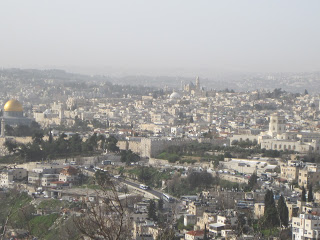
jerusalem04Let us go now to Jerusalem.

Grace and Peace,

Shelli