On the Way Down the Mountain

Jezreel ValleyScripture Passage:  Matthew 17: 1-9

Six days later, Jesus took with him Peter and James and his brother John and led them up a high mountain, by themselves. And he was transfigured before them, and his face shone like the sun, and his clothes became dazzling white. Suddenly there appeared to them Moses and Elijah, talking with him. Then Peter said to Jesus, “Lord, it is good for us to be here; if you wish, I will make three dwellings here, one for you, one for Moses, and one for Elijah.” While he was still speaking, suddenly a bright cloud overshadowed them, and from the cloud a voice said, “This is my Son, the Beloved; with him I am well pleased; listen to him!” When the disciples heard this, they fell to the ground and were overcome by fear. But Jesus came and touched them, saying, “Get up and do not be afraid.” And when they looked up, they saw no one except Jesus himself alone. As they were coming down the mountain, Jesus ordered them, “Tell no one about the vision until after the Son of Man has been raised from the dead.”

Boy, that was some trip up that mountain!  Who was ever going to believe this?  But it doesn’t matter because Jesus tells them to be quiet about it, tells them to go back to their lives, go back to their work.  Really?  How in the world can you just go back?  How in the world can you go back to things the way they were after basking in glory?  Well, maybe that’s the point.  Maybe we can’t.

I think that all of us are given glimpses of glory, tastes of the Divine, from time to time, if we only pay attention.  The Celts called them “thin places”, the places where heaven and earth, where the sacred and the ordinary, suddenly, if only for a moment, touch as if they are somehow part of each other, perhaps even dependent on each other.  It is a place of liminality, betwixt and between.  It is a place that belongs not to one or the other but instead is some sort of shared reality as the Sacred and the ordinary spill in to each other.  The people of whose journeys we read in the Torah believed that no one could ever see God without dying.  They talked of God as consuming fire and destructive wind, a rushing force that passes over the earth leaving little in its wake.  That thin place, the place where the earth meets the sky was one of no return.  They assumed that no one would ever come back down the mountain.

Maybe we’ve become a little too accustomed to this God we know.  Maybe our glimpses of glory have become a bit too pre-planned.  Maybe our thin places have gotten a little too thick with earthbound images of who God is in our lives, of how much of God we really want to encounter.  Because, you see, when you truly encounter those glimpses of the Sacred and the Holy, those you truly do not expect, when you let yourself be surprised by a cloud, you cannot help but be changed.  In a way, the early Hebrews were right.  When you encounter God, that you that you’ve made dies a little.  It has to, it has to make room for a God you never knew.

So on our way down the mountain, we realize that we cannot stay.  We cannot stay and bask in glory forever.  We were never called to that, to some sort of pious and righteous existence high above the world.  We were sent, sent down the mountain, back to the world.  But a part of us has died.  And from the ashes, we will rise.  Because, you see, that’s the only way it will happen.  So go, be careful where you walk.  We have to go down the mountain.  We have to go back.  Jerusalem is waiting.  But we are different; we have basked in glory.  For now, we will be quiet about it.  There are others waiting to join us on this journey.  Someday they will all understand.  Someday we will understand.  But in the meantime, we are just called to go.

As you prepare to begin this Lenten journey, where have you encountered those thin places, those moments of almost, just almost, touching the Sacred?

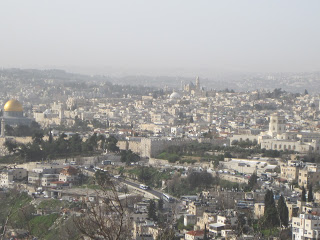
jerusalem04Let us go now to Jerusalem.

Grace and Peace,

Shelli


Flesh


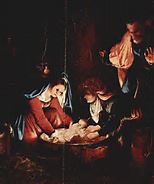
"The Nativity", Lorenzo Lotto, 1527-1528
“The Nativity”, Lorenzo Lotto, 1527-1528

Scripture Passages for Reflection:

When Joseph awoke from sleep, he did as the angel of the Lord commanded him; he took her as his wife, but had no marital relations with her until she had borne a son; and he named him Jesus. (Matthew 1:24-25)

And she gave birth to her firstborn son and wrapped him in bands of cloth, and laid him in a manger, because there was no place for them in the inn. (Luke 2:7)

And the Word became flesh and lived among us, and we have seen his glory, the glory as of a father’s only son, full of grace and truth. (John 1:14)

The Gospel writers all seemed to struggle a bit to fully convey the wonder, the unfathomable glory, of this night.  In fact, the writer that we know as Mark didn’t even really try.  He or she just jumped right in proclaiming the Good News, seemingly in a tremendous hurry to get the word out.  For the writer of Matthew’s Gospel, he seemed to only be able to state it with some proof of what it was not.  (In other words, this is no ordinary birth.)  And the writer that we call Luke seemed very focused on the physical place of Jesus’ birth and the realization that there really was no room.  But years later, the writer of John’s Gospel, conveyed a notion with which we still struggle:  that God in God’s wisdom after centuries upon centuries of trying to deal with humanity, after years of drawing us toward the Divine, of showing us a vision that God has for each of us, became flesh, one of us.  On this night, God is born human, fully human, into a world that was never really ready, never really prepared (and probably still isn’t).  And, yet, God must have loved the world, even THIS world, more than life itself, to come into it as one of us.  God became human and lived with us.  Incredible thought, isn’t it?

The Incarnation is God’s unveiling, God’s coming out of the darkness and the shadows and the clouds and showing us for the first time what we could not see before. Emmanuel, God With Us, this day walks into our ordinariness.  God has traversed time and space and all things Divine to enter our every day world.  Pierre Teilhard de Chardin said that “by virtue of the creation, and still more of the incarnation, nothing here below is profane for those who know how to see.”  Perhaps God came into this ordinary world to show us the holiness that had been created, the sacredness that in our worldliness, we were somehow missing. God steps into our lives to show us the depths to which we have not allowed ourselves to dig.   No longer can flesh and humanity be deemed “bad”; God came as flesh, came as human, came as one of us.  It would be easy to dismiss the whole thing as something that “seemed” like one of us because, after all, this is God.  And what would God be doing fooling around with the squalor and feebleness of this world?  You see, it is not that God lowered the Godself to our standard but that God’s coming raised us toward the Divine.  And notice in the Christmas stories how they emphasize the lowliness of the surroundings and the danger to the child as much as the miraculous glory of the event.  By entering human existence, even God faces down the power of evil, sin, and death.  In love, God elects to be no more immune than we are from the dangers to love and life.

Thomas Merton once said that “the Advent mystery is the beginning of the end in all of us that is not yet Christ.”  It is all this waiting, all this preparing that we have done that has put us in this place.  It is the place that humbles and amazes at once.  Who would have ever thought?  Who would have ever written the story such that a baby’s birth on a cold desert night in the midst of social turmoil would be the in-breaking of the Godself into our world, Emmanuel, God With Us.  After all this time, all this waiting for God, this hoping against hope that God would show up and pull us out of the mire of humanity, God comes full on into it, not pretending to be like us but becoming one of us.  God came to show us how to be who we are, who we are called to be, and to show us that, once again, it is very, very good.  So, on this night of nights, as the Light begins to dawn and we realize that God has come bursting into our lives and into our world, let us open our eyes and rub the sleep out of them and finally see this thing that has happened.
Reflection:  On this night of nights, what does God in our midst mean for you?  How can this year be different?
Merry Christmas!
Shelli

Advent 4A: A Little Bit of Water and a Ritz Cracker

Ritz CrackersLectionary Epistle for Reflection:  Romans 1: 1-7

Paul, a servant of Jesus Christ, called to be an apostle, set apart for the gospel of God, which he promised beforehand through his prophets in the holy scriptures, the gospel concerning his Son, who was descended from David according to the flesh and was declared to be Son of God with power according to the spirit of holiness by resurrection from the dead, Jesus Christ our Lord, through whom we have received grace and apostleship to bring about the obedience of faith among all the Gentiles for the sake of his name, including yourselves who are called to belong to Jesus Christ, To all God’s beloved in Rome, who are called to be saints: Grace to you and peace from God our Father and the Lord Jesus Christ.

First of all, this has to be the king of run-on sentences.  Perhaps Paul was not one for taking lots of breaths.  Or was he almost in a panic-state trying to get the words out?  It was as if his audience was somehow drifting away, heading down a road that he did not think was good, leaving Paul behind in a sense.  So, Paul, with more words than a sentence could hold, went chasing after them.  Whatever it is, Paul is reminding his hearers to whom they belong.  Maybe it was his way of trying to call them away from the lure of the world, from what Paul saw as an almost competing society, a competing way of living and being.  See, these people probably had no problem seeing themselves as belonging to Christ, as part of Christ’s kingdom.  I mean, they were new believers.  They were excited.  They were still pumped up from that first evangelical moment that they had experienced.  And yet, there was the Roman Empire looming large around them.  It was hard to refuse.  Who are we kidding?  It was dangerous to refuse.  One could quickly lose everything.

Now I don’t think Paul really wanted them to leave it all behind.  After all, his own identity as a Jew in the Roman Empire was important to him.  He just wanted them to see something different.  He wanted them to see something bigger.  He wanted them to realize that it was not that the Roman Empire was where they belonged now and the Kingdom of God was where they were going; rather, the two existed together.  He wanted people to understand that the Kingdom of God was not the “other way”, not the veritable opposite of the way they were living but rather the “Thing” that encompassed the “thing”.  And maybe they belonged to both things.  (I mean, in our own context, patriotism is not anti-God; it just has the possibility of developing into sort of a misplaced devotion that competes with our spiritual selves.)  All that we are and all that we have and all to which we belong belongs to God.  It is the way God lays claim on us, bursting into our lives as we know them, pouring the very Godself into each and every crevice of our lives until all (yes, ALL) is recreated in the Name of Christ.  We are called not to choose between Christ and the world but to bring Christ to the world.

The other day I baptized a young child that was eating a Ritz cracker through the whole thing. Now, we don’t usually pass out hor’dourves with the Sacraments, but, really, did that change God’s Presence in that moment?  For that matter, who’s to say that it didn’t make that Presence more real?  (OK, so maybe I’m not as much of a sacramental purist as you thought!)  God’s presence and God’s promise comes wherever one is.  Our calling is to respond to that presence in the midst of the lives we lead.  But that entails learning to see and listen in a way that many of us do not.  We need to appreciate how God calls others into being so that we might be able to better discern our own unique way that God is entering our lives.  And the Ritz?  Well, who hasn’t eaten a Ritz? (And, for me, a little peanut butter)  It is not part of the “other” way of living.  All that we have and all that we are belongs to God.  And, you know, that little bit of water that I sprinkled onto that child’s head does not exist in a vacuum.  The choice is not to choose the water or the Ritz.  The choice is not to choose God or empire.  The choice is to follow God through all that is and all that we encounter, to open oneself to becoming new not instead of the old but as even it is made new.

In this Advent season, we have walked in the wilderness.  We have encountered darkness.  We have waited and waited for God to make the Godself known to us.  Maybe that for which we’ve waited was here all along–in the wilderness, in the darkness, in the Empire.  Maybe God’s Presence is found in all of it when we learn to see, when we learn to open ourselves to possibilities.  Maybe God’s Presence is not some big, flashy extravaganza like we’ve been expecting.  Maybe it’s been there all along, sort of like a little bit of water and a Ritz cracker, or maybe more like a baby born into a world that was not ready, that was never ready, a world that couldn’t move over and make room.  Advent is not about welcoming a King; Advent is about making room for a God who comes into our ordinary lives as an ordinary person into an ordinary place and makes it all extraordinary.  Advent is a lot like eating a Ritz cracker through a Holy Sacrament.

Reflection:  What are you expecting God’s Presence to be?  What is the most ordinary thing that you see right now?  Where might God’s Presence in it?

Grace and Peace,

Shelli

Advent 3A: We the People

Upside Down WorldLectionary Passage for Reflection:  Luke 1:47-55
“My soul magnifies the Lord, 47and my spirit rejoices in God my Savior, for he has looked with favor on the lowliness of his servant. Surely, from now on all generations will call me blessed; for the Mighty One has done great things for me, and holy is his name. His mercy is for those who fear him from generation to generation. He has shown strength with his arm; he has scattered the proud in the thoughts of their hearts. He has brought down the powerful from their thrones, and lifted up the lowly; he has filled the hungry with good things, and sent the rich away empty. He has helped his servant Israel, in remembrance of his mercy, according to the promise he made to our ancestors, to Abraham and to his descendants forever.”

We love this passage.  It is Mary’s Song, the poetic rendering of her realization that she has truly been blessed, that she has been called to do what no one else has done, what no one else will do.  She has been called to give birth to God in this world, to deliver the promise that her people have always known.  But, lest we overly-domesticate the young girl that we know as Mary, these words attributed to her are downright radical.  This is a strong and faithful young woman who is responding to her call not just to birth a baby into the world, but to also open the doors to the eternal as it comes flooding in.  She is the forerunner, the one who opens the door that so many have tried desperately to nail shut then and even now.  She has brought God’s Presence into something that we can see, that we can fathom.  But it comes with a price.  No longer can we continue to live our lives as we have.

E. Stanley Jones called The Magnificat “the most revolutionary document in the world”.  It is said that The Magnificat terrified the Russian Czars so much that they tried to dispel its reading.  It is an out and out call to revolution.  Less subversive language has started wars.  Edward F. Marquart depicts it as God’s “magna carta”.  It is the beginning of a new society, the preamble to a Constitution that most of us are not ready to embrace.  We’d rather chalk it up to the poetry of an innocent young woman.  But this…

God will scatter the proud, those who think they have it figured out, those who are so sure of their rightness and their righteousness.  In other words, those of us who think that we have it all nailed down will be shaken to our core.  The powerful–those with money, those with status, those with some false sense of who they are above others–will be brought down from their high places.  The poor and the disenfranchised, those who we think are not good enough or righteous enough, will be raised up. They will become the leaders, the powerful, the ones that we follow.  The hungry will feel pangs no more and those who have everything–the hoarders, the affluent, those are the ones whose coffers will be emptied to feed and house the world.  God is about to turn the world upside-down.  Look around you.  This is not it; this is not what God had in mind.  And God started it all not by choosing a religious leader or a political dynamo or even a charismatic young preacher but a girl, a poor underage girl from a third-world country with dark skin and dark eyes whose family was apparently so questionable that they are not mentioned and whose marital status seemed to teeter on the edge of acceptable society.  God picked the lowliest of the lowly to turn the world upside down.

We try so hard to do things right, to do what we can to fill the needs of the world.  But the Magnificat does not call us to fix things.  It does not call us to share what think we can with the less fortunate.  It calls us to change, to turn our lives upside down.  So, who is supposed to make this happen?  We are.  You know…”We the People”.  What does this mean?  Well, you know that vision that we keep talking about?  This is it.  This is the beginning.  This is the cracking open of the locked door so it can flood into our lives and into our being.  And if we just listen, just let it be, think what it would like:

There will be no more days like today when we remember the first anniversary of the worst mass school killing in our history.   Never again will we remember 20 children and 6 adults who did not have to die before their lives were filled.  The woman who came through my neighborhood Wednesday night looking through the trash cans for food will have more than the meager pasta and sauce and peanut butter and apples and bananas and crackers that I hastily threw in a bag for her.  No more soldiers and no more children that were just in the wrong place at the wrong time will die in needless violence as we fight for control of this world or attempt to insure that weapons of mass destruction will not be used against us.  There will be no more illness or death because someone could not afford medical care or because they live in a place that does not provide it.  There will be no young people who cannot get a good and solid education with the best resources and technical support that our world and our brains now offer.  Our earth will no longer cry in pain as we consume resources beyond what we need and throw the rest away.  And each of God’s creatures–human and others–will have what they need and the relationships that they need to become what God calls them to be.  In other words, everyone will know, finally, that they have a home.

Aren’t we supposed to be looking toward Christmas?  Isn’t this supposed to be a joyous time?  Why in the world, you ask, am I depressing everyone?  Because, you see, God did not wait to come into the world until everything was right.  God chose instead to come and show us how to be who we were created to be.  And that, that is pure joy beyond anything that we can imagine.  That is our blessing.  Now it’s our turn…“We had the option to do nothing, or to do something.  And then when you think of it like that, we didn’t have any options.” (Mark Barden, whose 7-year old son, Daniel, was killed at Sandy Hook Elementary one year ago today.)

We the People…in Order to form a more perfect Union, establish Justice, insure domestic Tranquility, provide for the common defence, promote the general Welfare, and secure the Blessings of Liberty to ourselves and our Posterity, do ordain and establish this Constitution…

Blessed be the God of Israel, who comes to set us free;
he visits and redeems us, he grants us liberty.
The prophets spoke of mercy, of freedom and release;
God shall fulfill his promise and bring his people peace.

(Michael A. Parry)

Reflection:  What part of God’s vision are you called to bring?  What in your life do you need to turn upside down?  In other words, what do you plan to do with this life you’ve been given?

Grace and Peace,

Shelli

Waiting For Each Other

waitingPassage for Reflection:  Isaiah 30: 18-20

18Therefore the Lord waits to be gracious to you; therefore he will rise up to show mercy to you. For the Lord is a God of justice; blessed are all those who wait for him. 19Truly, O people in Zion, inhabitants of Jerusalem, you shall weep no more. He will surely be gracious to you at the sound of your cry; when he hears it, he will answer you. 20Though the Lord may give you the bread of adversity and the water of affliction, yet your Teacher will not hide himself any more, but your eyes shall see your Teacher.

So, what are we supposed to be doing while we’re doing all this waiting?  I think that Advent may be the Master Teacher in waiting, dangling unlit candles each week and angels coming to a young girl and a world that is not ready.  And, of course, the rest of the world decorates the Christmas trees and covers the houses with lights and pressures us to get everything done (Hurry, hurry, hurry…Cyber Monday-Tuesday-Wednesday-Thursday is almost over!!!).  But Advent quietly calls us to wait.  OK, which is it?  Do we wait or do we follow that vision of God and change the world, the vision that has been in front of us all this time?

There’s our problem.  The act of waiting to which we are called, the waiting that Advent teaches us over and over again, year after year, is not your run-of-the-mill-twiddle-your-thumbs kind of waiting.  The waiting to which we are called is active.   It is indeed a waiting that changes the world.  So what, then, are we waiting for?  Well, see, we wait for the time to be right; we wait for our galaxy of stars to perfectly align; we wait for the world to accept the change that we offer, to need the gifts that we have to give.  And all this time, the One for which you were waiting has been waiting for you.

So in this season of Advent, we are told to wait.  We are not told to stop, just to wait.  Perhaps it is our time to let go of the plans that we had made, to let go of what or who we envisioned would save us.  Perhaps it is the time to return to the One that envisioned us in the first place, the One that is waiting for us to return, the One that calls us to act, to work, to build the Kingdom of God.  Advent is not about stopping what you are doing but just rethinking it.  We are called to be a part of bringing God’s vision into being but we have to wait long enough to know what the vision is.  God is waiting for us to realize that…And we are called to realize that all this time God has been there…waiting, waiting for us to wait for God.  All this time we were waiting for each other…

Click to listen…

http://www.youtube.com/watch?v=lIY_2t0ZKPU

Reflection:  For what are you waiting?  Are you waiting on the God who is waiting on you?  What part of God’s vision are you being called to change?  Perhaps you’ll have to wait on the other parts, but is there something that you are called to do now?  Is there something that God is waiting for you to do?

Grace and Peace,

Shelli

Bending Rules

Bending tree2This Week’s Lectionary Text: Luke 7:36-8:3

I am for the most part a rule-follower (so I’m trying to get back to posting some blogs!).  Part of it is due to what could probably be considered my meticulous, “Type A” personality, but my guess is that most of it is due to my small-town, Protestant upbringing.  Rules are good.  They create boundaries; they can provide protection; they serve as a foundation on which to stand and from which to grow as we are guided by the remnants of the past.  Our society and our lives are built on rules.  So what happens when the rules are not followed?  Does it always result in chaotic anarchy?  Or are there some rules that it’s alright to stretch just a bit? Do you think that there are possibly some rules that need to be bent?

We all know enough about religion to know that it was based on rules from the very beginning.  My own denomination’s generally-accepted beliefs and consensual polity are encapsulated in The Book of Discipline of the United Methodist Church.  This is not a new publication.  It’s been around for about as long as Methodism has been in the United States.  I have a small collection of antique Disciplines and the oldest one that I have is dated 1828.  I also have one that I found in my great-grandfather’s attic.  It’s from 1900.  When you look through it, there are some similarities to our current one.  It has the Articles of Religion and the General Rules.  But it’s also got some rules that we would probably consider just downright odd.  They seemed to be very concerned with how people dressed and intent on insuring that people did not come to church wearing too much jewelry.  There are very few of us that would fit into that mold of what we’re supposed to look like when we come to church.  The point is that sometime rules change.  Sometimes they need to be edited or added to and I think sometimes they need to be thrown out altogether.       

In the Gospel passage that we read, we are given lots of rules.  It starts at the beginning when it tells us that Jesus “took his place at the table.”  He took his place as if there was a designated place where he was supposed to sit.  It was probably, you could surmise, toward the head of the table to the right of the host.  Isn’t that what the rules of etiquette usually tell us?  And then this woman enters—a woman already defined by the community and now by Scripture as a “sinner”.  Somewhere along the way she had apparently broken some rule of conduct and violated what would be considered an acceptable way of living and being. (People have often designated her a prostitute.  Go there if you want, but it never really tells us, so…maybe that’s not a great “rule of thumb”!)  And now she is apparently interrupting what is probably a perfectly-choreographed evening in the home of one of the most respected religious leaders.  She desires to anoint Jesus’ head with oil.  (Boy, I hope she doesn’t get that all over the imported tablecloth!) But standing nearer Jesus’ feet, she is suddenly overcome with emotion and begins to weep.  She begins to wash his feet with her tears, takes down her hair to dry them and then kisses them and pours the anointing oil on them.  What a spectacle that must have been!  And right here in the home of this respected Pharisee!

And so the Pharisee not only pronounces judgment on the woman, but also on Jesus.  After all, they had both broken the rules!  Woman of questionable reputation did not act like this, with weeping and flying hair and all, and if Jesus was really who he claimed to be, he would have known better.  But Jesus’ response is not the apology that the Pharisee and his “respectable” guests probably expected.  Instead Jesus challenges Simon’s pronouncement of both of them by launching into a parable about forgiveness.  And woven through the parable are reminders of what the woman did.  She openly and generously gave of herself, more than anyone else at the table had done.

Jesus is trying to make them realize that there is something more than rules, there is something more than religion, and there is something more than doing the “right thing”.  Ralph Waldo Emerson said that “the faith that stands on authority is not faith”.  I think that is what Jesus is trying to get across.  Faith is not about rules.  The woman’s intense act of love beyond all reasonable expectations and all acceptable actions becomes a means of grace.  It leads us to God.  It shakes us out of our comfort zones of what is normal and expected and even acceptable because, when you think about it, Jesus was very seldom normal and expected and even acceptable.  Instead he showed us how to step out of our boxes and live a life of faith—real faith that is untamed and uncontrolled and virtually undefined, a faith that rips open our carefully-sewn-together lives just enough to let God’s presence spill into them.     

 In a 2006 article in the “National Catholic Reporter”, editor Tom Roberts said that “we live in an age of expanding religion and a diminishing God.”  Those words probably make several of us squirm.  After all, have we become so sure of who we think God is and what we think God wants from us that we are willing to sacrifice the new and expanding ways that God interacts with our lives?  Religion and faith are not the same thing. Religion is about what we believe and why we believe.  It is about tradition, the institution, the system, and, yes, the rules.  When you think about it, our religion has been constructed over centuries.  It has given us creeds and liturgy and definitions of God.  It gathers us and grounds us and reminds us of a world to come.  It gives us commandments and rules that guide the way we live so that we can become what we seek, so that we can journey toward a oneness with God.  It is meant to lead us to God, not pave the way (as in make it easier) or drive us there. 

Somewhere in the midst of those rules we, like Jesus, have to do a little bending.  We have to at some point move beyond and transcend the rules and rituals.  We have to look beyond where we are to that place to which God calls us.  That is where faith comes in.  That is where God, greater than any religion, meets us.

In her book, Called to Question, Joan Chittister says that “in order to find the God of life in all of life, maybe we have to be willing to open ourselves to the part of it that lies outside the circles of our tiny little worlds.”  She goes on to tell a Sufi tale of disciples who, when the death of their master was clearly imminent, became totally bereft.  “If you leave us, Master,” they pleaded, “how will we know what to do?”  And the Master replied, “I am nothing but a finger pointing at the moon.  Perhaps when I am gone you will see the moon.”  The meaning is clear:  It is God that religion must be about, not itself.  When religion [or rules] makes itself God, it ceases to be religion.  But when religion becomes the bridge that leads to God, it stretches us to live to the limits of human possibility.”[i]  Chittister maintains that “religion ends where spirituality begins.”  From that standpoint, these rules, these dogmas, all of these things that make up our religion are not our faith journey, but they lead us through it.  They are, from that standpoint, a means of grace.

And as we change, as our journey changes, as our context changes, perhaps we are sometimes called to the act of bending rules.  It doesn’t mean that we’re dismissing them or ignoring them.  It means that we are allowing the conversation about God to continue.  But more important than that, it means that we are becoming part of the conversation.  We are becoming part of the journey.  And so, perhaps we really are called to a spiritual discipline of bending the rules sometimes.  It is part of the ongoing conversation, the ongoing faith journey of which we are a part.  Sometimes that bending means we just understand it better after we’ve questioned and explored.  Sometimes it means that we need to add something to make it clearer for us and for those who walk this journey with us.  And sometimes it means that we need to get rid of things that no longer augment or serve to depict our understanding of who God is and how God enters and is revealed in our lives.   Hugh E. Brown said that “Christianity is not being destroyed by the confusions and concussions of the time; it is being discovered.”  That is the point.  We don’t discover how God is revealed to us without continuing to think about it, continuing to look and re-address how we have understood God. 

That’s what Jesus was doing that day at the Pharisee’s house.  He wasn’t shunning the rules that had been a part of the faith tradition for as long as anyone could remember.  He was just bending them a bit, making them a bit more pliable, a bit more nimble, a little bit more transcendent, a little bit closer to what God had in mind.  The rules are meant to be foundations on which we can stand and through which God is revealed.  But when they become boundaries that control who is welcome and who is accepted, or who is invited to live out their own calling or who is not, that is not what God is about.  So, Jesus didn’t really follow the rules.  In fact, Jesus often got himself in trouble with those rule-followers.  Jesus just loved God and wanted to reveal that love for us and everyone else.  And here was this woman—a sinful woman, the Scriptures say—shunned by the rule-followers and welcomed by God.  Because you see this woman did what we are called to do—love generously and extravagantly, love the way that God loves.  G.K. Chesterton said that we should “let our religion be less of a theory and more of a love affair.”  There are really very few rules—except to love the way God loves and be open to doing perhaps a little bending.

So, go do a little rule-bending of your own!
 
Grace and Peace,
 
Shelli
 
(To see notes on all of the Lectionary texts for this week, go to http://journeytopenuel.wordpress.com/)


[i] Joan Chittister, Called to Question:  A Spiritual Memoir, (Lanham, MD:  Sheed & Ward, 2004), 19-20.

Falling in Love With God

Lectionary Passage: Song of Solomon 2: 8-13

To read this passage online, go to http://bible.oremus.org/?passage=Song+of+Songs+2:8-13&vnum=yes&version=nrsv

Do you love God?  Sure you do!  That’s the whole point, right?  But here’s perhaps a harder (or at least a weirder) question:  Are you in IN love with God?  After all, being “in love” seems to be something so profoundly human, so earthy, so “fleshy”, so intimate, so private.  It’s more than just loving.  It’s more than just being together.  It’s almost a completion of who you are called to be, an entirely different way of being.  It really is more about being one than being two that love.  We proper Western Protestants understand loving God (and, certainly, pleasing God).  But do we let ourselves fall, with utter abandon, into love with God?    The Old Testament passage from this week’s Lectionary selections is from the wisdom writing known in Hebrew as the Song of Songs.  It’s not the usual fare for our lectionary.  I mean, it borders on what is sometimes characterized as almost erotic imagery and it doesn’t even mention God.  So, as you can imagine, there were lots of debates about whether or not it belonged in the canon at all.  The matter was settled by Rabbi Akiba, the great teacher and mystic, who said this: “The whole world is not worth the day on which the Song of Songs was given to Israel, for all the Scriptures are holy, but the Song of Songs is the Holy of Holies.   The Holy of Holies?  Wow!  We’ll have to think about that one.  I mean, really?  We struggle with that, as if our relationship with God should be proper and acceptable, as if it should be reverent of the One in whom we live and breathe and have our being.  So what is reverence?  Is it standing away, removed from the One whom we revere?  Or it is realizing that every molecule of our being desires to connect with God, longs to return to the One who created us.  Or maybe, just maybe, it’s falling in love with God.   Implicit in this poem is a sort of pining absence, a longing so deep that the poet cannot be complete without the One that is loved. I think that’s the way we’re called to be. I mean, think about it, we were created in the image of God, made with a shape and a sense into which only God fits. And we struggle. We struggle to find what fits into that shape. And in the absence, in the longing, we finally find that Presence of God, we finally find that One in whom we are destined to fall in love. Seventeenth century mathematician, Blaise Pascal spoke of it as a “God-shaped vacuum” in every human, a hole that only God could fill. It’s like being in love.

Like I said, this poem is not your usual reading from the Bible. There are no parables, no words of judgment, no promises of future and unrequited redemption. Rather, there is presence; there is reverence; there is a depiction of the most joyous and incredible love imaginable. It is flirtatious, and playful, and filled with utter joy. It is the very love of God. And the poet depicts it as transforming, a veritable spring at the end of winter, when life bursts forth from lifelessness and literally consumes death.  (Sounds like resurrection to me!)

Perhaps it is the language that makes us bristle, that makes us squirm a bit in our pews.  Perhaps we are even a bit uncomfortable with a God who is so intimate, so a part of us, that falling in love is all we can do.  Perhaps we really haven’t thought through what it means to be created in the image of someone else.  It means that we have to let ourselves go, that we have to become who God called us to be, that we have to realize that there is something more, that WE are something more, that we are created in the image of our Beloved, that we are created to fall in love with God.  It is about completion; it is about wholeness; it is about being who we were created to be.  It is about falling in love with God and falling into God.

Our lectionary probably doesn’t do us any favors because it doesn’t even allow us to finish the poem.  The next four verses go like this:

O my dove, in the clefts of the rock, in the covert of the cliff, let me see your face, let me hear your voice; for your voice is sweet, and your face is lovely. Catch us the foxes, the little foxes, that ruin the vineyards— for our vineyards are in blossom.”   My beloved is mine and I am his; he pastures his flock among the lilies.  Until the day breathes and the shadows flee, turn, my beloved, be like a gazelle or a young stag on the cleft mountains.

My beloved is mine and I am my beloved’s.  That’s a whole lot different than an image of a seemingly-removed deity sitting up somewhere waiting for us to get our act together and catch up.  And it flies in the face of us spending our earthly lives wallowing in chaos and muck, hoping against hope that we will finally rack up enough points to make it to heaven someday.  Once again, it’s present tense.  We are God’s and God, in a show of grace more amazing than we could ever sing, becomes ours.  We are not just called to love and support and please God and try to figure out who or what God is; we are called to let ourselves go, to fall into love with God and fall into God with utter abandon and profound joy.

Until the day breathes and the shadows flee, turn, my beloved…My beloved is mine and I am [my beloved’s].  Thanks be to God!
There is only one love.  (Teresa of Avila)
Grace and Peace,
Shelli