Fast Track

FastingScripture Text:  Deuteronomy 8:3

[God] humbled you by letting you hunger, then by feeding you with manna, with which neither you nor your ancestors were acquainted, in order to make you understand that one does not live by bread alone, but by every word that comes from the mouth of the Lord.

Lent is typically a season for fasting, for self-emptying oneself  of whatever overfills us.  And yet, fasting, is something that postively eludes most of us who live in this world of instant gratification and excessive consumption.  In fact, “going without” is completely anathema for us so fasting has more than likely been shoved to the back of the storage closet with all those other archaic things. After all, we want to believe in a God that blesses us with showers of abundance rather than a God that might on some days expect us to go without.  I’m afraid many of our somewhat fragile identities have a lot to do with what we have.  What if, instead, we were defined by what we could do without?  (That’s purely rhetorical…I have no answer!)

But fasting has for centuries and centuries been a part of just about every religious tradition.  The ancient Hebrews (and those of the Jewish tradition today) observe a special period of fasting as a sign of repentance on the Day of Atonement, or Yom Kippur.  Fasting was a sign of mourning or act of reparation for sins.  It was both a way to express repentance as well as prepare oneself inwardly for receiving the necessary strength and grace to complete a mission of faithful service in God’s name.  This was the reason that Jesus fasted for 40 days in the wilderness–not to prove something but to prepare himself for a life of ministry.  Fasting is neither abstinence from nor avoidance of, but a journey into a place that’s empty enough to fill with what God offers.  Essentially, it is allowing oneself to die to self and to our selfishness and rise again in Christ.

So, why is it so hard?  Maybe it is not merely because we have a hard time going without (although I think that is a large part of it.)  Maybe it is because we are expecting it to produce results that it is not meant to produce. Fasting is not meant to make us lose weight or make us decrease our sugar consumption or whatever else you’re trying to cut back on.  Fasting is not meant to be manipulated in that way. It is meant to clear rather than produce.  Think of fasting as response–a response to grief or sin, a response to graciousness or thankfulness, a response to a God who calls us out ourselves.  But perhaps fasting is also about return, a return to our own self before we developed all these needs, before we stored everything away, a return to the self that God created–with proper perspective and an awareness of what basic needs actually are. If you look up the physiology of fasting, you will find that a body can survive for 40 days or more without eating (Well, isn’t THAT interesting?)  In that time, depriving a body of food is not starvation but rather a burning of stored energy.

But I have to say that fasting has never been a huge part of my spiritual discipline.  Being the good Methodist that I am, I have always maintained that I can “add” to my Lenten practice and do the same thing as fasting.  I’m not real sure, though, that that is the case.  (Although writing on this blog every day during Lent has become my Lenten discipline.)  Maybe, even metaphorically, I am only storing in excess, building and building for the future, trying to take as much of God’s abundance as I can and stash it away.  Maybe in this 40 days of fasting, we are indeed called to let something go, to return to who we are before we stored it all away–the “leaner”, fuller, more focused self who knew that our basic daily needs would be met and that the abundance of God was really about allowing God to fill our needs and fill our lives and show us the way.  In other words, we are called to give up our self-imposed “fast track” for a new and freeing Fast Track, a journey toward God with God.  And once our bodies and our minds and our souls (and our houses!) are cleared of all the stored excess, we will be open to what we need–the very breath of God who breathed life into us in the beginning and each and every day–if there’s room.

Fasting makes me vulnerable and reminds me of my frailty.  It leads me to remember that if i am not fed I will die…Standing before God hungry, I suddenly know who I am.  I am one who is poor, called to be rich in a way that the world does not understand.  I am one who is empty, called to be filled with the fullness of God.  I am one who is hungry, called to taste all the goodness that can be mine in Christ.  (Macrina Wiederkehr)

We are more than halfway through our Lenten journey.  Many of you may already be fasting from something for Lent.  But why don’t you try giving up those things that are not blamed for your weight or your high blood sugar, but the things that get in the way of your self, that person that God created you to be.  Try giving up anger or resentment or greed or worry.  Try giving up the need to be in control.  You may come up with others.  Just try it through the week-end and if that works out, make it part of first your Lenten discipline and then your Life discipline.

Grace and Peace on this Lenten Journey,

Shelli

Seeing What is Hidden From View


The Wizard of Oz (Revealed)

Scripture Passage:  John 9: 1-12 (13-41) (Lent 4A)

As he walked along, he saw a man blind from birth. His disciples asked him, “Rabbi, who sinned, this man or his parents, that he was born blind?” Jesus answered, “Neither this man nor his parents sinned; he was born blind so that God’s works might be revealed in him. We must work the works of him who sent me while it is day; night is coming when no one can work. As long as I am in the world, I am the light of the world.” When he had said this, he spat on the ground and made mud with the saliva and spread the mud on the man’s eyes, saying to him, “Go, wash in the pool of Siloam” (which means Sent). Then he went and washed and came back able to see.  The neighbors and those who had seen him before as a beggar began to ask, “Is this not the man who used to sit and beg?” Some were saying, “It is he.” Others were saying, “No, but it is someone like him.” He kept saying, “I am the man.” But they kept asking him, “Then how were your eyes opened?” He answered, “The man called Jesus made mud, spread it on my eyes, and said to me, ‘Go to Siloam and wash.’ Then I went and washed and received my sight.” They said to him, “Where is he?” He said, “I do not know.”

Go and wash.  It sounds so simple.  So there must be something fishy about it, right?  Inherently, we are just distrusting creatures, are we not? It’s interesting that the first thing that people address here is sin. The man has been apparently blind from birth and their first thought is sin? Did he commit the sin? What an odd question! Was he supposed to have committed some sin in the womb that was apparently terrible enough to blind him for life? Or did his parents sin? It’s an odd line of questioning to us. They see a man that has missed out on so much of what life holds, that has never seen what you and I take for granted every day, and they immediately want to know what he did wrong or what his parents did wrong to deserve that.  (Ok, now don’t get too self-righteous about our own reaction.  We do the same thing.  I mean, what went wrong in that person’s life?  It must have been SOMEONE’S fault.)

But Jesus doesn’t see a sinner; Jesus doesn’t even see a blind man; Jesus sees a child of God. And so he reaches down into the cool dirt and picks up a piece of the earth. He then spits into his hand and lovingly works the concoction into a sort of paste. And then, it says, he spreads the mud into the man’s eyes and tells him to go wash in the Pool of Siloam. And the man’s eyes were opened and he saw what had been always hidden from his view.

We love this story.  But there are so many that ask why we don’t hear accounts of healing such as this.  Maybe it’s because we’re looking for miracles with ordinary eyes, with the eyes of our world that need to explain and extract.  Maybe it’s because we do not see something new.  At the risk of destroying the story for you, does the blindness have to be physical?  It never says that, nor does it say that the blind man was “fixed”‘ or “cured”.  If it wasn’t a physical healing, would that lessen the story?  How miraculous it is for someone to see in a different way, to open one’s vision to what God has envisioned for us.

I couldn’t help (again) but think of the Wizard of Oz.  You see, everyone imagined what they would find–courage, heart, mind, and home–imagined what it would look like, how it would come.  But the curtain was torn back and revealed that the miracle-worker was part of this world.  He was just an ordinary person.  So how could he give them courage, heart, mind, and home?  It had to do with seeing what is hidden from view.

This season of Lent is as much about showing us our blindness, our darkness, as it is about bringing us light. For that is the way we see as God sees. It is a way of seeing anew, seeing beauty we’ve never seen before, seeing the Way of Christ. Rainer Maria Rilke said that “the work of the eyes is done. Go now and do the heart-work on the images imprisoned within you.” That is the work of Lent—to release us from our spiritual blindness, from our old way of seeing, frozen in time, and to light the way for a vision of eternity.  We are called to see that which is hidden from view.  It is the work that allows us to see, finally, what has always been hidden from view.  You see (pun intended), it is time for the heart-work.

There are two ways to live:  you can live as if nothing is a miracle; you can live as if everything is a miracle. (Albert Einstein)

Much of this Lenten journey is about seeing, about seeing through our spiritual blindness, our own often self-imposed darkness.  Now is the time for our heart-work.  What does that look like?  What heals you from your won spiritual blindness?

Grace and Peace,

Shelli

So I Wait

Waiting on the journeyScripture Passage:  James 5: 7-10

Be patient, therefore, beloved, until the coming of the Lord. The farmer waits for the precious crop from the earth, being patient with it until it receives the early and the late rains. You also must be patient. Strengthen your hearts, for the coming of the Lord is near. Beloved, do not grumble against one another, so that you may not be judged. See, the Judge is standing at the doors! As an example of suffering and patience, beloved, take the prophets who spoke in the name of the Lord.

Patience…probably not my strong suit!  And isn’t waiting something that we talk about in Advent?  I thought Lent was supposed to be a journey, a time forward.  But journeys also include standing still, contemplating, thinking, perhaps waiting on change (or at least the traffic to clear).  You see, most of us probably not only want to know where we’re going but we also want to get there fast.  Waiting is not part of our make-up.  We’re programmed to keep moving, even though some of the steps may be painful.  We’re rather traverse the jaggedness of the path than stand and wait for something that we do not control.   It’s as if when we keep moving, we think we have some control, a sense that we are somehow responsible for changing things.

So I wait.

The Scripture talks about the farmer waiting for the crop. We probably understand that better than in most years.  This winter has been hard.  I’m still wondering if some of my plants will come back from the cold pain of the freezing temperatures.  I’ve done what I can.  Now I just wait.  It’s hard.  I like to know what direction things are moving.  But I wait.  My crepe myrtles in my back yard are always good for building patience.  They seem to take forever to come back, almost taunting me with their bare limbs.  I find myself looking to see if crepes are blooming around the neighborhood, wondering if there’s something wrong with them–or maybe something wrong with me.

So I wait.

Standing still–our lives don’t really encourage that–exposed, out of control, just waiting.  Maybe this vulnerability reminds us of our place or, more importantly, makes us appreciate the journey.  Part of this season and part of life is indeed about standing still.  A journey is seldom completed with constant motion.  We are just not made for that. (You can look up that seventh day concept when you have time!  You know…on the seventh day…) Sometimes we are meant to move; sometimes we are meant to stand still and savor what God has shown us.  Behold!  There is the cross.  There you are.  And if you stand still long enough, you will be able to see where you are headed.  We are not called to walk blindly into the unknown, never looking, never questioning, never contemplating where we are or where we’re going or where we’ve been; we are called to journey toward that which God has illumined in our lives.

So I wait.

We must be willing to let go of the life we have planned so as to have the life that is waiting for us.  (Joseph Campbell)

By my count, this is the 20th day of the season (remember, not counting Sundays!).  We are halfway through.  Stop.  Wait.  From where have you come?  What have you learned about the journey that you can take forward?

Grace and Peace,

Shelli

Light Exposure


Long-exposure Star Photography, by Lincoln Harrison

Scripture Text:  Ephesians 5: 8-14 (Lent 4A)

For once you were darkness, but now in the Lord you are light. Live as children of light— for the fruit of the light is found in all that is good and right and true. Try to find out what is pleasing to the Lord. Take no part in the unfruitful works of darkness, but instead expose them. For it is shameful even to mention what such people do secretly; but everything exposed by the light becomes visible, for everything that becomes visible is light. Therefore it says, “Sleeper, awake! Rise from the dead, and Christ will shine on you.”

This passage essentially contends that to “walk in the light” means that we are no longer naïve.  It is not about being happy or “blessed” in terms of how this world sees “blessed”.  The world is illumined by our faith.  We now must own a commitment to justice and compassion for all of Creation.  Light is goodness and justice and truth.  It is not about merely living a moral and righteous life; it is about witnessing to the light that is Christ.  Light and darkness cannot exist together.  As the passage says, light makes all things visible and then all things visible become light.  The Light of Christ makes that on which is shines light itself.  The passage exhorts us to wake up and see the light and then live as children of that light;  in essence, we are called to become light.

I don’t really think of this light of Christ as a bright, blinding spotlight.  It’s really much more nuanced and subtle than that.  Think illuminating, rather than blinding.  And it doesn’t dispel or destroy the darkness but rather illumines it.  It casts a different light, a light that illuminates all.  God, with infinite wisdom, gave us the power and the desire to see through the darkness and glimpse the light shining through, to see the Light that is Christ.  It is a light that is always present regardless of our view, that exposes all that is visible and makes that on which it shines light itself.  There is a Maori proverb that says “turn your face to the [light] and the shadows will fall behind you.”  They are not consumed; they are still there, light streaming into their midst.  Shadows do not exist without light.  Light is what makes them visible.  We are like that.  Exposed by the Light of Christ, we become visible; and by becoming visible, we become light, children of light, images of the Light that is Christ, the Light that is God.

Light exposure changes the thing that is exposed.  When something is exposed to light, it takes on some of those light particles.  Colors lighten and change.  We are no different.  Faith is about light exposure.  When exposed to the Light that is God, we change.  We take on part of that Light.  We become a ray of that Light, a light that becomes visible to all.  We are not meant to live in darkness.  We are created to be children of Light.  We are created to be changed.  There is still darkness.  There are still injustices and prejudices and suffering and pain.  There are still parts of the world begging for Light.  That is where we come in, those who have been exposed, forever changed, and who can do nothing else but shine forth.
I cannot create the light. The best I can do is put myself in the path of its beam. (Annie Dillard)
On this Lenten journey, there is darkness all around.  Go and be Light.  Be that to which you have been exposed.
Grace and Peace,
Shelli

The Call to Prayer

Call to PrayerScripture Text:  Luke 11: 1

He was praying in a certain place, and after he had finished, one of his disciples said to him, “Lord, teach us to pray, as John taught his disciples.”

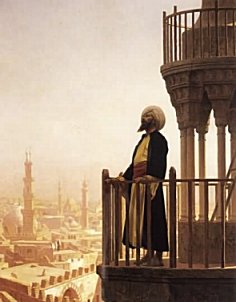
Teach us to pray…we still ask that.  Prayer seems to elude us.  We know that it is part of our spiritual journey but, yet, we still ask how.  When I was in Jerusalem a couple of years ago, I was struck by the Muslim Call to Prayer, Adhan, in Arabic, that rang out across the city five times a day.  I remember thinking that these people seemed to pray a lot more than I do, so I started praying at those times.  It was meaningful to feel a part of that rhythm, that call to return to God in the midst of life’s ritual and to journey with others who are called to the same thing.  I’m afraid that many of us tend to limit our prayers to our needs and the needs of others.  Our lives are wanting for prayer.  We want to know how to pray.  We want to have a deep and abiding prayer life that connects us with God and makes our lives richer and fuller.  How do you pray?  Who taught you to pray?  Why do you pray? What makes your prayer meaningful? Maybe that’s our problem.  We’re trying so hard to bring meaning to our prayer life that we’re not allowing our prayers to bring meaning to our life.  We’re trying so hard to find God that we don’t expect to experience a God who is already there.  God does not need our prayers; we do.  God does not have to be invited into our lives; we just have to open our eyes to God’s Presence that is already there.

The truth is, Jesus knew that.  He knew that people struggled to experience the real Presence of God and because of that, they also struggled with how to acknowledge and live with that Presence in their lives.  He knew that we struggled continuously with doubts about God and about what God wanted from us.  He knew that we struggle with what prayer should be.  So he begins where we are—in the midst of that silence that is God.  He began by showing the disciples what was at the very core of his own life—his relationship with God.  Because remember that Jesus had made prayer an integral part of his life.  How many times do we read of him “withdrawing to a deserted place to pray” or “going to the mountain to pray” or “spending the night in prayer with God?”  He prayed before he chose the disciples, when he fed the five thousand, and on the night before he was led to his death.  He even prayed on the cross, a prayer of centering and forgiveness.

The prayer that Jesus taught us to pray has nothing to do with knowing the right words.  It really is more about persistence.  Jesus continues in this passage by reminding us to keep asking, keep seeking, and keep knocking.  Far from characterizing God as some sort of celestial Santa Claus who always brings good little boys and girls the things for which they ask, Jesus seemed to assume that God is already in motion, that God has already answered every prayer, and that God has already opened every door that needs to be opened and is standing at the threshold inviting us to enter.  So praying opens our lives to the presence of the God who is always and already there and gives us the realization that God provides life’s minimum daily requirements so that all we need to do is open ourselves to being with God.

The truth is, most of us starve ourselves for God.  We search and search for meaning and neglect to realize that there is but a bountiful feast laid before us for our consumption.  And yet, we continue to live on the junk food that we have created in our lives.  We just have to become aware of how badly we need nourishment.  And we need to pay attention to the rhythm that is part of us all.  Prayer is becoming a part of that rhythm, part of that creative Spirit that is God.  Prayer is more than words; prayer is being with God.

To pray is to go down into a deep well where the sound of the voice of God echoes in the darkness.  (Joan Chittister, in Listen With the Heart)

This Season of Lent is about re-patterning our lives to that Rhythm that is God.  Prayer is part of that.  As part of your Lenten discipline, why not set up your own “call to prayer” schedule.  Feel the Rhythm that it holds.

Grace and Peace,

Shelli


This is the One

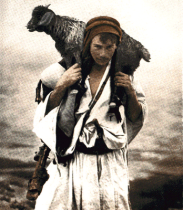
David, the Shepherd BoyScripture Passage: 1 Samuel 16: 1-13 (Lent 4A)

The Lord said to Samuel, “How long will you grieve over Saul? I have rejected him from being king over Israel. Fill your horn with oil and set out; I will send you to Jesse the Bethlehemite, for I have provided for myself a king among his sons.” Samuel said, “How can I go? If Saul hears of it, he will kill me.” And the Lord said, “Take a heifer with you, and say, ‘I have come to sacrifice to the Lord.’ Invite Jesse to the sacrifice, and I will show you what you shall do; and you shall anoint for me the one whom I name to you.” Samuel did what the Lord commanded, and came to Bethlehem. The elders of the city came to meet him trembling, and said, “Do you come peaceably?” He said, “Peaceably; I have come to sacrifice to the Lord; sanctify yourselves and come with me to the sacrifice.” And he sanctified Jesse and his sons and invited them to the sacrifice.  When they came, he looked on Eliab and thought, “Surely the Lord’s anointed is now before the Lord.” But the Lord said to Samuel, “Do not look on his appearance or on the height of his stature, because I have rejected him; for the Lord does not see as mortals see; they look on the outward appearance, but the Lord looks on the heart.” Then Jesse called Abinadab, and made him pass before Samuel. He said, “Neither has the Lord chosen this one.” Then Jesse made Shammah pass by. And he said, “Neither has the Lord chosen this one.” Jesse made seven of his sons pass before Samuel, and Samuel said to Jesse, “The Lord has not chosen any of these.” Samuel said to Jesse, “Are all your sons here?” And he said, “There remains yet the youngest, but he is keeping the sheep.” And Samuel said to Jesse, “Send and bring him; for we will not sit down until he comes here.” He sent and brought him in. Now he was ruddy, and had beautiful eyes, and was handsome. The Lord said, “Rise and anoint him; for this is the one.” Then Samuel took the horn of oil, and anointed him in the presence of his brothers; and the spirit of the Lord came mightily upon David from that day forward. Samuel then set out and went to Ramah.

In this Lenten season, what would change about our journey if we knew where we would end up, if we thought that we might end up in a place that we didn’t plan?  And what would change about our life if we knew how it was all going to turn out?  I mean, think about it…the boy David is out in the field just minding his own business and doing what probably generations of family members before him had done.  Perhaps his mind is drifting off in daydreams as he sits there with the sheep.  Perhaps he is thinking about what his life will be, where he plans to go, what he plans to do.  He sees his brothers leave and go inside one by one, probably wandering what in the world is going on.  Finally, he is called in.  “You’re the one!”  “What do you mean I’m the one?” he probably thought.  “What in the world are you talking about?  Don’t I even get a choice?”  “Not so much.”  And so David was anointed.  “You’re the one!”

What would have happened if David has just turned and walked away?  Well, I’m pretty sure that God would have found someone else, but the road would have turned away from where it was.  It would have been a good road, a life-filled road, a road that would have gotten us where we needed to be.  But it wouldn’t have been the road that God envisioned it to be. We know how it all turned out.  David started out by playing the supposed evil out of Saul with his lyre.  He ultimately became a great king (with several bumps–OK, LOTS of bumps–along the way!) and generations later, a child was brought forth into the world, descended from David.  The child grew and became himself anointed—this time not for lyre-playing or kingship but as Messiah, as Savior, as Emmanuel, God-Incarnate.  And in turn, God then anoints the ones who are to fall in line.  “You’re the one”.

Do we even get a choice, you ask?  Sure, you get a choice.  You can close yourself off and try your best to hold on to what is really not yours anyway or you can walk forward into life as the one anointed to build the specific part of God’s Kingdom that is yours.  We are all called to different roads in different ways.  But the calling is specifically yours.  And in the midst of it, there is a choice between death and life.  Is there a choice?  Not so much!  Seeing the way to walk is not necessary about seeing where the road is going but knowing that the road is the Way.  So just keep walking and enjoy the scenery along the way! 

See, we are no different.  We are all chosen, all, on some level, anointed to this holy work.  We can ignore it.  We can cover our ears and cover our eyes and shroud ourselves with excuses and keep walking the way that we would like.  It will get us somewhere, perhaps somewhere that is good and wonderful and makes us feel good.  But what happens when God calls us from the fields and interrupts our daydreams?  What happens when God has something else in store for us?  Each of us given specific and unique gifts.  We are all called.  It’s not a goal to pursue but a calling to hear.  Our lives are the way we live into that call.  This is the one.  We are the ones.  We are the ones for which we’ve been waiting.

You have been telling the people that this is the Eleventh Hour.  Now you must go back and tell the people that this is The Hour.  And there are things to be considered:  Where are you living?  What are you doing?  What are your relationships? Aare you in right relation?  Where is your water? Know your garden. It is time to speak your Truth. Create your community. Be good to each other. And do not look outside yourself for the leader.  This could be a good time! There is a river flowing now very fast. It is so great and swift that there are those who will be afraid. They will try to hold on to the shore. They will feel they are being torn apart, and they will suffer greatly.  Know the river has its destination. The elders say we must let go of the shore, push off into the middle of the river, keep our eyes open, and our heads above the water. See who is in there with you and celebrate.  At this time in history, we are to take nothing personally. Least of all, ourselves. For the moment that we do, our spiritual growth and journey comes to a halt.  The time of the lone wolf is over. Gather yourselves!  Banish the word struggle from your attitude and your vocabulary.  All that we do now must be done in a sacred manner and in celebration. We are the ones we’ve been waiting for. (The Elders Oraibi, Arizona Hopi Nation)

Lent is a time of holy questioning and holy listening.  Where are you living?  What are you doing?  Where is your water?  For what are you being called?  For what are you the one?

Grace and Peace,

Shelli

Psalm 95: A Season for Worship

Girl WorshippingPsalter:  Psalm 95 (Lent 3A)

O come, let us sing to the Lord; let us make a joyful noise to the rock of our salvation!  Let us come into his presence with thanksgiving; let us make a joyful noise to him with songs of praise!  For the Lord is a great God, and a great King above all gods.  In his hand are the depths of the earth; the heights of the mountains are his also.  The sea is his, for he made it, and the dry land, which his hands have formed.  O come, let us worship and bow down, let us kneel before the Lord, our Maker!  For he is our God, and we are the people of his pasture, and the sheep of his hand. O that today you would listen to his voice!  Do not harden your hearts, as at Meribah, as on the day at Massah in the wilderness, when your ancestors tested me, and put me to the proof, though they had seen my work.  For forty years I loathed that generation and said, “They are a people whose hearts go astray, and they do not regard my ways.” Therefore in my anger I swore, “They shall not enter my rest.”

Sometimes I think that “worship” in our culture is defined based on how gratifying it is to us, on whether or not it is meaningful to us or leave us feeling “spiritual”.   Our worship is sort of graded based on how good the sermon is, or how wonderful the music is, or how it makes us feel.  I know I fall into that trap.  There are just certain styles of worship and worship music that do not feel “worshipful” to me.  But, really, is that what worship is?  What is the point of worship?  Worshippers in Early Judaism believed that God was actually IN the worship space that they carried with them.  And so they would approach the tabernacle with awe and joy.  They didn’t get wrapped up in worship styles or whether or not they liked the sermon.  Worship was about God, about coming into the very Presence of God with thanksgiving.  Worship was about realizing that there was more than us, that God held all of Creation in the Divine Hands and was worthy of worship.

So, when did we lose that?  When did we lose the notion that worship is not about us.  Soren Kierkegaard, when talking about worship, asked that we think about what it means to us.  Using his depiction of worship as a theater, think about your own notion of worship.  Where is the stage?  (Most would say the chancel or the altar.)  Who are the actors?  (Most would say the clergy, the choir, and perhaps the ushers and acolytes, those that “make it happen”)  Who is the audience?  (Well, of course the congregation.)  But Kierkegaard would say that the stage is the whole sanctuary, perhaps the whole world, all  of those places where worship happens.  And the actors?  Well that would be us–all of us, all of us bowing in worship.  And the audience?  The audience is God.  I love that.  I think it reminds us that we are not the center of worship.  It is not about us.

The Psalm reminds us that God is the God of all, that everything is within God’s realm, resting in God.  So we are called to make a joyful noise.  It doesn’t call for happiness.  Happiness, that self-gratifying feeling, is always a little bit elusive.  But joy–joy resides in the deepest part of our being.  It is that sense of awe and presence when we know that God is there, always there, and can do nothing else but come into God’s Presence, nothing else but worship the God of us all.  God desires our worship, not because God is selfish, not because God wants to be honored, not because we in some way owe God that; God desires our worship because God desires us, wants desperately to be with us, for us to feel and know and live in God’s Presence.  And, there, there in God’s Presence, we worship.  Our whole lives, we worship.  Every moment, every place, every piece of our being, worships. O Come, Let us Sing to the Lord!

To worship is to quicken the conscience by the holiness of God, to feed the mind with the truth of God, to purge the imagination by the beauty of God, to open the heart to the love of God, to devote the will to the purpose of God.  (William Temple)

On this third Sunday of the Lenten Season, think about your own worship.  Who is the audience?  What would it mean for your worship to be solely about God and not about you? 

Grace and Peace,

Shelli