Faith in the Midst of Everything Else

city-streetsPaul, a servant of Jesus Christ, called to be an apostle, set apart for the gospel of God, 2which he promised beforehand through his prophets in the holy scriptures, 3the gospel concerning his Son, who was descended from David according to the flesh 4and was declared to be Son of God with power according to the spirit of holiness by resurrection from the dead, Jesus Christ our Lord, 5through whom we have received grace and apostleship to bring about the obedience of faith among all the Gentiles for the sake of his name, 6including yourselves who are called to belong to Jesus Christ, 7To all God’s beloved in Rome, who are called to be saints: Grace to you and peace from God our Father and the Lord Jesus Christ. (Romans 1: 1-7)

So many of us spend our time trying to “find” God, perhaps trying to get to the place where God is.  We often forget that God is not sitting in some faraway place until we clean up our act or pray more or get more religious or figure it all out. (OK, THAT’S probably never going to happen.)  God comes into the normalcy of our lives.  God shows up on city streets and country lanes.  God appears in places that we wouldn’t dare go ourselves.  God does not limit the Divine to the places that are cleaned up and presentable.  God comes not just to the places where we think we should be but the places where we spend our days and spend our hours, the times when we laugh and grieve and dance and walk and get all confused and discombobulated and feel like we’re all alone.  The coming of God into our midst in this very chaotic and holy season reminds us of that.  God did not sit in some far-off palace eating hors d’oeuvres until everyone caught up with the Divine.  God came into the lowliest of cities and was born in the dirtiest of cribs and was held by the poorest of the poor who had been refused entrance to what most of us would count as normal.

The point is that God comes not to the ones who deserve God’s Presence, not to the ones that are really all that prepared, not to the ones that have done what they need to do, but to us.  God comes to us.  God comes into our lives just as they are and begins to walk, first taking our hand and guiding our steps until we can run on our own and help others along the way.  God comes into the places where God is unrecognized and needed the most.

Once I baptized a baby who was eating a Ritz cracker.  The mother was, of course, trying to calm the squirming child down enough to get some holy water on his head and hear the words that reminded us who he was and who we were.  It worked.  There, with Ritz cracker in hand, Hudson was reminded (or his parents were reminded) that he was a son of God with whom God is well pleased.  And I’m thinking that if all that took was a Ritz cracker, then we ought to spend our whole journey with an open box in tow.  We do not have to clean up our act before God comes.  God is willing to come into the very messiness of our lives.  If it takes a Ritz cracker to calm us down enough to receive it, then so be it.  THIS Advent, THIS Christmas, in the moment that you are now, look up and know that God comes, with our without hors d’oeuvres.

God did not wait till the world was ready, till nations were at peace. God came when the Heavens were unsteady and prisoners cried out for release. God did not wait for the perfect time.  God came when the need was deep and great. In the mystery of the Word made flesh the maker of the Stars was born. We cannot wait till the world is sane to raise our songs with joyful voice, or to share our grief, to touch our pain.  God came with Love.  Rejoice!  Rejoice! And go into the Light of God. (From “First Coming”, by Madeleine L’Engle)

FOR TODAY:  Pay attention to God’s coming.  It’s happening now.

Grace and Peace,

Shelli

Unfiltered


unfiltered-light10Again the Lord spoke to Ahaz, saying, 11Ask a sign of the Lord your God; let it be deep as Sheol or high as heaven. 12But Ahaz said, I will not ask, and I will not put the Lord to the test. 13Then Isaiah said: “Hear then, O house of David! Is it too little for you to weary mortals, that you weary my God also? 14Therefore the Lord himself will give you a sign. Look, the young woman is with child and shall bear a son, and shall name him Immanuel. 15He shall eat curds and honey by the time he knows how to refuse the evil and choose the good. 16For before the child knows how to refuse the evil and choose the good, the land before whose two kings you are in dread will be deserted. (Isaiah 7: 10-16)

As we near the end of Advent and the promised coming of God, the prophetic voices seem to get louder and louder.  The picture of the promise has begun to take shape, moving from a far-off clouded beginning to verses that are more specific of what is about to happen.  We don’t know if Ahaz’ refusal to ask for a sign is because it had begun to be clear or if it was his way of showing his faith.  Either way, he didn’t feel the need to ask for proof of God’s existence or what God was about to do.  But we really don’t know who the child is.  Some think that this might have been referring to Ahaz’s wife, which means the child may have been the future king Hezekiah.  Centuries later when the Christian lens was added, another interpretation of the passage was taken as referring to the coming of Christ, Emmanuel, “God with us”.

There is ambiguity to the story.  Oh, who are we kidding?  There is ambiguity to the whole faith story.  Maybe that’s the point.  If the story were clear and definitive, why would we need faith?  If we knew exactly where we were going, why would we need to walk this road?  Faith is not knowing what the promise is; faith is not being sure of where we are going; faith is journeying toward a promise that is sometimes clear and sometimes cloudy, but always there.

Yesterday, every window in the house in which I live was replaced.  The old windows were dirty and worn.  They had been clouded over with years and years of dirt and grime, years of weather and winds, years of pounding rains.  (And they were so thin and brittle, that Maynard, the black lab had hit one and broken it going after a person or a cat or perhaps a unicorn, but that’s another story!) But when I look through the new windows, the colors are more pronounced and I can see more of what is outside.  The light streams in, unfiltered by dust and grime.  That is sort of what Advent does for us.  This season is a clearing season, clearing away the cobwebs and the dirt and grime, making the colors of our faith more pronounced so that the promise begins to come into focus, if only a little bit.  It is still filled with ambiguity and the unknown.  After all, we’re not meant to ever have ALL the answers.  We’re meant to walk in faith. But the signs are there.  Unfiltered, this season prepares us to open our eyes to the light as it begins to stream in. And when the light is that bright, it walks us through the ambiguity that it illumines.

Spirituality is the ability to live with ambiguity. (Ray Anderson)

FOR TODAY:  What signs do you see when you stop and look?

Grace and Peace,

Shelli

When to Pull the Gospel Card

playing-cards46And Mary said, “My soul magnifies the Lord, 47and my spirit rejoices in God my Savior, 48for he has looked with favor on the lowliness of his servant. Surely, from now on all generations will call me blessed; 49for the Mighty One has done great things for me, and holy is his name. 50His mercy is for those who fear him from generation to generation. 51He has shown strength with his arm; he has scattered the proud in the thoughts of their hearts. 52He has brought down the powerful from their thrones, and lifted up the lowly; 53he has filled the hungry with good things, and sent the rich away empty. 54He has helped his servant Israel, in remembrance of his mercy, 55according to the promise he made to our ancestors, to Abraham and to his descendants forever.” (Luke 1: 46-55)

The Magnificat…Mary’s Song of freedom and mercy.  We all know the passage.  Most of us probably have sort of a love-fear relationship with it.  Each Advent we read this passage with perhaps a little reticence.  We love the words and the promises that they bring.  But, deep down, we’re probably a little afraid of on which side of the fence we might be standing.  These lovely, merciful words have been threatening the ways of the world since their very beginning.  E. Stanley Jones called the Magnificat “the most revolutionary document in the world.”  It is God’s Revolution, God’s Manifesto for the new creation.  It is said that the Russian czars were positively terrified of these words and the changes that they could incite.

The words are poetic and thoughtful.  But when you read them, it is clear that God exalts the poor, feeds the poor, helps the poor, and remembers the poor.  God brings the poor together just as God tears down and separates the mighty and the wealthy and the powerful.  Sadly, God sends the rich, those who do not see their need for God, away.  The Divine was not birthed by a princess or a queen.  God came through a young, terrified servant girl that would be raised up to be blessed by the world.  God’s vision is an upside-down version of what we have let our world become.

But this is not some isolated poem in the middle of Mary’s story.  These words are the Gospel. Let me say that again.  These words ARE the Gospel.  If you were to put the Gospel into its Cliff Notes version, I would think you could take these words, Matthew 22: 37-39, and Matthew 28:20b and have a pretty good idea of what Jesus was trying to say.  But there are those that will pull their “Gospel card” out of their pocket when it is convenient to prove their point.  There are those will draw it when they need to be comforted.  But, here, here we are asked to pull the Gospel card that will shake the world and send us to our knees.  Here, we are asked to pull the Gospel card so that the world will begin to see things differently.  It is revolutionary.  It would be hard to over-sentimentalize these words, hard to make them into something that they are not, hard to see that they are not talking about us.  I don’t think Jesus meant “oh, eventually” or “when you get around to it” or “yeah, “they” need to get on board”.  We are asked here to lay our riches and down and walk away from them.  We are asked to feed the poor and house the homeless.  We are asked to let go of power that we have gotten by human means that we hold onto so desperately for our own protection and our own edification.  Yes, we are asked to pull the Gospel card in our homes, in our lives, in our politics, in our nation, in our world.  Truth be told, these words have one meaning:  “Game on…”

Cautious, careful people, always casting about to preserve their reputation and social standing, never can bring about a reform. Those who are really in earnest must be willing to be anything or nothing in the world’s estimation, and publicly and privately, in season and out, avow their sympathy with despised and persecuted ideas and their advocates, and bear the consequences.  (Susan B. Anthony)

FOR TODAY:  Which card will you play?

Grace and Peace,

Shelli

Or Should We Wait for Another?

Reflexion of a lunar path in water.2When John heard in prison what the Messiah was doing, he sent word by his disciples 3and said to him, “Are you the one who is to come, or are we to wait for another?” 4Jesus answered them, “Go and tell John what you hear and see: 5the blind receive their sight, the lame walk, the lepers are cleansed, the deaf hear, the dead are raised, and the poor have good news brought to them. 6And blessed is anyone who takes no offense at me.” As they went away, Jesus began to speak to the crowds about John: “What did you go out into the wilderness to look at? A reed shaken by the wind? 8What then did you go out to see? Someone dressed in soft robes? Look, those who wear soft robes are in royal palaces. 9What then did you go out to see? A prophet? Yes, I tell you, and more than a prophet. 10This is the one about whom it is written, ‘See, I am sending my messenger ahead of you, who will prepare your way before you.’ 11Truly I tell you, among those born of women no one has arisen greater than John the Baptist; yet the least in the kingdom of heaven is greater than he.  (Matthew 11: 2-11)

So, are you the one?  Because, see, we’re putting a lot into this.  We need to be sure.  We do not want to be surprised again.  So, just tell us, “are you the one or do we need to keep looking?”  We’re like that.  We want to be certain.  We don’t want to waste our time or our emotions.  We want to get the show on the road but we want to make sure that the road we’re on is the way home.

John was, of course, the forerunner, the one who was to point to the One who was pointing to God.  So, John had gotten on board quick, preaching his message of immediate repentance with all the evangelistic fervor of one of those early morning television preachers.  But then when Jesus finally comes on the scene, he starts healing and freeing and forgiving and welcoming and doing all sorts of things that were not going to move this along any faster.  Jesus was not what John had envisioned and certainly not what we wanted to see.  So, he just bluntly asks, “Are you really the one?”  In other words, are you sure you have the personality for this job?  Maybe we need to put some feelers out.  Maybe, well, you know, maybe we need someone that is a little more direct, someone who looks like what people want to see.

So, are we any different?  We all probably have a certain image of what Jesus should be.  We have an image of the way we should act, the way we should dress, the way we should worship to give God the glory in the way that we have figured out God wants to be glorified.  And we have shut out the ways and those that do not fit that mold.  Advent is a season that teaches us a different way of seeing.  Advent shakes loose the cobwebs that have begun to grow around our hardened and finished ideas of who God is and who God wants us to be.  Advent opens us to the possibility that God will come anew into places that we thought we had already figured out.  Advent prepares us not to know the old, old story again but rather read its rewritten version that God is already writing on our hearts.  Advent tears down the fences and the walls and the borders that we have built and calls us to a faraway place where we will find God.

So, should we wait for another?  Well, I supposed you could.  Or you could just open your eyes and your hearts to the One that has come and that will come again given the chance.

Whoever you are, in whatever faith you were born, whatever creed you profess; if you come to this house to find God you are welcome here.   (John Wesley)

FOR TODAY:  About what are you so certain that you have quit searching?


Grace and Peace,

Shelli


An Emptying Season

empty cup of coffee on wood backgroundLet the same mind be in you that was in Christ Jesus, who, though he was in the form of God, did not regard equality with God as something to be exploited, but emptied himself, taking the form of a slave, being born in human likeness.  And being found in human form, he humbled himself and became obedient to the point of death—even death on a cross. (Philippians 2: 5-8)

Emptying?  No, that’s not Advent.  That’s Lent!  Advent is about preparing ourselves for the big Coming Day.  Advent is about buying presents and putting ornaments on the tree and buying all the stuff that we need at the grocery store to make all those marvelous goodies.  We’re TRYING to prepare, but there’s just so much to do.  So, this is the season about making our list and checking it twice to make sure we don’t miss anyone or anything.  So what in the world does that have to do with emptying?

Well, nothing—it has nothing to do with any of those things.  That’s the point.  Where did we get the idea that preparing for Christ’s coming was about taking on more stuff?  You know with all this buying and all this trimming and all this baking and all this running around, how is Jesus going to fit in?  Our Advent preparations are not about filling our lives to the brim; they are about making room for the Christ in our lives.  And I’m thinking that probably means we need to do a little end-of-year cleaning.

When Jesus was born, there was no room in the world.  The world was just not quite ready.  The world was preoccupied with its own problems and its own situation.  The world was too busy trying to fill itself with good things and guard against someone taking them away.  The world was distracted with its politics and its games and its inability to fix it all and it forgot to make room.  So God came into the only emptiness that there was—a young girl’s womb, an open manger, and a displaced couple traveling far from home.  It seems that God does not often forcefully wedge the Divine self into places that are full and lit, places that are completed and closed.  Otherwise God would have been born in a warm bed with fresh sheets and perhaps a dark chocolate on the pillow.  But God instead seems to show up in those hollowed out darkened spaces, the ones that we have sometimes forgotten and sometimes just ignored.  Into the emptiness of the world, God comes.

So, this Advent, empty yourself a bit and make room for God to come into your life!

Grace fills empty spaces, but it can only enter where there is a void to receive it, and it is grace itself which makes this void. (Simone Weil)

FOR TODAY:  Stop…no more…empty some of that out!


Grace and Peace,

Shelli

Patiently Waiting

edge-of-the-cliff-608x400Be patient, therefore, beloved, until the coming of the Lord. The farmer waits for the precious crop from the earth, being patient with it until it receives the early and the late rains. You also must be patient. Strengthen your hearts, for the coming of the Lord is near. Beloved, do not grumble against one another, so that you may not be judged. See, the Judge is standing at the doors! As an example of suffering and patience, beloved, take the prophets who spoke in the name of the Lord. (James 5: 7-10)

OK, so we’re thinking we’re supposed to be reading stories of angels coming to Mary and Joseph or maybe more about that vision that God holds for us.  And some guy named James or, in that century, someone that wrote in the name of some guy named James, tells us to “be patient”.  Who is this?  He obviously did not have Christmas shopping to do.  He obviously did not have to worry about putting his decorations up.  He obviously did not have to crank out bulletins and sermons for the next four weeks.  He obviously did not understand our situation.  I mean, we need to get this show on the road.  Isn’t that the way we do things?

Truthfully, we Western Christians struggle with the whole idea of Holy Patience.  In fact, it is probable that for most of us, that phrase is an oxymoron.  We live in a permanent state of hurrying, trying to get to the “next thing.”  So we struggle with our faith journey which is always an exercise in the practice if patience, the practice of simply being, of honoring the sacredness of the moment.  Perhaps that’s the whole point.  We are not told to be patient because God doesn’t have time to deal with us right now or because God in some passive-aggressive act is holding back on the promise that we’ve been given and dangling it out there like some sort of temptress.  We are told to be patient because where we are is the place that we are called to be.  The “next thing” is not yet.

This season of Advent teaches us patience if we will only pay attention.  But we are in such a hurry to get to the “next thing”, to get to the big day, that we are missing out on the now.  Being patience does not mean ignoring what is to come.  Being patient is about understanding that this moment, this one, never-again-to-come-again moment is the place to prepare you for the next thing. Jumping to the “next thing” does not get you down the road faster; it takes you to a place that you are not prepared to be.  Be patient.  God will come when God will come.  God will come when the moment is the right one.  God will come and those who have patiently and actively waited will be the first to know.

I discovered that in the spiritual life, the long way round is the saving way.  It isn’t the quick and easy religion we’re accustomed to.  It’s deep and difficult–a way that leads into the vortex of the soul where we touch God’s transformative powers.  But we have to be patient.  We have to let go and tap our creative stillness.  Most of all, we have to trust that our scarred hearts really do have wings. (Sue Monk Kidd)

FOR TODAY:  Be patient.

Grace and Peace,

Shelli

Evidence of Light

Sorry…for those that “follow”, last night’s posted before I was ready…you didn’t get the song!   I’ll try this again.  Hope it works!

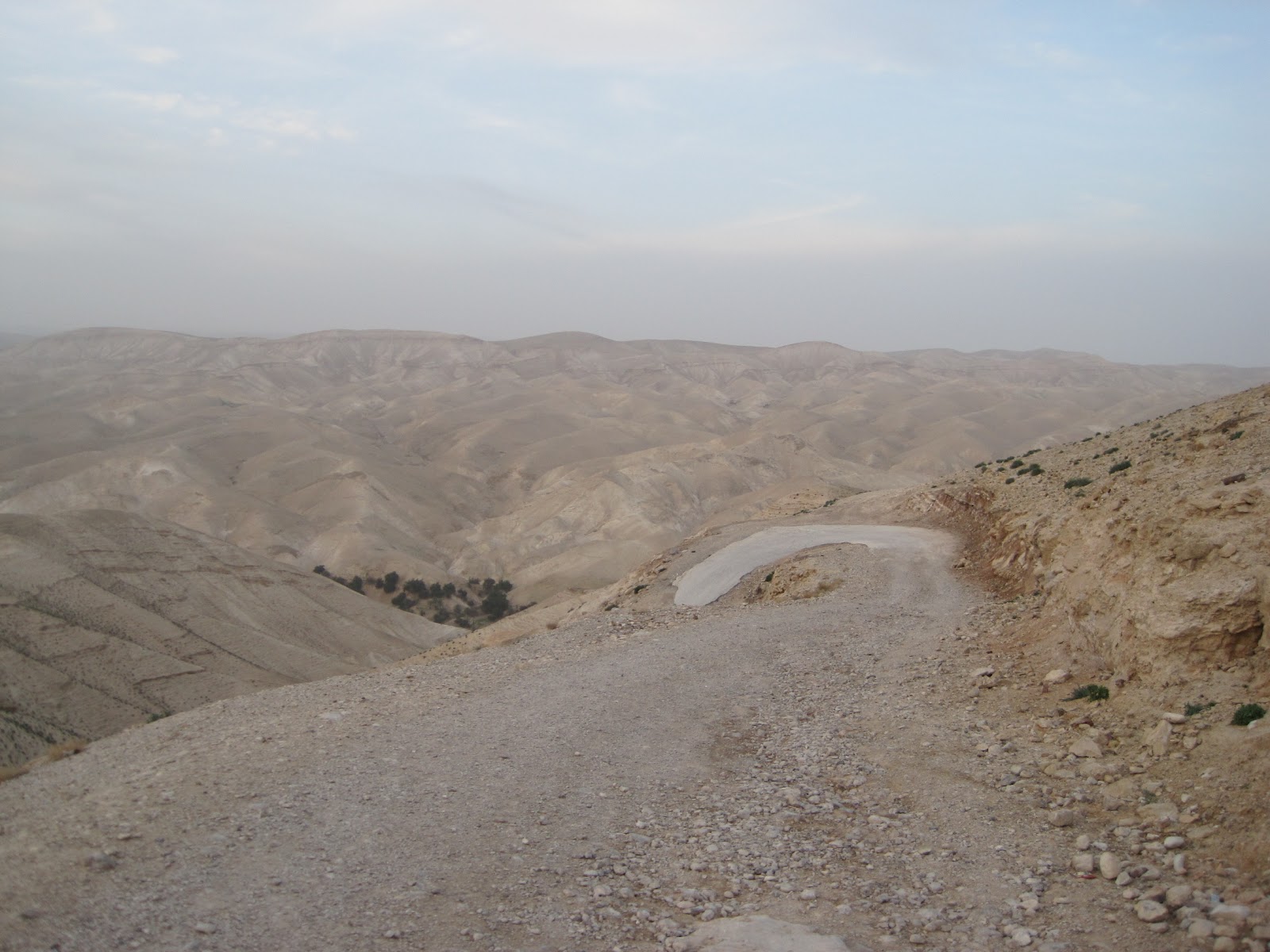
OLYMPUS DIGITAL CAMERA3A voice cries out: “In the wilderness prepare the way of the Lord, make straight in the desert a highway for our God. 4Every valley shall be lifted up, and every mountain and hill be made low; the uneven ground shall become level, and the rough places a plain. 5Then the glory of the Lord shall be revealed, and all people shall see it together, for the mouth of the Lord has spoken.” (Isaiah 40: 3-5)

Oh, good grief…here we are in the wilderness yet again!  The GPS has no service, the food has run out, and our water has begun to mean more to us than our fully-updated and completely charged iPhone.  As we wander through the wilderness of our lives, we are unsure where our next step should be planted.  The pathway ahead is murky at best.  Our backpack which is usually packed with the supplies for our journey is empty.  So, without the resources to which we are accustomed, how do we prepare?  How do we traverse this desert highway when we can’t see the road ahead, when we sometimes can’t feel the road beneath our feet?  What do we do when we are out here, exposed, without our comforts and our backups and those things to which we are accustomed?  How do we prepare the way of the Lord when we don’t know what to do, when we don’t even know who we are?

This season talks over and over about preparations?  So for what are you preparing?  For what are you spending these remaining 18 days doing?  (18 DAYS…ARE YOU KIDDING ME?!?)  Here’s a thought:  what if you put down all those carefully-constructed lists?  What if you didn’t have to get everything done that you had planned?  What if gifts were not productions but just happened in the dusk of the coming Light?  What if the light was still only a dim line of illumination?  What if you turned off the news channel and ignored reports of fake news stories and fake intelligence and temporary breaking news and turned to the realness of your heart and soul?  What if, just for a moment, the disunity of our world did not affect your soul–just for a moment?  What if your preparations for the season had nothing to do with shopping or decorating or baking or worrying?  What if your only thing to do this season was to learn to abide and to travel through that mysterious wilderness to a place you did not know you could be?

Abide…just be…listen…watch…breathe in the emptiness of the wilderness and let it empty you.  Prepare the way of the Lord by emptying what you have collected for the sacred season.  Clear your thoughts of what you expect yourself to do and clear your days of who you expect yourself to be.  Let the wilderness wash over you and become something you did not know you could be.  Clear your mind of what you thought it was and empty your heart of what you thought you needed.  And, there, there in the wilderness that you did not expect, wait…and abide in what you find.  And prepare yourself to come and see this thing that has happened—over and over again.  And there, there we will find evidence of light…

The Wilderness holds answers to more questions than we have yet learned to ask. (Nancy Wynne Newhall)

“Abide” (Carrie Newcomer)

FOR TODAY:  What newness do you find in the wilderness?  For what are you preparing?


Advent Peace,

Shelli