(part of the “Breathing Out” Lenten Series)
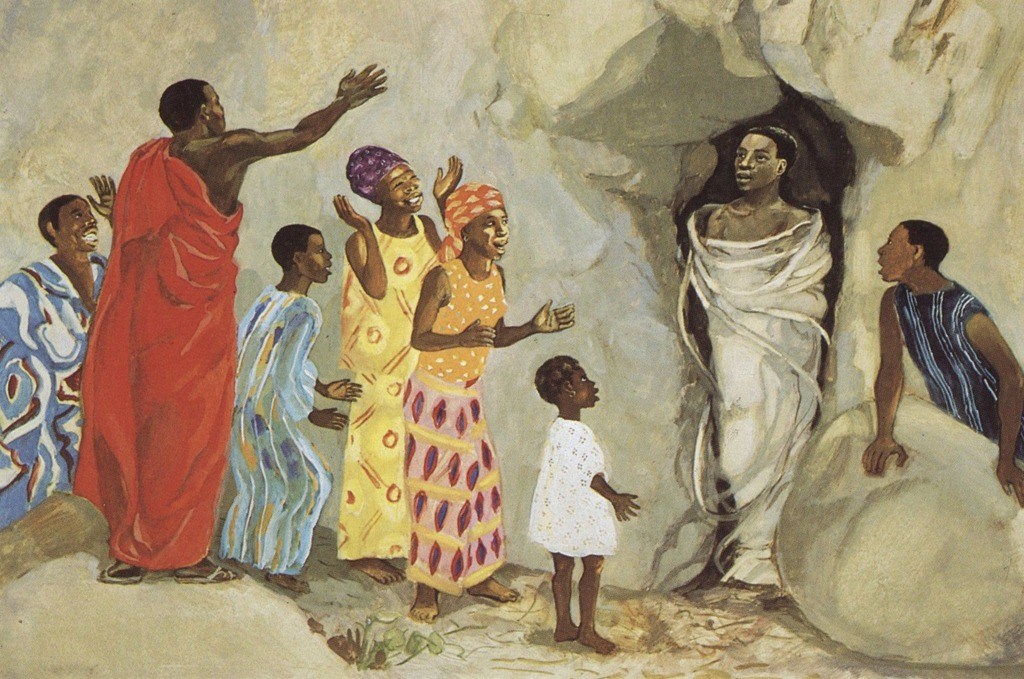
Scripture Text: John 11: (1-16) 17-44 (45) (Lent 5A)
When Jesus arrived, he found that Lazarus had already been in the tomb four days. Now Bethany was near Jerusalem, some two miles away, and many of the Jews had come to Martha and Mary to console them about their brother. When Martha heard that Jesus was coming, she went and met him, while Mary stayed at home. Martha said to Jesus, “Lord, if you had been here, my brother would not have died. But even now I know that God will give you whatever you ask of him.” Jesus said to her, “Your brother will rise again.” Martha said to him, “I know that he will rise again in the resurrection on the last day.” Jesus said to her, “I am the resurrection and the life. Those who believe in me, even though they die, will live, and everyone who lives and believes in me will never die. Do you believe this?” She said to him, “Yes, Lord, I believe that you are the Messiah, the Son of God, the one coming into the world.” When she had said this, she went back and called her sister Mary, and told her privately, “The Teacher is here and is calling for you.” And when she heard it, she got up quickly and went to him. Now Jesus had not yet come to the village, but was still at the place where Martha had met him. The Jews who were with her in the house, consoling her, saw Mary get up quickly and go out. They followed her because they thought that she was going to the tomb to weep there. When Mary came where Jesus was and saw him, she knelt at his feet and said to him, “Lord, if you had been here, my brother would not have died.”
When Jesus saw her weeping, and the Jews who came with her also weeping, he was greatly disturbed in spirit and deeply moved. He said, “Where have you laid him?” They said to him, “Lord, come and see.” Jesus began to weep. So the Jews said, “See how he loved him!” But some of them said, “Could not he who opened the eyes of the blind man have kept this man from dying?” Then Jesus, again greatly disturbed, came to the tomb. It was a cave, and a stone was lying against it. Jesus said, “Take away the stone.” Martha, the sister of the dead man, said to him, “Lord, already there is a stench because he has been dead four days.” Jesus said to her, “Did I not tell you that if you believed, you would see the glory of God?” So they took away the stone. And Jesus looked upward and said, “Father, I thank you for having heard me. I knew that you always hear me, but I have said this for the sake of the crowd standing here, so that they may believe that you sent me.” When he had said this, he cried with a loud voice, “Lazarus, come out!” The dead man came out, his hands and feet bound with strips of cloth, and his face wrapped in a cloth. Jesus said to them, “Unbind him, and let him go.”
This has always been at the very least a strange story to me. I think I once had some image of Lazarus walking out of the tomb, with tattered grave clothes dangling and an unbearable stench following him (probably from a 3rd grade Sunday School picture!), and then dressing and sitting down for a nice fish dinner with Jesus and his sisters. But the Scripture is not here to show us magic or to in some way depict a God that with the veritable snap of a finger can just put everything back like it was before. (Well, I don’t know, I supposed God CAN, but why? That’s not really the way God works. God has something much better in store.) This story is taken as a precursor to Jesus’ own Resurrection. It was Jesus’ way of promising life. But ironically, it is also the act that turns the tables toward Jesus’ demise. Here, standing within two miles or so from Jerusalem, the journey as we know it begins to wind to an end. Even now, the Sanhedrins are gathering their swords and the night is beginning to fall.
This passage is odd. Even when you read it all (I “shortened” it but I’m not sure how good a job I did), it’s more about the minutia around Lazarus’ death and rising than about Lazarus himself. In fact, we really know very little about the character Lazarus except that he was dead and then he wasn’t. Like us, the characters deal with death by dealing with minutia. When my dad passed away, I was definitely the queen of the minutia. One family member removed herself completely. Another one wept in the front room. (I remember thinking…I want to do that, to weep, to wail, to scream, but, instead, I’m organizing and directing.) When my grandmother died, my dad and I sat alone in the hospital room for hours waiting on the funeral home. We recounted memories, talked about what it meant, and felt that thin veil that gathers when a loved dies, the sense of the presence of those who were loved and who were important there with us. THAT’s what I wanted. I wanted to sense that veil. But instead, I directed and hosted and gathered information—the police, the EMT’s, more police (he died at home), and then the funeral home. I barely remember it but somehow it happened. Isn’t that how we often deal with death? But here…Jesus steps in and raises Lazarus.
So, why would Jesus do that? Surely he knew what might happen. Surely he knew how many red flags his presence near Jerusalem had already raised. And what about Lazarus? Who was this mysterious man whose main part in the whole Biblical story is to die and be raised? Why do this with someone as seemingly insignificant as this? Maybe it’s because Lazarus is us–you and me. Maybe the whole point of the passage is not to point to Jesus’ Resurrection but to our own. Do you think of yourself as journeying toward resurrection? Do you believe this? Sure, we talk about journeying to God, about journeying to the Promised Land, whatever that might be, and about journeying to where God call us. But do you think of it as resurrection? Do you think of yourself dying and then being raised? Maybe each of us is Lazarus. Maybe that’s what Jesus wanted us so badly to believe and live.
We don’t talk a lot about our own resurrection. Perhaps it’s because we think that feat is reserved for Jesus Christ. Or maybe we don’t want to talk about it because in order to talk about our resurrection, we must also acknowledge our death. We must acknowledge an ending. Resurrection, of course, doesn’t happen without death. But that’s been the promise through the whole story when you think about it. Think of all the stories of redemption, of re-creation, of resurrection—stories of raising and passing over and wrestling, stories of new life. That’s the message.
We talk a lot of this Lenten journey as our journey to the Cross, our journey with Christ. So, does it stop there? I think the story goes on. Jesus is Resurrected. Maybe that’s what Jesus was trying to show us–not that we would be somehow plucked from death in the nick of time and not that God really has need of putting our lives back together like some sort of Humpty-Dumpty character, but that we, too, are journeying toward resurrection, toward new life. Lent is the journey that shows us that. Lent shows us that the journey is sometimes hard, sometimes painful. Lent shows us not that death will not claim us but that death will not have the final word. Death thins that veil between earth and heaven, between this life and the next. And resurrection steps in and tears it apart, ripping it at the seams for all to experience. (Read the Passion story—there’s a curtain that rips)
Lent shows us that our faith tells us that there is more. Lent shows us what it means for Christ to unbind even us–even you and me–and let us go. Through all of life’s transitions, through all of life’s sad endings, through all of life’s unbearable turns, there is always a beginning. There is always resurrection–over and over and over again. So, breathe…breathe out finality, breathe out hopelessness, breathe out endings. Our faith tells us that the only endings are those that are transformed to beginnings, to life. So, breathe in life. We are all Lazarus, whether or not we know it. Just start breathing again…
There was, indeed, something I had missed about Christianity, and now all of a sudden, I could see what it was. It was the Resurrection! How could I have been a church historian and a person of prayer who loved God and still not known that the most fundamental Christian reality is not the suffering of the cross but the life it brings?…The foundation of the universe for which God made us, to which God draws us, and in which God keeps us is not death, but joy. (Roberta Bondi)
Grace and Peace,
Shelli
 Dancing to God
you walked me through the death (and yes, new life) of my parents once again Thank you