(part of the “Breathing Out” Lenten Series)
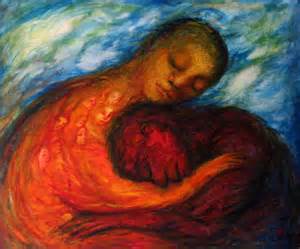
Scripture Passage: Matthew 15: 21-28
21Jesus left that place and went away to the district of Tyre and Sidon. 22Just then a Canaanite woman from that region came out and started shouting, “Have mercy on me, Lord, Son of David; my daughter is tormented by a demon.” 23But he did not answer her at all. And his disciples came and urged him, saying, “Send her away, for she keeps shouting after us.” 24He answered, “I was sent only to the lost sheep of the house of Israel.” 25But she came and knelt before him, saying, “Lord, help me.” 26He answered, “It is not fair to take the children’s food and throw it to the dogs.” 27She said, “Yes, Lord, yet even the dogs eat the crumbs that fall from their masters’ table.” 28Then Jesus answered her, “Woman, great is your faith! Let it be done for you as you wish.” And her daughter was healed instantly.
Sometimes we don’t exactly know what to do with this passage. It tells us that Jesus travels to a place that is not his, to an unfamiliar place some distance away. It’s not the wildernesses that we’ve come to know but it IS a wilderness. When we journey through unknown territory, through places that are not our home, through places that are not ours, places that we have not planned or planted, even places for which we feel totally unprepared, there is a certain wilderness aspect to them.
And in this unfamiliar place, this woman appears to Jesus begging that he heal her daughter. Her appeals got louder and louder and more and more insistent. So, what was Jesus to do? He wasn’t there for her. She was Canaanite. She was not Jewish. (The Markan version of this story depicts her as Syrophoenician). Either way, she was “the other”. And at this point, Jesus understood that his mission was to the Jews. This would not be right. She was not one of them. But the woman kept insisting. (I will tell you, the reference to “dogs” is not a nice one. Without offense to the dog-lovers and dogs among us, in 1st century Jewish society, dogs were looked upon as unclean, as scavengers.) And, yet, even Gentiles, even the “bottom of society”, even the “dogs” gather the crumbs from the masters’ table.
But, then, Jesus changes. He stops, he listens, he changes. See, this woman gets it. Her faith sees Jesus as a sign of what’s to come. This moment is, in effect, a turning point for Jesus. (And we need to realize that that turning point is the reason we’re here. We ARE the ones to which Jesus’ mission turned and broadened to include.) I’m actually grateful the writer didn’t try to “clean up” the story. This shows Jesus’ humanness, his searching, his exploring, his changing, his realization that there was something (and someone) more. In this moment, there, in the wilderness, in the place that was not his, Jesus saw a broader vision of God and who God called him to be than even he had before.
I think that’s why Lent tends to be this sort of wilderness journey. Traversing through places with which we are unfamiliar, places that perhaps do not feel like home, perhaps will never feel like home, gives us a new perspective. Maybe we’re not called to make ourselves at home at all. Maybe we’re rather called to continuously journey through newness, continuously open our minds and our hearts just a little bit more with each turn of the pathway. I don’t believe that God calls us to stay planted where we are; otherwise, there wouldn’t be so many pesky wildernesses in the stories of faith and in our own lives. The wilderness is where we change our course, where the road turns if only one small degree and, unsettled though we are, we turn with it and continue our journey with minds broadened and hearts opened.
We can’t hold on to the familiar. We can’t just associate with those who look like us and think like us and believe like us. That’s what’s wrong with the world right now. That’s what’s wrong with our society, our country, our relationships with each other. We need to hold fast to what we believe but not at the expense of relationships. That’s what Jesus teaches us in this passage. Jesus listens to the woman and backs away a bit. He doesn’t retreat; he gets a different view. He gets a broader view. He looks at the world the way God does. God made the world diverse. Why in the world would we be meant to stay in our own little bubble? And yet, we’re arguing over the use of DEI (diversity, equity, and inclusion)? I don’t get it. We need to breathe out needing to surround ourselves with comfort, with those who are like us. I mean, Jesus wasn’t even like us! He was a dark-skinned immigrant who was Jewish. What does that tell us? So, we need to breathe in the way the world is—diverse and God-made—all of us.
He drew a circle that shut me out. Heretic, a rebel, a thing to flout. But Love and I had the wit to win. We drew a circle that took him in! (Edwin Markham)
Grace and Peace,
Shelli
 Dancing to God
this passage has always troubled me If Jesus was ‘fully God’, it ‘doesn’t fit’ that he
ever reacted as the story tells
Maybe it’s highlighting the meaning of “fully human”—to grow, to change, to come closer to what that means. It holds hope for us.
I want our discussion group back!