The Wrestling Wilderness

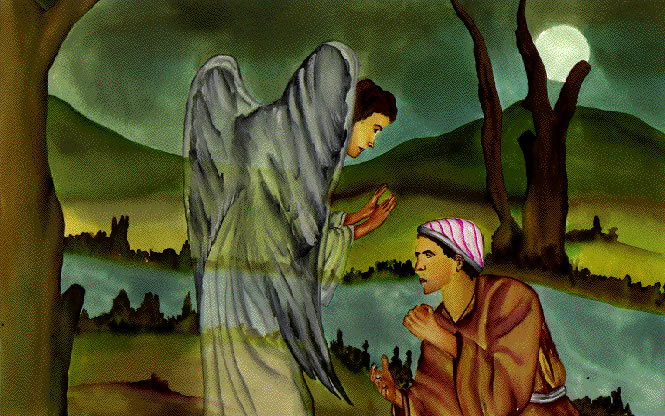
Jacob Wrestles with AngelScripture Text: Genesis 32: 24-30

 24Jacob was left alone; and a man wrestled with him until daybreak. 25When the man saw that he did not prevail against Jacob, he struck him on the hip socket; and Jacob’s hip was put out of joint as he wrestled with him. 26Then he said, “Let me go, for the day is breaking.” But Jacob said, “I will not let you go, unless you bless me.” 27So he said to him, “What is your name?” And he said, “Jacob.” 28Then the man said, “You shall no longer be called Jacob, but Israel, for you have striven with God and with humans, and have prevailed.” 29Then Jacob asked him, “Please tell me your name.” But he said, “Why is it that you ask my name?” And there he blessed him. 30So Jacob called the place Peniel, saying, “For I have seen God face to face, and yet my life is preserved.”


We know this story.  Jacob is running from Esau.  (You know, the brother that he duped into handing over his birthright to Jacob.)  And during the night, he wrestles.  It doesn’t fully say why he was wrestling.  Was it fear?  Was it regret?  Was it guilt?  After all, he had taken Esau’s life, pushed him into something that he was not and, in turn, became someone that he himself was not.  So he wrestles, begging for a blessing, begging for forgiveness, begging that his conscience be clear.  As daybreak approaches, Jacob is struck in the hollow of the thigh.  The blow has a crippling effect and brings the struggle to its climactic moment.  But Jacob retains his hold.


Jacob will never be the same again.  He has looked God and also himself square in the face and everything has changed.  The wrestling has been an act not of destruction, but of transformation.  Each step is now marked by the Divine touch.  Jacob becomes Israel, the God-wrestler.  He has experienced a true rebirth.  He names the place Penuel, or “I have seen the face of God”.  Not only has he seen the face of God, but his life is such now that he will continue to experience that over and over again.


The truth is, sometimes we have to get out in the wilderness to do our wrestling.  We think we can do it on our own turf, protected by our armors of plans and preconceptions.  We think we can do it according to some preset schedule.  But the wilderness is the real wrestling place.  Like Jacob, we have sometimes to go it alone, sometimes forsake all of our supplies and our help.  We have to be vulnerable.  We have to be real.  We have to strip away all of our armor.  And, there, exposed, there is nothing to hide who we are.  We face ourselves and we face God.  The wilderness is the place where we encounter God and begin to know ourselves.  The wilderness is the place of blessing.  God wants us to wrestle.  That’s why God gave the name of “God-wrestler” to God’s people.


The season of Lent is a wrestling season.  It begins in a wilderness and ends on a Cross.  And God is there for each round of the game.  Because only those who wrestle with God understand what it means to be blessed, understand what it means to see God face to face, understand what it means to become the one that God sees with the name that God knows.


Come near to the holy men and women of the past and you will soon feel the heat of their desire after God…They prayed and wrestled and sought…in season and out, and when they had found [God], the finding was all the sweeter for the long seeking. (A.W. Tozer)


FOR TODAY:  Strip away the armor that protects you.  With what do you wrestle?  With whom are you wrestling?  Why are you afraid to wrestle?      


Grace and Peace,

Shelli
Guided in the Wilderness

Shepherd with SheepScripture Text: Psalm 78: 52-54


52Then he led out his people like sheep, and guided them in the wilderness like a flock. 53He led them in safety, so that they were not afraid; but the sea overwhelmed their enemies. 54And he brought them to his holy hill, to the mountain that his right hand had won.


We tend to think of the wilderness as a place where we are sort of thrown out into virtually alone. We imagine wandering, looking for solace, looking for companionship, looking for someone to help us out of where we are. We search for God as if God is somehow parked at the exit of the wilderness holding a sign with our name on it as we disembark. And, yet, this psalm reminds us that even in the wilderness we are not alone, that God leads us and guides us through the treacherous terrain. Actually, there are times, when God, as it says, guides us IN, wandering, living the wilderness. It says that we are led to safety and brought to a place that is holy, that is of God. So, why then, here in the wilderness, do we feel so alone?


We are accustomed to pastoral images in the Bible, beautiful images of the flock being led or shepherds on the hillside. We know what it is supposed to connote. The shepherd guides the sheep to the place where they will be well-fed and cared for, the place where they will grow and flourish into maturity. There is soft, green grass, blue skies, and other sheep in the fold to keep them company as they grow together. But this is not what it looks like right now. Where is the green grass? Where are the blue skies? Where are my trusty companions? And so, searching for our image of where a shepherd is supposed to lead, we leave to look for greener pastures or easier pathways. But the grass isn’t really greener, the skies really aren’t any clearer, and in our confusion, we fall, tumbling down the gulley, bruised and tired.


As we said before, the wilderness is not just something to rush through. And God does not always lead us out of the desolation that surrounds us. As the passage says, God leads us through or in the wilderness, helping us navigate the rough paths and the difficult sightlines and, when the time is right, bringing us home. Our problem is that we don’t envision ourselves like sheep because we are trying so hard to be the shepherd of our own lives, to be in control, to be the guide. And so we often wander away and get lost. We may end up in a place that is not ours to be. But think about sheep. Sheep are seldom characterized as one of the smartest beings on the farm and yet, sheep know to whom they belong. Sheep know how to follow. Sheep know how to be part of a flock, holding each other up, helping each other see the shepherd. And when, as happens every now and then, a sheep gets lost, the sheep trusts that the shepherd will come and bring the sheep home.


Lent is a season that teaches us to be more like sheep, to follow God through the wilderness, learning the things that it teaches, accepting the things that it offers, and knowing, that, when it is time, God will guide us out of this lostness, out of despair, out of the loneliness.  You don’t have to fix it; you don’t have to hurry; you don’t have to make it something it is not.  Just follow.  Just live.  But by following God’s lead, we will see beauty we have never seen and companionship we have never known.  That’s what you get when you’re part of a flock.


Be patient toward all that is unsolved in your heart and try to love the questions themselves like locked rooms or books that are written in a foreign tongue. The point is to live everything. Live the questions now. Perhaps you will then gradually without noticing it, live your life some distant day into the answers. (Rainer Maria Rilke)


FOR TODAY:  Be sheep.  Follow.  Listen.  Be patient.

As If Everything Were Downside Up


upsidedownworldScripture Text: John 2: 13-17

The Passover of the Jews was near, and Jesus went up to Jerusalem. 14In the temple he found people selling cattle, sheep, and doves, and the money changers seated at their tables. 15Making a whip of cords, he drove all of them out of the temple, both the sheep and the cattle. He also poured out the coins of the money changers and overturned their tables. 16He told those who were selling the doves, “Take these things out of here! Stop making my Father’s house a marketplace!” 17His disciples remembered that it was written, “Zeal for your house will consume me.”


We don’t know what to make of this passage. Oh, we try to make sense of it, sort of clean it up so that it doesn’t look so bad. After all, what happened to that loving, mild-mannered Savior that we knew? What happened to the consummate storyteller that knew how to get everyone to listen to him? What happened to Jesus? Here he is, whip raised like some sort of drunken cowboy herding all the sheep and cattle out of the square outside the temple. And then grabbing all of the baskets of coins from the money changers and throwing them on the ground. So, when he walked away there were animals scattered into the town, tables turned over, coins strewn everywhere, and, I’m assuming, some pretty flabbergasted merchants standing around not knowing what to do.


Well, of course, we know why. After all, the temple is God’s house; the temple is a place of reverence and worship. Well, OK, BUT, remember that God dwells everywhere—in you, in me. Remember…God made flesh, Emmanuel, Dwelt among us,..all that stuff. So what exactly was wrong? After all, that was the way society ran. No one was breaking the law. No one was mistreating anyone (or at least not in any way that was not properly sanctioned by both the community and the religious tradition) So what was wrong? Why was Jesus so upset? Because, there they were…essentially selling worship, selling religious practice, selling God.


“Horrible!,” we sigh. But think about our own society.  Think about us. Our lives are reward-driven and because of it we live with the idea that we should get what is “due” to us. We believe that by working hard and doing the right things we will be rewarded. And often that carries into our spiritual lives. How many of us do the things we do because we think we should, because we think that it will in some way earn us points with God, or, even, because we think that we are the only ones that can do them? Oh, you know the stuff. If I pray really hard, God will answer. If I have faith, God will reward me. If I serve God, I will feel good. If I study and try my best to make sense of God, God will guide me and everything will turn out alright. It is our own way of merchandising. What do we do because we love God and what do we do because we think that will reap a reward (or at least insure us against future calamity)?


Meister Eckhart (13th-14th century German mystic) said that “as long as we strive to get something from God on some kind of exchange, we are like the merchants. If you want to be rid of the commercial spirit, then by all means do all you can in the way of good works, but do so solely for the praise of God.” Eckhart then exhorts us to “live as if you do not exist…then God alone dwells there.” So what would that mean, then, to live as if we do not exist? It means to live without an “if-then” statement. It means to live “as if”, as if God’s Kingdom is here in its fullness and glory, as if all of Creation echoes the song of God, as if God dwells in our midst and you are God’s holy temple (oh, yeah…that one IS supposed to be an already one). We live between the already and the not yet. This season of Lent makes that oh so much more real to us as we journey in the wilderness knowing that the Cross, and, indeed, the Resurrection, God’s ultimate act of bringing the downside up, is up ahead.  But that does not mean that the tables cannot be turned—even now. So, to live as if you do not exist, to live as if God dwells in you as a holy temple, what tables in your life does Jesus need to turn downside up to get your attention? (Or what do you need to do to at least live as if it were that way?)


The noblest prayer is when [one] who prays is inwardly transformed into what [one] kneels before. (Angelus Silesius, 17th century)


FOR TODAY:  Think about what tables Jesus need to turn downside up in your life so that you can live as if you do not exist.


Grace and Peace,

Shelli

Sometimes the Wilderness Blooms

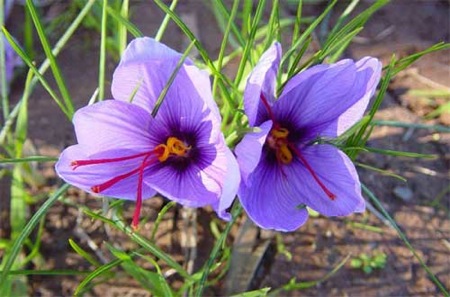
Crocus in the desertScripture Text: Isaiah 35: 1-2

 The wilderness and the dry land shall be glad, the desert shall rejoice and blossom; like the crocus 2it shall blossom abundantly, and rejoice with joy and singing. The glory of Lebanon shall be given to it, the majesty of Carmel and Sharon. They shall see the glory of the Lord, the majesty of our God.


Our walk in the wilderness has grown tiresome already. As far as we can look, there is desolation, drought, and despair. When is this going to end already? (Sorry…not even a third of the way there!)  But this passage is almost an interruption. We thought had it in our minds what the wilderness was. For us, the wilderness is a place to get through, to complete, to endure, a pathway to somewhere else. But maybe we’re not giving the wilderness the credit that it is due. After all, would God have created a complete wasteland with no redeeming qualities, no chance for hope? That’s not really God’s style. Maybe we’ve missed something. Maybe we’re trying so hard to overcome the wilderness and run through it, we’ve missed its beauty.


God does not wait until everything in order and the time is right to spring beauty into action. Every inch of creation, every wasteland we endure, has God’s fingerprints all over it. Every single piece is awash in God’s grace, even those whose beauty we cannot yet see either because our eyes have not adjusted to the light or because we have been clouded over with the old way of seeing. Can you see it? Or are we too busy rushing through it hoping that it will end? God’s voice is often out of place with what we see and know about the world. And yet, the desert wasteland is rejoicing in bloom. The passage says that the crocuses (maybe it’s croci) are blossoming abundantly, rejoicing with joy and singing. They abound with the glory of the Lord. We just have to give the wilderness a chance.


Maybe our problem is that we don’t trust first appearances. We want something that is tried and true, that perhaps has been around awhile and weathered all the tests. We want something that makes sense.  But this crocus pops up first. It is a first creation. And we’re not sure what to do. Is it a weed? Is it a flower? What do I do with it? It is God’s newness that at first glance seems to look a little out of place until it begins to gather its flock. (You know, I think that happened before for us. And, again, the world did not know quite what to do with something so out of place, something that so interrupted the way we think and the way we live.) So before we crucify any notion of beauty in the wilderness, let us stop and breathe and see it in bloom. Let us open our eyes and begin, even now while we’re wandering in the darkness, to see our resurrection (that’s right, not only THE Resurrection, but OUR resurrection) that is beginning to be.  Because, SOMETIMES even the wilderness blooms.


Our God is the One who comes to us in a burning bush, in an angel’s song, in a newborn child. Our God is the One who cannot be found locked in the church, not even in the sanctuary. Our God will be where God will be with no constraints, no predictability. Our God lives where our God lives, and destruction has no power and even death cannot stop the living. Our God will be born where God will be born, but there is no place to look for the One who comes to us. When God is ready God will come even to a godforsaken place like a stable in Bethlehem. Watch…for you know not when God comes. Watch, that you might be found whenever, wherever God comes. (Ann Weems, Kneeling in Bethlehem)


FOR TODAY: Stop and look for the blooms in the wilderness. What beauty do you see?

A Fool’s Journey


Power of the CrossLectionary Text:  1 Corinthians 1: 18-21, 25

For the message about the cross is foolishness to those who are perishing, but to us who are being saved it is the power of God. For it is written, “I will destroy the wisdom of the wise, and the discernment of the discerning I will thwart.” Where is the one who is wise? Where is the scribe? Where is the debater of this age? Has not God made foolish the wisdom of the world? For since, in the wisdom of God, the world did not know God through wisdom, God decided, through the foolishness of our proclamation, to save those who believe…For God’s foolishness is wiser than human wisdom, and God’s weakness is stronger than human strength.


Well, you have to give Paul credit. After all, he’s the only one that actually said what we were all thinking out loud. Admit it, you were. I mean, really? After years and years (no scratch that, after centuries and centuries and centuries) of waiting for a Savior, waiting for the Messiah, he finally shows up. He’s from a no-name-blip-on-the-road town and is born in another no-name-blip-on-the-road town to young, no-name working-class peasants. He’s born in a grotto of some sort and is placed in a feed trough. Then after a considerable amount of hoopla surrounding his birth, he sort of drops out of site for three decades or so. Then he sort of bursts onto the scene to take on the world. He’s baptized in a river by some relative of his that lives in the wilderness and wears camel hair and eats locusts. Then he goes out and lives in the desert for six weeks or so completely alone. Then instead of hobnobbing with those who had the power to really finally make his ministry fruitful, he hangs around the Lake of Galilee for a couple of years gathering other no-name folks to help him out. He shies away from things like pledge campaigns and evangelism programs and instead opts to tell stories, to stand out in the weather and the elements and try to get people not necessarily on board with his fledgling ministry but just to turn their lives around. He never even, as far as I can tell, took up an offering unless you count that meager fish lunch that somehow he managed to use to feed the multitudes. Then this young itinerant pastor and his motley brood make their way to Jerusalem. They go right in the gates, taking on the best and the brightest, taking on the Holy City itself. Well, we know how it all turned out. Because, you see, when you take on the strong and the powerful, when you begin to unseat those in charge, when you point to their vulnerabilities, to their shortcomings, it seldom ends well. You know, there are seasons and places where that can get you crucified!


For God’s foolishness is wiser than human wisdom, and God’s weakness is stronger than human strength.


In this Season of Lent, as we come closer and closer to the cross, we get a better and better sense of its meaning.  Because in terms of the world, Jesus, Jesus’ Life, even the Cross is utter foolishness.  The world says “mind your own business”; Jesus says “there is no such thing as your own business”.  The world says “buy low, sell high”; Jesus says “give it all away”.  The world says “take care of your health”; Jesus says “surrender your life to me”.  The world says “Drive carefully—the life you save may be your own”; Jesus says “whoever would save his life will lose it, and whoever loses his life for my sake will find it.”  The world says “get what you are due”; Jesus says, “love your neighbor as yourself”.
For God’s foolishness is wiser than human wisdom, and God’s weakness is stronger than human strength.


So, we try our best to make the story presentable to the world. We polish the gleaming cross at the front of the sanctuary. We make the pews comfortable with back support. We spend hours making the bulletin user-friendly so it will all make sense. Maybe once in a while, it would do us good to embrace the sheer foolishness of it all instead of trying to make it presentable to the world. After all, this promise of Life did not come to us unscathed. God’s promise is life born of death. It does not just appear in the midst of a beautiful array of carefully-placed lilies on Easter morning. God took something so horrific, so dirty, so unacceptable and recreated it into Hope Everlasting. But in terms of what we know, what we expect, even what we deserve, it is an act of utter foolishness. Perhaps wisdom, though, is not about worshipping a gleaming, pristine cross but rather looking at an instrument of death and seeing the life it holds. Because, you see, if it all made sense, we wouldn’t need it at all.


For God’s foolishness is wiser than human wisdom, and God’s weakness is stronger than human strength.


The truth is, the ones that got it were not the powerful or the rich or the ones in charge. The ones who got it were the ones whose lives the world assumes makes no sense—the poor, the blind, the prisoners, the weak, the meek, the givers, the peacemakers, the ones who think the world should change. The ones that don’t fit into what the world expects, those that the world thinks are less than others or are being foolish themselves, those are the ones that get the Cross, those are the ones that can make sense of the foolishness of God. And the rest of us? Maybe we need to start playing the fool.


For God’s foolishness is wiser than human wisdom, and God’s weakness is stronger than human strength.


“If the world is sane, then Jesus is mad as a hatter and the Last Supper is the Mad Tea Party…In terms of the world’s sanity, Jesus is crazy as a coot, and anybody who thinks he can follow him without being a little crazy too is laboring less under a cross than under delusion.” (Frederick Buechner, “The Faces of Jesus”)


FOR TODAY: Be foolish. Surrender. Give your life away. Love your neighbor. (Hey…be REALLY foolish and love your enemy). Follow Christ…all the way to the Cross. (But be careful…that doesn’t always end well.)

Grace and Peace,

Shelli

Sheltered in the Wilderness

OLYMPUS DIGITAL CAMERAScripture Text: 1 Samuel 23: 14-17

14David remained in the strongholds in the wilderness, in the hill country of the Wilderness of Ziph. Saul sought him every day, but the Lord did not give him into his hand. 15David was in the Wilderness of Ziph at Horesh when he learned that Saul had come out to seek his life. 16Saul’s son Jonathan set out and came to David at Horesh; there he strengthened his hand through the Lord. 17He said to him, “Do not be afraid; for the hand of my father Saul shall not find you; you shall be king over Israel, and I shall be second to you; my father Saul also knows that this is so.”

David is one that spends a lot of time in the wilderness according to the Scriptures. He seems to always have issues. (You think?) Here, he is running, running for his very life. He knows that Saul is coming after him. So, he runs into the “strongholds of the wilderness”. Isn’t that interesting that this place that holds such danger, such peril, such forsakenness, is, here, a place of protection? David stays there, hidden away, as the wilderness surrounds him and holds him. I suppose given the alternative (you know, like when a really angry man with an army is chasing you), the wilderness appears to be a very attractive place. And it becomes easy to enter its wilds and close ourselves off to the world.


You know, with all this talk about wilderness, it would be easy for us to think that the wilderness is a place for us to stay. Now, don’t get me wrong. Sometimes I would like nothing better than to close myself off and not have to deal with my part of the world. Sometimes, I would love to just stay in my room for days on end and write. But even though God calls us into the wilderness in certain seasons of our lives, the wilderness is not meant to be home. The wilderness is not a place where we put down stakes and plant roots. The wilderness is not a home; it is an encounter. It is the place that pushes us. If a wilderness begins to offer us solace, we have, sadly, tamed its wilds.


I’ve thought again about those early Desert Mothers and Fathers, who spent the better part of a lifetime wandering in the wilderness, communing with God, and writing the tales. But they did not live in the wilderness as a home; they did not tame it enough that they could close themselves off. Imagine them moving in a way that their feet never really touched the ground. Maybe that’s the operative word…moving.


When you think about it, the Bible is a story of movement. God creates life and just as quickly pushes it into the wilds. The creatures wander for a time and then they begin to plant their feet and build walls and boundaries (and dress themselves). So God, with loving hands, pushes them farther out into the world. They wander and then they begin building. The Bible is a story of the rhythms of God driving us into the world and our building of walls and boundaries. It happens over and over and over again. It is no different here. David is driven into the wilderness and then decides, “you know, I’ll stay awhile and let it offer me solace and protection”. It did not last long.


Lent, like the wilderness, is not meant to be our home; it is meant to be our way of life. Because when we wander in the wilderness, we are free, we are vulnerable. University of Houston’s Dr. Brene’ Brown tells us that connection begins by allowing ourselves to be seen; in other words, being vulnerable, allowing ourselves to be seen, leaves us open to encounter. If we quit wandering and sit down and plant our feet and build a home that is not meant to be, that is not ours, we close ourselves off to encounter. We close ourselves off to God. So, if you feel the need to stay where you are, to build a home, to wall yourselves off, at least an opening so you can see the sun and breathe the air and know that God is always there.


“When we were children, we used to think that when we were grown-up we would no longer be vulnerable. But to grow up is to accept vulnerability… To be alive is to be vulnerable.” (Madeleine L’Engle)


FOR TODAY: Stop. Quit building your shelter. Feel the sun; breathe the air; encounter God.  Let yourself be seen.

(And you can hear Brene’ Brown’s TED TALK, “The Power of Vulnerability” at

http://www.bing.com/videos/search?q=brene+brown+vulnerability+youtube&FORM=VIRE1#view=detail&mid=A6AD2CE4CD973EA9B668A6AD2CE4CD973EA9B668)


Grace and Peace,

Shelli

A Gift in the Wilderness


Mt. SinaiScripture Text:  Exodus 20: 1-17

Then God spoke all these words: 2I am the Lord your God, who brought you out of the land of Egypt, out of the house of slavery; 3you shall have no other gods before me. 4You shall not make for yourself an idol, whether in the form of anything that is in heaven above, or that is on the earth beneath, or that is in the water under the earth. 5You shall not bow down to them or worship them; for I the Lord your God am a jealous God, punishing children for the iniquity of parents, to the third and the fourth generation of those who reject me, 6but showing steadfast love to the thousandth generation of those who love me and keep my commandments. 7You shall not make wrongful use of the name of the Lord your God, for the Lord will not acquit anyone who misuses his name. 8Remember the sabbath day, and keep it holy. 9Six days you shall labor and do all your work. 10But the seventh day is a sabbath to the Lord your God; you shall not do any work—you, your son or your daughter, your male or female slave, your livestock, or the alien resident in your towns. 11For in six days the Lord made heaven and earth, the sea, and all that is in them, but rested the seventh day; therefore the Lord blessed the sabbath day and consecrated it.  12Honor your father and your mother, so that your days may be long in the land that the Lord your God is giving you. 13You shall not murder. 14You shall not commit adultery. 15You shall not steal. 16You shall not bear false witness against your neighbor. 17You shall not covet your neighbor’s house; you shall not covet your neighbor’s wife, or male or female slave, or ox, or donkey, or anything that belongs to your neighbor.

This is hard.  The people are journeying through the wilderness.  Food is in short supply and nerves are raw.  They have quarreled and tested God but until now, they have had no real identity, no real purpose.  This is the place where they are finally aware of the intention that God has for them as a people. This is the place where their lives and their journey becomes meaningful. And God gives them this covenant.  The specific laws would have been selected from among the many social and moral laws over many generations.  It is probable that they did not magically drop out of the sky but rather grew out of a people’s understanding of who God was.

So many in our society try to make these laws more judicial, as if they are a hard and fast set of rules that God laid down, perhaps metaphorically slapping the people on their hands for misbehaving, like small unruly children.  There are those who think we need to post these up on the board (or in front of court buildings and the like) so that people will remember them (and, sadly, interpret them the way the person that pinned them up does!).  But these are not laws to obey in the “following the rules” sense.  They are the shape of who we are, the shape of God’s people.  They depict who we are as people of God.  It is about how we relate to God, how we relate to each other, and how we sustain ourselves on our faith journey.  The wilderness provided a gift of how to wander in the wilderness, of how to be.  Think of them not as boundaries but as declarations of freedom, freedom not just from the slavery endured before but from every time that we allow ourselves to be enslaved by anything.  I don’t think we’re called to remember the words of the ten commandments as much we are to remember who and whose we are.

This Season of Lent is not really about following rules either.  It is not meant to burden us or make us quit enjoying life or any of that.  It, too, is about freedom, about finally experiencing the freedom that God gives us from slavery, from our plans, from the expectations of the world.  God is not expecting us to follow rules; God is asking us to dance, to delight in Creation, to delight in the world that was created for us.  And the way we do that?  We love God. We love ourselves. We love our neighbor as ourselves.  And we learn the meaning of rest and reflection and glorious Sabbath.  That’s all.  But that’s the way we will know God.  Consider these commandments not as rules but as a glorious gift of God from the wilderness.  But, notice, we had to get away, we had to wander a bit, all the while shedding ourselves of the trappings that we have created in our life, of those things that enslave us, to really understand what we have been given.  We have not been given rules; we have been given Life.

If indeed we love the Lord with all our hearts, minds, and strength, we are going to have to stretch our hearts, open our minds, and strengthen our souls, whether our years are three score and ten or not yet twenty.  God cannot lodge in a narrow mind.  God cannot lodge in a small heart.  To accommodate God, they must be palatial. (William Sloane Coffin)

FOR TODAY:  Love God. Love yourself. Love your neighbor.  And then rest, and reflect, and be still.  That’s all.

Grace and Peace,

Shelli