FIRST SUNDAY IN ADVENT: Awakening

ADVENT 1B:  Isaiah 13: (24-31) 32-37
32“But about that day or hour no one knows, neither the angels in heaven, nor the Son, but only the Father.33Beware, keep alert; for you do not know when the time will come.34It is like a man going on a journey, when he leaves home and puts his slaves in charge, each with his work, and commands the doorkeeper to be on the watch.35Therefore, keep awake—for you do not know when the master of the house will come, in the evening, or at midnight, or at cockcrow, or at dawn,36or else he may find you asleep when he comes suddenly.37And what I say to you I say to all: Keep awake.”

The first day of Advent…the first day of the Christian year…and (I know), the first day that I’ve written a blog posting in a really long time.  We begin this Year B of our Lectionary year with a reading from The Gospel According to Mark, whose writer really just sort of skips over the whole Advent / Christmas thing and cuts right to the chase.  Most over-personalized readings of this Scripture leave us with a fear of what comes next.  (Oh my, am I ready?  What’s going to happen to me?) We quickly go to visions of those who are unprepared being uncomfortably ripped from what they know or, as a series of cult fiction writings would depict it, being flat out left behind!  But keep reading…this is not meant to scare us; it is meant to wake us up.  Sure, it is meant to remind us that there is something coming!  We do not want to miss it.  But, more than that, we do not want to miss the present spiritual awakening that we are all having in this very moment.

We have skewed our understanding of Advent a bit.  I think all of us know that.  But, really, can you blame us?  The world is so bent on being prepared for what comes next that it tends to live one season ahead at all times–the Halloween decorations go up the end of August, the Thankgiving decorations go up the end of September, and the Christmas decorations go up the end of October.  The twelve days of Christmas tide, will of course, be filled with merchandise sales, a couple of unreplaced burned out Christmas lights, and and a flowering of little red hearts filled with candy to make sure we’re ready for the next thing.  Somewhere in there, Advent is lost.  Oh, we Christians, do alright with it.  We faithfully light one candle at a time while we begrudingingly ward off the singing of any Christmas carols.  But Advent is not merely a season of preparation for Christmas.  It is much, much more.  It is from the Latin “Adventus“, which means arrival or coming.  It is not really meant to be only a time of shopping and checking off our “to do” list for the December 25th festival. Rather, Advent is our awakening to the realization that the Divine is even now spilling into our lives, even now a new humanity is being birthed, and even now all of Creation is being reformed and recreated.

We cannot live one season ahead.  God will come when God will come.  The full revealing of what God has in store is yet to be.  But this season of Advent, this season of waiting, awakens us that we might see that it has already started to be.  The feast has yet to be set but the dancing has begun.  All we have to do is learn to stay awake.

In this season of Advent, give yourself the gift of your own awakening to God’s Sacred Presence that is all around you.

Grace and Peace,

Shelli   
And They Took Joseph to Egypt

Lectionary Text:  Genesis 37: (1-4, 12-22) 23-28:
So when Joseph came to his brothers, they stripped him of his robe, the long robe with sleeves that he wore;and they took him and threw him into a pit. The pit was empty; there was no water in it.Then they sat down to eat; and looking up they saw a caravan of Ishmaelites coming from Gilead, with their camels carrying gum, balm, and resin, on their way to carry it down to Egypt.Then Judah said to his brothers, “What profit is it if we kill our brother and conceal his blood?Come, let us sell him to the Ishmaelites, and not lay our hands on him, for he is our brother, our own flesh.” And his brothers agreed.When some Midianite traders passed by, they drew Joseph up, lifting him out of the pit, and sold him to the Ishmaelites for twenty pieces of silver. And they took Joseph to Egypt.

And they took Joseph to Egypt…so matter-of-fact, so simple, so explanatory.  But far from being merely historical data, this six word sentence represents a turning point in the story.  With these words the Genesis story turns the corner, moving from a story of a somewhat dysfunctional family as their lives are intricately woven with the breath of God to the story of a people growing into God’s people.  We begin to prepare for the Exodus story.  Nothing will ever be the same again.  We know what is to come–slavery, plagues, wilderness, and, finally, deliverance, redemption.  This is the stuff of transformation.

When this Scripture (sorry, I cut off the first part!) was read this morning, I was struck by these words.  I know that I’ve passed them over time and time again. After all, this is an important story and there’s a lot to grasp–favorite sons, dreams, beautiful coats, family squabbles, murder, intrigue, conspiracy, enemies, slavery, lies.  (And just for the record, I would like it to be noted that no matter what I did to my brother Donnie growing up, I NEVER sold him into slavery!)  And then you take a breath and, oh yeah, “and they took Joseph to Egypt.”  What struck me is how similar those words are to some others:

Text:  Matthew 17: 1-9
Six days later, Jesus took with him Peter and James and his brother John and led them up a high mountain, by themselves.And he was transfigured before them, and his face shone like the sun, and his clothes became dazzling white.Suddenly there appeared to them Moses and Elijah, talking with him.Then Peter said to Jesus, “Lord, it is good for us to be here; if you wish, I will make three dwellings here, one for you, one for Moses, and one for Elijah.”While he was still speaking, suddenly a bright cloud overshadowed them, and from the cloud a voice said, “This is my Son, the Beloved; with him I am well pleased; listen to him!”When the disciples heard this, they fell to the ground and were overcome by fear.But Jesus came and touched them, saying, “Get up and do not be afraid.”And when they looked up, they saw no one except Jesus himself alone.As they were coming down the mountain, Jesus ordered them, “Tell no one about the vision until after the Son of Man has been raised from the dead.”

Today is the Feast of the Transfiguration.  When I realized that earlier this week, I thought it was just odd.  I mean, really, don’t we celebrate that right before Lent begins?  But the abrupt ending to today’s Old Testament Scripture made me think a little bit more about it.  In this Matthean account of the Transfiguration, the writer has Jesus and the disciples headed down the mountain.  They were talking.  Jesus warned them to be quiet about what they had just seen.  And in the same breath, he gave them a foretaste of what would come.  So, we have Jesus walking down the mountain.  Where is he going?  He’s going to Jerusalem.  And we know what happens there.  This is the turning point.  There is no going back.  A new way of being has begun.

And they took Joseph to Egypt…And they took Jesus to Jerusalem.

We all have Egypts.  We all have Jerusalems.  They are those watershed moments in our lives that are bumpy and rough and uncomfortable.  They are that way because it means that we have changed.  We have been through a transition; we have been transformed; we have been transfigured into something else.

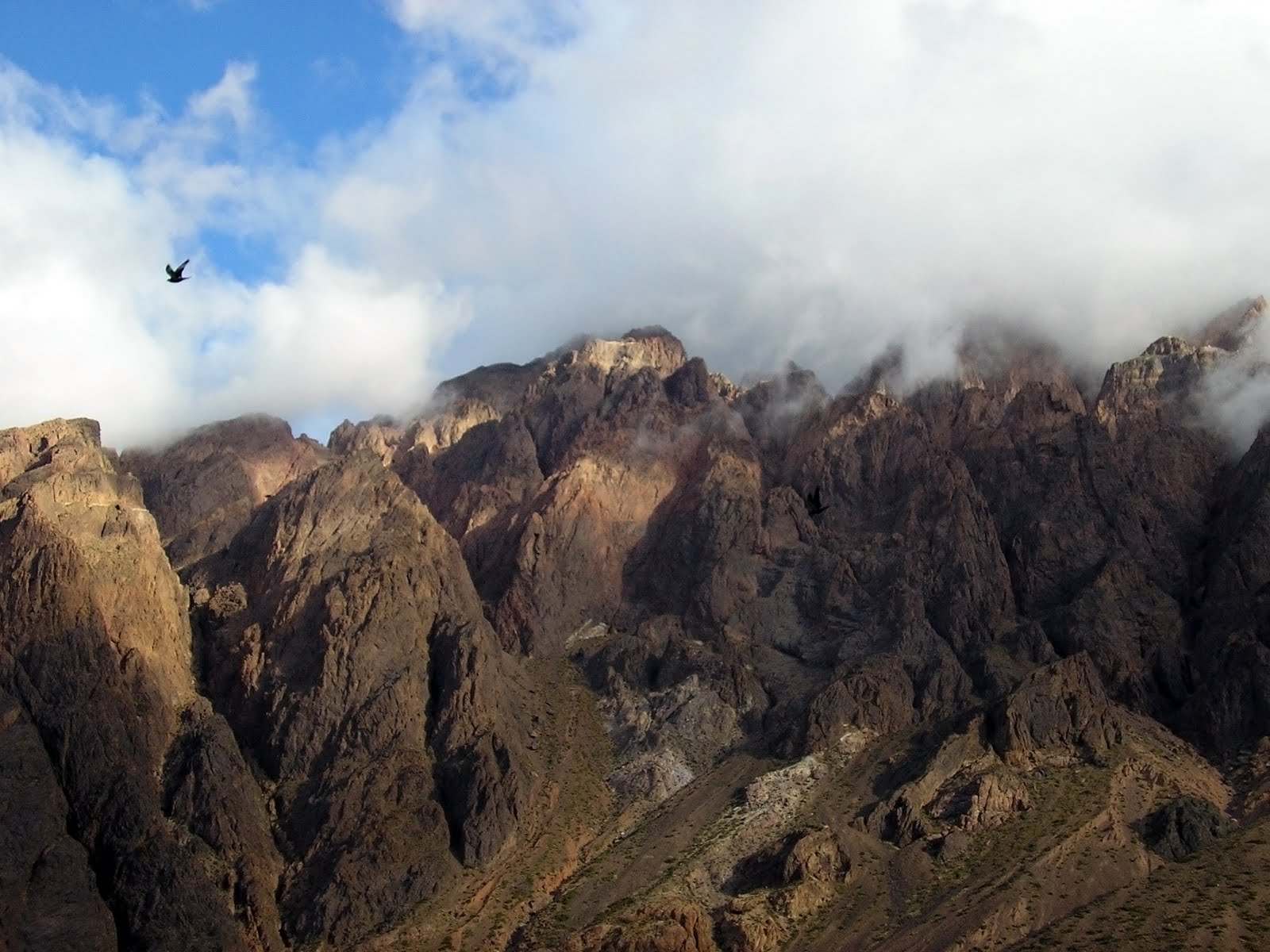
We don’t know what Monday morning will hold for our economy.  There are those who will say that our “best years” are behind us, those who yearn for the 40’s and the 50’s when the United States was “on top of the mountain.”  Really?  I’m pretty clear that our African-American brothers and sisters will disagree with you.  Are our “best years” the ones in which only some of us are on top?  That’s sad.  I don’t think so.  Perhaps we’re being sold to Egypt.  I don’t know.  Maybe we’ve got a long wilderness ahead.  Maybe we are walking down that mountain headed for who knows what.  Maybe we will find ourselves in Egypt.  Maybe we will find ourselves in Jerusalem.  Maybe we will find ourselves enslaved by something we never saw coming or crucified by those who want to maintain things the way they are.  Maybe there is a rough road ahead.  Maybe not.  Maybe our stocks will pop back up tomorrow and everything will be hunky dory.  Maybe not.  Whatever happens, we are in the midst of change. The road to change is not always an easy one.  But somewhere on that road, we will find transformation.  We will find deliverance.  We will find redemption.  But right now we’ve got to come down from the mountain…After all, I think it’s WAY too cloudy to see what’s going on up here.  (Hmmm!  Maybe that’s our whole problem.)

And they took Joseph to Egypt…and you know what?  No one was ever the same again.  We’ve been to the mountaintop…now is the time to move on.

Grace and Peace,

Shelli

One Who Is Mighty and Brave

Lectionary Text:  Matthew 14: 22-33
Immediately he made the disciples get into the boat and go on ahead to the other side, while he dismissed the crowds.23And after he had dismissed the crowds, he went up the mountain by himself to pray. When evening came, he was there alone,24but by this time the boat, battered by the waves, was far from the land, for the wind was against them.25And early in the morning he came walking toward them on the sea.26But when the disciples saw him walking on the sea, they were terrified, saying, “It is a ghost!” And they cried out in fear.27But immediately Jesus spoke to them and said, “Take heart, it is I; do not be afraid.”28Peter answered him, “Lord, if it is you, command me to come to you on the water.”29He said, “Come.” So Peter got out of the boat, started walking on the water, and came toward Jesus.30But when he noticed the strong wind, he became frightened, and beginning to sink, he cried out, “Lord, save me!”31Jesus immediately reached out his hand and caught him, saying to him, “You of little faith, why did you doubt?”32When they got into the boat, the wind ceased.33And those in the boat worshiped him, saying, “Truly you are the Son of God.”

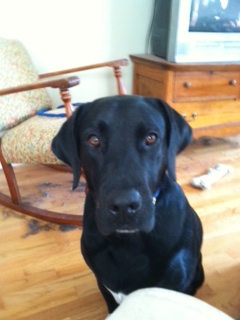
One year ago today, I adopted a rescued Labrador retriever.  He had been picked up in some place downtown where people throw food for homeless dogs.  He landed at B.A.R.C. (For those non-Houstonians, that’s the Bureau of Animal Regulation and Control.  I think they used to call it the “city pound”.) and was there, unbelievably, for three months. On the night before he was to be put down, someone at B.A.R.C. called Scout’s Honor Rescue and told them to come get this “wonderful little black lab” before they put him down.  He was put into foster care and, unbelievably, I found him on the Internet with his own page asking to be adopted.  (Isn’t technology amazing?) Somewhere along the way, someone had named him Vader, which I just thought was odd.  So, I changed his name to Maynard. (Which, admittedly, YOU may think is odd!)  It means “one who is mighty and brave”.  It just seemed to fit for a rescue dog.  He had been hungry and homeless and out in the elements.  He had been caged and deserted and begging.  But when he came home with me, it took a little while.  He was enamored with the dog toys.  He was amazed that there was dinner every night. He thought the yard and the walks were wonderful.  But when I left him, there was a look in his eyes.  I think he always wondered if I was really coming back.  A year later, that look is not there.  He has been swept into my unpredictable life.  He has often been the last one picked up from his weekly daycare outing and a couple of weeks ago, he had to be “emergency boarded” because his owner got tied up at a hospital with a pastoral care visit.  And yet, he knows, beyond a shadow of a doubt, that I will come and take him home.  That is what it means to be one who is mighty and brave—not that fear no longer exists, but that it is no longer the controlling force in one’s life.

Recasting fear is not easy.   Sometimes life is just scary.  Sometimes life changes in an instant.  And sometimes that unknown ending of life as we know it looms larger than we ever thought it would. Yeah, sometimes the winds and the waves pound so loudly that we can’t even hear ourselves think.  Sometimes life is just scary.  God never calls us to leave our fears behind.  They are part of who we are.  But faith empowers us to recast them, to reshape and remold them into something different.  Think about the “recasting” of a thrown pot.  You do not discard the clay; you simply remold it into something that works a little better.

Faith gives us the ability to recast fear into trust.  God created all that is from chaos.  Imagine what God could do with the chaos in our lives today.  God is good at dealing with chaos.  God has done this before.  Our only job is to get out of the boat and trust that, when it’s all said and done, God will take the chaos of our fears and recreate them into trust in what God can do.  “Do not be afraid”, for God has recast your fears into life.  It is knowing beyond a shadow of a doubt that God will always bring you home.

You see, faith is not a shield that we create that protects us from harm.  It is not something that we accomplish or wear like a badge of honor.  I don’t even think it’s something that is measurable.  It’s not something that we check off of our “to do” list.  Rather, faith makes us realize that we’re not in this alone.  Maybe God will pull us out of the storm in the nick of time.  Maybe not.  I think it’s much more profound to believe in a God who will get in the storm with me, who will hold me, allow me to wrestle, allow me to fight against the waves.  I believe in a God who doesn’t demean me or dismiss me for being afraid.  Sure, I’m afraid!  After all, there’s a big wave coming my way right now!  What kind of semi-emotionally-adjusted human WOULDN’T have fears?

You know, Peter had fears.  He admitted he had fears—ghosts, storms, death.  Jesus never said to him that those were unfounded or baseless or stupid.  Jesus just held out his hand and cheered him on.  “Peter, you almost have it, hold on, hold on.”  It is no different for us.  In his 1833 Journals, Ralph Waldo Emerson said that “the wise man in the storm prays to God, not for safety from danger, but for deliverance from fear.” We need to trust our fears.  They are part of our very being.  They are part of the way God made us to be.  But they don’t need to control what we do or who we are.  There is a way to recast those fears into something that is life-giving.

Of what are you afraid?  No, I mean REALLY afraid–that terrifying, nail-biting, knuckle-whitening feeling that washes over you like waves.  Take it.  It is your fear.  It is real.  And then trust, trust that God can create even from this chaos that consumes your life.  I think God has done that before.  In fact, I think God is REALLY good at it, sort of has it down to an art (or at least a promise we can trust.)  And when God asks you to get out of the boat, go ahead.  What’s the worst that can happen?  Maybe you’ll sink to the depths of your soul, but God will sink right along with you.  (Hmmm!  God has done that before too!)  And maybe, just maybe, if only for a moment, you’ll walk on water.  And maybe you won’t.  Does it really matter?  Faith is not about always coming out on top.  I don’t even think it’s about relying on God always pulling us out at the last minute.  Maybe that’s not what’s going to happen!  I think faith has more to do with knowing that God is there on the mountaintop and there in the depths of our existence.  And THAT will make us one who is mighty and brave!

Happy “Adoption” Day Maynard!

Grace and Peace,

Shelli        

Taking Care of Busyness (but not all!)

I just returned back to work today after a couple of days off.  It was wonderful!  It was what I guess they’re calling a “stay-cation”.  I just stayed at home and sort of “piddled”.  I got some (but not all) of the planting done, some (but not all) of the organizing done, some (but not all) of that “to do” list done,  In my “but not all” times, I wandered through shops that I kept saying I wanted to visit, sat on the porch, and walked the dog.  I bought an old concrete yard ornament that is a weather-beaten rabbit who has two (but not all!) of his ears.  The antique dealer sold him to me for $18.00 and he’s in my front flower bed in front of the porch.  His name is now Chester and he has a home (which is the reason that the dealer agreed to sell him so cheaply!).  And I went and bought fresh (I mean REALLY fresh) fruits and vegetables from a neighborhood market and then made up things that I could do with them.  And, to top it off, I lost weight!  Maybe “but not all” is a good thing on several levels!

We are a busy people!  To tell the truth, even my “stay-cation” was wrought with emails and calls that were “work related”.  But they were important–so important, in fact, that I need to check emails and messages while I’m doing my self-prescribed “piddling”!  So I was able set up some meetings and agreed to do another mentoring gig.  Really?  Am I THAT important?  No, not at all.  I think on some level I just don’t want to lag behind the world.  I’m letting the world and it’s busyness lead my life.  So what do you do?

I think you change the way you do things.  You alter the route of your life.  I was watching something on TV during my time off.  (Truthfully, I don’t know what because I just had it on in the midst of the “piddling”.  Again, I watched some (but not all)!)  Anyway, their was a test question asked as to whether one can improve his or her memory more by memorizing something or by changing one’s route to work or some other place.  Interestingly enough, the answer was by changing one’s route.  I think it’s because it makes us look at things differently.  It doesn’t mean that we don’t arrive at the place that we would have anyway; it just means that we got there a different way and probably paid more attention to what was along our path. Now don’t get me wrong.  I am a BIG ritual person.  That is not what gets us in trouble.  It’s not the ritual of it.  It’s the rote of it.  Look up “rote”.  One of the definitions is “from memory, without thought or meaning.”  “Without thought or meaning”?  That’s pretty scary.

You know, we’ve seen this theme before.  Think about it.  The Scriptures are big on wildernesses.  There are lots of accounts of people just wandering around until they found where they were supposed to be.  Maybe the point is not that they were lost but that they had found a different route!  I think ritual connects and points us to God.  But being open to changing the way that we walk may allow us to see the God who walks with us along the way. 

So, here’s what I think.  I don’t think iPhones are bad.  I don’t think ritual is bad.  I don’t think work and staying busy is bad.  I don’t even think that one’s inability to say “no” once in awhile (but not all) is really all that bad.  It’s the WAY we do it.  Each of our lives is a work of art-in-process.  Each step is a brushstroke filling the canvas with color and texture.  And eventually, that bright white light that you see is the blending of all of those colors.  White is the most brilliant color of all.  Without color, without contrast, the world is dark.

So, how do we take care of busyness?  Maybe it’s only a matter of loosening it up enough to follow a different route.  Maybe some (but not all) busyness isn’t all that bad.

Two roads diverged in a yellow wood,
And sorry I could not travel both
And be one traveller, long I stood
And looked down one as far as I could
To where it bent in the undergrowth;

Then took the other, as just as fair,
And having perhaps the better claim,
Because it was grassy and wanted wear;
Though as for that the passing there
Had worn them really about the same,

And both that morning equally lay
In leaves no step had trodden black.
Oh, I kept the first for another day!
Yet knowing how way leads on to way,
I doubted if I should ever come back.

I shall be telling this with a sigh
Somewhere ages and ages hence:
Two roads diverged in a wood, and I–
I took the one less traveled by,
And that has made all the difference

…Robert Frost

Have a wonderfully busy week…just drive around a different block once in awhile!
Grace and Peace,
Shelli


Just An Ordinary Day

Today we begin Ordinary Time.  We made it through Lent and Eastertide and the spirit-filled days of Pentecost and Trinity Sunday.  And now we begin that long stretch of time until Advent.  It holds few “high holy” days, with the exception of All Saints Day and, for our church, the Blessing of the Animals. (Maynard is laying right below me on the floor, so I had to say that!)  It’s just ordinary, everyday time.  And this beginning Sunday is just an ordinary day.  Thanks be to God!

I love Ordinary Time.  It’s a chance to breathe in all that Spirit that has been swirling around us the last few weeks.  It’s a chance to soak in what has happened, a chance to sort of “catch up” with ourselves.  There is a story of a nineteenth century explorer who journeyed to Africa and hired some of the villagers to help him navigate the continent.  For the first three days, they walked at an incredible pace and took few breaks.  He was pleased with how quickly they were moving.  On the fourth day, though, they wouldn’t move at all.  He was angry, to say the least.  After all, he was paying them to do this!  When he asked them what in the world they thought they were doing, they told him that it was time to stop, to rest.  It was time to let their souls catch up with their bodies.

I love that story.  I think I need to hear it about every fourth day (or at least every seventh!).  That’s why we need Ordinary Time.  All this ascending and Spirit pouring into us can wear a person out.  So, rather than filling us until our head explodes, God gives us the gift of time to breathe it all in and change our lives to fit our new way of being.

Today we read what is possibly one of the most difficult passages in the Bible.  The story of the Sacrifice of Isaac (Genesis 22:1-14), taken at face value, is disconcerting, disenchanting, and downright shocking.  Read in this way, neither Abraham nor God really comes out looking that good.  After all, what kind of parent would kill his own son?  (Hmmm…I’ll leave that one for later!)  And what kind of God would expect someone to pass some sort of test as proof of faith.  I used to hate this story.

But…breathe…let it sit…let it become a part of you.  First of all, we need to realize that our English translation is limited by the English language.  There are two meanings for the word “test”.  One denotes testing to discern whether or not standards are being met, to separate right from wrong.  (You went there, didn’t you?)  The other is a sort of experiment.  Think of a chemical test in which an entity is pushed beyond itself, a test in which something actually becomes something else.  If God was “testing” Abraham, perhaps it was so that Abraham would emerge changed, a new being.  The point was not whether or not Abraham passed but whether or not Abraham transformed.

Rabbi Arthur Waskow claims that the best contemporary midrash to the Aqedah comes from Esther Ticktin.  She says that the “strongest imperatives of Torah are to rear children and to break idols.  What happens when we turn our children into idols?  We must break our idolization of them—kill the image of of them we have erected…This is what God asked of Abraham:  Lift him up to me:  But Abraham had so totally made Isaac into his idol that he couldn’t fathom how to do it without killing him.  The lifted knife was the breaking of the idol.”  That was all God wanted—for Abraham to break the cast of any idols that he might have set between himself and God.  God wanted Abraham to realize once and for all his own faith to trust in what God was doing in his life.

Maybe the point of the story is not whether Abraham got it right or wrong.  I mean, when it was all said and done, who really cares anyway?  God shows us over and over again that there is always another chance to see things in a different way. Ordinary Time is the time that we are given to break idols, to shift our perspective, to finally get it.  This story does not include such drama as burning bushes or parting seas or even stones rolled away.  There is no dramatic wind or fire pouring down from the heavens.  What finally comes to Abraham is “wait”…”listen”…”think about what you’re doing”.  Maybe Abraham finally questions all that he knew about God and saw God in a way that he’d never seen God before.

God never spoke to Abraham again.  Abraham lived the rest of his days in Ordinary Time, just breathing in all that God had provided.

Have a wonderfully ordinary day!

Grace and Peace, 

Shelli   

EASTER 2A: In the Shadow of a Doubt

Lectionary Text:  John 20: 19-31
When it was evening on that day, the first day of the week, and the doors of the house where the disciples had met were locked for fear of the Jews, Jesus came and stood among them and said, “Peace be with you.” After he said this, he showed them his hands and his side. Then the disciples rejoiced when they saw the Lord. Jesus said to them again, “Peace be with you. As the Father has sent me, so I send you.” When he had said this, he breathed on them and said to them, “Receive the Holy Spirit. If you forgive the sins of any, they are forgiven them; if you retain the sins of any, they are retained.” But Thomas (who was called the Twin), one of the twelve, was not with them when Jesus came. So the other disciples told him, “We have seen the Lord.” But he said to them, “Unless I see the mark of the nails in his hands, and put my finger in the mark of the nails and my hand in his side, I will not believe.” A week later his disciples were again in the house, and Thomas was with them. Although the doors were shut, Jesus came and stood among them and said, “Peace be with you.” Then he said to Thomas, “Put your finger here and see my hands. Reach out your hand and put it in my side. Do not doubt but believe.” Thomas answered him, “My Lord and my God!” Jesus said to him, “Have you believed because you have seen me? Blessed are those who have not seen and yet have come to believe.” Now Jesus did many other signs in the presence of his disciples, which are not written in this book. But these are written so that you may come to believe that Jesus is the Messiah, the Son of God, and that through believing you may have life in his name.

This Scripture probably scares all of us a bit.  Are we just supposed to believe unconditionally, take on a sort of blind faith without questioning, without trying to figure it all out?  I don’t really believe that (but maybe I have my doubts!).  No, really, the Scriptues tell us to believe but nowhere does it say that we’re not supposed to explore that belief.  The truth is, we fault Thomas here and, yet, the others HAD seen.  Of course they believed.  Thomas, though, alone, had the courage and, I would say, the faith, to question it all.  And Jesus gave him the gift of himself, the gift not of answers but of illumination.  Thomas probably still couldn’t explain to you how or why or even if it happened.  He just believed that it did.

Swiss-born theologian and writer Hans Kung said that “doubt is the shadow cast by faith. One does not always notice it, but it is always there, though concealed. At any moment it may come into action. There is no mystery of the faith which is immune to doubt.”  Isn’t that a wonderful thought? Doubt is the shadow cast by faith. Faith in the resurrection does not exclude doubt, but takes doubt into itself. Faith is a matter of worshipping and doubting, doubting and worshipping. It is a matter of being part of this wonderful community of disciples not because God told us to but because our doubts bring us together. Examining our faith involves doubts, it requires us to learn the questions to ask. And it is in the face of doubt that our faith is born. God does not call us to a blind, unexamined faith, accepting all that we see and all that we hear as unquestionable truth; God instead calls us to an illumined doubt, through which we search and journey toward a greater understanding of God.

At the risk of disappointing some of you, going to seminary did not give me all the answers to the faith.  It taught me how to ask the questions.  I think that’s what faith is about–not having the right answers all the time but having the courage and indeed the desire to continue asking those questions that lead us to a more illumined faith.  Who is God?  What is God to you?  Who is Christ?  What does it mean to be Christ in this world?  What does it truly mean to show your brothers and sisters in this world what the Risen Christ means to you?  The list is endless, far into the shadows up ahead.  Faith is not about memorizing doctrines or dismissing questions in light of what some choose to call “orthodox” belief.  And I don’t think we’re called to have the answers but rather to live a faith that becomes alive and illumined by our questions and our exploration and our continued search for what it all means in our life.  That is the way we connect with God.  That is the way we journey toward God.  That is the way to living a life of faith that is propelled by our doubts rather than pulled down by them.  Maybe our doubts are not supposed to live in the shadows of our lives but way out in front, pulling us into a greater understanding of this God that we so desire. Maybe a life of faith IS lived in the shadow of a doubt.  Hey, remember what creates shadows?  Light…  Isn’t that illuminating?

So in this season in which you see the Risen Christ, go ahead and doubt and then let it lead to faith, to the belief that it is so.

Grace and Peace,

Shelli

EASTER 2A: Epilogue

Lectionary Text: 1 Peter 1: 3-9
Blessed be the God and Father of our Lord Jesus Christ! By his great mercy he has given us a new birth into a living hope through the resurrection of Jesus Christ from the dead, and into an inheritance that is imperishable, undefiled, and unfading, kept in heaven for you, who are being protected by the power of God through faith for a salvation ready to be revealed in the last time.  In this you rejoice, even if now for a little while you have had to suffer various trials, so that the genuineness of your faith—being more precious than gold that, though perishable, is tested by fire—may be found to result in praise and glory and honor when Jesus Christ is revealed. Although you have not seen him, you love him; and even though you do not see him now, you believe in him and rejoice with an indescribable and glorious joy, for you are receiving the outcome of your faith, the salvation of your souls.

There’s lots of “Easter” language in this text–new birth, living hope, resurrection.  It speaks of all those things for which we hope, for which we look.  But, truth be told, none of it can really be proven, now can it?  The writer of this letter obviously has a strong faith, a faith that looks toward what will come, toward what we have been promised.  And yet when you’re hurting in the deepest part of you, what good does that really do?  Perhaps this doesn’t speak well for my level of faith, but it drives me positively crazy when someone responds to grief or deep despair by saying, “just put your trust in God and God will take care of it”, or “God never gives us more than we can handle.”, or (even worse!) “it’s God’s will”.  But you and I both know that most of the time you get up the next morning and it’s just as bad or worse.  And these sorts of comments are not only unhelpful; I think they’re just downright mean and often harmful.  The truth is, it IS my faith that gets me through times like this–not faith that God will fix it or make it go back to the way it was but faith in a God that is there with me every step of the way, faith in a God that will see me through the end and on to the next beginning.

This letter was first written to people who were going through some really tough times, possibly people who were suffering because they WERE who they were.  They are not being promised a quick fix.  In fact, there’s a possibility that this is just not going to get any better at all.  Faith is not believing that God will fix it; faith is believing that there is always something more, something beyond what we know, something beyond even this.

Come to think of it, there are lots of great stories that don’t really end the way that you would have rather seen them end.  I remember reading “Little Women” as a child.  In fact, it may have been the first time that I really dealt with heartache and death.  I liked the first part of the story much better when all four girls were there.  After Beth died, no one and nothing was the same.  I finished it and to this day, I love the story, but I just remember feeling so sad. It’s not the only story like that–“Titanic”, “Anne Frank”, “Gone With the Wind”…the list goes on. The point is that sometimes (I would say possibly most of the time) life just doesn’t go the way that you would have written it given the chance.  Prince Charming almost never shows up with a glass slipper and whisks you away to material riches and a life without care.  Suffering is part of life.  We will all suffer, we will all grieve, we will all have something that doesn’t go as planned.  If we didn’t, we wouldn’t be real, we wouldn’t be human.  (I guess we’d be characters in one of those Harlequin Romances or something!)

Faith is not about the story going well; it’s about knowing that there’s an epilogue–the “word after the word”.  No, epilogues are generally not part of the actual story.  Their purpose is to resolve the plot, bring it together, make it once and for all make sense.  I think that’s what faith is.  It’s not believing that God will fix the story but rather believing that God has already written the epilogue.   In the meantime, go ahead and finish the story.  I think this one’s going to get better in the end!

Grace and Peace,

Shelli