A Refuge in the Wilderness

Scripture Passage:  Matthew 2: 13-15

13Now after they had left, an angel of the Lord appeared to Joseph in a dream and said, “Get up, take the child and his mother, and flee to Egypt, and remain there until I tell you; for Herod is about to search for the child, to destroy him.” 14Then Joseph got up, took the child and his mother by night, and went to Egypt, 15and remained there until the death of Herod. This was to fulfill what had been spoken by the Lord through the prophet, “Out of Egypt I have called my son.”

We are accustomed to the wilderness being a scary place, a wild and unpredictable mass of chaos that becomes our nemesis, our thing to conquer. But can it ever be a place of refuge?  It seems there is nothing about it that feels safe. There is nothing about it that feels like we are in control. There is nothing about it that feels like it is protecting us. And yet, after the birth of Jesus, after that hard birth in the grotto of Bethlehem, Joseph is called into yet another wilderness. Joseph is told to flee to Egypt. The reason that Joseph and his new family are called into the wilderness isn’t about awakening or questing or getting to a promised land of some sort. Joseph is called into the wilderness so that the wilderness can be a refuge.

But when you think about it, this has happened before. The Israelites were released into the wilderness in order to pursue freedom–ironically, freedom from Egypt. The wilderness is their way to freedom. And now, Joseph and his family return, traversing the wilderness in search of freedom, in search of safety from Herod, from the certain death of Jesus the child. Maybe Egypt was never the captor at all, but just the other side of the wilderness, the other side of freedom. But this fleeing into the wilderness by Joseph and Mary and their child is to gain refuge. Here, the wilderness is a place of refuge.

Maybe it can be that for us too.  Maybe we don’t trust it as refuge because we can’t control it or predict it or pave its path. After all, we tend to think of it as “all or nothing”. How can I guarantee my safety? How can I protect myself against all harm? How can I make sure that nothing will happen to me? Well, you can’t. God does not provide some sort of Divine bubble around our lives. Things happen. Bad things happen. Maybe rather than closing us off to life, God calls us into wildernesses so that we will have nothing to hold onto except God. God provides a refuge not from the things of life or the things that we can’t control, but from those things that get in the way of who we are, those things that perhaps protect us so much that they become our captors, our enslavers. But in the refuge of the wilderness, we have to let them go. For us, just as those before us, the wilderness is our way not to safety or protection from life, but to freedom. Because in the freedom of the wilderness, when we have let go of the things that we hold so tightly, we find that God is holding us, providing a refuge, a way to freedom, a way forward.

This Season of Lent, like the wilderness, is often wild and untamed. And yet, it gets us out of ourselves, providing a refuge, offering freedom so that we can move forward finally unhindered and free from enslavement. Refuge seldom comes when we are comfortable.  Refuge comes when we need to reach, when we need to grasp for something to hold us or save us or free us.  This Lenten wilderness journey can be our refuge if we only let it.  So, reach for it!

God, I am sorry I ran from you. I am still running, running from that knowledge, that eye, that love from which there is no refuge. For you meant only love, and love, and I felt only fear, and pain. So once in Israel love came to us incarnate, stood in the doorway between two worlds, and we were all afraid.  (Annie Dillard)

Grace and Peace,

 Shelli
Encounter

Scripture Passage:  Numbers 9: 1-3

The Lord spoke to Moses in the wilderness of Sinai, in the first month of the second year after they had come out of the land of Egypt, saying: 2Let the Israelites keep the passover at its appointed time. 3On the fourteenth day of this month, at twilight, you shall keep it at its appointed time; according to all its statutes and all its regulations you shall keep it. 

Well, we’ve been wandering in the wilderness awhile.  Have you heard God speak to you yet?  If not, maybe we’re still not traveling light enough, still dragging baggage with us over the rough terrain, so afraid that we will be without something.  I, personally, am a terrible over-packer.  It’s not so much that I’m afraid to be without something; it really has more to do with preparation.  In my swirling, sometimes-chaotic life, if I wait until the last minute to pack (which I often do), I end up just throwing things in a bag.  Without taking the time to think things through, I tend to over-compensate.  And, more times than not, the bag that I planned to bring turns out not to be big enough or I have to add another bag.

The wilderness requires preparation.  The wilderness requires that we be intentional about what it is we do.  Why do you think God was so specific about the preparations for the Passover?  The Scripture doesn’t say to make sure you cram the Passover into your schedule once a year at a time when it’s convenient or when the weather is right or when you can find time on the church calendar.  Sometimes living our faith is NOT convenient.  Sometimes it gets in the way of our plans and our lives.  Thanks be to God!

Traveling in this wilderness requires that we pack light, that we leave ourselves nimble and with enough room for what we find.  The truth is, God is always speaking to us in the wilderness.  God is always speaking to us everywhere.  But in the wilderness, unencumbered by our baggage and our creature comforts, we finally hear.  In the wilderness, we have to be aware, we have to be prepared, we have to present.  The way we prepare for the wilderness, the way we be present in the wilderness is to become aware of everything, to hear every sound as if it was our first sound, to taste the dust as it flies up and makes its way between our lips, to feel the thirst in every molecule of our body, to know what we need and to, finally, need it.  Preparing to travel light, preparing to feel, preparing to thirst is how will finally pay attention to the God who has been speaking all along.

On this Lenten journey, this Wilderness Season, I hope that you have packed well and only brought what you truly need.  I hope that your bag is light enough for you to keep moving, to be prepared to encounter God at every turn.  See, God is speaking to us at every turn.  But in order to encounter God, we have to pay attention.  Martin Buber said that “all actual life is encounter.”  The wilderness journey will teach us what we need to encounter the God who is with us always.  In the barrenness, we will learn to hunger.  In the drought, we will learn to thirst.  The wilderness teaches us to encounter; the wilderness teaches us how to feel, to live.  But we have to travel light.

God…awaits us every instant in our action, in the work of the moment. There is a sense in which [God] is at the tip of my pen, my spade, my brush, my needle—of my heart and my thought. By pressing the stroke, the line, or the stitch, on which I am engaged, to its ultimate natural finish, I shall lay hold of the last end toward which my innermost will tends. (Pierre Teilhard de Chardin)

Grace and Peace,

 Shelli

The Light in the Wilderness

Scripture Passage:  Psalm 22: 23-31 (Lent 2B Psalter)

You who fear the Lord, praise him! All you offspring of Jacob, glorify him; stand in awe of him, all you offspring of Israel!  24For he did not despise or abhor the affliction of the afflicted; he did not hide his face from me, but heard when I cried to him. 25From you comes my praise in the great congregation; my vows I will pay before those who fear him. 26The poor shall eat and be satisfied; those who seek him shall praise the Lord. May your hearts live forever! 27All the ends of the earth shall remember and turn to the Lord; and all the families of the nations shall worship before him. 28For dominion belongs to the Lord, and he rules over the nations. 29To him, indeed, shall all who sleep in the earth bow down; before him shall bow all who go down to the dust, and I shall live for him. 30Posterity will serve him; future generations will be told about the Lord, 31and proclaim his deliverance to a people yet unborn, saying that he has done it.

This psalm is probably more meaningful in its entirety.  The beginning verses (which are not included in our psalter for today) bear an agonizing pain by the Psalmist, one who is feeling lonely and desperate.  The writer is surrounded by enemies and is sure of God’s abandonment.  It’s kind of like how we usually think of the wilderness.  You can imagine standing in the Judean desert with the winds whipping around you and the sands stinging your eyes.  You just want it to end.  You’ve resolved that you can’t go back but you want this desperation and pain to be over. You want to see something up ahead.

And then, almost abruptly, the threat is gone.  The Psalmist is no longer surrounded by enemies but is aware of the surrounding community, a community of worship, a community of God’s people stretching out for generations.  God has heard the cries of the children and despair has been replaced with blessing, lament has turned into praise.  And the psalmist knows that God is everlasting, that even future generations will know of God’s presence.

This Psalm is also read on Good Friday.  You can understand why.  It is the story of one forsaken who ultimately encounters blessing and redemption.  But it’s a good psalm for our wilderness journey through Lent.  I mean, it’s hard to wander through the wilderness and always know that God is there, always know that you have not been abandoned.  Sometimes we need to be reminded and, let’s face it, sometimes we just need a good old pity party before we are again able to remember God’s promise that the beloved Creation will never be abandoned.  I think God knows that.  We are made to be human.  We feel pain.  We feel despair.  We feel abandonment.  Stuff happens in our lives.  Sometimes the wilderness seems to have no end. 

And, then, just as suddenly as our despair overtook us, we are able to see again.  Maybe the winds have shifted.  Maybe the sands have calmed.  Or maybe, we are finally ready to encounter the One who walks with us through it all.  And God is there.  And, like the Psalmist, we feel joy once again.  But I don’t think joy comes and goes.  It’s not like happiness.  Happiness is fleeting.  But joy is deep and abiding.  It never really leaves once we have it.  But sometimes, sometimes we have to be reminded of it.  And it’s OK if we have to wander in the wilderness a little while to remember.  God is patient even if we need a little pity party now and then.  God is patiently waiting for us to remember yet again that we are a son or daughter of God with whom God is well pleased. 

Here is the God I want to believe in: a Father who, from the beginning of Creation, has stretched out his arms in merciful blessing, never forcing himself on anyone, but always waiting; never letting his arms drop down in despair, but always hoping that his children will return so that he can speak words of love to them and let his tired arms rest on their shoulders. His only desire is to bless. (Henri Nouwen, from “The Return of the Prodigal Son”)

Grace and Peace,

 Shelli

Freed

Scripture Passage:  Exodus 5:1

Afterward Moses and Aaron went to Pharaoh and said, “Thus says the Lord, the God of Israel, ‘Let my people go, so that they may celebrate a festival to me in the wilderness.

We know the story.  The people had been taken away, held in slavery.  And now, God is insisting, “Let my people go.”  Now it probably wasn’t slavery as we think about it.  There were no shackles or locked cells.  They were able to pretty much roam around as they pleased.  They were even able to earn a living and have a home.  Their slavery may have more resembled that of an indentured servant.  They could not leave because they were economically and even culturally bound.  And after a couple of generations, they had sort of grown accustomed to it.  The culture that enslaved them had become their own.

So God screams, “Let my people go.”  Maybe God’s most prevalent concern was that after generations of this, the people had forgotten who they were.  They had become part of the culture in which they lived and had somehow morphed into being someone who they were not.  In God’s vision, the wilderness, the place where darkness loomed and consumed, was better than the place of bound safety that enslaved the people.  God was calling for their release, not just from economic chains but from the chains of being content to be who they are not. 

We can identify.  Sometimes we find ourselves bound by our lifestyle, by what our life is expected to be.  We are bound by the expectations of others.  We are bound by plans that did not materialize but that we cannot (or will not) change.  We are bound by who we think we should be or who we think we should become.  And just as God did so long ago, the Divine screams into the night, “Let my people go.” And just like that, we are driven into the wilderness.  It is a place of unfamiliarity, a place of discomfort.  It is a place that scares us.  It is a place that we cannot control, a place for which we cannot plan.  But it is also a place of freedom.    

Maybe the point of this story was not so much about freeing God’s people from her enslavers but about freeing God’s people to become God’s people.  How many times have you looked back into the dark times of your life and realized that, as hard as it was, it was exactly what made you who you are? Sometimes the dark times are the ones that push us into the light, even if the way is through a wilderness.

The wilderness is calling us.  The wilderness is the place where we are not bound, where we can finally be free to be who God calls us to be.   The wilderness is the place where we finally set down the things that we are holding that are not ours, that do not make us who God calls us to be.  The wilderness is the place where we become who we are meant to be.  This season is our time to go into the wilderness.

What would happen if security were not the point of our existence? That we find freedom, aliveness, and power not from what contains, locates, or protects us but from what dissolves, reveals, and expands us. (Eve Ensler)

Grace and Peace,

 Shelli

The Tonic of Wilderness

Scripture Passage:  Deuteronomy 2:7

7Surely the Lord your God has blessed you in all your undertakings; he knows your going through this great wilderness. These forty years the Lord your God has been with you; you have lacked nothing.”

So I’m also spending this Lenten season writing another set of devotionals for a church.  The theme for that series is “The Wilderness Season”, so I thought that on the days when I don’t deal with the coming lectionary passages for the upcoming Sunday, maybe we could wander around in the wilderness a little too.

Think back to the Gospel passage for this past Sunday.  (I think I actually wrote about it on Saturday.)  Remember that Jesus was driven immediately into the wilderness.  And, we too, somehow found our way there.  Now that we’ve been driven into the wilderness, where are we?  Where do we go?  The truth is that the wilderness can be either physical or spiritual.  I think it sometimes can be both.  It is the place we find ourselves when we do not know where to go, that place that is unfamiliar, uncomfortable, even seemingly unforgiving. It is the place, not unlike what we’ve gone through over the last year (and for many of us in Texas, the last week), where you wish you could go back, perhaps retrace your steps, and yet are propelled farther and farther into the unknown. 

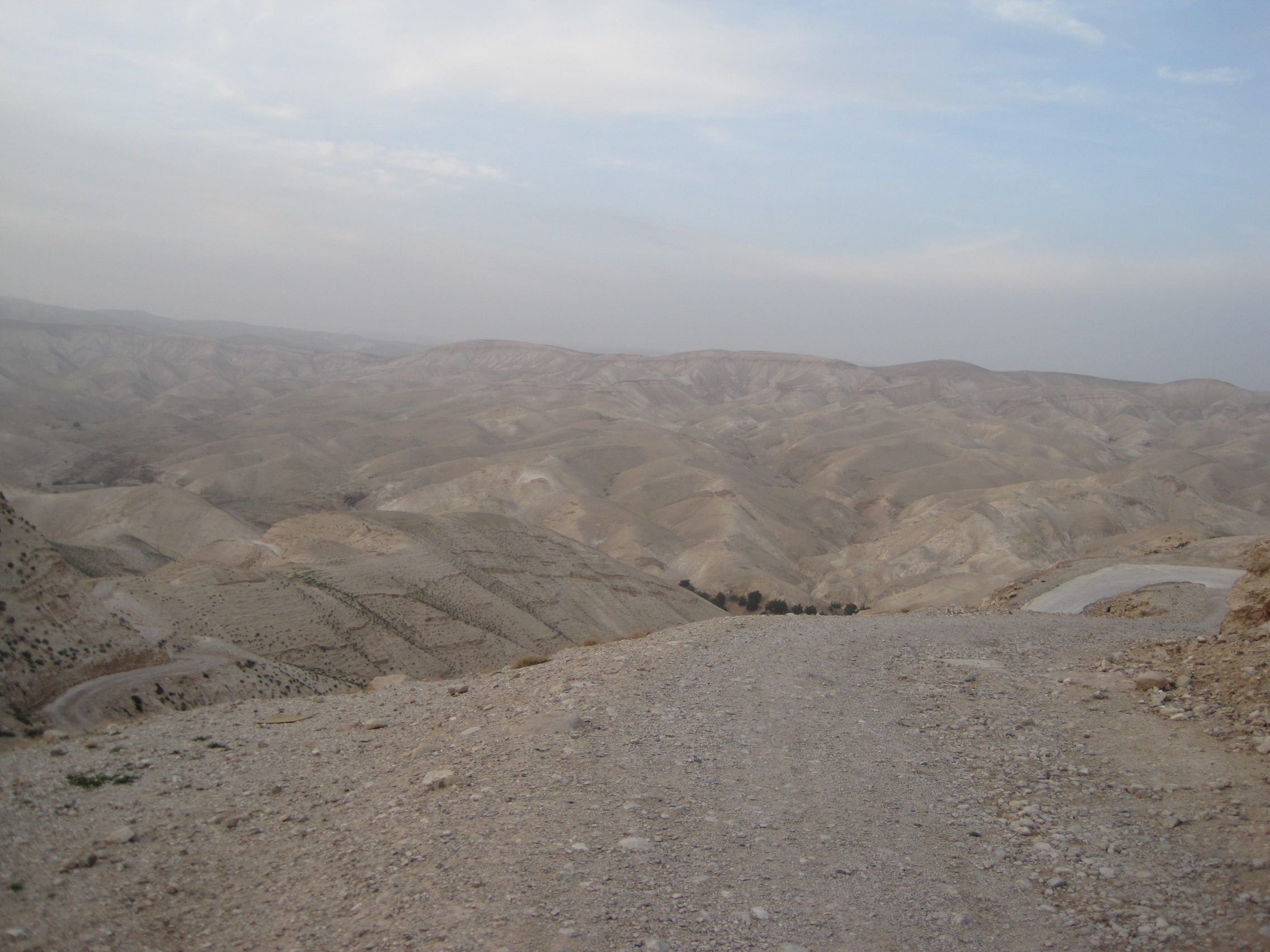
Perhaps your image of the wilderness looks like the piney woods of East Texas, thick with brush and pine needles carpeting the floor.  Perhaps it is more like a rain forest, with slick pathways and unpredictable weather and odd sounds that you’ve never heard.  But think about the Judean wilderness into which Jesus was driven.  There were few trees.  The mountains rise up ahead of you, each one appearing to be bigger than the one in front of it.  The winds blow, shifting the sands beneath your feet making your pathway ahead on which you had set your course disappear.  And when you look back, your footprints are also gone.  The way is unclear.  

The wilderness is a challenge.  It is a place of continuous change, a place that forces us out of what is comfortable and familiar.  In the wilderness, our fears abound and loss becomes much more obvious.  The wilderness is a place where we have to let go of what we’re holding.  We have to set it down, relieving ourselves of its weight, so that we can walk unhindered by it.

Today I find myself in a wilderness of sorts.  My living quarters are askew, actually unlivable at the moment thanks to a burst pipe from the once-in-a-century freeze (which will probably return well before that!), and I’m relegated to a nomadic type of existence.  I’m moving into a place that will not hold what I’ve amassed.  So, I’m also looking at storage options.  The wilderness is not only an appropriate metaphor for my life.  It is also a lesson.  We tend to look at the wilderness as a place from which to escape, a way of being that is not to our liking.  But the wilderness is not that at all.  It is a growing place, a clearing place, a place that calls for us to let go of what we’re holding, what we’ve amassed.  The point is not to find our way through the wilderness but to become what the wilderness let us be—open, vulnerable, unable to fend for ourselves, learning to trust, letting go not only what we’ve amassed but also what we’ve become. 

This Lenten journey is about letting go.  Have you ever grabbed a rope to swing you out over the water?  You have to let go.  If you continue to hold on, you won’t end up back where you were.  You’ll end up slammed against the edge of the rock.  There is no going back.  You have to let go.  You have to drop and let what is there catch your fall.  Let go.  Follow.  You are not alone.   God knows your going through this great wilderness.  Let it teach you.  And become what it shows you.

We need the tonic of wildness, to wade sometimes in marshes where the bittern and the meadow-hen lurk and hear the booming of the snipe; to smell the whispering sedge where only the wilder and more solitary fowl builds her nest, and the mink crawls with its belly close to the ground.  We can never have enough of nature.  We must be refreshed by the sight of inexhaustible vigor, vast and titanic features, the sea-coast with its wrecks, the wilderness with its living and its decaying trees, the thunder cloud, and the rain which lasts weeks and produces freshets. We need to witness our own limits transgressed, and some life pasturing freely where we never wander.(Henry David Thoreau)

Grace and Peace,

Shelli

With No Time to Prepare

Scripture Passage:  Mark 1: 9-15 (Lent 1B)

9In those days Jesus came from Nazareth of Galilee and was baptized by John in the Jordan. 10And just as he was coming up out of the water, he saw the heavens torn apart and the Spirit descending like a dove on him. 11And a voice came from heaven, “You are my Son, the Beloved; with you I am well pleased.” 12And the Spirit immediately drove him out into the wilderness. 13He was in the wilderness forty days, tempted by Satan; and he was with the wild beasts; and the angels waited on him. 14Now after John was arrested, Jesus came to Galilee, proclaiming the good news of God, 15and saying, “The time is fulfilled, and the kingdom of God has come near; repent, and believe in the good news.”

Jesus was driven out into the wilderness.  The Markan passage says that it happened immediately.  (Actually, the Gospel writer we call Mark liked things to happen “immediately”.  Read the whole thing in one sitting and you’ll see what I mean.)  So, Jesus had no time to pack, no time to prepare.  There was no family lunch after the baptism.  First he gets baptized and the Spirit descends upon him.  He is claimed by the Spirit.  And then the same Spirit that claims him somehow compels him to go out into the wilderness alone–no supplies, no map, no compass, no cell phone with that neat little GPS app–immediately.  Driven out into the wilderness…You know, I used to think that I understood this wilderness thing.  I used to picture Jesus going out into the wilderness, into the trees, into nature, to pray and commune with God.  Perhaps my idea of a wilderness was somewhat skewed by visions of thick East Texas pine trees or perhaps the clammy sensation of the Costa Rican rainforest.  After all, nature is always a great place to become closer to God.

And then I saw the Judean wilderness, the same wilderness into which Jesus was driven by the Spirit.  I stood there on that mountain with a view of winds and sands and nothingness, the true depiction of forsakenness and despair.  And, standing there, I thought about this image of Jesus going out into the wilderness.  On purpose?  He went on purpose?  This is not a wilderness for the faint of heart and certainly not for one with such a faulty sense of direction as I seem to have.  This wilderness has no trees, no real markings of any kind.  The faint pathways change as the winds blow the sands wherever they want.  Even if one began this wilderness journey with some faint sense of where he or she was headed, the pathway would move in an instant and the traveler would be stranded, vulnerable, with no real sense of direction at all.

So into this vulnerable state, Jesus was driven.  If you read the passage, the Spirit claimed him at his baptism and then drove him into a journey that had no obvious pathway at all.  The mere thought of it terrifies us.  After all, don’t we do everything we can do to avoid the wilderness, to avoid a loss of control, a loss of our sense of direction, a loss of the knowledge of where we are and where we are going. But last I checked, the same Spirit supposedly descended on me as descended on Jesus.  So am I to assume that that Spirit is now driving me into the wilderness?  As one who was also baptized, who also had this same Spirit, am I being compelled to go beyond what I know?  But, I will tell you, I did not plan for the wilderness.  I do not have everything I need.  I need to pack.  I need to prepare.  (I probably need new shoes!)  And so I wait.  But that baptism thing keeps tugging at us.  You know, it’s not really meant to be a membership ritual.  It is meant, rather, to be the driving force in our lives.  It is the thing that drives us into the wilderness–if only we will go.

Contrary to the way most of us live our lives, faith is not certainty or knowledge.  It is not, I’m afraid, a sure and unquestioning sense of where one is going, even, for us seemingly progressive theologians (because we are ALL theologians!), in a “big picture” way.  It is not about being saved from something.  Faith is not about learning or being shown the way.  We are not given a map.  It’s just not that clear.  In fact, it’s downright murky, almost like sand in the air.  No, I think that faith is about entering The Way, being driven into the wilderness, where one is vulnerable, unprepared, and usually scared to death.  And in that death, in that yielding, in that realization that we’re not really sure where it is we’re supposed to go, we encounter God.  And then in the next instant, the winds will blow the path away and, once again, we are in darkness until we realize that God is still there, not pointing to show us, but walking with us.

Every Lenten season we read of the wilderness into which Jesus was driven.  It is the affirmation that Jesus was not a superhero or a star of Survivor.  Rather, Jesus was driven into the deepest depths of human frailty and vulnerability and, unsure of where to go, found God.  Wandering the wilderness is not about finding your way but rather being open and vulnerable enough that The Way will find you.  So in what way do you need to let yourself be vulnerable?  In what way do you need to wander in the wilderness?

The promised land lies on the other side of a wilderness.  (Havelock Ellis)

Grace and Peace,

Shelli

Wilderness Re-Creation

ADVENT 2B: Isaiah 40: 1-11

A voice cries out: “In the wilderness prepare the way of the Lord, make straight in the desert a highway for our God. Every valley shall be lifted up, and every mountain and hill be made low; the uneven ground shall become level, and the rough places a plain. Then the glory of the Lord shall be revealed, and all people shall see it together, for the mouth of the Lord has spoken.” (Isaiah 40: 3-5)

First of all, with all due respect to Mr. Handel’s presentation, this passage was probably not originally written with us or our tradition in mind! This really is talking about the people of Israel. It really is talking about bringing comfort to a people who have wandered in the Judean wilderness. Probably written toward the end of the Babylonian exile, this writing offers a vision where a highway (a REAL man-made highway) through the wilderness will be made level and straight. If, as most assume, this part of the book that we know as Isaiah was written after the exile, it would have been soon after 539 BCE when Cyrus of Persia conquered the Babylonians and, not really caring whether or not the Israelites stayed, allowed them to return to Jerusalem. So imagine a highway that, typical of the ancient world, would have originally been built to accommodate royal processions. And so God is depicting a highway made for a grand procession led by the Almighty.

The just-released exiles are returning. But to what? Their city and their way of life lay in ruins. They can’t just go back and pick up where they left off. They have to feel that God has deserted them. They are looking for comfort. They are looking for solace. They are looking for God to put things back the way they were before. But God has something different in mind. Rather than repair, God promises recreation; rather than vindication, God promises redemption; and rather than solace, God promises transformation. God is making something new–lifting valleys, lowering mountains, and ultimately, when all is said and done, revealing a glory that we’ve never seen before.

So 2020 has handed most of us a new understanding of this passage.  (Wow! Thanks 2020!)  As a community, as a country, as a people, we sort of have our own little wilderness thing going right now. Now we haven’t been conquered by Babylonians yet (and for that we ARE thankful!), but our life has changed—probably, if we’re honest, forever. And in this season that so quickly elicits traditions and memories of past years, it is easy to start to feel like we are truly walking through an unknown wilderness, full of masked strangers, distanced friends, and communication via these little boxes of faces on Zoom.  The wilderness sometimes seems to be closing in on us.  And the pathway out seems to be murky at best.

But think about this passage.  We are given a vision.  We are not promised solace. We are not promised that Emmanuel, God With Us, is coming to put our lives back together. In fact, can you feel it? The world has begun to shake. The valleys are rising; the mountains are leveling. Something incredible is about to happen. The light is just beginning to dawn. Life as we know it will never be the same again. Soon the fog will lift and we will see that the road does not lead back to where we were. It instead leads us home. But we’re going to have to be willing to leave what we know–forever.

When we prepare ourselves in this Season, we’re not looking for the Messiah to come and put all the pegs back where they were.  We’re not preparing ourselves to go back to the lives to which we’ve become accustomed.  God is not going to “fix” it.  I mean, think about it.  God’s not usually in the “fixing” business.  God is more into making all things new.  So we have to open ourselves to the new creation that God promises and here in the wilderness, God will re-create us too.  So, open your eyes, learn to wait, prepare your hearts for something new, for the glory of the Lord to be revealed.  And, in the meantime, wear your mask!


The Wilderness holds answers to more questions than we have yet learned to ask. (Nancy Wynne Newhall)

Grace and Peace,

Shelli