Roundabout Way of the Wilderness

Moses in the WildernessScripture Text:  Exodus 13: 17-22

17When Pharaoh let the people go, God did not lead them by way of the land of the Philistines, although that was nearer; for God thought, “If the people face war, they may change their minds and return to Egypt.” 18So God led the people by the roundabout way of the wilderness toward the Red Sea. The Israelites went up out of the land of Egypt prepared for battle. 19And Moses took with him the bones of Joseph who had required a solemn oath of the Israelites, saying, “God will surely take notice of you, and then you must carry my bones with you from here.” 20They set out from Succoth, and camped at Etham, on the edge of the wilderness. 21The Lord went in front of them in a pillar of cloud by day, to lead them along the way, and in a pillar of fire by night, to give them light, so that they might travel by day and by night. 22Neither the pillar of cloud by day nor the pillar of fire by night left its place in front of the people.

The Season of Lent is the wilderness season.  It begins in the wilderness and ends in another wilderness until Easter bursts forth.  And in between those wildernesses are the stories of the way of the wilderness.  Lent is about fasting from what we know and feasting on what we find in our roundabout way through the wilderness.  There are, of course, many mentions of wildernesses in the Scriptures.  The NRSV touts 287 times that the word “wilderness” shows up.  Well, there seems to be a recurring theme here.  Maybe it’s not that wilderness just keeps cropping up in our Scriptures; maybe the Scriptures are rather about the wilderness, or, more specifically, a rhythm of going and return, forsakenness and deliverance, hopelessness and redemption.  The Scriptures begin in the wilderness.  Genesis 1 doesn’t specifically mention the word.  But in its place is a depiction of it as a formless void filled with darkness.  It is where we begin and then God recreates it into order and light.  Pilgrimage, or journeying, is a way of life.  And all of us struggle along the way.  The wilderness is part of our story.  It is part of us.  It is the way we grow in our faith.

When you read the Exodus passage above, we are told that God sort of “redirected” the people through the wilderness to avoid the land of the Philistines.  And there they wandered for forty years, through a wilderness with no real “roadmap”, through shifting sands and places devoid of landmarks.  They journeyed through hopelessness and forsakenness, continually asking questions and doubting that God was there at all.  But they grew.  They grew to know God, grew to know themselves.  What they found in the wilderness was their identity.  The sometimes harsh lessons of the desert transformed the people into God’s people.  Led by a cloud through the desert, the people became people of faith.

We are no different.  This season may sometimes seem to be a roundabout way through the wilderness.  We encounter the dangers of hopelessness and forsakenness; we experience the dangers of questions and doubt; and somewhere in there, if we give ourselves the chance, we are recreated and transformed into newness and life.  During this season, we keep hearing over and over to empty ourselves before God and open ourselves to what God is showing us.  It is our season of unmasking, peeling off all of the layers that do not belong to us, that make us someone who we are not. Leo Tolstoy once said that “there are many reasons for the failure to comprehend Christ’s teaching…but the chief cause which has engendered all these misconceptions is this: that Christ’s teaching is considered to be such that it cannot be accepted, or even not accepted, without changing one’s life.” The wilderness is what changes us, what changes our life.

In the spiritual tradition, wilderness is the place where we leave the world behind and place ourselves at God’s disposal. (Daniel Wolpert)

FOR TODAY:  Embrace your journey through the wilderness.  Make it your story.  This is your beginning.  Place yourself at God’s disposal and change your life.

Grace and Peace,

Shelli

Holy Patience

PatienceScripture Text (Advent 2B): 2 Peter 3:8-9

But do not ignore this one fact, beloved, that with the Lord one day is like a thousand years, and a thousand years are like one day.  The Lord is not slow about his promise, as some think of slowness, but is patient with you, not wanting any to perish, but all to come to repentance.


I must admit that I am not the most patient person I know.  I think it’s safe to assume that, really, few of us are.  The world just moves too fast.  The patient ones, the ones who wait, tend to get left behind.  And yet, those of us of us who are always on the move don’t really get there any sooner.  What is that about?  And then we read this passage that describes God as patient.  Have you ever thought of the Divine, the Holy, the Creator, the One who is always and forever on the move, compelling us to go forward, to live into this glorious Vision that God has, as “patient.”  I suppose the impatient ones of us want God to get this show on the road, already.  After all, where IS peace?  Where IS righteousness?  Where IS this promise of no poverty, no hunger, no suffering?  But wait, it doesn’t say that God is sitting back on the holy laurels and being slow about things happening.  God is not slow to fill the world with glory; God is waiting for us, patiently waiting for us, to catch up.


So perhaps our impatience, our living life full-throttle, without stopping, just stopping to see what God is doing, to hear where God is calling, is what is slowing this whole thing down.  After all, God knows where God is going.  God is waiting for us, waiting for our response, waiting for us to perhaps wait to see, wait to hear.  Oh, shoot!  It’s back to that waiting thing.  We CAN’T hurry this along.  We CAN’T live for the next thing.  We CAN’T live as if we are in a season that is not quite yet.  God is waiting for us to stop, to wait on God, so that we can catch up to what God envisions us to be.  It’s back to the Sabbath ideal.  God created times for us to stop, to wait, to let ourselves sort of regroup so that we could move forward down the way we are called to go.


You’ve heard the story of the American traveler on safari in Kenya.  He was loaded down with maps, and timetables, and travel agendas.  Porters from a local tribe were carrying his cumbersome supplies, luggage, and “essential stuff.”  On the first morning, everyone awoke early and traveled fast and went far into the bush.  On the second morning, they all woke very early and traveled very fast and went very far into the bush.  On the third morning, they all woke very early and traveled very fast and went even farther into the bush.  The American seemed pleased.  But on the fourth morning, the porters refused to move.  They simply sat by a tree.  Their behavior incensed the impatient American.  “This is a waste of valuable time.  Can someone tell me what is going on here?”  The translator answered, “They are waiting for their souls to catch up with their bodies.”


This Advent time is a time of waiting for God.  But it is also a time when God waits on us–patiently and lovingly waits for us to awake to God’s Presence, awake to God’s beckoning, awake to finally see where we were meant to be all along.  We cannot do that if we are too busy impatiently moving through life, always reaching and grasping for the next thing and missing that God is waiting for us now.  If we would be a little more patient, if we could just for a moment stop and breathe in that Holy Patience of God, perhaps God would no longer have to wait another day or another thousand years for the promises to come to be.


Earth’s crammed with heaven, And every common bush afire with God; But only [they] who see, take off [their] shoes—The rest sit round it and pluck blueberries. (Elizabeth Barrett Browning, from “Aurora Leigh”)


FOR TODAY:  Stop moving so fast.  Be patient.  Look.  Listen.  Take off your shoes and be.  God is waiting.


Grace and Peace,

Shelli


Comfort, O Comfort My People


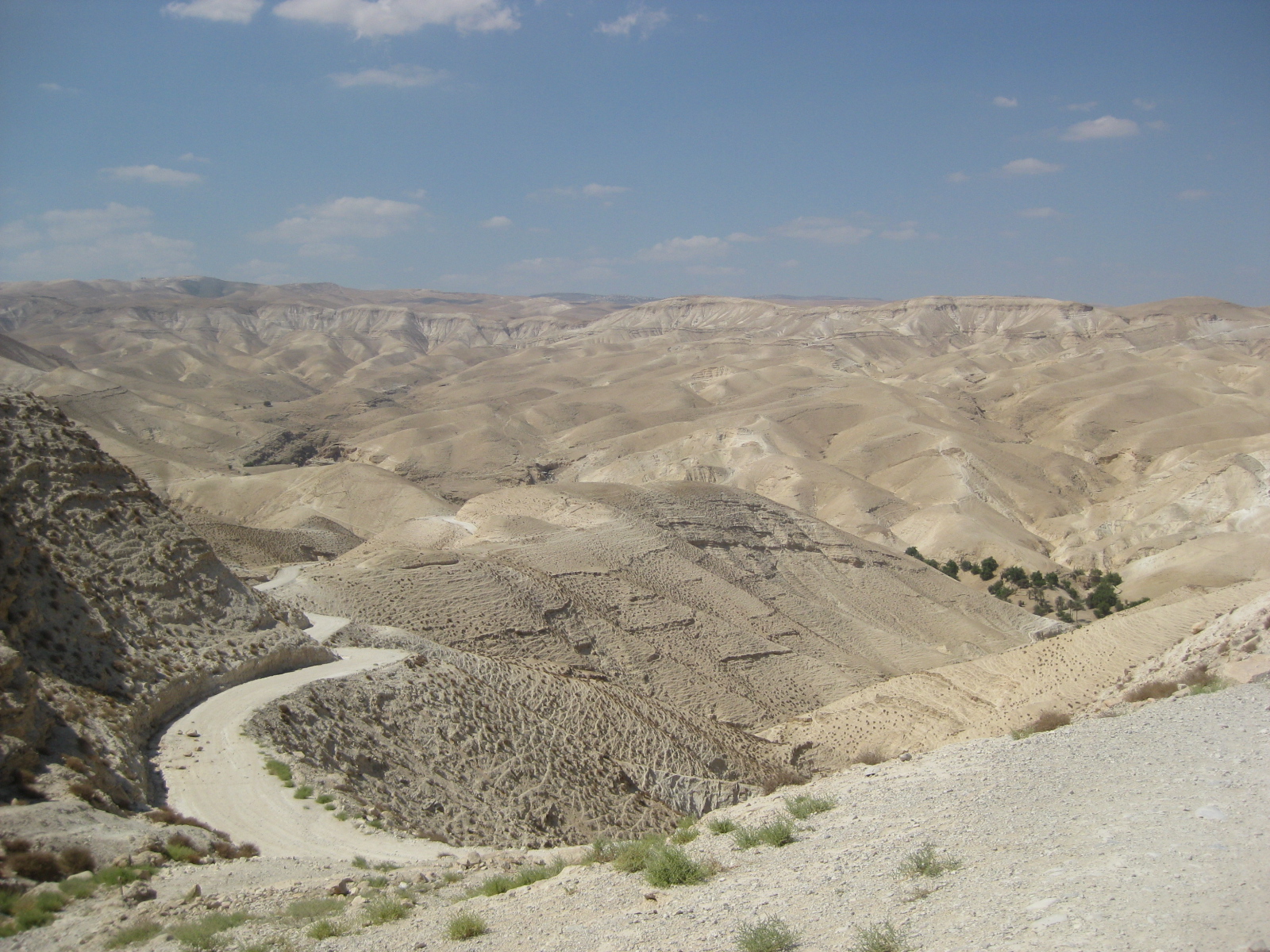
Scripture Text:  Isaiah 40: 1-5Road through the desert

Comfort, O comfort my people, says your God. Speak tenderly to Jerusalem, and cry to her that she has served her term, that her penalty is paid, that she has received from the Lord’s hand double for all her sins.  A voice cries out: “In the wilderness prepare the way of the Lord, make straight in the desert a highway for our God. Every valley shall be lifted up, and every mountain and hill be made low; the uneven ground shall become level, and the rough places a plain. Then the glory of the Lord shall be revealed, and all people shall see it together, for the mouth of the Lord has spoken.”

“Comfort, O Comfort my people.”  That sounds nice.  It sounds warm and inviting, something that we can just sort of fold ourselves into and relax and let God take care of us.  Well, maybe.  But then what happens?  What we do with our lives after that?  The truth is, as much as we like to imagine a warm and fuzzy God that heaps everything we desire and everything we need to make our lives easy and comfortable on us, that’s not exactly the way it always is.  Here, comfort is not solace; here comfort is transformation.  God is promising something new.  These words begin with God’s initiative–to bring the exiles home.  Sure, it will mean ending their suffering and making their lives better.  But it is more.  It means that they will become something new–a new creation.  The former things have passed away.  God is not in the habit of rebuilding or “fixing” the way it is easy for us to imagine could happen.  God is the Creator, the great I AM, the one who brings newness and life.


So, God prepares a highway through the wilderness.  Now, don’t think that there wasn’t already a road there.  In the year 539 BCE, Cyrus of Persia conquered the Babylonians. Now he tended to be sort of a benign and tolerant ruler and so he allowed those who had been previously exiled from Jerusalem the chance to return home. So the people are beginning to return home, but to a home that was nothing like it was before. If you can imagine, these waves upon waves of people on this highway that leads toward Jerusalem—a Jerusalem that now lies in ruins without the Temple that used to be in the center of its life. This highway, a highway through the desert that, typical of the ancient world, was originally built to accommodate royal processions. Everything was done to make the highway smooth and clear.   The road was there, already made straight and smooth for the royals to travel.  And so the exiles, returning to “who knows what?” were on this road.


But, wait, look, over here.  God also promises a highway, smoothed and cleared of mountains and deep, treacherous valleys that would impede the journey.  God promises a holy highway built for a grand procession led by the Almighty God.  It’s still a road that you have to travel, but, rather than leading you to the ruins of the life you once knew, THIS road leads you Home.  And as we travel this road, God is creating and creating and creating the whole time, unfolding our life before us as long as we keep our eyes open to see what God is doing.  This is the way that the Glory of the Lord shall be revealed.


This is the road that Advent shows us.  It’s not one that takes us to the place that we’ve always known.  Advent shows us the newness that God is offering.  In the Advent season, we remember those generations upon generations that waited for a Savior.  We also prepare ourselves to remember once again how Christ came and comes.  But there’s another part of Advent that we miss.  It is this road, this road that we’re on that leads us to finally see things in a different light.  There is a Maori proverb that says “turn your face to the sun and the shadows will fall behind you.”  “Comfort, O Comfort my people.”  The Light is changing and you, even you, even now, are being made new.  “Then the Glory of the Lord shall be revealed, and all people shall see it together.”


Learn to see and then you’ll know there is no end to the new worlds of our vision.  (Carlos Castaneda)


FOR TODAY:  What newness has God created in your life?  During this Advent, what newness can you find on the road?


Grace and Peace,


Shelli