The Other Story

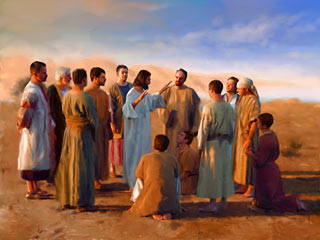
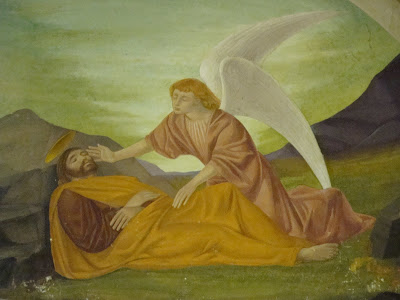
So, here, we get the story of the annunciation.  Wait, didn’t we talk about the annunciation yesterday?  No, this is the OTHER one.  This is the other side of the story.  We’re guilty of skipping over it, this calling of Joseph.  I suppose it’s pretty easy.  After all, he doesn’t even talk.  We really know very little about him. We know he was from Nazareth, a sort of no-name town in Galilee.  We can surmise that he was a carpenter because Jesus is described as the son of a carpenter several times in Scripture.  And we know that he was engaged, or actually betrothed to Mary.  This is not like our engagement.  This was a marital contract.  It just wasn’t consummated.  They were not just dating.  But you know what?  Joseph had plans.  He had some idea laid out of how his life would go.  And, when you think about it, Joseph had to be hurt, probably even angry at Mary.  And then came the dream.  (What is it about Josephs and dreams?)

The writer known as Matthew is the only one that gives Joseph his moment.  But, interestingly enough, he doesn’t even get a chance to ask a question (like, “How can this be?”)  or voice his opinion or perhaps shake his fist in utter disbelief.  I don’t know if it’s the moment or the Scripture, but Joseph is somehow rendered speechless.  He’s not even given a small speaking role.  Instead, Joseph, who had apparently already decided what he was going to do (a plan that it should be noted in the face of the tradition was merciful and compassionate).  He was going to quietly dismiss her.  And, I suppose, Joseph would have faded into the pages of the story with no other mention.  Perhaps Mary could have gotten help from her cousins.  They probably would have put her up.  And Jesus and John would have grown up like brothers.  It could have all worked out, but a better story was waiting.  Because in this moment, Joseph is handed a dream.

It was apparently a wild fit of a dream.  I mean, the Lord came.  That cannot have been a comfortable situation.  And, true to form, God tells him not to be afraid.  “Oh, no,” Joseph thought, “I have read this before.  When the Lord tells you not to be afraid, things tend to happen–things like the floor of your world on which your standing giving way and you falling uncontrollably into something that you never imagined and for which you certainly could never have planned.  Hold on!”  And the Lord hands him a story that doesn’t even make sense.  Joseph is being asked to step back into the story.  And oh, what a story it has become.  Joseph is being asked to raise the child that IS the Messiah.  Joseph is being asked to love him and guide him and discipline him (Good grief, how do you discipline a Messiah?  I mean, does he get like some sort of Divine time out?)  Joseph is even told what to name the child—Emmanuel, “God With Us”.

Well, I’m betting that Joseph’s first thought when he awoke was that he had eaten some bad lamb or something.  He probably laid there for a few minutes processing it all.  I mean, remember, the verses before the ones we read remind us that Joseph was descended from a long line of dreamers.  In fact, old Grandpa Jacob (like 34 “greats” ago) had fought back, wrestling until the break of day!  Remember that?  And then Joseph got up and moved out of the way and followed.  He had plans.  He had a reputation to think of.  He had a face that he had to present to the temple.  He had a life.  But Joseph moved aside and fell speechless.  And then, and then God gave him his voice.

The 20th century theologian Dietrich Bonhoeffer who died for speaking out about the Nazi regime, once said that “We have become so accustomed to the idea of divine love and of God’s coming at Christmas that we no longer feel the shiver of fear that God’s coming should arouse in us.  We are indifferent to the message, taking only the pleasant and agreeable out of it and forgetting the serious aspect, that the God of the world draws near to the people of our little earth and lays claim to us.  The coming of God is truly not only glad tidings, but first of all frightening news for everyone who has a conscience.”[i]

Lays claim to us…This Scripture makes us realize that God’s coming into the world did not just involve God, an angel, and Mary.  Joseph was there too, as were all of those who came before and all of those (including us) who came after.  God’s coming is not just the birth of a baby in a pretty nativity story; God’s coming is the way that God lays claim on us.  God’s coming is the way that God turns all of our lives upside down.  God’s coming is the way that the story changes.

The truth is, there was a story.  And Joseph had written some of his chapters in not realizing that they didn’t lead to the vision that God had in mind.  When I was in seminary, I was privileged to be a part of a small group of students (there were maybe thirty of us) that had a wonderful conversation with John Irving (the author of “A Prayer for Owen Meany”, “The Cider House Rules”, and “The World According to Garp”).  Someone asked what was probably an expected question:  How do you craft your stories?  The answer was probably not as expected.  John Irving said that he always writes the end of the story first and then fleshes out the plot and the characters and the themes to get to that ending.

Don’t you think that’s what God has done?  God has this vision for what the world should be.  And along the way, God calls and comforts and cajoles to coax us toward that ending.  The early chapters are not written.  That’s up to us.  But the ending is the very vision of God.  So, God called Joseph.  Joseph had a story.  He was writing it.  And when he was called, he changed it.  What about us?  We are waiting on the world to change.  What if that vision has already been written?  What if the way we get there, the way the world changes, is us?  What if the change is not the ending but the way the story plays out?  What if our calling is to write a better story?

Grace and Peace,

Shelli


[i] From “The Coming of Jesus in our Midst”, by Dietrich Bonhoeffer, in Watch for the Light:  Readings for Advent and Christmas, December 21

Sent

This story is told in all four Gospels, so it must have been seen as important.  It must be a story to which we should listen.  The truth was that Jesus wasn’t seen as a prophet or a Messiah by this crowd.  He was just one of them, this little kid that had made good and of whom they were very proud.  This was the kid that they had helped raise.  They probably thought that his ministry would be a reflection on them.  But Jesus was going off-script, so to speak.  And when they looked at him, they did not see a reflection of what they were expecting but a dim view of something that was a tad unfamiliar.  Jesus was standing there, calling them to change, calling them to look at things differently, to step out of their carefully constructed boxes and away from their earthly temples of who they thought they should be and actually become the people of God. So, who did he think he was?  God?

And then he called the disciples and sent them out.  Now, truthfully, they were already “called”.  That had already happened.  This was the sending.  This was the place where he gives them the authority to go out and BE his disciples. And, if you read a little farther, he tells them not to take any food or money, not a bag, not even a change of clothes.  This always struck me as weird.  So, they go out into the world without really being prepared?  I think maybe Jesus didn’t want them to be weighed down.  He didn’t want them to rely solely on themselves because when we do that, it becomes about us.  And this was not about the disciples; it was about the journey on which they were called to go. 

Then (still reading farther) Jesus tells them that if someone doesn’t welcome them, if someone doesn’t listen, if someone doesn’t extend hospitality to them, if someone out and out rejects them, don’t worry about it.  Just “shake off the dust from your feet”.  That is hard.  When you feel like you’re right, when you feel like you’re doing what you’re supposed to be doing, it is really hard to walk away from rejection.  But it’s another reminder that it’s not about us.  Sometimes stuff just doesn’t happen the way we plan.  Maybe the person that comes to them next will get through.  Maybe no one will ever get through.  Maybe they’re just locked into their own preconceived notion of who God is and who they should be.   Jesus essentially tells them not to worry about it.  Do what you can because that’s what you’re there to do.  Just let it go.  Your mission is to bring healing and reconciliation to those who need it.  Your mission is to tell the story.

You know what Jesus DOESN’T say?  (I am fascinated by this idea…maybe what Jesus doesn’t say is just as important as what he does!)  Surprisingly, he doesn’t tell them what to say to people.  He doesn’t give them a prescribed set of Biblical interpretations or some pre-ordained “orthodox” theological premise.  He gives them no notes, no reading hints, and no check-off list of beliefs that they are supposed to accept and espouse.  He gives them no bulletin or video screen to prompt their words.  He doesn’t give them some bizarre 1-minute “elevator speech” to convert someone to the faith while they’re flying between Floor 1 and Floor 4.  (I’m sorry.  That was always an odd concept to me.  I actually think starting a faith journey is a lot more substantive than a 1-minute elevator ride.  But that’s just me.)  Instead, Jesus tells them to proclaim the good news of the Kingdom of God.  He sends them out to tell the story—to anybody, to everybody, to whomever they encounter who will listen.  And he tells them to adapt, to be nimble.  He reminds them that it’s not about them or what they think.  It’s about the good news.  It’s about God.  And he leaves room for them to wrestle with their own understanding.

I know.  “Adaptable” and “nimble” are not the first words that come to your mind when you’re talking about our faith.  They are certainly not the primary words used to describe the church.  But maybe they should be.  What if faith is not, after all, a fortress?  What if belief is not intended to be rigid or staid? What if our theological understandings actually grew?  (Goodness, mine have!) What if our faith means openness to change, openness to the newness that God offers us?  What if our faith was adaptable to that change?  What if our faith grew into something we never imagined because we were open to it?  What if our next crisis of faith, our next crisis of the church, made us recognize the way that God had turned our path just a bit?  What if we went out into the world as God’s disciples to tell the story, to invite, to gather, rather than to convert?

So, the picture on the left is an image of the Choluteca Bridge over the Choluteca River in Honduras.  It was built in the 1930’s by the U.S. Army Corps of Engineers and it’s an important bridge on a very busy road called the Panamericana.  The picture on the right is the same bridge after Hurricane Mitch in 1998.  Now, contrary to your first thought, no, the hurricane did not do anything to the bridge.  The bridge is fine.  The hurricane moved the river.  (Oh my!) Adaptable and nimble…things happen, things out of our control.  But our faith tells us that God will turn our paths toward the new river.  But if we don’t listen, we will find ourselves on a bridge to nowhere.

Faith and belief and religious expression are messy.  Jesus knew that.  I think he also knew that they change.  They grow.  Sometimes they even shrink.  That’s why we’re sent out—to keep telling the story.  The words will change.  The people will change.  Churches will change.  (They grow, they split, they regroup, they rediscover who they are…looking at you United Methodists!  It’s all OK.)  Sometimes even the river will move.  But, most of all, WE will change. And God will walk with us through the bends and curves and speed bumps that we find.  If someone doesn’t want to hear us, it is not our job to ram it down their throat.  There is someone else that has the words they will hear.  Let it go.  Faith is not about rules or prescribed beliefs or, of all things, laws and politics.  Faith is about a story.  Just tell the story.  Tell it from your heart.  It’s there.

Jesus told the disciples he sent out to take nothing with them, to travel light.  It was so they weren’t weighed down and tempted to stay where they were.  We could take a valuable lesson from that.  It’s hard but sometimes we need to be more open to change.  Because this world that God created is always changing, always growing, always alive.  There’s sort of a wildness to it, not to be tamed or fixed, but to be embraced and entered.  We are called to go out into the world and change it.  But, more importantly, we are called to move to where God is leading us and allow ourselves to be changed.  Our traditions and our theological understandings and our beliefs and our religions are not theories.  They simply give us the words to tell the story and the story is God’s.  So they went out.  And we are called to do the same.

Grace and Peace,

Shelli

The Story of Light

Scripture Text: Luke 2: 1-14 (Christmas Eve)

In those days a decree went out from Emperor Augustus that all the world should be registered. 2This was the first registration and was taken while Quirinius was governor of Syria. 3All went to their own towns to be registered. 4Joseph also went from the town of Nazareth in Galilee to Judea, to the city of David called Bethlehem, because he was descended from the house and family of David. 5He went to be registered with Mary, to whom he was engaged and who was expecting a child. 6While they were there, the time came for her to deliver her child. 7And she gave birth to her firstborn son and wrapped him in bands of cloth, and laid him in a manger, because there was no place for them in the inn. 

8In that region there were shepherds living in the fields, keeping watch over their flock by night. 9Then an angel of the Lord stood before them, and the glory of the Lord shone around them, and they were terrified. 10But the angel said to them, “Do not be afraid; for see—I am bringing you good news of great joy for all the people: 11to you is born this day in the city of David a Savior, who is the Messiah, the Lord. 12This will be a sign for you: you will find a child wrapped in bands of cloth and lying in a manger.” 13And suddenly there was with the angel a multitude of the heavenly host, praising God and saying, 14“Glory to God in the highest heaven, and on earth peace among those whom he favors!”

It’s finally here, this night of nights.  The Light for which we’ve waited and journeyed toward peers into the darkness and the world is changed forever.  We love this story.  Most of us could probably recite it from memory.  And, yet, the story may not be EXACTLY the way we think.  It’s not like there was someone with a video camera following them around that night.  Only two of the canonical Gospel writers even tell the story and they tell it very differently.  The non-canonical Gospel According to James tells it in more detail but the birth takes place in some sort of cave.  (But, in all honesty, where did you actually read about a stable?)  The same account also brings in a midwife, which, when you think about it, makes a whole lot of sense.  So, no, I’m not trying to tear down your much-beloved story.  The truth is, it’s not about the story; it’s about the birth.  It’s also about the Light.  It’s about the Light of God coming into the world, however that may have happened.

This is the story of Light.  It’s the Light that has always been there, the light that was created so long ago.  It’s the light that led people home over and over again.  But it was always a light that was hidden in a cloud or shrouded on a mountain or even set in the promise of a bow in the clouds.  But this night, this story, tells of Light not shining onto the earth but coming into the earth, mingling with us and giving us life.  This is the night that our story becomes the story of Light.

The Bible is not about people trying to get to God or get to the Light; it’s about the story, the story of God.  And this part of it, this chapter that we read and relive tonight, this holy night is not the climax of the story; it is a new chapter, a new beginning.  19th century American author and pastor Henry Van Dyke once asked “And now that this story is told, what does it mean?  How can I tell?  What does life mean?”  And then he answered himself by saying, “If the meaning could be put into a single sentence, there would be no need of telling the story.”

This is the night of the story of God coming out of the darkness and out of the shadows and showing us what we could not see before.  The Light is beginning to dawn.  It’s not a new light.  But this time, the heavens themselves spilled into the earth so that the story would become ours.  This is the story of Light.  It’s also the story of us.  So, what comes next?  Go into the Light…and follow God to write your story.

To be continued…

I cannot create the light. The best I can do is put myself in the path of its beam.  (Annie Dillard) 

Grace and Peace,

 Shelli

Made Flesh

Scripture Passage:  John 1: 1-14

1In the beginning was the Word, and the Word was with God, and the Word was God. 2He was in the beginning with God. 3All things came into being through him, and without him not one thing came into being. What has come into being 4in him was life, and the life was the light of all people. 5The light shines in the darkness, and the darkness did not overcome it. 6There was a man sent from God, whose name was John. 7He came as a witness to testify to the light, so that all might believe through him. 8He himself was not the light, but he came to testify to the light. 9The true light, which enlightens everyone, was coming into the world. 10He was in the world, and the world came into being through him; yet the world did not know him. 11He came to what was his own, and his own people did not accept him. 12But to all who received him, who believed in his name, he gave power to become children of God, 13who were born, not of blood or of the will of the flesh or of the will of man, but of God. 14And the Word became flesh and lived among us, and we have seen his glory, the glory as of a father’s only son, full of grace and truth.

The Word became flesh.  Think about it.  God’s Spirit, God’s breath, the Hebrew language refers to it as ruah, the very essence and being of God was suddenly given flesh and bone and cartilage and hands and feet and all those very human things that we humans require to be here on earth.  In other words, the Divine became human, if only for a while.  That tells us that God does not desire a partner, or a relative, or a close friend.  God desires to live with each of us as one of us.  The miracle of Christmas is not just that God came, although that would be miracle enough.  The miracle of Christmas is that God takes on flesh. 

In The Message paraphrase of the Bible, Eugene Peterson says that “The Word became flesh and blood and moved into the neighborhood.”  That’s actually a little disconcerting when you think about it.  That means that you’ll see God when you’re out walking your dog or getting your mail.  It means that you’ll run into God in the grocery store when you’re in a terrible hurry and don’t have time. It means that God will show up at your door when the house is a wreck and you are least expecting visitors.

As the Scripture says, in the beginning was God and in the end will be God and in between?  In between, God is with us.  In between, God is one of us.  In between, is us.  That is the very mystery of Christmas.  So what do we do then with a God who is with us?  God is not limited to this sanctuary or to the places in our lives where we’ve sort of cleaned up a bit.  God comes into place of darkness and places of light.  God comes into profound poverty and into gated communities.  God is with us every step of our lives.  God is one of us in our flesh and our bone.  God has moved in.

So, now it’s our move.  I suppose we could just pick up the Christmas decorations and put them back in the box for another year.  I suppose we could just go back to whatever we define as our normal lives.  But the problem is that God is with us.  God lives with us, here, in the neighborhood.  Everywhere we turn, we will meet God—over and over and over again.  And once you’ve met God, you can’t go back to the way it was before.

The problem with God is not that God comes at times that might be a little inconvenient for us; the problem with God is that God never goes away.  God is all over us.  That first Christmas was God’s unveiling, God’s coming out of the darkness and the shadows and showing us what we could not see before.  God poured the Divine into the lowliest of humanity, into a dirty animal stall, and began to pick us up so we could walk with God. 

And we are asked to follow.  We are asked to become something new.  We are asked to now become the very reflection of the God that is here everywhere.  Thomas Merton once said that “the Advent mystery is the beginning of the end in all of us that is not yet Christ.”  It’s Christmas.  Now is the time.  Let us go see this thing that has happened.

God is closer to me than I am to myself. (Meister Eckhart)

Thank you for joining me on this Advent journey!  I hope it gave you some hope and some light in this very-hard time in which we live right now.  Now I’m going to take just a small break.  BUT…I’m back in  practice, so I’m going to try to continue (but not every day!).  I’ll continue to post at least once a week around the Lectionary passages and maybe sometimes you’ll get an extra post in a week if I just have something else to say! SO, look for a post Sunday morning or earlier for the Sunday after Christmas and then a post for Epiphany Sunday early next week and that will be our plan for now.  Thanks again for joining me! Have a wonderful Christmas! 

Merry Christmas!

Shelli

What It’s All About

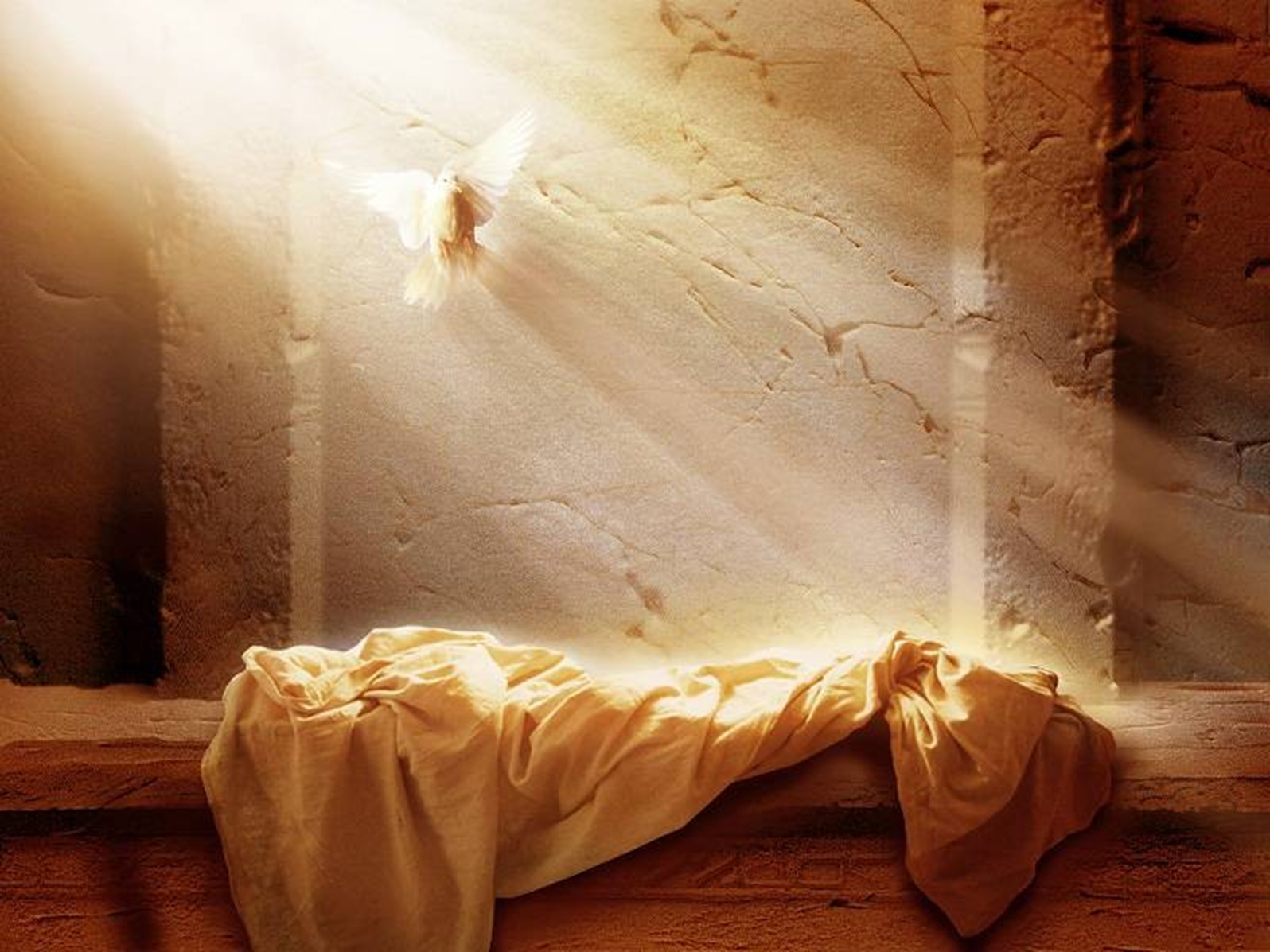
resurrection-lightEarly on the first day of the week, while it was still dark, Mary Magdalene came to the tomb and saw that the stone had been removed from the tomb. 2So she ran and went to Simon Peter and the other disciple, the one whom Jesus loved, and said to them, “They have taken the Lord out of the tomb, and we do not know where they have laid him.”… 

 11But Mary stood weeping outside the tomb. As she wept, she bent over to look into the tomb; 12and she saw two angels in white, sitting where the body of Jesus had been lying, one at the head and the other at the feet. 13They said to her, “Woman, why are you weeping?” She said to them, “They have taken away my Lord, and I do not know where they have laid him.” 14When she had said this, she turned around and saw Jesus standing there, but she did not know that it was Jesus. 15Jesus said to her, “Woman, why are you weeping? Whom are you looking for?” Supposing him to be the gardener, she said to him, “Sir, if you have carried him away, tell me where you have laid him, and I will take him away.” 16Jesus said to her, “Mary!” She turned and said to him in Hebrew, “Rabbouni!” (which means Teacher). 17Jesus said to her, “Do not hold on to me, because I have not yet ascended to the Father. But go to my brothers and say to them, ‘I am ascending to my Father and your Father, to my God and your God.’” 18Mary Magdalene went and announced to the disciples, “I have seen the Lord”; and she told them that he had said these things to her. (John 20: 1-2, 11-18)

These hours have been such a whirlwind of thoughts and emotions.  But in this moment, I am beginning to see what it was all about.  I want to hold her and comfort her and explain it all but Jesus’ young friend Mary is running around with a mix of hysteria and excitement.  Maybe she, too, is beginning to understand.  I always knew who he was, knew from that surreal night when the angel came.  I probably would have thought I was losing it but Joseph had had a dream too.   Oh, that seems so long ago and yet, I remember it like it happened just a second ago. No one really understood.  No one ever understood.  But we did.  We knew who he was.  But not until this moment did I really grasp it.

I hope that the world does not take this as a do-over of some sort.  Because it is all part of it—everything up to this moment and everything that comes to be.  All of time and all of space and all creation points to this and is illuminated by it.  All of those generations that carried the story to me and the generations that stretch out beyond where I will ever see are in this moment.  I now understand that that strange brilliance that led us to Bethlehem and then stayed with us through the night that he was born has been with me always.  And he showed me that.  But I didn’t understand until now.

The memories come flooding back to me now—more than three decades of memories.  They will take several days to process.  But now they are not memories wrapped in grief.  I understand that they are the story—his story, my story, Joseph’s story, the world’s story.  God came into the world and walked with me.  God invited me to dance with the Divine, to touch, to love, to hold the Godself.  There was nothing special about me.  I have always been so ordinary.  But now I see that my life is an incredible mix of the ordinary and the sacred.  God has come.  And now I understand that God was always here.  And will be forevermore. “My soul magnifies the Lord, and my spirit rejoices in God my Savior, for he has looked with favor on the lowliness of his servant.  Surely, from now on all generations will call me blessed.”  I do feel blessed.  I pray that the world will begin to understand.

There was, indeed, something I had missed about Christianity, and now all of a sudden I could see what it was.  It was the Resurrection!  How could I have been a church historian and a person of prayer who loved God and still not known that the most fundamental Christian reality is not the suffering of the cross but the life it brings?…The foundation of the universe for which God made us, to which God draws us, and in which God keeps us is not death, but joy.  (Roberta Bondi)

FOR TODAY:  Begin to make room.  There’s more to the story than you thought.

Peace to you in this often-hectic week,

Shelli

More To the Story

Light into the world2 Abraham was the father of Isaac, and Isaac the father of Jacob, and Jacob the father of Judah and his brothers, 3and Judah the father of Perez and Zerah by Tamar, and Perez the father of Hezron, and Hezron the father of Aram, 4and Aram the father of Aminadab, and Aminadab the father of Nahshon, and Nahshon the father of Salmon, 5and Solomon the father of Boaz by Rahab, and Boaz the father of Obed by Ruth, and Obed the father of Jesse, 6and Jesse the father of King David.  And David was the father of Solomon by the wife of Uriah, 7and Solomon the father of Rehoboam, and Rehoboam the father of Abijah, and Abijah the father of Asaph,* 8and Asaph* the father of Jehoshaphat, and Jehoshaphat the father of Joram, and Joram the father of Uzziah, 9and Uzziah the father of Jotham, and Jotham the father of Ahaz, and Ahaz the father of Hezekiah, 10and Hezekiah the father of Manasseh, and Manasseh the father of Amos,* and Amos* the father of Josiah, 11and Josiah the father of Jechoniah and his brothers, at the time of the deportation to Babylon.  12 And after the deportation to Babylon: Jechoniah was the father of Salathiel, and Salathiel the father of Zerubbabel, 13and Zerubbabel the father of Abiud, and Abiud the father of Eliakim, and Eliakim the father of Azor, 14and Azor the father of Zadok, and Zadok the father of Achim, and Achim the father of Eliud, 15and Eliud the father of Eleazar, and Eleazar the father of Matthan, and Matthan the father of Jacob, 16and Jacob the father of Joseph the husband of Mary, of whom Jesus was born, who is called the Messiah.* (Matthew 1: 2-16)

We Christians sometimes seem to have this notion that Jesus, Emmanuel, God-With-Us, Messiah, the Savior of the World just sort of dropped out of the sky one cold winter night in Bethlehem and the world began. But the story of the birth of the Divine One into this world is not the beginning but the next chapter in a story that had been read into the world for volumes of the story before.  Jesus came, God with Us, after eons of the earth straining to see the Light.  He came into centuries upon centuries of waiting journeyers, those who had prepared the way for his coming, not knowing what that would be but knowing that it would be.  Those that came before are not just a prelude to the story but are part of the story itself.

I would guess that most of you sort of skip over these verses in the Gospel from the writer known as Matthew. After all, the names are hard to pronounce and, really, what do they bring to the lovely story that we have compiled from the Gospels of Matthew, Luke, and a little “tradition” thrown in. But they ARE important, SO important. They are the story of our connection. If the writer had not been of Jewish descent (I think the fact that he (or she!) starts with Abraham is the first of many clues in that Gospel version.), the story might have gone back to the beginning—you know, that “in the beginning” part. It’s all part of the story.

In the beginning, God came into the darkness, into the chaos that was the world and filled it with Light. And it was good. And God went on to fill the illuminated world with Creation—waters that bring and sustain life, soils that would continue to birth life from decay, green and blue foliage reaching into the earth for their nutrients, animals of prey and animals that would become companions to us (including the one that just demanded that I open the window blinds so he can make sure no one is going down his road!), and we humans. And then God continued to walk with the Creation, guiding them through the times that they listened and patiently waiting for their return when they did not. And after generations of both failed and incredibly wonderful journeys, God again came to once again bring light to a world who had allowed part of the light of Creation to go out. And it was good. And this time, God came not as the Light on us but the Light within us, coming as one of us to show us how to be Light.

No, Jesus did not just pop out of nothingness. The story had been in place long before. And we, too, did not just appear. Our lives are not merely individual existences that we have worked so hard to create. Our lives are part of the ongoing story of the world becoming more and more illuminated until the darkness is no more. THIS Advent, remember the story and do not forget the light that you are called to carry forward into the next chapter of the story. Even now, God is bringing Light to a partially dark world. We can only imagine where God will take the incredible story next.

God showed me a little thing, the size of a hazelnut, in a palm of my hand, and it was as round as a ball. I looked at it with my minds’ eye and I thought, “What can this be?” An answer came, “It is all that is made.” I marveled that it could last, for I thought it might have crumbled to nothing, it was so small. And the answer came into my mind, “It lasts and ever shall because God loves it.” And all things have their being through the love of God. In these little things I saw three truths. The first is that God made it. The second is that God loves it. The third is that God looks after it. (Julian of Norwich)


Grace and Peace,


Shelli


Be the Story

the_nativity_story_08

Scripture Text:  Genesis 1: 1-3, 31a

In the beginning when God created the heavens and the earth, the earth was a formless void and darkness covered the face of the deep, while a wind from God swept over the face of the waters.  Then God said, “Let there be light”; and there was light…God saw everything that he had made, and indeed, it was very good.

There is not one of us that does not love The Christmas Story.  It’s got it all–heartache, darkness, intrigue, danger, animals, innocence, an oppressive government, and a baby to boot.  It’s got all those things that make great tales.  No wonder it’s a bestseller!  No wonder there are so many songs written about it (that we at this moment cannot WAIT to sing and for some are even irritated that we are NOT!)  But for all the romantic notions of a baby born into a cold desert night in a small town on the other side of the world to poor, struggling parents, this story is not about a birth.  It’s not just a story about Jesus.  This is the Story of God.


It began long before this.  It began in the beginning.  It began when God breathed a part of the Godself into being and created this little world.  And as the story unfolded, as God’s Creation grew into being, God remained with them, a mysterious, often unknown Presence, that yearned to be in relationship with what God had breathed into being.  And once in a while, God’s children would stop what they were doing long enough to know and acknowledge the incarnations of God.  Once in awhile, they would encounter a burning bush or a parting sea or an unfathomable cloud on the top of a mountain.  Once in awhile they would stop, take off their shoes, and feel the holiness beneath their feet.  But more often than not, they struggled in darkness, they struggled in war, they struggled in oppression and injustice because they didn’t see the Light that was with them.  God called them and God sent them and some were prophets and some were wise and some were yearning themselves to be with God.  Some wrote hymns and poetry telling of their yearning and others just bowed and hoped that God would notice.


This wasn’t enough.  It wasn’t enough for the people and it wasn’t enough for God.  God yearned to be with what God had created.  God desperately wanted humanity to be what they were made to be, to come home to the Divine, to be part of the unfolding story.  And so God came once again, God Incarnate, into this little world.  But this time, God came as what God had created.  And so God was born into a cold, dark night.  But the earth was almost too full.  There was little room for God.  But, on that night, in a dark grotto on the outskirts of holiness, God was born.  The Divine somehow made room in a quiet, little corner of the world.  God came to show Creation what had been there all along.  And, yet, there was Newness; there was Light; there was finally Meaning; there was God Made Known.


The Incarnation (the “big I” one!) is God’s unveiling.  It is God coming out of the darkness and out of the shadows and showing us what we could not see before.  God became one of us to show us how to be like God in the world.  So, in this season, we again hear the story.  We hear the story of God.  But unless we realize that it is our story, it still won’t be enough.  God came as God Incarnate into this little world to tell the story that goes back to the beginning.  In the beginning was the Word, and the Word was with God, and the Word was God.  He was in the beginning with God.  All things came into being through him, and without him not one thing came into being.  What has come into being in him was life, and the life was the light of all people.  The light shines in the darkness, and the darkness did not overcome it.  (John 1: 1-5)  And the story continues…BE the Story.


God delights in the human imagination.  No one person can claim to hold the key to unlock what God intended, because what God intended was for each generation to read its story into the text.  (Sandy Eisenberg Sasso)


FOR TODAY (OR YESTERDAY!):  BE the Story.  What does that mean?  God did not come into this world so you could celebrate Christmas; God came so that you would know it is your story.  BE the Story.


Grace and Peace,


Shelli