If You Love Me…

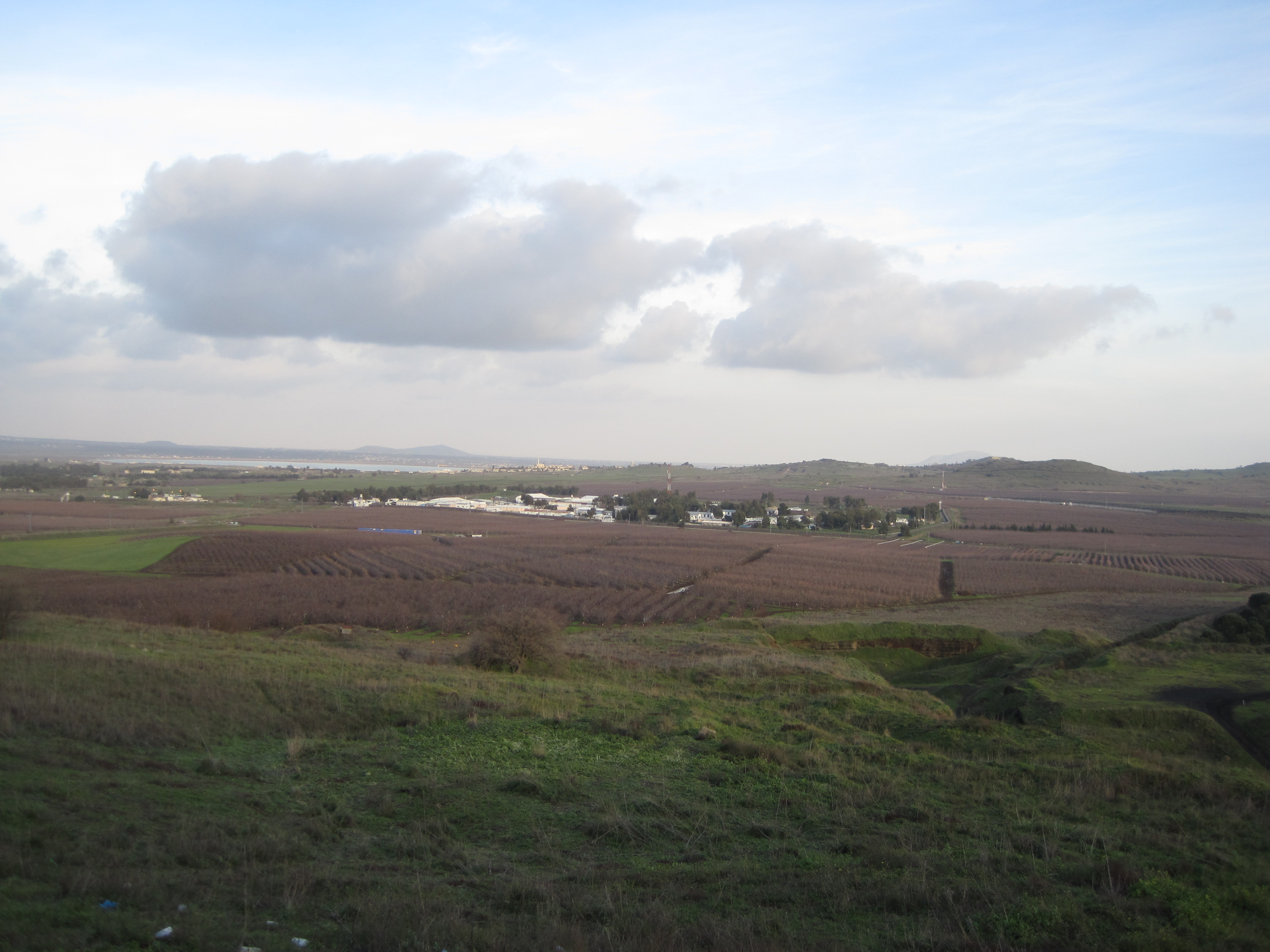
Galilee, near the Mt. of the Beatitudes

This passage is familiar to all of us.  Maybe it’s too familiar.  Maybe we’re good at reciting it and not that great at living it.  But all that Jesus was—the annunciation, the birth, the teaching, the welcoming, the healing, the miracles, the calling, even the turning of the tables—all of it came down to this.  THIS was the message that Jesus was trying to impart to us.  Oh, it’s not that it’s more important than everything else that Scripture holds, everything else that Jesus taught.  It’s that it IS everything else, all wrapped up into these words—love God and love neighbor.  It is the story of our faith.

This passage tells of the last in a series of encounters that Jesus had with the Pharisees and the Sadducees over the issue and challenge of Jesus’ authority, over the question of who Jesus was.  In the context of the Gospel by the writer known as Matthew, this is Jesus’ final encounter with those who saw it as their role to protect the tradition of the first century Jewish religion.  After this, the Gospel moves into the judgment of Jesus and then on toward the Passion and Resurrection of Christ.  In a way, this was Jesus’ final answer, his way of summing it all up for us before the judgment began.

The lawyer who stepped forward could be considered an expert on the Torah, the professional theologian and the resident authority on all things of the faith tradition.  And his purpose was to test Jesus, to trap him into giving an answer that would finally prove that Jesus was not who he had made himself out to be.  For the writer of Matthew, this was a test of the kingdoms pitted against each other—the Kingdom of God against the powers that were in play on earth.

The rabbis had counted a total of 613 commandments in the Torah, the “Law”.  (I’m sure you have all of those memorized and follow them to the letter!—or not!) And even though it was acceptable for rabbis to give summaries of the Law itself, the view was that each one of these commandments held equal value with all the others.  By asking Jesus which law was the greatest, the lawyer was setting a trap.  If Jesus singled out any one law above the other, it would be like dismissing the other 612.  It would be a violation of the Law of Torah.  It would be the final blow.

But Jesus, in true Jesus fashion has an answer that they were not expecting.  “You shall love the Lord your God with all your heart, and with all your soul, and with all your mind.”  The first commandment that Jesus cites is part of what is known in Judaism as the Shema, the central prayer of the Jewish faith.  It would be hard to refute.  Found in the 6th chapter of Deuteronomy, the commandment that Jesus gives is part of what is found in a mezuzah, the holy parchment affixed to the doorframes of Jewish homes.  From the Tanakh translation, which is a traditional Hebrew translation, the prayer goes like this:

“Hear, O Israel!  The Lord is our God, the Lord alone.  You shall love the Lord your God with all your heart and with all your soul and with all your might.  Take to heart these instructions with which I charge you this day.  Impress them upon your children.  Recite them when you stay at home and when you are away, when you lie down and when you get up.  Bind them as a sign on your hand and let them serve as a symbol on your forehead; inscribe them on the doorposts of your house and on your gates.”

It declares not only the belief in the One and Only God but also calls us to a deep and abiding relationship with God.  We are called to love God with our whole heart, a pure and absolute devotion to God as our one and only maker and redeemer.  We are called to love God with our souls, to long for a passionate and engaged love for the One who nurtures and sustains us.  We are called to love God with our minds, not a blind and uninformed faith but one that questions, and learns, and grows into what God envisions us to be.  And we are called to love God with all our strength, every fiber of our being, a full and engaged life lived in the name of Christ our Lord.

But then Jesus comes back and tells us that we “shall love our neighbor as ourself.” (Found in Leviticus 19:18) In essence, it seems that Jesus was asked for one commandment and responded with two.  But the writer of Matthew’s Gospel depicts the second as “like” the first.  The Greek word for this does not mean merely similar; it means, rather, that is of equal importance and inseparable from the first, linked and dependent upon each other.  The great command to love God has as its inseparable counterpart the command to love neighbor.   One cannot understand true and abiding love without a loving relationship with God.  But one cannot realize that relationship with God without loving one’s brothers and sisters and realizing that we are all children of God.  From this standpoint, our mutual and shared humanity becomes part of our relationship with God, as we are swept into the coming of the Kingdom of God for all of Creation.  We are called to love our neighbor as deeply as we love ourselves, to meet our neighbor’s needs as readily as we meet our own, and to seek to understand our neighbor’s dreams and passions just as we vie for what we believe.  We are called to love our neighbor because we love God.  The two commandments are intrinsically intertwined, inescapably linked to one another.  They become reflections of each other in true Trinitarian mutual relationship.  They are of one essence and being.  Our love and compassion for others gives visibility to our love and compassion of God. 

Jesus did not just invent this “greatest commandment”.  It was a way of talking about all of the commandments that were known (including those “Top 10” that politicians seem so intent on placing in every school room).  In fact, if you look at the Ten Commandments, they are neatly summarized in the Great Commandment.  The truth is that none of them are a list of “do’s and don’ts”.  They are this—this greatest commandment, summarized into Jesus’ final message.  It’s not a set of rules; it’s a way of being, to live a life loving God and neighbor.

So, here we are, coming so near to the gates of Jerusalem, so near to the end.  We Christians walk this Lenten journey with Jesus.  We probably walk it with only a modicum of the attention it is due because, after all, we know how it all turns out.  We know that in a matter of days, we’ll go to church and bask in the perfume of Easter lilies and go on with our lives.  But the truth is that living this Greatest Commandment means more than just paying attention, more than just remembering.  Loving God is about entering this Holy Walk and loving God so much that you can’t walk away.  And loving neighbor means that we are called to love the Pontius Pilates and the callous townspeople and the corrupt court and the disciples who stayed and the disciples who fled.  Loving our neighbor means that we love the thieves on the cross, both the penitent and the impenitent, as ourselves.  Because they are us—all of them.  They are the times that we choose to ignore our neighbor or make excuses for our action or try to justify something that is not just.  They are the times that we bear the cross to die to what we should not be. 

John 14:15 reminds us that Jesus said, “If you love me, you will keep my commandments.”  Keep here is not just “obey”.  It means more to watch over them, to preserve them, to guard them, to become them.  So, as we begin to turn toward the gate to enter Jerusalem, breathe out…breathe out the excuses, breathe out walking through this as history or a distant memory that is not yours.  Breathe out want to avoid the grief and the gore and the despair because it is uncomfortable.  Breathe out thinking that the walk is not yours because Jesus did it for you.  (OK, at the risk of being thrown off the team, I’m not really a substitutionary atonement kind of gal.  Jesus invited us into being with God through Christ.  Jesus invited us to this walk—all of it.  We must experience a death, of sorts, a dying and letting go of what was so that we might live.) And breathe in remembrance—the remembrance that is love.  Breathe in this commandment to love God and love neighbor, two inextricably linked parts that if you keep, if you preserve, if you become, you will know resurrection—not only Jesus’ but also yours.  You will know how to begin to practice resurrection.

Love God with all you are and love your neighbor as yourself…love enough to walk this Way of the Cross. 

Humanly speaking, we could interpret the Sermon on the Mount in a thousand different ways.  Jesus knows only one possibility:  simple surrender and obedience.  He does not want it to be discussed as an ideal; he really means us to get on with it.  (Dietrich Bonhoeffer)

Grace and Peace,

Shelli

The One Who is Raised to Begin Again

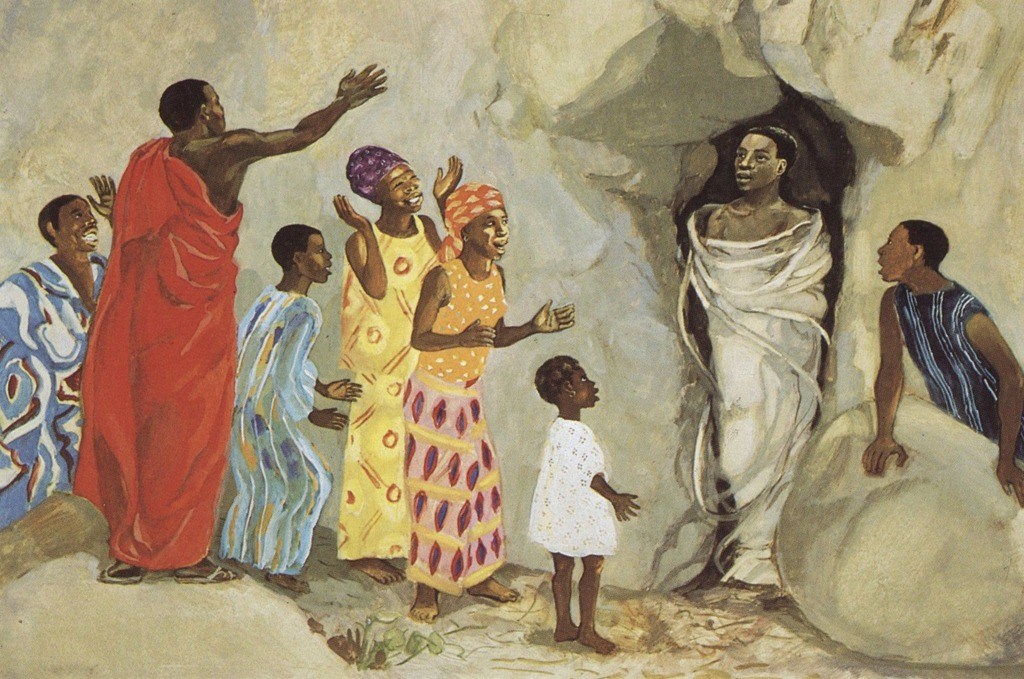
This has always been at the very least a strange story to me.  I think I once had some image of Lazarus walking out of the tomb, with tattered grave clothes dangling and an unbearable stench following him (probably from a 3rd grade Sunday School picture!), and then dressing and sitting down for a nice fish dinner with Jesus and his sisters.  But the Scripture is not here to show us magic or to in some way depict a God that with the veritable snap of a finger can just put everything back like it was before. (Well, I don’t know, I supposed God CAN, but why?  That’s not really the way God works.  God has something much better in store.)  This story is taken as a precursor to Jesus’ own Resurrection.  It was Jesus’ way of promising life.  But ironically, it is also the act that turns the tables toward Jesus’ demise.  Here, standing within two miles or so from Jerusalem, the journey as we know it begins to wind to an end.  Even now, the Sanhedrins are gathering their swords and the night is beginning to fall.

This passage is odd.  Even when you read it all (I “shortened” it but I’m not sure how good a job I did), it’s more about the minutia around Lazarus’ death and rising than about Lazarus himself.  In fact, we really know very little about the character Lazarus except that he was dead and then he wasn’t.  Like us, the characters deal with death by dealing with minutia.  When my dad passed away, I was definitely the queen of the minutia.  One family member removed herself completely.  Another one wept in the front room.  (I remember thinking…I want to do that, to weep, to wail, to scream, but, instead, I’m organizing and directing.)  When my grandmother died, my dad and I sat alone in the hospital room for hours waiting on the funeral home.  We recounted memories, talked about what it meant, and felt that thin veil that gathers when a loved dies, the sense of the presence of those who were loved and who were important there with us.  THAT’s what I wanted.  I wanted to sense that veil.  But instead, I directed and hosted and gathered information—the police, the EMT’s, more police (he died at home), and then the funeral home.  I barely remember it but somehow it happened.  Isn’t that how we often deal with death?  But here…Jesus steps in and raises Lazarus.

So, why would Jesus do that?  Surely he knew what might happen.  Surely he knew how many red flags his presence near Jerusalem had already raised.  And what about Lazarus?  Who was this mysterious man whose main part in the whole Biblical story is to die and be raised?  Why do this with someone as seemingly insignificant as this?  Maybe it’s because Lazarus is us–you and me.  Maybe the whole point of the passage is not to point to Jesus’ Resurrection but to our own.  Do you think of yourself as journeying toward resurrection?  Do you believe this?  Sure, we talk about journeying to God, about journeying to the Promised Land, whatever that might be, and about journeying to where God call us.  But do you think of it as resurrection?  Do you think of yourself dying and then being raised?  Maybe each of us is Lazarus.  Maybe that’s what Jesus wanted us so badly to believe and live.

We don’t talk a lot about our own resurrection.  Perhaps it’s because we think that feat is reserved for Jesus Christ.  Or maybe we don’t want to talk about it because in order to talk about our resurrection, we must also acknowledge our death.  We must acknowledge an ending.  Resurrection, of course, doesn’t happen without death.  But that’s been the promise through the whole story when you think about it.  Think of all the stories of redemption, of re-creation, of resurrection—stories of raising and passing over and wrestling, stories of new life.  That’s the message. 

We talk a lot of this Lenten journey as our journey to the Cross, our journey with Christ.  So, does it stop there?  I think the story goes on.  Jesus is Resurrected.  Maybe that’s what Jesus was trying to show us–not that we would be somehow plucked from death in the nick of time and not that God really has need of putting our lives back together like some sort of Humpty-Dumpty character, but that we, too, are journeying toward resurrection, toward new life.  Lent is the journey that shows us that.  Lent shows us that the journey is sometimes hard, sometimes painful. Lent shows us not that death will not claim us but that death will not have the final word.  Death thins that veil between earth and heaven, between this life and the next.  And resurrection steps in and tears it apart, ripping it at the seams for all to experience.  (Read the Passion story—there’s a curtain that rips) 

Lent shows us that our faith tells us that there is more.  Lent shows us what it means for Christ to unbind even us–even you and me–and let us go.  Through all of life’s transitions, through all of life’s sad endings, through all of life’s unbearable turns, there is always a beginning.  There is always resurrection–over and over and over again. So, breathe…breathe out finality, breathe out hopelessness, breathe out endings.  Our faith tells us that the only endings are those that are transformed to beginnings, to life.  So, breathe in life.  We are all Lazarus, whether or not we know it.  Just start breathing again…

Grace and Peace,

Shelli

Finding the Breath That Remains

“Ru’ah.”  As we’ve mentioned before, it is the Hebrew word that is here translated as “breath,” God breathing life.  It is also translated as “wind” or “spirit”.  Actually, we English-speakers don’t really have a translation that will do it justice.  It is not JUST breath; it is the very essence of God giving us life, God’s Spirit, God’s Word breathed into all of Creation, into all that is life.

Ezekiel was both a priest and a prophet in the 6th century BCE, before and during the time of the conquest of Judah and the Babylonian exile.  Ezekiel himself was taken into exile, into a land far away from the land of his birth and of his identity.  The temple was destroyed and the city lay in ruins.  All seemed hopeless and gone.  The bones here, whether taken literally or as metaphor, are dry, lifeless, and broken.  They symbolize all of the hopes and dreams that now lay in despair.  The kingdom of Israel is gone and their lives have gone away with it.  There is nothing left but corpse-like bones.

And then, according to Ezekiel, “the hand of the Lord came upon me.”  In The Message, Eugene Peterson says that “God grabs me”.  Think of that image.  Here was Ezekiel, probably feeling the weight of despair of those around him and virtual helplessness at what he could do as their leader.  But then “God GRABBED him…I have something to show you.”  And there in the middle of death and destruction and despair, God showed him what only God could see.  God showed him that there was something there—there was always something there.  And then God breathes life into the bones and the bones come to life.  It is a story of resurrection.

The idea of God creating and recreating over and over again is not new to us.  But most of us do not this day live in exile.  We are sitting comfortably at home; we are residing in the place where our identity is claimed.  So how can we, then, understand fully this breathing of life into death, this breathing of hope into despair?  The image is a beautiful one and yet we sit here breathing just fine.  We seldom think of these breaths as the very essence of God.  In the hymn, “I’ll Praise My Make While I’ve Breath”, Isaac Watts writes the words, “I’ll praise my God who lends me breath…”  Have you ever thought of the notion of God “lending you breath”?  Think about it.  In the beginning of our being, God lent us breath, ru’ah, the very essence of God.  And when our beings become lifeless and hopeless, that breath is there again.  And then in death, when all that we know has ended, God breathes life into dry, brittle, lifeless bones yet again.  Yes, it is indeed a story of resurrection.

God gave us the ability to breathe and then filled us with the very Breath of God.  We just have to be willing to breathe.  It involves inhaling.  It also involves exhaling.  So, exhale, breathe out all of that stuff that does not give you life, all of that stuff that dashes hopes and makes you brittle, all of that stuff that you hold onto so tightly that you cannot reach for God.  Most of us sort of live our lives underwater, weighed down by an environment in which we do not belong.  We have to have help to breathe, so we add machines and tanks of air.  But they eventually run out and we have to leave where we are and swim to the top.  And there we can inhale the very essence of God, the life to which we belong.  God lends us breath until our lives become one with God and we can breathe forever on our own.

“Lending breath”…it is ours, but only for a moment, only for a breath.  We do not keep it, we do not store it away.  Like manna, we fill our lungs to capacity as only they are designed by God to do and then we exhale.  We let go.  We release that breath of life into Creation to make room to breathe again.  Most of us take it for granted, this rhythmic breathing in and breathing out.  We don’t really think about each of these breaths that have been lent to us, these God-breathed gasps that are ours for only a short time.  Actually, more of life is like that than we like to think.  We like to think that we are in control, that we orchestrate our breathing in and our breathing out.  But, really, the breath is not ours.  It is God-breathed.  It is what give us life, over and over and over again.  In a way, each and every moment, we are resurrected.  We begin again.  But we forget that.  Lent reminds us, reminds us that there is more than what we control, more than what we know.  Lent reminds us that the air we breathe is not our own, that we need to exhale.

We don’t tend to use the word “resurrection” as often on this side of the cross.  We wait until we have walked through the turmoil.  We wait until we have walked through that shadow of death and have been laid aside in a tomb.  I’m wondering if we don’t talk about it because it DOES involve a death, an exhaling of sorts, a letting go of all those things to which we hold that do not bring us life, that are not part of who we are meant to be.  That death, that exhaling, is a way of making room, making room for that God-given breath within us that is trying desperately to bring us life.  Resurrection allows one to breathe.

So, more breathing exercises…Breathe out—breathe out those things that make you dry and brittle, those things that weigh you down, those things that you try desperately to hold because you think you should or because you are fearful what will happen if you don’t.  Breathe out those things that do not bring you life.  And then breathe in…breathe in that breath, like manna from heaven, that brings newness and life.  The breath is there, that “Ru’ah,” that breathe that was breathed into you in the very beginning.  Just breathe… 

Grace and Peace,

Shelli

Collateral Damage

This is one of the hardest Scriptures for us (or at least the part of “us” that is “me”).  What do you mean suffering results in hope?  That can’t be right.  I mean, suffering is bad, hope is good.  Everyone knows that.  Isn’t that how it works?  But suffering is a part of life.  It doesn’t mean that you did something wrong.  It certainly doesn’t mean that God is sitting off somewhere doling out suffering like it’s some sort of giant card game.  And, please, DO NOT tell me that God would never give me more than I can handle. (aaaggghhh!)  What, are we all supposed to get some sort of ration of suffering?  No, that’s not the way it happens at all.  Suffering just happens.  It happens because it is part of life.  We do not live as mechanical robots.  Suffering is part of the richness and profundity of life.  Maybe it’s the downside of having skin, of being created, of being real.  We all have needs.  Sometimes life is just too much.  (And sometimes it’s not enough.)  But we will all suffer.  And where is God?  There…there in the midst of the suffering.  Suffering reveals the heart of God.

Nearly thirty years ago, I had the opportunity to visit Auschwitz, Poland.  I expected to be appalled; I expected to be moved; I expected to be saddened at what I would fine.  I did not expect to become so personally or spiritually involved.  I did not expect my empathy to kick in in a way that I felt it so deeply.  As you walk through the concentration camp, you encounter those things that belonged to the prisoners and victims that were unearthed when the camp was captured–suitcases, eye glasses, books, clothes, artificial limbs, and shoes–lots and lots and lots and lots of shoes–mountains of humanity, all piled up in randomness and namelessness and despair.  This is the epitome of suffering.  This is humanity at its worst.  This is humanity making unthinkable decisions about one another based on the need to be in control, based on the need to be proven right or worthy or acceptable at the expense of others’ lives, based on the assumption that one human is better or more deserving than another.  It is something that in this divisive and vitriolic climate, we need to think about, to perhaps revisit what happened in what seems another world but is in THIS century of humanity.

I’ve thought about that trip a lot lately.  There is so much suffering today.  And somehow we make excuses for 72,000 dead in Gaza since October 7, 2023.  We ignore 400,000-500,000 deaths in the Russian incursion into Ukraine.  And now we don’t even talk about more than 1,000 Iranians dead from the attacks that we have inflicted.  You can say there are reasons for all of those wars.  There are.  But it doesn’t alleviate the suffering.

And yet, God CHOSE to be human.  God CHOSE to put on skin, temporarily separating the Godself from the Holy Ground that is always a part of us, and entering our vulnerability.  God willingly CHOSE to become vulnerable and subject to humanity at its worst.  God CHOSE the downside of having skin.  Now maybe God was having an off day when that divine decision was made, but I think it was because beneath us all is Holy Ground.  God came to this earth and put on skin and walked this earth that we might learn to let go, take off our shoes, and feel the Holy Ground beneath our feet.  God CHOSE to be human not so we would learn to be Divine (after all, that is God’s department) but so that we would learn what it means to take off our shoes and feel the earth, feel the sand, feel the rock, feel the Divine Creation that is always with us and know that part of being human is knowing the Divine.  Part of being human is being able to feel the earth move precariously beneath your feet, to be vulnerable, to be tangible, to be real, to take on flesh, to put on skin, to be incarnate.  Part of being human is making God come alive.

Suffering exists.  It always exists.  Maybe we could stand a little reframing from Paul too.  For us, suffering is a failure; within the vision of God, suffering holds hope for newness.  Because in the midst of suffering, just like in the midst of everything else, we find God.  God walks with us through it, loving us and holding us, perhaps even revealing a way out of it, if we would only listen, and gives us a glimpse of what is to come.  The suffering of the world reveals the heart of God, reveals the holiness that is, if we will only look.  It doesn’t explain it; it doesn’t make it easier; it just reminds us that it is not the final chapter.  Maybe it’s the downside of having skin, which means that you are human, a child of God, made in the image of God, with so much more ahead.

The suffering of the world also reveals the heart of us, if we will only listen.  It reveals our connectedness.  It reveals the community that God created just as God created each of us as individuals.  In this season of breathing, we’re not called to breathe out the suffering.  That is part of life.  But I think we need to breathe out the callousness of our reaction to it.  We need to breathe out the excuses and the way we ignore it and the way we attribute it to “collateral damage”.  We need to breathe in the way that God heals and resurrects and the way that we are called to be a part of that in the world.

In this season of Lent, we once again walk toward the Cross, with the drums of discord, still this moment far in the distance, growing louder with each step.  This season lasts for forty days.  But those forty days do not include the Sundays of Lent.  Known as “little Easters”, they are opportunities to glimpse and celebrate the Resurrection even in the midst of darkness.  They are reminders that even in this season of Christ’s Passion and Death, there is always a light on the horizon.  Resurrection always comes.  But it’s not a fix; it’s not a reward for the most powerful; it’s definitely not a dismissal of collateral damage; it’s what happens when God’s love is poured into our hearts.

Grace and Peace,

Shelli

Between

Lectionary Scripture Text: Psalm 31: 1-5, 15-16

1In you, O Lord, I seek refuge; do not let me ever be put to shame; in your righteousness deliver me.  2Incline your ear to me; rescue me speedily. Be a rock of refuge for me, a strong fortress to save me.  3You are indeed my rock and my fortress; for your name’s sake lead me and guide me, 4take me out of the net that is hidden for me, for you are my refuge.

5Into your hand I commit my spirit; you have redeemed me, O Lord, faithful God.  15My times are in your hand; deliver me from the hand of my enemies and persecutors.  16Let your face shine upon your servant; save me in your steadfast love.

What do we do with this day, this Holy Saturday?  We are still grieving.  The reality of it all is beginning to sink in, beginning to be real.  Jesus is gone, dying alone on some hill that we don’t even know.  So, what do we do today?  How do we pick up the pieces in the midst of our pain and despair and just go on with our lives?  Oh, we 21st century believers know how the story ends.  We’ve already jumped ahead and read the next chapter many, many times.  (Don’t tell those that don’t read ahead, but it all works out in the end.)

And yet, we do ourselves no favors if we jump ahead to tomorrow.  After all, the Scriptures tell us that Jesus rose on the third day, the THIRD day, as in one-two-three.  The third day doesn’t happen without today.  It must be important, right?  But, oh, it’s just so painfully quiet.  The sanctuary is dark, awaiting to be redressed for its coronation.  The bells are quiet, hanging expectantly for tomorrow.  And we still sit here draped in black with our Easter brights hanging there ready for us to don.  What are we supposed to do today?

Tradition (and the older version of the Apostles’ Creed) holds that Jesus died, was buried, and descended into hell.  So is that what this day is?  Descent?  Good grief, wasn’t the Cross low enough?  The well-disputed claim is that Jesus descended into death, descended into hell, perhaps descended into Gehenna (Greek) (Hebrew–Gehinnom, Rabbinical Hebrew–גהנום/גהנם), the State of ungodly souls.  Why?  Why after suffering the worst imaginable earthly death would Jesus descend into hell?  Well, the disputed part is that Jesus, before being raised himself, descended to the depths of suffering and despair and redeemed it, recreated it.  The sixth century hymnwriter, Venantius Fortunatus claimed that “hell today is vanquished, Heaven is won today.” Why is that so out of bounds of what God can do?  Don’t we believe that God is God of all?  Or does it give us some sense of comfort to know that we are not the worst of the bunch, that there are always Judas’ and Brutus’ that have messed up a whole lot worse than any of us and so are destined to spend eternity on the lowest rungs of hell?  But, oh, think about the power and grace and amazing love of a God who before the Divine Ascent into glory, descended into the depths of humanity and redeemed us all, every single one of us, perhaps wiped out the hell of each of our lives rung, by rung? 

Welcome, happy morning! age to age shall say:
Hell today is vanquished, Heav’n is won today!”
Lo! the dead is living, God forevermore!
Him, their true Creator, all His works adore!

And, yet, again, we cannot leave it all to Christ to do.  Just as we were called to pick up our cross yesterday, we are called to descend down into the depths, plunging into the unknown darkness, so that God can pick us up again, set us right, and show us a new Way.  And so, this day, we stand between, between death and life, between hell and heaven, between a world that does not understand and a God who even in the silence of this day has begun the redeeming work.  In some ways, this is the holiest day of the week.  How often do we stand with a full and honest view of the world and a glimpse of the holy and the sacred that is always and forever part of our lives?  How often do we stand together and see ourselves as both betrayers and beloved children of God?  How often do we stand in the depths of our human state and yet know that God will raise us up.  This is a pure state of liminality, a state, as the Old English would say, “betwixt and between.”  It is where we are called to be.  It is the place of the fullness of humanity as it claims both human and divine.  In the silence of this day, we stand with God.  And we wait, we wait expectantly for resurrection. 

Do you remember how we started this whole thing?  Do you remember the Creation account from Genesis, how how God spoke Creation into being, how God spoke US into being.  So today we wait for God to say us into being again.  It is where we should always be.  We won’t though.  We won’t be there. (Remember, we’ve had this problem before.)  And maybe on some level, it’s too much for us to always be there, always be waiting expectantly for God.  Because, granted, today IS very wilderness-like.  In fact, you could say that it is the ultimate wilderness—lonely, forsaken, no clear path ahead.  I know.  You thought we were going to “wrap” this whole wilderness thing up, right?  But, see, wilderness is an opportunity.  It’s an opportunity for God to say us into being again.  But at least we can remember what this day feels like as we stand between who we were and what we will be. 

So, for today, keep expectant vigil.  Do not jump ahead.  We can only understand the glory of God when we see it behind the shadow of death.  But, remember, shadows only exist because the Light is so very, very bright. 

The shadows shift and fly.

The whole long day the air trembles,

Thick with silence, until, finally, the footsteps are heard,

And the noise of the voice of God is upon us.

The Holy One is not afraid to walk on unholy ground.

The Holy Work is done, and the world awaits the dawn of Life.

(“Saturday Silence”, Ann Weems, in Kneeling in Jerusalem)

You must give birth to your images.  They are the future waiting to be born.  Fear not the strangeness you feel.  The future must enter you long before it happens.  Just wait for the birth, for the hour of new clarity. (Rainer Maria Rilke) 

Grace and Peace,

 Shelli

Plotting Our Resurrection

Scripture Text: John 11: 33-44

33When Jesus saw her weeping, and the Jews who came with her also weeping, he was greatly disturbed in spirit and deeply moved. 34He said, “Where have you laid him?” They said to him, “Lord, come and see.” 35Jesus began to weep. 36So the Jews said, “See how he loved him!” 37But some of them said, “Could not he who opened the eyes of the blind man have kept this man from dying?” 38Then Jesus, again greatly disturbed, came to the tomb. It was a cave, and a stone was lying against it. 39Jesus said, “Take away the stone.” Martha, the sister of the dead man, said to him, “Lord, already there is a stench because he has been dead four days.” 40Jesus said to her, “Did I not tell you that if you believed, you would see the glory of God?” 41So they took away the stone. And Jesus looked upward and said, “Father, I thank you for having heard me. 42I knew that you always hear me, but I have said this for the sake of the crowd standing here, so that they may believe that you sent me.” 43When he had said this, he cried with a loud voice, “Lazarus, come out!” 44The dead man came out, his hands and feet bound with strips of cloth, and his face wrapped in a cloth. Jesus said to them, “Unbind him, and let him go.”

This has always been at the very least a strange story to me.  I think I once had some image of Lazarus walking out of the tomb, with tattered grave clothes dangling and an unbearable stench following him, and then dressing and sitting down for a nice fish dinner with Jesus and his sisters.  But the Scripture is not here to show us magic or to in some way depict a God that with the veritable snap of a finger can just put everything back like it was before. (Well, I don’t know, I supposed God CAN, but why?  That’s not really the way God works.  God has something much better in store.)  This story is taken as a precursor to Jesus’ own Resurrection.  It was Jesus’ way of promising life.  But, ironically, it is also the act that turns the tide toward Jesus’ demise.  Here, standing within two miles or so from Jerusalem, the journey as we know it begins to wind to an end.  Even now, the Sanhedrins are gathering their swords and the night is beginning to fall.  And Jesus is grieving.  As one who is fully human, Jesus fully experienced loss and grief.

So, why would Jesus do that?  Surely, he knew what might happen.  Surely, he knew how many red flags his presence near Jerusalem had already raised.  And what about Lazarus?  Who was this mysterious man whose main part in the whole Biblical story is to die and be raised?  Why do this with someone as seemingly insignificant as this?  Maybe it is because Lazarus is us–you and me.  Maybe the whole point of the passage is not to point to Jesus’ Resurrection but to our own.  Do you think of yourself as journeying toward resurrection?  Do you believe this?  Sure, we talk about journeying to God, about journeying to the Promised Land, whatever that might be, and about journeying to where God calls us.  But do you think of it as resurrection?  Do you think of yourself dying and then raised?  Maybe each of us is Lazarus.  Maybe that is what Jesus wanted us so badly to believe and live—to show us how to grieve and then to teach us Life.

We often depict this Lenten journey as our journey to the Cross, our journey with Christ.  So, does it stop there?  I think the story goes on.  Jesus is Resurrected.  Maybe that’s what Jesus was trying to show us–not that we would be somehow plucked from death in the nick of time and not that God really has the intention of putting our lives back together like some sort of Humpty-Dumpty character, but that we, too, are journeying toward resurrection, toward new life. 

Lent is the journey that shows us that.  Lent shows us that the journey through the wilderness is sometimes hard, sometimes painful. Lent shows us not that death will not claim us but that death will not have the final word.  Lent shows us that our faith tells us that there is more.  Lent shows us what it means for Christ to unbind even us–even you and me–and let us go.  Through all of life’s transitions, through all of life’s sad endings, through all of life’s unbearable turns, there is always a beginning.  There is always Resurrection and resurrection–over and over and over again.  That’s what this wilderness of loss teaches us—to plot our own resurrection.  It is not the final say.

There was, indeed, something I had missed about Christianity, and now all of a sudden I could see what it was.  It was the Resurrection!  How could I have been a church historian and a person of prayer who loved God and still not known that the most fundamental Christian reality is not the suffering of the cross but the life it brings?…The foundation of the universe for which God made us, to which God draws us, and in which God keeps us is not death, but joy.  (Roberta Bondi)

Grace and Peace,

 Shelli

What It’s All About

resurrection-lightEarly on the first day of the week, while it was still dark, Mary Magdalene came to the tomb and saw that the stone had been removed from the tomb. 2So she ran and went to Simon Peter and the other disciple, the one whom Jesus loved, and said to them, “They have taken the Lord out of the tomb, and we do not know where they have laid him.”… 

 11But Mary stood weeping outside the tomb. As she wept, she bent over to look into the tomb; 12and she saw two angels in white, sitting where the body of Jesus had been lying, one at the head and the other at the feet. 13They said to her, “Woman, why are you weeping?” She said to them, “They have taken away my Lord, and I do not know where they have laid him.” 14When she had said this, she turned around and saw Jesus standing there, but she did not know that it was Jesus. 15Jesus said to her, “Woman, why are you weeping? Whom are you looking for?” Supposing him to be the gardener, she said to him, “Sir, if you have carried him away, tell me where you have laid him, and I will take him away.” 16Jesus said to her, “Mary!” She turned and said to him in Hebrew, “Rabbouni!” (which means Teacher). 17Jesus said to her, “Do not hold on to me, because I have not yet ascended to the Father. But go to my brothers and say to them, ‘I am ascending to my Father and your Father, to my God and your God.’” 18Mary Magdalene went and announced to the disciples, “I have seen the Lord”; and she told them that he had said these things to her. (John 20: 1-2, 11-18)

These hours have been such a whirlwind of thoughts and emotions.  But in this moment, I am beginning to see what it was all about.  I want to hold her and comfort her and explain it all but Jesus’ young friend Mary is running around with a mix of hysteria and excitement.  Maybe she, too, is beginning to understand.  I always knew who he was, knew from that surreal night when the angel came.  I probably would have thought I was losing it but Joseph had had a dream too.   Oh, that seems so long ago and yet, I remember it like it happened just a second ago. No one really understood.  No one ever understood.  But we did.  We knew who he was.  But not until this moment did I really grasp it.

I hope that the world does not take this as a do-over of some sort.  Because it is all part of it—everything up to this moment and everything that comes to be.  All of time and all of space and all creation points to this and is illuminated by it.  All of those generations that carried the story to me and the generations that stretch out beyond where I will ever see are in this moment.  I now understand that that strange brilliance that led us to Bethlehem and then stayed with us through the night that he was born has been with me always.  And he showed me that.  But I didn’t understand until now.

The memories come flooding back to me now—more than three decades of memories.  They will take several days to process.  But now they are not memories wrapped in grief.  I understand that they are the story—his story, my story, Joseph’s story, the world’s story.  God came into the world and walked with me.  God invited me to dance with the Divine, to touch, to love, to hold the Godself.  There was nothing special about me.  I have always been so ordinary.  But now I see that my life is an incredible mix of the ordinary and the sacred.  God has come.  And now I understand that God was always here.  And will be forevermore. “My soul magnifies the Lord, and my spirit rejoices in God my Savior, for he has looked with favor on the lowliness of his servant.  Surely, from now on all generations will call me blessed.”  I do feel blessed.  I pray that the world will begin to understand.

There was, indeed, something I had missed about Christianity, and now all of a sudden I could see what it was.  It was the Resurrection!  How could I have been a church historian and a person of prayer who loved God and still not known that the most fundamental Christian reality is not the suffering of the cross but the life it brings?…The foundation of the universe for which God made us, to which God draws us, and in which God keeps us is not death, but joy.  (Roberta Bondi)

FOR TODAY:  Begin to make room.  There’s more to the story than you thought.

Peace to you in this often-hectic week,

Shelli