(part of the “Breathing Out” Lenten Series)
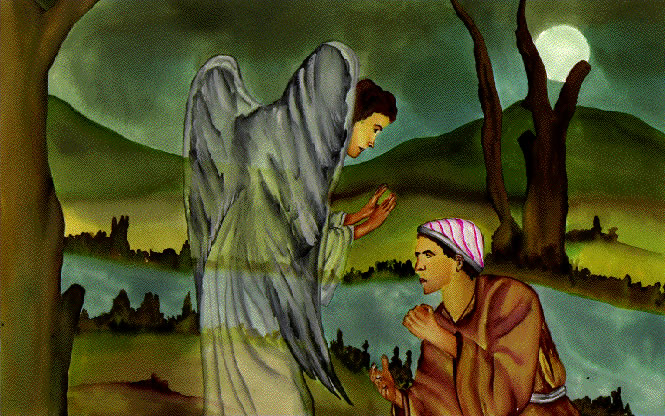
Scripture Passage: Genesis 32: 24-31
24Jacob was left alone; and a man wrestled with him until daybreak. 25When the man saw that he did not prevail against Jacob, he struck him on the hip socket; and Jacob’s hip was put out of joint as he wrestled with him. 26Then he said, “Let me go, for the day is breaking.” But Jacob said, “I will not let you go, unless you bless me.” 27So he said to him, “What is your name?” And he said, “Jacob.” 28Then the man said, “You shall no longer be called Jacob, but Israel, for you have striven with God and with humans, and have prevailed.” 29Then Jacob asked him, “Please tell me your name.” But he said, “Why is it that you ask my name?” And there he blessed him. 30So Jacob called the place Peniel, saying, “For I have seen God face to face, and yet my life is preserved.” 31The sun rose upon him as he passed Penuel, limping because of his hip.
Our faith journey is not meant to be a collection of information or a complete understanding of the entire Biblical story. There is not some elusive list of doctrines or commandments or moral rules that we are required to memorize and follow. The truth is, the answers are there but they are often shrouded in doubt and mystery and clouded over by our own pre-conceived notion of what faith is supposed to be and who God is in our lives. Our faith journey is instead just that—an evolving journey on which we travel not to an end where our Maker finally welcomes us to a place called home but rather one on which we walk with this God we sometimes barely know and who we always fall short of understanding and realize along the way that we were home all along. It is a journey on which we struggle and wrestle and often resist the Way that is laid before us. But it is also one that gives us glimpses of the holy and the sacred that are so profound and so amazing that all we can do is fall down on our knees and worship the One who was with us all along.
So, this story that we read has often eluded me. What does this mean? I was never satisfied with it being a story of Jacob’s great faith and persistence. I mean, after all, who in the world would fight with one who is bigger than we can imagine and has no limits? Wouldn’t it be smarter, and probably a whole lot easier, to just walk away? And what does that say about God? Surely God is not withholding something from us for which God expects us to fight.
So, for a little background, note that Jacob and his entourage are about to reenter the Promised Land. He has sent his entire caravan across the Jabbok, an eastern tributary of the Jordan about twenty miles north of the Dead Sea. And it is here that, for some reason, Jacob stays behind. And sometime during the night, he is wrestled to the ground. Jacob may well have thought it was Esau at first, who had threatened to kill Jacob for taking his birthright (because Jacob did NOT come out the moral winner in that fight!). He might have thought that he was finally getting his due for all those years as the trickster, that he had finally once and for all been “found out”.
The struggle goes on through the night and as daybreak approaches, Jacob is struck on the hollow of this thigh by his opponent. The blow has a crippling effect but Jacob retains such a hold that there is no escape. He demands a blessing for the release. You think about it—he had the birthright, he had everything in his life. But his greatest desire was to be blessed. So, somehow Jacob either knew or had realized that this was God with whom he was wrestling, because only God has the power to grant such a blessing.
Now remember that it was believed that God’s face would not be seen and if it was, the one who saw God would die. This says something about Jacob. He is willing to risk even death for the sake of the divine blessing. And God is willing to allow Jacob to wrestle, even to demand, even to seemingly take more of God’s time and God’s power than he really deserved. God gives the blessing and changes Jacob’s name to Israel, “God-wrestler”.
The story ends with a lot of ambiguity. I mean, there’s no clear winner. They just sort of walk away as the dawn breaks. But Jacob will never be the same again. He has looked not only God but himself square in the face and everything has changed. In a way, the old sages were right. Once someone looks into the face of God, they do indeed die. They have been made new, reborn. Nothing will ever be the same again. For Jacob, this act of wrestling has been one of transformation. And this trickster, this heel, this one who had spent his whole life trying to better his own existence, is renamed. He becomes Israel and he names the place Peniel, which means “I have seen the face of God.”
You know, it’s interesting to note that the New Revised Standard Version uses “Peniel” in one place and “Penuel” in the other to name this place where Jacob wrestled. They both essentially mean the same thing. The difference is that “Peniel” (with an “I”) is singular or first person. It means “I have seen the face of God.” “Penuel” (with a “u”) is plural. It means “We have seen the face of God.” So Jacob names the place for his own encounter, acknowledging that he knew that he had seen the face of God. By the time he leaves, though, the name is plural, opening up new possibilities to all of us having a similar encounter with the Holy and the Sacred.
The truth is, this wrestling match that Jacob had is not a story of persistence or winning; it is a story of redemption. Jacob was allowed to wrestle and wander and even doubt and, still, became the one he was called to be. The message of our Christian faith is not that God is some impersonal force, or a terrifying presence to whom we cannot relate. God does not expect empty praise and sacrifices and groveling from us. God is willing to wrestle, to get down into our lives, to know who we are, and to allow us to search for who God is to us. We are the people who wrestle with God. It is not presumptuous of us to make this claim. God was the one who gave that name to God’s people. That’s who God wants us to be. Of course God could squish us like a bug in a nanosecond. But for our benefit, God is always available to wrestle with us, at whatever level we are capable of wrestling. God sent Jesus into the world to wrestle with us, and Jesus allowed himself to get pinned to a cross. That’s what it took for us to experience the love that flows from God.
So, for us? We breathe. We breathe out all of those preconceived notions of God that we have. We let go of the God who will punish us for not being “right” or abandon us for not being “godly” or shun us for not being the way that the world wants us to be. And then we breathe in. We breathe in a God who not only lets us wrestle but does it with us, a God that will love us more than we allow ourselves to love us, a God that is made of love. We breathe in a God that doesn’t coerce but rather invites us into love. That’s what Jesus showed us. The God of us all is a God of love.
In the ways that truly shape life, we are left alone to wrestle with God. That wrestling isn’t the assault of a thug, despite what people say about God’s hatred and wrath. That wrestling isn’t a contest for supremacy. It is about who we are. We have one sense of ourselves, and God has another. Or to use the image of Genesis, we know one name for ourselves, and God knows another. In that wrestling with God, we decide whether to remain small, a creature of the world, governed by appetite and self-centered, or to become what God knows. That is lonely duty. No one can do it for us. (Tom Ehrich)
This hymn offering was written by Charles Wesley (because I’m TOTALLY a United Methodist dork!). It was first published in 1742 and actually had 14 verses. I love this hymn. I want it sung at my funeral. It is said that John Wesley tried to teach the hymn two weeks after his brother died and broke down. And Isaac Watts supposedly said that “that single poem, “Wrestling Jacob”, was worth all the verses he himself had written.” (Watts wrote “When I Survey the Wondrous Cross”) The whole thing is phenomenal. Look it up at https://www.poetry-archive.com/w/wrestling_jacob/
Grace and Peace,
Shelli
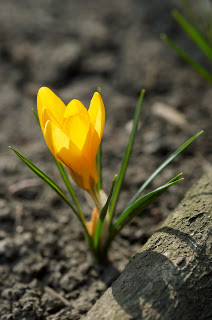 (Advent 3A) The wilderness and the dry land shall be glad, the desert shall rejoice and blossom; like the crocus 2it shall blossom abundantly, and rejoice with joy and singing. The glory of Lebanon shall be given to it, the majesty of Carmel and Sharon. They shall see the glory of the Lord, the majesty of our God. 3Strengthen the weak hands, and make firm the feeble knees. 4Say to those who are of a fearful heart, “Be strong, do not fear! Here is your God. He will come with vengeance, with terrible recompense. He will come and save you.” 5Then the eyes of the blind shall be opened, and the ears of the deaf unstopped; 6then the lame shall leap like a deer, and the tongue of the speechless sing for joy. For waters shall break forth in the wilderness, and streams in the desert; 7the burning sand shall become a pool, and the thirsty ground springs of water; the haunt of jackals shall become a swamp, the grass shall become reeds and rushes. 8A highway shall be there, and it shall be called the Holy Way; the unclean shall not travel on it, but it shall be for God’s people; no traveler, not even fools, shall go astray. 9No lion shall be there, nor shall any ravenous beast come up on it; they shall not be found there, but the redeemed shall walk there.10And the ransomed of the Lord shall return, and come to Zion with singing; everlasting joy shall be upon their heads; they shall obtain joy and gladness, and sorrow and sighing shall flee away. (Isaiah 35: 1-10)
 Dancing to God