(part of the “Breathing Out” Lenten Series)
Scripture Passage: Genesis 12: 1-4 (Lent 2A)
Now the Lord said to Abram, “Go from your country and your kindred and your father’s house to the land that I will show you. 2I will make of you a great nation, and I will bless you, and make your name great, so that you will be a blessing. 3I will bless those who bless you, and the one who curses you I will curse; and in you all the families of the earth shall be blessed.” 4So Abram went, as the Lord had told him; and Lot went with him.
We are familiar with this story that our lectionary brings for this second week of Lent. We know it well. Abram is called to go forth, called to leave what he knows and become someone new. We know that it will end with him becoming Abraham. It is the beginning of Israel, the beginning of Judaism, and, ultimately, the beginning of us and our own faith story. The story quickly moves from a broad sweep of humanity to a focus on one family and one person. Perhaps it was a way of reminding us that humanity is not just a glob of no-name people but is rather made up of individuals, each children of God in their own right.
We like this story of our hero Abraham. What courage, what persistence, what faith it would take to leave one’s home, to leave everything that one knows and to follow God. It is that to which we all aspire and to which most of us fall incredibly short. We struggle with what leaving would mean for us. After all, what would it mean to you to just lock your doors and walk away, never looking back at the comforts and certitudes of your existence, never look back at all the stuff you’ve gathered and stored, never look back at this life that you have so painstakingly created?
I’ve always wondered what Abram really thought. I mean, he wasn’t young. He and Sarai had been around a long time. They had wanted children, a big family, someone to carry their legacy on, but it hadn’t happened. But they were fine. They had settled into a wonderful life. Perhaps Abram had plans to spend lazy afternoons napping in the hammock and watching the sheep. Maybe he had plans to get a couple of camels. Life was not what they had wanted but it was good—really, really good. And then, without warning, everything changed…
I mean, “Go”…Go where? I’m not young. I have arthritic knees. Where am I supposed to go? What is it I’m supposed to do? I’ve got a lot of things going on. Sarai needs me. The sheep need me. This is not a good time. I have too much to do. You have the wrong person.
Yes, I took liberties. The Scriptures don’t focus on anything resembling this fight of wills. But Abram was human. Isn’t that what we would feel? He was asked to just blindly go, trusting in the God in whom he fiercely believed. But there had to be some reticence. I mean, think about it. The plan he was given was a little sketchy. Why would God call this person who was settling into the end of his life? Why would God tell him to go into the unknown, into the wild unpaved terrain, away from everything he knows? And, really, he was just told to go with only a faint promise of legacy and greatness and history. How in the world was Abram supposed to grasp that?
It’s probably even harder for us. I mean, at least Abram was already part of a nomadic lifestyle. And then there’s us. We don’t just “settle” down. We actually strive for it. In fact, it’s our goal in life—family, home, a little money to spend, time with our loved ones, and some private time. But maybe a little unsettling wouldn’t be such a bad thing. But what would we do? I mean, how big of a storage unit do I need to rent for all my stuff? Maybe it wouldn’t be so bad if we breathed out some of this settling, some of this way of life to which we hold, and breathed in the new pathway God is calling us to traverse.
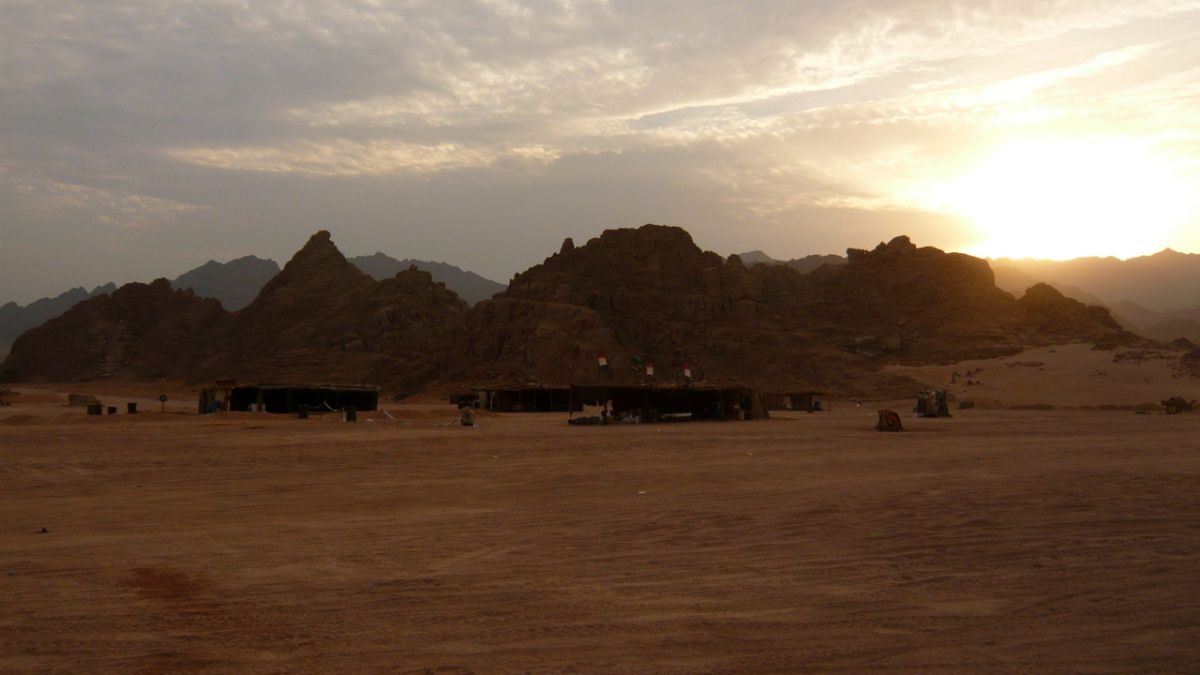
I’ve always found it interesting that the season of Lent begins not in the Temple, not in the “settled” place, but in the wilderness, where the winds blow the pathways into changing patterns rather than roads and the sands swirl and blind us at times. Maybe it is when we leave behind what we know that we can finally hear the way Home. That is the Promise in which we trust–that somewhere beyond what we have figured out and what we have planned and that for which we have settled is the way Home. I mean, really, would it hurt to unsettle your life a bit? Because, otherwise, how will you be able to know when God is calling you to “Go”?
Let yourself get shaken up. What are you willing to give up to ensure your own unfolding, and the unfolding of what is holy in your life? Where you stumble, here is your treasure. (Joseph Campbell)
Grace and Peace,
Shelli
 Dancing to God