Now the Lord said to Abram, “Go from your country and your kindred and your father’s house to the land that I will show you. 2I will make of you a great nation, and I will bless you, and make your name great, so that you will be a blessing. 3I will bless those who bless you, and the one who curses you I will curse; and in you all the families of the earth shall be blessed.”4So Abram went, as the Lord had told him; and Lot went with him.
We are familiar with this story that our lectionary brings for this second week of Lent. We know it well. Abram is called to go forth, called to leave what he knows and become someone new. We know that it will end with him becoming Abraham. It is the beginning of Israel, the beginning of Judaism, and, ultimately, the beginning of us and our own faith story. The story quickly moves from a broad sweep of humanity to a focus on one family and one person. Perhaps it was a way of reminding us that humanity is not just a glob of no-name people but is rather made up of individuals, each children of God in their own right.
We like this story of our hero Abraham. What courage, what persistence, what faith it would take to leave one’s home, to leave everything that one knows and to follow God. It is that to which we all aspire and to which most of us fall incredibly short. We struggle with what leaving would mean for us. After all, what would it mean to you to just lock your doors and walk away, never looking back at the comforts and certitudes of your existence, never look back at all the stuff you’ve gathered and stored, never look back at this life that you have so painstakingly created?
I’ve always wondered what Abram really thought. I mean, he wasn’t young. He and Sarai had been around a long time. They had wanted children, a big family, someone to carry their legacy on, but it hadn’t happened. But they were fine. They had settled into a wonderful life. Perhaps Abram had plans to spend lazy afternoons napping in the hammock and watching the sheep. Maybe he had plans to get a couple of camels. Life was not what they had wanted but it was good—really, really good. And then, without warning, everything changed…
I mean, “Go”…Go where? I’m not young. I have arthritic knees. Where am I supposed to go? What is it I’m supposed to do? I’ve got a lot of things going on. Sarai needs me. The sheep need me. This is not a good time. I have too much to do. You have the wrong person.
Yes, I took liberties. The Scriptures don’t focus on anything resembling this fight of wills. But Abram was human. Isn’t that what we would feel? He was asked to just blindly go, trusting in the God in whom he fiercely believed. But there had to be some reticence. I mean, think about it. The plan he was given was a little sketchy. Why would God call this person who was settling into the end of his life? Why would God tell him to go into the unknown, into the wild unpaved terrain, away from everything he knows? And, really, he was just told to go with only a faint promise of legacy and greatness and history. How in the world was Abram supposed to grasp that?
It’s probably even harder for us. I mean, at least Abram was already part of a nomadic lifestyle. And then there’s us. We don’t just “settle” down. We actually strive for it. In fact, it’s our goal in life—family, home, a little money to spend, time with our loved ones, and some private time. But maybe a little unsettling wouldn’t be such a bad thing. But what would we do? I mean, how big of a storage unit do I need to rent for all my stuff? Maybe it wouldn’t be so bad if we breathed out some of this settling, some of this way of life to which we hold, and breathed in the new pathway God is calling us to traverse.
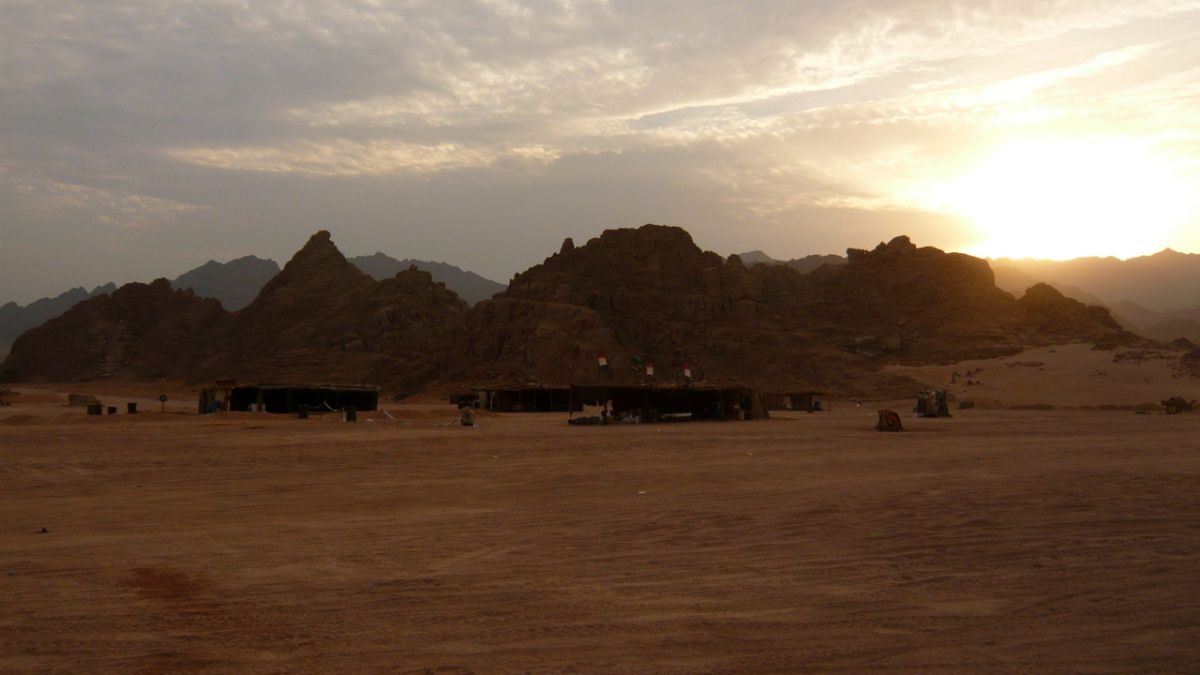
I’ve always found it interesting that the season of Lent begins not in the Temple, not in the “settled” place, but in the wilderness, where the winds blow the pathways into changing patterns rather than roads and the sands swirl and blind us at times. Maybe it is when we leave behind what we know that we can finally hear the way Home. That is the Promise in which we trust–that somewhere beyond what we have figured out and what we have planned and that for which we have settled is the way Home. I mean, really, would it hurt to unsettle your life a bit? Because, otherwise, how will you be able to know when God is calling you to “Go”?
Let yourself get shaken up. What are you willing to give up to ensure your own unfolding, and the unfolding of what is holy in your life? Where you stumble, here is your treasure. (Joseph Campbell)
31Then he began to teach them that the Son of Man must undergo great suffering, and be rejected by the elders, the chief priests, and the scribes, and be killed, and after three days rise again. 32He said all this quite openly. And Peter took him aside and began to rebuke him. 33But turning and looking at his disciples, he rebuked Peter and said, “Get behind me, Satan! For you are setting your mind not on divine things but on human things.” 34He called the crowd with his disciples, and said to them, “If any want to become my followers, let them deny themselves and take up their cross and follow me. 35For those who want to save their life will lose it, and those who lose their life for my sake, and for the sake of the gospel, will save it. 36For what will it profit them to gain the whole world and forfeit their life? 37Indeed, what can they give in return for their life? 38Those who are ashamed of me and of my words in this adulterous and sinful generation, of them the Son of Man will also be ashamed when he comes in the glory of his Father with the holy angels.”
We are very good at imagining who we intend to be. We are very good at attempting to write the story that makes sense for us. So, what do we do when we find out that the story is about to change? See, Peter had it all figured out. His whole identity was wrapped up in who he understood Jesus to be and who he understood himself to be in light of that. Sure, I think Peter got that Jesus was the Messiah. He knew the words. He had been taught the meaning probably from his childhood, the idea that this Messiah would come and bring victory and glory. Put yourself in his place. Here is this great man who you have grown to dearly love. This ministry that he has begun has been great. He truly IS the Messiah for which you have waited so long. What great plans for the future Peter must have imagined!
But then Jesus starts talking about his own coming suffering. This wasn’t the plan that Peter envisioned. This wasn’t the way the story was supposed to go. Most of us identify with Peter here. This cannot be! There is no way that it is time for Jesus to leave us. This was our Messiah sent here to save us, the Messiah for which we have waited for generations upon generations! Jesus’ harsh statement to Peter jolts us into reality, though. For we do often limit our thinking to things of this world. We want to protect and possess this Messiah. We want a Messiah who will save us on our terms, someone to be in control, someone to fix things, someone to make it all turn out like we want it to turn out, someone to make our lives safer and easier.
Now, contrary to the way our version of the Scriptures interprets it, I don’t think Jesus was accusing Peter of being evil or Satan or anything like that. Who could blame Peter? He’s just like us! Listen further…If any want to become my followers, let them deny themselves and take up their cross and follow me. We’ve all read that verse before. We’d like to make it read a little easier. We would rather skip through the end of Holy Week and go straight to Easter morning. That’s why this season of Lent is so difficult. It won’t let us do that. The cross is not something that we look to only in the past. The cross is not something that we look to at the end of our lives. This is not some goal for farther down the road. This is not some plan laid out for our lives. This is here; this is now. It’s talking about the journey. It’s talking about our listening to God’s calling us in our lives now. It’s talking about letting your life go NOW! If this were easy, then we wouldn’t need Christ. We’re not asked to just believe in Christ; we’re asked to follow…all the way to the cross.
I know what you’re all thinking. I’m not so sure I signed up for this. What happened to that Messiah that was going to take away all our troubles—you know calm all the storms and such? What happened to that Savior that would solve all of our problems so that life wouldn’t be so hard? Ooops! Wrong Savior! Maybe we don’t want a Messiah at all. Maybe we were confused. Maybe what we REALLY want is a superhero, you know…more of a “and they lived happily ever after” ending.
That’s not how the story is written. Oh, don’t get me wrong, I in no way believe that everything has already been laid out for us as some sort of pre-ordained path. I’m not that Calvinist. It’s much more nuanced than that. Some of you have heard me say this, but I once had the opportunity to be a part of a discussion group with John Irving (yes, THAT John Irving). One question that was asked was predictable: How did he write his stories? But his answer was unusual. He said that he writes the ending first and then rolls out the plots, themes, and chapters that will end the way he has envisioned it.
I think that’s a lot like the way this story is being written. God has a vision. We’ve been given clues and the small pieces of it that we can grasp. But the story is still being written by God and by us. God has invited us into this work. But the story is not linear. It’s not something we can predict or for which we can plan. Instead, it probably more closely resembles chaos theory. Chaos theory is a scientific and mathematical discipline that embraces patterns, rather than linear lines. The assumption is that whatever happens is a product of multiple things, including choices, weather, science, and the things that came before. You’ve heard of the “butterfly effect”. That’s chaos theory. It’s not random. And it’s not chaos. It’s ordered. Isn’t that what God does? God takes this veritable chaotic swirl of happenings and orders it. And it is very very good.
Jesus had that vision. Jesus knew the story. He was trying to help Peter understand that the chapters that would unfold were not random. They certainly weren’t chaos. But they weren’t controllable. They weren’t predictable. They weren’t the story that we would probably pen on our own. God is writing the story and invites us into it to help write it. But we need to breathe out needing it to be predictable, needing it to be what we want or envision or write for ourselves. Forget that. Breathe in the story…the one that God is writing with you.
God…leads us step by step, from event to event. Only afterwards, as we look back over the way we have come and reconsider certain important moments in our lives in the light of all that has followed them, or when we survey the whole progress of our lives, do we experience the feeling of having been led without knowing it, the feeling that God has mysteriously guided us. (Paul Tournier)
(part of the “Waiting on the World to Change” Advent Series)
2 Samuel 7: 1-16
Now when the king was settled in his house, and the Lord had given him rest from all his enemies around him, 2the king said to the prophet Nathan, “See now, I am living in a house of cedar, but the ark of God stays in a tent.” 3Nathan said to the king, “Go, do all that you have in mind; for the Lord is with you.”
4But that same night the word of the Lord came to Nathan: 5Go and tell my servant David: Thus says the Lord: Are you the one to build me a house to live in? 6I have not lived in a house since the day I brought up the people of Israel from Egypt to this day, but I have been moving about in a tent and a tabernacle. 7Wherever I have moved about among all the people of Israel, did I ever speak a word with any of the tribal leaders of Israel, whom I commanded to shepherd my people Israel, saying, “Why have you not built me a house of cedar?” 8Now therefore thus you shall say to my servant David: Thus says the Lord of hosts: I took you from the pasture, from following the sheep to be prince over my people Israel; 9and I have been with you wherever you went, and have cut off all your enemies from before you; and I will make for you a great name, like the name of the great ones of the earth. 10And I will appoint a place for my people Israel and will plant them, so that they may live in their own place, and be disturbed no more; and evildoers shall afflict them no more, as formerly, 11from the time that I appointed judges over my people Israel; and I will give you rest from all your enemies. Moreover the Lord declares to you that the Lord will make you a house. 12When your days are fulfilled and you lie down with your ancestors, I will raise up your offspring after you, who shall come forth from your body, and I will establish his kingdom. 13He shall build a house for my name, and I will establish the throne of his kingdom forever. 14I will be a father to him, and he shall be a son to me. When he commits iniquity, I will punish him with a rod such as mortals use, with blows inflicted by human beings. 15But I will not take my steadfast love from him, as I took it from Saul, whom I put away from before you. 16Your house and your kingdom shall be made sure forever before me; your throne shall be established forever.
The Bible is a story of a journey, a movement from one place to another, one time to another, one way of being to another. It is full of stories of going beyond and coming home. And woven through those stories are stories of us building and constructing and attempting to wall off our understanding of God. (And it’s often also the story of us destroying what is built.) Throughout the Scriptures, God sends us forth, we begin to walk, and then we build something, then God sends us forth, we begin to walk, and then we wall something off, on…and…on…It has continued for thousands of years and continues today. See, we understand the notion of God being everywhere, of God not being limited to what we build and what we wall off. But most of us still find ourselves in the midst of building projects throughout our lives. Some of those projects are for houses, some are for churches or grand cathedrals, and some are for ourselves, our traditions, our ideals, and our own lives. Does it make it seem better? Does it bring God closer? Or does it just make us a little more comfortable?
This poor Scripture doesn’t get a whole lot of Advent attention because it shares the fourth week of Advent in Lectionary Year B with Mary’s story and, not surprisingly, most people would not choose Nathan and David over Mary and the angel in the middle of Advent. I’ve never preached it. I’ve barely written on it. But it’s still a great story and reminder for the season. And it’s important. Dr. Walter Brueggemann once made the claim that this chapter was the most important chapter in the Samuel saga and was one of the pivotal chapters in the entire Old Testament. Think about it. It seals the Davidic dynasty and it turns the entire human story toward God’s vision of it.
The text we read sort of wraps up the promise that God made to Abram in the twelfth chapter of Genesis. The people have a home and they can live in peace. And David’s reign as king has been pretty much legitimized. Things seem to be going well. (Well, for the most part. I mean, it’s David, right?) And so, David envisions now a more permanent structure to house the ark of the Lord. In other words, David now desires to build a temple in Jerusalem. I don’t know if he feels a little guilty that HE has a house and God doesn’t (as if God isn’t IN the house of cedar already and as if the moveable tent that had “housed” God for so long as the Ark of the Covenant moved from place to place was somehow no longer sufficient.). Maybe he really felt that God needed to be given God’s due, that a grand and glorious structure would show honor to God (as well as perhaps raise David’s reputation). In a shamefully cynical view, perhaps David wanted to just know EXACTLY where God was, as if he could once again wall God off into a limited space, thereby protecting God or maybe even himself. In other words, he wanted to know that there was a place where he could go where he KNEW God would be.
But that night the Lord intervenes by way of Nathan with a promise not necessarily of a permanent “house” but, rather a permanent dynasty, an everlasting house of the line of David. David has risen from shepherd boy to king and has apparently felt God’s presence through it all. He now sits in his comfortable palace and compares his “house” to the tent that “houses God” in his mind. God, through the prophet Nathan, responds by asking, in a sense, “Hey! Did you hear me complaining about living in a tent? No, I prefer being mobile, flexible, responsive, free to move about, not fixed in one place.” God then turns the tables on David and says, “You think you’re going to build me a house? No, no, no, no. I’M going to build YOU a house. I’ll build you a house that will last much longer and be much greater than anything you could build yourself with either wood or stone. I’ll build you a house that will shelter the hopes and dreams of your people long after ‘you lie down with your ancestors.’” And God promises to establish David and his line forever.
The truth is, we all desire permanence; we want something on which we can stand, that we can touch, that we can “sink our teeth into”, so to speak. We want to know the plan so that we can fit our lives around it. Well, if this was going to make it easier to understand God, go ahead. But Franciscan Fr. Richard Rohr warns us that “God is always bigger than the boxes we build for God, so do not waste too much time protecting your boxes.” (from Everything Belongs) (That’s actually one of my favorite quotes!) The truth is, this is a wandering God of wandering people. This is not a God who desires to or can be shut up in a temple or a church or a closed mind. This is not a God who desires to be (or can be) “figured out.” This God is palatial; this God is unlimited; this God will show up in places that we did not build. (and sometimes in places that we really wouldn’t go!) This God does not live in a house; this God dwells with us—wherever we are. This God comes as a traveler, a journeyer, a moveable feast. And this God shows up where we least expect God to be—such as in a god-forsaken place on the outskirts of acceptable society to a couple of scared people that had other plans for their lives. This God will be where God will be. And it IS a permanent home.
So, here’s the problem with David’s thinking. God has made and stood by lots of promises. But God’s promise of a home, God’s promise of permanence, God’s promise of a “place” that the people of God can call their own came with another directive. With that promise of home, was the exhortation to “go”, to leave this place with which your familiar and go to the place to which you’ve been called. It doesn’t mean we’re homeless; it means that we’re journeying with God. I think part of the reason God never really told anyone to build a “house” (sorry, David) is that when we start DOING for God, when we start building and hammering and making noise, things have a tendency to get out of control. The “house” becomes about us and we forget why we built it in the first place. So, God doesn’t call for a permanent house; God calls for one that exists within us, a place where God can sit with us, and eat with us, and make plans for the future. It’s the place where we make room for God.
So, returning to our ongoing theme of “waiting on the world to change”, I’m going to ask a hard question. Are we waiting for the world to become what God wants us to be, to become that holy vision about which we’ve talked and dreamed? Or are we just really mad right now that people seemed to have come into our house—the house that WE built—and moved the furniture around? It’s hard. I’m not sure I like the answer. Because, remember, when God promises us a place, God also tells us to “go”. I guess this Advent waiting is a way of beginning to move, starting to follow the journey, the Way of God.
Advent both makes us aware of a God who is beyond our reach and opens us up to a God who is present and immanent among us, to the God who desires to dwell within us. The mystery of God is that One who cannot be contained in the largest of cathedrals, One who is beyond our reach, beyond our knowing, beyond our understanding, comes to us as one of us, as a baby, in a seemingly godforsaken place for which the world had no room or on a cross on the outskirts of town. God indeed makes a home for us. Sometimes it’s in a packed cathedral with a candle pointing us beyond what we know. And sometimes God comes to us when we are alone, perhaps when we wish we could be somewhere else, perhaps when there is no room, and makes a home in us. That is the mystery of God. But you have to make room. Transcendence is sometimes hard to attain but immanence, the notion of God dwelling with you, dwelling within you, is even harder. I think God DOES want a sanctuary. But it doesn’t look a temple or church. This Advent, make room for the God within you. While you’re waiting on the world to change, God’s vision of the world is waiting for you to go out into it. Don’t worry about the furniture. You can fix it later.
If indeed we love the Lord with all our hearts, minds, and strength, we are going to have to stretch our hearts, open our minds, and strengthen our souls, whether our years are three score and ten or not yet twenty. God cannot lodge in a narrow mind. God cannot lodge in a small heart. To accommodate God, they must be palatial. (William Sloane Coffin)
24“A disciple is not above the teacher, nor a slave above the master; 25it is enough for the disciple to be like the teacher, and the slave like the master. If they have called the master of the house Beelzebul, how much more will they malign those of his household! 26“So have no fear of them; for nothing is covered up that will not be uncovered, and nothing secret that will not become known. 27What I say to you in the dark, tell in the light; and what you hear whispered, proclaim from the housetops.
Have no fear…do not be afraid…fear not…How many times have we encountered that in Scripture? Well, apparently, “fear not” is in the Bible 365 times according to the trustworthy Google machine. Are you sensing a theme? So, of what are you afraid? We’ve probably outgrown worrying about the monsters under the bed or the ghosts in the closet. But we’re all afraid of something—health issues, financial issues, the pandemic, global terrorism, or just being found out. Yeah, most of us are afraid that others will discover that we’re not as competent or self-assured or as put together as we project. (Or maybe that’s just me!) Most of us are afraid that that façade we have so carefully crafted around our lives will be pierced and we’ll have to be honest with those around us and, even worse, ourselves.
Fear not…have no fear of them…well, easy for YOU to say. The promise is that everything will be made known. That’s what the full Light does, remember? It exposes everything. And imagine how glorious that would be to no longer have to hide those parts of yourself from the world! Be not afraid! What’s the worse that could happen, right?
So, do you remember that whole notion of needing to die to live, die to self and be resurrected as a New Creation? I think that’s the thing. Living in the darkness makes it easy to hide things. But this light, this light shows us everything. So those things hidden in the darkness will die. They will just fade away. The things in the Light will survive. The Light is coming. Right now it’s just a whisper. But we know what’s out there. Our faith tells us that. And we know that we have to let go of the darkness, we have to let go of the things that we hide. The whispers of Light are gently showing us how to let go. Because the Light will give us everything.
God, I am sorry I ran from you. I am still running, running from that knowledge, that eye, that love from which there is no refuge. For you meant only love, and love, and I felt only fear, and pain. So once in Israel love came to us incarnate, stood in the doorway between two worlds, and we were all afraid. (Annie Dillard)
31Then he began to teach them that the Son of Man must undergo great suffering, and be rejected by the elders, the chief priests, and the scribes, and be killed, and after three days rise again. 32He said all this quite openly. And Peter took him aside and began to rebuke him. 33But turning and looking at his disciples, he rebuked Peter and said, “Get behind me, Satan! For you are setting your mind not on divine things but on human things.” 34He called the crowd with his disciples, and said to them, “If any want to become my followers, let them deny themselves and take up their cross and follow me. 35For those who want to save their life will lose it, and those who lose their life for my sake, and for the sake of the gospel, will save it. 36For what will it profit them to gain the whole world and forfeit their life? 37Indeed, what can they give in return for their life? 38Those who are ashamed of me and of my words in this adulterous and sinful generation, of them the Son of Man will also be ashamed when he comes in the glory of his Father with the holy angels.”
Our job in this lifetime is not to shape ourselves into some ideal we imagine we ought to be, but to find out who we already are and become it.What things in your life could you never be without? What things in your life really sort of describe who you are? I think that’s what Jesus was trying to get across to Peter—the point that all of this was more than that, that Peter’s very identity was affected by who he thought Jesus was. Sure, I think Peter got that Jesus was the Messiah. He knew the words. He had been taught the meaning probably from his childhood, the idea that this Messiah would come and bring victory and glory. Put yourself in his place. Here is this great man who you have grown to dearly love. This ministry that he has begun has been great. He truly IS the Messiah for which you have waited so long. What great plans for the future Peter must have imagined!
But then Jesus starts talking about his own coming suffering. This wasn’t the plan that Peter envisioned. Most of us identify with Peter here. This cannot be! There is no way that it is time for Jesus to leave us. This was our Messiah sent here to save us, the Messiah for which we have waited for generations upon generations! Jesus’ harsh statement to Peter jolts us into reality, though. For we do often limit our thinking to things of this world. We want to protect and possess this Messiah. We want a Messiah who will save us on our terms, someone to be in control, someone to fix things, someone to make it all turn out like we want it to turn out, someone to make our lives safer and easier.
Now, contrary to the way our version of the Scriptures interprets it, I don’t think Jesus was accusing Peter of being evil or Satan or anything like that. Who could blame Peter? He’s just like us! Listen further…If any want to become my followers, let them deny themselves and take up their cross and follow me. We’ve all read that verse before. We’d like to make it read a little easier. We would rather skip through the end of Holy Week and go straight to Easter morning. That’s why this season of Lent is so difficult. It won’t let us do that. The cross is not something that we look to only in the past. The cross is not something that we look to at the end of our lives. This is not some goal for farther down the road. This is not some plan laid out for our lives. This is here; this is now. It’s talking about the journey. It’s talking about our listening to God’s calling us in our lives now. It’s talking about letting your life go NOW! If this were easy, then we wouldn’t need Christ. We’re not asked to just believe in Christ; we’re asked to follow….all the way to the cross.
I know what you’re all thinking. I’m not so sure I signed up for this. What happened to that Messiah that was going to take away all our troubles—you know calm all the storms and such? What happened to that Savior that would solve all of our problems so that life wouldn’t be so hard? Ooops! Wrong Savior!
Now, don’t get me wrong. We are not called to be martyrs. We’re not called to suffer unbearable pain as proof of our devotion to Christ. I’m pretty sure that none of us will ever be victims of first century Roman persecution. Our crosses are as unique as our DNA. Taking up our cross means simply letting go, letting go of those things that shield us from God, that get in the way of us really living, that stand in the way of who we are called to be. For some of us, it means letting go of a plan for our lives and instead journeying a little farther into the wilderness as we follow God’s lead. For others, it may mean letting go of our life security so that others may share in it. For still others, it might mean letting go of hurt and pain and instead picking up the mantle of forgiveness that leads to life. It may just mean finally getting up enough courage to quit standing on the shore to our lives and finally, finally jump into the deep end with no fear of how far you will sink before you rise. Each of us is different. Taking up our cross means, as Joseph Campbell said, being willing to let go of the life we planned so as to have the life that is waiting for us.
There is an old story that originated somewhere along the banks of the Mediterranean that tells of a really old man, who had lived a long and very happy life on a beautiful island. He loved his island, where all his family, for generations, had lived and made their home. And so, when he realized that he was approaching his last days of his life, he asked his sons to take him outside one last time. There, he knelt, and gathered a handful of native soil, and clutched it tightly.
Soon afterwards, the man died and came to the gates of Heaven. He was greeted joyfully and was told by one of the angels, “You have lived a good life. Welcome to the Kingdom of Heaven. Please come in.” But when the man tried to cross the threshold, he was kindly told, “You must let go of the soil that you are clutching.” “Oh no, I could never do that,” he cried, “This is my native soil, the earth of my beloved island home.” The angels at the gate were sad as they went back to heaven, leaving the old man wandering, lonely, outside.
Many years passed, and the angels came again. They brought the old man a taste of the heavenly banquet and feasted with him there, outside the gates, trying to persuade him to come into the fullness of the Kingdom. He wanted so much to join them for all eternity, but again, when they asked him to let go of the soil he was clutching, he couldn’t bring himself to do so. And again, they had to leave him standing there, alone.
Finally, after many more years had passed, the angels came again and this time, they brought with them the old man’s granddaughter, who had grown old in the meantime and had died herself. She was delighted to see her beloved grandfather standing there. “Oh, Granddad,” she cried, “I’m so happy to see you. Please come and join us in the heavenly Kingdom. We love you so much, and we want you with us for all eternity.” The old man was overwhelmed to see his little granddaughter there, and in his joy, he flung out his arms to embrace her. And as he did so, the soil slipped right through his fingers. With great joy, the angels now led him into his heavenly home, and the first thing he saw there was the whole of his beloved island, waiting there to greet him.
Our job in this lifetime is not to shape ourselves into some ideal we imagine we ought to be, but to find out who we already are and become it.(Steven Pressfield)
Early on the first day of the week, while it was still dark, Mary Magdalene came to the tomb and saw that the stone had been removed from the tomb. 2So she ran and went to Simon Peter and the other disciple, the one whom Jesus loved, and said to them, “They have taken the Lord out of the tomb, and we do not know where they have laid him.” 3Then Peter and the other disciple set out and went toward the tomb. 4The two were running together, but the other disciple outran Peter and reached the tomb first. 5He bent down to look in and saw the linen wrappings lying there, but he did not go in. 6Then Simon Peter came, following him, and went into the tomb. He saw the linen wrappings lying there, 7and the cloth that had been on Jesus’ head, not lying with the linen wrappings but rolled up in a place by itself. 8Then the other disciple, who reached the tomb first, also went in, and he saw and believed; 9for as yet they did not understand the scripture, that he must rise from the dead. 10Then the disciples returned to their homes. 11But Mary stood weeping outside the tomb. As she wept, she bent over to look into the tomb; 12and she saw two angels in white, sitting where the body of Jesus had been lying, one at the head and the other at the feet. 13They said to her, “Woman, why are you weeping?” She said to them, “They have taken away my Lord, and I do not know where they have laid him.” 14When she had said this, she turned around and saw Jesus standing there, but she did not know that it was Jesus. 15Jesus said to her, “Woman, why are you weeping? Whom are you looking for?” Supposing him to be the gardener, she said to him, “Sir, if you have carried him away, tell me where you have laid him, and I will take him away.” 16Jesus said to her, “Mary!” She turned and said to him in Hebrew, “Rabbouni!” (which means Teacher). 17Jesus said to her, “Do not hold on to me, because I have not yet ascended to the Father. But go to my brothers and say to them, ‘I am ascending to my Father and your Father, to my God and your God.’” 18Mary Magdalene went and announced to the disciples, “I have seen the Lord”; and she told them that he had said these things to her.
Whew! We made it through the wilderness. The tomb is open and all is good. The morning was glorious, full of light and life and, finally, alleluias. THE LORD IS RISEN! THE LORD IS RISEN INDEED! The long Lenten wilderness journey is behind us. Whew! We made it!
But don’t you remember what kept happening in the wilderness? In the wilderness, when we’re so unsure of where to go, when darkness seems to overtake us at times, when we often feel stripped of all we know, God comes. God comes and re-creates in the most incredible ways. God comes and brings light into darkness and life into death. God comes and we are changed forever. That happens in the wilderness when we no longer have the familiar and the comfortable to which we can hold. Like Mary at the tomb, we are reminded to not hold on to what we know but rather to open our hands to the newness that God offers.
After Lent, we go back to our lives. The time of giving up and emptying out is behind us. So with what do we fill our lives? If we go back and pick up where we left off, cramming our lives full of all the stuff that we just stored in the closet for the season, it will all be for naught. But if we finally know that in all of God’s resurrecting, we, too, were raised. If we remember that in all of God’s re-creating, even the wilderness, the chaos, was made new again. If we find ourselves with eyes that see differently and hearts that beat in new ways, we will see that the wilderness is where we are meant to be. We were never meant to settle into ways of thinking and be satisfied with routine ways of being. Instead we are called to go forth into newness, into what we do not know, down roads that our faith calls us to follow.
It seems that God is continually calling us into places and times that we’ve never been, constantly empowering us to push the limits of our “comfort zones”, to embark on a larger and more all-encompassing journey toward a oneness with God. It seems that God always calls us beyond where we are and beyond where we’ve been, not to the places that are planted and built and paved over with our preconceptions and biases but, rather, to places in the wilds of our lives with some vision of a faint pathway that we must pave and on which we must trudge ahead. Perhaps, then, this wilderness journey is not one in which we launch out and pursue a new life but is instead one that brings us to the center of our own life, one that brings us home, but changed.
The end of all our exploring…will be to arrive where we started…and know the place for the first time. (T.S. Eliot)
FROM NOW ON: Make the wilderness journey your home.
Well, we have come to the end of the season. I am honored that once again so many of my old friends joined me for the journey. And along the way, there were others that I am so grateful chose to join us. That’s what happens when you travel unfamiliar roads! I’m going to take a break from the “every day” writing and will try to post at least once a week or so. Stay tuned! Keep journeying! AND, email me and let me know YOUR thoughts! I’m going to try to put my email in “code” below my name so the spammers don’t find me, but you are smart people and you can figure it out! Thank you again for journeying with me! Happy Easter! WE ARE RISEN! WE ARE RISEN INDEED!
Grace and Peace,
Shelli
Shelli Williams 13 (run all those together), then [that funny little a with the circle], gmail.com
Afterward Moses and Aaron went to Pharaoh and said, “Thus says the Lord, the God of Israel, ‘Let my people go, so that they may celebrate a festival to me in the wilderness.’“
We know the story. The people had been taken away, held in slavery. And now, God is insisting: “Let my people go.” The truth is, it probably wasn’t slavery as we think about it. There were probably not prison bars or shackles or anything of the like. Their slavery may have resembled more of an indentured servant or perhaps an economic enslavement. They could not leave, of course, but not because they were held but because they were bound. It was just as bad and in some cases, it is harder to claim release.
So God screams, “Let my people go.” The truth is, maybe God wasn’t worried about the economic enslavement at all. Because, you see, they had been there awhile, a couple of generations if you’re counting. And as generations go on, we forget, we forget who we are. It would have been so incredibly easy to lapse into the Egyptian society. It wasn’t bad. In fact, it would have been easier to do just that. But it wasn’t who they were. Somehow, I think God’s concern was not that they were economically enslaved but that they had forgotten who they were. In God’s vision, the wilderness, the place where darkness loomed, was better than the place of safety that enslaved the people.
SO, does this sound familiar? We are not enslaved. We are, however, bound. We are bound by our lifestyle, by what our life expects us to be. We are bound by the expectations of others. We are bound by our plans for what our life holds. We are bound by what we think we are supposed to be in this world. We, too, have forgotten who we are. And, just as God did so long ago, the Divine screams into the night, “Let my people go.” We are not enslaved in the usual sense. There are no prison bars and no shackles. But we are enslaved. This season of Lent is God’s time, God’s time to scream “let my people go,” and be heard. And even the wilderness is better than what we have.
The wilderness is calling. The place where we are not bound, where we can finally learn to be free, where danger meets us and we know that rather turn to the ones who enslave us, who offer no help in the wilderness, we will finally look to God. Let us be the ones who finally, once and for all, know that we are offered freedom, freedom, mostly, not from whom holds us, but from the one who we are not. Let us be the people who, finally, go and be the one that we are meant to be.
I think most of the spiritual life is really a matter of relaxing — letting go, ceasing to cling, ceasing to insist on our own way, ceasing to tense ourselves up for this or against that. (Beatrice Bruteau)
FOR TODAY: In what ways are you enslaved? What would it mean to be let go? God is waiting to do that.






 Dancing to God