The New Normal

Scripture Passage:  Isaiah 40: 3-5

3A voice cries out: “In the wilderness prepare the way of the Lord, make straight in the desert a highway for our God. 4Every valley shall be lifted up, and every mountain and hill be made low; the uneven ground shall become level, and the rough places a plain. 5Then the glory of the Lord shall be revealed, and all people shall see it together, for the mouth of the Lord has spoken.” 

So, here we wander in the wilderness, hoping against hope that it will all be over soon, that things will finally, once and for all, get back to normal (or at least a more normalized “new normal” that everyone keeps touting). So, what IS normal? Is it places that are not the wilderness? It is times that are not now? Is it ways of being that were before? Here, the exiles, just released from captivity, dripping with newfound freedom, are beginning to return. They are making their way through the wilderness, headed toward “getting back to normal”. But their city and their way of life lies in ruins. They can’t just go back and pick where they left off. They are looking for comfort, for solace, for a promise that God will put things back the way they were before.

But the problem is that’s not the promise that has been made. Rather than repair, God promises re-creation; rather than vindication, God promises redemption; and rather than solace, God promises transformation. God is making something new—lifting valleys, lowering mountains, and, ultimately, when all is said and done, revealing a glory that we’ve never seen before. The truth is, there is no going back. So what is normal? Perhaps “normal” is newness, going forward, becoming re-created. What if THAT was normal?

To be honest, have you ever really witnessed a highway being built? (If you haven’t, you don’t live where I do!) It’s not easy. It takes preparation and time and lots of heavy lifting. You have to recruit people to do it, you have to clear the way, you have to show people how to navigate through it. And once in a while (or every other weekend, as the case may be where we live), they have to close the road so that it can be made new. See, lifting valleys and lowering mountains is not an easy feat. God is not a magician. (Oh, sure, God could raise and flatten with the wave of a hand, I’m sure, but what fun is that?) In fact, I’m thinking the world, all of Creation, is even now groaning and shaking with all the movement that is happening, wanting at its very core to burst forth into being, to ignore God’s prodding to wait and be patient. And, no, it will never be like it was before. There is no going back. There is never any going back. In this life of faith, “normal” is newness, it is going forward through the wilderness toward a new normal.

At the end of the exile, the people realized that their former lives did not exist. And so, in this new normal, they had to rethink and recast their image of God. Rather than relying on what was familiar and comfortable, they had to find God again in the midst of a strange, new world. They had to discover that God was not in the repair business, that God was not there to clean up their mess and fix their woes, that God loves us too much to put things back the way they were before.

We are no different. This wilderness journey that we are on is not a “break” from our lives. Lent is not a season of denying ourselves and giving up sweets and talking about sin and suffering and repentance over and over and then sliding into to Easter morning with a “whew, glad THAT’S over…now we can go back.” If that were the case, there would be no point. If that’s what you think, there is a chocolate bunny that you can have right now! See, the deal is, the wilderness changes you; it changes your life; it changes the world. God is doing something new. There is a new normal. You can never, ever go back. But you CAN go home again. THAT’S what the wilderness teaches you.

Everything that God has created is potentially holy, and our task as humans is to find that holiness in seemingly unholy situations…We must remember that everything in this world has God’s fingerprints on it—that alone makes it special.  Our inability to see beauty doesn’t suggest in the slightest that it is not there.  Rather, it suggests that we are not looking carefully enough or with broad enough perspective to see it.  (Harold Kushner)

Grace and Peace,

 Shelli

Sheer Foolishness

Scripture Passage:  1 Corinthians 1: 18-21, 24-25 (Lent 3B)

18For the message about the cross is foolishness to those who are perishing, but to us who are being saved it is the power of God. 19For it is written, “I will destroy the wisdom of the wise, and the discernment of the discerning I will thwart.” 20Where is the one who is wise? Where is the scribe? Where is the debater of this age? Has not God made foolish the wisdom of the world? 21For since, in the wisdom of God, the world did not know God through wisdom, God decided, through the foolishness of our proclamation, to save those who believe… 24but to those who are the called, both Jews and Greeks, Christ the power of God and the wisdom of God. 25For God’s foolishness is wiser than human wisdom, and God’s weakness is stronger than human strength. 

Well, you have to give Paul credit. After all, he’s the only one that actually said what we were all thinking out loud. Admit it, you were. I mean, really? After years and years (no scratch that, after centuries and centuries and centuries) of waiting for a Savior, waiting for the Messiah, he finally shows up. He’s from a no-name-blip-on-the-road town and is born in another no-name-blip-on-the-road town to young, no-name working-class peasants. He’s born in a grotto of some sort and is placed in a feed trough. Then after a considerable amount of hoopla surrounding his birth, he sort of drops out of site for three decades or so. Then he bursts onto the scene to take on the world. He’s baptized in a river by some relative of his that lives in the wilderness and wears camel hair and eats locusts. Then he goes out and lives in the desert for six weeks or so completely alone. Then instead of hobnobbing with those who had the power to finally make his ministry fruitful, he hangs around the Lake of Galilee for a couple of years gathering other no-name folks to help him out. He shies away from things like pledge campaigns and evangelism programs and instead opts to tell stories, to stand out in the weather and the elements and try to get people not necessarily on board with his fledgling ministry but just to turn their lives around. He never even, as far as I can tell, took up an offering unless you count that meager fish lunch that he somehow managed to use to feed the multitudes.

Then this young itinerant pastor and his motley brood make their way to Jerusalem. They go right in the gates, taking on the best and the brightest, taking on the Holy City itself. I mean, who writes this stuff?  Well, we know how it all turned out. Because, you see, when you take on the strong and the powerful, when you begin to unseat those in charge, when you point to their vulnerabilities, to their shortcomings, it seldom ends well. You know, there are seasons and places where that can get you crucified!

In this Season of Lent, as we come closer and closer to the cross, we get a better and better sense of its meaning.  Because in terms of the world, Jesus, Jesus’ Life, even the Cross is utter foolishness.  The world says “mind your own business”; Jesus says “there is no such thing as your own business”.  The world says “buy low, sell high”; Jesus says “give it all away”.  The world says “take care of your health”; Jesus says “surrender your life to me”.  The world says “Drive carefully—the life you save may be your own”; Jesus says “whoever would save his life will lose it, and whoever loses his life for my sake will find it.”  The world says “get what you are due”; Jesus says, “love your neighbor as yourself”.
 

So, we try our best to make the story presentable to the world. We polish the gleaming cross at the front of the sanctuary. We make the pews comfortable with back support and we make sure the temperature is comfortable. We spend hours making the bulletin user-friendly so it will all make sense. (Like putting the words of the whole Scripture text in the bulletin when there’s a Bible right there in the pew!) And none of us would dare consider running church past the prescribed one-hour time allotment. 

Maybe once in a while, it would do us good to embrace the sheer foolishness of it all instead of trying to make it presentable to the world. After all, this promise of Life did not come to us unscathed. God’s promise is life born of death. It does not just appear in the midst of a beautiful array of carefully-placed lilies on Easter morning. God took something so horrific, so dirty, so unacceptable and recreated it into Life Everlasting. But in terms of what we know, what we expect, even what we deserve, it is an act of utter foolishness. Perhaps wisdom, though, is not about worshipping a gleaming, pristine cross but rather looking at an instrument of death and seeing the life it holds. Because, you see, if it all made sense, we wouldn’t need it at all.

The truth is, the ones that got it were not the powerful or the rich or the ones in charge. The ones who got it were the ones whose lives the world assumes makes no sense—the poor, the blind, the prisoners, the weak, the meek, the givers, the peacemakers, even the outsiders.  They were the ones who think the world should change. The ones that don’t fit into what the world expects, those that the world thinks are less than others or are being foolish themselves, those are the ones that get the Cross, those are the ones that can make sense of the foolishness of God. And the rest of us? Maybe we are indeed the fools.

“If the world is sane, then Jesus is mad as a hatter and the Last Supper is the Mad Tea Party…In terms of the world’s sanity, Jesus is crazy as a coot, and anybody who thinks he can follow him without being a little crazy too is laboring less under a cross than under delusion.” (Frederick Buechner, “The Faces of Jesus”)

Grace and Peace,

 Shelli

The Shape of Who We Are

Scripture Passage:  Exodus 20: 1-17 (Lent 3B)

Then God spoke all these words: 2I am the Lord your God, who brought you out of the land of Egypt, out of the house of slavery; 3you shall have no other gods before me. 4You shall not make for yourself an idol, whether in the form of anything that is in heaven above, or that is on the earth beneath, or that is in the water under the earth. 5You shall not bow down to them or worship them; for I the Lord your God am a jealous God, punishing children for the iniquity of parents, to the third and the fourth generation of those who reject me, 6but showing steadfast love to the thousandth generation of those who love me and keep my commandments. 7You shall not make wrongful use of the name of the Lord your God, for the Lord will not acquit anyone who misuses his name. 8Remember the sabbath day, and keep it holy. 9Six days you shall labor and do all your work. 10But the seventh day is a sabbath to the Lord your God; you shall not do any work—you, your son or your daughter, your male or female slave, your livestock, or the alien resident in your towns. 11For in six days the Lord made heaven and earth, the sea, and all that is in them, but rested the seventh day; therefore the Lord blessed the sabbath day and consecrated it.  12Honor your father and your mother, so that your days may be long in the land that the Lord your God is giving you. 13You shall not murder. 14You shall not commit adultery. 15You shall not steal. 16You shall not bear false witness against your neighbor. 17You shall not covet your neighbor’s house; you shall not covet your neighbor’s wife, or male or female slave, or ox, or donkey, or anything that belongs to your neighbor.

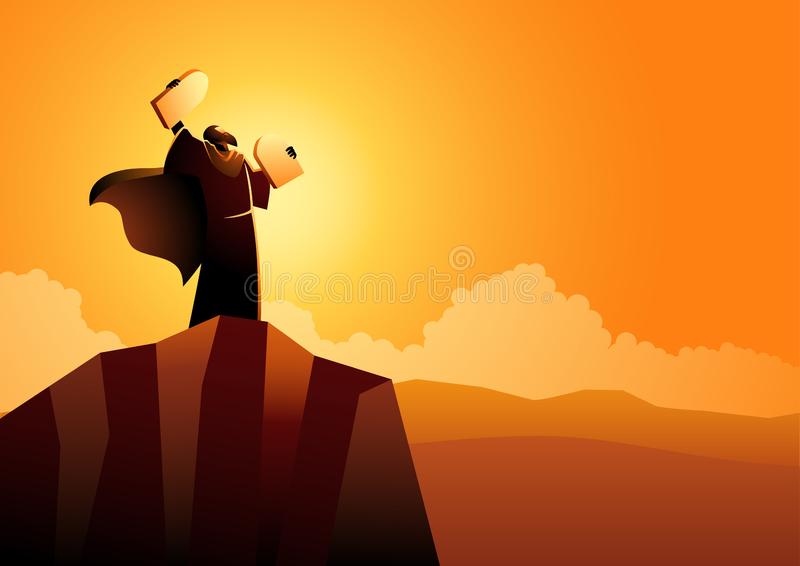
This is hard.  The people are journeying through the wilderness.  Food is in short supply and nerves are raw.  They have quarreled and tested God but until now, they have had no real identity, no real purpose.  This is the place where they are finally aware of the intention that God has for them as a people. This is the place where their lives and their journey become meaningful. This is the shape of who they are. And God gives them this covenant. 

Now, despite the way we often read this somewhat fanciful story, I’m pretty sure that the Ten Commandments did not just drop out of the sky.  It is much more likely that these specific laws were selected from among the gathered moral and social laws of generation upon generation.  In essence, they grew out of a people’s understanding about God and their own relationship with God.  The people are first reminded that God has already saved them before, bringing them out of slavery, bringing them into relationship with God.  But you can’t help noticing that these commandments are formative of who one is before God and how one lives in response to God.  The first four commandments related to one’s relationship with God and the remaining six have to do with the relationship between human beings.  It is really very simple:  You shall love the Lord God with all your heart, and with all your soul, and with all your mind. (with all that you are, with every essence of your being)  And…you shall love your neighbor as yourself.

But we often try to make these laws more judicial, as if they are a hard and fast set of rules that God laid down, perhaps metaphorically slapping the people on their hands for misbehaving, like small unruly children.  But these are not laws to obey in the “following the rules” sense.  They are the shape of who we are, the shape of God’s people.  They depict not what we should (or shouldn’t do) but who we are as people of God.  It is about how we relate to God, how we relate to each other, and how we sustain ourselves on our faith journey. 

The wilderness provided a gift of how to wander in the wilderness, of how to be.  Think of them not as boundaries but as declarations of freedom, freedom not just from the slavery endured before but from every time that we allow ourselves to be enslaved by anything that makes us too comfortable and too settled and too sure of ourselves to wander with God and become who God intends that we should be.  I don’t think we’re called to remember the words of the ten commandments as much we are to remember who and whose we are, to remember the very essence that they hold.

This Season of Lent is not really about following rules either.  It is not meant to burden us or make us quit enjoying life or any of that.  It, too, is about freedom, about finally experiencing the freedom that God gives us from slavery, from our plans, from the expectations of the world.  Think of Lent as a type of Sabbath season, that frees us to “regroup”, to look again at who we are and who we should be. God is not expecting us to follow rules; God is asking us to dance, to delight in Creation, to delight in the world that was created for us.  And the way we do that?  We love God. We love ourselves. We love our neighbor as ourselves.  And we learn the meaning of rest and reflection and glorious Sabbath.  That’s all.  That’s the way we will know God.  Consider these commandments not as rules but as a glorious gift from God in the wilderness.  But, notice, we had to get away, we had to wander a bit, all the while shedding ourselves of the trappings that we have created in our life, of those things that enslave us, to really understand what we have been given.  We have not been given rules; we have been given Life.

Certainty is missing the point entirely. (Ann Lamott)

Grace and Peace,

 Shelli

Encounter

Scripture Passage:  Numbers 9: 1-3

The Lord spoke to Moses in the wilderness of Sinai, in the first month of the second year after they had come out of the land of Egypt, saying: 2Let the Israelites keep the passover at its appointed time. 3On the fourteenth day of this month, at twilight, you shall keep it at its appointed time; according to all its statutes and all its regulations you shall keep it. 

Well, we’ve been wandering in the wilderness awhile.  Have you heard God speak to you yet?  If not, maybe we’re still not traveling light enough, still dragging baggage with us over the rough terrain, so afraid that we will be without something.  I, personally, am a terrible over-packer.  It’s not so much that I’m afraid to be without something; it really has more to do with preparation.  In my swirling, sometimes-chaotic life, if I wait until the last minute to pack (which I often do), I end up just throwing things in a bag.  Without taking the time to think things through, I tend to over-compensate.  And, more times than not, the bag that I planned to bring turns out not to be big enough or I have to add another bag.

The wilderness requires preparation.  The wilderness requires that we be intentional about what it is we do.  Why do you think God was so specific about the preparations for the Passover?  The Scripture doesn’t say to make sure you cram the Passover into your schedule once a year at a time when it’s convenient or when the weather is right or when you can find time on the church calendar.  Sometimes living our faith is NOT convenient.  Sometimes it gets in the way of our plans and our lives.  Thanks be to God!

Traveling in this wilderness requires that we pack light, that we leave ourselves nimble and with enough room for what we find.  The truth is, God is always speaking to us in the wilderness.  God is always speaking to us everywhere.  But in the wilderness, unencumbered by our baggage and our creature comforts, we finally hear.  In the wilderness, we have to be aware, we have to be prepared, we have to present.  The way we prepare for the wilderness, the way we be present in the wilderness is to become aware of everything, to hear every sound as if it was our first sound, to taste the dust as it flies up and makes its way between our lips, to feel the thirst in every molecule of our body, to know what we need and to, finally, need it.  Preparing to travel light, preparing to feel, preparing to thirst is how will finally pay attention to the God who has been speaking all along.

On this Lenten journey, this Wilderness Season, I hope that you have packed well and only brought what you truly need.  I hope that your bag is light enough for you to keep moving, to be prepared to encounter God at every turn.  See, God is speaking to us at every turn.  But in order to encounter God, we have to pay attention.  Martin Buber said that “all actual life is encounter.”  The wilderness journey will teach us what we need to encounter the God who is with us always.  In the barrenness, we will learn to hunger.  In the drought, we will learn to thirst.  The wilderness teaches us to encounter; the wilderness teaches us how to feel, to live.  But we have to travel light.

God…awaits us every instant in our action, in the work of the moment. There is a sense in which [God] is at the tip of my pen, my spade, my brush, my needle—of my heart and my thought. By pressing the stroke, the line, or the stitch, on which I am engaged, to its ultimate natural finish, I shall lay hold of the last end toward which my innermost will tends. (Pierre Teilhard de Chardin)

Grace and Peace,

 Shelli

Freed

Scripture Passage:  Exodus 5:1

Afterward Moses and Aaron went to Pharaoh and said, “Thus says the Lord, the God of Israel, ‘Let my people go, so that they may celebrate a festival to me in the wilderness.

We know the story.  The people had been taken away, held in slavery.  And now, God is insisting, “Let my people go.”  Now it probably wasn’t slavery as we think about it.  There were no shackles or locked cells.  They were able to pretty much roam around as they pleased.  They were even able to earn a living and have a home.  Their slavery may have more resembled that of an indentured servant.  They could not leave because they were economically and even culturally bound.  And after a couple of generations, they had sort of grown accustomed to it.  The culture that enslaved them had become their own.

So God screams, “Let my people go.”  Maybe God’s most prevalent concern was that after generations of this, the people had forgotten who they were.  They had become part of the culture in which they lived and had somehow morphed into being someone who they were not.  In God’s vision, the wilderness, the place where darkness loomed and consumed, was better than the place of bound safety that enslaved the people.  God was calling for their release, not just from economic chains but from the chains of being content to be who they are not. 

We can identify.  Sometimes we find ourselves bound by our lifestyle, by what our life is expected to be.  We are bound by the expectations of others.  We are bound by plans that did not materialize but that we cannot (or will not) change.  We are bound by who we think we should be or who we think we should become.  And just as God did so long ago, the Divine screams into the night, “Let my people go.” And just like that, we are driven into the wilderness.  It is a place of unfamiliarity, a place of discomfort.  It is a place that scares us.  It is a place that we cannot control, a place for which we cannot plan.  But it is also a place of freedom.    

Maybe the point of this story was not so much about freeing God’s people from her enslavers but about freeing God’s people to become God’s people.  How many times have you looked back into the dark times of your life and realized that, as hard as it was, it was exactly what made you who you are? Sometimes the dark times are the ones that push us into the light, even if the way is through a wilderness.

The wilderness is calling us.  The wilderness is the place where we are not bound, where we can finally be free to be who God calls us to be.   The wilderness is the place where we finally set down the things that we are holding that are not ours, that do not make us who God calls us to be.  The wilderness is the place where we become who we are meant to be.  This season is our time to go into the wilderness.

What would happen if security were not the point of our existence? That we find freedom, aliveness, and power not from what contains, locates, or protects us but from what dissolves, reveals, and expands us. (Eve Ensler)

Grace and Peace,

 Shelli

Letting Go

Scripture Passage:  Mark 8: 31-38 (Lent 2B)

31Then he began to teach them that the Son of Man must undergo great suffering, and be rejected by the elders, the chief priests, and the scribes, and be killed, and after three days rise again. 32He said all this quite openly. And Peter took him aside and began to rebuke him. 33But turning and looking at his disciples, he rebuked Peter and said, “Get behind me, Satan! For you are setting your mind not on divine things but on human things.” 34He called the crowd with his disciples, and said to them, “If any want to become my followers, let them deny themselves and take up their cross and follow me. 35For those who want to save their life will lose it, and those who lose their life for my sake, and for the sake of the gospel, will save it. 36For what will it profit them to gain the whole world and forfeit their life? 37Indeed, what can they give in return for their life? 38Those who are ashamed of me and of my words in this adulterous and sinful generation, of them the Son of Man will also be ashamed when he comes in the glory of his Father with the holy angels.”

Our job in this lifetime is not to shape ourselves into some ideal we imagine we ought to be, but to find out who we already are and become it.What things in your life could you never be without?  What things in your life really sort of describe who you are?  I think that’s what Jesus was trying to get across to Peter—the point that all of this was more than that, that Peter’s very identity was affected by who he thought Jesus was. Sure, I think Peter got that Jesus was the Messiah.  He knew the words.  He had been taught the meaning probably from his childhood, the idea that this Messiah would come and bring victory and glory. Put yourself in his place.  Here is this great man who you have grown to dearly love.  This ministry that he has begun has been great.  He truly IS the Messiah for which you have waited so long.  What great plans for the future Peter must have imagined! 

But then Jesus starts talking about his own coming suffering.  This wasn’t the plan that Peter envisioned.  Most of us identify with Peter here.  This cannot be!  There is no way that it is time for Jesus to leave us.  This was our Messiah sent here to save us, the Messiah for which we have waited for generations upon generations!  Jesus’ harsh statement to Peter jolts us into reality, though.  For we do often limit our thinking to things of this world.  We want to protect and possess this Messiah.  We want a Messiah who will save us on our terms, someone to be in control, someone to fix things, someone to make it all turn out like we want it to turn out, someone to make our lives safer and easier. 

Now, contrary to the way our version of the Scriptures interprets it, I don’t think Jesus was accusing Peter of being evil or Satan or anything like that.  Who could blame Peter?  He’s just like us!  Listen further…If any want to become my followers, let them deny themselves and take up their cross and follow me.  We’ve all read that verse before.  We’d like to make it read a little easier.  We would rather skip through the end of Holy Week and go straight to Easter morning.  That’s why this season of Lent is so difficult.  It won’t let us do that.  The cross is not something that we look to only in the past.  The cross is not something that we look to at the end of our lives.  This is not some goal for farther down the road. This is not some plan laid out for our lives.  This is here; this is now. It’s talking about the journey.  It’s talking about our listening to God’s calling us in our lives now.  It’s talking about letting your life go NOW! If this were easy, then we wouldn’t need Christ.  We’re not asked to just believe in Christ; we’re asked to follow….all the way to the cross.

I know what you’re all thinking.  I’m not so sure I signed up for this.  What happened to that Messiah that was going to take away all our troubles—you know calm all the storms and such?  What happened to that Savior that would solve all of our problems so that life wouldn’t be so hard?  Ooops! Wrong Savior!  

Now, don’t get me wrong.  We are not called to be martyrs.  We’re not called to suffer unbearable pain as proof of our devotion to Christ.  I’m pretty sure that none of us will ever be victims of first century Roman persecution.  Our crosses are as unique as our DNA.  Taking up our cross means simply letting go, letting go of those things that shield us from God, that get in the way of us really living, that stand in the way of who we are called to be.  For some of us, it means letting go of a plan for our lives and instead journeying a little farther into the wilderness as we follow God’s lead.  For others, it may mean letting go of our life security so that others may share in it.  For still others, it might mean letting go of hurt and pain and instead picking up the mantle of forgiveness that leads to life.  It may just mean finally getting up enough courage to quit standing on the shore to our lives and finally, finally jump into the deep end with no fear of how far you will sink before you rise.  Each of us is different.  Taking up our cross means, as Joseph Campbell said, being willing to let go of the life we planned so as to have the life that is waiting for us.

There is an old story that originated somewhere along the banks of the Mediterranean that tells of a really old man, who had lived a long and very happy life on a beautiful island.  He loved his island, where all his family, for generations, had lived and made their home.  And so, when he realized that he was approaching his last days of his life, he asked his sons to take him outside one last time.  There, he knelt, and gathered a handful of native soil, and clutched it tightly.

Soon afterwards, the man died and came to the gates of Heaven.  He was greeted joyfully and was told by one of the angels, “You have lived a good life.  Welcome to the Kingdom of Heaven.  Please come in.”  But when the man tried to cross the threshold, he was kindly told, “You must let go of the soil that you are clutching.”  “Oh no, I could never do that,” he cried, “This is my native soil, the earth of my beloved island home.”  The angels at the gate were sad as they went back to heaven, leaving the old man wandering, lonely, outside.

Many years passed, and the angels came again.  They brought the old man a taste of the heavenly banquet and feasted with him there, outside the gates, trying to persuade him to come into the fullness of the Kingdom.  He wanted so much to join them for all eternity, but again, when they asked him to let go of the soil he was clutching, he couldn’t bring himself to do so.  And again, they had to leave him standing there, alone.

Finally, after many more years had passed, the angels came again and this time, they brought with them the old man’s granddaughter, who had grown old in the meantime and had died herself.  She was delighted to see her beloved grandfather standing there. “Oh, Granddad,” she cried, “I’m so happy to see you.  Please come and join us in the heavenly Kingdom.  We love you so much, and we want you with us for all eternity.”  The old man was overwhelmed to see his little granddaughter there, and in his joy, he flung out his arms to embrace her.  And as he did so, the soil slipped right through his fingers. With great joy, the angels now led him into his heavenly home, and the first thing he saw there was the whole of his beloved island, waiting there to greet him.

Our job in this lifetime is not to shape ourselves into some ideal we imagine we ought to be, but to find out who we already are and become it.(Steven Pressfield)

Grace and Peace,

Shelli

Face to Face With G_d

Scripture Passage:  Genesis 32: 24-30

Jacob was left alone; and a man wrestled with him until daybreak. 25When the man saw that he did not prevail against Jacob, he struck him on the hip socket; and Jacob’s hip was put out of joint as he wrestled with him. 26Then he said, “Let me go, for the day is breaking.” But Jacob said, “I will not let you go, unless you bless me.” 27So he said to him, “What is your name?” And he said, “Jacob.” 28Then the man said, “You shall no longer be called Jacob, but Israel, for you have striven with God and with humans, and have prevailed.” 29Then Jacob asked him, “Please tell me your name.” But he said, “Why is it that you ask my name?” And there he blessed him. 30So Jacob called the place Peniel, saying, “For I have seen God face to face, and yet my life is preserved.” 

So, for a little background, note that Jacob and his entourage are about to reenter the Promised Land.  He has sent his entire caravan across the Jabbok, an eastern tributary of the Jordan about twenty miles north of the Dead Sea.  And it is here that, for some reason, Jacob stays behind.  And sometime during the night, he is wrestled to the ground.  Jacob may well have thought it was Esau at first, who had threatened to kill Jacob for taking his birthright.  He might have thought that he was finally getting his due for all those years as the trickster, that he had finally once and for all been “found out”. 

The struggle goes on through the night and as daybreak approaches, Jacob is struck on the hollow of this thigh by his opponent.  The blow has a crippling effect but Jacob retains such a hold that there is no escape.  He demands a blessing for the release.  You think about it—he had the birthright, he had everything in his life.  But his greatest desire was to be blessed. So, somehow Jacob either knew or had realized that this was God with whom he was wrestling, because only God has the power to grant such a blessing. 

Now remember that it was believed that God’s face would not be seen and if it was, the one who saw God would die.  This says something about Jacob.  He is willing to risk even death for the sake of the divine blessing.  And God is willing to allow Jacob to wrestle, even to demand, even to seemingly take more of God’s time and God’s power than he really deserved.  God gives the blessing and changes Jacob’s name to Israel, “God-wrestler”.

The story ends with a lot of ambiguity.  I mean, there’s no clear winner.  They just sort of walk away as the dawn breaks.  But Jacob will never be the same again.  He has looked not only God but himself square in the face and everything has changed. In a way, the old sages were right.  Once someone looks into the face of God, they do indeed die.  They have been made new, reborn.  Nothing will ever be the same again.  For Jacob, this act of wrestling has been one of transformation. And this trickster, this heel, this one who had spent his whole life trying to better his own existence, is renamed.  He becomes Israel and he names the place Peniel, which means “I have seen the face of God.”

You know, it’s interesting to note that the New Revised Standard Version uses “Peniel” in one place and “Penuel” in the other to name this place where Jacob wrestled.  They both essentially mean the same thing.  The difference is that “Peniel” (with an “I”) is singular or first person.  It means “I have seen the face of God.”  “Penuel” (with a “u”) is plural.  It means “We have seen the face of God.”  So Jacob names the place for his own encounter, acknowledging that he knew that he had seen the face of God.  By the time he leaves, though, the name is plural, opening up new possibilities to all of us having a similar encounter with the Holy and the Sacred.

The truth is, this wrestling match that Jacob had is not a story of persistence or winning; it is a story of redemption. Jacob was allowed to wrestle and wander and even doubt and, still, became the one he was called to be.  The message of our Christian faith is not that God is some impersonal force, or a terrifying presence to whom we cannot relate.  God does not expect empty praise and sacrifices and groveling from us.  God is willing to wrestle, to get down into our lives, to know who we are, and to allow us to search for who God is to us.  We are the people who wrestle with God. It is not presumptuous of us to make this claim. God was the one who gave that name to God’s people. That’s who God wants us to be.  Of course God could squish us like a bug in a nanosecond. But for our benefit, God is always available to wrestle with us, at whatever level we are capable of wrestling.  God sent Jesus into the world to wrestle with us, and Jesus allowed himself to get pinned to a cross. That’s what it took for us to experience the love that flows from God.

This season of Lent is our wrestling season.  It begins in a wilderness and ends on a Cross.  And God is there for each round of the game.  Because only those who wrestle with God, those who let go of the armors that they have built around their lives, those who forsake their plans and ask for help, those who are vulnerable, those who wrestle with their guilt and their despair, can encounter God.  The wilderness is a place of blessing.  God wants us to wrestle; indeed, invites us to wrestle.  That is the only way that we will come to know God and come to know ourselves.  Faith grows in the midst of the struggle.  Faith grows in the wilderness.  That is the way that we will forever walk, perhaps even with a slight limp, with the mark of the Divine.

You must give birth to your images.  They are the future waiting to be born.  Fear not the strangeness you feel.  The future must enter you long before it happens.  Just wait for the birth, for the hour of new clarity.”(Rainer Maria Rilke)

Grace and Peace,

Shelli