In the Thirst

Dry Parched GroundScripture Passage (Isaiah 55: 1-3)

Ho, everyone who thirsts, come to the waters; and you that have no money, come, buy and eat! Come, buy wine and milk without money and without price. 2Why do you spend your money for that which is not bread, and your labor for that which does not satisfy? Listen carefully to me, and eat what is good, and delight yourselves in rich food. 3Incline your ear, and come to me; listen, so that you may live. I will make with you an everlasting covenant, my steadfast, sure love for David.


Thirst, real thirst, probably eludes most of us who are reading this. We have water. We just turn on the tap and, usually, it runs freely. Many of us don’t think it’s good enough water so we spend money buying high-priced spring waters (which may be from a tap anyway!) But when one is really, really thirsty, thirsty to the point of feeling dry and parched, water is the most incredible thing in the world. So, here, we read of an invitation to all those who thirst. That really sort of sounds like thirsting is a good thing. So those of us with bottled water and instant food, those of us who satisfy our longing by buying more stuff or building bigger things or wrapping ourselves in the bounds of what we do, probably struggle with the whole idea of thirsting.


We live in a world that dangles satisfaction and completion in front of us. We live in a world that looks for results. We live in a world that looks for solutions to things that we do not understand, to things that are difficult. And yet, nowhere in the Scriptures does God protect us from the difficulties of life by telling us to run and hide, to avoid pain, to avoid suffering, to avoid darkness or wilderness or unknowing. After all, thirsting for something more means that we are alive. Physical thirst means that we are still living and breathing and our bodies are craving what they need. And spiritual thirst is the same. We are still alive. There is still something more. And in the deepest part of our being, we know that.


There are those that thirst for wealth, those that thirst for stature or position. There are those that thirst for pleasure or happiness. And there are those that thirst for things to be comfortable, to be the way they want it to be, perhaps to be the way it’s “always been”. But, for most people, attaining those things really doesn’t satisfy them at all. It leaves a veritable dryness in life. Perhaps the point is that life is not in the quenching but in the thirst. Alexander Stuart Baillie once wrote that “one needs to keep on thirsting because life grows and enlarges. It has no end; it goes on and on; it becomes more beautiful. When one has done [his or her] best there is, [one] finds, still more to learn and so much to do. [One] cannot be satisfied until one attains unto the stature of Jesus, unto a perfect [human], and ever thirsts for God.” I thirst. Then he bowed his head and gave up his spirit. And life began.


All your love, your stretching out, your hope, your thirst, God is creating in you so that God may fill you…God is on the inside of the longing. (Maria Boulding)


Thank you for sharing your Lenten journey with me!


I know I’ve tended to be a little irregular with the postings this season. I’m sorry about that. Life continues to get in the way. Maybe it’s part of that thirsting. I will try to keep the waters flowing.


Grace and Peace,


Shelli

Yearning to Fill a Restless Heart

Reaching for GodScripture Passage (Psalm 85:8)

8Let me hear what God the Lord will speak, for he will speak peace to his people, to his faithful, to those who turn to him in their hearts.


So, we’re on this journey, a journey toward who we are meant to be, a journey toward God with God, a journey where we are searching for God. The truth is, God is not lost. God is not up ahead waiting for us to catch up or up above waiting for us to clean up our act so we’ll get there! God is here and has been here all along, from the beginning (actually, even BEFORE the beginning). Actually, God IS the beginning (and the end and the middle and all the stuff around it.) So what exactly is this journey? What is our spiritual walk that we try so hard to maintain?


Maybe we need to go back to the basics. For what is it that you hunger? What brings you life? What gives you energy? All those questions are really close to the same. They all have to do with sustenance, with filling what is empty and satisfying what is wanting. St. Augustine said, “You have made us for yourself, and our heart is restless until it rests in you.” That’s our story—we are not evil; we are not bad; we are not unrighteous or ungodly or un-whatever; and we are certainly not “only human”. (I hate that…Jesus was human, fully human, so there’s no “only” about it. Maybe we’re inhumane sometimes, (maybe a lot!) but we’re not “only” human.) We’re not any of those things. We are beloved. God made us. We are part of God. But we just haven’t found our place yet. We are not bad; we are restless. We know there is something more. Our heart knows it. Our heart knows that there is an emptiness and a wanting that we almost cannot bear. It is that “God-shaped hole” again. Our hunger, our emptiness tells us that in our deepest being, we desire to be with God, to walk with God. And God, in God’s infinite love, is at the root of that hunger.


And so we journey. We walk and we walk and we walk and we search and we search and we search. This IS our spirituality. This IS our journey. This IS our Way. We all have it. Some of us struggle with it, muddying it with materialism and prejudice and fear that we will lose control or lose what we have. And some of us somehow, by God’s grace, actually travel further than we dared, into the unknown, into the wilderness. It is always a bit of a struggle, even for those that seem have their spirituality all together. If it wasn’t, then God would have just filled our heart and then hardened it up so it couldn’t go anywhere and never made the world at all. But God made us to journey, called us to journey, called us to search and wander and to, somehow, along the way, learn to trust that our real desire is to be with God, to fill our hearts with God and to, finally, have peace (not to be righteous, not to be holy, not to be perfectly and fully-versed in the ways of God, not to be the “best” at spirituality—just to have peace).


Our journey, our spiritual walk, is the way that God relates to us and the way we respond. It’s a dance. And the best dancers do not drag their partners across the floor or dance in front or over those in the line. The best dancers understand the rhythm that is not theirs but to which they belong. There are no easy directions to your spiritual journey. You will not find this in a self-help book. There is no quick fix, no shortcut, no road that is better paved or with less traffic. The Way is yours and God’s. And as you dance, your heart fills, and when it is full to what you thought was the brim, to the place where you cannot imagine it can fill anymore, you will find that you only yearn for God.


You called, you cried, you shattered my deafness. You sparkled, you blazed, you drove away my blindness. You shed your fragrance, and I drew in my breath, and I pant for you. I tasted and now I hunger and thirst. You touched me, and now I burn with longing for your peace. (St. Augustine of Hippo)


Thank you for sharing your Lenten journey with me!


Grace and Peace,


Shelli

A Question of Citizenship

Flags of different countriesScripture Passage (Philippians 3:14-4:1)

14I press on toward the goal for the prize of the heavenly call of God in Christ Jesus. 15Let those of us then who are mature be of the same mind; and if you think differently about anything, this too God will reveal to you. 16Only let us hold fast to what we have attained. 17Brothers and sisters, join in imitating me, and observe those who live according to the example you have in us. 18For many live as enemies of the cross of Christ; I have often told you of them, and now I tell you even with tears. 19Their end is destruction; their god is the belly; and their glory is in their shame; their minds are set on earthly things. 20But our citizenship is in heaven, and it is from there that we are expecting a Savior, the Lord Jesus Christ. 21He will transform the body of our humiliation that it may be conformed to the body of his glory, by the power that also enables him to make all things subject to himself. 4Therefore, my brothers and sisters, whom I love and long for, my joy and crown, stand firm in the Lord in this way, my beloved.


This passage is pretty familiar. Most people read the words “goal” or “prize” and imagine that whatever it is we are journeying toward is some sort of reward for a job well done. So we assume that if we live righteous (or whatever we think that might be) and godly (really? You are planning to become “like God”?) lives, we’ll get to where it is or what it is or whatever it is that we want to go. But the problem is that Paul is probably not implying that this journey is some sort of course of study for life that is all laid out with prerequisites and gold stars and graduations. Paul is talking about a pattern of life, a way of being, a life lived with the mind of Christ. In other words, we are called to enter that Way of Christ, to become the Way of Christ. It’s not about getting a good report card; it’s about becoming someone different.


And then we’re hit with an even more uncomfortable notion. Look around you. What you see, what you know best, what you aspire to be, what you dream of having, what you think you have, what you think you possess—all of that means nothing. In fact, it’s not even yours. Oh don’t get me wrong. We are in no way called to remove ourselves from the world. In fact, we are called to throw ourselves into it with all our might. But we throw ourselves into a world that not only is not ours but is really something that we’re not a part of. To use a well-worn (and now seemingly controversial) phrase, we are “resident aliens”. Our citizenship, where we belong, is not this. Now I don’t think it’s that we belong to another place. We belong to another Way of being. And we are called, with the same mind of Christ, to bring that Way of being into the place where we reside.


There is a certain irony that we are hit with this idea of “citizenship” in this politically-charged time that is already filled with questions of who can run for political office based on where they were born. (Getting very tired already…) This is so Roman. The people to whom this original letter was written were probably citizens of a Roman colony. And in that day, “citizenship” was not a right. It was not something that could be acquired. It was an honor that came with birthright. And with that birthright came power. And Paul is contrasting it with a New Identity, a new Way of being that held no class distinctions and no extra credit for having been there as one emerged from the womb. But we still like to reward ourselves for being, I guess, in the right place at the right time, so to speak. The world does it. Our nation does it. Churches do it. We churches like to reward our members first, take care of ourselves first, limit our grace and our mercy to those who are like us, or, even, who ARE us.


But holiness and righteousness are not things that can be measured or rewarded or achieved or handed out or held away. They are not part of the ways of the world. Our goal is not to become holy or righteous; our journey is toward a fuller relationship with God, toward having the mind of Christ. It is about relationship; it is about caring and compassion and mercy not just for those like us but for all of our brothers and sisters in this Creation. It is about realizing that we live as aliens, as immigrants (there, I said it!), in a place that is not ours, that is not like us, and yet a place where we live and move and breathe and work and love. We do not possess this. This world, this nation, this church is not ours. It is, rather, the place through which we journey for a season, doing all the good we can, the place where we take others by the hand and lead them home.


God leads us to the slow path: to the joyous insights of the pilgrim; another way of knowing: another way of being. (Michael Leunig)


Thank you for sharing your Lenten journey with me!


Grace and Peace,


Shelli

To Hold Dear and Love

14-11-02-#6-Sermon-Thin PlaceScripture Passage (Genesis 15: 1-6)

After these things the word of the Lord came to Abram in a vision, “Do not be afraid, Abram, I am your shield; your reward shall be very great.” 2But Abram said, “O Lord God, what will you give me, for I continue childless, and the heir of my house is Eliezer of Damascus?” 3And Abram said, “You have given me no offspring, and so a slave born in my house is to be my heir.” 4But the word of the Lord came to him, “This man shall not be your heir; no one but your very own issue shall be your heir.” 5He brought him outside and said, “Look toward heaven and count the stars, if you are able to count them.” Then he said to him, “So shall your descendants be.” 6And he believed the Lord; and the Lord reckoned it to him as righteousness.


We are told over and over to not be afraid. But we still want a guarantee. We WANT to believe that God will work it all out; we WANT to believe that God will sustain us; we WANT to believe, but we’d like to know when things will get worked out to at least our satisfaction, if not our comfort and ease. Now this passage is probably better translated as “trust” than “believe”. Is it the same? Well, probably close. But we tend to think of believing in something as knowing that it’s right. That’s not really right, but it’s what most of us have fallen into. In the 16th century, the Saxon meaning depicted it as “to hold dear or love”. That’s different. That’s WAY different. Do you follow because you think it’s right or because you love it and hold it dear? So is belief more about facts or about the meaning it brings to your life?


When we are told not to be afraid, it seems to be more of a call to trust, rather than merely believe. You can believe something, maybe know it’s right in your deepest being, and yet not fully give yourself to it. But Abram was told to trust, to give himself to it. “Come, Abraham. Trust it. Follow it. Give yourself to it. Hold it dear and love it. Become it.” And the covenant, the relationship, came to be.


This journey that we’re on is not, of course, a straight and unhindered pathway. There are hills to climb and valleys to maneuver. There is a wilderness to traverse. There are things that come along and get in our way and change our whole schedule when we least expect it. (I had some of those the last few days, which is why I’m WAY behind on “daily meditations”. So, I owe you four extras somewhere along the way!) But we’re not just called to mindlessly and aimlessly follow what we believe to be true.  We are instead called to trust it in our deepest being, to turn ourselves over to it, if you will. It doesn’t mean that there won’t be “blips” along the way. After all, Abraham (formerly known as Abram) would become the father of three major world religions, but he was perfect. He probably wasn’t even trustworthy. We all know he tried to manipulate the outcome of it all a bit. But this faith journey is not about making us perfect humans; it’s not about our blind acceptance of what we do not understand; it’s about relationship. Faith is about realizing and trusting that we are part of a deep and abiding relationship between God and humanity, actually between God and all of Creation as the holy and the sacred pours into our being bit by bit. No, it makes no sense in terms of this world. That’s what makes it faith. That’s what Lent teaches us. So, do not be afraid. Follow what you love and hold dear and I’ll walk it with you.


Meaning does not come to us in finished form, ready-made; it must be found, created, received, constructed. We grow our way toward it. (Ann Bedford Ulanov)


Thank you for sharing your Lenten journey with me!


Grace and Peace,


Shelli

In Our Search for Belief

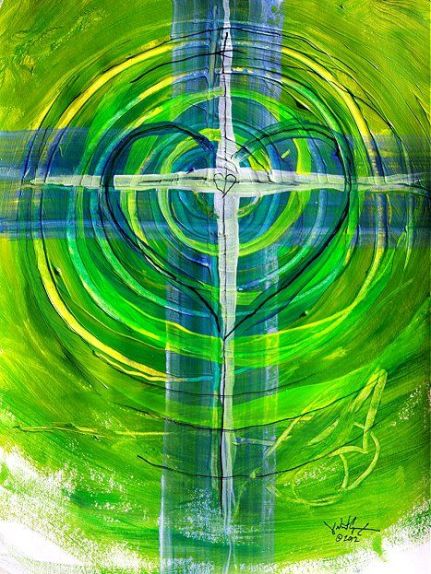
Cross-Abstract
“Faith, Day and Night”, J. Vincent Scarpace, 2012

Scripture Passage (Romans 10: 8b-13)


“The word is near you, on your lips and in your heart” (that is, the word of faith that we proclaim); 9because if you confess with your lips that Jesus is Lord and believe in your heart that God raised him from the dead, you will be saved. 10For one believes with the heart and so is justified, and one confesses with the mouth and so is saved. 11The scripture says, “No one who believes in him will be put to shame.” 12For there is no distinction between Jew and Greek; the same Lord is Lord of all and is generous to all who call on him. 13For, “Everyone who calls on the name of the Lord shall be saved.”


You know, this whole faith journey thing would be a whole lot easier if the rules were better laid out! So, are you supposed to confess your beliefs first or believe what you’re saying first? (because did you notice they get switched in this passage?) I mean, just make it easy! How DO we get this right? Just tell me what I’m supposed to do and I’ll do it! Just tell me what to say. I’m a pretty fast learner. I could probably remember enough to get through the initial exam anyway.


That’s what most of us want. That’s what those that Paul was first addressing wanted. Good grief, just tell us what we’re supposed to do to get this right! They wanted him to tell them what acts, what righteousness needed to happen so they could check off that they were following the law. We’re no different. We’re used to racking up points or grades or salary levels (or for churches, it would be members or attendees or giving patterns or apportionments—aaaagggghhhh!—there, I’m better!), all so that we can check off that we’ve achieved something. But when you read this, Paul isn’t even laying out what it is we’re supposed to believe. There’s no talk of original sin or not, no mention of which salvation theory Paul thought was the right one, and no list of rules or beliefs to which we needed to adhere to get “in”. Paul’s answer instead was to just believe. Just ask. Just open your mouth and pour out your heart and say it. That’s all. Because, see, it’s there. It’s all right there. Just call on the Lord and start walking.


But there’s another side to this. If we’re not told exactly what it is that we’re supposed to believe, then why would we think that our beliefs are the way everyone should believe? The passage says that “everyone—that means all of us—who calls on the name of the Lord shall be saved.” In other words, desiring God is enough. Desiring God is what leads us toward God. Wanting to pray is praying. Yearning to be with God is being with God. Confessing our belief is believing. It doesn’t mean that we won’t have what seem to be crises of faith. (I have one about every week lately!) It doesn’t mean that we will ever get to the point where we don’t have questions. (If you meet someone that tells you they don’t question God or question what they believe, personally, I’d run! I mean, are you really willing to stake your whole existence on what YOU’VE figured out God is going to do?)


Desiring God, wanting to be with God, wanting to follow is enough. Beginning is enough. I mean, I’ll be honest, if God had some prescribed list of rules and definitive beliefs in mind, why in the world would God have chosen Paul to be the head writer of the greatest treatise on salvation of all time, with his circular thoughts and grammatically incorrect run-on sentences? Maybe God’s whole idea is that we wander and we explore and we question and we journey not until we “get it” but until we realize that the journey IS the way we live with God, that this wilderness in which we find ourselves IS the Way to God and, at the same time, the way to ourselves. That is the reason that in this season, we find ourselves in the wilderness. It is not a punishment. It is a reminder that the God who created us has never left us. It is for us to realize that in the deepest part of our being, we desire to be with God almost as much as God desires to be with us. That is the reason that God came, Emmanuel, God-With-Us, to walk with us, to perhaps wake up our God-given desires to be with God. So, begin. Wanting to be with God IS being with God. And THAT is something in which you can believe.


There is a God-shaped hole in the heart of every [person] which cannot be filled by any created thing, but only by God, the Creator, made known through Jesus Christ. (Blaise Pascal)


Thank you for sharing your Lenten journey with me!


Grace and Peace,


Shelli

The Home We Have Inherited

wandering-arameanScripture Passage (Deuteronomy 26: 1-2, 5, 10-11)
When you have come into the land that the Lord your God is giving you as an inheritance to possess, and you possess it, and settle in it, 2you shall take some of the first of all the fruit of the ground, which you harvest from the land that the Lord your God is giving you, and you shall put it in a basket and go to the place that the Lord your God will choose as a dwelling for his name… 5you shall make this response before the Lord your God: “A wandering Aramean was my ancestor; he went down into Egypt and lived there as an alien, few in number, and there he became a great nation, mighty and populous… 10So now I bring the first of the fruit of the ground that you, O Lord, have given me.” You shall set it down before the Lord your God and bow down before the Lord your God. 11Then you, together with the Levites and the aliens who reside among you, shall celebrate with all the bounty that the Lord your God has given to you and to your house.


See, the problem with this whole Lenten wilderness excursion is that we’re really not ready, right? But have you ever considered that the problem might be that we’re TOO prepared. I mean, maybe we’ve overpacked, dragging what we think is ours, what we think defines us along this dusty road. Maybe we’re so walled off with our own preconceptions of who we are, who God is, what Jesus can do for us, how this whole journey will end up, that we’re not paying attention at all to where we are going or what God is trying to show us along the way.


Look around. We are not the first to travel this way. Oh, don’t get me wrong, it’s not an overly well-worn path, but there is a faint pathway that someone carved out long before we came along. This is not our pathway. This is not our land. This is not OUR country (arguing political pundits aside). This is not OUR church. We inherited what we have. It was handed down to us from those that came before. And it is ours not to possess, not to settle, but to hold, to hold for a season in time. What we have, all that surrounds us was entrusted to us for our care and our use (not for us to USE UP, just for our use.)


This Lenten journey is a reminder of not only where we are headed but also from where we have come. It is a way of our acknowledging that we are not self-made as we would like to think, that all that we are and all that we have is not only from God but IS God’s. But the passage also reminds us that we have time to digest all of that. God doesn’t expect to have all of this figured out or to be fully formed in faith. God is not standing at the doorway to our home like a holy ticket-taker. God is waiting for us to offer the fruits of what God has given us back to God. And then, together, we will celebrate the glorious bounty that belongs to us all. The journey is one that calls us to remember who and whose we are, to remember the place we began, to remember that that walked this path before, and to welcome those that are yet to come. Maybe Lent calls us to let go so that we will realize that what we are holding is not ours to possess.


Complete possession is proved only by giving. All you are unable to give possesses you. (Andre’ Gide)


Thank you for sharing your Lenten journey with me!


Grace and Peace,


Shelli

Oh, All This Talk About Sin!

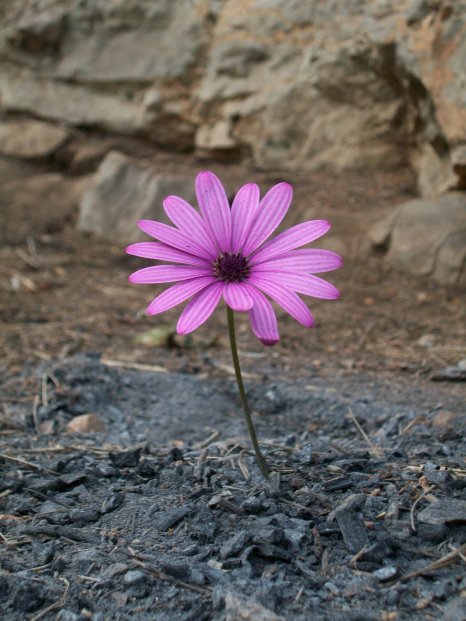
flower_ashes_by_dennisallendorfScripture Passage (Psalm 51: 1-3, 7-13)

1Have mercy on me, O God, according to your steadfast love; according to your abundant mercy blot out my transgressions. 2Wash me thoroughly from my iniquity, and cleanse me from my sin. 3For I know my transgressions, and my sin is ever before me….Purge me with hyssop, and I shall be clean; wash me, and I shall be whiter than snow. 8Let me hear joy and gladness; let the bones that you have crushed rejoice. 9Hide your face from my sins, and blot out all my iniquities. 10Create in me a clean heart, O God, and put a new and right spirit within me. 11Do not cast me away from your presence, and do not take your holy spirit from me. 12Restore to me the joy of your salvation, and sustain in me a willing spirit. 13Then I will teach transgressors your ways, and sinners will return to you.


I know, we’re not really ready for Lent yet. (I saw a Christmas tree still up less than two weeks ago. That was a whole lot more festive.) This season has come WAY too fast thanks to an apparent impatient spring on the calendar. So, the pancakes were all eaten last night and the masks have been removed and put away. We are ready to begin the journey again. It is a journey of giving up and giving in, of wandering in the wilderness, of stopping or at least slowing down enough to let God’s Spirit begin once again to seep into our being. But first, first, on this day of dust and ashes, we have to talk about sin.


Sin? Who wants to talk about sin? I mean, I’m Methodist. We are “grace” people, after all! We are forgiven people. Isn’t that what we’re told? God’s mercy is infinite. Jesus took care of all that, right? Really? So, you have no part in this? You just want to go on your merry way? The truth is, what relationship with God would we have if we truly thought we were either sinless or our sins were just hosed off of us without us even knowing what had happened? I mean, what in the world is forgiveness if there’s nothing to forgive? But the fact that God loves me not just in spite of me but BECAUSE of me is a much deeper understanding of God. This is a God who is not waiting for me to clean my act up so I can get on the yellow brick road toward a grace-filled life. This is a God who walks with me down this rocky, sometimes steep and treacherous trail through a wilderness I do not understand and showers me with grace even when I am muddied and worn by sin. This is a God who doesn’t just wait for me to return but takes me by the hand and leads me home even when I sin.


There I said it—sin, Sin, SIN! Hmmm! Steeple didn’t fall off, stained glass windows still there, me, still standing. (I just went and looked—yes, the sign out front still says United Methodist!) On this day of dust and ashes, it is our time to acknowledge that yes, we mess up; that yes, we make the wrong choices (I’m hoping God doesn’t yet regret that whole free will decision way back when!); that, yes, we sin. But this day is also the day that we choose—we CHOOSE to follow God on this journey. Now, at the risk of speaking for the Great I AM, I would much rather have a relationship with one who CHOSE to follow rather than one who knew nothing else. Choosing God and being innocent are not the same. This day, we acknowledge that we are both in need of God and that God loves us more than we will ever fathom. Now, you would think those two scenarios would fit together rather well. But somewhere along the way, we have somehow replaced our need for God with our need to be perfect. Albert Outler called it “overreaching”, getting in God’s business. See, God doesn’t need us to be perfect, or sinless, or innocent. God desires us to choose to follow. God desires us to be who God calls us to be.


And so, the pathway looms ahead. It’s not always familiar territory. And, in fact, we usually have to leave part of what we carry and hold so tightly behind. We usually tend to travel too weighted down to notice where we need to go. So, give up what you need to give up or take on what you need to take on. And feel the ashes on your skin to remind you who you are and also whose you are. Let them be a blessing and a beginning. And know that God calls you away from the self that you have imagined. And begin to walk. It is a journey that is hard and difficult and takes you through darkness. But it is a journey that leads to life, that leads to beginning again.


Meanwhile, sin is our only hope, because the recognition that something is wrong is the first step toward setting it right again. (Barbara Brown Taylor, in “Speaking of Sin”)


Thank you for sharing your Lenten journey with me!


Grace and Peace,


Shelli