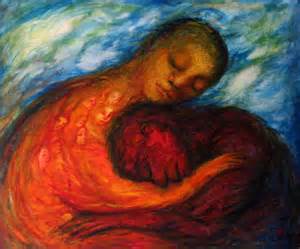
Jesus Loves Me, This I Know

This is it: THE verse.  So, what we do with THE verse?  It’s on street corners and billboards and T-Shirts and tattoos and faces and signs at sporting events.  I think it is often read as some sort of great reward for doing the right things, the recognition of a narrow and exclusive pathway.  You know, if you do everything you’re supposed to do, you’ll be rewarded when it’s all said and done.  And if you don’t, well you’re just out of luck.  You messed up.  So, look at me…do what I do, go to church where I go, be what I am, look like I look.  I’m saved; are you?  (Define that!  Do we really understand what that means?)

Really?  Truthfully, I used to hate this verse.  The way it was taught did not make sense to me.  I mean, why would the guy that welcomed all those thousands of people on a hillside (or a plain if you’d rather read it in The Gospel According to Luke) suddenly say, “nope…just this group”?  Yeah, I think we’ve read it wrong.  (Cue the lightning bolt, I guess…) For God so loved the world—not the ones in the right church or the right country or the right side of the line—but the WORLD.  God loved the world, everything about the world, everyone in the world, so much, so very, very, VERY much, that God came and walked among us, sending One who was the Godself in every way, to lead us home, to actually BRING us home, to lead us to God.  Are you saved?  Yes…every day, every hour, over and over and over and over again.  I’m being saved with every step and move and breath I take.  I think that’s what God does.  God loves us SO much that that is what God does.  God is saving us.  God came into the world to save the world.  So why would we interpret this to mean that God somehow has quit loving some of us or that we have to somehow bargain with God to begin loving us or that “being saved” is a badge of honor?  See, God loves us so much that God is saving us from ourselves—all of us, as in the WHOLE WORLD. 

The reference to the snake refers to Numbers 21:4-9.  It is the account of the Lord sending poisonous serpents into the wilderness that can be countered by making a serpent and putting it on a pole so that everyone who looks at it will live even though they were bit by a poisonous snake.  (OK….whatever!…I’m not really a snake person.)  So, essentially, it’s like this:  You think your main problem is snakes?  I mean, THAT’S your problem? Alright, here it is.  Look at it hanging there on the tree.  Quash your fear, let your preconceptions go.  There…no more snakes.  You don’t have to fear snakes. 

So, this time?  You have let the world order run your life.  You have become someone that you are not.  You have allowed yourself to be driven by fear and preconceptions and greed.  You have opted for security over freedom, held on to what is not yours, and settled for vengeance rather than compassion and love.  You have conjured up wars against each other. I created you for more than this.  I love you too much for this to go on.  Look up.  Look there, hanging on the tree, there on the cross.  Stare at the snake.  Stare at the Cross.  Enter the Cross.  See how much I love you.  In this moment, I take all your sin, all your misgivings, all your inhumanity and let it die with me.  All is well.  All is well with your soul.  There…no more death.  You don’t have to fear death.

Many people read this verse as the depiction of a narrow way, a way that is defined by the Jesus that they imagine.  I don’t think that.  I read it not as a narrow pathway to God but one that is wide and welcoming, one that is merciful and grace-filled, on that each of us can find a way to walk.  That’s Jesus’ message for me:  “Come, THIS way…I’ll show you!  Because that is how much you are loved.”

There are so many of us that are quick to define who is “in” and who is “out” as far as God is concerned.  Really?  Are you sure?  I mean, isn’t that a little above your holy pay grade, so to speak.  For God so loved the world that he gave his only Son, so that everyone who believes in him may not perish but may have eternal life. Indeed, God did not send the Son into the world to condemn the world, but in order that the world might be saved through him. So, come all you that are searching and those that are lost.  Come all who struggle with being accepted in the church, all who have been shunned and made to feel that they are less than.  Come ALL of God’s children.  You are loved.  You are so loved that God walked this earth in the form of a human to show us all the way.  And, yes, I think that is REALLY, REALLY good news.

So, for today’s breathing exercise…Breathe out what the world tells you about who is “in” and who is “out”.  Breathe out the vision of a church and a Kingdom of God that only includes those who believe the “right” way, who walk the prescribed path.  Breathe out hatred and exclusion and xenophobia of God’s children, no matter who they are.  Then breathe in…breathe in that great, great love of God that Jesus showed us.  Breathe in that you are so deeply and incredibly loved that you can’t even fathom its depth.

Grace and Peace,

Shelli

Ever-Widening Circles

Several years ago, I had the opportunity to lead a discussion with the a UMW group on “Immigration and the Bible”.  It’s based on a book with that same name by Joan Maruskin that was published to be a 2013 UMW study (that’s United Methodist Women for you non-Methodists!  They’ve now changed their names but whatever…).  Now, that “immigration” word is, for us, probably nothing less than a lightning bold word.  It is so politically charged nowadays that most of us shy away from it.  But the truth is, it is what the Bible is about.  The Bible is about movement.  The Bible is about immigration. It begins with God’s Spirit moving across the face of the earth and ends with a depiction of a city, a New Jerusalem, moving from heaven to earth.  And in between, we read stories of people continuing to be uprooted.  They move from one place to another seeking safety and sanctuary and we are continually given reminders of how we are called to welcome the stranger into our midst.  The Bible is a story of movement and a story of welcome.  And along the way, the call is not to build and prosper but to encounter each other and enter each other’s lives.

But each of us in this world works hard to preserve our perceived image of what that world should be—a world where our political views, our boundaries we have drawn, our wealth and possessions we hold, our standard of living and our understanding of who God is remain intact.  The problem is that our need to preserve ourselves usually gets in the way of our ability to connect with others, our ability to encounter the rest of God’s children.  Because if each of us is waiting for the other to respond in love first, then love will never be the response and the walls of hatred become stronger and more difficult to tear down.

Take the relationship between the Samaritans and the Jews.  Both believed in God.  Both had a monotheistic understanding of the one true God, the YHWH of their shared tradition of belief.  But where the temple of YHWH for the Jews existed on Mount Zion in Jerusalem, the Samaritans instead believed the Scriptures supported the worshipping of God on Mount Gerizim near the ancient city of Shechem.  And with that, a new line of religious understanding was formed.  The Samaritans believed that their line of priests was the legitimate one, rather than the line in Jerusalem and they accepted only the Law of Moses, The Torah, as divinely inspired, without recognizing the writings of the prophets or the books of wisdom.  These differences between the two peoples probably began as early as one thousand years before the birth of Christ and what started as a simple religious division, a different understanding of how God relates to us and we relate to God, eventually grew into a cultural and political conflict that would not go away.  The tension escalated and the hatred for the other was handed down for centuries from parent to child over and over again.

So here is this woman depicted as a stranger, an outcast, a Samaritan.  And here is Jesus breaking all of the boundaries of traditional and accepted Judaism.  First, he, unescorted, speaks to a woman.  In the Talmud, the rabbis warned that conversing with women would ultimately lead to unchastity.  In fact, Jose ben Johanan, of Jerusalem, who lived around 160 B.C., wrote, “He that talks much with womankind brings evil upon himself and neglects the study of the Law and at the last will inherit Gehenna (or the destination of the wicked). ”  (Wow! That sounds pretty serious!) Secondly, Jesus speaks to a woman of questionable repute.  Now, in all probability, this woman was probably just a victim of some form of Levirate marriage gone bad, where she had been handed in marriage from relative to relative as her husbands died, leaving her penniless and out of options.  And, finally, Jesus speaks to the so-called “enemy”.  The truth is, there is nothing about this woman that is wrong or sinful or anything else that we try to tack on her reputation.  The woman was just different.  Her life had been difficult.  She lived in darkness and had no way out of it.  And the most astonishing thing is that this seemingly low-class Samaritan woman who is not even given a name in our Scriptures becomes the witness to the Gospel of Jesus Christ.  Because, you’ll notice, Jesus did not just ask her for a drink.  He engaged her in conversation about spiritual matters.  Once again, the Gospel is found not in Jerusalem and not on Mt. Gerizim and not even in whatever faith community you call “yours”, but in our shared existence as part of this “new humanity”.  The Gospel is found in our encounter with each other.  Here, too, Jesus enters a new phase of his ministry.  Up until this point, Jesus’ encounters have been pretty ethno-centric.  But, here, the Gospel begins to spread to other ethnicities and other peoples.  It begins to include an encounter with the world. It begins to include the “other”, the immigrant.

For most of us, our problem is that we are always waiting for someone else to make the first move toward acceptance and reconciliation.  But Jesus did not wait.  Jesus stepped into encounter.  That is what we are called to do.  We are called to go forward on an unpaved road to meet the other. We are called to somehow reach through our prejudice and even our fears and take each other’s hand.  We are called to cross boundaries, rather than constructing them.  We are called to reach through our differences and find our common, shared humanity, all children of God, all made in the image of God.  That is the way that peace is found—one hand at a time.  And that is the way that we encounter Jesus Christ.

Putting this study of “Immigration and the Bible” together, I began to see a new pattern emerge in the Scriptures—well, new for me as I read the Scriptures through a different lens.  The Biblical story is a story of God calling us to go forth and our drawing borders, walling ourselves off, protecting who we are and what we have.  God calls us to go and we draw borders.  God calls us to go and we construct gates.  God calls us to go and we build walls.  But we are called to encounter the stranger.  It is more than being welcoming.  It is more than letting them into our carefully-constructed lives.  It means entering their life and completely opening ours to them.  It means that they become us and we become them.  It means that we encounter each other.

We are in the middle of this season of Lent.  It IS the season of wandering, the season of the wilderness journey.  We always begin Lent with Jesus going into the wilderness, leaving what he knows, leaving the comforts of home.  And I think that part of the reason for that, is that we are called to be wanderers, aliens, and sojourners.  We do not stand in one place waiting for others to come to us.  The Christian journey is always moving us toward something, so we go the way that God calls us to go and along the way, we gather the children of God.  We encounter each other. As Jesus once said, “Go to the street corners and invite to the banquet anyone you find.”  In other words, go and encounter each other because that is how you encounter Christ.

So, let us breathe out that fear of the other.  Let us breathe out the preservation of our way.  Let us breathe out the notion that our view of the world, our view of who God is, is all there is.  And let us breathe in what our brother and sisters can teach us.  Let us breathe in the world and all the ever-widening circles that means.

The answer’s been here all along
We just need to hold each other ’til the hurt is gone
Oh, to belong, still a dream

Look what we’ve imagined with pain
Make believing we aren’t the same
But you and I know the truth
Imagine what we could do
If we imagined with love

Wild where the energy flows
The window’s wide open
All we see is the door that’s closed
Sad how it goes
So it goes, ’til it goes

Look what we’ve imagined with pain
Make believing we aren’t the same
But you and I know the truth
Imagine what we could do
If we imagined with love

Time for all of us to wake up out of this hypnotic state
Instead of dreaming fast asleep, we should be dreaming wide awake

Look what we’ve imagined with pain
Make believing we aren’t the same
But you and I know the truth
Imagine what, we could do, if we choose
Yeah, what do we have to lose
If we imagined with love?

Grace and Peace,

Shelli

Diversity, Equity, and Inclusion

Sometimes we don’t exactly know what to do with this passage.  It tells us that Jesus travels to a place that is not his, to an unfamiliar place some distance away.  It’s not the wildernesses that we’ve come to know but it IS a wilderness.  When we journey through unknown territory, through places that are not our home, through places that are not ours, places that we have not planned or planted, even places for which we feel totally unprepared, there is a certain wilderness aspect to them. 

And in this unfamiliar place, this woman appears to Jesus begging that he heal her daughter.  Her appeals got louder and louder and more and more insistent.  So, what was Jesus to do?  He wasn’t there for her.  She was Canaanite.  She was not Jewish.  (The Markan version of this story depicts her as Syrophoenician).  Either way, she was “the other”.  And at this point, Jesus understood that his mission was to the Jews.  This would not be right.  She was not one of them.  But the woman kept insisting.  (I will tell you, the reference to “dogs” is not a nice one.  Without offense to the dog-lovers and dogs among us, in 1st century Jewish society, dogs were looked upon as unclean, as scavengers.)  And, yet, even Gentiles, even the “bottom of society”, even the “dogs” gather the crumbs from the masters’ table. 

But, then, Jesus changes.  He stops, he listens, he changes.  See, this woman gets it.  Her faith sees Jesus as a sign of what’s to come.  This moment is, in effect, a turning point for Jesus.  (And we need to realize that that turning point is the reason we’re here.  We ARE the ones to which Jesus’ mission turned and broadened to include.)  I’m actually grateful the writer didn’t try to “clean up” the story.  This shows Jesus’ humanness, his searching, his exploring, his changing, his realization that there was something (and someone) more.  In this moment, there, in the wilderness, in the place that was not his, Jesus saw a broader vision of God and who God called him to be than even he had before.

I think that’s why Lent tends to be this sort of wilderness journey.  Traversing through places with which we are unfamiliar, places that perhaps do not feel like home, perhaps will never feel like home, gives us a new perspective.  Maybe we’re not called to make ourselves at home at all.  Maybe we’re rather called to continuously journey through newness, continuously open our minds and our hearts just a little bit more with each turn of the pathway.  I don’t believe that God calls us to stay planted where we are; otherwise, there wouldn’t be so many pesky wildernesses in the stories of faith and in our own lives.  The wilderness is where we change our course, where the road turns if only one small degree and, unsettled though we are, we turn with it and continue our journey with minds broadened and hearts opened.

We can’t hold on to the familiar.  We can’t just associate with those who look like us and think like us and believe like us.  That’s what’s wrong with the world right now.  That’s what’s wrong with our society, our country, our relationships with each other.  We need to hold fast to what we believe but not at the expense of relationships.  That’s what Jesus teaches us in this passage.  Jesus listens to the woman and backs away a bit.  He doesn’t retreat; he gets a different view.  He gets a broader view.  He looks at the world the way God does.  God made the world diverse.  Why in the world would we be meant to stay in our own little bubble?  And yet, we’re arguing over the use of DEI (diversity, equity, and inclusion)?  I don’t get it.  We need to breathe out needing to surround ourselves with comfort, with those who are like us.  I mean, Jesus wasn’t even like us!  He was a dark-skinned immigrant who was Jewish.  What does that tell us?  So, we need to breathe in the way the world is—diverse and God-made—all of us.

Grace and Peace,

Shelli

A Miraculous Feast

It was early in the morning and the sun had just begun to peak through the window above where he slept.  He really hadn’t gotten that much sleep.  The excitement and expectation was just too overwhelming.  It hadn’t been until right before he had gone to bed that his parents had finally given him permission to go.  He had been begging them for days.  He didn’t think his father really understood.  That seemed odd to him, given the fact that his father was so involved and so well-respected at the temple.  After all, his father went to the temple every day and was close to God.  That’s really what he wanted.  He wanted to be close to God, to feel God, to know God.  And all the townspeople had been talking about this man who was so close to God, who could show you how to be close to God.  He wanted to hear him.

So, he sprang out of bed and hurriedly put on his clothes.  He didn’t want to be late.  He wanted to get a good seat near the upper part of the hill so that he could hear.  He wanted to be near this man they called Jesus.  Just as he was running through the house, his mother called him back.  He rolled his eyes.  He did NOT want to be late.  He turned around.  His mother was standing there with a basket covered with a cloth.  She had packed him a lunch. He didn’t really feel that he needed a lunch.  He just wanted to hear what Jesus was going to say.  But he would humor her.  Maybe a lunch would be a good thing.  He took the lunch and returned her hug.  And then as he stepped out of the doorway and began to walk toward the lakeside beach, he glanced in the basket.  Hmm…five loaves and two fishes…that would be good…it was just enough for him.  It was all he would need.

When he got to the beach, there were already people gathering.  He thought he saw someone that could be this man Jesus through the crowd.  And then the crowd started moving, away from the beach and up the mountain side.  He could feel the cool air coming off of the lake as they went up the mountain.  It felt good.  Near the top of the mountain, Jesus sat down on a rock and his disciples sat down around him.  The small boy pushed through the crowd and positioned himself on a rock.  What a great spot!  He could see Jesus.  He could hear Jesus.  He was going to find out how to be close to God! He was with Jesus!

This is, of course, a familiar Scripture to us.  Many of us have read it since our childhood.  We have seen paintings and stained glass and countless other renditions that depict this story.  It is an amazing story to us, probably one of our favorites.  Apparently, this story was liked by everyone when it was first told, also.  Because it is not told just once, not twice, not just three times; rather, this story is the only gospel miracle that is told in its fullness in all four renditions of the Gospel. Apparently, this is a story to which we need to pay attention.  Because not only is it a story about Jesus; it is the story of a crowd.  It is a story of us.  We are the ones sitting on the grass, witnessing these signs, and receiving food from Jesus.

But what we end up concentrating on is the miracle that Jesus obviously did, taking a small amount of food and feeding an entire mountain of people.  But somewhere along the way, we forget that Jesus did not make something out of nothing.  This was not a magic trick.  We forget about the small boy, unnoticed, uncounted (remember that the 5,000 would have just been the men!), a small boy who just wanted to get closer to God.

Think back—barley loaves and fish—the cheaper food for the poor.  Barley was very inexpensive and for these communities surrounding the Lake of Galilee, fish would have been plentiful.  This was all the boy had.  It might have been a real sacrifice for his mother to pack that lunch at all. But soon after they reach the far side of the lake, he sees the disciples moving through the crowd.  They seemed to be looking for something.  And then he heard one of them ask someone if they knew of anyone in the crowd who had some food.  The little boy looked up.  “Oh”, he said, standing and running toward the disciple, “I do.  I have brought food.  Take it.  Take my food.  I want Jesus to have what I have brought.”  The boy had been right.  It was just enough.

Now at the risk of destroying your view of this story, notice that it doesn’t say that the boy’s lunch was the ONLY food.  It doesn’t say that the rest of the crowd did not have lunch.  Commentators have suggested that maybe some people in the crowd had things tucked away, holding it back to make sure that they had enough.  After all, do you really think more than 5,000 people would travel on foot and show up for a day-long extravaganza with no food?  Perhaps, then the miracle lies in the fact that the young boy was the first.  He was the first to offer his food, the first to offer all he had, the first to demonstrate an understanding of the abundance that God’s offers.  The fact that everyone eventually ended up with food may mean, in fact, that his generosity and openness to giving inspired others to do the same.  Generosity and caring about others became contagious.  It moved through the crowd.  You’ve experienced that, experienced those times when the spirit of generosity is pervasive.  And that IS a miracle.  Jesus WAS the one who performed that miracle.

I want to be like that little boy.  I want to, without reservation, willingly and joyfully offer what I have to Christ.  I want to bring what I have to the table of life that all might be able to share in it.  But I am like many on that hill that day and probably many of you.  I hold back, afraid that there will not be enough and offer only what I think I can do without—my spare time, my spare change, even my spare thoughts.  We are taught by our society to live our lives with an assumption of scarcity, assuming that there will not be enough when it is all said and done and so we hold back, rationalizing our reserves and hoarding our gifts that God has so generously shared with us.  We give in to the fear of not having enough. 

But that little boy looked at Jesus and saw abundance, rather than scarcity.  His faith gave him the ability to see that God had provided for him and would continue to do so and so he offered what he had with joy and extravagant generosity.  Oh, I want to be like that little boy. 

When you get to the end of this familiar Gospel story, Jesus leaves the stage.  He withdraws once again to the mountain alone.  And the crowd and we are left behind.  And as the sun sets on the scene, there is an empowering absence that descends upon us, a spirit of extravagant generosity and radical hospitality.  Can you feel it, that almost palpable spirit moving through the crowd?  Jesus has shown us what to do and now it is ours to actually do.  Meeting Jesus means that we have said we are willing to let our lives be changed.  Jesus did not come to us just to be a miracle-worker.  Jesus is not a vending machine-like character that gives us everything we think we need.  Jesus came, rather, to initiate the building of the Kingdom of God and calls us to follow.

And, as if that weren’t enough, there were leftovers!   So, Jesus tells the disciples to gather up all these fragments and save them.  Nothing is wasted.  Nothing is discarded.  Every morsel is important. Every morsel is part of this ongoing banquet.  Jesus is always preparing for the next crowd that might need something.  The story ends with Jesus still meeting the needs of each and every one, even those that might show up a little late, even those that are yet to come. The story is right—this WAS a miracle!   

Grace and Peace,

Shelli

Or Should We Wait for Another?

Reflexion of a lunar path in water.2When John heard in prison what the Messiah was doing, he sent word by his disciples 3and said to him, “Are you the one who is to come, or are we to wait for another?” 4Jesus answered them, “Go and tell John what you hear and see: 5the blind receive their sight, the lame walk, the lepers are cleansed, the deaf hear, the dead are raised, and the poor have good news brought to them. 6And blessed is anyone who takes no offense at me.” As they went away, Jesus began to speak to the crowds about John: “What did you go out into the wilderness to look at? A reed shaken by the wind? 8What then did you go out to see? Someone dressed in soft robes? Look, those who wear soft robes are in royal palaces. 9What then did you go out to see? A prophet? Yes, I tell you, and more than a prophet. 10This is the one about whom it is written, ‘See, I am sending my messenger ahead of you, who will prepare your way before you.’ 11Truly I tell you, among those born of women no one has arisen greater than John the Baptist; yet the least in the kingdom of heaven is greater than he.  (Matthew 11: 2-11)

So, are you the one?  Because, see, we’re putting a lot into this.  We need to be sure.  We do not want to be surprised again.  So, just tell us, “are you the one or do we need to keep looking?”  We’re like that.  We want to be certain.  We don’t want to waste our time or our emotions.  We want to get the show on the road but we want to make sure that the road we’re on is the way home.

John was, of course, the forerunner, the one who was to point to the One who was pointing to God.  So, John had gotten on board quick, preaching his message of immediate repentance with all the evangelistic fervor of one of those early morning television preachers.  But then when Jesus finally comes on the scene, he starts healing and freeing and forgiving and welcoming and doing all sorts of things that were not going to move this along any faster.  Jesus was not what John had envisioned and certainly not what we wanted to see.  So, he just bluntly asks, “Are you really the one?”  In other words, are you sure you have the personality for this job?  Maybe we need to put some feelers out.  Maybe, well, you know, maybe we need someone that is a little more direct, someone who looks like what people want to see.

So, are we any different?  We all probably have a certain image of what Jesus should be.  We have an image of the way we should act, the way we should dress, the way we should worship to give God the glory in the way that we have figured out God wants to be glorified.  And we have shut out the ways and those that do not fit that mold.  Advent is a season that teaches us a different way of seeing.  Advent shakes loose the cobwebs that have begun to grow around our hardened and finished ideas of who God is and who God wants us to be.  Advent opens us to the possibility that God will come anew into places that we thought we had already figured out.  Advent prepares us not to know the old, old story again but rather read its rewritten version that God is already writing on our hearts.  Advent tears down the fences and the walls and the borders that we have built and calls us to a faraway place where we will find God.

So, should we wait for another?  Well, I supposed you could.  Or you could just open your eyes and your hearts to the One that has come and that will come again given the chance.

Whoever you are, in whatever faith you were born, whatever creed you profess; if you come to this house to find God you are welcome here.   (John Wesley)

FOR TODAY:  About what are you so certain that you have quit searching?


Grace and Peace,

Shelli