Sanctuary

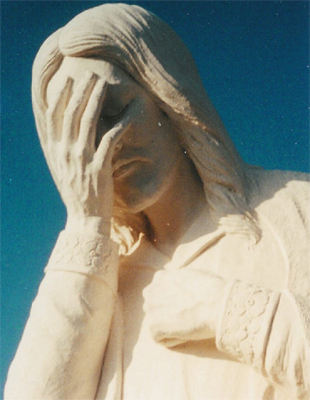
I’ve come to this moment and this place. I understood what I was called to do.  It was what was needed. Everyone was so locked in, often misinformed, often following a way that was not good for them, a way that was pulling them away from God, away from each other.  Oh, they meant well.  They were trying to follow the laws, trying to believe in the way they had been taught, trying so hard to make the way for themselves. But what they missed was the God who was with them, who had always been with them.  What they missed was the God of Love. I so prayed to show them the God of Love.

I was called to show them a new way, a way that would allow them to see the beauty and the grace and the mercy that God had in store for them, a way that would show how much God loves them, how much God desires for them. There were times when I felt it happening. There were those times when the disciples followed me, timidly leaving their lives behind and hesitantly following in this new way. There was that afternoon on the side of the mountain when the excitement was palpable.  There were so many that day that seemed ready to follow a new path. There were so many that understood. There they were, talking and eating together and being the people of God.

There were times I did not expect that were so wonderful, so life-giving. There was the one that was healed that came back, that understood the mercy and the grace. There was the woman at the well that taught me that my mission was bigger that even I had thought, that God was calling me to the world.  I pray that her voice will always be heard. And there was Lazarus.  My friend, my confidante, the one who always supported me.  When he died, I grieved.  And when he was raised, it was such a celebration.  His resurrection was what I prayed everyone would understand.  Thank you, God, for that gift, for the rising and the life.

I hope I did everything I could. I pray that my time here was what was needed, that somehow the fruitfulness will sprout even after I am gone, that this new Way will be imprinted on your people and in your world. I pray that part of me, part of what I did, part of what I taught, and part of how much I loved them will remain. I pray that this will not all be for naught. I pray that they will continue the pathway I have tried to show them.

But, always, in the shadows, there seemed to be something pulling everyone away, convincing everyone that they had to put themselves first, that they had to fear others, that they had to preserve their way of life, that somehow the earthly kings were above You or that in some perversion of your Word, there was belief that you somehow had sanctioned what is being done in the world, that you had somehow blessed the warring and the madness and the hunger and the exclusion. I weep because they have forgotten who they are.  They have forgotten that they are your children, that they are made in your image, a reflection of your being and your Presence in the world. 

And so, in this moment before I enter the city, I weep.  I weep for you my children.  I weep that I will not have more time, that what I tried to impart to you may not have taken hold.  I weep at the thought that when I am gone, you will simply turn back to your own ways. I weep that God’s love and mercy and grace have eluded you. I weep for you, Jerusalem, that you might have become so inward-looking that you have missed the gracious dance that the Father offers each of you.

Dear Father, I weep these tears this day.  Thank you for the gift of these tears.  Thank you for not taking them away just yet because they are your tears.  This is your lament.  This is your city, your holiest of cities, the place of your presence, that has seemed to push away what you offer, that has seemed to push away your love.

I do not weep for me.  I know that I have done your work.  I know that you have called me to this time—just this time.  I know that there will be other children of yours that will carry your love, that will carry your message to the world.  I pray for their strength and their fortitude.  I pray that they will know how to love you like I do.  I pray that this Way of Christ will be theirs.

Go with me, dear Father.  Carry me into what is to come.  I am ready.  I do this for you.  I do this for your children.  I do this for your kingdom.  I pray for all that is to come.  I pray for the generations of your children that will follow in my name.  I pray that what I tried to do, what I hoped to do, what I prayed that I would do, was done.  Forgive them Lord.  Be with them Lord.  Let them know your love.  Let them be your sanctuary. Let them breathe out the ways of the world and breathe in all that You are.

1Hear my prayer, O Lord; give ear to my supplications in your faithfulness; answer me in your righteousness. 2Do not enter into judgment with your servant, for no one living is righteous before you. 3For the enemy has pursued me, crushing my life to the ground, making me sit in darkness like those long dead. 4Therefore my spirit faints within me; my heart within me is appalled. 5I remember the days of old, I think about all your deeds, I meditate on the works of your hands. 6I stretch out my hands to you; my soul thirsts for you like a parched land. (Psalm 143)

      Grace and Peace,

      Shelli

      If You Love Me…

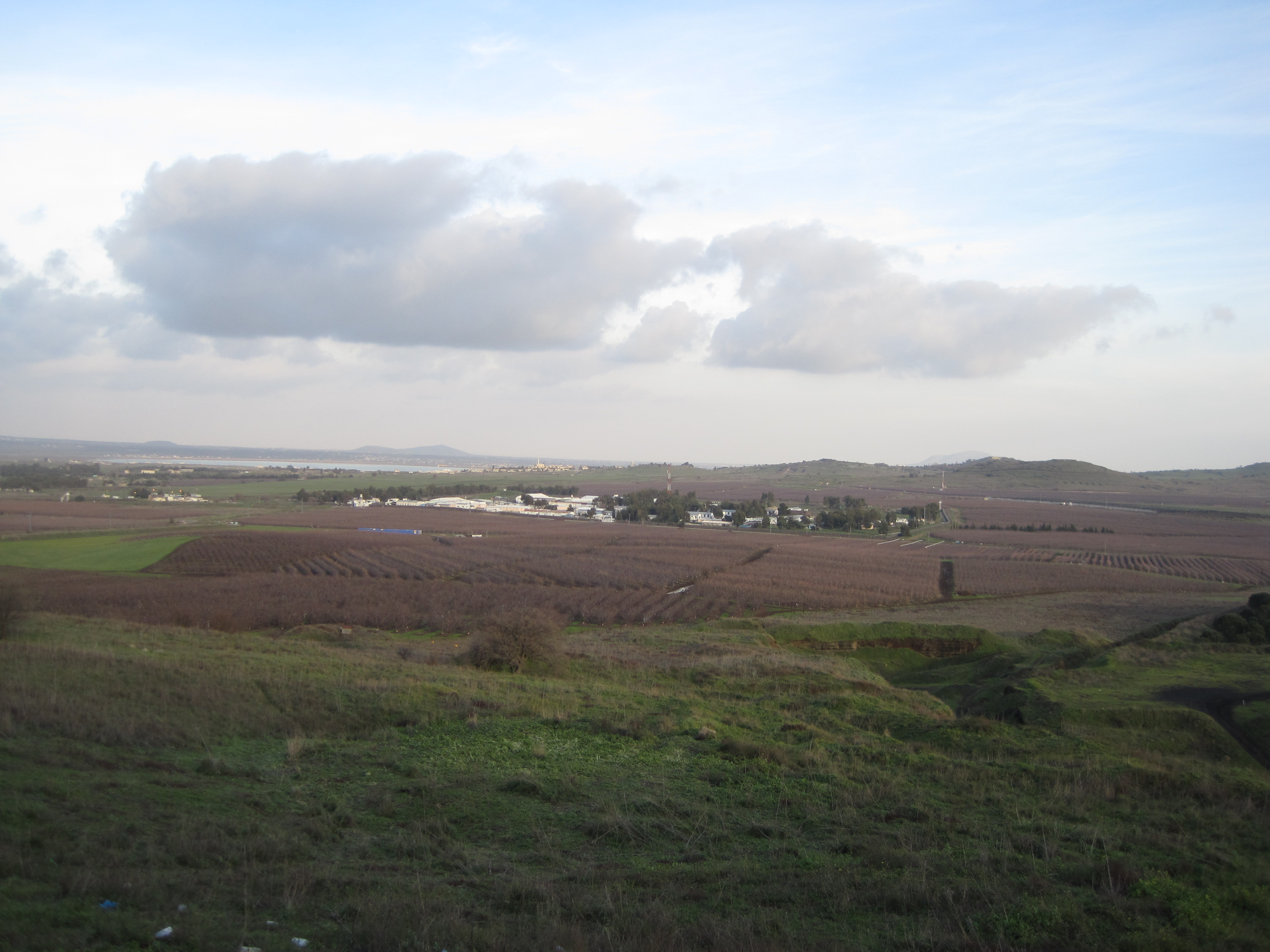
      Galilee, near the Mt. of the Beatitudes

      This passage is familiar to all of us.  Maybe it’s too familiar.  Maybe we’re good at reciting it and not that great at living it.  But all that Jesus was—the annunciation, the birth, the teaching, the welcoming, the healing, the miracles, the calling, even the turning of the tables—all of it came down to this.  THIS was the message that Jesus was trying to impart to us.  Oh, it’s not that it’s more important than everything else that Scripture holds, everything else that Jesus taught.  It’s that it IS everything else, all wrapped up into these words—love God and love neighbor.  It is the story of our faith.

      This passage tells of the last in a series of encounters that Jesus had with the Pharisees and the Sadducees over the issue and challenge of Jesus’ authority, over the question of who Jesus was.  In the context of the Gospel by the writer known as Matthew, this is Jesus’ final encounter with those who saw it as their role to protect the tradition of the first century Jewish religion.  After this, the Gospel moves into the judgment of Jesus and then on toward the Passion and Resurrection of Christ.  In a way, this was Jesus’ final answer, his way of summing it all up for us before the judgment began.

      The lawyer who stepped forward could be considered an expert on the Torah, the professional theologian and the resident authority on all things of the faith tradition.  And his purpose was to test Jesus, to trap him into giving an answer that would finally prove that Jesus was not who he had made himself out to be.  For the writer of Matthew, this was a test of the kingdoms pitted against each other—the Kingdom of God against the powers that were in play on earth.

      The rabbis had counted a total of 613 commandments in the Torah, the “Law”.  (I’m sure you have all of those memorized and follow them to the letter!—or not!) And even though it was acceptable for rabbis to give summaries of the Law itself, the view was that each one of these commandments held equal value with all the others.  By asking Jesus which law was the greatest, the lawyer was setting a trap.  If Jesus singled out any one law above the other, it would be like dismissing the other 612.  It would be a violation of the Law of Torah.  It would be the final blow.

      But Jesus, in true Jesus fashion has an answer that they were not expecting.  “You shall love the Lord your God with all your heart, and with all your soul, and with all your mind.”  The first commandment that Jesus cites is part of what is known in Judaism as the Shema, the central prayer of the Jewish faith.  It would be hard to refute.  Found in the 6th chapter of Deuteronomy, the commandment that Jesus gives is part of what is found in a mezuzah, the holy parchment affixed to the doorframes of Jewish homes.  From the Tanakh translation, which is a traditional Hebrew translation, the prayer goes like this:

      “Hear, O Israel!  The Lord is our God, the Lord alone.  You shall love the Lord your God with all your heart and with all your soul and with all your might.  Take to heart these instructions with which I charge you this day.  Impress them upon your children.  Recite them when you stay at home and when you are away, when you lie down and when you get up.  Bind them as a sign on your hand and let them serve as a symbol on your forehead; inscribe them on the doorposts of your house and on your gates.”

      It declares not only the belief in the One and Only God but also calls us to a deep and abiding relationship with God.  We are called to love God with our whole heart, a pure and absolute devotion to God as our one and only maker and redeemer.  We are called to love God with our souls, to long for a passionate and engaged love for the One who nurtures and sustains us.  We are called to love God with our minds, not a blind and uninformed faith but one that questions, and learns, and grows into what God envisions us to be.  And we are called to love God with all our strength, every fiber of our being, a full and engaged life lived in the name of Christ our Lord.

      But then Jesus comes back and tells us that we “shall love our neighbor as ourself.” (Found in Leviticus 19:18) In essence, it seems that Jesus was asked for one commandment and responded with two.  But the writer of Matthew’s Gospel depicts the second as “like” the first.  The Greek word for this does not mean merely similar; it means, rather, that is of equal importance and inseparable from the first, linked and dependent upon each other.  The great command to love God has as its inseparable counterpart the command to love neighbor.   One cannot understand true and abiding love without a loving relationship with God.  But one cannot realize that relationship with God without loving one’s brothers and sisters and realizing that we are all children of God.  From this standpoint, our mutual and shared humanity becomes part of our relationship with God, as we are swept into the coming of the Kingdom of God for all of Creation.  We are called to love our neighbor as deeply as we love ourselves, to meet our neighbor’s needs as readily as we meet our own, and to seek to understand our neighbor’s dreams and passions just as we vie for what we believe.  We are called to love our neighbor because we love God.  The two commandments are intrinsically intertwined, inescapably linked to one another.  They become reflections of each other in true Trinitarian mutual relationship.  They are of one essence and being.  Our love and compassion for others gives visibility to our love and compassion of God. 

      Jesus did not just invent this “greatest commandment”.  It was a way of talking about all of the commandments that were known (including those “Top 10” that politicians seem so intent on placing in every school room).  In fact, if you look at the Ten Commandments, they are neatly summarized in the Great Commandment.  The truth is that none of them are a list of “do’s and don’ts”.  They are this—this greatest commandment, summarized into Jesus’ final message.  It’s not a set of rules; it’s a way of being, to live a life loving God and neighbor.

      So, here we are, coming so near to the gates of Jerusalem, so near to the end.  We Christians walk this Lenten journey with Jesus.  We probably walk it with only a modicum of the attention it is due because, after all, we know how it all turns out.  We know that in a matter of days, we’ll go to church and bask in the perfume of Easter lilies and go on with our lives.  But the truth is that living this Greatest Commandment means more than just paying attention, more than just remembering.  Loving God is about entering this Holy Walk and loving God so much that you can’t walk away.  And loving neighbor means that we are called to love the Pontius Pilates and the callous townspeople and the corrupt court and the disciples who stayed and the disciples who fled.  Loving our neighbor means that we love the thieves on the cross, both the penitent and the impenitent, as ourselves.  Because they are us—all of them.  They are the times that we choose to ignore our neighbor or make excuses for our action or try to justify something that is not just.  They are the times that we bear the cross to die to what we should not be. 

      John 14:15 reminds us that Jesus said, “If you love me, you will keep my commandments.”  Keep here is not just “obey”.  It means more to watch over them, to preserve them, to guard them, to become them.  So, as we begin to turn toward the gate to enter Jerusalem, breathe out…breathe out the excuses, breathe out walking through this as history or a distant memory that is not yours.  Breathe out want to avoid the grief and the gore and the despair because it is uncomfortable.  Breathe out thinking that the walk is not yours because Jesus did it for you.  (OK, at the risk of being thrown off the team, I’m not really a substitutionary atonement kind of gal.  Jesus invited us into being with God through Christ.  Jesus invited us to this walk—all of it.  We must experience a death, of sorts, a dying and letting go of what was so that we might live.) And breathe in remembrance—the remembrance that is love.  Breathe in this commandment to love God and love neighbor, two inextricably linked parts that if you keep, if you preserve, if you become, you will know resurrection—not only Jesus’ but also yours.  You will know how to begin to practice resurrection.

      Love God with all you are and love your neighbor as yourself…love enough to walk this Way of the Cross. 

      Humanly speaking, we could interpret the Sermon on the Mount in a thousand different ways.  Jesus knows only one possibility:  simple surrender and obedience.  He does not want it to be discussed as an ideal; he really means us to get on with it.  (Dietrich Bonhoeffer)

      Grace and Peace,

      Shelli

      Seized By the Power of a Great Affection

      We are getting closer.  Jerusalem is upon us.  We have walked this Way of letting go and picking up, of feeling both despair and hope, of lament and joy, of breathing out and breathing in.  But, still, the ending is beginning to loom bigger than we imagined it would be. What is it, exactly, that we’re supposed to do with it all?  How do we walk with Jesus to the place where he is handed over?

      This passage is usually read on Holy Monday.  It is part of the walk that we walk during Holy Week that ends with Jesus’ crucifixion.  It includes Palm Sunday, the Anointing, the description of the Cross (the wheat passage), the account of Judas, Maundy Thursday, and Good Friday.  But this passage is part of the “taking stock” that we are doing this week, the walk with Jesus through his life.

      The truth is that we are not used to a Christ who does nothing, who just surrenders. We are, rather, more comfortable when Jesus is showing us how to do what we’re supposed to do as followers. We like a Jesus who is strong and confident leading our team.  We are not accustomed to such a passive Christ. I looked up the word “passive” in an etymological dictionary. The root is the Latin passiuus. And then, surprisingly, it says “See Passion.” The etymological root of passion, the term that we use to describe Jesus’ suffering journey to the cross, is the Latin passionem, or suffering. And it says “See Passive.” The two words are related. The “Passion”, this time of suffering and letting go and being “handed over”, is a movement from planned and intentional action to no longer being in control. All of Jesus’ actions are accomplished. It is finished. It is a time of waiting—waiting for others’ response.  Jesus has shown us how to let go, how to surrender.

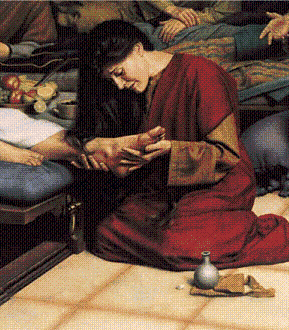
      In the passage, we find this passive Jesus. He visits the home of friends, the home of those whom he had served, those for whom he had done things. And, it says, they give a dinner for him. Jesus is the guest of honor. After all the doing, after all the action, after all the stuff, he now spends time with friends. And they serve him. And then the passage tells us that Mary takes a pound of costly perfumed nard, breaks the seal, and lavishly pours it onto Jesus’ feet. Then as the oil runs down his feet and begins to drip onto the floor, she bows and wipes his feet with her hair. The whole house is filled with this overwhelming fragrance, sort of a combination of mint and ginseng, sickeningly sweet.

      Well, the disciples just couldn’t leave it alone. What in the world was she doing? Here is this man who has worked for years to bring peace and justice to the world, to heal others, to end poverty and oppression and you waste this oil by pouring it out on him! That oil could have been sold. Things could have been done with that money! We could have done great ministry with what you just poured on his feet! But you have wasted it! You have squandered it!

      Jesus responds. “Leave her alone,” he says. You see, she gets it. She understands. I do not have long to be with you. She knows where I am going. And she responds. This woman loves Jesus. In fact, she loves Jesus so much that she defies the expected, shuns her role as the subservient female, and instead pours out the abundance of her life and anoints Jesus for his burial. This is not the time to talk about budgets or the ways things are normally done. This is the time of Jesus’ waiting and her response. As she anointed Jesus, Mary entered Jesus’ Passion and understood what it meant to have a personal relationship with Christ.

      There are those in our society that would describe that breakthrough as being “born again”. But that phrase, commonplace and probably overused and misused as it is today, was not even around over a hundred years ago. Instead, the words that were used to describe this coming into who Jesus is was to say that one was “seized by the power of a great affection.” Isn’t that an incredible phrase—to be “seized by the power of a great affection”? You see, we 21st century folks usually think we have it all figured out. We know what we’re called to do to make disciples of Jesus Christ. We live our lives as best we can within the framework of what God wants us to do. And we do what we can for others by reaching out in the name of Christ. All of that is wonderful. But are we truly “seized by the power of a great affection”? Why do you think Jesus did everything that he did while he was on this earth? Was it just to show us what it is we’re supposed to do? No, Jesus was more than merely an exemplary human being put here for us to emulate. Jesus came to reveal God’s love, to show us how much God loves each of us and how much God desires us, to make known once and for all the affection that God has for all of God’s Creation and for us as children of God. Jesus was God made known, Emmanuel.

      There is a story from the Sufi mystical tradition of a disciple that comes to an elder for direction.  “Where shall I find God?” the disciple asked the elder. “God is with you,” the Holy One replied. “But if that is true,” the disciple asked, “why can I not see this Presence?” “Because you are like the fish who, when in the ocean, never notices the water.” It is not that God is not with us; it is that we are unaware of that incredible Presence.  When we finally stop doing what we think we should be doing, let go, and listen for that which God is calling us to be we will become aware of that extraordinary Presence that is God. And in that becoming, we enter the anointed Christ-life.

      We are about to enter the week when we come to the end of all our doing. This is the wilderness week when we let go and walk with Christ through the suffering of the Cross. This is the week when we finally realize that we can do nothing else. And on that final day, as the passive Christ is handed over, there is nothing more for him to do other than wait for our response. Who will follow me? Who will come to me with all your misery and your sins, with all your trouble and your needs, and with all your longings to be loved?  Who will follow me through the wilderness? Who will hand over their lives just as I have done that you too might be raised to new life? Because it is then that the oil will be poured out for you in much the same way as you are immersed in the waters of your Baptism.

      I have read several modern interpretations of the theology about Mary that posits that Mary of Bethany and Mary of Magdala were actually the same person, the sister of Lazarus, whom Jesus had raised.  There is also the belief that Martha was possibly a later edition to the narrative.  In other words, Lazarus only had one sister in this interpretation.  I’ve read some of Professor Elizabeth Schrader-Polczer’s work and Diana Butler Bass also writes about it.  Most of the work is based on the earliest existing texts including the Gospel of John (before the Western translators got hold of it) as well as some non-canonical texts (including The Gospel of Mary Magdalene).  So, I’m not completely convinced yet but I find it extraordinarily fascinating.  Because what it does is place Mary right in the story—the whole story.  It shows us that Mary confesses Christ, serves Jesus, anoints him for burial, witnesses his death, and proclaims the first Easter message. 

      What I find fascinating is that IF this is the case, it means that Mary was doing everything at that dinner.  She was serving (as women did and even do) AND she was engaged, sitting at the feet of Jesus and anointing him for burial.  Mary got it.  Mary understood it enough that she did not allow herself to be strapped by the ways of the world, to be limited by her gender or her role, to be told the “proper” way to do something.  She allowed herself to be truly “seized by the power of a great affection”.  And, in that moment, Jesus was everything to her.  In that moment, she gave herself to him.  In that moment, the connection that they shared was the human connection that God calls us all to share—to love each other without distraction.  So, breathe out…breathe out all those things that pull you away from paying attention to each other, from engaging.  I have a handful of friends (one is a cousin) with whom I have regular or semi-regular lunches.  We do not engage with our phones.  We do not read anything but the menu.  We just spend time together.  We talk.  We share.  We ask advice.  We talk about books and theology and family and memories.  The point is that we breathe out the world and engage with each other.  That’s what Mary did.  I envision that if there WAS no Martha, then the dirty dishes were left in the sink for a while (the scandal!).  And then we breathe in…we breathe in Jesus.  We become seized by the power of a great affection.

      Mary breathed out.  She breathed out what was expected.  She breathed out everything that would be said about her.  And then she knelt down and lifted the cup and poured out the oil until nothing was left.  It dripped down Jesus and onto the floor and seeped into the floor boards.  She tried to wipe it up with her hair.  And then she breathed in.  She wanted to remember this moment.  Days later would be too late.  Now was the time to engage.  In this moment she knew.  And she breathed in the presence of her Lord.

      Grace and Peace,

      Shelli

      Surrender

      Scripture Text: John 12: 20-36

      20Now among those who went up to worship at the festival were some Greeks. 21They came to Philip, who was from Bethsaida in Galilee, and said to him, “Sir, we wish to see Jesus.” 22Philip went and told Andrew; then Andrew and Philip went and told Jesus. 23Jesus answered them, “The hour has come for the Son of Man to be glorified. 24Very truly, I tell you, unless a grain of wheat falls into the earth and dies, it remains just a single grain; but if it dies, it bears much fruit. 25Those who love their life lose it, and those who hate their life in this world will keep it for eternal life. 26Whoever serves me must follow me, and where I am, there will my servant be also. Whoever serves me, the Father will honor. 27“Now my soul is troubled. And what should I say—‘Father, save me from this hour’? No, it is for this reason that I have come to this hour. 28Father, glorify your name.” Then a voice came from heaven, “I have glorified it, and I will glorify it again.” 29The crowd standing there heard it and said that it was thunder. Others said, “An angel has spoken to him.” 30Jesus answered, “This voice has come for your sake, not for mine. 31Now is the judgment of this world; now the ruler of this world will be driven out. 32And I, when I am lifted up from the earth, will draw all people to myself.” 33He said this to indicate the kind of death he was to die. 34The crowd answered him, “We have heard from the law that the Messiah remains forever. How can you say that the Son of Man must be lifted up? Who is this Son of Man?” 35Jesus said to them, “The light is with you for a little longer. Walk while you have the light, so that the darkness may not overtake you. If you walk in the darkness, you do not know where you are going. 36While you have the light, believe in the light, so that you may become children of light.” After Jesus had said this, he departed and hid from them.

      And now the conversation turns to this talk of death and loss.  This is uncomfortable for us.  This is not the kind of wilderness we want.  We’d like to run now, to hastily make our exit back through that heavy gate behind us.  We’re not sure that our journey really prepared us at all.  But it is too late.  The hour has come. 

      The reading starts by telling us of the arrival of some Greeks. Now this may seem to us to be sort of periphery to the point of the story but it’s not. For you see, this arrival of the Greeks is something new. It marks the beginning of an entirely new section of the Gospel. These are not merely Greek-speaking Jews, but Gentiles who have made the pilgrimage to Jerusalem for the Passover feast. These are non-Jews, Gentiles from across the sea who wanted to meet the Hebrew holy man. This is the beginning of the world seeing Jesus and knowing who he is.  They approach Philip and request to “see” Jesus, to have a meeting with him. Perhaps they want to know more of who this Jesus is. Perhaps they just want to talk to him. Or perhaps they want to become disciples. But regardless of why they are here, their arrival points to the fulfillment of the church’s future mission—to make disciples of Jesus Christ for the redemption of the world. This is the decisive dividing line between Jesus coming as a Jewish Messiah and Christ, through his death and resurrection, to fulfilling God’s promise for the renewal and redemption of all of Creation. Now is the time for the Son of Man to be glorified.  Jesus did not just come to save you and me.  Remember, Jesus is the Savior of the World.  Uncomfortable as that may be for some of us, Jesus has begun to draw the world into the Cross.  Jesus came for everyone.

      Change is all around us.  Our world is beginning to shake a bit.  Sure, we could run, go back to our old ways, to the comfort and safety of home.  We could yell and scream and demand that someone put it back the way it was.  The problem is that nothing stays the same.  Even if we could return, it would not feel like home.  For you see, this wilderness journey has changed us.  We have lived this season of clearing and surrender.  We are different.  We don’t look different, but we do see differently.

      But what is this thing with wheat?  (OK, to the end, Jesus seemed to continue speaking in confusing parables!)  So, here’s your botany lesson.  Wheat is a caryopsis, meaning that the outer “seed” and the inner fruit are connected. The seed essentially has to die so that the fruit can emerge. If you were to dig around in the ground and uproot a stalk of wheat, you would not find the original seed. It is dead and gone. In essence, the grain must allow itself to be changed.  So what Jesus is trying to tell us here is that if we do everything in our power to protect our lives the way they are—if we successfully thwart change, avoid conflict, prevent pain and discomfort—then at the end we will find that we have no life at all.  He goes on…” Those who love their life lose it, and those who hate their life in this world will keep it for eternal life. Whoever serves me must follow me, and where I am, there will my servant be also. And whoever does this, God will honor.”  Whoever follows Jesus through his death, will become part of his everlasting life.

      You see, we cannot go back to what we know because it is no longer ours.  The Light has become part of us.  Jesus wanted us to understand not just that he was leaving, not just that his death was imminent, but that this journey to the cross was not just his to make, but ours, as uncomfortable as that may be for us. Now is the time to walk with Jesus to the cross.

      Martin Luther once said that “discipleship is not limited to what you can understand – it must transcend all comprehension. Plunge into the deep waters beyond your own understanding, and I will help you to comprehend. Bewilderment is the true comprehension. Not to know where you are going is the true knowledge. In this way Abraham went forth from his father, not knowing where he was going. That is the way of the cross. You cannot find it in yourself, so you must let me lead you as though you were a blind man. Not the work which you choose, not the suffering you devise, but the road which is contrary to all that you choose or contrive or desire – that is the road you must take. It is to this path that I call you, and in this sense that you must be my disciple.

      This Lenten wilderness journey was not preparing us for this by building us an armor to protect us or make us more comfortable with what is about to be.  It was preparing us by stripping away all that we know, all that we have planned, all that we think makes us who we are.  THIS wilderness is a place of Holy Discomfort.  It prepares us to truly see Jesus and to realize that the journey to the Cross is not something that we watch, not something that we just walk along offering Jesus moral support; rather, the journey to the Cross is ours.  The air has changed.  Jesus is walking to the Cross. And so are we.

      I have discovered over time that the cross is supposed to take its toll on us.  It forms us to find God in the shadows of life.  Ironically enough, it’s the cross that teaches us hope…it is this hope that carries us from stage to stage in life, singing and dancing around dark corners. (Joan Chittister)

      Grace and Peace,

       Shelli

      Abide

      Scripture Text: John 12: 1-11

      12Six days before the Passover Jesus came to Bethany, the home of Lazarus, whom he had raised from the dead. 2There they gave a dinner for him. Martha served, and Lazarus was one of those at the table with him. 3Mary took a pound of costly perfume made of pure nard, anointed Jesus’ feet, and wiped them with her hair. The house was filled with the fragrance of the perfume. 4But Judas Iscariot, one of his disciples (the one who was about to betray him), said, 5“Why was this perfume not sold for three hundred denarii and the money given to the poor?” 6(He said this not because he cared about the poor, but because he was a thief; he kept the common purse and used to steal what was put into it.) 7Jesus said, “Leave her alone. She bought it so that she might keep it for the day of my burial. 8You always have the poor with you, but you do not always have me.” 9When the great crowd of the Jews learned that he was there, they came not only because of Jesus but also to see Lazarus, whom he had raised from the dead. 10So the chief priests planned to put Lazarus to death as well, 11since it was on account of him that many of the Jews were deserting and were believing in Jesus.

      Holy Week has begun. We have walked this wilderness road to the cross throughout this Lenten season—letting go, acknowledging our discomforts, fears, and losses, and changing, most of all, changing–and now it is upon us. Most of us don’t really know what it is that we’re supposed to do with this week. We have gone through this season hearing its call to repentance, to emptying, to looking at things differently. But, still, the ending is beginning to loom bigger than we imagined it would be. What is it, exactly, that we’re supposed to do with this week?  After all, this is the week that Jesus surrenders and lets himself be handed over.

      We are not used to a Christ who does nothing, who just surrenders. We are, rather, more comfortable when Jesus is showing us how to do what we’re supposed to do as followers. We like a Jesus who is strong and confident leading our team.  We are not accustomed to such a passive Christ. I looked up the word “passive” in an etymological dictionary. The root is the Latin passiuus. And then, surprisingly, it says “See Passion.” The etymological root of passion, the term that we use to describe Jesus’ suffering journey to the cross, is the Latin passionem, or suffering. And it says “See Passive.” The two words are related. The “Passion”, this time of suffering and letting go and being “handed over”, is a movement from planned and intentional action to no longer being in control. All of Jesus’ actions are accomplished. It is finished. It is a time of waiting—waiting for others’ response.  Jesus has shown us how to let go, how to surrender.

      In the reading for this Holy Monday, we find this passive Jesus. He visits the home of friends, the home of those whom he had served, those for whom he had done things. And, it says, they give a dinner for him. Jesus is the guest of honor. After all the doing, after all the action, after all the stuff, he now spends time with friends. And they serve him. And then the passage tells us that Mary takes a pound of costly perfumed nard, breaks the seal, and lavishly pours it onto Jesus’ feet. Then as the oil runs down his feet and begins to drip onto the floor, she bows and wipes his feet with her hair. The whole house is filled with this overwhelming fragrance, sort of a combination of mint and ginseng, sickeningly sweet.

      Well, the disciples just couldn’t leave it alone. What in the world was she doing? Here is this man who has worked for years to bring peace and justice to the world, to heal others, to end poverty and oppression and you waste this oil by pouring it out on him! That oil could have been sold. Things could have been done with that money! We could have done great ministry with what you just poured on his feet! But you have wasted it! You have squandered it!

      Jesus responds. “Leave her alone,” he says. You see, she gets it. She understands. I do not have long to be with you. She knows where I am going. And she responds. This woman loves Jesus. In fact, she loves Jesus so much that she defies the expected and instead pours out the abundance of her life and anoints Jesus for his burial. This is not the time to talk about budgets or the ways things are normally done. This is the time of Jesus’ waiting and her response. As she anointed Jesus, Mary entered Jesus’ Passion and understood what it meant to have a personal relationship with Christ.

      There are those in our society that would describe that breakthrough as being “born again”. But that phrase, commonplace and probably overused and misused as it is today, was not even around over a hundred years ago. Instead, the words that were used to describe this coming into who Jesus is was to say that one was “seized by the power of a great affection.” Isn’t that an incredible phrase—to be “seized by the power of a great affection”? You see, we 21st century folks usually think we have it all figured out. We know what we’re called to do to make disciples of Jesus Christ. We live our lives as best we can within the framework of what God wants us to do. And we do what we can for others by reaching out in the name of Christ. All of that is wonderful. But are we truly “seized by the power of a great affection”? Why do you think Jesus did everything that he did while he was on this earth? Was it just to show us what it is we’re supposed to do? No, Jesus was more than merely an exemplary human being put here for us to emulate. Jesus came to reveal God’s love, to show us how much God loves each of us and how much God desires us, to make known once and for all the affection that God has for all of God’s Creation and for us as children of God. Jesus was God made known, Emmanuel.

      There is a story from the Sufi mystical tradition of a disciple that comes to an elder for direction“Where shall I find God?” the disciple asked the elder. “God is with you,” the Holy One replied. “But if that is true,” the disciple asked, “why can I not see this Presence?” “Because you are like the fish who, when in the ocean, never notices the water.” It is not that God is not with us; it is that we are unaware of that incredible PresenceWhen we finally stop doing what we think we should be doing, let go, and listen for that which God is calling us to be we will become aware of that extraordinary Presence that is God. And in that becoming, we enter the anointed Christ-life.

      In our faith understanding, the Sacrament of Baptism is the beginning of our life as a Christian, a new life in Christ, the beginning of a journey toward oneness with God, toward the life of Christ. The waters of Baptism remind us of God’s ever-Presence in our lives, of God’s claim on us, and of the great love that God has for us that was revealed in Christ. It is sacramental because it is God’s love made visible for us. Through this sacrament, we enter this journey with God.

      In much the same way, Mary poured the oil upon Jesus. The act was sacramental. Mary understood that love. She entered that love. Indeed, she was “seized by the power of a great affection”. And in pouring the oil, in wiping his feet, she entered Jesus’ Passion. She became part of Jesus’ journey to the cross. In Baptism, God uses water to make God’s love visible to us. And as Mary poured the oil on Christ, she made her love visible to God. And immersed in that love, we will find ourselves “seized by the power of a great affection.”

      This is the week when we come to the end of all our doing. This is the wilderness week when we let go and walk with Christ through betrayal and suffering and last suppers and final endings. This is the week when we finally realize that we can do nothing else. And on that final day, as the passive Christ is handed over, there is nothing more for him to do other than wait for our response. Who will follow me? Who will come to me with all your misery and your sins, with all your trouble and your needs, and with all your longings to be loved?  Who will follow me through the wilderness? Who will hand over their lives just as I have done that you too might be raised to new life? Because it is then that the oil will be poured out for you in much the same way as you are immersed in the waters of your Baptism.

      This week is not an easy one to walk. Sometimes we are still not sure what it is that we’re supposed to do. But this week is not about us; it is not about what we do or how we do it; this week is the week that we are called to be “seized by the power of a great affection”, to become one with Christ, to enter Christ’s suffering and passion and waiting, to make our very lives a sacramental journey. And as we come closer and closer in this wilderness to what seems to be a final ending, we will finally be aware that we are never really alone. God calls us. God is waiting for our response.  Let go and let God.

      Our hosannas sung, our palms waved, let us go with passion into this week…. It is a time to greet Jesus as the Lord’s Anointed One,to lavishly break our alabaster and pour perfume out for him without counting the cost. It is a time for preparation. (Ann Weems)

      Grace and Peace,

       Shelli

      In the Hours Before the Dawn

      dark-before-dawnScripture Text:  Genesis 1:1-5a, 31a, 2:1-3

      In the beginning when God created the heavens and the earth, the earth was a formless void and darkness covered the face of the deep, while a wind from God swept over the face of the waters.  Then God said, “Let there be light”; and there was light. And God saw that the light was good; and God separated the light from the darkness. God called the light Day, and the darkness he called Night…God saw everything that he had made, and indeed, it was very good…Thus the heavens and the earth were finished, and all their multitude. And on the seventh day God finished the work that he had done, and he rested on the seventh day from all the work that he had done. So God blessed the seventh day and hallowed it, because on it God rested from all the work that he had done in creation. 

      We’re never really sure what to do with this day.  Everything is so quiet, so unsettled.  Memories of the week before interrupt our quiet thoughts, filling our minds with regrets over things we would have done differently, places we would have said “yes”, places we would have said “no”, places that we would have stood, places that we would have stayed.  The Cross is empty and Jesus is gone, laid in the tomb–forever.  We know that we will have to go on but we’re not sure how to do that. This is a day when once again, we are covered in darkness.  The earth feels out of sorts, almost formless and empty once again.  And so we sit here in these hours before the dawn with no direction, no guide, no journey that we can see.

      And, yet, God has done this before, this creating.  God takes a formless voice that is immersed in darkness and sweeps into it bringing Light.  God creates and we become.  God creates and the world begins to move.  God creates and everything is as it should be.  And then God rested.  This seventh day, this Sabbath, this day of rest, is not the low point of Creation but the veritable climax.  It is the edge of everything that will be, the veritable edge of Glory.  This is the day to sit without doing, to sit without trying to “fix” the world, without trying to “fix” ourselves, without even worrying what the future may hold, and let the peace of God sweep over us once again.  This is the day to sit in the silence and hear the voice that is beckoning us to a New Creation.  Whether we can see it or not, this is the day that we are standing on the edge of Glory.  It is not what we planned; it is not what we envisioned; it is new.  Creation is happening now–in the quiet, in the darkness.

      So what do we do today in these hours before the dawn?  It’s hard for those of us that want to make the future right.  It’s hard for us in a place where it’s always been so easy, so protected, to live with both the memories of yesterday and the uncertain future of a world that seems to teeter even now on the brink of furthering its own demise.  This is a day filled with talk of bombs and crosses.  It is a world that only faith can redeem.  What do we do?  Nothing…just rest…and let God create you.  This is the moment of your re-creation.  God is walking in the darkness with you. It may not be what you imagined but it will be right.  The light is just over the darkened horizon.

      The pilgrims sit on the steps of death.  Undanced, the music ends.  Only the children remember that tomorrow’s stars are not yet out.  (Ann Weems)

      Grace and Peace,

      Shelli

      The Winds of Change

      Wheat and WindsScripture Text:  John 12: 20-36 (Holy Tuesday)

      Now among those who went up to worship at the festival were some Greeks. They came to Philip, who was from Bethsaida in Galilee, and said to him, “Sir, we wish to see Jesus.” Philip went and told Andrew; then Andrew and Philip went and told Jesus. Jesus answered them, “The hour has come for the Son of Man to be glorified. Very truly, I tell you, unless a grain of wheat falls into the earth and dies, it remains just a single grain; but if it dies, it bears much fruit. Those who love their life lose it, and those who hate their life in this world will keep it for eternal life. Whoever serves me must follow me, and where I am, there will my servant be also. Whoever serves me, the Father will honor.  “Now my soul is troubled. And what should I say—‘Father, save me from this hour’? No, it is for this reason that I have come to this hour. Father, glorify your name.” Then a voice came from heaven, “I have glorified it, and I will glorify it again.” The crowd standing there heard it and said that it was thunder. Others said, “An angel has spoken to him.” Jesus answered, “This voice has come for your sake, not for mine. Now is the judgment of this world; now the ruler of this world will be driven out. And I, when I am lifted up from the earth, will draw all people to myself.” He said this to indicate the kind of death he was to die. The crowd answered him, “We have heard from the law that the Messiah remains forever. How can you say that the Son of Man must be lifted up? Who is this Son of Man?” Jesus said to them, “The light is with you for a little longer. Walk while you have the light, so that the darkness may not overtake you. If you walk in the darkness, you do not know where you are going. While you have the light, believe in the light, so that you may become children of light.” After Jesus had said this, he departed and hid from them.

      And now the conversation turns to this talk of death and loss.  We’d like to run now, to hastily make our exit back through that heavy gate behind us.  We’re not sure that our journey really prepared us at all.  But it is too late.  The hour has come. 

      The reading starts by telling us of the arrival of some Greeks. Now this may seem to us to be sort of periphery to the point of the story but it’s not. For you see, this arrival of the Greeks is something new. It marks the beginning of an entirely new section of the Gospel. These are not merely Greek-speaking Jews, but Gentiles who have made the pilgrimage to Jerusalem for the Passover feast. These are non-Jews, Gentiles from across the sea who wanted to meet the Hebrew holy man. This is the beginning of the world seeing Jesus and knowing who he is.  They approach Philip and request to “see” Jesus, to have a meeting with him. Perhaps they want to know more of who this Jesus is. Perhaps they just want to talk to him. Or perhaps they want to become disciples. But regardless of why they are here, their arrival points to the fulfillment of the church’s future mission—to make disciples of Jesus Christ for the redemption of the world. This is the decisive dividing line between Jesus coming as a Jewish Messiah and Christ, through his death and resurrection, fulfilling God’s promise for the renewal and redemption of all of Creation. Now is the time for the Son of Man to be glorified.  Jesus did not just come to save you and me.  Remember, Jesus is the Savior of the World.  Jesus has begun to draw the world into the Cross.

      Change is all around us.  Our world is beginning to shake a bit.  Sure, we could run, go back to our old ways, to the comfort and safety of home.  We could yell and scream and demand that someone put it back the way it was.  The problem is that nothing stays the same.  Even if we could return, it would not feel like home.  For you see, this journey has changed us.  We have lived this season of clearing and surrender.  We are different.  We don’t look different but we do see differently.

      But what is this thing with wheat?  (OK, to the end, Jesus seemed to continue speaking in confusing parables!)  Well, wheat is a caryopsis, meaning that the outer “seed” and the inner fruit are connected. The seed essentially has to die so that the fruit can emerge. If you were to dig around in the ground and uproot a stalk of wheat, you would not find the original seed. It is dead and gone. In essence, the grain must allow itself to be changed.  So what Jesus is trying to tell us here is that if we do everything in our power to protect our lives the way they are—if we successfully thwart change, avoid conflict, prevent pain—then at the end we will find that we have no life at all.  He goes on…”Those who love their life lose it, and those who hate their life in this world will keep it for eternal life. Whoever serves me must follow me, and where I am, there will my servant be also. And whoever does this, God will honor.” This is the only time that the Gospel speaks of God honoring someone. And we begin to see the connection unfolding. Whoever follows Jesus through his death, will become part of his everlasting life.

      You see, we can’t go back to what we know because it is no longer ours.  The Light has become part of us.  Jesus wanted us to understand not just that he was leaving, not just that his death was imminent, but that this journey to the cross was not just his to make, but ours. This lifting up and this drawing in is all ours.  We ARE the Children of the Light.  Now is the time to walk with Jesus to the cross.

      Discipleship is not limited to what you can understand – it must transcend all comprehension. Plunge into the deep waters beyond your own understanding, and I will help you to comprehend. Bewilderment is the true comprehension. Not to know where you are going is the true knowledge. In this way Abraham went forth from his father, not knowing where he was going. That is the way of the cross. You cannot find it in yourself, so you must let me lead you as though you were a blind man. Not the work which you choose, not the suffering you devise, but the road which is contrary to all that you choose or contrive or desire – that is the road you must take. It is to this path that I call you, and in this sense that you must be my disciple. (Martin Luther)

      This Lenten journey was not preparing us for this by building us an armor to protect us.  It was preparing us by stripping away all that we know, all that we have planned.  It was preparing us to truly see Jesus and to realize that the journey to the Cross is not something that we watch, not something that we just walk along offering Jesus moral support; rather, the journey to the Cross is ours.  What does it mean to you to die to self?  Of what do you need to let go?  What must you put down so that you can pick up the Cross?  The air has changed.  Jesus is walking to the Cross.  Where are you?

      Grace and Peace,

      Shelli