The Place We Dwell

(Yes, I used KJV because, according to my Grandmother, you cannot read Psalm 23 in any other version…)

Lent is a season of shadows.  During this time we walk through the shadow of the Cross, the shadow of death, and, even, the shadow of our former selves.  Maybe that’s the point of Lent–to wrestle us away from our comfortable, perfectly-manicured lives, from all those things that we plan and perceive, from all those things that we hide and, finally, teach us to traverse the nuances that the journey holds.  And yet, think about it.  What exactly creates shadows?  The answer is light.  Light must be behind the shadowed object.  So, the shadow of the Cross, the shadow of death, even the shadow of our former selves cannot be without the Light.

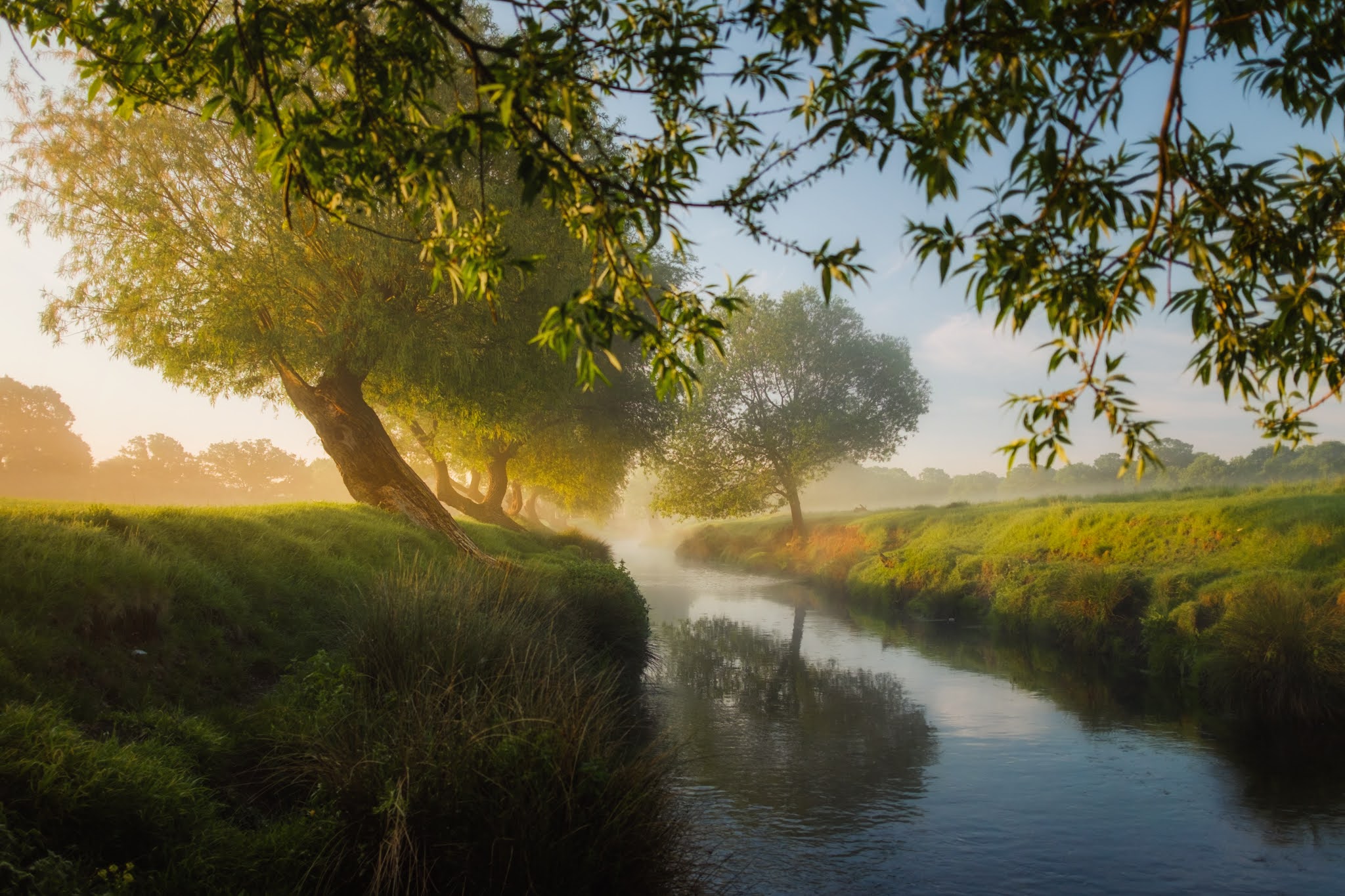
Faith is, by its very nature, a journey through wilderness, through green pastures and still waters and loss and despair and doubt and not really knowing what comes next. It is a journey through a place where all of a sudden God is not as God should be, not as the God that we have somehow conjured up in our own mind. No longer is God a freshly cleaned-up deity handing out three cotton candy wishes to faithful followers. In the wilderness, we find God in the trenches and in the silence of our lives. Or maybe it is that that is the place that we finally notice God at all. When our lives are emptied out, when our needs and our deepest emotions are exposed, is the time that a lot of us realize that God was there all along. Maybe part of our walk is a way of getting to the depths of ourselves, the place where in our search for God, we find our faith in God, and there in the silence we find our hope.

In her book, When God is Silent, Barbara Brown Taylor tells “a story from the Sufi tradition about a man who cried, “Allah! Allah!” until his lips became sweet with the sound. A skeptic who heard him said, “Well! I have heard you calling out but where is the answer to your prayer? Have you ever gotten a response?” The man had no answer to that. Sadly, he abandoned his prayers and went to sleep. In his dreams, he saw his soul guide, walking toward him through a garden. “Why did you stop praising?” the saint asked him. “Because I never heard anything back,” the man said. “This longing you voice IS the return message,” the guide told him. The grief you cry out from draws you toward union. Your pure sadness that wants help is the secret cup.”

Now, don’t get me wrong. I am not one of those people that think that God sends us suffering or heartache or grief to make us stronger or to test our faith or just to prove something. I don’t think I’d have a lot of respect for a God that has so little compassion for those who love God so much. God is always there, listening and guiding, and wanting us to get a sense of the holy and the sacred to which we’ve been called. But the point is that those times when life is not that great, when we struggle in the very depths of our being, are the times when God reaches through our waiting and our struggles and we can finally hear the silence that is God. We experience the biggest part of God when our need is the greatest.

Now I know that this Psalm brings about different thoughts and memories for each of us—some wonderful, some painful, some bittersweet. It’s probably one of those few passages that you can actually recite all the way through. It goes beyond the words, beyond the rhythm, beyond the hearing. It is truly beloved. It is a glimpse of the holy and the sacred.

My own standout experience with it happened several years ago. I was in seminary with little or no worship experience. I went to the funeral of one of my great aunts. And then, after the perfunctory family lunch (with our rather large family) and the funeral, we began to make our way to the cemetery for the burial. It was just a short drive. As we arrived, one of the ministers came up to me and asked me if I would like to read the Scripture at the graveside. Well, I have to tell you, when you’re in seminary, have little or no worship experience, and must now do this in front of your entire rather large family, many of whom are thinking it’s odd or wrong or at the very least just sort of cute that this woman is going to seminary to become a pastor, it’s a little overwhelming. I opened the funeral handbook (yes, there’s a funeral handbook! Perhaps we’re not as smart as you think!). And there, there it was…this wonderful Psalm. I would read that. But I did not choose it because I had opened to it; I did not choose it because it was familiar to me and I knew that there weren’t any hard words. I chose it because I knew that my grandmother, though nearly deaf, could hear it.  As I began to read, there was a stillness that settled over the crowd. The Spring wind that had been blowing all day stopped and all I heard was the faint sound of some wind chimes near the cemetery entrance. And I heard my voice but it didn’t sound like it was coming from me. As we got into the car to go, my grandmother whispered to me, “I heard you.” Don’t think it was a miracle; she didn’t hear a word I said. But it was part of her.   She had repeated it for 92 or 93 years at that point. She no longer needed to listen to the words. She could hear them anyway.

Several years later, I stood in another cemetery beside my grandmother’s casket, reading these words again.  This time I had graduated from seminary and had a little experience in worship. But don’t get me wrong…there was also my entire rather large family, many of whom are thinking it’s odd or wrong or at the very least just sort of cute that this woman has become a pastor. At the cemetery, I read the Scripture. I chose the same Psalm, not because my grandmother could hear it, but because I could.  (I will say that my grandmother always insisted that this Psalm could ONLY be read in the King James Version, so let that be a lesson too!)

Life is filled with shadows, places that you did not plan to go, places that scare you and challenge you, places that are filled with pain.  But God did not call us to walk through blinding Light.  God called us to learn to see.  Maybe the shadows help us do that.  Maybe the shadows are the reason we see the Light.

The crux is that this Psalm is meaningful to just about all of us.  I think it may be more than just the comfort it supposedly brings.  I think it depicts the place we dwell.  It depicts our life—all of it.  It depicts that incredible life that God created filled with good and bad, sunshine and shadows, celebration and despair.  But what we have to do is breathe out the tendency that we have to discount that, to perhaps only welcome the good while trying to hide or excuse the painful aspects.  Because all of it makes us who we are.  So, breathe in all of it…breathe in the place where you dwell.  Go back and re-read the Psalm.  It is where you are, always are—there with God, the great shepherd of all of us.

Grace and Peace,

Shelli

Handed Over

Lectionary Scripture Text (Good Friday):

16Then he handed him over to them to be crucified. So they took Jesus; 17and carrying the cross by himself, he went out to what is called The Place of the Skull, which in Hebrew* is called Golgotha. 18There they crucified him, and with him two others, one on either side, with Jesus between them. 19Pilate also had an inscription written and put on the cross. It read, ‘Jesus of Nazareth,* the King of the Jews.’ 20Many of the Jews read this inscription, because the place where Jesus was crucified was near the city; and it was written in Hebrew,* in Latin, and in Greek. 21Then the chief priests of the Jews said to Pilate, ‘Do not write, “The King of the Jews”, but, “This man said, I am King of the Jews.” ’ 22Pilate answered, ‘What I have written I have written.’ 23When the soldiers had crucified Jesus, they took his clothes and divided them into four parts, one for each soldier. They also took his tunic; now the tunic was seamless, woven in one piece from the top. 24So they said to one another, ‘Let us not tear it, but cast lots for it to see who will get it.’ This was to fulfil what the scripture says, ‘They divided my clothes among themselves,  and for my clothing they cast lots.’ 25And that is what the soldiers did.

Meanwhile, standing near the cross of Jesus were his mother, and his mother’s sister, Mary the wife of Clopas, and Mary Magdalene. 26When Jesus saw his mother and the disciple whom he loved standing beside her, he said to his mother, ‘Woman, here is your son.’ 27Then he said to the disciple, ‘Here is your mother.’ And from that hour the disciple took her into his own home.

28 After this, when Jesus knew that all was now finished, he said (in order to fulfil the scripture), ‘I am thirsty.’ 29A jar full of sour wine was standing there. So they put a sponge full of the wine on a branch of hyssop and held it to his mouth. 30When Jesus had received the wine, he said, ‘It is finished.’ Then he bowed his head and gave up his spirit.

******************

            I am standing here but it does not seem real.  I want to hold him, to comfort him, to cradle him in my arms like I did when he was a baby.  But the guards are holding us back.  Oh, please, I don’t think I can stand anymore.  But I must stand with him.  He has to know that I am here with him.  He has to know how much I love him, how much I hurt for him, how I would trade places with him if I could.

All of the memories are flooding into my head.  I remember that night when the angel came to me.  (Luke 1:26-38) I did not understand.  I was so afraid.  But I knew I had to say yes.  I had no idea what I was agreeing to do.  And then for nine months I carried the baby in my womb. It was joyous.  In one respect, it was just like any other pregnancy, like the others I had after that.  And yet, it was different.  I always felt like there was someone there with me, guiding me, loving me, helping me through it.  It’s hard to explain.  

The birth itself was hard, downright scary in fact.  (Luke 2:1-20) We traveled to Bethlehem.  It was so far, so painful.  And then when we finally arrived, it was so crowded.  The streets were wild.  I remember that nice man who let us bed down in the room that housed his animals.  I remember the first time I looked into his eyes–those dark, compassionate eyes.  Even as a baby, he had compassionate, loving eyes.  He was special.  I knew that he was special when he came into the world.  I just didn’t know how wonderful he would be. 

I remember that day in the temple when we went for the Purification. (Luke 2:22-40) That strange man that I had never met took him from me.  He cradled him in his arms.  It was as if they had known each other always.  And he told me my soul would be pierced.  Oh, how right he was! 

I remember the day that my cousin’s son baptized him.  He didn’t know I was there.  I hid behind the trees.  After all, he was an adult; he didn’t need his mother always looking on.  And I remember when his ministry started.  He was so brave, so fearless.  It scared me at times.  I thought something like this might happen.  But I am so incredibly proud of him.  I am so proud of what he became, what he made others become that he touched in his life.  He was special.

No, this does not seem real.  Somebody needs to help him.  Please, please, he’s asking for water.  Please, someone give him water.  I’m afraid this is it.  I’m afraid he cannot take it anymore.  I’m afraid he’s going to give up.  Perhaps it would be better.  Perhaps it is better to let go…Oh, how I love him! How I want to go back, to hold him just once more!  It is over.  It is all over.  He is gone.  What did it all mean?  I don’t understand.  Why the angel?  Why the star?  Why did it all happen if it was going to end this way?  What does God have in mind for him?  He promised me that it would be for good.  He promised me that it would be OK.  I guess I have to believe that, hold on to it, hope.  Someday maybe I’ll see it.

I wanted to stay here until they gave me his body, but I don’t think I can.  There are others here too–Jesus’ friend Mary, who has always been so lovely toward me, and the disciples.  I hope they all realized how much he loved them, how he would do anything for them, how he wished the best for them.  The rain is really coming down now and the skies are angry, angry like me.  The wind is blowing so hard, I can no longer stand against it.  There are rocks and debris sliding down the mountain above us.  It seems that the world is breaking apart.  Will the world ever know what it has lost?  Will the world ever know what it did?  Will God ever forgive this world for killing my son, their son, God’s son?  Someone just told me that the temple curtain has split in two.  It is as if the holy has spilled into the world.  I can’t explain it.

My son came into this world wrapped in so much hope.  He was supposed to change the world.  He was supposed to open the eyes of the world to what it could be, what it could become.  Is it all for naught?  Or, someday, will we finally understand why he came?  Someday, I know, that God will make it all make sense.  But, now, today, I am grieving more than I could know.  The loss is unbearable, a thick wilderness of loss through which I cannot find my way.  But what a gift I’ve had!  What an incredible gift that was taken away all too soon!  I have to leave this place, as hard as it is.  Shabbat is starting in a few minutes.  I must go prepare, light the candles, and usher in the joy of the Sabbath.  I must go rest.  I need it.  I need it to resurrect my hurting soul.  God will be with me.  Let it be.

“My soul magnifies the Lord, and my spirit rejoices in God my Savior, for he has looked with favor on the lowliness of his servant. Surely, from now on all generations will call me blessed; for the Mighty One has done great things for me, and holy is his name. His mercy is for those who fear him from generation to generation. He has shown strength with his arm; he has scattered the proud in the thoughts of their hearts. He has brought down the powerful from their thrones, and lifted up the lowly; he has filled the hungry with good things, and sent the rich away empty. He has helped his servant Israel, in remembrance of his mercy, according to the promise he made to our ancestors, to Abraham and to his descendants forever.”  (Luke 1:46-55) Shalom, my dear Son!  May God’s Light stay with you!

******************

We have all experienced loss and grief.  It DOES seem like a wilderness.  You want so badly to go back.  But the pathway behind you seems to have closed.  You can only walk forward.  But God takes grief and loss and redeems it.  God doesn’t take it away.  It is part of us just as the wilderness journey through which we’ve traveled will always be.  But God helps us restructure our lives and finds a place for loss, a healing, joyful place. 

The point of this journey through Holy Week is to empty, to surrender, to let God in.  It is the completion of the process of Lent in which we have made room for our death, for our surrender to God.  Resurrection is finding that place that is just for us.  The wilderness teaches how to be open to that, how to prepare our lives for re-creation.  That is what God does—gives us the gift of re-creation.  But, for now, we will grieve, and we will feel loss and God will hold us until we can hold it ourselves.  It is finished.

There is a journey you must take.  It is a journey without destination.  There is no map.  Your soul will lead you.  And you can take nothing with you.  (Meister Eckhart, 14th century) 

Grace and Peace,

Shelli