(part of the “Breathing Out” Lenten Series)

Scripture Passage: John 4: 5-26 (Lent 3A)
So he came to a Samaritan city called Sychar, near the plot of ground that Jacob had given to his son Joseph.Jacob’s well was there, and Jesus, tired out by his journey, was sitting by the well. It was about noon.A Samaritan woman came to draw water, and Jesus said to her, “Give me a drink.”(His disciples had gone to the city to buy food.) The Samaritan woman said to him, “How is it that you, a Jew, ask a drink of me, a woman of Samaria?” (Jews do not share things in common with Samaritans.)Jesus answered her, “If you knew the gift of God, and who it is that is saying to you, ‘Give me a drink,’ you would have asked him, and he would have given you living water.” The woman said to him, “Sir, you have no bucket, and the well is deep. Where do you get that living water? Are you greater than our ancestor Jacob, who gave us the well, and with his sons and his flocks drank from it?” Jesus said to her, “Everyone who drinks of this water will be thirsty again, but those who drink of the water that I will give them will never be thirsty. The water that I will give will become in them a spring of water gushing up to eternal life.” The woman said to him, “Sir, give me this water, so that I may never be thirsty or have to keep coming here to draw water.” Jesus said to her, “Go, call your husband, and come back.” The woman answered him, “I have no husband.” Jesus said to her, “You are right in saying, ‘I have no husband’; for you have had five husbands, and the one you have now is not your husband. What you have said is true!” The woman said to him, “Sir, I see that you are a prophet. Our ancestors worshiped on this mountain, but you say that the place where people must worship is in Jerusalem.” Jesus said to her, “Woman, believe me, the hour is coming when you will worship the Father neither on this mountain nor in Jerusalem. You worship what you do not know; we worship what we know, for salvation is from the Jews. But the hour is coming, and is now here, when the true worshipers will worship the Father in spirit and truth, for the Father seeks such as these to worship him. God is spirit, and those who worship him must worship in spirit and truth.” The woman said to him, “I know that Messiah is coming” (who is called Christ). “When he comes, he will proclaim all things to us.” Jesus said to her, “I am he, the one who is speaking to you.”
Several years ago, I had the opportunity to lead a discussion with the a UMW group on “Immigration and the Bible”. It’s based on a book with that same name by Joan Maruskin that was published to be a 2013 UMW study (that’s United Methodist Women for you non-Methodists! They’ve now changed their names but whatever…). Now, that “immigration” word is, for us, probably nothing less than a lightning bold word. It is so politically charged nowadays that most of us shy away from it. But the truth is, it is what the Bible is about. The Bible is about movement. The Bible is about immigration. It begins with God’s Spirit moving across the face of the earth and ends with a depiction of a city, a New Jerusalem, moving from heaven to earth. And in between, we read stories of people continuing to be uprooted. They move from one place to another seeking safety and sanctuary and we are continually given reminders of how we are called to welcome the stranger into our midst. The Bible is a story of movement and a story of welcome. And along the way, the call is not to build and prosper but to encounter each other and enter each other’s lives.
But each of us in this world works hard to preserve our perceived image of what that world should be—a world where our political views, our boundaries we have drawn, our wealth and possessions we hold, our standard of living and our understanding of who God is remain intact. The problem is that our need to preserve ourselves usually gets in the way of our ability to connect with others, our ability to encounter the rest of God’s children. Because if each of us is waiting for the other to respond in love first, then love will never be the response and the walls of hatred become stronger and more difficult to tear down.
Take the relationship between the Samaritans and the Jews. Both believed in God. Both had a monotheistic understanding of the one true God, the YHWH of their shared tradition of belief. But where the temple of YHWH for the Jews existed on Mount Zion in Jerusalem, the Samaritans instead believed the Scriptures supported the worshipping of God on Mount Gerizim near the ancient city of Shechem. And with that, a new line of religious understanding was formed. The Samaritans believed that their line of priests was the legitimate one, rather than the line in Jerusalem and they accepted only the Law of Moses, The Torah, as divinely inspired, without recognizing the writings of the prophets or the books of wisdom. These differences between the two peoples probably began as early as one thousand years before the birth of Christ and what started as a simple religious division, a different understanding of how God relates to us and we relate to God, eventually grew into a cultural and political conflict that would not go away. The tension escalated and the hatred for the other was handed down for centuries from parent to child over and over again.
So here is this woman depicted as a stranger, an outcast, a Samaritan. And here is Jesus breaking all of the boundaries of traditional and accepted Judaism. First, he, unescorted, speaks to a woman. In the Talmud, the rabbis warned that conversing with women would ultimately lead to unchastity. In fact, Jose ben Johanan, of Jerusalem, who lived around 160 B.C., wrote, “He that talks much with womankind brings evil upon himself and neglects the study of the Law and at the last will inherit Gehenna (or the destination of the wicked). ” (Wow! That sounds pretty serious!) Secondly, Jesus speaks to a woman of questionable repute. Now, in all probability, this woman was probably just a victim of some form of Levirate marriage gone bad, where she had been handed in marriage from relative to relative as her husbands died, leaving her penniless and out of options. And, finally, Jesus speaks to the so-called “enemy”. The truth is, there is nothing about this woman that is wrong or sinful or anything else that we try to tack on her reputation. The woman was just different. Her life had been difficult. She lived in darkness and had no way out of it. And the most astonishing thing is that this seemingly low-class Samaritan woman who is not even given a name in our Scriptures becomes the witness to the Gospel of Jesus Christ. Because, you’ll notice, Jesus did not just ask her for a drink. He engaged her in conversation about spiritual matters. Once again, the Gospel is found not in Jerusalem and not on Mt. Gerizim and not even in whatever faith community you call “yours”, but in our shared existence as part of this “new humanity”. The Gospel is found in our encounter with each other. Here, too, Jesus enters a new phase of his ministry. Up until this point, Jesus’ encounters have been pretty ethno-centric. But, here, the Gospel begins to spread to other ethnicities and other peoples. It begins to include an encounter with the world. It begins to include the “other”, the immigrant.
For most of us, our problem is that we are always waiting for someone else to make the first move toward acceptance and reconciliation. But Jesus did not wait. Jesus stepped into encounter. That is what we are called to do. We are called to go forward on an unpaved road to meet the other. We are called to somehow reach through our prejudice and even our fears and take each other’s hand. We are called to cross boundaries, rather than constructing them. We are called to reach through our differences and find our common, shared humanity, all children of God, all made in the image of God. That is the way that peace is found—one hand at a time. And that is the way that we encounter Jesus Christ.
Putting this study of “Immigration and the Bible” together, I began to see a new pattern emerge in the Scriptures—well, new for me as I read the Scriptures through a different lens. The Biblical story is a story of God calling us to go forth and our drawing borders, walling ourselves off, protecting who we are and what we have. God calls us to go and we draw borders. God calls us to go and we construct gates. God calls us to go and we build walls. But we are called to encounter the stranger. It is more than being welcoming. It is more than letting them into our carefully-constructed lives. It means entering their life and completely opening ours to them. It means that they become us and we become them. It means that we encounter each other.
We are in the middle of this season of Lent. It IS the season of wandering, the season of the wilderness journey. We always begin Lent with Jesus going into the wilderness, leaving what he knows, leaving the comforts of home. And I think that part of the reason for that, is that we are called to be wanderers, aliens, and sojourners. We do not stand in one place waiting for others to come to us. The Christian journey is always moving us toward something, so we go the way that God calls us to go and along the way, we gather the children of God. We encounter each other. As Jesus once said, “Go to the street corners and invite to the banquet anyone you find.” In other words, go and encounter each other because that is how you encounter Christ.
So, let us breathe out that fear of the other. Let us breathe out the preservation of our way. Let us breathe out the notion that our view of the world, our view of who God is, is all there is. And let us breathe in what our brother and sisters can teach us. Let us breathe in the world and all the ever-widening circles that means.
I live my life in ever-widening circles that reach out across the world. I may not complete this last one but I give myself it it. I circle around God, around the primordial tower. I’ve been circling for thousands of years and I still don’t know: am I a falcon, a storm, or a great song? (Rainer Maria Rilke)
The answer’s been here all along
We just need to hold each other ’til the hurt is gone
Oh, to belong, still a dream
Look what we’ve imagined with pain
Make believing we aren’t the same
But you and I know the truth
Imagine what we could do
If we imagined with love
Wild where the energy flows
The window’s wide open
All we see is the door that’s closed
Sad how it goes
So it goes, ’til it goes
Look what we’ve imagined with pain
Make believing we aren’t the same
But you and I know the truth
Imagine what we could do
If we imagined with love
Time for all of us to wake up out of this hypnotic state
Instead of dreaming fast asleep, we should be dreaming wide awake
Look what we’ve imagined with pain
Make believing we aren’t the same
But you and I know the truth
Imagine what, we could do, if we choose
Yeah, what do we have to lose
If we imagined with love?
Grace and Peace,
Shelli

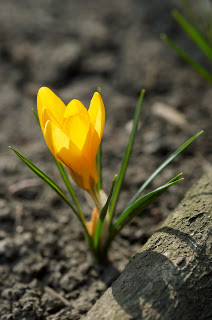 (Advent 3A) The wilderness and the dry land shall be glad, the desert shall rejoice and blossom; like the crocus 2it shall blossom abundantly, and rejoice with joy and singing. The glory of Lebanon shall be given to it, the majesty of Carmel and Sharon. They shall see the glory of the Lord, the majesty of our God. 3Strengthen the weak hands, and make firm the feeble knees. 4Say to those who are of a fearful heart, “Be strong, do not fear! Here is your God. He will come with vengeance, with terrible recompense. He will come and save you.” 5Then the eyes of the blind shall be opened, and the ears of the deaf unstopped; 6then the lame shall leap like a deer, and the tongue of the speechless sing for joy. For waters shall break forth in the wilderness, and streams in the desert; 7the burning sand shall become a pool, and the thirsty ground springs of water; the haunt of jackals shall become a swamp, the grass shall become reeds and rushes. 8A highway shall be there, and it shall be called the Holy Way; the unclean shall not travel on it, but it shall be for God’s people; no traveler, not even fools, shall go astray. 9No lion shall be there, nor shall any ravenous beast come up on it; they shall not be found there, but the redeemed shall walk there.10And the ransomed of the Lord shall return, and come to Zion with singing; everlasting joy shall be upon their heads; they shall obtain joy and gladness, and sorrow and sighing shall flee away. (Isaiah 35: 1-10)
 (Advent 2A) A shoot shall come out from the stump of Jesse, and a branch shall grow out of his roots. 2The spirit of the Lord shall rest on him, the spirit of wisdom and understanding, the spirit of counsel and might, the spirit of knowledge and the fear of the Lord. 3His delight shall be in the fear of the Lord. He shall not judge by what his eyes see, or decide by what his ears hear; 4but with righteousness he shall judge the poor, and decide with equity for the meek of the earth; he shall strike the earth with the rod of his mouth, and with the breath of his lips he shall kill the wicked. 5Righteousness shall be the belt around his waist, and faithfulness the belt around his loins. 6The wolf shall live with the lamb, the leopard shall lie down with the kid, the calf and the lion and the fatling together, and a little child shall lead them. 7The cow and the bear shall graze, their young shall lie down together; and the lion shall eat straw like the ox. 8The nursing child shall play over the hole of the asp, and the weaned child shall put its hand on the adder’s den. 9They will not hurt or destroy on all my holy mountain; for the earth will be full of the knowledge of the Lord as the waters cover the sea. 10On that day the root of Jesse shall stand as a signal to the peoples; the nations shall inquire of him, and his dwelling shall be glorious. (Isaiah 11: 1-10)
 Dancing to God