Seized By the Power of a Great Affection

We are getting closer.  Jerusalem is upon us.  We have walked this Way of letting go and picking up, of feeling both despair and hope, of lament and joy, of breathing out and breathing in.  But, still, the ending is beginning to loom bigger than we imagined it would be. What is it, exactly, that we’re supposed to do with it all?  How do we walk with Jesus to the place where he is handed over?

This passage is usually read on Holy Monday.  It is part of the walk that we walk during Holy Week that ends with Jesus’ crucifixion.  It includes Palm Sunday, the Anointing, the description of the Cross (the wheat passage), the account of Judas, Maundy Thursday, and Good Friday.  But this passage is part of the “taking stock” that we are doing this week, the walk with Jesus through his life.

The truth is that we are not used to a Christ who does nothing, who just surrenders. We are, rather, more comfortable when Jesus is showing us how to do what we’re supposed to do as followers. We like a Jesus who is strong and confident leading our team.  We are not accustomed to such a passive Christ. I looked up the word “passive” in an etymological dictionary. The root is the Latin passiuus. And then, surprisingly, it says “See Passion.” The etymological root of passion, the term that we use to describe Jesus’ suffering journey to the cross, is the Latin passionem, or suffering. And it says “See Passive.” The two words are related. The “Passion”, this time of suffering and letting go and being “handed over”, is a movement from planned and intentional action to no longer being in control. All of Jesus’ actions are accomplished. It is finished. It is a time of waiting—waiting for others’ response.  Jesus has shown us how to let go, how to surrender.

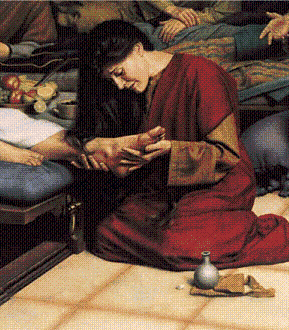
In the passage, we find this passive Jesus. He visits the home of friends, the home of those whom he had served, those for whom he had done things. And, it says, they give a dinner for him. Jesus is the guest of honor. After all the doing, after all the action, after all the stuff, he now spends time with friends. And they serve him. And then the passage tells us that Mary takes a pound of costly perfumed nard, breaks the seal, and lavishly pours it onto Jesus’ feet. Then as the oil runs down his feet and begins to drip onto the floor, she bows and wipes his feet with her hair. The whole house is filled with this overwhelming fragrance, sort of a combination of mint and ginseng, sickeningly sweet.

Well, the disciples just couldn’t leave it alone. What in the world was she doing? Here is this man who has worked for years to bring peace and justice to the world, to heal others, to end poverty and oppression and you waste this oil by pouring it out on him! That oil could have been sold. Things could have been done with that money! We could have done great ministry with what you just poured on his feet! But you have wasted it! You have squandered it!

Jesus responds. “Leave her alone,” he says. You see, she gets it. She understands. I do not have long to be with you. She knows where I am going. And she responds. This woman loves Jesus. In fact, she loves Jesus so much that she defies the expected, shuns her role as the subservient female, and instead pours out the abundance of her life and anoints Jesus for his burial. This is not the time to talk about budgets or the ways things are normally done. This is the time of Jesus’ waiting and her response. As she anointed Jesus, Mary entered Jesus’ Passion and understood what it meant to have a personal relationship with Christ.

There are those in our society that would describe that breakthrough as being “born again”. But that phrase, commonplace and probably overused and misused as it is today, was not even around over a hundred years ago. Instead, the words that were used to describe this coming into who Jesus is was to say that one was “seized by the power of a great affection.” Isn’t that an incredible phrase—to be “seized by the power of a great affection”? You see, we 21st century folks usually think we have it all figured out. We know what we’re called to do to make disciples of Jesus Christ. We live our lives as best we can within the framework of what God wants us to do. And we do what we can for others by reaching out in the name of Christ. All of that is wonderful. But are we truly “seized by the power of a great affection”? Why do you think Jesus did everything that he did while he was on this earth? Was it just to show us what it is we’re supposed to do? No, Jesus was more than merely an exemplary human being put here for us to emulate. Jesus came to reveal God’s love, to show us how much God loves each of us and how much God desires us, to make known once and for all the affection that God has for all of God’s Creation and for us as children of God. Jesus was God made known, Emmanuel.

There is a story from the Sufi mystical tradition of a disciple that comes to an elder for direction.  “Where shall I find God?” the disciple asked the elder. “God is with you,” the Holy One replied. “But if that is true,” the disciple asked, “why can I not see this Presence?” “Because you are like the fish who, when in the ocean, never notices the water.” It is not that God is not with us; it is that we are unaware of that incredible Presence.  When we finally stop doing what we think we should be doing, let go, and listen for that which God is calling us to be we will become aware of that extraordinary Presence that is God. And in that becoming, we enter the anointed Christ-life.

We are about to enter the week when we come to the end of all our doing. This is the wilderness week when we let go and walk with Christ through the suffering of the Cross. This is the week when we finally realize that we can do nothing else. And on that final day, as the passive Christ is handed over, there is nothing more for him to do other than wait for our response. Who will follow me? Who will come to me with all your misery and your sins, with all your trouble and your needs, and with all your longings to be loved?  Who will follow me through the wilderness? Who will hand over their lives just as I have done that you too might be raised to new life? Because it is then that the oil will be poured out for you in much the same way as you are immersed in the waters of your Baptism.

I have read several modern interpretations of the theology about Mary that posits that Mary of Bethany and Mary of Magdala were actually the same person, the sister of Lazarus, whom Jesus had raised.  There is also the belief that Martha was possibly a later edition to the narrative.  In other words, Lazarus only had one sister in this interpretation.  I’ve read some of Professor Elizabeth Schrader-Polczer’s work and Diana Butler Bass also writes about it.  Most of the work is based on the earliest existing texts including the Gospel of John (before the Western translators got hold of it) as well as some non-canonical texts (including The Gospel of Mary Magdalene).  So, I’m not completely convinced yet but I find it extraordinarily fascinating.  Because what it does is place Mary right in the story—the whole story.  It shows us that Mary confesses Christ, serves Jesus, anoints him for burial, witnesses his death, and proclaims the first Easter message. 

What I find fascinating is that IF this is the case, it means that Mary was doing everything at that dinner.  She was serving (as women did and even do) AND she was engaged, sitting at the feet of Jesus and anointing him for burial.  Mary got it.  Mary understood it enough that she did not allow herself to be strapped by the ways of the world, to be limited by her gender or her role, to be told the “proper” way to do something.  She allowed herself to be truly “seized by the power of a great affection”.  And, in that moment, Jesus was everything to her.  In that moment, she gave herself to him.  In that moment, the connection that they shared was the human connection that God calls us all to share—to love each other without distraction.  So, breathe out…breathe out all those things that pull you away from paying attention to each other, from engaging.  I have a handful of friends (one is a cousin) with whom I have regular or semi-regular lunches.  We do not engage with our phones.  We do not read anything but the menu.  We just spend time together.  We talk.  We share.  We ask advice.  We talk about books and theology and family and memories.  The point is that we breathe out the world and engage with each other.  That’s what Mary did.  I envision that if there WAS no Martha, then the dirty dishes were left in the sink for a while (the scandal!).  And then we breathe in…we breathe in Jesus.  We become seized by the power of a great affection.

Mary breathed out.  She breathed out what was expected.  She breathed out everything that would be said about her.  And then she knelt down and lifted the cup and poured out the oil until nothing was left.  It dripped down Jesus and onto the floor and seeped into the floor boards.  She tried to wipe it up with her hair.  And then she breathed in.  She wanted to remember this moment.  Days later would be too late.  Now was the time to engage.  In this moment she knew.  And she breathed in the presence of her Lord.

Grace and Peace,

Shelli

The Way

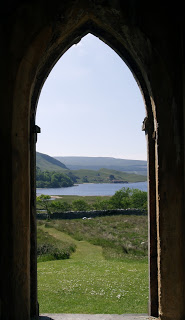
Lake of Galilee from Capernaum

The account of Jesus early in his ministry speaking in the synagogue before his hometown is found in all four Gospels.  It is the beginning of the story of Jesus we know as the teacher, as the community organizer, as the one that pushes people beyond their own boundaries.  In the Lukan Gospel, the passage from which he read is included. 

So, as was the custom, Jesus stood in the synagogue to read.  He unrolled the scroll and began.  But something happened in the midst of the reading.  He saw himself differently after reading the lyrical words from the scroll.  Hear the Scripture that was read: (Isaiah 61)

The spirit of the Lord God is upon me, because the Lord has anointed me;
he has sent me to bring good news to the oppressed, to bind up the broken-hearted, to proclaim liberty to the captives,  and release to the prisoners;
2to proclaim the year of the Lord’s favour,  and the day of vengeance of our God;    to comfort all who mourn; 3to provide for those who mourn in Zion—to give them a garland instead of ashes, the oil of gladness instead of mourning, the mantle of praise instead of a faint spirit.  They will be called oaks of righteousness, the planting of the Lord, to display his glory. 4They shall build up the ancient ruins, they shall raise up the former devastations; they shall repair the ruined cities, the devastations of many generations.

The truth was that Jesus wasn’t seen as a prophet or a Messiah by this crowd.  He was just one of them, this little kid that had made good and of whom they were very proud.  This was the kid that they had helped raise.  They probably thought that his ministry would be a reflection on them.  But Jesus was not cooperating.  And when they looked at him, they did not see a reflection of what they were expecting but a dim view of something that was a tad unfamiliar.  Jesus was standing there, calling them to change, calling them to look at things differently, to step out of their carefully constructed boxes and away from their earthly temples of who they thought they should be and actually become the people of God. So, who did he think he was?  God?

The truth is, Jesus was asking them to go beyond what they knew.  As hard as it was for them to fathom, God was not some far-off inaccessible entity to which they could go when it was convenient and from which they could turn when it was not.  This ordinary, earthly man standing before them was God—Immanuel, God-with-us—calling them to serve others, to put themselves out there, and to unlock those gates that we all so carefully build around our lives.  They were being called to look into that reflection to see not who they were but who they were supposed to be.

And the passage says that they “took offense at him”.  In Greek, the word offense is “skandalon”, from which we get the word “scandal”.  Jesus was scandalous because he had the audacity to imply not that these learned people who had worshipped so faithfully for so long were wrong but that the religion that they practice, the boundaries that they had built, were not the whole thing.  

Albert Einstein once said that “we cannot solve our problems with the same mindset that created them.”  This world that God created is always changing, always growing, always alive.  There’s sort of a wildness to it, not to be tamed or fixed, but to be embraced and entered.  We are called to go out into the world and change it.  But, more importantly, we are called to move to where God is leading us and allow ourselves to be changed.  The world is different than it used to be—and so are we.

Jesus got that.  I think he knew in this moment that the ministry he was beginning was not a recap of the “usual” way.  No, it was the Way of Christ, the Way that God calls us to go.  And as much as the world still tries to sanitize that image of Christ, still tries to make him “acceptable” to the ways of the world, as much as those in power try to present a version that is on their side and affirms what they are doing, the truth is that the Way of Christ doesn’t look like this world or this theology that we have so carefully constructed.  It is rather one that shakes us up, turns us around, and heads us in a new direction.  We cannot follow the way that has been paved over and we can’t live in a world that has been safely fenced off against those who we are called to serve.  The pathway ahead is wild and untamed.  So, breathe out…breathe out the usual way.  Breathe out the way the world tells you that you should go.  Breathe out the usual and the comfortable and the way that won’t get you, I don’t know, killed or something.  And breathe in.  Breathe in the Spirit of the Lord that was breathed into the human we call Jesus.  And follow the path that calls you to build up ruins, raise those place that are devastated by our world, and repair the cities that the world has chosen to forget.  Breathe in the very image of Jesus Christ.

I think Jesus knew in this moment that the pathway would not be easy, that people would be “offended”, that there were those who would try to stop him.  Perhaps he knew how it would all end.  Jesus was not just placed in the world to become yet another historic footnote.  Jesus came to invite us into the Story, a story that at times would be difficult, a story that would take us on a difficult journey to the Cross, but, ultimately, a story that would end where it all began—with Life.  And God saw that it was very, very good.

Lyrics: “Jesus” (Ashley Cleveland)

Jesus
They say You walked upon the water once
When you lived as all men do
Please teach me how to walk the way You did
Because I want to walk with You

Jesus
They say you taught a lame man how to dance
When he had never stood without a crutch
Well here am I Lord holding out my withered hands
And I’m just waiting to be touched

Jesus
Write me into Your story
Whisper it to me
And let me know I’m Yours

Jesus
They say You spoke and calmed an angry wave
That was tossed across a stormy sea
Please teach me how to listen how to obey
‘Cause there’s a storm inside of me

Jesus
Write me into Your story
Whisper it to me
And let me know I’m Yours

They drove the cold nails through Your tired hands
And rolled a stone to seal Your grave
Feels like the devil’s rolled a stone onto my heart
Can You roll that stone away?”

Grace and Peace,

Shelli

Seeing Jesus

And now the conversation begins turns to this talk of death and loss.  We know we’re getting closer, that the tide is beginning to turn.  But we’re not sure.  We’re not sure that our journey really prepared us at all.  But we need to start talking about it.

The reading starts by telling us of the arrival of some Greeks. Now this may seem to us to be sort of periphery to the point of the story but it’s not. For you see, this arrival of the Greeks is something new. It marks the beginning of an entirely new section of the Gospel. These are not merely Greek-speaking Jews, but Gentiles who have made the pilgrimage to Jerusalem for the Passover feast. These are non-Jews, Gentiles from across the sea who wanted to meet the Hebrew holy man. This is the beginning of the world seeing Jesus and knowing who he is.  They approach Philip and request to “see” Jesus, to have a meeting with him. Perhaps they want to know more of who this Jesus is. Perhaps they just want to talk to him. Or perhaps they want to become disciples. But regardless of why they are here, their arrival points to the fulfillment of the church’s future mission—to make disciples of Jesus Christ for the redemption of the world, to see Jesus. This is the decisive dividing line between Jesus coming as a Jewish Messiah and Christ, through his death and resurrection, fulfilling God’s promise for the renewal and redemption of all of Creation. Now is the time for the Son of Man to be glorified.  Jesus did not just come to save you and me.  Remember, Jesus is the Savior of the World, to show God to the world.  Jesus has begun to draw the world into the Cross.

Change is all around us.  No, not all of it is good right now.  Our world seems to be shaking a bit—war, growing economic worries, divisiveness, escalating disregard for the “other”, even a new “acceptable” racism, an “acceptable” xenophobia, an “acceptable” homophobia, an “acceptable” hatred toward those with whom we share this world, and even more war.  It’s scary.  Sure, we could run, go back to our old ways, to the comfort and safety of home.  We could yell and scream and demand that someone put it back the way it was.  The problem is that nothing stays the same.  Even if we could return, it would not feel like home.  For you see, this journey has changed us.  We walk this season of clearing and surrender and then we realize that this season never really ends.  We are different.  We don’t look different but we do see differently.  Jesus has taught us how to see.

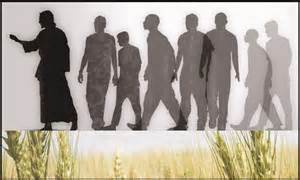
But what is this thing with wheat?  (OK, to the end, Jesus seemed to continue speaking in confusing parables!)  Well, wheat is a caryopsis, meaning that the outer “seed” and the inner fruit are connected. The seed essentially has to die so that the fruit can emerge. If you were to dig around in the ground and uproot a stalk of wheat, you would not find the original seed. It is dead and gone. In essence, the grain must allow itself to be changed.  So, what Jesus is trying to tell us here is that if we do everything in our power to protect our lives the way they are—if we successfully thwart change, avoid conflict, prevent pain—then at the end we will find that we have no life at all.  He goes on…” Those who love their life lose it, and those who hate their life in this world will keep it for eternal life. Whoever serves me must follow me, and where I am, there will my servant be also. And whoever does this, God will honor.” This is the only time that the Gospel speaks of God honoring someone. And we begin to see the connection unfolding. Whoever follows Jesus through his death, will become part of his everlasting life.

You see, we can’t go back to what we know because it is no longer ours.  The Light has become part of us.  Jesus wanted us to understand not just that he was leaving soon, not just that his death was imminent, but that this journey to the cross was not just his to make, but ours. This lifting up and this drawing in is all ours.  We ARE the Children of the Light.  Now is the time to walk with Jesus to the cross.  Now is the time to see Jesus.

The season is continuing on.  What we know is coming seems to move toward us faster, overwhelming us.  Now is the time to see Jesus.  So, breathe out—breathe out that tendency to want to go back, to retreat, no matter how hard life is, no matter what the world throws at you.  And breathe in—breathe in allowing yourself to be changed, to grow, to step forward and be the very image of Christ in the world.  Breathe in the presence of Jesus.

Grace and Peace,

Shelli

Between

Lectionary Scripture Text: Psalm 31: 1-5, 15-16

1In you, O Lord, I seek refuge; do not let me ever be put to shame; in your righteousness deliver me.  2Incline your ear to me; rescue me speedily. Be a rock of refuge for me, a strong fortress to save me.  3You are indeed my rock and my fortress; for your name’s sake lead me and guide me, 4take me out of the net that is hidden for me, for you are my refuge.

5Into your hand I commit my spirit; you have redeemed me, O Lord, faithful God.  15My times are in your hand; deliver me from the hand of my enemies and persecutors.  16Let your face shine upon your servant; save me in your steadfast love.

What do we do with this day, this Holy Saturday?  We are still grieving.  The reality of it all is beginning to sink in, beginning to be real.  Jesus is gone, dying alone on some hill that we don’t even know.  So, what do we do today?  How do we pick up the pieces in the midst of our pain and despair and just go on with our lives?  Oh, we 21st century believers know how the story ends.  We’ve already jumped ahead and read the next chapter many, many times.  (Don’t tell those that don’t read ahead, but it all works out in the end.)

And yet, we do ourselves no favors if we jump ahead to tomorrow.  After all, the Scriptures tell us that Jesus rose on the third day, the THIRD day, as in one-two-three.  The third day doesn’t happen without today.  It must be important, right?  But, oh, it’s just so painfully quiet.  The sanctuary is dark, awaiting to be redressed for its coronation.  The bells are quiet, hanging expectantly for tomorrow.  And we still sit here draped in black with our Easter brights hanging there ready for us to don.  What are we supposed to do today?

Tradition (and the older version of the Apostles’ Creed) holds that Jesus died, was buried, and descended into hell.  So is that what this day is?  Descent?  Good grief, wasn’t the Cross low enough?  The well-disputed claim is that Jesus descended into death, descended into hell, perhaps descended into Gehenna (Greek) (Hebrew–Gehinnom, Rabbinical Hebrew–גהנום/גהנם), the State of ungodly souls.  Why?  Why after suffering the worst imaginable earthly death would Jesus descend into hell?  Well, the disputed part is that Jesus, before being raised himself, descended to the depths of suffering and despair and redeemed it, recreated it.  The sixth century hymnwriter, Venantius Fortunatus claimed that “hell today is vanquished, Heaven is won today.” Why is that so out of bounds of what God can do?  Don’t we believe that God is God of all?  Or does it give us some sense of comfort to know that we are not the worst of the bunch, that there are always Judas’ and Brutus’ that have messed up a whole lot worse than any of us and so are destined to spend eternity on the lowest rungs of hell?  But, oh, think about the power and grace and amazing love of a God who before the Divine Ascent into glory, descended into the depths of humanity and redeemed us all, every single one of us, perhaps wiped out the hell of each of our lives rung, by rung? 

Welcome, happy morning! age to age shall say:
Hell today is vanquished, Heav’n is won today!”
Lo! the dead is living, God forevermore!
Him, their true Creator, all His works adore!

And, yet, again, we cannot leave it all to Christ to do.  Just as we were called to pick up our cross yesterday, we are called to descend down into the depths, plunging into the unknown darkness, so that God can pick us up again, set us right, and show us a new Way.  And so, this day, we stand between, between death and life, between hell and heaven, between a world that does not understand and a God who even in the silence of this day has begun the redeeming work.  In some ways, this is the holiest day of the week.  How often do we stand with a full and honest view of the world and a glimpse of the holy and the sacred that is always and forever part of our lives?  How often do we stand together and see ourselves as both betrayers and beloved children of God?  How often do we stand in the depths of our human state and yet know that God will raise us up.  This is a pure state of liminality, a state, as the Old English would say, “betwixt and between.”  It is where we are called to be.  It is the place of the fullness of humanity as it claims both human and divine.  In the silence of this day, we stand with God.  And we wait, we wait expectantly for resurrection. 

Do you remember how we started this whole thing?  Do you remember the Creation account from Genesis, how how God spoke Creation into being, how God spoke US into being.  So today we wait for God to say us into being again.  It is where we should always be.  We won’t though.  We won’t be there. (Remember, we’ve had this problem before.)  And maybe on some level, it’s too much for us to always be there, always be waiting expectantly for God.  Because, granted, today IS very wilderness-like.  In fact, you could say that it is the ultimate wilderness—lonely, forsaken, no clear path ahead.  I know.  You thought we were going to “wrap” this whole wilderness thing up, right?  But, see, wilderness is an opportunity.  It’s an opportunity for God to say us into being again.  But at least we can remember what this day feels like as we stand between who we were and what we will be. 

So, for today, keep expectant vigil.  Do not jump ahead.  We can only understand the glory of God when we see it behind the shadow of death.  But, remember, shadows only exist because the Light is so very, very bright. 

The shadows shift and fly.

The whole long day the air trembles,

Thick with silence, until, finally, the footsteps are heard,

And the noise of the voice of God is upon us.

The Holy One is not afraid to walk on unholy ground.

The Holy Work is done, and the world awaits the dawn of Life.

(“Saturday Silence”, Ann Weems, in Kneeling in Jerusalem)

You must give birth to your images.  They are the future waiting to be born.  Fear not the strangeness you feel.  The future must enter you long before it happens.  Just wait for the birth, for the hour of new clarity. (Rainer Maria Rilke) 

Grace and Peace,

 Shelli

Handed Over

Lectionary Scripture Text (Good Friday):

16Then he handed him over to them to be crucified. So they took Jesus; 17and carrying the cross by himself, he went out to what is called The Place of the Skull, which in Hebrew* is called Golgotha. 18There they crucified him, and with him two others, one on either side, with Jesus between them. 19Pilate also had an inscription written and put on the cross. It read, ‘Jesus of Nazareth,* the King of the Jews.’ 20Many of the Jews read this inscription, because the place where Jesus was crucified was near the city; and it was written in Hebrew,* in Latin, and in Greek. 21Then the chief priests of the Jews said to Pilate, ‘Do not write, “The King of the Jews”, but, “This man said, I am King of the Jews.” ’ 22Pilate answered, ‘What I have written I have written.’ 23When the soldiers had crucified Jesus, they took his clothes and divided them into four parts, one for each soldier. They also took his tunic; now the tunic was seamless, woven in one piece from the top. 24So they said to one another, ‘Let us not tear it, but cast lots for it to see who will get it.’ This was to fulfil what the scripture says, ‘They divided my clothes among themselves,  and for my clothing they cast lots.’ 25And that is what the soldiers did.

Meanwhile, standing near the cross of Jesus were his mother, and his mother’s sister, Mary the wife of Clopas, and Mary Magdalene. 26When Jesus saw his mother and the disciple whom he loved standing beside her, he said to his mother, ‘Woman, here is your son.’ 27Then he said to the disciple, ‘Here is your mother.’ And from that hour the disciple took her into his own home.

28 After this, when Jesus knew that all was now finished, he said (in order to fulfil the scripture), ‘I am thirsty.’ 29A jar full of sour wine was standing there. So they put a sponge full of the wine on a branch of hyssop and held it to his mouth. 30When Jesus had received the wine, he said, ‘It is finished.’ Then he bowed his head and gave up his spirit.

******************

            I am standing here but it does not seem real.  I want to hold him, to comfort him, to cradle him in my arms like I did when he was a baby.  But the guards are holding us back.  Oh, please, I don’t think I can stand anymore.  But I must stand with him.  He has to know that I am here with him.  He has to know how much I love him, how much I hurt for him, how I would trade places with him if I could.

All of the memories are flooding into my head.  I remember that night when the angel came to me.  (Luke 1:26-38) I did not understand.  I was so afraid.  But I knew I had to say yes.  I had no idea what I was agreeing to do.  And then for nine months I carried the baby in my womb. It was joyous.  In one respect, it was just like any other pregnancy, like the others I had after that.  And yet, it was different.  I always felt like there was someone there with me, guiding me, loving me, helping me through it.  It’s hard to explain.  

The birth itself was hard, downright scary in fact.  (Luke 2:1-20) We traveled to Bethlehem.  It was so far, so painful.  And then when we finally arrived, it was so crowded.  The streets were wild.  I remember that nice man who let us bed down in the room that housed his animals.  I remember the first time I looked into his eyes–those dark, compassionate eyes.  Even as a baby, he had compassionate, loving eyes.  He was special.  I knew that he was special when he came into the world.  I just didn’t know how wonderful he would be. 

I remember that day in the temple when we went for the Purification. (Luke 2:22-40) That strange man that I had never met took him from me.  He cradled him in his arms.  It was as if they had known each other always.  And he told me my soul would be pierced.  Oh, how right he was! 

I remember the day that my cousin’s son baptized him.  He didn’t know I was there.  I hid behind the trees.  After all, he was an adult; he didn’t need his mother always looking on.  And I remember when his ministry started.  He was so brave, so fearless.  It scared me at times.  I thought something like this might happen.  But I am so incredibly proud of him.  I am so proud of what he became, what he made others become that he touched in his life.  He was special.

No, this does not seem real.  Somebody needs to help him.  Please, please, he’s asking for water.  Please, someone give him water.  I’m afraid this is it.  I’m afraid he cannot take it anymore.  I’m afraid he’s going to give up.  Perhaps it would be better.  Perhaps it is better to let go…Oh, how I love him! How I want to go back, to hold him just once more!  It is over.  It is all over.  He is gone.  What did it all mean?  I don’t understand.  Why the angel?  Why the star?  Why did it all happen if it was going to end this way?  What does God have in mind for him?  He promised me that it would be for good.  He promised me that it would be OK.  I guess I have to believe that, hold on to it, hope.  Someday maybe I’ll see it.

I wanted to stay here until they gave me his body, but I don’t think I can.  There are others here too–Jesus’ friend Mary, who has always been so lovely toward me, and the disciples.  I hope they all realized how much he loved them, how he would do anything for them, how he wished the best for them.  The rain is really coming down now and the skies are angry, angry like me.  The wind is blowing so hard, I can no longer stand against it.  There are rocks and debris sliding down the mountain above us.  It seems that the world is breaking apart.  Will the world ever know what it has lost?  Will the world ever know what it did?  Will God ever forgive this world for killing my son, their son, God’s son?  Someone just told me that the temple curtain has split in two.  It is as if the holy has spilled into the world.  I can’t explain it.

My son came into this world wrapped in so much hope.  He was supposed to change the world.  He was supposed to open the eyes of the world to what it could be, what it could become.  Is it all for naught?  Or, someday, will we finally understand why he came?  Someday, I know, that God will make it all make sense.  But, now, today, I am grieving more than I could know.  The loss is unbearable, a thick wilderness of loss through which I cannot find my way.  But what a gift I’ve had!  What an incredible gift that was taken away all too soon!  I have to leave this place, as hard as it is.  Shabbat is starting in a few minutes.  I must go prepare, light the candles, and usher in the joy of the Sabbath.  I must go rest.  I need it.  I need it to resurrect my hurting soul.  God will be with me.  Let it be.

“My soul magnifies the Lord, and my spirit rejoices in God my Savior, for he has looked with favor on the lowliness of his servant. Surely, from now on all generations will call me blessed; for the Mighty One has done great things for me, and holy is his name. His mercy is for those who fear him from generation to generation. He has shown strength with his arm; he has scattered the proud in the thoughts of their hearts. He has brought down the powerful from their thrones, and lifted up the lowly; he has filled the hungry with good things, and sent the rich away empty. He has helped his servant Israel, in remembrance of his mercy, according to the promise he made to our ancestors, to Abraham and to his descendants forever.”  (Luke 1:46-55) Shalom, my dear Son!  May God’s Light stay with you!

******************

We have all experienced loss and grief.  It DOES seem like a wilderness.  You want so badly to go back.  But the pathway behind you seems to have closed.  You can only walk forward.  But God takes grief and loss and redeems it.  God doesn’t take it away.  It is part of us just as the wilderness journey through which we’ve traveled will always be.  But God helps us restructure our lives and finds a place for loss, a healing, joyful place. 

The point of this journey through Holy Week is to empty, to surrender, to let God in.  It is the completion of the process of Lent in which we have made room for our death, for our surrender to God.  Resurrection is finding that place that is just for us.  The wilderness teaches how to be open to that, how to prepare our lives for re-creation.  That is what God does—gives us the gift of re-creation.  But, for now, we will grieve, and we will feel loss and God will hold us until we can hold it ourselves.  It is finished.

There is a journey you must take.  It is a journey without destination.  There is no map.  Your soul will lead you.  And you can take nothing with you.  (Meister Eckhart, 14th century) 

Grace and Peace,

Shelli

The Day That Hope Was Born

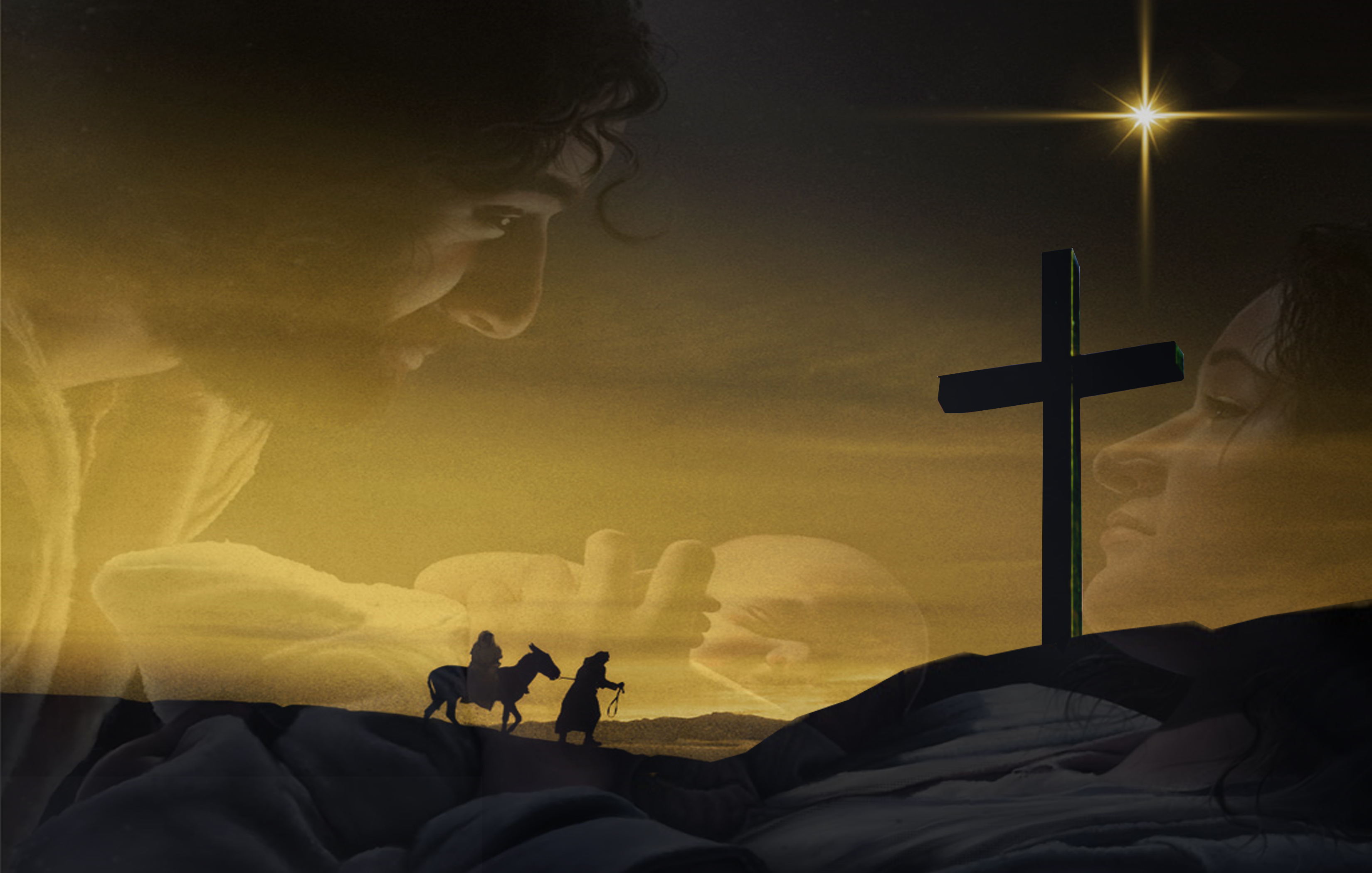
cross-and-manger-16-12-19Meanwhile, standing near the cross of Jesus were his mother, and his mother’s sister, Mary the wife of Clopas, and Mary Magdalene. 26When Jesus saw his mother and the disciple whom he loved standing beside her, he said to his mother, ‘Woman, here is your son.’ 27Then he said to the disciple, ‘Here is your mother.’ And from that hour the disciple took her into his own home.

28 After this, when Jesus knew that all was now finished, he said (in order to fulfil the scripture), ‘I am thirsty.’ 29A jar full of sour wine was standing there. So they put a sponge full of the wine on a branch of hyssop and held it to his mouth. 30When Jesus had received the wine, he said, ‘It is finished.’ Then he bowed his head and gave up his spirit.  (John 19: 25b-30)

Those midday hours on that day were merciless.  I stood there feeling so helpless, wanting to hold him to cradle him like I did when he was a baby.  At that point, I didn’t know what the outcome would be.  I just knew that he was in pain.  And I needed to get to him.  But the guards were holding us back.  There was nothing that I could do but pray, pray that this would end, pray that God would release him, pray that this would all turn out for some good. Little did I know how good it would be.

In that moment, the memories flooded back.  I thought about that night when the angel came to me.  At first I did not understand. I was afraid.  But something in me compelled me to say yes, to say yes to something that I had no idea how to do.  I thought about that long trip to Bethlehem.  And then when we arrived, the city was packed with people and we had nowhere to go.  It was so scary.  But I never felt like we were alone.  Someone traveled with Joseph and I.  Now I understand.  We were never alone.  And I knew that I was not alone now.  There, there on the cross was God.  But in that moment, I prayed that it still all had a purpose.

None of it seemed real.  At that point, I was questioning why.  Why did all this happen?  Why was I allowed to love him, to look into his eyes and love him if this was how it was going to end?  I wondered if these people standing here with me even thought about the manger, even thought about that holy night.  In hindsight, I know that God was holding ME—when I was holding him and even now.

I wondered if the world would ever understand what it did.  And it began to rain and the wind began to blow.  The skies turned appropriately dark and angry.  And the world began to shake.  Rocks and debris began to slide down the mountain behind us and the wind blew the temple curtain that separated the holy and the ordinary.  In that moment, I thought hope was dying there on the cross.  I realize now that that child I held that Bethlehem night so long ago was hope, a hope that would never die, a hope that would literally spill into the ordinary parts of our lives.  At that point, I thought it had ended.  I know now that our eternity itself was spilling in to our lives.  I know now that that birth so long ago was never for naught.  It was for this—to give hope to a world that could never give it to itself, to give hope to a world that sadly over and over destroys itself, to give hope to a world that doesn’t really understand that it has never been alone.  I know now that hope was born in that manger.  But hope came to be on that cross.  I know now that I was pulled into a story that would have no end, that would birth newness and hope at every turn.  How blessed I truly am!

At the center of the Christian faith is the history of Christ’s passion.  At the center of this passion is the experience of God endured by the godforsaken, God-cursed Christ.  Is this the end of all human and religious hope?  Or is it the beginning of the true hope, which has been born again and can no longer be shaken?  For me it is the beginning of true hope, because it is the beginning of a life which has death behind it and for which hell is no longer to be feared…Beneath the cross of Christ hope is born again out of the depths. (Jurgen Moltmann)

FOR TODAY:  Dare to hope…in spite of everything else.  Dare to hope for that which you cannot know.  Dare to hope beyond what you can see.

Peace to you in this often-hectic week,

Shelli

In the Time Between

StillnessScripture Text:  Luke 23: 48-49

48And when all the crowds who had gathered there for this spectacle saw what had taken place, they returned home, beating their breasts. 49But all his acquaintances, including the women who had followed him from Galilee, stood at a distance, watching these things.


What do we do with this day, this day after, this day before, this time between?  What do we do when our foundations have been shaken to their core and we wander, alone?  What do we do when we stand at a distance and can do nothing to fix it or hurry the healing along?  This IS the deepest part of the wilderness.  We begin to wander again but this time, we are alone.  This time we wander in grief and despair.  The darkness overcomes us.

Have you noticed that all of the Gospels after the frantic accounts of the Crucifixion fall silent on this day?  They all go from some rendition of laying Jesus in the tomb to some version of “after the Sabbath”.  There was, you see, nothing more to say about what had happened and the story had to stop and wait for itself to begin again.  You see, this IS the Sabbath, the time between work and work, the time between conversations, the time between life and life.  This IS the time to be silent, to sit in the deep wilderness and wait, wait again for life to dawn.

The truth is, there IS nothing to do with this day.  See, this day is not ours.  We’re so accustomed to days revolving around our lives that we have forgotten how to wait, how to just be.  Notice that tomorrow morning the Scripture will not give us the account of the Resurrection.  It will instead tell us the story of the revelation of what has happened, the finding of the empty tomb.  We were not there for the Resurrection.  While we were grieving and wondering and trying to find our way in this new wilderness, God was re-creating in the darkness.  God seems to be drawn to the darkness, to the place where the Light most needs to be.

So, in this darkness, in this silence, know that you are not alone.  Know that God is re-creating everything even now.  Know that this is the time to just be still, to just be still and know.

My ego is like a fortress.  I have built its walls stone by stone to hold out the invasion of the love of God.  But I have stayed here long enough.  There is light over the barriers.  O my God…I let go of the past.  I withdraw my grasping hand from the future.  And in the great silence of this moment, I alertly rest my soul. (Howard Thurman)


FOR TODAY:  It is finished.  Just be still.  Just be still and know.

Grace and Peace,

Shelli