Re-Ordering

upsidedownworld“My soul magnifies the Lord, 47and my spirit rejoices in God my Savior, for he has looked with favor on the lowliness of his servant. Surely, from now on all generations will call me blessed; for the Mighty One has done great things for me, and holy is his name. His mercy is for those who fear him from generation to generation. He has shown strength with his arm; he has scattered the proud in the thoughts of their hearts. He has brought down the powerful from their thrones, and lifted up the lowly; he has filled the hungry with good things, and sent the rich away empty. He has helped his servant Israel, in remembrance of his mercy, according to the promise he made to our ancestors, to Abraham and to his descendants forever.” (Luke 1: 47-55)


We love this passage.  It is Mary’s Song, the poetic rendering of her realization that she has truly been blessed, that she has been called to do what no one else has done, what no one else will do.  She has been called to give birth to God in this world, to deliver the promise that her people have always known.  But don’t get too lost in the poetry and the familiarity. E. Stanley Jones called The Magnificat “the most revolutionary document in the world”.  It is said that The Magnificat terrified the Russian Czars so much that they tried to dispel its reading.  It is an out and out call to revolution.  Less subversive language has started wars.  Edward F. Marquart depicts it as God’s “magna carta”.  It is the beginning of a new society, the preamble to a Constitution that most of us are not ready to embrace.  We’d rather chalk it up to the poetry of an innocent young woman and keep shopping.


See, this is God’s vision for the world. It is not a world where the best and the brightest and the richest come out on top. It is not a world that we can control. It is not a world where we can earn what we have and deserve who we are. It is rather a world where God’s presence and God’s blessings are poured onto all. But it comes with a price. Those who have, those who are, those whose lives are filled with plenty are called to change, to open their lives to God and to others. Because God will scatter the proud, those who think they have it figured out, those who are so sure of their rightness and their righteousness.  In other words, those of us who think that we have it all nailed down will be shaken to our core.  The powerful–those with money, those with status, those with some false sense of who they are above others–will be brought down from their high places.  The poor and the disenfranchised, those who we think are not good enough or righteous enough, will be raised up. They will become the leaders, the powerful, the ones that we follow.  The hungry will feel pangs no more and those who have everything–the hoarders, the affluent, those are the ones whose coffers will be emptied to feed and house the world.  God is about to turn the world upside-down.  Look around you.  This is not it; this is not what God had in mind.  And God started it all not by choosing a religious leader or a political dynamo or even a charismatic young preacher but a girl, a poor underage girl from a third-world country with dark skin and dark eyes whose family was apparently so questionable that they are not mentioned and whose marital status seemed to teeter on the edge of acceptable society.  God picked the lowliest of the lowly to turn the world upside down.


And when you’re turned upside down, things tend to spill. No longer can we hold onto what we know. No longer can we rest on the laurels of our past. If we’re going to be part of God’s vision of the world, we have to give up those things that are not part of it. We have to change, learn to live a new way, look upon the world and others not as competition, not as threats, but as the very vision of God pouring into the world. So, THIS Advent, what are you willing to let go of so that you will have room to offer a place for God? What are you willing to change in your life to come just a little bit closer to what God envisions? How willing are you to turn your world upside down? What do you plan to do with this precious life you’ve been given?


There are those who will read this and dismiss it as some utopian socialist notion, something that flies in the face of our capitalistic society. I don’t think it’s either. God’s vision does not align with any form of government on this earth but is instead ordered with love and grace and abundant mercy. It is not a vision where everyone is treated the same; it is a vision where everyone is loved. So, again, what are you willing to change in your own life? What are you willing to trade for love? Christmas is six days away. Six days…that’s all that’s needed to create a new order.


Into this world, this demented inn, in which there is absolutely no room for him at all, Christ has come uninvited. But because he cannot be at home in it, because he is out of place in it, and yet he must be in it, his place is with those others who do not belong, who are rejected by power, because they are regarded as weak, those who are discredited, who are denied the status of persons, tortured, exterminated. With those for whom there is no room, Christ is present in this world. (Thomas Merton)


Grace and Peace,

Shelli

More To the Story

Light into the world2 Abraham was the father of Isaac, and Isaac the father of Jacob, and Jacob the father of Judah and his brothers, 3and Judah the father of Perez and Zerah by Tamar, and Perez the father of Hezron, and Hezron the father of Aram, 4and Aram the father of Aminadab, and Aminadab the father of Nahshon, and Nahshon the father of Salmon, 5and Solomon the father of Boaz by Rahab, and Boaz the father of Obed by Ruth, and Obed the father of Jesse, 6and Jesse the father of King David.  And David was the father of Solomon by the wife of Uriah, 7and Solomon the father of Rehoboam, and Rehoboam the father of Abijah, and Abijah the father of Asaph,* 8and Asaph* the father of Jehoshaphat, and Jehoshaphat the father of Joram, and Joram the father of Uzziah, 9and Uzziah the father of Jotham, and Jotham the father of Ahaz, and Ahaz the father of Hezekiah, 10and Hezekiah the father of Manasseh, and Manasseh the father of Amos,* and Amos* the father of Josiah, 11and Josiah the father of Jechoniah and his brothers, at the time of the deportation to Babylon.  12 And after the deportation to Babylon: Jechoniah was the father of Salathiel, and Salathiel the father of Zerubbabel, 13and Zerubbabel the father of Abiud, and Abiud the father of Eliakim, and Eliakim the father of Azor, 14and Azor the father of Zadok, and Zadok the father of Achim, and Achim the father of Eliud, 15and Eliud the father of Eleazar, and Eleazar the father of Matthan, and Matthan the father of Jacob, 16and Jacob the father of Joseph the husband of Mary, of whom Jesus was born, who is called the Messiah.* (Matthew 1: 2-16)

We Christians sometimes seem to have this notion that Jesus, Emmanuel, God-With-Us, Messiah, the Savior of the World just sort of dropped out of the sky one cold winter night in Bethlehem and the world began. But the story of the birth of the Divine One into this world is not the beginning but the next chapter in a story that had been read into the world for volumes of the story before.  Jesus came, God with Us, after eons of the earth straining to see the Light.  He came into centuries upon centuries of waiting journeyers, those who had prepared the way for his coming, not knowing what that would be but knowing that it would be.  Those that came before are not just a prelude to the story but are part of the story itself.

I would guess that most of you sort of skip over these verses in the Gospel from the writer known as Matthew. After all, the names are hard to pronounce and, really, what do they bring to the lovely story that we have compiled from the Gospels of Matthew, Luke, and a little “tradition” thrown in. But they ARE important, SO important. They are the story of our connection. If the writer had not been of Jewish descent (I think the fact that he (or she!) starts with Abraham is the first of many clues in that Gospel version.), the story might have gone back to the beginning—you know, that “in the beginning” part. It’s all part of the story.

In the beginning, God came into the darkness, into the chaos that was the world and filled it with Light. And it was good. And God went on to fill the illuminated world with Creation—waters that bring and sustain life, soils that would continue to birth life from decay, green and blue foliage reaching into the earth for their nutrients, animals of prey and animals that would become companions to us (including the one that just demanded that I open the window blinds so he can make sure no one is going down his road!), and we humans. And then God continued to walk with the Creation, guiding them through the times that they listened and patiently waiting for their return when they did not. And after generations of both failed and incredibly wonderful journeys, God again came to once again bring light to a world who had allowed part of the light of Creation to go out. And it was good. And this time, God came not as the Light on us but the Light within us, coming as one of us to show us how to be Light.

No, Jesus did not just pop out of nothingness. The story had been in place long before. And we, too, did not just appear. Our lives are not merely individual existences that we have worked so hard to create. Our lives are part of the ongoing story of the world becoming more and more illuminated until the darkness is no more. THIS Advent, remember the story and do not forget the light that you are called to carry forward into the next chapter of the story. Even now, God is bringing Light to a partially dark world. We can only imagine where God will take the incredible story next.

God showed me a little thing, the size of a hazelnut, in a palm of my hand, and it was as round as a ball. I looked at it with my minds’ eye and I thought, “What can this be?” An answer came, “It is all that is made.” I marveled that it could last, for I thought it might have crumbled to nothing, it was so small. And the answer came into my mind, “It lasts and ever shall because God loves it.” And all things have their being through the love of God. In these little things I saw three truths. The first is that God made it. The second is that God loves it. The third is that God looks after it. (Julian of Norwich)


Grace and Peace,


Shelli


Dominion

Earth Day 1

Scripture Text:  Psalm 8

1O Lord, our Sovereign, how majestic is your name in all the earth! You have set your glory above the heavens.

2Out of the mouths of babes and infants you have founded a bulwark because of your foes, to silence the enemy and the avenger.

3When I look at your heavens, the work of your fingers, the moon and the stars that you have established;

4what are human beings that you are mindful of them, mortals that you care for them?

5Yet you have made them a little lower than God, and crowned them with glory and honor.

6You have given them dominion over the works of your hands; you have put all things under their feet,

7all sheep and oxen, and also the beasts of the field,

8the birds of the air, and the fish of the sea, whatever passes along the paths of the seas.

9O Lord, our Sovereign, how majestic is your name in all the earth!


Earth Day 2Today is Earth day.  I’m not exactly sure what that is.  Somehow, it is the day we honor the earth, remember the earth, care for the earth, revere the earth.  Yes, we, we humans, who God gave dominion over the earth have apparently designated a day when we do that.  Dominion…we struggle with that word.  In our world of empires and winners, dominion for us connotes power.  It depicts the one who is on top, who has “won out” and can make all the decisions.  And so we have reaped and sowed and pumped and spilled and flattened and built and paved and thrown and used and have given little in return to this Creation that God breathed in being and then lovingly placed in our hands.  Dominion is not about power; it is about responsibility; it is about care; it is, ultimately, about love.  We have been given dominion over the works of God’s hands, over this Creation that God spoke from chaos.

Earth Day 3I wish I would be more caring of the earth.  Actually, I DO care.  It’s just so inconvenient sometimes.  It was much easier when I could recycle on the curb.  It’s hard to walk to work because there is a really, really busy road to cross and I have lots to carry.  And those plastic water bottles are just so easy to use.  But those are just excuses.  Dominion is not about convenience.  God gave us Creation for our sustenance and our life and, yes, even our pleasure.  But God did not give us Creation to use up, to deplete.  Remember, dominion is about responsibility.  Having dominion over something means loving it so much that you can do nothing less than give it the means to thrive.  And thrive it will, given the chance.

When God breathed Creation into being, there was nothing about it that was static or temporary.  In God’s breath was life.  And as God breathed, God also invited each and every creature into the ongoing creative activity.  So over time, the earth itself would move and groan and give way to shifts in its existence.  Plants would dig deep into the earth for their life and some would reach extraordinary heights while others would bloom for a season and then die away to replenish and nurture the other, letting go so that life could continue on.  Animals would scale or slither or walk or swim, some providing food and warmth for other creatures and some returning themselves to the earth after a time so that the soil would nurture life again.  And there would be some whose purpose seems to be to do nothing else but give companionship to those with dominion and remind them what it means to care, and what it means to love.Earth Day 4

I guess it’s good we have this day.  It’s always good to have a day not to finally do what we are called to do, but to remind us what it means to have dominion, remind us what it means to care and what it means to love.  The Psalm says that God made us a little lower than the angels and placed Creation in our hands.  Look around at what God has done and what God has placed in your hands. And so see and breathe and savor and plant and tend and water and feed and care and love.  And be in communion with all that God is and all that God has made.  And let it give back to you willingly with its gifts of life.  And us?  Well, we are made in the very image of God, the image of the One who gives life.  What does that look like?  What does it mean to give life?  It means to have dominion, to care, to love.  “How majestic is your Name in all the earth!”

If I spend enough time with the tiniest creature—even a caterpillar-I would never have to prepare a sermon. So full of God is every creature. (Meister Eckhart, ca. 1260-1327)

Click below for a wonderful photo prayer from the website of The United Methodist Church:

God’s Gift of the Earth: A Photo Prayer


FOR TODAY:  It is Earth Day.  Plant or feed or water or use.  But, whatever you do, take dominion in love.


Grace and Peace,

Shelli

The Wilderness is Where We Began

Creation 1Scripture Text:  Genesis 1: 1-3

In the beginning when God created the heavens and the earth, 2the earth was a formless void and darkness covered the face of the deep, while a wind from God swept over the face of the waters. 3Then God said, “Let there be light”; and there was light.


That’s not the wilderness!  Wilderness has thick, unsculptured trees or endless sand, hard-to-follow paths or paths that keep disappearing.  This isn’t a wilderness. There’s nothing there!  But don’t you think nothingness, a formless void covered in darkness is just about as ultimate a wilderness as you can imagine? And keep in mind that there WASN’T nothingness, per se.  There was a void, a glob (that’s an official very spiritual term!) of disordered chaos.  And God was there, there in the wilderness with the chaos and the glob.  All of Creation began in this wilderness.  God spoke the first creating Word in that wilderness.  God spoke and the formless void began to slowly follow God into being. As the Spirit of God swept over the waters, they moved and parted, letting go of the part of themselves to which they had held so tightly, and they began to change.  And then with another Word, God called Light forth and darkness began to be illuminated.  Creation had begun.  We had begun.  The wilderness is where we began.

We know the rest of the tale.  God continued to create, continued to order the wilderness, to one by one call Creation into being—earth and sky, plants and suns and moons and ordered seasons, swimming creatures, winged creatures, creeping creatures, walking creatures, and, oh yeah, us!  As the last bit of ordering of this incredible called-out Creation, God created Sabbath, the pinnacle, the climax, the glorious coming together into perfect order of all of Creation.  And God delighted in this order and called it good.

The wilderness is where we began.  In our beginnings, in our disordered chaos, God called us forth into being.  God created us not in a haphazard way but in the very image of God.  God called us forth to live into that image, to become the very ones that God envisioned we would be.  We were probably pretty OK in that wilderness void; after all, we knew nothing different.  And then God created us into something new.  And God called it good.  We were God’s delight, God’s beloved.  Oh, sometimes we wander away. Sometimes we mistake really pretty acceptable chaos for God’s ordering.  Sometimes we think we have a better idea of who we could be than this image of God.  And so we need to return to the wilderness, to the place of our creation, to the place where we began, so that God can say us into being once more.

That’s what Lent does for us.  Lent calls us into the wilderness to remind us who and who’s we are, to remind us of that image in which we were made.  Lent calls us into the wilderness so that we can begin again.

Every act of creation is first an act of destruction. (Pablo Picasso)

FOR TODAY:  Look around at this wilderness.  What does it mean to begin again?

Grace and Peace,

Shelli

Sometimes the Wilderness Blooms

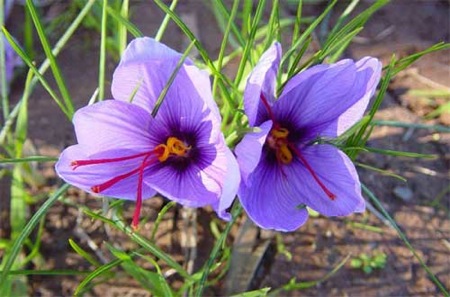
Crocus in the desertScripture Text: Isaiah 35: 1-2

 The wilderness and the dry land shall be glad, the desert shall rejoice and blossom; like the crocus 2it shall blossom abundantly, and rejoice with joy and singing. The glory of Lebanon shall be given to it, the majesty of Carmel and Sharon. They shall see the glory of the Lord, the majesty of our God.


Our walk in the wilderness has grown tiresome already. As far as we can look, there is desolation, drought, and despair. When is this going to end already? (Sorry…not even a third of the way there!)  But this passage is almost an interruption. We thought had it in our minds what the wilderness was. For us, the wilderness is a place to get through, to complete, to endure, a pathway to somewhere else. But maybe we’re not giving the wilderness the credit that it is due. After all, would God have created a complete wasteland with no redeeming qualities, no chance for hope? That’s not really God’s style. Maybe we’ve missed something. Maybe we’re trying so hard to overcome the wilderness and run through it, we’ve missed its beauty.


God does not wait until everything in order and the time is right to spring beauty into action. Every inch of creation, every wasteland we endure, has God’s fingerprints all over it. Every single piece is awash in God’s grace, even those whose beauty we cannot yet see either because our eyes have not adjusted to the light or because we have been clouded over with the old way of seeing. Can you see it? Or are we too busy rushing through it hoping that it will end? God’s voice is often out of place with what we see and know about the world. And yet, the desert wasteland is rejoicing in bloom. The passage says that the crocuses (maybe it’s croci) are blossoming abundantly, rejoicing with joy and singing. They abound with the glory of the Lord. We just have to give the wilderness a chance.


Maybe our problem is that we don’t trust first appearances. We want something that is tried and true, that perhaps has been around awhile and weathered all the tests. We want something that makes sense.  But this crocus pops up first. It is a first creation. And we’re not sure what to do. Is it a weed? Is it a flower? What do I do with it? It is God’s newness that at first glance seems to look a little out of place until it begins to gather its flock. (You know, I think that happened before for us. And, again, the world did not know quite what to do with something so out of place, something that so interrupted the way we think and the way we live.) So before we crucify any notion of beauty in the wilderness, let us stop and breathe and see it in bloom. Let us open our eyes and begin, even now while we’re wandering in the darkness, to see our resurrection (that’s right, not only THE Resurrection, but OUR resurrection) that is beginning to be.  Because, SOMETIMES even the wilderness blooms.


Our God is the One who comes to us in a burning bush, in an angel’s song, in a newborn child. Our God is the One who cannot be found locked in the church, not even in the sanctuary. Our God will be where God will be with no constraints, no predictability. Our God lives where our God lives, and destruction has no power and even death cannot stop the living. Our God will be born where God will be born, but there is no place to look for the One who comes to us. When God is ready God will come even to a godforsaken place like a stable in Bethlehem. Watch…for you know not when God comes. Watch, that you might be found whenever, wherever God comes. (Ann Weems, Kneeling in Bethlehem)


FOR TODAY: Stop and look for the blooms in the wilderness. What beauty do you see?