Be the Story

the_nativity_story_08

Scripture Text:  Genesis 1: 1-3, 31a

In the beginning when God created the heavens and the earth, the earth was a formless void and darkness covered the face of the deep, while a wind from God swept over the face of the waters.  Then God said, “Let there be light”; and there was light…God saw everything that he had made, and indeed, it was very good.

There is not one of us that does not love The Christmas Story.  It’s got it all–heartache, darkness, intrigue, danger, animals, innocence, an oppressive government, and a baby to boot.  It’s got all those things that make great tales.  No wonder it’s a bestseller!  No wonder there are so many songs written about it (that we at this moment cannot WAIT to sing and for some are even irritated that we are NOT!)  But for all the romantic notions of a baby born into a cold desert night in a small town on the other side of the world to poor, struggling parents, this story is not about a birth.  It’s not just a story about Jesus.  This is the Story of God.


It began long before this.  It began in the beginning.  It began when God breathed a part of the Godself into being and created this little world.  And as the story unfolded, as God’s Creation grew into being, God remained with them, a mysterious, often unknown Presence, that yearned to be in relationship with what God had breathed into being.  And once in a while, God’s children would stop what they were doing long enough to know and acknowledge the incarnations of God.  Once in awhile, they would encounter a burning bush or a parting sea or an unfathomable cloud on the top of a mountain.  Once in awhile they would stop, take off their shoes, and feel the holiness beneath their feet.  But more often than not, they struggled in darkness, they struggled in war, they struggled in oppression and injustice because they didn’t see the Light that was with them.  God called them and God sent them and some were prophets and some were wise and some were yearning themselves to be with God.  Some wrote hymns and poetry telling of their yearning and others just bowed and hoped that God would notice.


This wasn’t enough.  It wasn’t enough for the people and it wasn’t enough for God.  God yearned to be with what God had created.  God desperately wanted humanity to be what they were made to be, to come home to the Divine, to be part of the unfolding story.  And so God came once again, God Incarnate, into this little world.  But this time, God came as what God had created.  And so God was born into a cold, dark night.  But the earth was almost too full.  There was little room for God.  But, on that night, in a dark grotto on the outskirts of holiness, God was born.  The Divine somehow made room in a quiet, little corner of the world.  God came to show Creation what had been there all along.  And, yet, there was Newness; there was Light; there was finally Meaning; there was God Made Known.


The Incarnation (the “big I” one!) is God’s unveiling.  It is God coming out of the darkness and out of the shadows and showing us what we could not see before.  God became one of us to show us how to be like God in the world.  So, in this season, we again hear the story.  We hear the story of God.  But unless we realize that it is our story, it still won’t be enough.  God came as God Incarnate into this little world to tell the story that goes back to the beginning.  In the beginning was the Word, and the Word was with God, and the Word was God.  He was in the beginning with God.  All things came into being through him, and without him not one thing came into being.  What has come into being in him was life, and the life was the light of all people.  The light shines in the darkness, and the darkness did not overcome it.  (John 1: 1-5)  And the story continues…BE the Story.


God delights in the human imagination.  No one person can claim to hold the key to unlock what God intended, because what God intended was for each generation to read its story into the text.  (Sandy Eisenberg Sasso)


FOR TODAY (OR YESTERDAY!):  BE the Story.  What does that mean?  God did not come into this world so you could celebrate Christmas; God came so that you would know it is your story.  BE the Story.


Grace and Peace,


Shelli
 

You Start at the Very Beginning…

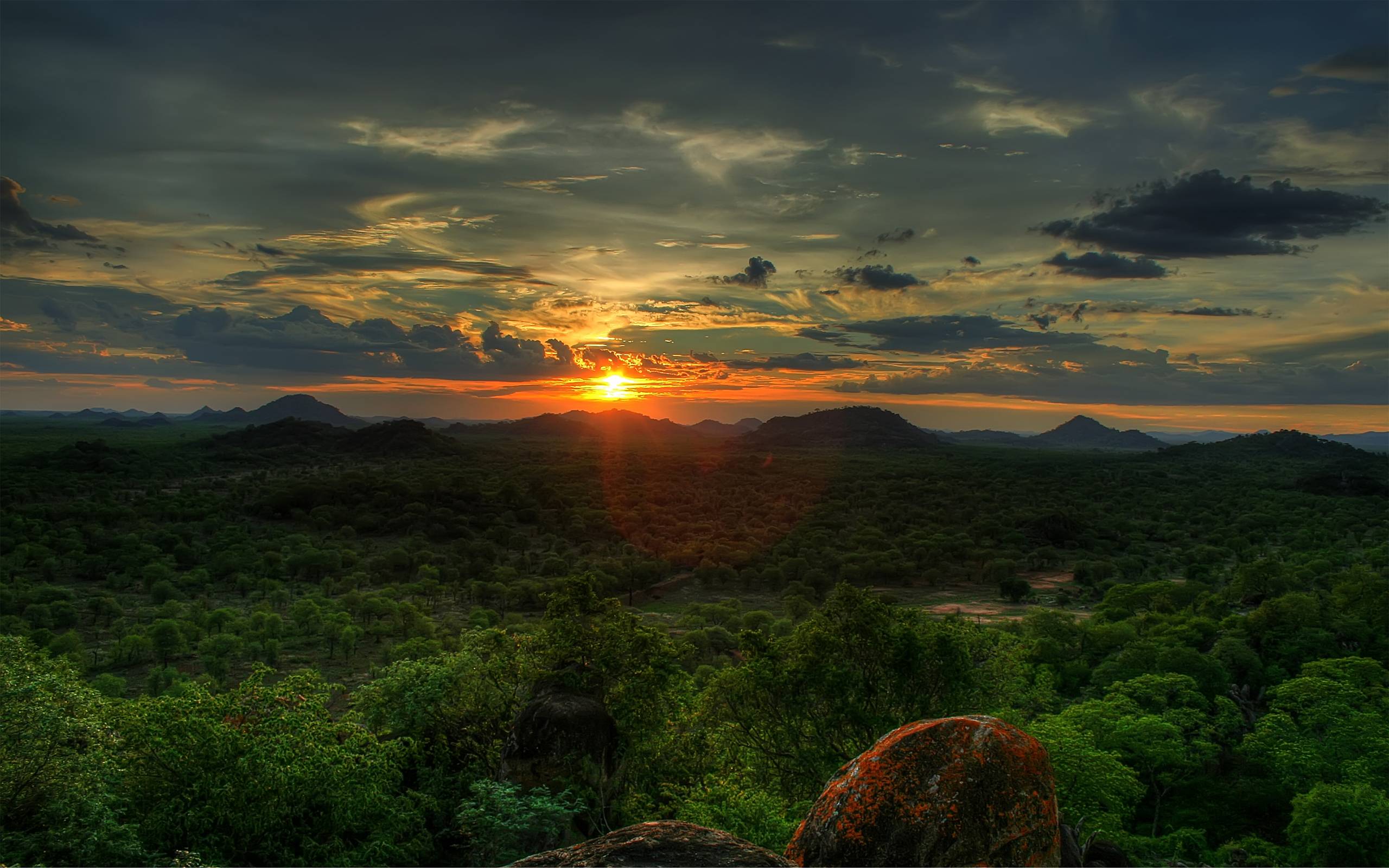
Dawn in the wildernessScripture Text:  Mark 1: 1-8

The beginning of the good news of Jesus Christ, the Son of God.  As it is written in the prophet Isaiah, “See, I am sending my messenger ahead of you, who will prepare your way;
the voice of one crying out in the wilderness: ‘Prepare the way of the Lord, make his paths straight,’”

John the baptizer appeared in the wilderness, proclaiming a baptism of repentance for the forgiveness of sins. And people from the whole Judean countryside and all the people of Jerusalem were going out to him, and were baptized by him in the river Jordan, confessing their sins. Now John was clothed with camel’s hair, with a leather belt around his waist, and he ate locusts and wild honey. He proclaimed, “The one who is more powerful than I is coming after me; I am not worthy to stoop down and untie the thong of his sandals. I have baptized you with water; but he will baptize you with the Holy Spirit.”

Do you remember the song from “The Sound of Music”?  “You start at the very beginning.  A very good place to start.  When you read, you begin with A-B-C; when you sing you begin with Do-Re-Mi.  The first three notes just happen to be Do-Re-Mi. Do-Re-Mi-Fa-So-La-Ti…..oh let’s see if we can’t make it a little bit easier…”  (Yeah, I’m a Sound of Music dork.)  We’re used to that…starting at the beginning, learning our A-B-C’s before we jump headlong into reading Tolstoy or something.  But, the writer of the Gospel According to Mark seemed to just sort of want to get this show on the road.  We’ve become so accustomed to the beauty and poetry of the nativity that somehow that becomes the season for us.  But here…”The beginning of the good news of Jesus Christ, the Son of God.”  That’s it.  That’s all you get.  No announcement of Jesus’ birth, no birth story, no stable, no inn, no manger, no Mary and Joseph and the babe, no shepherds, no magi.  Just that.  It’s sort of like the Gospel writer is saying “refer to the previous volumes”.  But, of course, most Biblical scholars will tell you that there WERE no previous volumes of the Gospel but that this one was the first.  So, what is that beginning?


Then it goes on:  As it is written….Essentially, the beginning of the good news of Jesus Christ, the Son of God, is everything that came before–all the prophets, all the judges, all the Wisdom, all the kings, Elijah, Moses, Ruth, Jacob, Abraham, Sarai, all the exiles returning home, all the burning bushes and parting waters, all the covenants, all those generations upon generations of people who wandered in the wilderness.  And now…now appearing in the wilderness is this wild, somewhat unkempt, bear of a man who clothes himself in camel’s hair and eats what appears to be whatever crosses his path in the brush.  There were certainly those with “proper” upbringing and “acceptable” expression of their religious beliefs that probably would have been a bit embarrassed by the display.  I mean, maybe it would have gone down easier if it had been someone a tad bit more “traditional”.  (But then, really, was Jesus all that status quo?)  And yet, I’m fascinated with this character of John the Baptist.  He knew who he was.  He knew his place.  He was called to prepare the way.  He was called to BE the voice crying out in the wilderness.  He was called to prepare the way of the Lord.


The beginning of the good news of Jesus Christ, the Son of God.  Here we are, in the wilderness of our lives, wandering a little aimlessly at times, trying our best to connect to God, to feel God’s Presence in our lives.  And yet, we know that God did not plunk down in the middle of the bustling city of Jerusalem.  God did not come in the way that was planned or imagined.  The Son of God emerged into the wilderness that was already there, already so full of God that the very earth shook.  The truth is, God had been there all along.  The good news of Jesus Christ was always beginning.  The same is true for us today.  What we are living is not some sort of prelude of a life to come; it is the very beginning of the story.  Maybe that’s our shortcoming.  Maybe we live lives limited by the chapters surrounding us.  But God…God came and comes over and over and over again, beginning, recreating, starting us over.  Advent is the season of beginnings–the beginning of the church year, the beginning of us, the beginning of what comes next.  Advent is not a preface to the high holy day on which we celebrate the Savior’s birth.  Advent reminds us that we, even now, are the beginning of the good news of Jesus Christ, the Son of God.  “See, I am sending my messenger ahead of you, who will prepare your way; the voice of one crying out in the wilderness: ‘Prepare the way of the Lord, make his paths straight.”  The truth is, the story ALWAYS is at the beginning!


When you come to the end of all the light you know, and it’s time to step into the darkness of the unknown, faith is knowing that one of two things shall happen: Either you will be given something solid to stand on or you will be taught to fly. (Edward Teller)


FOR TODAY:  How are you called to prepare the way for Christ?  How are you called to begin again?


Grace and Peace,

Shelli


Comfort, O Comfort My People


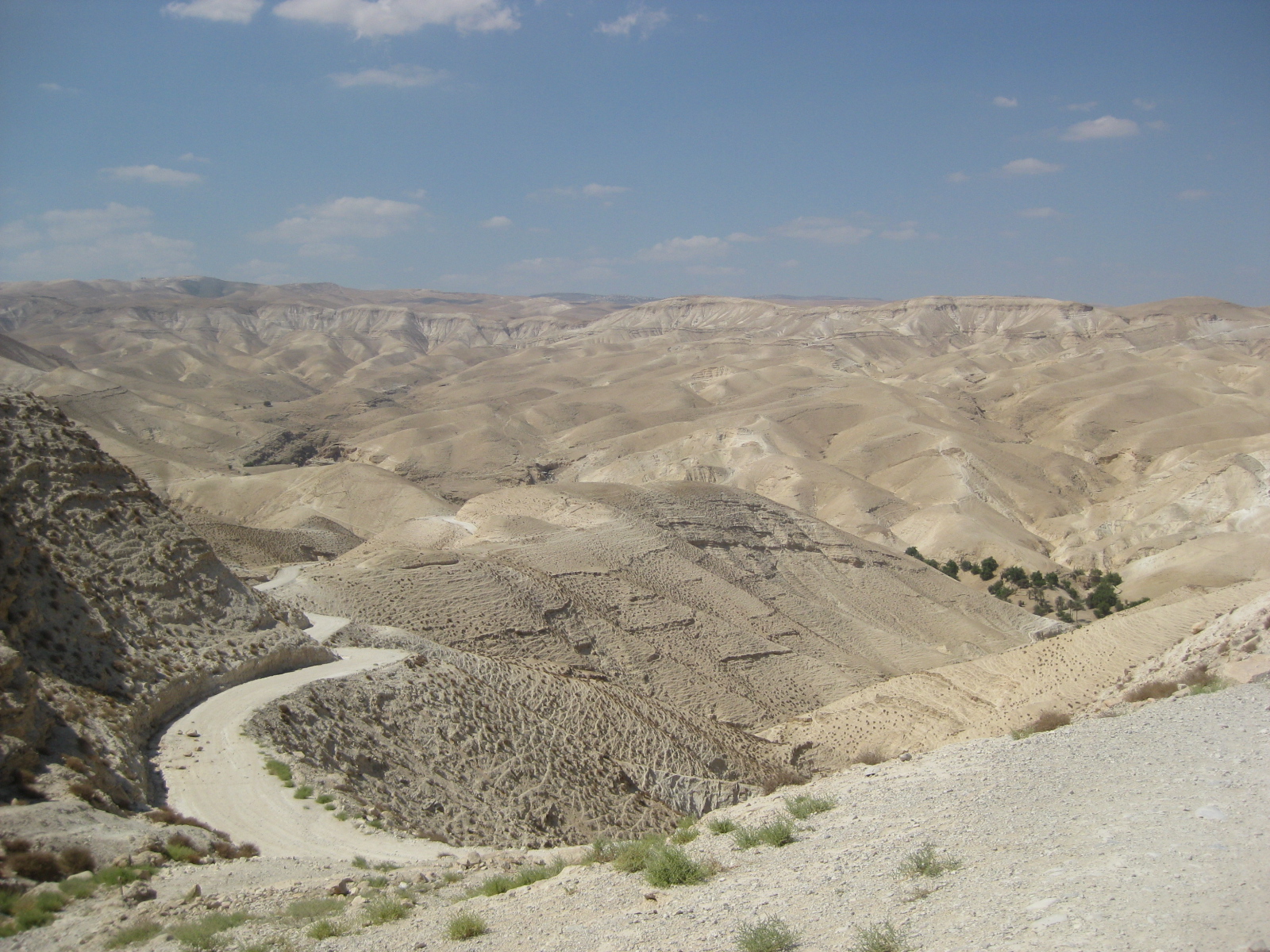
Scripture Text:  Isaiah 40: 1-5Road through the desert

Comfort, O comfort my people, says your God. Speak tenderly to Jerusalem, and cry to her that she has served her term, that her penalty is paid, that she has received from the Lord’s hand double for all her sins.  A voice cries out: “In the wilderness prepare the way of the Lord, make straight in the desert a highway for our God. Every valley shall be lifted up, and every mountain and hill be made low; the uneven ground shall become level, and the rough places a plain. Then the glory of the Lord shall be revealed, and all people shall see it together, for the mouth of the Lord has spoken.”

“Comfort, O Comfort my people.”  That sounds nice.  It sounds warm and inviting, something that we can just sort of fold ourselves into and relax and let God take care of us.  Well, maybe.  But then what happens?  What we do with our lives after that?  The truth is, as much as we like to imagine a warm and fuzzy God that heaps everything we desire and everything we need to make our lives easy and comfortable on us, that’s not exactly the way it always is.  Here, comfort is not solace; here comfort is transformation.  God is promising something new.  These words begin with God’s initiative–to bring the exiles home.  Sure, it will mean ending their suffering and making their lives better.  But it is more.  It means that they will become something new–a new creation.  The former things have passed away.  God is not in the habit of rebuilding or “fixing” the way it is easy for us to imagine could happen.  God is the Creator, the great I AM, the one who brings newness and life.


So, God prepares a highway through the wilderness.  Now, don’t think that there wasn’t already a road there.  In the year 539 BCE, Cyrus of Persia conquered the Babylonians. Now he tended to be sort of a benign and tolerant ruler and so he allowed those who had been previously exiled from Jerusalem the chance to return home. So the people are beginning to return home, but to a home that was nothing like it was before. If you can imagine, these waves upon waves of people on this highway that leads toward Jerusalem—a Jerusalem that now lies in ruins without the Temple that used to be in the center of its life. This highway, a highway through the desert that, typical of the ancient world, was originally built to accommodate royal processions. Everything was done to make the highway smooth and clear.   The road was there, already made straight and smooth for the royals to travel.  And so the exiles, returning to “who knows what?” were on this road.


But, wait, look, over here.  God also promises a highway, smoothed and cleared of mountains and deep, treacherous valleys that would impede the journey.  God promises a holy highway built for a grand procession led by the Almighty God.  It’s still a road that you have to travel, but, rather than leading you to the ruins of the life you once knew, THIS road leads you Home.  And as we travel this road, God is creating and creating and creating the whole time, unfolding our life before us as long as we keep our eyes open to see what God is doing.  This is the way that the Glory of the Lord shall be revealed.


This is the road that Advent shows us.  It’s not one that takes us to the place that we’ve always known.  Advent shows us the newness that God is offering.  In the Advent season, we remember those generations upon generations that waited for a Savior.  We also prepare ourselves to remember once again how Christ came and comes.  But there’s another part of Advent that we miss.  It is this road, this road that we’re on that leads us to finally see things in a different light.  There is a Maori proverb that says “turn your face to the sun and the shadows will fall behind you.”  “Comfort, O Comfort my people.”  The Light is changing and you, even you, even now, are being made new.  “Then the Glory of the Lord shall be revealed, and all people shall see it together.”


Learn to see and then you’ll know there is no end to the new worlds of our vision.  (Carlos Castaneda)


FOR TODAY:  What newness has God created in your life?  During this Advent, what newness can you find on the road?


Grace and Peace,


Shelli

Expectant Hope

cropped-dreamstimefree_2365100.jpgScripture Text: Hebrews 11:1

Now faith is the assurance of things hoped for, the conviction of things not seen.

I remember when I was little, going to bed on Christmas Eve was the hardest and the most amazing thing to do.  I would lay there so excited about the next morning that I couldn’t sleep.  There were things that I hoped against hope would be under the tree when I awoke.  But, the main thing, is that I knew deep down that, regardless of what I hoped would be there, there was always something wonderful there.  I knew that.  I thought sure that there was no way I would ever go to sleep but at some point, I would drift off.  Then in the morning, I would lay there for a little awhile.  Even at a young age, I understood that there was this moment–this wonderful glorious moment when I would get my first look at the Christmas tree (post-Santa’s visit) and I would savor it, push it until I could not stand it anymore.  Then, there it was–this moment filled with beauty and wonder and hopes fulfilled before the tree stood a short time later in a barren wasteland of discarded wrapping paper.  But in that moment was hope alive.


I think we have lost the meaning of the word hope.  We’ve become like that young child, attaching it to a list of needs or wants that we have somehow conjured up in our head.  We have gotten hope confused with wishing.  I think, though, that hope is more.  It is not what we want to happen or what we wish would happen; hope is what we expect will happen.  The young me had somehow gotten that part of it too–that understanding that hope was not merely wanting something, but daring to expect it, daring to imagine that it would actually come to be.


As Christians, we are given hope.  Oh, hope was always there.  We just believe that it became more tangible that night in the manger and that it could no longer even be denied as we stood before an empty tomb.  But what we do with that hope is up to us.  Living with hope is not about merely wishing things were different and it’s certainly not about wanting things to be better for us.  Living with hope is living with the conviction that somehow, some way, even though it doesn’t make sense to us and even though we don’t understand it, we dare to expect that that moment will come to be–filled with beauty and wonder and hopes fulfilled.


This season of Advent gives us hope.  In our waiting, in this season in which we have to let go of our need to control what is going to happen, our need to plan, our need to jump ahead to the next season, we find hope.  And as the passage implies, hope feeds our faith, gives it life.  Hope is not wishing; hope is expecting.  Dare to expect what seems to be beyond hope and there you will find hope.  Hope is alive.  It is more than a dream; it is the story into which we live.  Living with hope is daring to live as if what you are expecting has already come to be.


Hope holds with it the promise that God always answers our questions by showing up, not necessarily with what we ask for but with remarkable gifts that change our lives and the world. (Mary Lou Redding, “While We Wait”)


FOR TODAY:  For what do you hope?  What do you expect?  What would it mean to live with expectant hope?

Grace and Peace and Advent Blessings,

Shelli

Flesh


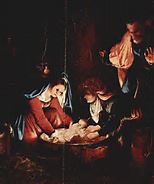
"The Nativity", Lorenzo Lotto, 1527-1528
“The Nativity”, Lorenzo Lotto, 1527-1528

Scripture Passages for Reflection:

When Joseph awoke from sleep, he did as the angel of the Lord commanded him; he took her as his wife, but had no marital relations with her until she had borne a son; and he named him Jesus. (Matthew 1:24-25)

And she gave birth to her firstborn son and wrapped him in bands of cloth, and laid him in a manger, because there was no place for them in the inn. (Luke 2:7)

And the Word became flesh and lived among us, and we have seen his glory, the glory as of a father’s only son, full of grace and truth. (John 1:14)

The Gospel writers all seemed to struggle a bit to fully convey the wonder, the unfathomable glory, of this night.  In fact, the writer that we know as Mark didn’t even really try.  He or she just jumped right in proclaiming the Good News, seemingly in a tremendous hurry to get the word out.  For the writer of Matthew’s Gospel, he seemed to only be able to state it with some proof of what it was not.  (In other words, this is no ordinary birth.)  And the writer that we call Luke seemed very focused on the physical place of Jesus’ birth and the realization that there really was no room.  But years later, the writer of John’s Gospel, conveyed a notion with which we still struggle:  that God in God’s wisdom after centuries upon centuries of trying to deal with humanity, after years of drawing us toward the Divine, of showing us a vision that God has for each of us, became flesh, one of us.  On this night, God is born human, fully human, into a world that was never really ready, never really prepared (and probably still isn’t).  And, yet, God must have loved the world, even THIS world, more than life itself, to come into it as one of us.  God became human and lived with us.  Incredible thought, isn’t it?

The Incarnation is God’s unveiling, God’s coming out of the darkness and the shadows and the clouds and showing us for the first time what we could not see before. Emmanuel, God With Us, this day walks into our ordinariness.  God has traversed time and space and all things Divine to enter our every day world.  Pierre Teilhard de Chardin said that “by virtue of the creation, and still more of the incarnation, nothing here below is profane for those who know how to see.”  Perhaps God came into this ordinary world to show us the holiness that had been created, the sacredness that in our worldliness, we were somehow missing. God steps into our lives to show us the depths to which we have not allowed ourselves to dig.   No longer can flesh and humanity be deemed “bad”; God came as flesh, came as human, came as one of us.  It would be easy to dismiss the whole thing as something that “seemed” like one of us because, after all, this is God.  And what would God be doing fooling around with the squalor and feebleness of this world?  You see, it is not that God lowered the Godself to our standard but that God’s coming raised us toward the Divine.  And notice in the Christmas stories how they emphasize the lowliness of the surroundings and the danger to the child as much as the miraculous glory of the event.  By entering human existence, even God faces down the power of evil, sin, and death.  In love, God elects to be no more immune than we are from the dangers to love and life.

Thomas Merton once said that “the Advent mystery is the beginning of the end in all of us that is not yet Christ.”  It is all this waiting, all this preparing that we have done that has put us in this place.  It is the place that humbles and amazes at once.  Who would have ever thought?  Who would have ever written the story such that a baby’s birth on a cold desert night in the midst of social turmoil would be the in-breaking of the Godself into our world, Emmanuel, God With Us.  After all this time, all this waiting for God, this hoping against hope that God would show up and pull us out of the mire of humanity, God comes full on into it, not pretending to be like us but becoming one of us.  God came to show us how to be who we are, who we are called to be, and to show us that, once again, it is very, very good.  So, on this night of nights, as the Light begins to dawn and we realize that God has come bursting into our lives and into our world, let us open our eyes and rub the sleep out of them and finally see this thing that has happened.
Reflection:  On this night of nights, what does God in our midst mean for you?  How can this year be different?
Merry Christmas!
Shelli

Threshold

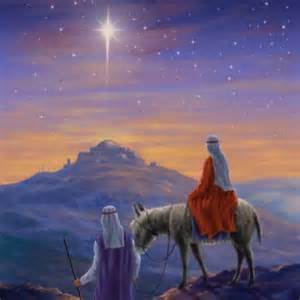
Journey to Bethlehem-colorScripture Passage for Reflection:  Luke 2: 1-5

In those days a decree went out from Emperor Augustus that all the world should be registered. This was the first registration and was taken while Quirinius was governor of Syria. All went to their own towns to be registered. Joseph also went from the town of Nazareth in Galilee to Judea, to the city of David called Bethlehem, because he was descended from the house and family of David. He went to be registered with Mary, to whom he was engaged and who was expecting a child. 

There is a word that we do not use much called “liminality”.  It is from the Latin word for threshold and is used to describe a state of being “betwixt and between”a point of being suspended between what has happened and what will be.  It is likened to being on an airplane flying over the ocean between two continents.  For a few hours, it is as if you are suspended between times, cultures, and nations.  It is as if you are nowhere and everywhere at the same time.  It is a place of enlarged vision, enlarged perspective and no real place to put down roots.  Liminality is a place that our souls crave, a place where our spiritual sense is somehow heightened, a place where se can see both who we are and who we will become.  On this eve of the Great Eve, we find ourselves a little “betwixt and between”.

Think of this day so long ago.  Bethlehem was in reach for this scared young couple who were so unsure of exactly what the world held for them.  They were rounding the final peaks of their journey.  But this day they found themselves no longer a part of their old lives and yet they didn’t really know what tomorrow would hold. But now, now they were traveling through a foreign land.  It was the land of Joseph’s family.  He had been there often as a child.  But the place was different somehow, full of those who followed this emperor, nothing like he really remembered.  The road was packed with travelers returning to the place of their ancestors to make their presence known to the government.  Joseph felt like he should know these people and, yet, they were all strangers to him.  Mary and Joseph did not feel like they were part of this new world and yet their old world did not exist.  There didn’t seem to be any room for them at all.

We are indeed standing on the edge of a brave new world.  Oh sure, we do this once a year whether we’re ready or not. Once a year, the night of nights comes and we sing Silent Night and we light our candle and once again welcome the Christ Child into our lives.  Why is this year any different?  Because, in this moment, standing on this edge between who we are and who we will be has the possibility of changing everything.  This is the moment when we decide whether or not to turn toward Bethlehem or to turn and go back.  Standing in this place of “betwixt and between”, we see both, fully in our view.

We are not that different from that scared young couple.  We find ourselves pulled between the life we’ve so carefully created and the life we’ve been promised.  It is hard to not hold so tightly to those structures that give us power and prestige and security.  And yet, God doesn’t call us to leave our lives behind but to live all that we are and all that we have within that vision that God holds for us.  And it is in this moment, standing here between the two that allows us to see how to do that, that allows us to see our lives the way that God sees them and journey on.  It is in this moment that God gives us new eyes and asks us to follow the star.  And if we do that, this year WILL be different.  We are standing in the threshold between a waiting world and one in which the Divine has already poured into our midst.  We live in the already and the not yet.  But for those who see with new eyes, the road ahead is the only one that makes sense anymore.  Because that is the way to Bethlehem.  Let us go and see this thing that has happened.  There’s a world about to be born.

This text speaks of the birth of a child, not the revolutionary deed of a strong man, or the breath-taking discovery of a sage, or the pious deed of a saint.  It truly boggles the mind:  The birth of a child is to bring about the great transformation of all things, is to bring salvation and redemption to all of humanity.

As if to shame the most powerful human efforts and achievements, a child is placed in the center of world history.  A child born of humans, a son given by God.  This is the mystery of the redemption of the world; all that is past and all that is to come.

All who at the manger finally lay down all power and honor, all prestige, all vanity, all arrogance and self-will; all who take their place among the lowly and let God alone be high; all who see the glory of God in the lowliness of the child in the manger:  these are the ones who will truly celebrate Christmas. (From Christmas With Dietrich Bonhoeffer, ed. By Manfred Weber)

Reflection:  On this eve of Eve’s, name those things that are holding you back from THIS year being different.

Grace and Peace,

Shelli

Behold, A Mystery!

Mystery ForestScripture Passage for Reflection: 1 Corinthians 15:51

Listen, I will tell you a mystery! We will not all die, but we will all be changed.

This Season of Advent is ripe with mystery.  I guess it’s conventional and comfortable to take all the stories as they are written, to make sure that Jesus was born the way we assume him to be born, to make sure that there was nothing that might be in question.  And so we spend the season praying over and over to God that God will somehow get our perspectives straight; in other words, that God will swoop in and finally clear it all up for us once and for all.  But mystery still remains!  There are oh so many questions.  Why this way?  Why Mary?  Why that time? (I mean the world wasn’t any more ready for it than it is now!)  Why NOT now?  Why THIS man?  Why THIS place?  Was it in a manger or a grotto or the back room attached to the house that was built for the animals in that century?  And why didn’t they have room?  I mean, really, if God was coming into the world, why didn’t God at least make reservations for the occasion?  So much of this doesn’t make sense at all.  Wouldn’t it have been more efficient of God’s coming into the world was better documented, perhaps well-explained so that we’d have something with which to work?  It would definitely be oh so much easier.

The truth is, surety and doubt, belief and questions are all a part of our faith.  They are all a part of the story.  They are the way the story unfolds. When I was in seminary, Perkins arranged for students to participate in a small question and answer type discussion with noted author and screenwriter, John Irving.  One of the questions that someone asked him was how he went about constructing his stories.  The question was, of course, not surprising.  The answer, though, might have been to some.  Irving said that when he sat down to write, he always wrote the ending first and then backed through the story, creating characters, plot, and theme.  The point of the story is, after all, that with which we are left.  Regardless of where it’s located in the work, the point is usually realized at the end.  I think that’s what God has done.  God wrote the ending first, the recreation of all there is, the Kingdom of God in its fullest, and then began to back through the story.  So this coming of the Godself into our midst becomes the turning point that leads us that Way.

Eternal life was already there for us written into the deepest part of our being, the very image of God within us.  But the way to that life is murky at best.  So God came not as one wielding weath and power and the things of this world but as one holding nothing, a tiny baby with nothing but the love of two people who had promised to show him the Way.  God never intended that this way would be one of certitude.  The journey is one of seeking, of questioning, of wrestling, until one finds his or her way to God.  Having all the answers would have shut us down long ago.  It is the mystery that invites us to journey.  Another noted author, Andrew Greeley, once wrote, “Life is prodigious,  overwhelming. In that there is mystery, hint, and perhaps sacrament…The excessiveness of life is the best sacrament we could ask for, a hint of how powerful, how determined, and how excessive You are.”  Maybe God’s plan was not to bring the Divine down to our understanding but to give us something to journey toward.  Mary’s part was a journey into the unknown.  So was Joseph’s.  So is ours.  But it is only unknown until we embrace it as Home.

God…leads us step by step, from event to event.  Only afterwards, as we look back over the way we have come and reconsider certain important moments in our lives in the light of all that has followed them, or when we survey the whole progress of our lives, do we experience the feeling of having been led without knowing it, the feeling that God has mysteriously guided us. (Paul Tournier)

Reflection:  What part of this mystery is the hardest for you?  Where do you need to journey?

Grace and Peace,

Shelli