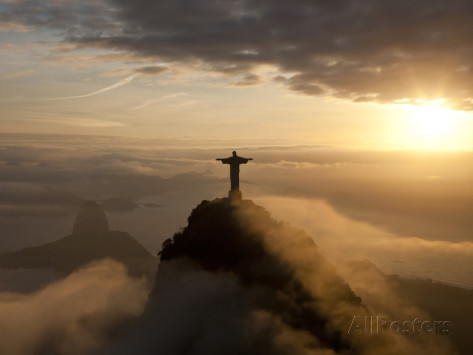
The Light-Gatherers

Scripture Text: Luke 3: 1-6 (Advent 2C)

In the fifteenth year of the reign of Emperor Tiberius, when Pontius Pilate was governor of Judea, and Herod was ruler of Galilee, and his brother Philip ruler of the region of Ituraea and Trachonitis, and Lysanias ruler of Abilene, 2during the high priesthood of Annas and Caiaphas, the word of God came to John son of Zechariah in the wilderness. 3He went into all the region around the Jordan, proclaiming a baptism of repentance for the forgiveness of sins, 4as it is written in the book of the words of the prophet Isaiah, “The voice of one crying out in the wilderness: ‘Prepare the way of the Lord, make his paths straight. 5Every valley shall be filled, and every mountain and hill shall be made low, and the crooked shall be made straight, and the rough ways made smooth; 6and all flesh shall see the salvation of God.’”

Well, we know it’s Advent when John the Baptist shows up again!  Most of us don’t really know what to do with John.  After all, he was actually a little bizarre.  John was this wild wilderness man who wore animal skins and made his meals off of locusts and honey and whatever else he could find in the wild.  He was actually a little radical, preaching what could probably be considered hellfire and brimstone sermons to convince people of his message.  OK, maybe John’s “bedside manner” had a little to be desired.  Yes, John was the one who never quite conformed to the way of this world, to acceptable society, but rather chose to focus solely on what it was God was calling him to do.

John never claimed to be more than he was.  His only mission was to point to the one who was coming, the One that would BE God in our midst, the One that would baptize us with water and the very Spirit of God.  So, though his preaching was often fiery and overly-zealous and maybe even a little off-putting, John was a Light-Gatherer.  Light-Gatherers do more than just look for the Light.  They do more than follow the Light.  Light-Gatherers walk into the Light, gather it in, and reflect it off of themselves.  Jesus taught that his disciples and his followers were called to be a Light to the world.  That is what John did.  He was a Light-Gatherer.

Creation is full of light-gatherers.  You remember photosynthesis, don’t you?  It’s the process by which plants take in light and transform it into energy and growth.  That’s probably a really good lesson for us.  We, too, are called to be Light-Gatherers, to take in the Light and transform it into energy and growth for ourselves and for the world.  Then we are called to reflect that Light, the Light of God, into the world.  We are called to be a beacon, a Light-Gatherer of the Light of God.  So, in this season of Advent, go toward the Light but don’t stop there.  Gather the Light and reflect that Light to the world.  Be a Light-Gatherer.

Sometimes our light goes out, but is blown again into instant flame by an encounter with another human being.  Each of us owes the deepest thanks to those who have rekindled this inner light. (Albert Schweitzer) 

Grace and Peace,

 Shelli

Let There Be Light

Scripture Text: Genesis 1: 1-5

In the beginning when God created the heavens and the earth, 2the earth was a formless void and darkness covered the face of the deep, while a wind from God swept over the face of the waters.

3Then God said, “Let there be light”; and there was light. 4And God saw that the light was good; and God separated the light from the darkness. 5God called the light Day, and the darkness he called Night. And there was evening and there was morning, the first day.

We talk a lot about light during the Advent and Christmas seasons, that coming of the Light as it is birthed into the world.  But go back to the beginning.  The Light came to be back then. It was always there, pushing back the darkness and illuminating all of Creation. According to this much-beloved story of Creation, God said the Light into being and there was Light.  This opening part of Genesis is essentially an affirmation of faith in the God who created the world and all that exists.  It doesn’t refer to the beginning, per se, but rather the beginning of the ordering of Creation.  See, the heavens and earth were there as dark, formless voids.  And God began to order Creation and into Creation God breathed Light. In the beginning, God began to re-create Creation—with Light.

The Light was always there, always pushing back the darkness of the world.  But sometimes our eyes are not adjusted to the light and we miss what it is illuminating for us.  We find ourselves in the darkness.  So Jesus came into the world not to BE the Light but to show us the Light that was always with us.  Jesus was part of that Light, the revelation of the Light, and came to show us how we, too, can reflect that Light throughout the world.

In this season of Advent, our journey guides us toward the Light.  It is the Light that has always been there.  It is the Light that God created.  It is the Light that Jesus Christ came into the world as God Incarnate, Emmanuel, to reflect, to show us how to be the Light. And yet we often travel in darkness.  The darkness is not bad.  God created the darkness just as God created the light. But the darkness cannot sustain us.  Only the Light, the Light that God created, the Light that God came into the world to reflect can sustain us.

So, as you travel through the darkness this season, remember to look for the light, those flashes of light.  They are there.  They will push back the darkness, illuminating it, making it more bearable.   Journey toward the Light.  It is the very essence of God coming into the world.

My ego is like a fortress.  I have built its walls stone by stone to hold out the invasion of the love of God.  But I have stayed here long enough.  There is light over the barriers.  O my God…I let go of the past.  I withdraw my grasping hand from the future.  And in the great silence of this moment, I alertly rest my soul. (Howard Thurman) 

Grace and Peace,

 Shelli

Colors of Light

Lectionary Scripture Text: Philippians 1: 3-11 (Advent 2C)

3I thank my God every time I remember you, 4constantly praying with joy in every one of my prayers for all of you, 5because of your sharing in the gospel from the first day until now. 6I am confident of this, that the one who began a good work among you will bring it to completion by the day of Jesus Christ.

7It is right for me to think this way about all of you, because you hold me in your heart, for all of you share in God’s grace with me, both in my imprisonment and in the defense and confirmation of the gospel. 8For God is my witness, how I long for all of you with the compassion of Christ Jesus.

9And this is my prayer, that your love may overflow more and more with knowledge and full insight 10to help you to determine what is best, so that in the day of Christ you may be pure and blameless, 11having produced the harvest of righteousness that comes through Jesus Christ for the glory and praise of God.

The passage for today is the beginning of a first-century letter and Paul begins by reassuring them of his prayers and his pride in them because of their faith.  See, Paul was never all that interested in winning converts.  The game was not about numbers.  He was more concerned about people entering into a new relationship with God that keeps them going.   He was encouraging a faith that would keep them going through the hard times, would empower them to look at their lives the way God meant them to be, the way God looks at their lives.  

This season of Advent calls us to do the same, to change our way of looking at our world, at our lives, at ourselves.  It is a way of adjusting our eyes to see the light.  It’s not about religious rules or theological presumptions.  I don’t even think it’s about doing the right things.  It’s about seeing things the way they are.  See, contrary to accepted belief, I don’t think Paul had a rigid adherence to religious laws or set ways of believing.  (I DO think some of his disciples and followers, some of whom wrote some of the letters attributed to Paul may have been a little more rigid in their belief.)  Paul really wanted people to be genuine, honest, and sincere.  He wanted everyone to be who they were called to be. Paul’s image of praising God has to do with real people living changed lives and changing others’ lives in the process.  It has to do with seeing in a different way.

The world often discolors our view.  We are affected by artificial light and fabricated color.  Paul talked about “full insight”, actually seeing things the way they are.  It means we have to strip away the colors that are not real.  You remember your science.  Light is just a collection of colors.  Black and white aren’t even colors at all but merely an absence or a congruence of colors that make us see things differently.  But what if you could see your life the way it was meant to be, with the colors God intended? The Light to which we move during Advent is not some fabricated collection of colors.  It’s true light; it’s true colors.  But it may not be what we thought it would look like.  After all, sometimes life is hard.  Sometimes it holds difficulty and loss and things not turning out the way we envisioned.  So, Advent calls us to be open, to be open to recoloring our world so that it looks the way it should look.  Open your eyes—to everything—to every color and every combination that God shows you on this journey.  It will be glorious!

God is in the symphony, where harmony exists amidst the tension of pitch and tone.  God is in the beautiful sunset, where contrasting colors hint at the glory of the Creator.  God is in the beautiful relationship, where solidarity is born of struggle and disagreement.  God is in the beautiful individual, whose wrinkled skin is witness to a life of challenge and hardship lived with the confidence that it all makes sense.  (Paul D. Sweet) 

Grace and Peace,

 Shelli

Fire and Light

Lectionary Scripture Text: Malachi 3: 1-4 (Advent 2C)

See, I am sending my messenger to prepare the way before me, and the Lord whom you seek will suddenly come to his temple. The messenger of the covenant in whom you delight—indeed, he is coming, says the Lord of hosts. 2But who can endure the day of his coming, and who can stand when he appears? For he is like a refiner’s fire and like fullers’ soap; 3he will sit as a refiner and purifier of silver, and he will purify the descendants of Levi and refine them like gold and silver, until they present offerings to the Lord in righteousness. 4Then the offering of Judah and Jerusalem will be pleasing to the Lord as in the days of old and as in former years.

In case you haven’t figured it out yet, I’m focusing on Light this Advent—those flashes of light that come unexpectedly, often unbidden, that fill our lives with illuminating color and spark.  But light is not always welcome.  It’s not always a warm twinkle that tiptoes in or peeks over the horizon as it waits until your eyes are adjusted to it.  Sometimes it is hot and explosive, even blinding.  Sometimes it comes as a burning bush or a chariot of fire.  And sometimes it is almost destructive, a white-hot fire that burns out of our control.

This Scripture from the Book of Malachi speaks of a fire such as this.  It is a refiner’s fire that will reform the society in preparation for the day of the Lord’s coming.  It is a purifying Light that will change everything and everyone that it touches.  Its first hearers were probably as uncomfortable with this whole fire message as we might be.  After all, fire is destructive.  Fire burns.  It is a light that consumes, that destroys.  But it also purifies.  It purifies by burning away the ore so the precious metal inside is revealed.  It is intense, heating beyond what most of us can normally stand.  But one has to get close enough to the fire to work with the metal for it to be refined.  It is risky.  It might even be painful.  But it is the only way for all the impurities to be removed.  The impurities must be burned away until the new part is revealed.

You’ve probably already heard this illustration because I’ve used it before, but it’s wonderful as it tells the story of a woman watching a silversmith at work.  “But sir,” she said, “do you sit while the work of refining is going on?” “Oh, yes madam,” replied the silversmith, “I must sit with my eye steadily fixed on the furnace, for if the time necessary for refining be exceeded in the slightest degree, the silver will be injured.”  So as the lady was leaving the shop, the silversmith called her back, and said he had still further to mention, that he only knows when the process of purifying was complete by seeing his own image reflected in the silver.

Light always brings about change.  Sometimes it’s warm and inviting—a sunrise, a guidelight, a lamp.  And other times the Light brings about change so fast that it is painful.  But we are meant to be changed.  We are meant to be refined.  Our very image is being burned into the change that we see in this world.  This Advent light is on the horizon.  We can’t push it away, no matter how uncomfortable it may be.  It is our journey—into the Light.  And we WILL be changed.  And, finally, the image in which we were created, that very image of God, will be revealed.

But whether small or great, and no matter what the stage or grade of life, the call brings up the curtain, always, on a miracle of transfiguration-a rite, or moment, of spiritual passage, which, when complete, amounts to a dying and a birth.  The familiar life horizon has been outgrown, the old concepts, ideals, and emotional patterns no longer fit; the time for the passing of a threshold is at hand. (Joseph Campbell) 

Grace and Peace,

 Shelli

Exposure to Light

Lectionary Scripture Text: 1 Thessalonians 3: 9-13 (Advent 1C)

9How can we thank God enough for you in return for all the joy that we feel before our God because of you? 10Night and day we pray most earnestly that we may see you face to face and restore whatever is lacking in your faith.  11Now may our God and Father himself and our Lord Jesus direct our way to you. 12And may the Lord make you increase and abound in love for one another and for all, just as we abound in love for you. 13And may he so strengthen your hearts in holiness that you may be blameless before our God and Father at the coming of our Lord Jesus with all his saints.

In a way, these few verses almost sound a little sappy to our sometimes-cynical ears.  Are we ready for the big group hug?  But, seriously, you have to think about this in light of the environment in which these believers lived.  It was not easy.  There were always other powers pulling them away, cultural norms into which it was so easy to fall once again.  So, Paul’s exhortation to the church at Thessalonica was not a sappy, feel-good letter.  It was a reminder that there is something more, something better up ahead.  It was a reminder to hold on, to persevere, and to open one’s eyes to the signs of God’s Presence that surround us even in the midst of all these things that get in the way.  It was a call to allow oneself to be strengthened in holiness as one comes nearer and nearer to God.

Perhaps these words are something we need to hear.  After all, these times are tough.  There is a pandemic still running rampant, a pandemic that last Advent we all thought would be long gone by now.  There is greater division in our country than any of us have ever seen in our lifetimes.  The world around us seems to be slipping into something that we don’t recognize sometimes.  In a way, our lives are reminiscent of those early Thessalonians.  And, so, we, like them, pray for strength, pray that God will strengthen our hearts in holiness that we might know the Hope that is always offered.

This season of Advent IS a season of hope.  But sometimes that hope is terribly hard to see.  It often calls for an adjustment of the light exposure in our picture.  That may be an elusive notion nowadays with all of our automatically-adjusting cameras on every electronic device we own, but the shutter cameras that we used to all have (you know, the ones with the film) sometimes required an adjustment that would allow more or less light through the shutter, depending on the photo itself.  That’s sort of what Advent does.  It’s not a “beginning again” in that we start over but rather a time to adjust our picture, change the way we look at things, shift our lives just a bit so that we can see the Light.  God will guide us as we prepare to do that if we will only listen, if we will only allow ourselves the gift of being changed.  Just focus, make the adjustment, and bathe in the Light that illuminates your way.

Turn your face to the sun and the shadows will fall behind you. (Maori Proverb) 

Grace and Peace,

 Shelli

Trees and Branches

Lectionary Scripture Text: Jeremiah 33: 14-16 (Advent 1C)

14The days are surely coming, says the Lord, when I will fulfill the promise I made to the house of Israel and the house of Judah. 15In those days and at that time I will cause a righteous Branch to spring up for David; and he shall execute justice and righteousness in the land. 16In those days Judah will be saved and Jerusalem will live in safety. And this is the name by which it will be called: “The Lord is our righteousness.”

“The days are surely coming…”  These words attributed to the prophet Jeremiah are spoken into a world filled with uncertainty and despair.  They are spoken at a time when Judah was literally being squeezed between the powerful and foreboding Assyrian nation to the north and Egypt to the south and the west.  The faithful were on the verge of losing their society, their culture, and their faith.  They were forgetting who they were.  Hope was fading fast.  The words were not a promise that things would be repaired or would go back to the way they were before.  The promise was of a future hope, a New Creation beginning to rise just on the horizon.  

The scripture talks of a righteous branch that will spring forth.  It is a New Creation.  It is that New Creation for which we look in this season of Advent.  For us, the coming of Christ points us toward this New Creation.  But branches do not grow alone.  They are attached to the tree, sharing food and source with other branches.  The branch is nothing by itself.  If it somehow becomes detached from the tree, separated from its sustenance, the branch will die.  It cannot exist alone.  Sometimes we forget that.  We begin to think that our way of being and our way of thinking and our way of understanding God is all there is.  But this branch springs forth from a tree whose roots reach deep, roots that connect us all.

We are that branch, that righteous branch.  But righteousness is not being “like God” or even better than most.  Righteousness is holiness.  It is realizing who and whose we are.  It is knowing that this branch is nothing without the tree to which it is connected.  It is understanding that our source and our sustenance is not made by us but comes from the God who created us all and from whom we spring forth, much like the branch that springs from the tree.  Righteousness is being and growing in the way one is called to be.

This season of Advent is not situated in linear time.  It is not a sequential season through which we cycle each year.  It is a mystery, a season rooted in the past as we remember the promise of hope made to those so long ago, a season placed in the present as we prepare ourselves to fully grasp the meaning of Christmas, and a season that thrusts us toward the future, toward that promise of a New Creation.  In this season, we realize that we are part of that branch, growing out of the sustenance and source that has existed all along and, as the righteous branch, growing forward as we reach toward the Light.  Our stems and leaves may intermingle with other branches, even growing around them until they become indistinguishable.  All of these branches growing together are part of a whole, part of a tree whose roots reach deep into time, sustaining everything, part of a network that always grows toward the Light.  So Advent is not merely a season of waiting; it is a season of finding the Light.

Faith is not something to be grasped; it is a state to grow into. (Mahatma Gandhi) 

Grace and Peace,

 Shelli

Flashes of Light

Lectionary Scripture Text: Luke 21:25-36

25“There will be signs in the sun, the moon, and the stars, and on the earth distress among nations confused by the roaring of the sea and the waves. 26People will faint from fear and foreboding of what is coming upon the world, for the powers of the heavens will be shaken. 27Then they will see ‘the Son of Man coming in a cloud’ with power and great glory. 28Now when these things begin to take place, stand up and raise your heads, because your redemption is drawing near.”

29Then he told them a parable: “Look at the fig tree and all the trees; 30as soon as they sprout leaves you can see for yourselves and know that summer is already near. 31So also, when you see these things taking place, you know that the kingdom of God is near. 32Truly I tell you, this generation will not pass away until all things have taken place. 33Heaven and earth will pass away, but my words will not pass away. 34“Be on guard so that your hearts are not weighed down with dissipation and drunkenness and the worries of this life, and that day catch you unexpectedly, 35like a trap. For it will come upon all who live on the face of the whole earth. 36Be alert at all times, praying that you may have the strength to escape all these things that will take place, and to stand before the Son of Man.”

We begin again.  The Christian calendar cycles around and starts again today and Advent begins.  And we wait.  We wait for what will come.  We wait for the promise to be fulfilled.  We wait for the Light.  And we look for the signs.  You see, there are always signs.  Even here in the darkness, before the birth, before the manger, before the coming of God into our world, there are signs.  Even in this unsettling time when confusion prevails, when divisions escalate, when the world topples a little as it spins, there are signs.  You know the ones.  They are flashes of light in the darkness that come when we don’t expect them, that appear when we’re not ready to see them, perhaps when our eyes are not adjusted enough to encounter them.  And so, they hurt.  And we push them away.  And we wait in darkness.

This is not new.  The Hebrew Scriptures are often inherently dark in timbre.  They carry stories of a people waiting for God to come, sometimes hurting, sometimes wanting, always hopeful.  But in the midst of the darkness, over and over and over again, there are flashes of light, flashes of a great light to be seen by those who walk in darkness.  But the light can only be seen by those who are looking for it, who are prepared, who do not push it way as a nuisance for which they’re not ready.  That is the lesson of Advent—not just that we must wait, not only that we must not “jump the gun” before the season of Light comes, but that we must learn how to wait.  Advent waiting is anything but passive.  It is instead a season of preparation.  It is a time of preparing oneself to see the Light.  And the signs and flashes help us know where to walk—if we will only pay attention.

This Advent is different for me.  My dad passed away in September.  Those “high days” are always hard at first after losing someone.  But, for me, THIS is the day I was dreading.  For many of the last couple of years, I have tried to post daily to this blog during Advent and Lent.  I thought about not doing it this year because I knew it would be a little painful.  See, my dad was probably my most engaged reader.  He would read it every morning and often he would text or email me or we would talk about it.  He would engage with the writing and with me.  Last winter and early spring, I had to spend some time “camping out” at their house after what I have chosen to call the “great flood of 2021” after the Great Texas Freeze froze my pumps in the house in which I was living.  Each morning when I was there, while I was still in that groggy state of morning sleep, I would often hear the song that I had included with the blog as I often have done.  It was coming from my dad’s iPad.  At that moment each morning he became part of what I had written.  And as I remembered that, I took it as a sign…

Advent is a lot like that.  We enter it a little a groggy.  After all, it’s hard to wait.  It’s hard to know what life holds.  It would be easier to push it away, to wait until we are ready.  But there are flashes of light and carefully-placed soundbites that draw us in, that remind us that the waiting is not for naught.  They are signs that invite us to engage.  That’s what Advent calls us to do—to engage, to be alert.  Those signs of light that we see along the way are not for us to smile and pass by.  They are drawing us in, inviting us to become a part of them, to live with them not as sign of what’s to come but as chapters of the story itself. This is the way we walk toward the Light.

So, this Advent, remember to stay alert to those signs.  They are for you.  Engage with them in the way that you are called to do.  Do not wait passively.  Do not put off encountering them for later when you think the time is right.  This season is not “pre-Christmas”.  It is, rather, the season of holy waiting.  I hope what I write will be helpful.  I hope in some small way it will hold flashes of light for you.

God did not wait till the world was ready, till nations were at peace. God came when the Heavens were unsteady and prisoners cried out for release. God did not wait for the perfect time.  God came when the need was deep and great. In the mystery of the Word made flesh the maker of the Stars was born. We cannot wait till the world is sane to raise our songs with joyful voice, or to share our grief, to touch our pain.  God came with Love.  Rejoice!  Rejoice! And go into the Light of God. (Madeleine L’Engle) 

Grace and Peace,

 Shelli