Be Thou My Vision

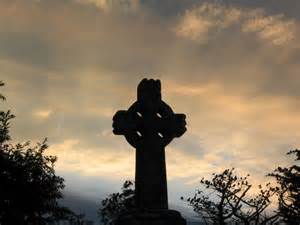
Celtic CrossScripture Text: John 1: 1-5

 In the beginning was the Word, and the Word was with God, and the Word was God. 2He was in the beginning with God. 3All things came into being through him, and without him not one thing came into being. What has come into being 4in him was life, and the life was the light of all people. 5The light shines in the darkness, and the darkness did not overcome it.


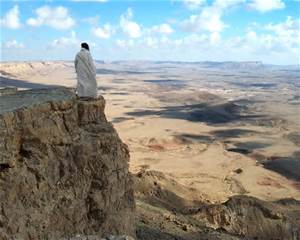
Well, just because we’re wandering in the wilderness does not mean that we are not allowed to paint ourselves green and celebrate with good ole’ St. Patrick. Happy St. Patrick’s Day! Because even those of us who are in traditions where we honor few feast days of Saints get in on this one! Now, admittedly, most of us don’t even know much about Patrick or his tradition, save a few legends about snakes and stuff.  Patrick was said to have been born Maewyn Succat (Lat., Magonus Succetus) in Roman Britain in the late 4th century.  When he was sixteen, he was captured by Irish raiders and taken as a slave to Ireland, where he lived for six years before escaping and returning to his family.  He wrote that his faith grew in captivity and he prayed daily.  The story is told that one day Patrick heard a voice saying “your ship is ready” and took it to mean that it was time to return home.  Fleeing his master, he traveled to a port two hundred miles away, found a ship, and sailed home.  He entered the church and later returned to Ireland as a missionary.  By the eighth century, he had become one of the patron saints of Ireland.


Patrick’s life, like his Celtic tradition, is based on pilgrimage.  Life in this tradition is about growing and moving and not “pitching our tent” in one place too long.  It is about connecting to all of Creation, about honoring and revering all as sacred.  It is about treating all of life sacramentally, embracing it as a gift from God and a way to God.  Embracing the Celtic spirit means going on a journey, open to moving from one place to another, one thought to another, one way of seeing to another.  In the midst of this journey, Celtic spirituality recognizes the importance of crossing places, seeing them as thresholds of growth.  These places are truly looked upon as sacred spaces.


I love the Celtic tradition. It has fed me spiritually for some time.  It’s probably a little wilder than that to which most of us are accustomed. Deborah Cronin characterized is as “a bit on the edge”. Rather than shunning the pagan belief that they inherited, they brought Christianity into it, letting the two traditions enter into a holy conversation. In fact, the Celtic Christians, without the limitations imposed by the Roman church, embraced even those considered “heretics” as part of their faith. So their version of the Christian tradition was “broadened” a bit beyond the traditional claims. See, history tells us that the Roman Empire never made it to Ireland, leaving the green isle just beyond the control of both the emperor and the authorities of early Christianity as most of us know it. So Ireland and the other islands that claimed this Celtic strain of belief, birthed a Christian experience somewhat removed both geographically and theologically from mainland Europe. It is Christianity mingled with, but not compromised by, the finest aspects of pagan Celtism, those that found resonance with Christian symbols and understanding. For Celtic Christians the experience of vision is a tangible way of seeing what God has done and then seeing it through God’s creative eyes, followed by seeing the life-giving possibilities God sees. Not overly concerned with ecclesiastical matters, the Celtic Way is instead expressed through the beauty of art and symbols, the richness of prayers and poetry, and an understanding of the sacredness of all of Creation.


What would our faith look like if we understood all Creation as sacred? What would our beliefs be if we allowed them to grow beyond what tradition has handed us? What would our lives look like if saw everything as “of God”, as a way that God is perhaps speaking to us, maybe leading us down a different path? What would our journey be if we became connected to more than what we know, more than what we see? What would it mean to live our lives “a bit on the edge”, in liminality (“betwixt and between”), as the Celts would have called it, on a threshold between what we know and what we don’t, between what we see and what has yet to be revealed to us, between what is true and what is Truth? In this season of Lent, we are called to open our thoughts, open our hearts to the way that God is leading us. We are called not just to see what is obvious but to let God be our Vision, our way of seeing, to enter the Sacred with new eyes and a new heart. Maybe we will find that the way out of this wilderness is not by exiting it but by beginning to see it differently, as a way filled with sacredness and wonder, as a Way of God.  

http://www.bing.com/videos/search?q=celtic+be+thou+my+vision&qpvt=celtic+be+thou+my+vision&FORM=VDRE#view=detail&mid=8DB7AEBD8FDE0203321C8DB7AEBD8FDE0203321C


Human beings may separate things into as many piles as we wish—separating spirit from flesh, sacred from secular, church from world. But we should not be surprised when God does not recognize the distinctions we make between the two. Earth is so thick with divine possibility that it is a wonder we can walk anywhere without cracking our shins on altars. (Barbara Brown Taylor)


FOR TODAY: Close your eyes and imagine God as your Vision. Open your eyes and behold the Sacred in everything…And THEN paint yourself green and do whatever you do to celebrate St. Patty’s Day!


Rath De ‘ort (Gaelic, pronounced Rah Day urt, “The Grace of God on you.”)


Shelli

Turned Inside Out


Inside OutScripture Text: Jeremiah 31: 31-34

 31The days are surely coming, says the Lord, when I will make a new covenant with the house of Israel and the house of Judah. 32It will not be like the covenant that I made with their ancestors when I took them by the hand to bring them out of the land of Egypt—a covenant that they broke, though I was their husband, says the Lord. 33But this is the covenant that I will make with the house of Israel after those days, says the Lord: I will put my law within them, and I will write it on their hearts; and I will be their God, and they shall be my people. 34No longer shall they teach one another, or say to each other, “Know the Lord,” for they shall all know me, from the least of them to the greatest, says the Lord; for I will forgive their iniquity, and remember their sin no more.


Most of us know this passage well. It speaks of a new covenant, one that is written not on tablets or in rainbows but woven into the very being of the people. The context in which this was written is probably following the exile. The cities have been breached, the temple has been totally destroyed, nothing is left of the people’s lives. They have become subjects of the Persian king and have lost everything that they had before. But God through the Prophet Jeremiah gives a vision of reconstruction and renewal. But this time things will be different…


We Christians like to read this with our Easter-colored lenses on. We Christians like to put on our post-Resurrection lens and read this with the view of Jesus, the Cross, and the empty tomb in our mind.  Ah…we think, Jesus, Jesus is the new covenant.  Jesus is the covenant that is written on our hearts.  Jesus is the one. Is he?  I mean, yes, Jesus IS the embodiment of the New Covenant. So we try our best to follow, to do what Jesus would do, to act like Jesus would act. We profess that we believe in Jesus Christ as our Lord and Savior. And then we sort of wait…we wait until Jesus comes or we go or whatever our belief system tells us is going to happen sometime up ahead. But, in the meantime, this covenant sort of eludes us. What happened to it being written on our hearts? What happened to it being part of us?


You know, when you think about it, did Jesus come as Emmanuel, God-With-Us, as one among us who took himself all the way to the Cross out of love for us just so that our belief system would change? Or did Jesus come to show us the Way to God, the way to write the covenant into our very being and become the embodiment of it ourselves? In other words, perhaps this life of faith, this way of being Covenant People, with hearts tattooed and all, is not just a life of profession of belief but one of following and living this Way to God so intently that we become it. Maybe it’s a way of living inside out.


So in this Lenten wilderness, we find our beliefs. They are there, time-tested and comfortable. We can memorize them; we can recite them; we can even talk about them on a good day when we think it’s appropriate and the audience is receptive. But the wilderness shows us that there is more. The wilderness exposes our heart. And there’s that covenant written into it. The wilderness shows us how to turn ourselves inside out and become the Way to God. So, the days are surely coming…maybe when that begins to be is up to us.  Maybe, as we’ve said, we are the ones that we’ve been waiting for.


We live like ill-taught piano students. We are so afraid of the flub that will get us in dutch, we don’t hear the music, we only play the right notes. (Robert Capon)


FOR TODAY: Imagine the covenant written on your heart. Imagine BEING the embodiment of the Way to God. Now dance to the music.


Grace and Peace,

Shelli

So, Again, Why Are We Here in the Wilderness?

Jesus tempted in the wildernessScripture Text:  Matthew 4: 1-11


Then Jesus was led up by the Spirit into the wilderness to be tempted by the devil. 2He fasted forty days and forty nights, and afterwards he was famished. 3The tempter came and said to him, “If you are the Son of God, command these stones to become loaves of bread.” 4But he answered, “It is written, ‘One does not live by bread alone, but by every word that comes from the mouth of God.’” 5Then the devil took him to the holy city and placed him on the pinnacle of the temple, 6saying to him, “If you are the Son of God, throw yourself down; for it is written, ‘He will command his angels concerning you,’ and ‘On their hands they will bear you up, so that you will not dash your foot against a stone.’” 7Jesus said to him, “Again it is written, ‘Do not put the Lord your God to the test.’” 8Again, the devil took him to a very high mountain and showed him all the kingdoms of the world and their splendor; 9and he said to him, “All these I will give you, if you will fall down and worship me.” 10Jesus said to him, “Away with you, Satan! for it is written, ‘Worship the Lord your God, and serve only him.’” 11Then the devil left him, and suddenly angels came and waited on him.


We’re past the mid-point place in the journey and it’s becoming tiresome. Is it all worth it?  We haven’t really seen any sign of where we’re going and things have gotten so incredibly uncomfortable (and some of it is beginning to get a little personal!).  We’re ready for all of this to be over.  At the beginning of the journey, we heard that Jesus had gone into the wilderness.  We already know that.  But the writer known as Mark didn’t really elaborate on the temptations that Jesus encountered.  This version of the story seems to focus on just that.

First of all, Jesus was fasting.  Now it doesn’t say what kind of fast—there are fastings from all meals except breakfast, there are fastings from everything except water, there are fastings from everything that enters one’s mouth.  There are also other fastings—fastings from certain input into one’s mind, fasting from doing certain things, perhaps fastings from human contact.  Maybe that’s what Jesus was doing.  Because forty days and forty nights by oneself doesn’t provide a lot of company.  He probably was famished.  But whatever Jesus’ fast entailed, it was long and it was hard and he was famished.

So Jesus is tempted when he is the most vulnerable, when all of his guard and his shields were down.  He is tempted to guarantee having what he needs, tempted to impress and be liked, and tempted to be in control.  Henri Nouwen said that the temptations were to be relevant, spectacular, and powerful. Oh, he could have made excuses.  We all do it.  After all, think how much powerful his ministry would have been.  Think what WE could accomplish if we were relevant, spectacular, and powerful.  The truth is, those things are not bad in and of themselves.  Relevance, spectacularness (probably not a word!) and power can do great things when they are harnessed in the right way.  But when they get in the way of who God calls us to be, when they become the reason we are doing things, when they become our primary focus and goal in life, then they have pulled us away from who God calls us to be.

See, Jesus knew those temptations and knew to resist them.  I think the whole reason that Jesus was tempted at all was not to prove that he could resist temptation but rather to put these things in their proper place.  They are not bad; they are just not the main thing, should not be the goal that we are trying to accomplish.  The truth is, this wilderness journey does not beg for us to accomplish; maybe in some way it calls us to famine, to being famished, so that we know exactly what we need.  So, again, why are we here in the wilderness?  We are here to empty our lives of ourselves so that they can be filled with God.  We are here to realize how our souls hunger and thirst for God.  We are here to finally know that nothing fills our emptiness, nothing fills us up, nothing fills our souls but God.  We are here to finally know that longing for God is our main thing because our longing will lead us to what we most need.

One needs to keep on thirsting because life grows and enlarges.  It has no end; it goes on and on; it becomes more beautiful…[One] cannot be satisfied until [one] ever thirsts for God. (Alexander Baillie)

FOR TODAY:  Long for God.  Write down what that means.  What emptiness do you feel?

The Wilderness of Fear

peter-adams-statue-of-jesus-known-as-cristo-redentor-christ-the-redeemer-on-corcovado-mountain-in-rio-de-jaScripture Text:  Genesis 28: 10-17

 10Jacob left Beer-sheba and went toward Haran. 11He came to a certain place and stayed there for the night, because the sun had set. Taking one of the stones of the place, he put it under his head and lay down in that place. 12And he dreamed that there was a ladder set up on the earth, the top of it reaching to heaven; and the angels of God were ascending and descending on it. 13And the Lord stood beside him and said, “I am the Lord, the God of Abraham your father and the God of Isaac; the land on which you lie I will give to you and to your offspring; 14and your offspring shall be like the dust of the earth, and you shall spread abroad to the west and to the east and to the north and to the south; and all the families of the earth shall be blessed in you and in your offspring. 15Know that I am with you and will keep you wherever you go, and will bring you back to this land; for I will not leave you until I have done what I have promised you.”   16Then Jacob woke from his sleep and said, “Surely the Lord is in this place—and I did not know it!” 17And he was afraid, and said, “How awesome is this place! This is none other than the house of God, and this is the gate of heaven.”


Jacob came to a certain place, a certain place in the wilderness. I don’t think it was a magical place. I’m not sure that it was even “destined” for him to be there. It was just an ordinary place with an ordinary stone. But then Jacob dreamed. And what a wild dream that was! Now, remember the “back story” of this. Jacob is not just wandering through the wilderness to get a little exercise. He is actually fleeing from his family and fleeing from the hatred of his brother Esau (you know that one that Jacob tricked into giving up his birthright.) So Jacob is also fleeing from himself, from his trickery and his duplicity. Perhaps he has had enough of himself. He is at the lowest point of his life. He is afraid, afraid of what will come next, afraid of Esau, probably a little afraid of God. The wilderness was nothing but for the fear.


And then a dream, a remarkable dream, probably the world’s most famous dream, fills his night.  He dreams that a ladder or, as interpreters claim is more likely, a stairway or a ramp extends from earth to heaven.  (Although, that really messes up that song!)  The Hebrew word is sulam, which is from the same root as “to cast up”, and so a ramp or a stairway probably does make more sense.  And on this ladder (or stairway or ramp or ziggurat or whatever it was), there were divine beings traversing up and down.  In this dream, we on earth were not left, as we sometimes think, to our own devices, to wander in the wilderness alone, and the place of the Divine, the Sacred, Heaven, or whatever you want to call this realm, is no longer off-limits to us.  In the wilderness, the two are intertwined, a part of one another.


The point is that, when the dream had ended, God was there.  The Hebrew is a little ambiguous.  It’s not clear if God was “before” Jacob or “beside” him.  I think maybe the ambiguity is the point.  No matter where we are, God is there.  And then, Jacob, this trickster, this one who is always looking out for himself, is given the promise that those before him had been given—land, prosperity, presence, and, homecoming.  God promises to bring Jacob home.  Upon awakening, Jacob realizes the importance of his dream and he proceeds to interpret its significance.  He recognizes that he has a completely new idea of who God is.  He has moved from revering and even fearing the God of his family, the God of Abraham and Isaac, to realizing that God is present even for him.  He also realizes that he has to respond to this God of Jacob, because he has encountered God.  So Jacob takes God’s promises and claims them as part of who he is.

Now don’t get me wrong.  Jacob was still Jacob.  He was not miraculously healed of his own sinfulness.  Jacob was still “the trickster”.  The experience does not make Jacob perfect or even, I would say, all that righteous.  It does not give Jacob early access to heaven.  God is God; we are not.  But what it does is opens his eyes to the realization that God’s presence is always and forever with him.


We are like Jacob.  Sometimes we, too, are wandering in fear—fear of being found out, fear of our past and what we’ve done, fear of the future, fear of the unknown, fear that it will not go as planned.  Perhaps we are afraid of what it means to encounter God, to follow Jesus, to come near to the Cross (not the cleaned-up one…the Golgotha one).  Perhaps we are afraid that our lives will change beyond our control.  We want to encounter God but we want to do it on our terms. And we don’t want to overstep. We don’t want to overreach. We don’t dare to even imagine that we could possibly do what God is calling us to do. And so we stay here, feet firmly planted in what we know. In her book, “A Return to Love”, Marianne Williamson contends that “our deepest fear is not that we are inadequate…[but that] we are powerful beyond measure.” She reminds us that “playing small does not serve the world…We are born to make manifest the glory of God that is within us.” In other words, we are born to scale to new heights because that is the way that we encounter God. That is the way we find the God who has been with us all along.


That is what this season calls us to do—to scale new heights.  I’m not sure that we are called to let go of fear.  After all, it’s a normal and a sometimes healthy human emotion.  Personally, as I’ve said many times, if I quit being a little nervous about what I do, if I don’t fear just a little every time I step into the pulpit, then I need to go do something else because this is a really big deal!  Maybe God’s “fear not” (That supposedly occurs 365 times in the Bible! I haven’t actually COUNTED them, but maybe that means that you can only fear on leap day!) is not asking us to stop fearing but rather to let the God who will never leave us take our fears and turn them into who God envisions us to be.  Maybe “fear not” is calling us to encounter the God who walks with us.  For surely the Lord is in this place and I did not know it!  I was so wrapped up in fear that I did not realize that God was holding it.


Be patient.  When you feel lonely, stay with your loneliness.  Avoid the temptation to let your fearful self run off.  Let it teach you in wisdom; let it tell you that you can live instead of just surviving.  Gradually you will become one, and you will find that [God] is living in your heart and offering you all you need.  (Henri J.M. Nouwen)


FOR TODAY:  What do you fear?  What stops you from being what God is calling you to be?  No more excuses.  Give God the fear and go forward.


Grace and Peace,

Shelli

The Wilderness of Ourselves

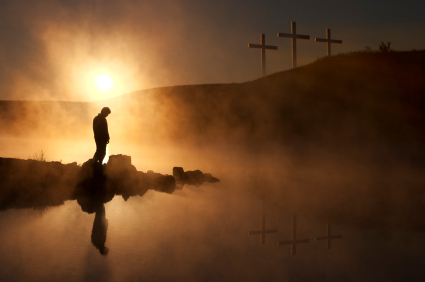
Three Crosses and Silhoutted Person in Prayer at SunriseScripture Text:  John 3: 14-17


14And just as Moses lifted up the serpent in the wilderness, so must the Son of Man be lifted up, 15that whoever believes in him may have eternal life. 16“For God so loved the world that he gave his only Son, so that everyone who believes in him may not perish but may have eternal life. 17“Indeed, God did not send the Son into the world to condemn the world, but in order that the world might be saved through him.

This is it: THE verse.  So what we do with THE verse?  It’s on street corners and billboards and T-Shirts and tattoos and faces and signs at sporting events.  I think it is often read as some sort of great reward for doing the right things.  You know, if you do everything you’re supposed to do, you’ll be rewarded when it’s all said and done.  And if you don’t, well you’re just out of luck.  So, look at me…do what I do, go to church where I go, be what I am, look like I look.  I’m saved; are you?  (I hate that!)

But we’ve read it wrong.  For God so loved the world—not the ones in the right church or the right country or the right side of the line—but the WORLD.  God loved the world, everything about the world, everyone in the world, so much, so very, very, VERY much, that God came and walked among us, sending One who was the Godself in every way, to lead us home, to actually BRING us home, to lead us to God.  Are you saved?  Yes…every day, every hour, over and over and over again.  I’m being saved with every step and move and breath I take.  I think that’s what God does.  God loves us SO much that that is what God does.  God is saving us.

God came into the world to save the world.  So why would we interpret this to mean that God somehow has quite loving some of us or that we have to somehow bargain with God to begin loving us or that “being saved” is a badge of honor?  See, God loves us so much that God is saving us from ourselves.  It’s back to that snake thing.  OK, kids, you think your main problem is snakes?  Alright, here it is, look at it, hanging there on a tree.  Look at it, really, really look at it.  Quash your fear, let your preconceptions go, just do it.  There now, all is well.  No more snakes.

OK, kids, what is the deal this time?  You have let the world order run your life.  You have become someone that you are not.  You have allowed yourself to be driven by fear and preconceptions and greed.  You have opted for security over freedom, held on to what is not yours, and settled for vengeance rather than compassion and love.   I created you for more than this.  I love you too much for this to go on.  Look up.  Look there, hanging on the tree, there on the cross.  Stare at the Cross.  Enter the Cross.  See how much I love you.  In this moment, I take all your sin, all your misgivings, all your inhumanity and let it die with me.  All is well.  All is well with your soul.

In this season of Lent, we inch closer and closer to the cross.  We shy away.  It’s hard to look at.  But perhaps it’s not the gory details, but the realization that we are the culprits.  Lent provides a mirror into which we look and find ourselves standing in the wilderness of ourselves.  But the Cross is our way out (not our way “in” to God, but our way “out” of ourselves).  Because God loves us so much that God cannot fathom leaving us behind.  But the Cross is the place where we finally know that. For God so loved the world that he gave his only Son, so that everyone who believes in him may not perish but may have eternal life. Indeed, God did not send the Son into the world to condemn the world, but in order that the world might be saved through him.


First United Methodist Church, Cleveland, TX

In Christian language, to be truly human is to shape our lives into an offering to God. But we are lost children who have wandered away from home, forgotten what a truly human life might be. When Jesus, our older brother, presented himself in the sanctuary of God, his humanity fully intact, he did not cower as though he were in a place of “blazing fire and darkness and gloom.” Instead he called out, “I’m home, and I have the children with me.” (Thomas Long, from “What God Wants”, 19 March, 2012.)


FOR TODAY:  Bask in God’s love.  Look up.  What do you fear?  What is wrong?  Look at the Cross.  All is well.  All is well with your soul.

Grace and Peace,

Shelli

The Wilderness of Former Things

About to Do a New ThingScripture Text: Isaiah 43: 18-19

 18Do not remember the former things, or consider the things of old. 19I am about to do a new thing; now it springs forth, do you not perceive it? I will make a way in the wilderness and rivers in the desert.


I love old things. They are full of stories and ripe with history. They are real, full of pits and marks from the past. My house is full of antiques and, for want of a better word, “repurposed” antique wanna-be’s. I love history. I love old houses and antique shops and cemeteries. I love connecting with the past and those that came before me. I love old churches and especially those that honor and celebrate their rich histories. Our church just refabricated the historic stained glass windows in the sanctuary and the whole nave looks like it has been woken up. See, old things are not the problem; old ideas are not the problem; old notions of who God is and who we are before God are not the problem. The problem comes about when we find ourselves stuck with “the way it has always been”, not wanting to bring the past to life, wake it up, repurpose it so that it has life for us now and beyond. The problem comes when we find ourselves holding on, wandering in the wilderness of former things.

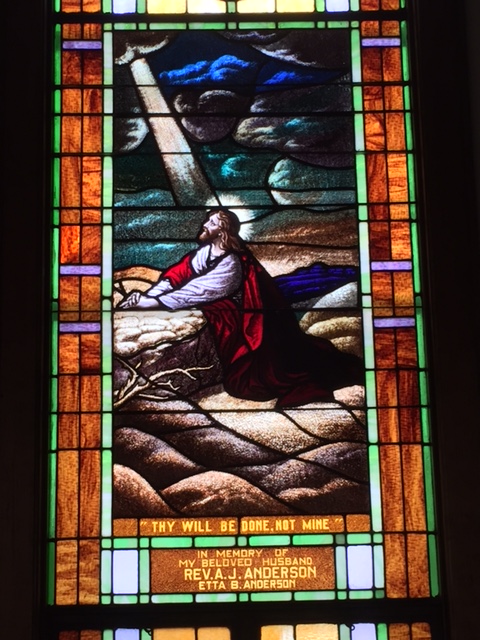
Gethsemane Window, First United Methodist Church, Cleveland, TX


I don’t think God wants us to forget the past. It is part of us. It is coursing through our DNA as we speak, making us who we are. It is what taught us to breathe, taught us to live, taught us to be. We always carry with us the echoes of what God created before. They are our beginnings. But beginnings are not meant to be held onto. It is to our detriment to pad our lives with the past, to clutch at the beginnings as if they are the end-all, and to miss the new thing that God is doing, the repurposing of the old into the new.

"The Good Shepherd Window", First United Methodist Church, Cleveland, TX
“The Good Shepherd Window”, First United Methodist Church, Cleveland, TX


Tradition is not a bad thing. It is a wonderful thing. It means to come into a conversation that began long before we got here and that will continue long after we are gone. It means realizing that there was something before we got here that is of value. It’s just not finished. We have to enter the conversation, embrace its riches, and then find what Truth is finally ready to be heard. Edna St. Vincent Millay said that “[Humanity] did not invent God, but developed faith to meet a God who is already there.” But the conversation must continue so that we can see the newness that God is doing as Creation is repurposed and Truth becomes fuller.


Lent is known as a season of the wilderness, a season of wandering into the unknown, of being vulnerable, of letting go. Maybe it’s not so much that we are entering wilderness, but that we are exchanging one wilderness for another, leaving the wilderness of former things behind and journeying on the way that God has made in the wilds of the new and untamed wilderness. But if we do things the “way we’ve always done it”, we will miss the newness springing forth. The wilderness is the place to begin but the beginning cannot be held for more than a moment or it is lost in the past.


Home is where your story begins. (Annie Danielson)


FOR TODAY: Begin again. Embrace the past and repurpose it as new.  On this 20th day of Lent, let your journey turn toward the new thing that God is doing.


Grace and Peace,

Shelli

The Wilderness of Certainty

Tightrope walkerScripture Text:  Ephesians 2: 8-10


8For by grace you have been saved through faith, and this is not your own doing; it is the gift of God— 9not the result of works, so that no one may boast. 10For we are what he has made us, created in Christ Jesus for good works, which God prepared beforehand to be our way of life.


See, we’ve really figured this out. We think if we get good grades, we’ll pass the course. If we do a good job, we’ll get a promotion. If we pay our dues, we’ll be rewarded. If we’re good, we’ll end up in the good seats in God’s Kingdom. We have it figured out. But this…what do you mean it’s not our doing? We’ve been working so hard. After all, there are good people and bad people. There are believers and non-believers (and maybe a few unbelievers). But we have tried so hard. Oh, we’ve messed up a time or two. We’ve ignored poverty. We’ve allowed racism and prejudice to exist even today. We’ve gotten behind those who can get us further, can give us what we desire. We’ve been mean, no, really, really mean to some that did not deserve it. But, for the most part, we follow the “Big Ten” and we try our best to be on our best God-behavior and, after all, we’re not bad “them”. And so we wait and hope that it will all be enough for God to swoop in and save us.


Is that what that says? Is that what any of it means? And what do we do with “it’s not our doing”? Of course it’s our doing. If we’re good, God will save us; if we’re bad, well we just won’t think about that. And now we find out that it’s a gift. Whew! Gifts from God tend to be very unpredictable. Gifts from God are not always what we imagined, not always what we would have put on our wish list. Gifts from God are sometimes downright dangerous business. The truth is, we see now that what we do, how good we act, how much better we are than anyone else is not what God had in mind. We are saved, yes, but through faith. Grace saves us through faith.


Don’t you hate it when that happens? It kind of puts everyone on the same level. After all, grace is undeserved, unmerited, unmeasured, and undefined. Grace is God’s movement in our life. God has been known to just hand out grace at will! So, when do we get saved? When do we get the t-shirt? When does God finally, once and for all, check us off the big God list so that we know that we’re “in”? You know, wandering in this wilderness would be a whole lot better if we knew how it was all going to turn out.


The problem is that Grace is not a one-time shot. Grace happens over and over and over again in our lives. Doors are continually opening for us and some are closing this very moment so that we will turn toward the open one. Grace is not a place or a time or a particular window in our lives. Grace is God’s way of journeying with us, handing us God’s hand over and over as God pushes us or pulls us or propels us or welcomes us into being. Grace is a process. Salvation is a process. We are never saved; we are always being saved. Salvation is never past tense, nor is grace.


Perhaps this wilderness comes about because we are so certain of things. Certainty is a dangerous thing. Certainty closes us off. We check off our boxes and we go on to the next thing. Grace does not give us certainty; grace gives us assurance enough to keep walking. Perhaps certainty, itself, is a wilderness. Perhaps it is a wilderness that we didn’t even recognize, a way that shuts us off to God, that makes us turn to ourselves, that closes our minds and our hearts to the Grace that God continually sows into our lives. Perhaps this Lenten season is a wilderness that moves us out of the wilderness of certainty, that walks us through a wilderness that is actually going somewhere, that moves us to a place where we can touch and feel and know beyond a shadow of a doubt that we do not know and so must continue journeying on through the doors that Grace opens.


Certainty is missing the point entirely. (Ann Lamott in “Plan B:  Further Thoughts on Faith”)


FOR TODAY:  Let go of certainty.  Follow Grace.  Let the wilderness lead you where God is leading you.


Grace and Peace,

Shelli