Abide

Well, it’s Advent so we get more John the Baptizer!  It’s definitely sometimes hard for us to get our heads around John, so to speak.  I mean, a person who wears animal skins and eats locusts is, well, strange.  But putting aside his wardrobe choices or his culinary preferences, John is important to us.  He is called the forerunner, the one who comes not to BE the Messiah but to point us toward the Messiah.  John knew who he was and what he was called to do.  He was called to actually BE that veritable voice in the wilderness that we so desperately need.  He was called to speak the truth about who Jesus was and, at this point, who Jesus would be.  He was called to point to the Light that was just beginning to dawn.    

The Gospel passage that we read for this week uses that image of light.  For the writer of The Gospel According to John, the Logos was the light of humanity, the true light.  It was there from the very beginning.  Now in this Gospel, there are no customary announcements here of Jesus’ coming or angels appearing to Mary.  There is no typical birth story. I guess the writer of this Gospel left that to the other Gospel-writers.  But this is essentially the equivalent:  the coming of Jesus, the Incarnation, is the coming of the true light, the Light that always existed, which enlightens everyone and illumines everything.  We once again see Creation in its splendor, as the light folds into the dark void that was and life begins.  Think about it—it is hard for us to imagine—but there was only darkness before (not “nothing”, just darkness—a darkness that God created) and then God said “Let there be light” and life began.  The earth was from then on bathed in light and seasons.  And now, now God enters and invites us into the Light.  And John the Baptizer is there to wake us up and point us toward it.

We like the image of light.  It’s warm and illuminating and sort of comfortable.  But that’s not what this is.  See, John had a “way” about him and sometimes his words were not very popular.  I mean, he went around like some wild man in the wilderness preaching repentance, preaching that we needed to change, preaching about the one who was coming after him, preaching about the light that was just around the bend, a light such that we had not seen, a Light that would change the world and us with it.  “John,” we want to say, “Shhhh!…you’ll wake the baby.”

Admit it.  That’s where we want to be—at the manger, kneeling before our Lord, basking in the illumination of the star above and singing Christmas carols, and yet we still want to hold onto those shadows in our own life.  For there is familiarity; there is safety; there is that which we can control, there is that place to which we can retreat when life is just too hard.  And the light…We would rather the light be allowed to remain in our thinking depicted as a warm and comfortable place to be.  Just let us sit here awhile with this sleeping baby, the Christ child, there in the manger while the Star in the East dances overhead. 

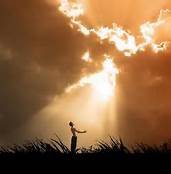
But John the Baptist, John the Witness, the forerunner, was right.  This light is not a twinkling, intermittent light like those that light our houses this season.  This is not a warm, glowing, candle-lit light that makes us feel comfortable even as we are content to sit silently in its shadows.  And it’s closer to us than any star in the universe.  This light is different.  This light is so big and so bright and so powerful that sometimes it hurts to look at it.  Sometimes it is just too painful.  This light is so pervasive and so encompassing, that it casts no shadows.  The light of Christ, this light to which John pointed, is not a warm glow but is rather a radical illumination of everything around it.  This light shows EVERYTHING.  Yes, EVERYTHING.  The world is about to be unable to hide its shadow side.

In her book, Lighted Windows, Margaret Silf tells the story of when her daughter was born and how one of the first problems that they encountered was light.  She said that “to make sure that [our daughter] would always experience the presence of a gentle, comforting light if she awoke during the night, we installed a little lamp close to the nursery door.  It also meant that if she cried we could grope our way to her even in a half-asleep state.”  But they soon realized that even the little nursery light burned their eyes, especially after the third or fourth time they went into the nursery during the night, groggy from sleep with eyes burning.  “So,” she says, “we went to the local electrical shop to ask whether they had any bulbs lower than 15 watts!”  “It’s strange,” she comments, “how light that is so needful for growth and life can also be so hurtful when we are unprepared for it.”

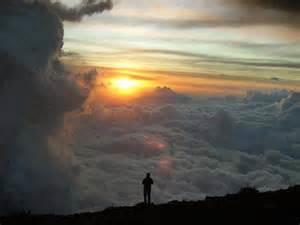
In this Advent season, the way that we prepare ourselves for the coming of the Light is by abiding in that light.  Abiding is a strange word.  It means to await but is more of an action word.  I think abiding in the light means that we have to go and be in it.  That’s what John was doing.  It was as if John was saying, “you there, come now, come into the Light that is even now dawning.” You can’t just stay in the shadows.  God invites us into the Light.  That is why God came and burst forth into our humanness—to show us what full illumination looks like and to call us into the light.  So, during this season, we squint and rub our eyes.  But we continue looking even if sometimes we’re squinting at the light.  But the Light will remain as we get used to it.  We keep looking for the Light thinking it will lead us home but what if, just what if, the Light IS home, the place where we’re called to be.  It is glorious and uncomfortable, illuminating and clarifying.  But what if that’s where we’re actually supposed to be while we wait for whatever God is doing next?

And John the Baptizer?  He kept pointing toward the Light, kept loudly proclaiming who the Messiah was.  He was the voice in the wilderness.  It would end badly for him.  His life would end with his head literally on a platter.  He would die midway through Jesus’ ministry, the victim of a world that thought he was too loud and too zealous and because he actually understood what abiding in the Light meant.  But through it all, he was always standing in that light.  He understood that he was not the Light.  But he always understood that the Light was where he should be.  In this season, we need to go toward the Light.  We need to abide in the Light.  God came and showered Light upon the world.  And this season of waiting, this season of preparation, beckons us into that Light.  Go now.

Lyrics: “Abide” by Carrie Newcomer

I will bring a cup of water
Here’s the best that I can offer
In the dusk of coming night
There is evidence of light
With the pattering of rain
Let us bow as if in grace
Consider all the ways we heal
And how a heart
Can break

Oh abide with me
Where it’s breathless and it’s empty
Yes abide with me
And we’ll pass the evening gently
Stay awake with me
And we’ll listen more intently
To something wordless and remaining
Sure and ever changing
In the quietness of now

Let us ponder the unknown
What is hidden and what’s whole
And finally learn to travel
At the speed of our own souls
There is a living water
A spirit cutting through
Always changing always making
All things new

Oh abide with me
Where it’s breathless and it’s empty
Yes abide with me
And we’ll pass the evening gently
Stay awake with me
And we’ll listen more intently
To something wordless and remaining
Sure and ever changing
In the quietness of now

There are things I cannot prove
And still somehow I know
It’s like a message in a bottle
That some unseen hand has thrown
You don’t have to be afraid
You don’t have to walk alone
I don’t know but I suspect
That it will feel
Like home

Oh abide with me
Where it’s breathless and it’s empty
Yes abide with me
And we’ll pass the evening gently
Stay awake with me
And we’ll listen more intently
To something wordless and remaining
Sure and ever changing
In the quietness of now

Grace and Peace,

Shelli
Tomorrow

This passage is read during the Advent season in Year C (next year!).  The lectionary actually calls for us to begin at verse 2.  I don’t know why.  Maybe they didn’t want God to be getting angry at us in the midst of a pretty hard season. But that verse speaks of redemption.  It speaks of God’s ever-present faith in us.  It reminds us that against all odds, God welcomes us and comforts us.  God is ever-present.  I think maybe we are the ones that need to get it together.

We love this passage.  We love to say it.  We love to sing it.  It brings us joy.  It is our affirmation that we trust that God will save us, that we rely on that.  And we wait and watch for those lovely flowing waters of salvation.  The writer’s vision is one of liberation—to the exiles, to the world, to all of Creation, to us.  The destiny is clear.  God is walking us all toward salvation and that is indeed something about which everyone should be joyful.

But, honestly, I worry that all of these passages from Isaiah, all these promises that the “something better” is just up ahead may become a bit overly-saccharine, like visions of sugarplums dancing in our heads.  I don’t want it to come across like someone is dangling life just beyond our reach to tease us or something.  That’s not the way it is.  It’s easy to claim that things will get better but what do we do in the meantime?  What do we do while we are waiting for the promised liberation or the prophesied salvation?  What do we do while we are waiting for our joy to kick in?  So, did we forget?  Did we forget what we believe—that God, the very Godself, the Creator, broke through all time and space and entered this world as a baby to become Emmanuel, God-With-Us?  So go back and re-read this passage with that in mind.

Notice that it says “God IS my salvation”—not God will be or God might be or God will come when we do something right.  God IS my salvation.  There’s no quid pro quo like so many of us are often led to believe.  That’s pretty major.  The God who is in our midst is here to save us—not to see if we’re being good or doing right—just IS.  So, why aren’t we drawing water from those wells?  Those wells are everywhere, flowing with clean sparkling water.  We just have to get a bucket and draw out the water.  Maybe that’s it.  Maybe we don’t always have our bucket handy.  Maybe we’re so preoccupied with what we will be and the way things will turn out for us that we have neglected what God has given us to draw out water, to draw out joy, to draw out Light.

The thing here is that we tend to push our hope for “that day”, for our joy and our salvation, for peace to surround us, off until tomorrow.  We count on tomorrow.  And, yes, tomorrow is there waiting for us to enter.  But tomorrow is affected by today.  What we do today leads into our tomorrow.  The journey is now.  So, don’t get so wrapped up in what we DON’T have.  Look around you.  Look around at the hints of joy, the hints of peace, even the hints of salvation and redemption.  Prepare to welcome tomorrow.

Remember that the season of Advent is nuanced.  It’s not just about the future.  It’s also about what we do now.  God created us in Joy.  God created us in Light.  God created us in water—lifegiving waters.  It’s all for the taking.  We are called to always go toward who we are meant to be, who God created us to be.  But the journey is here, filled with joy and light.  So, take your bucket and draw out the waters.  Take joy.  Take Light.  It is yours.  God IS our salvation.  Take that too, for “great in your midst is the Holy One of Israel”—in your midst…and will be tomorrow.

Lyrics: “Another Day”, by Carrie Newcomer

Last night I awoke
I just couldn’t sleep
I’d read too much news
There was a dog on my feet
Too much to remember
Or not finished yet
A list of new worries
And older regrets

Let it go says my heart
It’s too late and too dark
This is just a chance to pray
Let it go for now darlin’
Tomorrow is another day

I’ve been looking for beauty
In these broken times
By making some beauty
In the world that I find
Some say it’s too late
It’s too much to brave
But I believe there’s so much
Worth being saved

Let it go says my heart
It’s too late and too dark
This is just a chance to pray
Let it go for now darlin’
Tomorrow is another day

Up on the roof is an old weathervane
In the shape of a fish swinging toward change
Let it go for now let it go

There are reasons to wonder
And witness to why
Troubled times coming
No way to deny
So I’ll lean into you
As you quietly breathe
And sense all that’s right
Still here and unseen

Let it go says my heart
It’s too late and too dark
This is just a chance to pray
Let it go for now darlin’
Tomorrow is another day
Let it go for now darlin’
Tomorrow is another day

Grace and Peace,

Shelli

Always

Rejoice always?  Pray without ceasing? Give thanks in all circumstances?  Are you kidding?  In this time of war and death and divisiveness and, well, just darkness, how in the world are we expected to rejoice, pray, and give thanks each and every moment? I mean, even if things WERE going all hunky-dory, we don’t have time to do that.  There are things to do. There are people to see, gifts to buy, gifts to wrap, places to go, and we still need to find time for ourselves to think, maybe read this blog, or whatever our life requires.  So, when we read this passage, we are a little bewildered.  Because we are used to looking at how to do something.  We want to know the easiest, cheapest, most energy-efficient, or most fulfilling way to accomplish things.  And, most of all, we want to be assured that we’re doing it the right way, that we’re on the right path.

But as much as we desire a “how to” booklet for our lives, that’s not what this is. (Honestly, that’s not really what the Bible is at all!) Paul was not laying down rules.  I don’t think he ever envisioned us living body-bent and knee-bowed 24/7.  I mean, how do we respond to that call to be a Kingdom-builder if we’re praying all the time?  No, Paul was not calling us to a life spent in prayer; Paul was calling us to a prayerful life, a life that is sacred, hallowed, a life lived in the unquenchable Spirit of God.  It has nothing to do with logging prayer hours. I mean, that’s helpful, even necessary.  But this is about perspective, about seeing everything that is your life as hallowed and holy, seeing all you are and all you have and all this is as of God, as prayer. Olga Savin says that “[the Scriptures] tell us that ceaseless prayer in pursuit of God and communion with [God] is not simply life’s meaning or goal, the one thing worth living for, but it is life itself.”  And a life lived the way it is called to be lived is the very will of God.  It is prayer.

As I said, I don’t think the Scriptures are meant to be “how to’s”; maybe instead they’re meant to shape us into those who can find the “ahhhs” in life.  Let me explain.  Think about all those diverse characters in the Scriptures. Abram and Sarai were just living their best retirement life.  And suddenly God has a new plan to make them the patriarchal couple of a “multitude of nations”.  And Abraham went toward the “ahhh”.  Moses was pretty much minding his own business and then ran across this burning bush.  Now, really, wouldn’t you either avoid a bushfire or try to put it out?  But Moses saw something else and said “ahhh” and his whole life changed. And those prophets?  The prophets tried desperately for generations to get the people to pay attention, to make them understand that the Lord was indeed coming, that things were about to change.  They marched this line of people straight through history, warning of something big and dark and ominous when God would step into the world.  Truthfully, that happened.  But it was very quiet, almost a whisper, as the Light again pushed through the darkness.  If you didn’t have your life honed in on that, you would have missed it.  In fact, God had to sort of announce it to make sure people were paying attention.  And, if you noticed it, you couldn’t help but say “ahhh”. 

Praying without ceasing, living a prayerful life, is about paying attention.  It is about looking at the pathway that you walk and noticing those things that make you say “ahhh”.   And then, it’s about turning toward them.  Maybe that means that you get off the well-worn path that is comfortable beneath your feet.  Maybe that means that you veer off in a direction you do not know, a way that you did not plan to go, a way that will change your life forever.  Ahhh….

Praying without ceasing is also about not limiting yourself as to what you think prayer is.  For some reason in writing this particular season of this blog, I have been more acutely aware of what happens when you write every day.  It’s hard.  It sort of saps you, leaving you sort of…the only way I can describe it is…raw and vulnerable.  But at the same time, it leaves you filled. It makes you new. It’s not just writing that does that.  That’s my thing.  Think of what you do that makes you feel like you should be doing it.  THAT’S yours—that’s the things that will leave you vulnerable and new.  Maybe that’s what prayer should be—a raw and sometimes uncomfortable vulnerability that leaves you filled with what you did not have before. 

You know those times when you have no words?  That’s a prayer.  The times when words seem to spill out of your life uncontrollably is a prayer.  The times when grief consumes you and you feel as if you cannot function is a prayer.  The times when laughter overtakes you in the middle of an otherwise-serene (and perhaps embarrassing) moment is a prayer.  Every menial task is a prayer.  Every walk is a prayer.  Every drive is a prayer.  Every time you log on to your computer is a prayer.  Every time you cook or wash dishes or empty the dishwasher (I hate emptying the dishwasher!) is a prayer.  Every time you hug someone or touch someone or connect with them on Zoom is a prayer.  Your life is a prayer—ALL of it.  That is what Advent shows us.  Advent wakes us up to the coming of God into the world and asks us to prepare.  But Advent also wakes us up to our own lives, prepares us to see what we’ve been missing and perhaps to notice a different way and to pray, to always pray. Look around. All you see, all you hear, all you are. It’s all prayer. Ahhh-men.

Grace and Peace,

Shelli

Imagine

OK, I think we’re officially halfway through our somewhat shortened Advent season.  We’ve traveled through the darkness hoping that we are at least coming near the Light.  It’s easy to get tired, frustrated, and even be tempted to give up the journey completely and in the midst of those feelings, this Scripture probably conjures up that somewhat an unreachable and perhaps inaccessible utopian paradise.  I mean, we keep hearing about it but sometimes it’s hard to keep focused on that in the midst of our lives.  When you read it in the context of where it resides, it almost doesn’t fit.  This passage seems to just come into the middle of rumors of war and desolation.  It seems a little out of place.  And, like us, those so long ago were asked to imagine beyond where they were.  They were asked to imagine a desert filled with flowing waters, a wilderness that blooms.  They were asked to participate in a vision of life anew.  They were asked to see something that, for the most part, might have seemed inaccessible.  They were asked to see something that really didn’t seem like it fit.

But it’s not inaccessible.  The whole idea is that it WILL come to be.  And Advent reminds us to look for that day, to imagine it into being.  It is a tension in which we live every day of our lives.  We want it, we imagine it, and, on a good day, we believe it will happen.  And then we turn on the TV—war in Eastern Europe, war in the Middle East, rampant gun violence, people being threatened, rights being taken away, and people that find themselves with, well, a fearful heart.  That’s actually not a great translation.  It’s probably better to read it as “ones whose hearts are racing.”  So, whether we live in fear or we live in stress, when life becomes just too much for us to imagine something different, we are called to walk in holy tension, a liminality, if you will, betwixt and between the turmoil and grit of our lives and the promise that we believe.

This is Creation’s repentance.  It is Creation turning around and going a different direction.  We’re familiar with that.  When we talk of our own repentance, it is uncomfortable to turn and launch off into another direction, to begin to travel where GPS is not available and to a place with a story that we are writing as we go.  But here we are told that the desert will bloom.  The desert—that mass of dry sand that blows in our eyes and clouds our views, the place where we cannot map where we go, the land where water is scarce and sustenance is hard to find—will bloom!  The desert will turn and become something new.  Blindness will become sight; deafness will become music; the lame will leap and the mute will sing.  The waters will flow with thirst-quenching sound and the lost way will become a clear path.  Yeah, I know our translation says that God will come in vengeance.  That is probably better translated as the promise that God will “deal with it”, a recompense, a compensation of sorts.  In other words, God will respond.  That is the promise.  And God’s response is that Creation will become something new.

So, if Creation can do that, why can’t we?  Why can’t we let go of our fears and our preconceptions?  Why can’t we become something new?  Why can’t we rejoice and bloom?  I think as much as anything, it’s because we’re human.  And God knows that.  So, we’re given this season of Advent, this time where we walk holding both the tensions and chaos of our world while at the same time, allowing ourselves to imagine something different.  Advent calls us to begin to see our potential and the potential of the world. Have you ever thought that perhaps our faith journey is not about finding God at all but rather finding ourselves?  God is here.  Whether we feel God or not, God is here.  But us?  How much faith do you have in yourself?  God has faith in you.  God created you to do this, to turn, to change, to repent, to bloom.  

We’re halfway through this season of journeys through darkness and holy tensions.  Here we turn, we turn toward the Light.  It’s only a seed right now but if we keep walking, this desert will spring to life and the world we know will become more than we ever could have imagined.  And so will we. So, keep walking. We have it on good faith that it gets better!

Not only is another world possible, she is on her way. On a quiet day, I can hear her breathing. (Suzanna Arundhati Roy)

Grace and Peace,

Shelli

Lean

So, I noticed something in the lectionary that I never had.  We have the option of this passage or a psalm for Advent 3B and again for Advent 4B.  (Apparently, the lectionary compilers REALLY wanted us to read it!)  I think they’re right.  We need to read it.  It makes those of us who are living a life of over-entitlement a bit uncomfortable but that’s all the more reason to read it. It is well known and, depending on how it rests on you when you hear it, it is either the beautiful and poetic “Song of Mary” or it is the hard-hitting, uncomfortable Magnificat.  Magnificat is Latin for “magnifies”, from the root magnificare, which means “greatly” or “to make much of”.  E. Stanley Jones, an American Methodist missionary from the early 20th century, once called the Magnificat “the most revolutionary document in the world.”  It is said that The Magnificat so terrified the Russian Czars that they tried to outlaw its reading.  It’s been used in Argentina to call for non-violent resistance and the government of Guatemala banned its recitation altogether in the 1980’s.  It is a call to revolution, the beginning of a new society, the dawn of a New Creation.  It is the words that the rising authoritarian movement that is pervading our globe would dread.

These words depict God’s vision for the world (which is REALLY different from the world we have now!)  It is not a world where the best and the brightest and the richest and the most powerful come out on top.  It is not a world that we can control.  It is a world where God’s presence and God’s Light are poured onto all.  But it comes with a price. Those who have, those who are, those whose lives are filled with plenty are called to change, to open their lives to God and to others.

Because God will scatter the proud, those who think they have it figured out, those who are so sure of their rightness and their righteousness.  In other words, those of us who think that we have it all nailed down will be shaken to our core.  The powerful–those with money, those with status, those with some false sense of who they are above others–will be brought down from their high places.  The poor and the disenfranchised, those who we think are not good enough or righteous enough, will be raised up. They will become the leaders, the powerful, the ones that we follow.  The hungry will feel pangs no more and those who have everything–the hoarders, the affluent, those are the ones whose coffers will be emptied to feed and house the world. (Yeah, we probably need to stop right there, go back and read the passage again, and sit with it!)

These words are indeed a magnification, a magnification of Light.  We have journeyed through the darkness toward the Light expecting it to save us, expecting it to shine its warm glow into our lives.  But when we read these words, we realize how bright the Light really is.  This Light doesn’t just shine on us.  It shines on everything, illuminating the dark corners and dirty vestibules of our world and exposing the pain and injustices that still exist and of which WE are still guilty.  It’s uncomfortable.  So, we are tempted to shrink back into the darkness once again.  The problem is that this IS a revolution and revolutions do not tend to be warm and fuzzy.  Revolutions have jagged edges that will cut into your heart and, yes, change you.

The Light is coming.  It is bright and magnified and something we’ve never seen before.  God came into the world to turn the world upside-down (or maybe right-side up).  God didn’t start it by choosing a great religious leader or a political powerhouse or even a charismatic young preacher.  God chose a girl, a poor underage girl from a third-world country with dark skin and dark eyes whose family may be so questionable that they are not even mentioned and whose marital status seemed to teeter on the edge of acceptable society.  God chose to shine the Light on the WHOLE world.  Our response is to reflect that Light and magnify it further.

Today is St. Lucia day in Sweden, Norway, and most of Scandinavia.  Now, to set the stage, keep in mind that we are a week away from the longest night of the year.  But in far-north Scandinavia, that is a time when there is barely light at all, The sunrise in Stockholm today is at 8:41 a.m.; the sunset is 2:37 p.m.!  The legend says that Lucia, a martyr from the 4th century, carried food and goods to those imprisoned in the catacombs beneath Rome, wearing a wreath dotted with candles on her head to light the way.  It is a day of welcoming light into the darkness, of leaning in to a light that otherwise might not be at all.

Advent is the season when we learn to lean toward the Light, when the steady ground on which we stand seems to fly out from beneath our feet.  We struggle to regain our footing.  Lean in.  You know what’s happening?  You know what the uncomfortable nagging feeling is?  It’s the New that is sprouting to life.  God does this a lot.  Y’all, we’re getting closer! We just have to be willing to lean into it a little.

Grace and Peace,

Shelli

New

This is another familiar passage for this season.  It speaks of hope.  God has sown God’s own Spirit into the one who speaks, breathed God’s breath into the one who will carry out God’s will.  And standing amid the ruins of what was once a thriving Jerusalem, the prophet depicts the perfect Reign of God, the time when all of Creation will be renewed and fulfilled.  It is the hope for the future even in the midst of the smoldering ashes of what is now.  And the prophet acknowledges and affirms an individual call from God, a call to bring good news, to bind up, to proclaim liberty, to witness, and to comfort. Well, that’s good…because we need someone to fix this mess, right?

But notice that in verse 3, the pronoun changes.  No longer is the prophet affirming an individual’s call.  The calling is now to the plural “they”.  It’s not just the “me” that is the prophet; it is the “they” that is everyone. The prophet is not called to “fix” things; the prophet is called to proclaim that all are called to this work of transformation. In other words, all that work that you think needs to be done?  Get busy!  You’re supposed to be part of that.

All of us are part of what the Lord has planted and nourished and grown to bloom.  All of us are “they”.  We are the ones that are called to become the new shoots sprouting to life.  We are the ones that are called to bring good news, to bind up, to proclaim liberty, to bring justice, to witness, and to comfort.  This Scripture may sound vaguely familiar to us for another reason.  In the fourth chapter of the Gospel According to the writer known as Luke, Jesus stands in the synagogue in his home temple in the midst of a world smarting with Roman occupation and cites these same words.  He acknowledges his own calling, his own commissioning to this holy work.  And he sets forth an agenda using the words of this prophet.  So, here we are reminded once again.  We are reminded what we as the people of Christ are called to do–to bring good news, to bind up, to proclaim liberty, to bring justice, to witness, to comfort, and to build the Kingdom of God.

But this is not a vision of repair.  It is not describing God’s work of putting things back the way they were.  That was never the deal.  Think newness.  Think something that’s never looked quite that way before. Maybe even think something you’ve never even thought of before.  That’s sort of the ongoing theme of God’s work when you think about it. I often tend to depict God’s Kingdom as a big dining room table.  There are chairs around it where we can all come together.  But when space becomes limited, when we don’t let everyone in the room, when there is no room at the table, we try to pull up more chairs.  Perhaps our differences and our varying notions of who God is makes for a crowded meal.  But, think about it.  God doesn’t pull up more chairs; God doesn’t even put more leaves in the table; God builds a brand-new dining room.

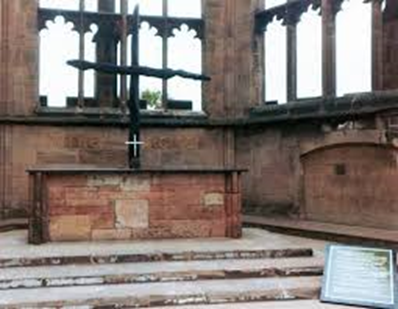
Many of you probably know the story of England’s Coventry Cathedral.  On November 14, 1940 in the midst of the Luftwaffe, the grand medieval Parish Church Cathedral of St. Michael was devastated by bombs and burned to the ground with the surrounding city.  Shortly after the destruction, the cathedral stonemason, Jock Forbes, noticed that two of the charred medieval roof timbers had fallen in the shape of a cross. He set them up in the ruins where they were later placed on an altar of rubble with the moving words “Father, forgive” inscribed on the sanctuary wall. Another cross was fashioned from three medieval nails by local priest, Arthur Wales. The Cross of Nails has become the symbol of Coventry’s ministry of reconciliation.

Today, the new modern Coventry Cathedral stands dedicated to forgiveness, unity, and redemption.  And next to it are the remains of the medieval cathedral. Emblazoned on the front of the altar are the words “Father, forgive” and flanking the altar are two statues—one given by Germany and one given by Japan.  And although physically attached to the new Cathedral, the Chapel made of ruins is not consecrated as an Anglican space, but instead is on a 999-year lease to an ecumenical Joint Council.  In the Chapel of Unity, people of any faith may gather to worship and receive the sacraments.  The old cathedral that once lay in smoldering ruins became something new.

In this Season of Advent, we are called to prepare ourselves for what is to come.  We are called to wait in hope and walk in light.  And, yet, so many of us are experiencing a world right now where we are barely able to sense that hope and see the light. In this hurting, divisive, warring world, many of us may identify more closely with the destruction in this passage than the good news.  See, we like the image of our faith being one of light and promise and that seems like what it should be.  But maybe even of more profound importance is our faith as one of shadows and remnants.  The truth is, God doesn’t call people to “fix” the world or, perhaps even worse, “repair” it so that it was what it was before.  At the risk of getting a wee bit political, when I hear the word “orthodoxy” (in the case of the church) or “originalism” (in the case of the interpretation of our laws), I think I tend to roll my eyes.  Maybe the reason we moved on, maybe the reason we changed, was that it wasn’t working for everyone.  Maybe God is calling us to something new. Maybe that is what our faith is about.

See, God calls people to transform the world.  And we are “they”.  We are the ones that are called to stand in the ruins, to step through the smoldering ashes, to take the remnants of destruction and hate and despair and to bring good news to the oppressed, to bind the brokenhearted, to proclaim liberty to the captives, and release to the prisoners; to proclaim the year of the Lord’s favor, and to comfort all who mourn.  And as the earth brings forth shoots, as a garden causes what is sown in it to spring up, so God will cause righteousness and praise to spring up before all the nations.  Newness will arise from destruction or smoldering ashes or misspent interpretations.  God calls us to something new.  Imagine it.

Lyrics to “I Will Sing a New Song”, by Carrie Newcomer

I don’t know how
No I don’t know how
I’ve never done this before
At least until now

Learned by heart
The hard and easy parts
But I’m feeling it clearly
The old song’s grown weary

I will sing a new song
The old one’s carried me this far and for so long
But it’s time to walk on
Lifting up my voice and heart with a new song

How it grows out of the last echo
A new song for new needs
So I’ll follow its lead

Here I stand all I truly am
So I’ll rise and lift up
This new curious cup

I will sing a new song
The old one’s carried me this far and for so long
But it’s time to walk on
Lifting up my voice and heart with a new song

In each life of worry and strive
Must be room to untangle
And the singing of angels

All that lasts and must surely pass
All that’s common and holy
All that’s shot through with glory

I will sing a new song
The old one’s carried me this far and for so long
But it’s time to walk on
Lifting up my voice and heart with a new song

All that’s breathless and beautiful
All I’ve lost and I retrieved
All the songs that I was born to

Sing a new song
The old one’s carried me this far and for so long
But it’s time to walk on
Lifting up my voice and heart with a new song

I don’t know how
No I don’t know how
I’ve never done this before
At least until now

Grace and Peace,

Shelli

Here

This passage is normally read in the third week of Advent during Year C.  We actually only read from the book of Zephaniah three times throughout the three-year cycle of the Revised Common Lectionary, so we’re probably not experts on it.  The book is probably set during the time of King Josiah.  It was a time of indifference by the people.  Maybe they were tired; perhaps they were just a bit too comfortable; or possibly they just forgot who and whose they were.  They have been hearing an ongoing foretelling of a time of destruction, a time of divine judgment. (I guess that would make me tune out too!)  But then we come to this passage.  It is a voice of hope, foretelling salvation rather than destruction.  And it proclaims, “the Lord, your God, is in your midst.”

What does that mean?  In our midst?  Like, here, now?  What do we do with a God who is here, who is with us, now?  We’ve been waiting for a God who seemed “out there” or maybe “up ahead”.  But God is here?  The Light is here?  The Light is with us?  That notion changes everything.

When I was about six years old, I remember laying in my bed one night, staring at the closet where the light was still lit.  It always was at night.  (Honestly, I still can’t sleep in a completely dark room.) But I had been told in Sunday School that day that God was always with me, that God could see everything.  I remember thinking that God seemed to be someone similar to Santa Claus, all-seeing, knowing everything that happens.  But to a six-year-old that presented a theological dilemma.  I mean, it was a little scary.  (Perhaps if you tell a six year old that, you need to clarify it a bit)  I remember thinking how scary that was, as if God was keeping track of all the ways I had been bad.  I laid there and thought about what that meant, what it meant for God to always be with me.  Was God here, now?  Was God in that closet with the light on?  Was God in bed with me?  If I closed my eyes, was God still there?  What if I got under the covers?  Could God see me if I hid under the covers?  It was confusing.

Most of us as adults probably are not much more theologically advanced than that six-year-old.  It’s not because we haven’t advanced; it’s because we don’t allow ourselves to think differently, to question.  We tend to neglect even thinking about God unless we think we need God.  Somewhere we have indeed convinced ourselves that God is “out there”, an elusive deity that we are trying desperately to approach.  We have been somehow convinced that all of our hope rests in this “out there” God, that getting to God will once and for all save us.  And, yet, we also know that God is everywhere.  God is here, here with us.  So, which is it?  I think perhaps the reason we don’t see God and don’t feel God upon demand is not that God is elusive or hiding in plain sight.  The reason is that we are not fully prepared to know the fullness of God, the fullness of life that God has in store for us.  In the language of some of the New Testament scriptures, we live beneath a veil, a veil that we have sewn, a veil that we are not prepared to shed, a veil that somehow obstructs our view of the Light or shields us from what we do not know or do not understand.  And, yet, there are holes in the veil, places where the threads are worn and beginning to tear.  And through those holes we sometimes get glimmers of light.  This Light in our midst is always peeking in, beckoning us forward, guiding us into the Light that we might become full, that we might finally know this God who is in our midst, finally be prepared to see what we’re meant to see and be what God means us to be.

So, what do we do?  What do we do with a God who is even now in our midst?  We do what we’re called to do in this time, in this place beneath the veil.  We prepare ourselves to see the Light.  This season of Advent is the season of that preparation.  We’re not waiting for God; God is waiting for us.  Walk into it.  You will never be alone (yes, even under the covers!).  Open your eyes. Prepare your heart.  The Lord, your God, is in your midst.

Full Lyrics: “All Saints Day” by Carrie Newcomer

All around us and within us
And yet it’s only at times we notice
As real as rain and soft as stardust
We know deep down what nobody told us

Can’t you feel it ever closer
We breathe it in and then we exhale
We touch both sides and now eternal
Standing closer to the veil

Now is just a moving image
Not a ribbon a start and end
There is a bird a hidden singer
That calls and listens and calls again

Can’t you feel it ever closer
We breathe it in and then we exhale
We touch both sides and now eternal
Standing closer to the veil

Centered down and moving outward
Sometimes almost too sweet to bare
There are endless ways to reach home
Just keep walking and I’ll meet you there

Can’t you feel it ever closer
We breathe it in and then we exhale
We touch both sides and now eternal
Standing closer to the veil

Can’t you feel it ever closer
We breathe it in and then we exhale
We touch both sides and now eternal
Standing closer to the veil

There’s a blurring of the borders
And I swear that I heard voices
But every act of simple kindness
Calls the kingdom down and all around us

Can’t you feel it ever closer
We breathe it in and then we exhale
We touch both sides and now eternal
Standing closer to the veil

Grace and Peace,

Shelli