Waiting For Each Other

waitingPassage for Reflection:  Isaiah 30: 18-20

18Therefore the Lord waits to be gracious to you; therefore he will rise up to show mercy to you. For the Lord is a God of justice; blessed are all those who wait for him. 19Truly, O people in Zion, inhabitants of Jerusalem, you shall weep no more. He will surely be gracious to you at the sound of your cry; when he hears it, he will answer you. 20Though the Lord may give you the bread of adversity and the water of affliction, yet your Teacher will not hide himself any more, but your eyes shall see your Teacher.

So, what are we supposed to be doing while we’re doing all this waiting?  I think that Advent may be the Master Teacher in waiting, dangling unlit candles each week and angels coming to a young girl and a world that is not ready.  And, of course, the rest of the world decorates the Christmas trees and covers the houses with lights and pressures us to get everything done (Hurry, hurry, hurry…Cyber Monday-Tuesday-Wednesday-Thursday is almost over!!!).  But Advent quietly calls us to wait.  OK, which is it?  Do we wait or do we follow that vision of God and change the world, the vision that has been in front of us all this time?

There’s our problem.  The act of waiting to which we are called, the waiting that Advent teaches us over and over again, year after year, is not your run-of-the-mill-twiddle-your-thumbs kind of waiting.  The waiting to which we are called is active.   It is indeed a waiting that changes the world.  So what, then, are we waiting for?  Well, see, we wait for the time to be right; we wait for our galaxy of stars to perfectly align; we wait for the world to accept the change that we offer, to need the gifts that we have to give.  And all this time, the One for which you were waiting has been waiting for you.

So in this season of Advent, we are told to wait.  We are not told to stop, just to wait.  Perhaps it is our time to let go of the plans that we had made, to let go of what or who we envisioned would save us.  Perhaps it is the time to return to the One that envisioned us in the first place, the One that is waiting for us to return, the One that calls us to act, to work, to build the Kingdom of God.  Advent is not about stopping what you are doing but just rethinking it.  We are called to be a part of bringing God’s vision into being but we have to wait long enough to know what the vision is.  God is waiting for us to realize that…And we are called to realize that all this time God has been there…waiting, waiting for us to wait for God.  All this time we were waiting for each other…

Click to listen…

http://www.youtube.com/watch?v=lIY_2t0ZKPU

Reflection:  For what are you waiting?  Are you waiting on the God who is waiting on you?  What part of God’s vision are you being called to change?  Perhaps you’ll have to wait on the other parts, but is there something that you are called to do now?  Is there something that God is waiting for you to do?

Grace and Peace,

Shelli
Advent 2A: Shoots and Stumps

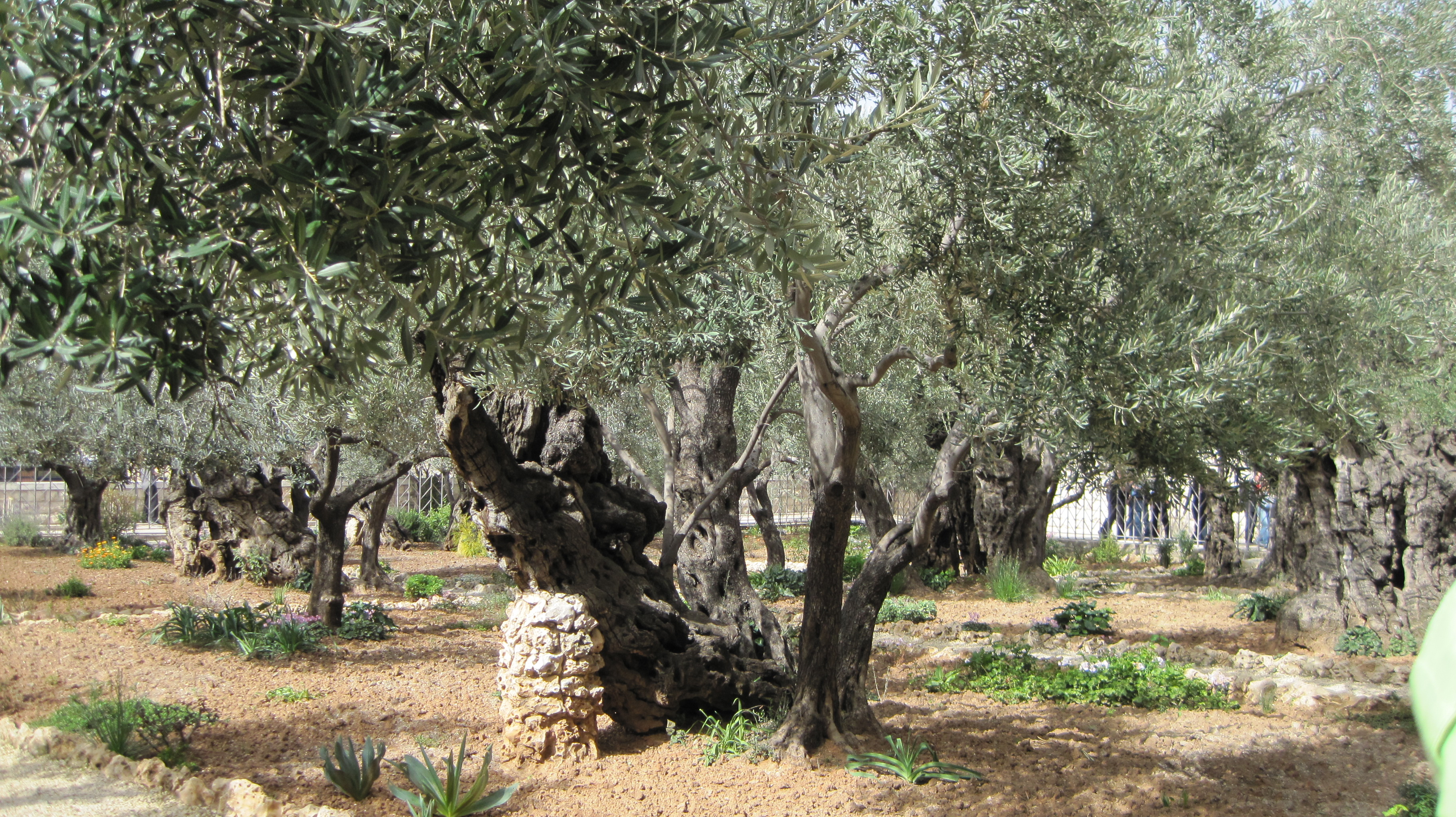
Garden of Gethsemane 07 (New Shoots)Advent 2A Old Testament Passage: Isaiah 11: 1-10

A shoot shall come out from the stump of Jesse, and a branch shall grow out of his roots. 2The spirit of the Lord shall rest on him, the spirit of wisdom and understanding, the spirit of counsel and might, the spirit of knowledge and the fear of the Lord. 3His delight shall be in the fear of the Lord. He shall not judge by what his eyes see, or decide by what his ears hear; 4but with righteousness he shall judge the poor, and decide with equity for the meek of the earth; he shall strike the earth with the rod of his mouth, and with the breath of his lips he shall kill the wicked. 5Righteousness shall be the belt around his waist, and faithfulness the belt around his loins. 6The wolf shall live with the lamb, the leopard shall lie down with the kid, the calf and the lion and the fatling together, and a little child shall lead them. 7The cow and the bear shall graze, their young shall lie down together; and the lion shall eat straw like the ox. 8The nursing child shall play over the hole of the asp, and the weaned child shall put its hand on the adder’s den. 9They will not hurt or destroy on all my holy mountain; for the earth will be full of the knowledge of the Lord as the waters cover the sea.  10On that day the root of Jesse shall stand as a signal to the peoples; the nations shall inquire of him, and his dwelling shall be glorious.

We Christians tend to read this with our own Christ-centered lens.  The shoot–newness, replacing the old sad stump–and the branch–us, growing from the foundations that have been laid.  And yet, this Scripture is purely Old Testament, purely Hebrew Scripture.  It speaks of a vision, a vision when life will be what God calls it to be, when the earth and all that it holds will finally once and for all live together just as the Lord intended.  Jesse was the father of David, the pinnacle of the great dynasty of Israel.  But dynasties and kingdoms have life spans just as people do.  And what was once a thriving political powerhouse becomes a stump, seemingly useless for the world, a shadow of the past.  And yet, from what we thought was dead suddenly springs forth life, providing a foundation for a new shoot.  It creates a new order, a new way of seeing the world, a time of peace and unity for all the world.  The people of Israel expected this from their king.  This was what God intended–an order of justice and righteousness and peace.  They long for a dynasty such as this, one with all the solid foundations of the past but one that grows in righteousness.

So, back to the Christ-centered lens…new order, justice, righteousness, peace…isn’t that the thing for which we hope?  In this season of Advent, we once again remember and live that hope of the people of Israel for the Messiah, the Savior of the World.  And we prepare for this year’s coming that will once again push us just a little bit closer to who we are meant to me.  And at the same time we wait for our own Advent, our own coming of God in its fullness.  Advent is all these things.  We long for that new creation.  We long for the day when  warriors will sit down with those that they now attack, when predators will live in peace with their victims, and when those that consume more than they need just because they can finally come to the realization that the resources of this world belong to all.  We hope against hope for a world without poverty and homelessness, without the threat of annihilation from weapons of all kinds, a world where each and every child has enough nutrition and education and healthcare to grow and flourish into who God calls him or her to be.

So, are we the shoot or the stump?  Are we the newness bursting forth or are we the foundation from whence it comes?  The answer is yes.  The two are so inter-connected that they cannot be separated.  The shoot does not just drop out of the sky but is born into generations upon generations of waiting and hoping for the Light to come.

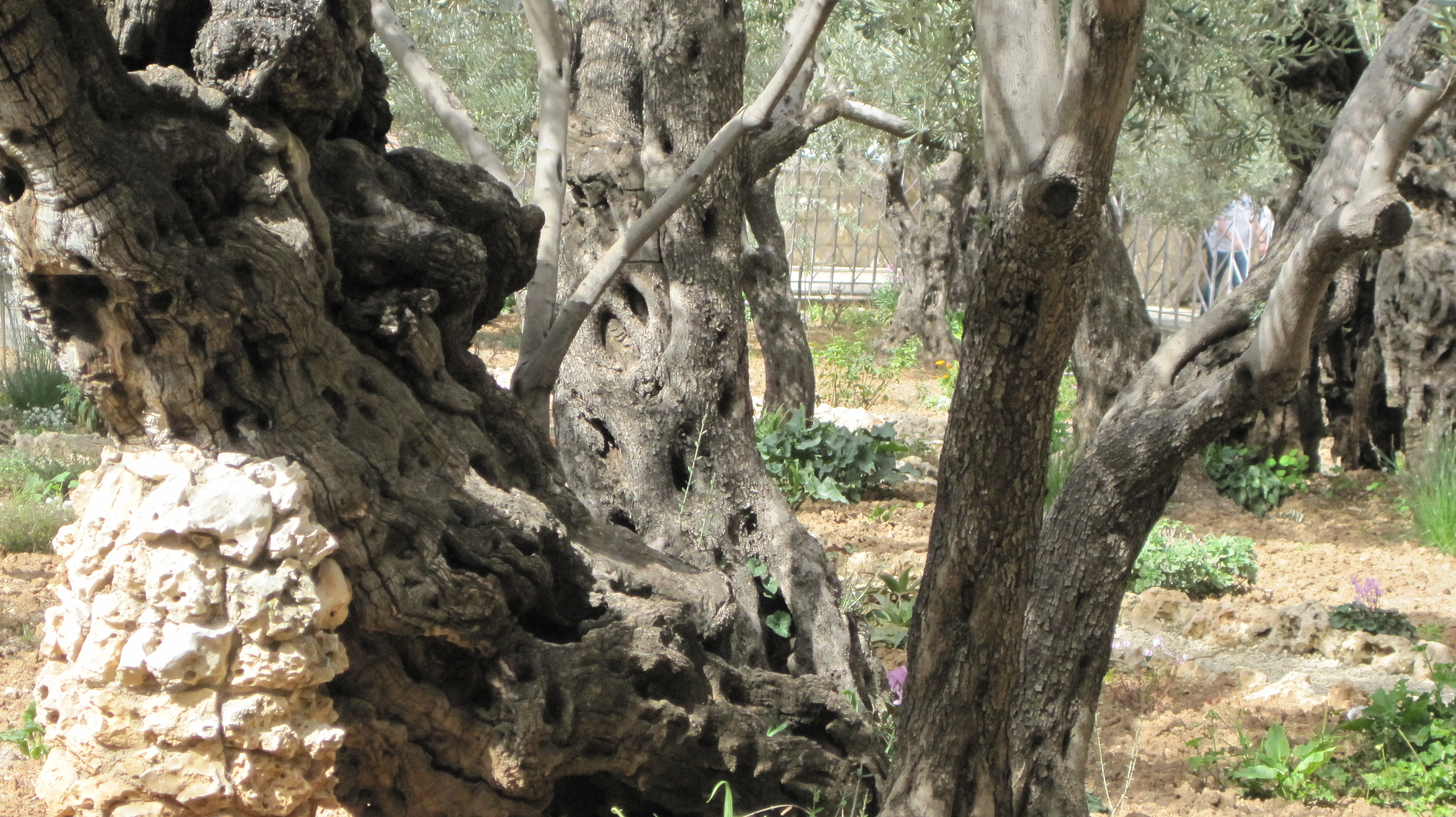
Garden of Gethsemane 08 (New Shoots)When I was in Israel a few years ago, I was fascinated with the olive trees.  You see, they live hundreds or perhaps even a thousand years.  And then they die, they leave what seems to be a mere stump.  But the root system gives way to something new.  So one of the oldest trees has a stump that is thousands of years old, almost petrified from the eons of weathering.  But shooting from its foundation is another tree that is hundreds of years old.  And shooting from it is another younger tree.  And shooting from it is yet another brand new shoot.  The tree is both a stump and a shoot, embracing the foundations of the past but leaving room for newness and recreation, leaving room for God’s work.  And they exist together there in the garden, the Garden of Gethsemane.

God did not create a disposable world, regardless of what we do with it.  God created an earth that would sustain itself not as individual lives making their way on others but as solid foundations giving way to new life.  Both shoots and stumps are part of God’s vision for what will be.  God is not replacing but recreating, redeeming, and resurrecting over and over again.

The fullness of joy is to behold God in everything. (Julian of Norwich)

Reflection:  Where are the stumps in your life?  Now look closer.  What shoots do you see emerging from them?  Are there parts of your life that you have discarded before God was finished working on them?

Grace and Peace,

Shelli

To see my full notes for this week’s Lectionary passages, go to http://journeytopenuel.com/.  If you’d like to get them each week, just follow the blog!

In the Spirit of Waiting

waiting-on-god1Passage for Reflection: Habakkuk 2:3

For there is still a vision for the appointed time; it speaks of the end, and does not lie.  If it seems to tarry, wait for it; it will surely come, it will not delay.

Most of us do not wait well.  It is not in our nature.  Our society tells us to “hurry up”, to “not waste time”, to “make the most of our time”.  And so we run and we hurry and we go through the season with our lists and our parties and our hope against hope that we can get it all done.  And then we get there.  We will sit in the sanctuary on Christmas Eve like we have done every year and we will wonder, wonder where it all went, wonder what happened to the holiness of Advent waiting, wonder what happened to the joy of it all.  Well, today is the beginning of the waiting, the beginning of living with hopeful expectation.  Yes, this year will be different!  We will light the first candle, the candle of hope and promise, the candle that calls us to wait.

Simone Weil once wrote that “waiting patiently in expectation is the foundation of the spiritual life.” Now, read that again.  The point of her statement is not calling us to patience but to expectation.  We are called to wait, yes, but to wait with the belief, no, more than belief, to wait with the conviction that someday, in some way, God will come.  Think about it.  Would you stand in line at the grocery store, impatiently looking at your watch, somewhat miffed at the women who is checking out 38 canned goods that were carefully concealed in the bottom of her basket, using 42 paper coupons (did you know that you can load those on your card, lady?), and then handing every known type of squash to the high school-age checker that has never seen these vegetables before if you didn’t know that, eventually, you would get there?  Eventually, you will get to the front of the line.  Would you sit there as the seconds roll into minutes and the minutes approach a partial hour as you wait to talk to a real person at the cable company? Eventually, as you know, SOMEONE will answer. And would you spend time sitting in the doctor’s waiting room (good grief, they don’t even make any bones about it–they just go ahead and call is what it is!  What if they called it the expectation room?  But no, someone way back there said, you know what, we’re going to make people wait and we’re going to build a room just for that purpose!) if you didn’t know that you really were going to be able to see the doctor?  No, see, none of us would do all this waiting that we do without some level of expectation, some belief that the thing for which we are waiting really IS going to occur.

So why is Advent different?  What does it mean to wait expectantly for God, not feeling compelled to make something happen or fill in the spaces that feel temporarily empty in our faith, but to just wait?  Henri Nouwen said that “the whole meaning of the Christian community lies in offering a space in which we wait for that which we have already seen.”  That’s right.  Remember that we KNOW that this is going to happen, we KNOW that God will come because God has come before over and over through centuries of waiting and even in our own lives.  Waiting is not some sort of grand proof that we are patient enough to be followers of Christ; waiting is a part of the story itself.

I remember when I was little.  Christmas Eve was magical.  We would drive home, usually near midnight, from Grandmother and Granddaddy Reue’s, and as we made our way down the dark roads between Fulshear and Katy, I used to look at the lit radio tower.  I knew it was a tower but, just for that moment, it was Rudolph leading Santa to our house.  Just for that moment, it was a glimmer of light in an otherwise darkened world.  And when we got home, I would try and try to go to sleep but it was just all too exciting.  Christmas was coming.  It always came.  And in some way, it changed the world.  You see, to me, that time of waiting, that time of expectancy was part of Christmas itself. So, let a little magic into your life.  Get into the spirit of waiting, waiting with expectation that God will come (because God always comes).

We are waiting for what we know.  But the waiting is part of the journey itself.  We wait with the expectation that the world will change.  We live with the expectation that God will come when God will come and the world will finally know that hope has been born.  We wait not because there is nothing else to do or because patience is some sort of virtuous way of being but because we know that each waiting moment is part of God’s bringing freedom and peace and life to us all.  And, in every moment of every day of every lifetime, God waits with us, waits for the world to awaken to the light.

Blessed be the God of Israel, who comes to set us free, who visits and redeems us, and grants us liberty.  The prophets spoke of mercy, of freedom and release; God shall fulfill the promise to bring our people peace.

On prisoners of darkness the sun begins to rise, the dawning of forgiveness upon the sinner’s eyes, to guide the feet of pilgrims along the paths of peace; O bless our God and Savior with songs that never cease!

“Blessed Be the God of Israel” (vs. 1,3), Michael Perry, 1973

Reflection:  What does it mean to wait expectantly?  What does God’s promise of life look like to you?

Grace and Peace,

Shelli

Open

Open TombScripture Passage:  Luke 24: 1-12

But on the first day of the week, at early dawn, they came to the tomb, taking the spices that they had prepared.2They found the stone rolled away from the tomb,3but when they went in, they did not find the body.4While they were perplexed about this, suddenly two men in dazzling clothes stood beside them.5The women were terrified and bowed their faces to the ground, but the men said to them, “Why do you look for the living among the dead? He is not here, but has risen.6Remember how he told you, while he was still in Galilee,7that the Son of Man must be handed over to sinners, and be crucified, and on the third day rise again.”8Then they remembered his words,9and returning from the tomb, they told all this to the eleven and to all the rest.10Now it was Mary Magdalene, Joanna, Mary the mother of James, and the other women with them who told this to the apostles.11But these words seemed to them an idle tale, and they did not believe them.12But Peter got up and ran to the tomb; stooping and looking in, he saw the linen cloths by themselves; then he went home, amazed at what had happened.

We have sat in silence in these hours in between, grieving our grief, feeling our despair, and not knowing where to turn.  But in the dawn of the morning, things look different.  The stone is rolled away and the tomb is empty.  He is not here.  He is Risen!  And suddenly, the dawn breaks into full light.  What once was gone is here; what once was dead is alive; what once was hopeless has brought hope and light and life to all.

Last evening was our Easter Vigil.  I guess we’re sort of wimps, so to speak.  We start at 6:00, read through the Scriptures, remember our Baptism, and then share in the Eucharist and it’s Easter!  But for Methodists, that’s pretty good.  The point, after all, is not how long it takes.  But, admittedly, we cut the waiting a little short.  I went early and began to set up for it, moving the worship items piece by piece through the darkened sanctuary.  I prepared the Eucharist and filled the pitcher with water for the Baptismal font.  As I did, I prayed for all of those who would be baptized at St. Paul’s this year, prayed for their lives, for their faith, for their openness.

You know, I think that’s what it’s about, this openness.  Think about it.  The Christian faith begins with an open tomb, an empty cup, and a dry font.  So the stone gets rolled away, the wine is poured into the cup, and the waters of life fill the bowl of our font.  And yet, we spend so much of our lives trying to fill our minds and fill our hearts and fill our lives and fill our wallets.  What would happen if THIS time, we opened them all up, exposing us to the world the way Jesus’ tomb was exposed that day?  What would happen if we were sent into the world vulnerable, open to change, with nothing but our faith? 

In the beginning when God created the heavens and the earth,2the earth was a formless void and darkness covered the face of the deep, while a wind from God swept over the face of the waters.  3Then God said, “Let there be light”; and there was light.4And God saw that the light was good; and God separated the light from the darkness.5God called the light Day, and the darkness he called Night. And there was evening and there was morning, the first day. (Genesis 1: 1-5)

You see, that’s where we are–back at the beginning.  God has taken a darkness-covered formless void in the form of a cross and when we were grieving and silent, we did not notice that a wind from God swept over it.  And God, “Let there be light.”  Let the light fill the emptiness; let the light sweep through the void; let the light not push the darkness away but, rather, turn it to light.  And THAT was only the first day.

Each of our days is a beginning.  Each of our days begins with an openness that God fills.  Come and see this thing that has happened.  God has taken this instrument of death and recreated it into life.  If God can do that, imagine what God could do in your life, if you were only open.  So, be open and be amazed at what will happen.

Grace and Peace,

Shelli

A Place to Flee

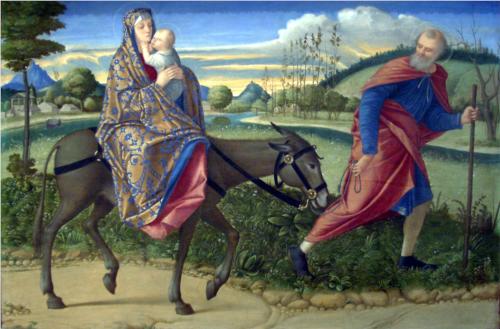
"The Flight Into Egypt", Vittore Carpaccio, c. 1500
“The Flight Into Egypt”, Vittore Carpaccio, c. 1500

Scripture Passage:  Matthew 2:13-2313Now after they had left, an angel of the Lord appeared to Joseph in a dream and said, “Get up, take the child and his mother, and flee to Egypt, and remain there until I tell you; for Herod is about to search for the child, to destroy him.”14Then Joseph got up, took the child and his mother by night, and went to Egypt,15and remained there until the death of Herod. This was to fulfill what had been spoken by the Lord through the prophet, “Out of Egypt I have called my son.”  16When Herod saw that he had been tricked by the wise men, he was infuriated, and he sent and killed all the children in and around Bethlehem who were two years old or under, according to the time that he had learned from the wise men.17Then was fulfilled what had been spoken through the prophet Jeremiah:18“A voice was heard in Ramah, wailing and loud lamentation, Rachel weeping for her children; she refused to be consoled, because they are no more.” 19When Herod died, an angel of the Lord suddenly appeared in a dream to Joseph in Egypt and said,20“Get up, take the child and his mother, and go to the land of Israel, for those who were seeking the child’s life are dead.”21Then Joseph got up, took the child and his mother, and went to the land of Israel.22But when he heard that Archelaus was ruling over Judea in place of his father Herod, he was afraid to go there. And after being warned in a dream, he went away to the district of Galilee.23There he made his home in a town called Nazareth, so that what had been spoken through the prophets might be fulfilled, “He will be called a Nazorean.”

(OK, see, I had something else in mind to write today, but my journey took me another way…Thanks, Mary! :))

We keep talking about our “journey” like it’s some neatly-mapped pathway from one point to another, like there is only one way to get to where we need to go.  But, really, our “journey” is a series of journeys, all connected, all with a beginning and an ending that pushes us into the next leg of our Way.  Rainer Maria Rilke speaks of living one’s life in “ever-widening circles”, all complete and yet inter-connected, each in its completion giving way to the beginning of another and all together creating an infinity of time and space and being.

We don’t deal with this particular Scripture a whole lot.  It appears in the Revised Common Lectionary once in Year A on the first Sunday following Christmas, so it is in competition with New Year’s, national Associate’s Sunday, and, depending on how the calendar falls, Epiphany Sunday.  So what does this mean?  Well, on one level, it is indicative of the unstable and almost chaotic way the world was put together then, with people vying for power and doing anything to make sure that their position stayed as it was (OK, maybe it’s not just about then!).  It is also a depiction of the great love that Mary and Joseph showed for the child Jesus, wanting to protect him, to rush him away, giving up themselves, giving up their own lives, leaving their families, probably Joseph’s carpentry business, leaving all that was familiar and all that was comfortable to make sure that the one that they loved was safe.

But Egypt?  If I remember, Egypt did not go well for Joseph and Mary’s ancestors.  In fact, Egypt represented oppression and slavery and forced labor and loss of home and way of living and way of being and overwhelming despair.  Well, apparently, God can redeem anything!  After all, Joseph is told to flee into the very place from which those before him fled.  This time around, Egypt means safety and freedom and redemption.  Oh, how our journeys turn, giving way to one another!  Perhaps this is a taste of what is to come.  Jesus will never be “safe”; Jesus will never be “comfortable”; Jesus will never be in a place of stability.  Jesus will always be journeying, fleeing from one circle to another–from a home that has no room for his birth to a place of exile that offers freedom and life.  Jesus will spend his life fleeing toward temptation and walking away from self-centeredness.  Jesus will spend his life with no place to lay his head and fleeing toward Jerusalem.  Jesus’ life of ever-widening circles will take him from rejection by his own to welcome to a place of exile over and over again.

Maybe each of our journeys prepares us for what’s to come, for not only the next, but to resolution down the road of a journey that we once thought had ended.  Perhaps this image of Egypt not as a captor but as redemption is a foretaste of what’s to come, that an instrument of death, an ending that logic tells us has no redemption, begins again.  And there, we will be called to the home where we have always belonged, where there was always room.

So on this Lenten journey, think of your journeys, think how they connect, how they redeem each, and how each is part of calling you home.  And imagine that the one that ends in despair could possibly be the one that begins your life.

Grace and Peace,

Shelli

Lenten Threshold

Celtic Cross-2Scripture Passage: John 1: 1-14

In the beginning was the Word, and the Word was with God, and the Word was God.2He was in the beginning with God.3All things came into being through him, and without him not one thing came into being. What has come into being4in him was life, and the life was the light of all people.  5The light shines in the darkness, and the darkness did not overcome it.6There was a man sent from God, whose name was John.7He came as a witness to testify to the light, so that all might believe through him.8He himself was not the light, but he came to testify to the light.9The true light, which enlightens everyone, was coming into the world.10He was in the world, and the world came into being through him; yet the world did not know him.11He came to what was his own, and his own people did not accept him.12But to all who received him, who believed in his name, he gave power to become children of God,13who were born, not of blood or of the will of the flesh or of the will of man, but of God.14And the Word became flesh and lived among us, and we have seen his glory, the glory as of a father’s only son, full of grace and truth.

Happy St. Patrick’s Day!  Yes, even those of us who are in traditions where we honor few feast days of saints get in to this one and don our green.  Now, admittedly, most of us don’t even know much about Patrick or his tradition, save a few legends about snakes and stuff.  Patrick was said to have been born Maewyn Succat (Lat., Magonus Succetus) in Roman Britain in the late 4th century.  When he was sixteen, he was captured by Irish raiders and taken as a slave to Ireland, where he lived for six years before escaping and returning to his family.  He wrote that his faith grew in captivity and he prayed daily.  The story is told that one day Patrick heard a voice saying “your ship is ready” and took it to mean that it was time to return home.  Fleeing his master, he traveled to a port two hundred miles away, found a ship, and sailed home.  He entered the church and later returned to Ireland as a missionary.  By the eighth century, he had become one of the patron saints of Ireland.

Patrick’s life, like his Celtic tradition, is based on pilgrimage.  Life in this tradition is about growing and moving and not “pitching our tent” in one place too long.  It is about connecting to all of Creation, about honoring and revering all as sacred.  It is about treating all of life sacramentally, embracing it as a gift from God and a way to God.  Embracing the Celtic spirit means going on a journey, open to moving from one place to another, one thought to another, one way of seeing to another.  In the midst of this journey, Celtic spirituality recognizes the importance of crossing places, seeing them as thresholds of growth.  These places are truly looked upon as sacred spaces.  Bridges and gateways express a determined refusal to be stopped by what blocks our way; causeways open up pathways to places that have been inaccessible; and burial grounds mark the crossing place from life to death, from “this world” to an “other world”, from time and space to eternity and infinity.      These thresholds prevent us from becoming islands, closed off to change and moving forward.  The thresholds open up new worlds and new possibilities.  Thresholds are bridges between the now and the to be.

For us, this Celtic tradition holds a lot of things that can help us on our Lenten journey.  In fact, they are notions that we spend a good part of our Lenten season trying to grasp.  Lent itself is a threshold, a sacred doorway to growth and connection, to learning to embrace our own lives as gifts, as sacramental journeys toward a new oneness with God.  It is a journey to the ultimate threshold of all, the gateway between life and death, between the world that we know and the Way that we are called to go.  Lent keeps us from staying behind when God is moving just ahead.  There is an Old English word, “liminality”, that literally means “betwixt and between”.  It is a place of intersection, a threshold, between what is and what will be.  And we are called to that place, to the intersection of this world and the world to which God calls us.  We are called to be “betwixt and between”, with our feet firmly planted in this world and our heart, our soul, and our mind stretching beyond ourselves, stretching to God.

And the snakes?  Well the legend credits St. Patrick with banishing all the snakes from Ireland.  Evidence suggests, however, that post-glacial Ireland never had any snakes.  But some suggest that Patrick was instrumental in ridding the Celtic Christians of all the “serpents” that were so common in their pre-Christian Druid belief, of helping them get rid of those things that got in the way of their movement, of their threshold, of their journey toward God.  Hmm!  Sounds like Lent to me!

So, as we journey during this Lenten season, let us embrace our threshold, let us embrace all of time and all of space that has brought us to this place, and then let us journey toward the Way that God is calling us.

Rath De ‘ort (Gaelic, pronounced Rah Day urt, “The Grace of God on you.”)

Shelli

Station XI: Regrets

crucifixion-22Scripture Passage: Mark 15: 22-32

22Then they brought Jesus to the place called Golgotha (which means the place of a skull).23And they offered him wine mixed with myrrh; but he did not take it.24And they crucified him, and divided his clothes among them, casting lots to decide what each should take.  25It was nine o’clock in the morning when they crucified him.26The inscription of the charge against him read, “The King of the Jews.”27And with him they crucified two bandits, one on his right and one on his left.29Those who passed by derided him, shaking their heads and saying, “Aha! You who would destroy the temple and build it in three days,30save yourself, and come down from the cross!”31In the same way the chief priests, along with the scribes, were also mocking him among themselves and saying, “He saved others; he cannot save himself.32Let the Messiah, the King of Israel, come down from the cross now, so that we may see and believe.” Those who were crucified with him also taunted him.

The eleventh station of the Via Dolorosa is marked by a beautiful Latin shrine.  This is the place where tradition tells us that soldiers nailed Jesus’ hands and feet to the cross.  It is only 9:00 in the morning.  For us, the thought of arriving at this eleventh station seems much longer, days really.  But it is still only mid-morning.  The sounds are deafening.  The clanging rings out over the land and settles into our hearts–a nail of greed, a nail of selfishness, nails of betrayal and hatred and war, nails of hunger and poverty, nails of not accepting and loving each other, nails of being so sure of one’s beliefs, so sure of one’s understanding of who God is and what God desires, that we miss seeing what God is trying to show us.  It is finished.  In the Name of Jesus Christ, you are forgiven.

It is here that our regrets sink in. It is here that we want to go back, we want a redo.  We would do it differently next time. We would not ask so many questions as to why he was doing what he was doing and to whom.  We would just watch and listen and learn from him how to love.  We would not fight and grapple with each other over who was in charge, over who was the most important, over who was his favorite.  Instead, we would bask in his spirit and his radiance and his love of equality for all.  And when asked if we knew who he was, we would not betray him.  Rather, we would step forward no matter the cost.  Because grace is not cheap.  But now we know how incredibly rich it really is.  Yes, we would stand up and be counted as one who follows him, who brings healing and love to the world, who doesn’t need credit or acclaim, and who is willing to lose one’s life to find it.  But there are no redos just now.

Regrets can be debilitating.  They can pull us into the past and keep us there.  It is not healthy.  Regrets can also be life-giving if we allow them to compel us to change, to perhaps turn a corner that we did not see before, to become something new, a New Creation, to become the one that God calls us to be.  And, yet, we still want the easy way out.  After all, we are empty cross people, Resurrection people!  And so maybe we walk away from this moment entirely too quickly.  After all, it makes us uncomfortable and God offers us life.  So too quickly we let it go, too quickly we move past our regrets without letting them change us.

The most difficult thing for us to face is that so little has changed.  We still try to be the one on top.  We still shut the door to those who are not like us.  We still close our doors so we don’t have to think about poverty or homelessness.  We still justify war.  We still will do anything it takes to defend the life that we have created.  We still betray.  We forget to love; we forget to bring healing; we forget to lose our life.  So, would we crucify Jesus today?  Would things go differently?  Only we can tell…

So on this Lenten journey, stop for a moment.  Look at the cross.  And let your regrets of what should have been done differently change your pathway.

Grace and Peace,

Shelli