The Dwelling Place

Open HouseScripture Passage: Psalm 27:4

One thing have I desired of the Lord, that will I seek after; that I may dwell in the house of the Lord all the days of my life, to behold the beauty of the Lord, and to enquire in his temple. (KJV)

The Psalmist gives us great comfort, this idea of dwelling with God forever.  It is our hope; it is our promise; it is what our faith is all about.  So what does it mean to “dwell”?  One definition is to “stay” or to “reside in permanent residence.”  That is usually the way we think of this notion–to live with God, to stay with God forever.  For us, a “dwelling” is something permanent, a structure that protects us and gives us shelter.  It is the place where we can go when life gets to be too much and when we need rest and sustenance.  It is the place where we can hide ourselves away and heal.  It is the place that feels like home. 

But dwellings also wall us off from the rest of the world, setting up boundaries of what is “mine” and what is “yours”.   They allow us to ignore the needs and the lives of those who are not within our walls.  I live in an older neighborhood in Houston.  Once filled with a few older Victorian homes and lots of small 1920’s bungalows (I have one of those), it is now becoming a victim of the so-called “McMansion” syndrome as bungalow after bungalow is torn down so that a sprawling three-story (or even four-story) Victorian wannabe can take over the entire lot.  So, beyond mere protection and shelter, the dwelling has creeped beyond its own boundaries and taken on an identity all its own.

Is this how we read these words now, as if we have somehow taken up residence with God and God’s sprawling house?  Is that what it means to dwell with God, to stay, to hide, take move into a permanent structure (perhaps with other like-minded children of God)?  But there is another meaning of the word “dwell”.  It is also defined as “to linger over” or “ponder”.  So what, then, would it mean to spend all the days of one’s life pondering God, lingering with God?  I don’t think God calls us to stay with God but rather to be with God.  The walls of dwellings sound to me far too limiting of a limitless God. (Which is the reason that the image of Christ becomes the new Temple, the new Dwelling.)  But this dwelling that we have somehow conjured up in our minds is not where God lives but rather where we want God to be, the place where we envision pulling God into our notion of who God is.  But to be, to be with God, means to go where God is, to open one’s mind and heart and soul to being the very image of God, to being the dwelling of God.

Once again, it requires us to make room, to clear our lives of the “stuff” that we have accumulated and to perhaps open the doors and windows and let the fresh air and light in.  God IS our sustenance, our shelter, even, at times, our protector.  But God does not wall us off from the rest of the world.  We are called to go forth, to be God’s image in the world.  We are called to ponder, to linger over, to become.  Doesn’t that sound a little familiar?  Mary treasured all these words and pondered them in her heart. (Luke 2: 19, NRSV)  And then, if you remember, she became the very dwelling of the Godself, the God-bearer, the one that birthed God into the world.  We are not called to stay with God; we are called to be with God, to be a dwelling place for God with God in God.  We are called to be the God-bearers.  It is home, the place where we can truly rest our souls.

My ego is like a fortress.  I have built its walls stone by stone to hold out the invasion of the love of God.  But I have stayed here long enough.  There is light over the barriers.  O my God…I let go of the past, I withdraw my grasping hand from the future, and in the great silence of this moment, I alertly rest my soul.  (Howard Thurman)

On this Lenten journey, what does it mean for you to dwell in God, to ponder?  What does it mean to become a dwelling place for God?

Grace and Peace,

Shelli
Behold, A Mystery!

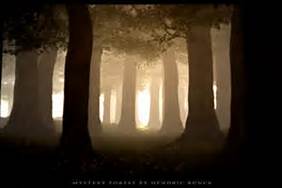
Mystery ForestScripture Passage for Reflection: 1 Corinthians 15:51

Listen, I will tell you a mystery! We will not all die, but we will all be changed.

This Season of Advent is ripe with mystery.  I guess it’s conventional and comfortable to take all the stories as they are written, to make sure that Jesus was born the way we assume him to be born, to make sure that there was nothing that might be in question.  And so we spend the season praying over and over to God that God will somehow get our perspectives straight; in other words, that God will swoop in and finally clear it all up for us once and for all.  But mystery still remains!  There are oh so many questions.  Why this way?  Why Mary?  Why that time? (I mean the world wasn’t any more ready for it than it is now!)  Why NOT now?  Why THIS man?  Why THIS place?  Was it in a manger or a grotto or the back room attached to the house that was built for the animals in that century?  And why didn’t they have room?  I mean, really, if God was coming into the world, why didn’t God at least make reservations for the occasion?  So much of this doesn’t make sense at all.  Wouldn’t it have been more efficient of God’s coming into the world was better documented, perhaps well-explained so that we’d have something with which to work?  It would definitely be oh so much easier.

The truth is, surety and doubt, belief and questions are all a part of our faith.  They are all a part of the story.  They are the way the story unfolds. When I was in seminary, Perkins arranged for students to participate in a small question and answer type discussion with noted author and screenwriter, John Irving.  One of the questions that someone asked him was how he went about constructing his stories.  The question was, of course, not surprising.  The answer, though, might have been to some.  Irving said that when he sat down to write, he always wrote the ending first and then backed through the story, creating characters, plot, and theme.  The point of the story is, after all, that with which we are left.  Regardless of where it’s located in the work, the point is usually realized at the end.  I think that’s what God has done.  God wrote the ending first, the recreation of all there is, the Kingdom of God in its fullest, and then began to back through the story.  So this coming of the Godself into our midst becomes the turning point that leads us that Way.

Eternal life was already there for us written into the deepest part of our being, the very image of God within us.  But the way to that life is murky at best.  So God came not as one wielding weath and power and the things of this world but as one holding nothing, a tiny baby with nothing but the love of two people who had promised to show him the Way.  God never intended that this way would be one of certitude.  The journey is one of seeking, of questioning, of wrestling, until one finds his or her way to God.  Having all the answers would have shut us down long ago.  It is the mystery that invites us to journey.  Another noted author, Andrew Greeley, once wrote, “Life is prodigious,  overwhelming. In that there is mystery, hint, and perhaps sacrament…The excessiveness of life is the best sacrament we could ask for, a hint of how powerful, how determined, and how excessive You are.”  Maybe God’s plan was not to bring the Divine down to our understanding but to give us something to journey toward.  Mary’s part was a journey into the unknown.  So was Joseph’s.  So is ours.  But it is only unknown until we embrace it as Home.

God…leads us step by step, from event to event.  Only afterwards, as we look back over the way we have come and reconsider certain important moments in our lives in the light of all that has followed them, or when we survey the whole progress of our lives, do we experience the feeling of having been led without knowing it, the feeling that God has mysteriously guided us. (Paul Tournier)

Reflection:  What part of this mystery is the hardest for you?  Where do you need to journey?

Grace and Peace,

Shelli

Advent 3A: Hurry Up and Wait!

Seeded FieldLectionary Passage for Reflection:  James 5: 7-10

Be patient, therefore, beloved, until the coming of the Lord. The farmer waits for the precious crop from the earth, being patient with it until it receives the early and the late rains. You also must be patient. Strengthen your hearts, for the coming of the Lord is near. Beloved, do not grumble against one another, so that you may not be judged. See, the Judge is standing at the doors! As an example of suffering and patience, beloved, take the prophets who spoke in the name of the Lord.

OK, I have to admit that I am not the most patient person in the world.  (Like THAT’S a big surprise!)  So, this whole Advent notion of waiting and waiting some more is almost too much to bear.  And don’t you hate it when someone tells you to “be patient”.  Grrrr!  Look, you just don’t know what all I have going on in my life.  You just don’t know how hard that is!  (Yeah, I know, that sounds way too familiar for comfort!)  And something about this season makes it even harder.  We have to hurry up and get the tree up!  And then we have to hurry up and get all the shopping done!  And then we have to hurry up and get the gifts wrapped!  And then we have to hurry to the party and hurry with the cooking and hurry with the hurrying.  And, please, please tell us what will happen next so that we can get ready!  So, how in the world with all this hurrying are we expected to be patient, to wait for God’s time to be our own. 

There is a story that you’ve probably heard of an American traveler on safari in Kenya.  He was loaded down with maps, and timetables, and travel agendas.  Porters from a local tribe were carrying his cumbersome supplies, luggage, and “essential stuff.”  On the first morning, everyone awoke early and traveled fast and went far into the bush.  On the second morning, they all woke very early and traveled very fast and went very far into the bush.  On the third morning, they all woke very early and traveled very fast and went even farther into the bush.  The American seemed pleased.  But on the fourth morning, the porters refused to move.  They simply sat by a tree.  Their behavior incensed the American.  “This is a waste of valuable time.  Can someone tell me what is going on here?”  The translator answered, “They are waiting for their souls to catch up with their bodies.”

Maybe that’s what this Advent season is–a season of waiting for our souls to catch up.  (So why did they put it in the busiest season of the year!  That doesn’t make sense!)  Whoever wrote this short epistle buried toward the back of the New Testament knew exactly what our problem was.  He or she knew that when we get something in our head, when we set our sights on something, we want it immediately if not last night sometime.  And so, many of us are running around with bodies and souls that are dangling, disconnected, not quite able to reach other, not able to connect.  Stop.  Stop what you’re doing.  Like the farmer, all that you are is planted and fertilized.  Now you have to wait.  You have to wait for God’s Spirit in God’s Time to rain in, drenching the thirsty soil.  Your soul knows how to wait.  There is a Divine Wisdom planted deep within.  The soul moves slowly soaking up everything in life.  Oh, what our minds and bodies could learn from that!  But we have be patient.  Sometimes we have to wait.  And sometimes we might even have to step back and be led to the next place. 

Perhaps rather than living life with the words “hurry up” always on our lips, we should live a life of “Amens”, “so be it”.  Life will be what life will be.  God knows that this is not easy.  There are things that we must finish and there are patches that we want to quickly run through so that we don’t experience the pain or the heartache.  God knows that it is hard to wait.  It is not God’s will that we suffer or that we have difficulties in life.  It is God’s will that we become who God envisioned us to be, that Creation becomes what God meant it to be.  It is all there, planted and fertilized.  But it takes time.  You have to wait.  The time is near but it is not yet right.  There is still more to come.

And ye, beneath life’s crushing load, whose forms are bending low, who toil along the climbing way with painful steps and slow, look now! for glad and golden hours come swiftly on the wing, O rest beside the weary road, and hear the angels sing!

For lo! the days are hastening on, by prophet seen of old, when with the ever-circling years shall come the time foretold, when peace shall over all the earth its ancient splendors fling, and the whole world send back the song which now the angels sing.

Edmund H. Sears, 1849

Reflection:  Why are you such a hurry?  What are you missing by hurrying through life?  What is your soul trying to teach you?

Grace and Peace,

Shelli

Searching for Home


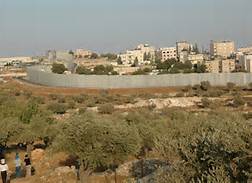
Modern-Day Bethlehem and the West Bank wall

Passage for Reflection:  Ruth 1:16b

“Do not press me to leave you or to turn back from following you! Where you go, I will go; Where you lodge, I will lodge; your people shall be my people, and your God my God.

What does “home” mean to you? Is it the place that keeps you safe?  Is it the place that encourages you to grow, to pursue your dreams, to become better than you are?  Is it the place to which you return or the place that you’re trying to find?  Is it the place you know or the place where you are known?  Robert Frost said that “home is the place where when you have to go there, they have to take you in.” (Personally, that sounds a lot like grace to me!)  Emily Dickinson said “where thou art, that is home.”  Ann Danielson said that “home is where your story begins.”  So when did home turn into something that we protect, something that we “own”, something that we use to close the doors and shut out the world?  When did home become something that keeps us where we are?  When did home become our stopping point?

These words of Ruth’s are not, as popular culture’s wedding traditions often assume, about a married or a marrying couple.  They are a daughter-in-law’s words to her mother.  And perhaps buried deep within their meaning is something even more.  They are also the words of a displaced, homeless wanderer desperately searching for home.  They are the words of one who lives in poverty and exile who is looking for a new story, a new life.  They are the words that begin a journey to Bethlehem.  So, Ruth, the Moabite, the foreigner, the one who really does not belong in the story travels with Naomi in search of a home.  And she becomes a part of the story, a story that also happens in Bethlehem.  Generations later, the Gospel writer known as Matthew will name Ruth as the ancestor of Jesus.

We will read the story of Jesus’ birth in a few weeks and we will bemoan the fact that there was no room for him, no home for him to begin his life on this earth.  Maybe that was the point.  Maybe it was because the world as it was, a world full of homelessness and poverty, a world full of empires vying for control, a world full of those who would shut the doors of their homes to others, was never really going to be home.  There was never really room for Jesus in this world the way it was.  And he lived a little more than three decades, we are told, wandering, never really settled, in search of a home.

Maybe that is what this season of Advent with of its stories of exiles and wild men in the wilderness, stories of misfits and rebels that are searching for a place to belong, a place that makes sense, a place that fits with the vision that they have been shown, teaches us.  (Good grief, ANOTHER Advent lesson?!?)  13th and 14th century theologian Meister Eckhart once said that “God is at home; it is we who have gone out for a walk.” Maybe, then, home is not the place where we hide under the covers all warm and toasty; maybe it is not the place to which we return but rather the place to which we are drawn.  Our faith journey is an incredible act of searching for home.  It is not the place that makes us comfortable but the place that gives us meaning, the place that makes us real, the place that makes us become who God calls us to be.  That vision that God holds for us is not one that draws us into the unknown but rather one that brings us home.  “Home is where your story begins.”  It begins now.  Have you ever thought that Advent is not about making room for Christ in the midst of what you know but rather following Christ in search of God’s vision of Home, not a home in some far off place in your next life, but home with God even now?  Advent is not about making room for God in your life but rather following God into the life in which God has made room for you.  But sometimes, like Ruth, you have to leave what you know behind.

Reflection:  What does “home” mean to you?  What places do you need to leave behind to search for home?

Grace and Peace,

Shelli

Prepare Ye the Way

Lighted PathwayScripture for Reflection:  Mark 1: 2-3

2As it is written in the prophet Isaiah, “See, I am sending my messenger ahead of you, who will prepare your way; 3the voice of one crying out in the wilderness: ‘Prepare the way of the Lord, make his paths straight,’”

We read this as a call to preparation, a call to hastily clean up our act before the Holy Child appears, a call to straighten up and follow the path to God.  But we forget about the ones who came before.  There has been waiting and preparing going on for centuries upon centuries of generations.  The word “Hebrew” is from the root “avar”, which means “to wander”.  What we have is a story of a people journeying home.  What we know is not the whole story, but merely a chapter of an incredible epic that God has written on our hearts.

Lately, I have gotten back to working some more with my family history, trying to figure out who came before, who was on the path before me.  I realized that I had quite a few pictures of the generations of women in my family–my grandmothers, my great-grandmothers, my great-great grandmothers, and even some great-great-great grandmothers.  So I set to work scanning and printing and framing and arranging and created a “Wall of Women”, those women in my family that are part of me.  I have eleven pictures on the wall and I and the rest of my family are now looking for others.  Of those women, I only knew four–my mother, both my grandmothers, and my Great Grandmother Stockdick.  And yet, I know them all.  They are part of me.  They are the ones that have prepared the way.

Jesus was not just plunked down from the sky into a manger.  Jesus came, God with Us, after eons of the earth straining to see the Light.  He came into centuries upon centuries of waiting journeyers, those who had prepared the way for his coming, not know what that would be but knowing that it would be.  Those that came before are not just a prelude to the story but are part of the story itself.

We, too, do not just appear on the scene.  We are part of the story–all that came before us and all that will come after us.  And a little more than two weeks from you when you sit in the sanctuary surrounded by candlelight knowing that, yet again, the Light has come, you will know that it does not just appear.  It comes after centuries of waiting; it comes after years of your life preparing for it and journeying toward it; and it comes at the end of this darkened season of Advent.  We journey not knowing what will be but that it will be.  We enter a Way that has already been prepared and prepare the Way ourselves.

2 Abraham was the father of Isaac, and Isaac the father of Jacob, and Jacob the father of Judah and his brothers, 3and Judah the father of Perez and Zerah by Tamar, and Perez the father of Hezron, and Hezron the father of Aram, 4and Aram the father of Aminadab, and Aminadab the father of Nahshon, and Nahshon the father of Salmon, 5and Solomon the father of Boaz by Rahab, and Boaz the father of Obed by Ruth, and Obed the father of Jesse, 6and Jesse the father of King David.  And David was the father of Solomon by the wife of Uriah, 7and Solomon the father of Rehoboam, and Rehoboam the father of Abijah, and Abijah the father of Asaph,* 8and Asaph* the father of Jehoshaphat, and Jehoshaphat the father of Joram, and Joram the father of Uzziah, 9and Uzziah the father of Jotham, and Jotham the father of Ahaz, and Ahaz the father of Hezekiah, 10and Hezekiah the father of Manasseh, and Manasseh the father of Amos,* and Amos* the father of Josiah, 11and Josiah the father of Jechoniah and his brothers, at the time of the deportation to Babylon.  12 And after the deportation to Babylon: Jechoniah was the father of Salathiel, and Salathiel the father of Zerubbabel, 13and Zerubbabel the father of Abiud, and Abiud the father of Eliakim, and Eliakim the father of Azor, 14and Azor the father of Zadok, and Zadok the father of Achim, and Achim the father of Eliud, 15and Eliud the father of Eleazar, and Eleazar the father of Matthan, and Matthan the father of Jacob, 16and Jacob the father of Joseph the husband of Mary, of whom Jesus was born, who is called the Messiah.* (Matthew 1: 2-16)

photo(1)Catherine Coffman Morrison, the mother of William Patrick Morrison, who with Hattie Aurelia Brockway Morrison, was the father and mother of Zeta Helen Morrison Stockdick;   (2) Mary Angeline Egbert Stockdick, the mother of Adam Henry Stockdick and Sarah A. Klaiss Young, the mother of Elmira Young Stockdick, who, with Adam Henry Stockdick were the parents of William Chester Stockdick.  (3) William Chester Stockdick and Zeta Helen Morrison Stockdick were the parents of Ruth Mary Stockdick Williams, (4) Mary Elizabeth Little Williams, the mother of Lester Leon Williams, who with Ruth Mary Stockdick Williams, were the parents of William Don Williams, (5) Helene Sitz Krause, mother of Agnes Helene Angeline Krause Reue, mother of Helen Louise Reue Williams, (6) William Don Williams and Helen Louise Reue Williams, the parents of Helen Michelle (Shelli) Williams.

Reflection:  Who has prepared the way for you? How are you being called to prepare the way?

Grace and Peace,

Shelli

The Plans I Have for You

BlueprintsScripture for Reflection:  Jeremiah 29: 11-14

11For surely I know the plans I have for you, says the Lord, plans for your welfare and not for harm, to give you a future with hope. 12Then when you call upon me and come and pray to me, I will hear you. 13When you search for me, you will find me; if you seek me with all your heart, 14I will let you find me, says the Lord, and I will restore your fortunes and gather you from all the nations and all the places where I have driven you, says the Lord, and I will bring you back to the place from which I sent you into exile.

Plans–we’re good at making plans.  We make plans and we put them on a list and we structure our time and our finances and we walk toward those plans.  But what happened to that vision that we keep talking about?  You know the one, when the predators really do lie down with those that they now persecute, when all of us listen to each other, respect each other, when we are all open to change and open to being the instruments of change.  It is the vision for which we hope, the vision on which our whole being, our whole faith is placed.  But, remember that means change-change for the world and change for us.  How open to change are we?  No, I mean really.  How open are we to letting go of what we hold, letting go of the lives that we’ve built around us, the lives that we’ve earned, the lives that we deserve?  How open are we, truly, to letting go of the plans that we’ve made for ourselves?  Oh, we say we are but, then, most of us are the ones with a whole lot more to let go, a whole lot more to lose.  I mean, after all, if your life is going exactly like you’ve planned for it to go, why would you want to change?

We want to change because we are called to change.  It is part of who we are in the deepest part of our being, that part of ourselves that is truly created in God’s image.  So do not hold too tightly to what you have made for yourself.  There is something much, much more waiting for you.  That is what this season of Advent calls us to do–let go, be open to change, open to the plan that God has for us.  Think about it.  What shapes you?  What shapes your life?  What are your goals?  What gives your life me aning?  In what kingdom do you reside?

In what kingdom do I reside?  What does THAT mean?  I mean, who do you follow, what drives you, to whom do you listen?  Life is hard work, this following of our dreams, this pursuing of our riches, this trying desperately to hold on to what we perceive as ours.  Maybe it’s because this is not that for which we were made.  This is not the image that is buried deep within us, the one that compels us to change, the one will lead us out of exile.  The lights have just begun to dawn, pointing the way to the promise, to that vision that God holds for us, to the blueprint that God has had all along.  This season points to a baby each year but the main reason is that it is calling us to rebirth, to follow another Way.  Search for the Lord and you will find that Way.

In each heart lies a Bethlehem, an inn where we must ultimately answer whether there is room or not, When we are Bethlehem-bound we experience our own advent in his.  When we are Bethlehem-bound we can no longer look the other way conveniently not seeing stars, not hearing angel voices.  We can no longer excuse ourselves by busily tending our sheep or our kingdoms.

This Advent let’s go to Bethlehem and see this thing that the Lord has made known to us.  In the midst of shopping sprees, let’s ponder in our hearts the Gift of Gifts.  Through the tinsel, let’s look for the gold of the Christmas Star.  In the excitement and confusion, in the merry chaos, let’s listen for the brush of angels’ wings.  This Advent, let’s go to Bethlehem and find our kneeling places.

(“In Search of Our Kneeling Places”, from Kneeling in Bethlehem, by Ann Weems, p. 19)

Reflection:  What plans are you following?  Where does that image of God within you call you to go?

Grace and Peace,

Shelli

Advent 2A: One Voice


HarmonyLectionary Epistle Passage for This Week:  Romans 15: 4-13

4For whatever was written in former days was written for our instruction, so that by steadfastness and by the encouragement of the scriptures we might have hope.  5May the God of steadfastness and encouragement grant you to live in harmony with one another, in accordance with Christ Jesus, 6so that together you may with one voice glorify the God and Father of our Lord Jesus Christ.  7Welcome one another, therefore, just as Christ has welcomed you, for the glory of God. 8For I tell you that Christ has become a servant of the circumcised on behalf of the truth of God in order that he might confirm the promises given to the patriarchs, 9and in order that the Gentiles might glorify God for his mercy. As it is written, “Therefore I will confess you among the Gentiles, and sing praises to your name”; 10and again he says, “Rejoice, O Gentiles, with his people”; 11and again, “Praise the Lord, all you Gentiles, and let all the peoples praise him”; 12and again Isaiah says, “The root of Jesse shall come, the one who rises to rule the Gentiles; in him the Gentiles shall hope.”  13May the God of hope fill you with all joy and peace in believing, so that you may abound in hope by the power of the Holy Spirit.

So you thought you had it figured out?  No where here does Paul depict Scripture as some sort of moral code, some sort of holy instruction book that tells us what is right, tells us what we need to know, tells us what choices to make.  The point is not that Scripture teaches us the “right” way to live but that it opens the door–opens the door to a different way of being, a different way of living, opens the door to hope.  The passage talks of welcoming one another–not correcting one another or shaping one another into some sort of pre-ordained human caricature–but just welcoming. It means opening our arms and welcoming the other, welcoming the one who is different, the one who sings in a different voice.

Think of a choir or a symphony or even a band.  The point is not to sing the same note but to learn to sing your own note in tune with those around you.  You know how you do that?  You listen to those around you.  You learn to live not in “sameness”, but in harmony.  If you’ve ever participated in any sort of musical ensemble or even if you simply sat and listened to one, you know that there is something that happens before a note of the music is played.  Nothing happens until the ensemble tunes itself to one voice.  This does not mean that they become each other.  A clarinet will always be a clarinet with a unique timbre and sound. A violin will remain what it is.  And in a choral ensemble, a rich bass voice will never become a first soprano (Thanks be to God!…kidding!).  Each instrument, each voice, remains what they are, remains what God calls them to be.  But before they start playing, they listen. They listen to themselves in a way that other people might hear them.  They listen to those around them to make sure that they blend together.  And, most importantly, they listen to the tuning pitch, to that one voice that will enable them to make glorious music.

That is the lesson that we must learn.  Do not get me wrong.  We are rich in diversity—in the way we look, the way we think, the way we live, the way we move through life.  Thanks be to God!  But there is a common rhythm running through all of our lives, one voice to which we must tune our lives.   That is our hope.  It is not becoming something different than we are but all of us becoming who we are already created to be.  Thomas Merton once said that “everything has already been given.  What we need is to live into it.”

In this Advent season, that is the invitation that we are given–not to re-craft or re-structure our lives into something that fits but to listen to the tune deep within us, the common harmony that runs through us all.  As the Scripture say, we listen to ourselves in a way that others hear us; we listen to our hearts in a way that others feel.  Advent is not some final-inning stretch before God comes.  Rather, it is the final tuning before the symphony begins.

Has it ever occurred to you that one hundred pianos all tuned to the same fork are automatically tuned to each other? They are of one accord by being tuned, not to each other, but to another standard to which each one must individually bow. So one hundred worshipers [meeting] together, each one looking away to Christ, are in heart nearer to each other than they could possibly be, were they to become ‘unity’ conscious and turn their eyes away from God to strive for closer fellowship. (A.W. Tozer)

Reflection:  Where are those place in your life where you need to just listen?  Write them down.  Carry them around.  And, then, shhhh…what are they telling you?

Grace and Peace,

Shelli

To see my full notes for this week’s Lectionary passages, go to http://journeytopenuel.com/.  If you’d like to get them each week, just follow the blog!