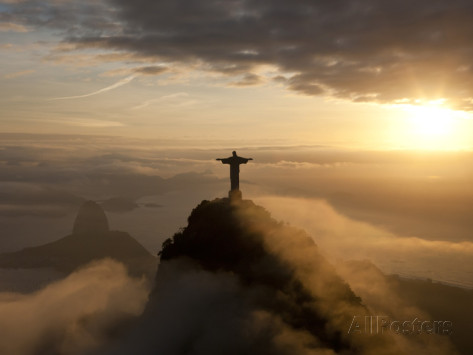
Seeing Jesus

Peter Adams, Cristo-Redentor, Corcovado Mt, Rio

Scripture Text: John 12: 20-33 (Lent 5B)

20Now among those who went up to worship at the festival were some Greeks. 21They came to Philip, who was from Bethsaida in Galilee, and said to him, “Sir, we wish to see Jesus.” 22Philip went and told Andrew; then Andrew and Philip went and told Jesus. 23Jesus answered them, “The hour has come for the Son of Man to be glorified. 24Very truly, I tell you, unless a grain of wheat falls into the earth and dies, it remains just a single grain; but if it dies, it bears much fruit. 25Those who love their life lose it, and those who hate their life in this world will keep it for eternal life. 26Whoever serves me must follow me, and where I am, there will my servant be also. Whoever serves me, the Father will honor. 27“Now my soul is troubled. And what should I say—‘Father, save me from this hour’? No, it is for this reason that I have come to this hour. 28Father, glorify your name.” Then a voice came from heaven, “I have glorified it, and I will glorify it again.” 29The crowd standing there heard it and said that it was thunder. Others said, “An angel has spoken to him.” 30Jesus answered, “This voice has come for your sake, not for mine. 31Now is the judgment of this world; now the ruler of this world will be driven out. 32And I, when I am lifted up from the earth, will draw all people to myself.” 33He said this to indicate the kind of death he was to die. 

We wish to see Jesus.  Think about it.  What does that mean?  Would our lives or our faith or our image of God be different if we had actually laid eyes on Jesus?  I think it’s interesting that those who wanted to see Jesus are Greeks.  If they were Greeks, that was implying that they were not Jewish.  They were not part of Jesus’ community. And to these ancient Greeks, “seeing” meant observing.  “Theoros” was the word for spectator or “one who observes the vision.”  These spectators were not just there.  They weren’t just hanging around.  They were intentionally sent.  Think of them as ambassodors sent to consult and bring back the news.  Being a spectator, a “seer”, meant being both a witness and a participant.

There is a story that is told of Anthony the Great, the fourth-century leader of Egyptian monasticism.  A wise older monk and a young novice would journey each year into the desert to seek the wisdom of Anthony.  Upon finding him, the monk would seek instruction from the great Anthony on the life of prayer, devotion to Jesus, and his understanding of the Scriptures.  While the monk was asking all the questions the novice would simply stand quietly and take it all in.

The next year the well-worn monk and the young novice again went into the desert to find Anthony and seek his counsel.  Again, the monk was full of questions, while the novice simply stood by without saying a word.  This pattern was repeated year after year.  Finally, Anthony said to the young novice, “Why do you come here?  You come here year after year, yet you never ask any questions, you never desire my counsel, and you never seek my wisdom.  Why do you come?  Can you not speak?”  The young novice spoke for the first time in the presence of the great saint.  “It is enough just to see you.  It is enough, for me just to see you.”

It is enough for us just to see Jesus.  But it is more than just seeing with our eyes.  We are spectators.  We are participants.  We are witnesses.  In the Scripture passage, Jesus promised that as he was lifted up, as he was carried away from the hopelessness and despair of this world, he would draw all people to himself.  All would see Jesus and finally have their thirst quenched by the Divine.  But in order to be lifted up, the self that one has created must die away.  No longer can there be an attachment to this world—to wealth, to pleasure, to the place that one has obtained for oneself in life.  Those are meaningless.  But God through Christ offers a life that will always quench our thirst and be a feast for our eyes—a life with the Divine forever walking with us, a life for which our true self thirsts, a life of seeing Jesus, being with Jesus, just as those Greeks desired.

The cross is the instrument through which we see Jesus.  It is on the cross that Jesus becomes transparent, fully revealed.  Seeing Jesus means that we see that vision of the world that God holds for us.  And seeing Jesus also means that we see this world with all of its beauty and all of its horror.  We see the way that God sees.  We back away from ourselves and we see the big picture.  We see what needs to be done.  We finally see who we are.  And the closer we get to the cross, the more transparent we also become, the more of ourselves is revealed to the world. 

That is probably uncomfortable for most of us.  Wouldn’t it be easier to stand back in the shadows and let all of this happen, maybe just quietly watch it?  After all, Jesus did it for us, right?  But that is not what this walk is about.  That is not what we’re about.  That is not what Jesus was about.  And how, then, would you answer the question to come: “Were you there?”  Malcolm Muggeridge once said that “the way of Love is the way of the Cross, and it is only through the cross that we come to the Resurrection. Because the son of man will be lifted up in glory, we will be gathered in, and we will see Jesus illumined by the light of God.  In other words, when we finally get ourselves out of the way, when we step forward as spectators, participants, and witnesses, we WILL see Jesus.  It means going all the way to the cross. We can’t stand back and just look. “Seeing” does not just happen with our eyes; “Seeing Jesus” is what we do with our heart.

Lent is not just a time for squaring conscious accounts but for realizing what we perhaps had not seen before. (Thomas Merton)

Grace and Peace,

Shelli

The New Thing

Scripture Text: Isaiah 43: 18-19

18Do not remember the former things, or consider the things of old. 19I am about to do a new thing; now it springs forth, do you not perceive it? I will make a way in the wilderness and rivers in the desert.

I love old things.  They are full of stories and ripe with history. They are real, full of pits and marks from the past. My house is full of antiques (many of which carry generations of family history with them) and, for want of a better word, “repurposed” antique wanna-be’s.  I love history. I love old houses and antique shops and cemeteries. I love connecting with the past and those that came before me. I love old churches and especially those that honor and celebrate their rich histories. See, old things are not the problem; old ideas are not the problem; old notions of who God is and who we are before God are not the problem. The problem comes about when we find ourselves stuck with “the way it has always been”, not wanting to bring the past to life, wake it up, repurpose it so that it has life for us now and beyond. The problem comes when we find ourselves holding on for fear of losing our past or losing our grounding, wandering in the wilderness of former things.

I don’t think God wants us to forget the past. It is part of us. It is coursing through our DNA as we speak, making us who we are. It is what taught us to breathe, taught us to live, taught us to worship, taught us to be. We always carry with us the echoes of what God created before. They are our beginnings. But beginnings are not meant to be held onto. It is to our detriment to pad our lives with the past, to clutch at the beginnings as if they are the end-all, afraid that we might lose them, and to miss the new thing that God is doing, the repurposing of the old into the new.

Tradition is not a bad thing. It is a wonderful thing. It means to come into a conversation that began long before we got here and that will continue long after we are gone. It means realizing that there was something before we got here that is of value. It’s just not finished. We have to enter the conversation, embrace its riches, and then find what Truth is finally ready to be heard and what part of the Truth is ours to finally tell. Edna St. Vincent Millay said that “[Humanity] did not invent God but developed faith to meet a God who is already there.” But the conversation must continue so that we can see the newness that God is doing as Creation is repurposed and Truth becomes fuller.

Lent is known as a season of the wilderness, a season of wandering into the unknown, of being vulnerable, of letting go. Maybe it’s not so much that we are entering wilderness, but that we are exchanging one wilderness for another, leaving the wilderness of former things behind and journeying on through the way that God has made in the wilds of the new and untamed wilderness. But if we do things the “way we’ve always done it”, we will miss the newness springing forth. I can’t help but think about this as we begin to birth our “new normal” as a society.  After this pandemic, there is no way of going “back to normal”.  It doesn’t exist.  The new normal is waiting to be, even if it is shrouded in wilderness right now.  There is no doubt that the wilderness is the place to begin but the beginning cannot be held for more than a moment or it is lost in the past.

It has been the interruptions to my everyday life that have most revealed to me the divine mystery of which I am a part. All of these interruptions presented themselves as opportunities; invited me to look in a new way at my identity before God. Each interruption took something away from me; each interruption offered something new. (Henri J.M. Nouwen)

Grace and Peace,

 Shelli

Fully Alive

Melchizedek, Churches of Christ, Farsi version

Scripture Text: Hebrews 5: 5-10 (Lent 5B)

5So also Christ did not glorify himself in becoming a high priest, but was appointed by the one who said to him, “You are my Son, today I have begotten you”; 6as he says also in another place, “You are a priest forever, according to the order of Melchizedek.” 7In the days of his flesh, Jesus offered up prayers and supplications, with loud cries and tears, to the one who was able to save him from death, and he was heard because of his reverent submission. 8Although he was a Son, he learned obedience through what he suffered; 9and having been made perfect, he became the source of eternal salvation for all who obey him, 10having been designated by God a high priest according to the order of Melchizedek.

St. Iranaeus of Lyons once said that “the glory of God is humanity fully alive.” What does that mean, to be “fully alive”? I don’t think that it means, as we might jump to conclude, reaching some sort of pinnacle of humanity, you know the “be all you can be” phenomenon. It is not in any way hierarchical. It doesn’t mean that one is better or worse or less alive than another. Being fully alive is rather embracing all that we are, all that God envisions us to be. It does not mean being superhuman; it means being fully human; it means being the very image of God such that was perfected in Jesus Christ.

So, who is this Melchizedek character? He crops up in the Bible a couple of times at best—in Genesis (Gen. 14:18) as Abraham is called by God and then again in Psalm 110 and then here. His name means “King of Righteousness” or “King of Peace” in some places. Remember that Abraham had been called by God and was promised that he would become the father of many nations. But that hadn’t happened, and Abraham was feeling the pressure of it all. So, at this lowest, darkest point, in the middle of the wilderness, so to speak, enter Melchizedek, a somewhat shadowy character that drifts in and out, almost not even worth a speaking part in the whole drama of Abraham. But he offers Abraham blessing, and food and wine. He just comes. He just shows up. (See, this is all sounding vaguely familiar.)

So, enter Jesus Christ, a high priest according to the order of Melchizedek. It’s not hierarchical; it’s an ordering of life. And we are baptized into that same order. It is not a designation that comes with power or tenure or honor.  We are not “set apart” away from the world or away from life. We are baptized into the order of life, this great continual ordering of God. Our lives will be filled with love. They will also endure suffering. We will walk through feasts and famines. We will traverse mountains of light and dark valleys. We will journey through the familiarity and comforts of home and places of deep wilderness. Living the depth and breadth of our lives makes us fully alive, makes us real. But, into our high points and our low points, a somewhat shadowy character drifts in and out, offers us blessing, and food and wine. God just comes over and over and over again, God comes. God just shows up. Perhaps being fully alive is knowing that you are loved, not that you have to earn that love or gain that love or do something specific for that love. Love just comes. Being fully alive is knowing in the deepest part of your being how much you are loved, so loved that it literally spills out of you into the world.

The wilderness teaches us to become fully alive, to feel pain and acknowledge suffering as a part of life and Lent is an invitation to become fully alive, to immerse ourselves into life, to finally allow ourselves to feel loss and emptiness as normal human emotions, to feel the Cross, so that we can grasp the untold Joy of Resurrection. Lent is an invitation to become real, to know Love, to know Love in the deepest part of who we are. Maybe Love that is found in the wilderness makes us fully alive. Maybe Love that comes when we need it the most, when our lives are emptied out, when we are surrounded by darkness, when we can do nothing to earn love, is the Love that we finally need to know.

When we were children, we used to think that when we were grown-up we would no longer be vulnerable. But to grow up is to accept vulnerability… To be alive is to be vulnerable. (Madeleine L’Engle)

Grace and Peace,

 Shelli

Betwixt and Between

Scripture Text: John 1: 1-5

In the beginning was the Word, and the Word was with God, and the Word was God. 2He was in the beginning with God. 3All things came into being through him, and without him not one thing came into being. What has come into being 4in him was life, and the life was the light of all people. 5The light shines in the darkness, and the darkness did not overcome it. (John 1: 1-5)

In the 4th century, there was a sixteen year old boy named Maewyn Succat in Roman Britain who was captured by Irish raiders and taken as a slave to Ireland.  He lived there in fear for six years before escaping and returning to his family.  One day, as the story is told, he heard a voice saying “your ship is ready” and fled his master, traveled to a port two hundred miles away, found a ship, and sailed home.  He later returned to Ireland, his place of captivity, the place of his fear, as a missionary.  By the eighth century, he had become one of the patron saints of Ireland.  You probably know him as St. Patrick.

Patrick’s life, like his Celtic tradition, is based on a pilgrimage through the wilderness.  Life in this tradition is about growing and moving and change and not “pitching our tent” in one place too long.  It is about connecting to all of Creation, about honoring and revering all as sacred.  It is about treating all of life sacramentally, embracing it as a gift from God and a way to God.  Embracing the Celtic spirit means going on a journey, open to moving from one place to another, one thought to another, one way of seeing to another.  In the midst of this journey, Celtic spirituality recognizes the importance of crossing places, seeing them as thresholds of growth.  These places are truly looked upon as sacred spaces.

I love the Celtic tradition. It has fed me spiritually for some time.  It’s probably a little wilder than that to which most of us are accustomed. Rather than rejecting the pagan belief that they inherited and being fearful of it, they brought Christianity into it, letting the two traditions enter a holy conversation. So, their version of the Christian tradition was “broadened” a bit beyond the traditional claims. See, history tells us that the Roman Empire never made it to Ireland, leaving the Green Isle just beyond the control of both the emperor and the authorities of early Christianity as most of us know it. So, Ireland and the other islands that claimed this Celtic strain of belief, birthed a Christian experience somewhat removed both geographically and theologically from mainland Europe. It is Christianity mingled with, but not compromised by, the finest aspects of pagan Celtism, those that found resonance with Christian symbols and understanding. For Celtic Christians the experience of vision is a tangible way of seeing what God has done and then seeing it through God’s creative eyes, followed by seeing the life-giving possibilities God sees. The Celtic Way is instead expressed through the beauty of art and symbols, the richness of prayers and poetry, and an understanding of the sacredness of all of Creation.

What would our faith look like if we understood all Creation as sacred? What would our beliefs be if we allowed them to grow beyond what tradition has handed us? What would our lives look like if we saw everything as “of God”, as a way that God is perhaps speaking to us, maybe leading us down a different path rather than fearing it? What would our wilderness journey be if we became connected to more than what we know, more than what we see? What would it mean to live our lives in liminality (“betwixt and between”), as the Celts would have called it, on a threshold between what we know and what we don’t, between what we see and what has yet to be revealed to us, between what is true and what is Truth?

In this season of Lent, we are called to open our thoughts, open our hearts to the way that God is leading us. We are called not just to see what is obvious but to let God be our Vision, our way of seeing, to enter the Sacred with new eyes and a new heart. Maybe we will find that the way out of this wilderness is not by exiting it but by beginning to see it differently, as a way filled with sacredness and wonder, as a Way of God.  Maybe that’s how we’re called to change.  Oh, and Happy St. Patrick’s Day!

I live my life in ever-widening circles that reach out across the world.  I may not complete this last one but I give myself to it.   (Rainer Maria Rilke)

Grace and Peace,

 Shelli

Betwixt and Between

Scripture Text: John 1: 1-5

In the beginning was the Word, and the Word was with God, and the Word was God. 2He was in the beginning with God. 3All things came into being through him, and without him not one thing came into being. What has come into being 4in him was life, and the life was the light of all people. 5The light shines in the darkness, and the darkness did not overcome it. (John 1: 1-5)

In the 4th century, there was a sixteen year old boy named Maewyn Succat in Roman Britain who was captured by Irish raiders and taken as a slave to Ireland.  He lived there in fear for six years before escaping and returning to his family.  One day, as the story is told, he heard a voice saying “your ship is ready” and fled his master, traveled to a port two hundred miles away, found a ship, and sailed home.  He later returned to Ireland, his place of captivity, the place of his fear, as a missionary.  By the eighth century, he had become one of the patron saints of Ireland.  You probably know him as St. Patrick.

Patrick’s life, like his Celtic tradition, is based on a pilgrimage through the wilderness.  Life in this tradition is about growing and moving and change and not “pitching our tent” in one place too long.  It is about connecting to all of Creation, about honoring and revering all as sacred.  It is about treating all of life sacramentally, embracing it as a gift from God and a way to God.  Embracing the Celtic spirit means going on a journey, open to moving from one place to another, one thought to another, one way of seeing to another.  In the midst of this journey, Celtic spirituality recognizes the importance of crossing places, seeing them as thresholds of growth.  These places are truly looked upon as sacred spaces.

I love the Celtic tradition. It has fed me spiritually for some time.  It’s probably a little wilder than that to which most of us are accustomed. Rather than rejecting the pagan belief that they inherited and being fearful of it, they brought Christianity into it, letting the two traditions enter a holy conversation. So, their version of the Christian tradition was “broadened” a bit beyond the traditional claims. See, history tells us that the Roman Empire never made it to Ireland, leaving the Green Isle just beyond the control of both the emperor and the authorities of early Christianity as most of us know it. So, Ireland and the other islands that claimed this Celtic strain of belief, birthed a Christian experience somewhat removed both geographically and theologically from mainland Europe. It is Christianity mingled with, but not compromised by, the finest aspects of pagan Celtism, those that found resonance with Christian symbols and understanding. For Celtic Christians the experience of vision is a tangible way of seeing what God has done and then seeing it through God’s creative eyes, followed by seeing the life-giving possibilities God sees. The Celtic Way is instead expressed through the beauty of art and symbols, the richness of prayers and poetry, and an understanding of the sacredness of all of Creation.

What would our faith look like if we understood all Creation as sacred? What would our beliefs be if we allowed them to grow beyond what tradition has handed us? What would our lives look like if we saw everything as “of God”, as a way that God is perhaps speaking to us, maybe leading us down a different path rather than fearing it? What would our wilderness journey be if we became connected to more than what we know, more than what we see? What would it mean to live our lives in liminality (“betwixt and between”), as the Celts would have called it, on a threshold between what we know and what we don’t, between what we see and what has yet to be revealed to us, between what is true and what is Truth?

In this season of Lent, we are called to open our thoughts, open our hearts to the way that God is leading us. We are called not just to see what is obvious but to let God be our Vision, our way of seeing, to enter the Sacred with new eyes and a new heart. Maybe we will find that the way out of this wilderness is not by exiting it but by beginning to see it differently, as a way filled with sacredness and wonder, as a Way of God.  Maybe that’s how we’re called to change.  Oh, and Happy St. Patrick’s Day!

I live my life in ever-widening circles that reach out across the world.  I may not complete this last one but I give myself to it.   (Rainer Maria Rilke)

Grace and Peace,

 Shelli

From the Inside Out

Scripture Passage:  Jeremiah 31: 31-34 (Lent 5B)

31The days are surely coming, says the Lord, when I will make a new covenant with the house of Israel and the house of Judah. 32It will not be like the covenant that I made with their ancestors when I took them by the hand to bring them out of the land of Egypt—a covenant that they broke, though I was their husband, says the Lord. 33But this is the covenant that I will make with the house of Israel after those days, says the Lord: I will put my law within them, and I will write it on their hearts; and I will be their God, and they shall be my people. 34No longer shall they teach one another, or say to each other, “Know the Lord,” for they shall all know me, from the least of them to the greatest, says the Lord; for I will forgive their iniquity, and remember their sin no more.

Most of us know this passage well.  It is telling of a new covenant, a covenant that is different from any that came before.  It is not a covenant that you can see; it is a covenant that you become.  The days are surely coming when that will come to be.  When would that be that the new covenant will come to be?  We Christians like to put on our post-Resurrection lens and read this with the view of Jesus, the Cross, and the empty tomb in our mind.  Ah…we think, Jesus, Jesus is the new covenant.  Jesus is the covenant that is written on our hearts.  Jesus is the one. Isn’t he?  So are the days surely here?

OK, be honest, have you looked around?  Have you listened to the news today?  BUT, “the days are surely coming!”  But I’m not sure they’re here yet.  I think we’re still wandering a little in the wilderness.  Now don’t get me wrong.  I DO believe that Jesus is an embodiment of the New Covenant, the embodiment of God’s Promise, the embodiment of The Way.  And yet, the idea of this being “written on our hearts”, of this New Covenant becoming not just something to which we aspire, not just something by which we try to abide, but something that is part of us just downright eludes most of us.  If it is written on our hearts, then this covenant is something that should be part of our body, our soul, our heart, our mind, our very being.  The promise is certain, but it doesn’t end there and we have to be open to seeing beyond ourselves to embrace it.

In his book, The Naked Now:  Learning to See as the Mystics See, Catholic priest and writer Fr. Richard Rohr tells of the experiences of three men who stand at the edge of the ocean, looking at the same sunset.  One man saw the immense physical beauty and enjoyed the event in itself.  This man…deals with what he can see, feel, touch, move, and fix.  This was enough reality for him, for he had little interest in larger ideas, intuitions, or the grand scheme of things.

A second man saw the sunset.  He enjoyed all the beauty that the first man did.  Like all lovers of coherent thought, technology, and science, he also enjoyed his power to make sense of the universe and explain what he discovered.  He thought about the cyclical rotations of planets and stars.  Through imagination, intuition, and reason, he saw…even [more].

The third man saw the sunset, knowing and enjoying all that the first and the second men did.  But in his ability to progress from seeing to explaining to “tasting,” he also remained in awe before an underlying mystery, coherence, and spaciousness that connected him with everything else.  He [saw] the full goal of all seeing and all knowing.  This was the best.  It was seeing with full understanding.  It was seeing beyond the obvious.  It was seeing not just with his eyes, but with all that he was.  It was seeing beyond himself and beyond what he was capable of seeing, beyond even what he was capable of understanding.  In essence, he was open not to just the sunset but what it meant to embrace it as part of who he was.

So, then, what does it mean for a covenant to be “written on our hearts”?  That means it’s part of who we are.  No longer are we looking at rainbows or holding tablets.  God’s vision is written on our hearts, permanently tattooed into our very being.  For us followers of Christ, the new covenant, then, is not just a vision of Christ; it is rather a vision of us as we live through Christ, as we FINALLY see Jesus in the light of who Jesus is.  What that tells us is that, yes, we are to be change agents, being a part of bringing God’s Kingdom into being.  But more than that, we are to BE the change.  The change happens in us as well as through us.

It is as if God is remaking us from the inside out.  The vision of that new covenant that God has is a vision of a new us.  That’s what Jesus was trying to show us, trying to lead us toward understanding.  That’s what following Jesus through life’s wilderness means.  But in order to do that, we need to become willing to let go—to let go of our lives, to let go of our things, to let go even of the images that we have God that get in the way of our following and being this Way of Christ.  We have to clear our lenses of those things that are clouding the vision that God has for us.

Think about it.  Read the words.  This is not about God just tossing some words out there in the hopes that someone will be curious enough or scared enough or ready enough to pick them up.  God is much more nuanced than that.  Rather, God’s vision is that they are written on our hearts, permanently tattooed, part of our very being.  It is as if God is remaking us from the inside out.  Maybe that’s our whole problem.  Maybe we’re trying to make ourselves and maybe, just maybe, we’re doing it backwards.  Maybe we’re trying to do the right things and say the right things and fast and pray and live our lives with the hopes that our hearts will be made right.  Maybe we’re trying so desperately to find our way out of the wilderness that we have missed what is happening to our very heart.  Because while we’re wandering, while we’re trying desperately to make everything right, God is inside, with heart-wrenching fervor, remaking us from the inside out and waiting patiently for us to stop and notice.  Amazingly, our hearts do not need to be made right; rather, we need to listen to what God has already written into them.

As we have said many times, wandering in this wilderness is hard.  It’s full of change.  But this passage points not to changes around us but changes within us.  Change comes at us usually unexpectedly.  Change comes when we’re not prepared for it at all.  But change is indeed part of the wilderness.  Change is indeed part of life.  Change is the way we grow.  Change softens us, like sandpaper on a piece of rough-hewed wood, making us touchable and real.  Change reminds us that we need to look beyond where we’re accustomed to looking.  Change makes us who God envisions we can be.  Look in your heart.  It’s written right there.

Deep within us all there is an amazing sanctuary of the soul,, a holy place…to which we may continuously return. Eternity is at our hearts, pressing upon our time-torn lives, warming us…calling us home unto Itself. Yielding to these persuasions…utterly and completely, to the Light within, is the beginning of true life. (Thomas R. Kelly)

Grace and Peace,

 Shelli

An Unfamiliar Journey

Scripture Passage:  Matthew 15: 21-28

21Jesus left that place and went away to the district of Tyre and Sidon. 22Just then a Canaanite woman from that region came out and started shouting, “Have mercy on me, Lord, Son of David; my daughter is tormented by a demon.” 23But he did not answer her at all. And his disciples came and urged him, saying, “Send her away, for she keeps shouting after us.” 24He answered, “I was sent only to the lost sheep of the house of Israel.” 25But she came and knelt before him, saying, “Lord, help me.” 26He answered, “It is not fair to take the children’s food and throw it to the dogs.” 27She said, “Yes, Lord, yet even the dogs eat the crumbs that fall from their masters’ table.” 28Then Jesus answered her, “Woman, great is your faith! Let it be done for you as you wish.” And her daughter was healed instantly.

Sometimes we don’t exactly know what to do with this passage.  It tells us that Jesus travels to a place that is not his, to an unfamiliar place some distance away.  It’s not the wilderness that we’ve come to know but it IS a wilderness.  When we journey through unknown territory, through places that are not our home, through places that are not ours, places that we have not planned or planted, even places for which we feel totally unprepared, there is a certain wilderness aspect to them. 

And in this unfamiliar place, this woman appears to Jesus begging that he heal her daughter.  Her appeals got louder and louder and more and more insistent.  So, what was Jesus to do?  He wasn’t there for her.  She was Canaanite.  She was not Jewish.  (The Markan version of this story depicts her as Syrophoenician).  Either way, she was “the other”.  And at this point, Jesus understood that his mission was to the Jews.  This would not be right.  She was not one of them.  But the woman kept insisting.  (I will tell you, the reference to “dogs” is not a nice one.  Without offense to the dog-lovers and dogs among us, in 1st century Jewish society, dogs were looked upon as unclean, as scavengers.)  And, yet, even Gentiles, even the “bottom of society”, even the “dogs” gather the crumbs from the masters’ table. 

But, then, Jesus changes.  He stops, he listens, he changes.  See, this woman gets it.  Her faith sees Jesus as a sign of what’s to come.  This moment is, in effect, a turning point for Jesus.  (And we need to realize that that turning point is the reason we’re here.  We ARE the ones to which Jesus’ mission turned and broadened to include.)  I’m actually grateful the writer didn’t try to “clean up” the story.  This shows Jesus’ humanness, his searching, his exploring, his changing.  In this moment, there, in the wilderness, in the place that was not his, Jesus saw a broader vision of God and who God called him to be than even he had before.

I think that’s why Lent tends to be this sort of wilderness journey.  Traversing through places with which we are unfamiliar, places that perhaps do not feel like home, perhaps will never feel like home, gives us a new perspective.  Maybe we’re not called to make ourselves at home at all.  Maybe we’re rather called to continuously journey through newness, continuously open our minds and our hearts just a little bit more with each turn of the pathway.  I don’t believe that God calls us to stay planted where we are; otherwise, there wouldn’t be so many pesky wildernesses in the stories of faith and in our own lives.  The wilderness is where we change our course, where the road turns if only one small degree and, unsettled though we are, we turn with it and continue our journey with minds broadened and hearts opened.

But whether small or great, and no matter what the stage or grade of life, the call brings up the curtain, always, on a miracle of transfiguration-a rite, or moment, of spiritual passage, which, when complete, amounts to a dying and a birth.  The familiar life horizon has been outgrown, the old concepts, ideals, and emotional patterns no longer fit; the time for the passing of a threshold is at hand. (Joseph Campbell)

Grace and Peace,

 Shelli