The Cenacle

The Cenacle As it Exists Today
Jerusalem, Israel

Lectionary Text:  John 13: 1-17, 31b-35
Now before the festival of the Passover, Jesus knew that his hour had come to depart from this world and go to the Father. Having loved his own who were in the world, he loved them to the end. The devil had already put it into the heart of Judas son of Simon Iscariot to betray him. And during supper Jesus, knowing that the Father had given all things into his hands, and that he had come from God and was going to God, got up from the table, took off his outer robe, and tied a towel around himself. Then he poured water into a basin and began to wash the disciples’ feet and to wipe them with the towel that was tied around him. He came to Simon Peter, who said to him, “Lord, are you going to wash my feet?” Jesus answered, “You do not know now what I am doing, but later you will understand.” Peter said to him, “You will never wash my feet.” Jesus answered, “Unless I wash you, you have no share with me.” Simon Peter said to him, “Lord, not my feet only but also my hands and my head!” Jesus said to him, “One who has bathed does not need to wash, except for the feet, but is entirely clean. And you are clean, though not all of you.” For he knew who was to betray him; for this reason he said, “Not all of you are clean.” After he had washed their feet, had put on his robe, and had returned to the table, he said to them, “Do you know what I have done to you? You call me Teacher and Lord—and you are right, for that is what I am. So if I, your Lord and Teacher, have washed your feet, you also ought to wash one another’s feet. For I have set you an example, that you also should do as I have done to you. Very truly, I tell you, servants are not greater than their master, nor are messengers greater than the one who sent them. If you know these things, you are blessed if you do them…”Now the Son of Man has been glorified, and God has been glorified in him. If God has been glorified in him, God will also glorify him in himself and will glorify him at once. Little children, I am with you only a little longer. You will look for me; and as I said to the Jews so now I say to you, ‘Where I am going, you cannot come.’ I give you a new commandment, that you love one another. Just as I have loved you, you also should love one another. By this everyone will know that you are my disciples, if you have love for one another.”

The Cenacle, from the Latin cenaculum, or “Upper Room”, is the place where this final gathering takes place.  We usually think of this night as the night of “The Last Supper”, when the Eucharist that we so dearly love came to be.  And yet, the writer of the version of the Gospel narrative that we call John barely mentions the dinner at all.  There seems to be much more focus on Jesus himself, on what he was feeling at this moment, and how he understood what was about to happen to him.  So, if only for a moment, let us forget about the meal…

I visited the site known as the “Upper Room” when I was in Israel last year.  Now understand that it’s more than likely not the REAL Upper Room.  No one really knows for sure where that was.  The traditional site may have been built by the Crusaders possibily into a building that was already there and had survived the destruction of Jerusalem in 70 A.D. under Titus.  But there was still something about going to this Upper Room.  When I entered, my first thought was, “no, this can’t be right!  It’s too big.”  I suppose all of the artistic renditions to which I’ve been exposed over the years had gotten the best of me.  I had somehow imagined this stuffy little room in someone’ attic.  This couldn’t be right.  Then I went back and read the Scripture text.  No where does it say that the disciples were alone with Jesus.  This was the Passover feast, which would have started with the traditional Seder meal including friends and extended family.  And THEN Jesus got up from the table and went to the disciples.

But rather than looking at it solely as an historical event, think about what it really meant.  Jesus knew that this was his final night.  Everything was coming down to this place and this time–his birth, his life, his ministry–and he knew that things were about to change forever.  And all he could think about in that moment was how much he loved those who had been with him.  Yes, they were a little bumbling sometimes, maybe a little too focused on what was in it for them.  And he knew that they really didn’t understand the whole thing.  But they had stuck with him.  How he loved them!  And so he gets up and kneels and washes their feet, taking each foot in both hands and caressing it like a parent caresses his or her child.  It did not matter what they thought. It did not matter that they did not understand.  And it certainly did not matter what anyone around them thought.  This was the moment.  This was the moment when he would teach them to love, would teach them to be vulnerable, would teach them to sit, to just sit there in the presence of their Lord. 

It is hard for us to understand because it is hard for us to just sit and be in the moment, to shut out the world if only for awhile.  But this moment is its own.  For in this moment, Jesus does not think about what is to come.  For just a moment, Jesus does not worry whether or not the disciples can do what needs to be done when he is gone.  And for just a moment, this moment, here in this Cenacle, nothing else in the world matters–not the betrayal, not the denial, not the time when he will die alone and despised by most of the world.  Having loved his own who were in the world, he loved them to the end.  And so in this moment, Jesus loves.

It would be his final teaching.  I think it probably is THE teaching.  Everything is swept into to this moment–this Announced, God-With-Us, Spirit-empowered, disciple-calling, teaching, healing, raising, anointing moment.  It all ends with Love.

The Garden of Gethsemane
Jerusalem, Israel
February, 2010

After this, the Matthean version of the Gospel depicts Jesus going into the Garden of Gethsemane with his disciples and then going off to pray.  It was his final surrender.  As the night goes on, the events move faster, speeding through an almost surreal order–the betrayal, the handing over, the mock trial–until Jesus is supposedly imprisoned in a dark dungeon in the House of Caiaphas, the high priest.  There he would wait the dawn of Friday morning.
We enter now that Upper Room
And take the wine and bread
And sit as our Lord washes our feet
When we feel we should be washing instead
A late night walk down a winding path,
Into the garden we go
And in the cold of night, Jesus says
Something that we already know.
For on this night it all will end
With naught but a single kiss
Our friend, our teacher, and our Lord
Surely it can’t be ending like this.
Our Lord Jesus now is whisked away
In a flurry of chaotic swarm
And we are left with a helpless silence
As the clouds gather for the storm.
The sun has set in blackest night
And my Lord lies in chains
What has brought us to this place?
Which of us is full of blame?
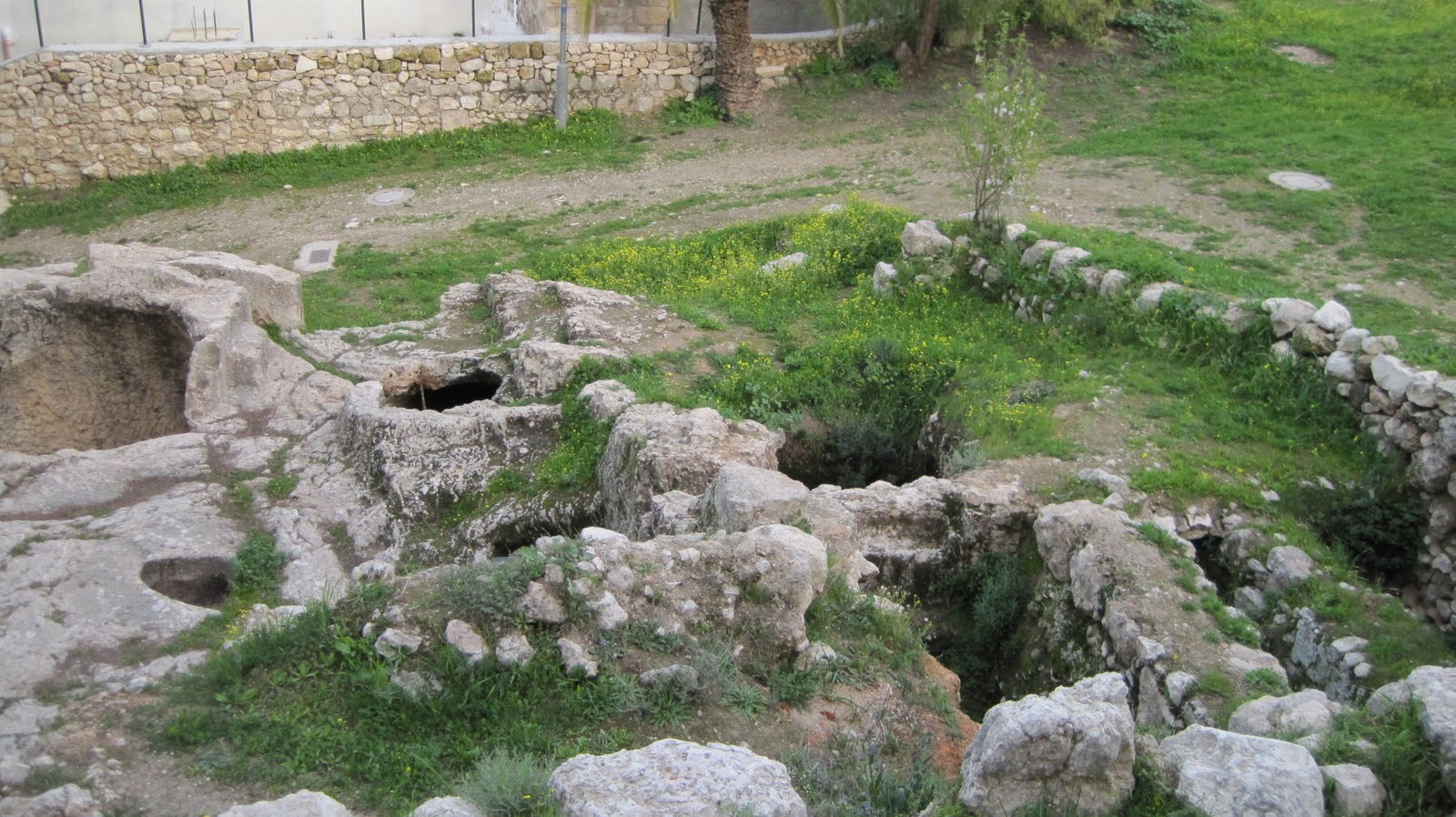
The Ruins of the House of Caiaphas
Jerusalem, Israel, February, 2010

As we come so near to the Cross, let us not grieve yet.  Let us, just for a moment, love as Jesus loves.

Grace and Peace in this holiest of weeks,

Shelli        

Unless A Grain of Wheat Dies

Lectionary Text:  John 12: 20-36
Now among those who went up to worship at the festival were some Greeks. They came to Philip, who was from Bethsaida in Galilee, and said to him, “Sir, we wish to see Jesus.” Philip went and told Andrew; then Andrew and Philip went and told Jesus. Jesus answered them, “The hour has come for the Son of Man to be glorified. Very truly, I tell you, unless a grain of wheat falls into the earth and dies, it remains just a single grain; but if it dies, it bears much fruit. Those who love their life lose it, and those who hate their life in this world will keep it for eternal life. Whoever serves me must follow me, and where I am, there will my servant be also. Whoever serves me, the Father will honor.  “Now my soul is troubled. And what should I say—‘Father, save me from this hour’? No, it is for this reason that I have come to this hour. Father, glorify your name.” Then a voice came from heaven, “I have glorified it, and I will glorify it again.” The crowd standing there heard it and said that it was thunder. Others said, “An angel has spoken to him.” Jesus answered, “This voice has come for your sake, not for mine. Now is the judgment of this world; now the ruler of this world will be driven out. And I, when I am lifted up from the earth, will draw all people to myself.” He said this to indicate the kind of death he was to die. The crowd answered him, “We have heard from the law that the Messiah remains forever. How can you say that the Son of Man must be lifted up? Who is this Son of Man?” Jesus said to them, “The light is with you for a little longer. Walk while you have the light, so that the darkness may not overtake you. If you walk in the darkness, you do not know where you are going. While you have the light, believe in the light, so that you may become children of light.” After Jesus had said this, he departed and hid from them.

The tide has begun to turn.   The palm branches and spilled perfume have turned to talk about death and we wonder how long we can take it.  We live in a world that tries it best to avoid death, either literally or figuratively.  We instead work to be in total control of our lives and of what happens to us.  And so we push death away.  But here Jesus is saying that it is death the brings life, that relinquinshing control and letting go allows the fruit to grow and prosper.  That is totally backwards from what we have figured out our lives should be.  So what, then, does this all mean?

This passage never really made sense to me until I discovered that wheat is a caryopsis.  This means that the single seed of this plant remains joined with the ovary wall.  Together, they form the grain.  In other words, the seed does not remain a seed but rather dies to self and becomes the grain, a true metamorphosis into new life.  In essence, death and life are interconnected, indeed dependent one upon the other.  So, Jesus was using this as a metaphor for what would happen to him and, ultimately, what would happen to us.  Our death and our life are interconnected.  In this life, we find death.  And then in death, we find new life.  Abraham Heschel said that “eternal life does not grow away from us; it is planted within us growing beyond us.” (Sabbath, p. 74)  So, our life, our eternal life has already begun.  It is already part of us.

So, why is this still difficult for us?   I think that it is because when we start talking about death and crosses and dying to self, we have to face our own self in order to do that.  No longer can we be satisfied with a Sunday-only sort of faith.  No longer can we just talk about it.  Dying to self calls for real change, real reflection.  And perhaps change is more painful than death itself.  The cross is the place where our humanity meets the Divine head-on.  There is no holding back.  There is no hiding away.  There is no waiting for a better time.

But we still want some sort of proof.  We still want to see Jesus.  I’m pretty sure that the reason that we don’t see it has more to do with us than with Jesus.  I have many times been on a bus racing across some country with a group of people trying to see as much as I could see–the Highlands of Scotland, the Alps of Austria, the rolling lands north of Moscow, Russia, or the wilderness desert around the Dead Sea.  Well, you get the idea.  You have your own images.  Oftentimes, rather than just sitting and enjoying the whole panoramic view, I have attempted to take pictures of it.  Well you know that it is a near-fact that if you try to snap a picture from a bus of a panoramic view, you will instead get a tree, or a highway sign, or, my favorite, the side of another bus.  It is not because the picture is not there; it is because you are moving too fast to see the whole thing.  When you move too fast, you don’t have enough space through which to encounter God, through which to see Jesus.


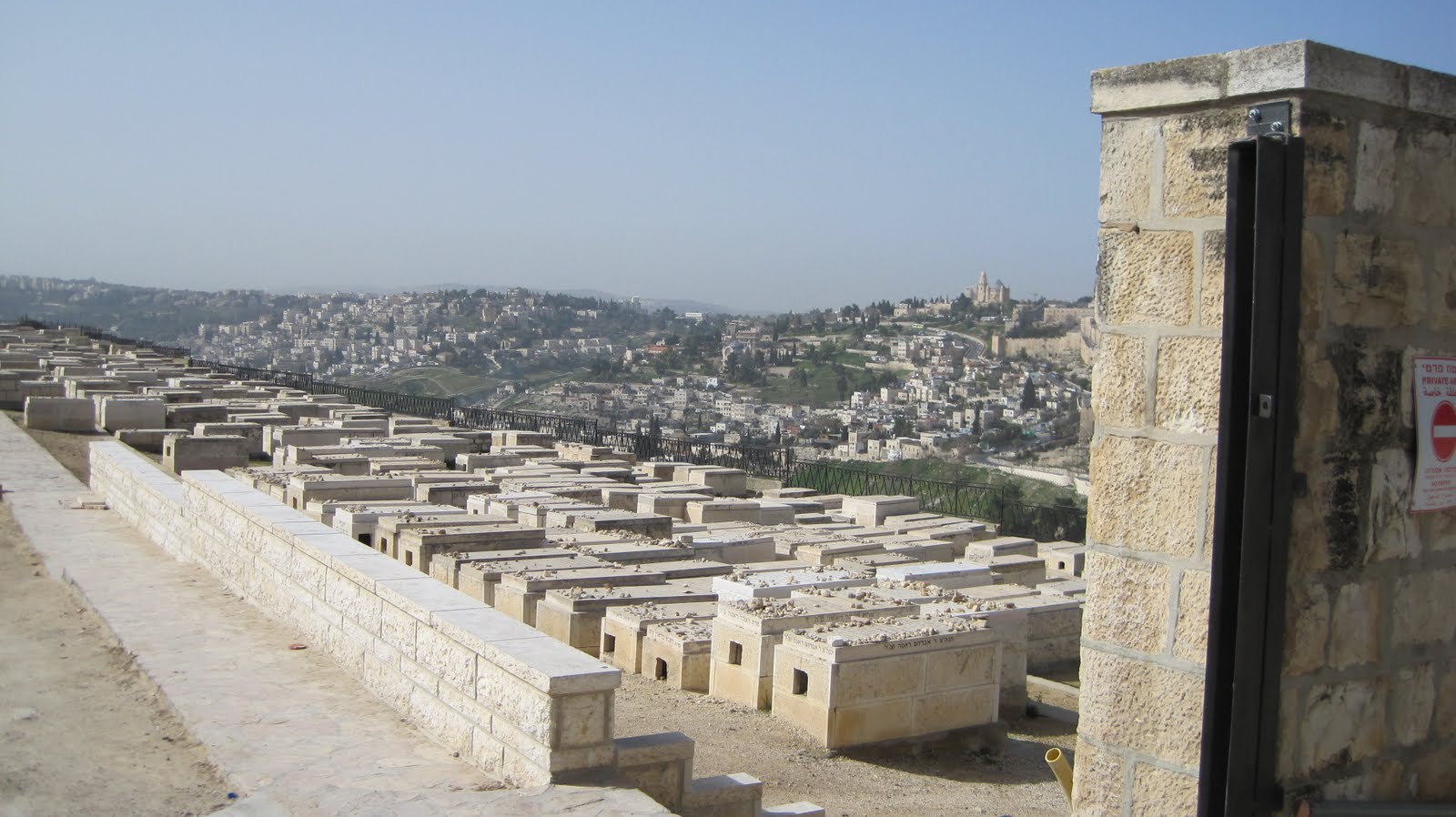
Jewish Cemetery near the
Old City of Jerusalem

 Holy Week provides space, space enough to see the Cross, space enough to see the life that comes from death, space enough to let go, space enough to breathe in what God has given us.  But this will not happen unless we slow down enough to let go of that to which we hold so tightly, let go of those things that you think you cannot live without, let go of those things that you are convinced are necessary for life.  Because you know what?  They’re really not.  Life cannot be unless a grain of what dies. 

Our path has taken us through the city and we are getting nearer and nearer to the Cross.  God never promised that we would not experience loss or pain or grief.  They are part of our human existence.  But at the Cross, there is enough space for the human to encounter the Divine.  At the Cross, a very human death becomes new life as the Divine spills onto the seed of our humanity and becomes life.  At the Cross, we will see Jesus.

And then the tide begins to turn
And talk of death ensues
But not just death for death’s dark sake
But death so life won’t lose.
We hear tales of wheat that when it dies
Leaves no seed behind
For the seed itself has died away
To itself bear fruit sublime

So, in this holiest of weeks, let go of that to which you hold, to that thing that you do not think you can live without.

Grace and Peace,

Shelli

Preserving Life

I had the opportunity yesterday to attend a global “Leadership Summit” within the United Methodist Church.  No, I did not travel around the world, but through the wonders of modern technology, we were joined live with United Methodist clergy and laypersons from literally all corners of the globe–Phillipines, Zimbabwe, and most of our United States conferences, to name a few.  We talked about what it means to “make disciples of Jesus Christ for the transformation of the world.”  We discussed what exactly it meant to strive toward the goal of having vital congregations and vital disciples.  As I was sitting there listening to part of the presentation, I asked myself what thing probably most stands in the way of a church being a “vital congregation” or a person being a “disciple of Jesus Christ for the transformation of the world.”  What do you think it is?  The thing that popped into my head is self-preservation.

I typed preservation (not even limiting it to the “self” variety!) into an online concordance.  Do you know how many times that is mentioned in the Scriptures?  Guess.  The answer would be zero.  Yes, zero.  There is no place that I know in the Scriptures where God calls us to a practice of self-preservation.  There is no place where God calls congregations to be self-preserving of who they are, of what they think, of what they’ve accomplished, no place where God wants us to make sure that we have beautiful buildings or comfortable facilities, no place where God calls us to be safe and secure and risk-free. 


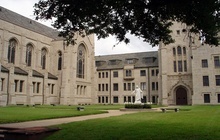
St. Paul’s United Methodist Church
Houston, TX
(Voted one of the fifty most iconic buildings in the city)

 (Now, I need to offer a point in the spirit of full disclosure here:  I am privileged to worship and lead worship in a space that is truly amazing!  It was built in 1929 and is one of the most magnificent cathedrals in Houston, if not the United States.  I am truly thankful for it.  It provides both emotional and spiritual food for me.  That said, there is indeed a fine line between allowing it to be transformational (as it is!) and making sure that we preserve it for our own edification.  It is difficult to be a part of a congregation whose building is its greatest asset and at the same time its largest possible detriment.  It is a walk of faith between the two.  Thanks be to God! )

You know, I don’t think there’s any where in the Scriptures where Jesus tells us not to rock the boat or make waves or push people beyond where they are comfortable going.    If I’m remembering correctly, Jesus turns all those nicely set tables and beautifully-constructed worship spaces completely on end! In fact, we’re actually supposed to be more in the surrender mode, letting go of all those things that “make” us, that wall us off from each other and from God, that stand in the way of our becoming who we’re called to become, and throwing ourselves into this journey of faith, risky as that may be.

Lent is the season when we are acutely reminded of this.  It is the season for letting go, the season for fasting from the usual, the season for surrendering our lives to the cross.  I have read a lot of Lenten resources and studied the Lenten Scripture passages.  I do not recall being asked to hold on to what I’ve been given for dear life.  Because, you see, that is not life.  Life is not about preservation; life is about laying everything aside and following the One who gives you life.  Life is about loss at the very depth of our soul to the point where we have nothing to lose.  It is at that lowest point of letting go and losing all so that we will truly preserve life.  Resurrection happens in the shadows of crosses, not in the bright lights of success.

So, what makes vital congregations and faithful disciples of Jesus Christ for the transformation of the world?  I would contend that it would be letting go.  In fact, start running…God is way out ahead of us!

So, in this Lenten season, let go.  It is there that you will find the Cross and it is in the shadows and darkness of the Cross that you will finally see the Light of Life.

Grace and Peace,

Shelli