It WAS About Grace

Well, you can tell it’s Lent when we keep talking about confession and repentance and forgiveness.  Most people in our modern-day society sort of squirm with those subjects.  I mean, can’t we just put these on the top shelf next to the hellfire and brimstone theology and the decree claiming that women can’t read the Scripture in church?  I mean, how about we talk a little about grace?  Isn’t that what we do?  We’d rather hide the shortcomings away or shift the blame to someone else or change the environment so what we did is perhaps now acceptable.  I mean, admitting we’ve messed up is hard.  It’s uncomfortable.  And what if everyone knows about it?  And so, we walk around full of guilt, full of questions, full of something that could just as easily be cleared away.

Let’s get this straight.  God is not sitting there waiting for us to confess, waiting for us to repent before God loves us.  There are those who will couch it like that (probably the same ones pulling the hellfire and brimstone material out) but, and this is me talking, I think that’s not the way it is at all.  Maybe God doesn’t even really care whether or not we do it.  Oh, but I think God does.  You know why?  Because God loves us.  See, confession, admission, breathing out the wrongs we have done, the people we have hurt, the ways we have blamed others for the peril of our lives is not to please God.  It is, rather, to make room for us, to clear a way so that we can grow and prosper and find a new way.  And because God loves us more than we can even fathom, God’s desire is that that happens—not for God but for us.

The psalmist warns against our silence, warns against us hiding ourselves away and not talking about it, not facing the truth.  And the psalmist exhorts us to confess, to admit our wrongdoing, to claim responsibility for our sins.  We no longer need to hide.  Because it is God who will step in, who will hold us in our discomfort, who will comfort us in our peril, who will stand with us as the consequences of whatever harm we have wrought, whatever hurts we have brought, rain down on us.

See, we know God forgives.  The part we miss is that God will stay with us through everything that comes after.  Breathe out your confession.  Make room.  And breathe in forgiveness and newness and the very presence of God through it all.

I must confess that I was not excited about writing this one.  I mean, it sort of sounded like a downer.  Now I realize that it WAS about grace.  Breathe out confession and breathe in grace.

In the Name of Jesus Christ you are forgiven…

Grace and Peace,

Shelli

Map Quest

The wilderness story…we read some version of this in the first week of every Lenten season.  It makes sense.  It is the beginning of our journey.  It is the beginning of Jesus’ journey to the cross.  And it leaves a lot of really good fodder for discussion.  Oh, we could talk about the usual subjects.  We could talk about the way Jesus did not fall prey to the temptation to be powerful or protected or relevant.  Instead, Jesus let all that go.  He just was. And he started walking.

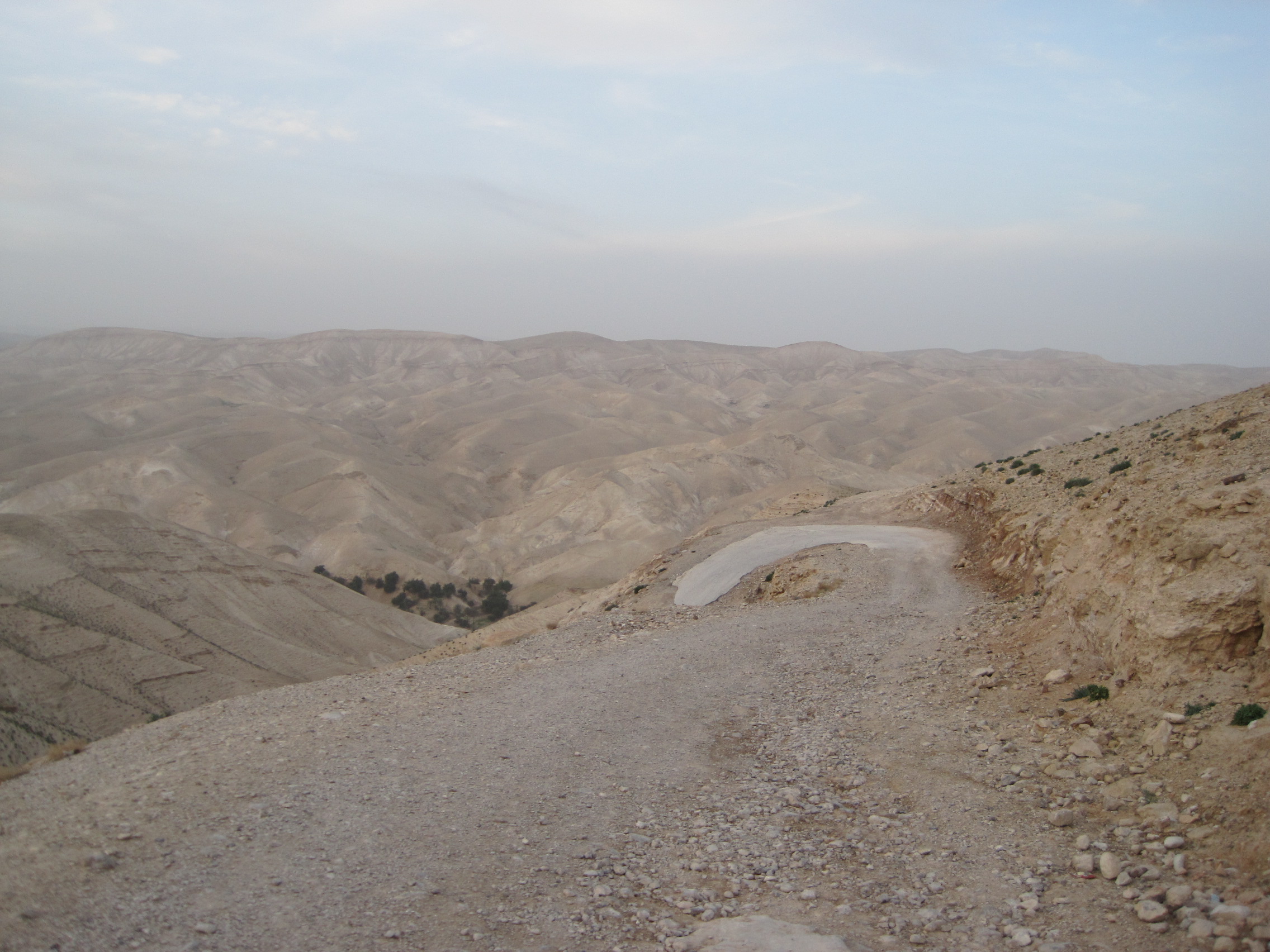
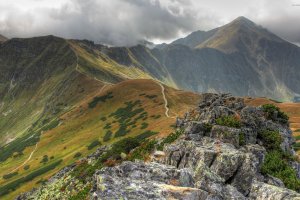
But where was he?  He had been led into the wilderness.  There was no map.  There is a faint remnant of a road that moves and flows and ebbs like waves as the winds blow over the sands.  The way is dim, sometimes non-existent.  You might be able to navigate if you knew the mountains well, if you knew which ones rise first and tower higher over the others.  You might be able to navigate when you think about where the beating sun is sitting, where it rises, where it falls.  But the way is not dependable.  The way is the way.  There is no map.

That is hard for us.  We want to know where we’re going. Oh, we’ve moved beyond maps for the most part.  There is instead a voice in the car or a voice on our phone that tells us where to go, that takes all the guesswork and most of the journeying out of the trip.  And with that, we have become dependent upon the voice, dependent upon being told the way and we soon find that we have somehow ceded our navigation to something that limits us, to something that controls us, to something that doesn’t allow us to deviate from the path.

I grew up with a dad that, I swear, knew every back road that was to be known.  He always had a “shortcut”.  And we always had maps.  I loved maps.  I was fascinated by them as far back as I can remember.  I remember navigating from the back seat with the tattered map that I never knew how to fold back the way it was meant to be.

Soon after I lost my dad, a friend and I drove to Taos, NM so that she could officiate at a wedding.  I just went along for the ride (and, apparently, navigation support).  It dawned on me that there were probably places in rural West Texas that might not respond to my GPS.  There was an excitement in me when I realized I needed a map!  Oh, I had a map!  It was the map my dad gave me when I went to college in 1980.  OK, maybe I needed a new map.  So, I went to Amazon and ordered maps for Texas and New Mexico.

Fast forward to rural West Texas.  Yep, there it was…that gray slice of nothingness in the middle of my iPhone straining to form a map.  So I pulled out the paper version.  And I began navigating.  One of those jaunts included a missed turn.  Not a problem…I have a map.  So, we drove down a barely-paved county road toward the road we meant to turn onto.  There were delightful farmhouses and beautiful vistas and the most wonderful 19th century Spanish church and cemetery.  And we would have missed it all if we had had the GPS.  I remember commenting, “oh my goodness, Billy Don Williams is SO proud of us right now!”

The journey is not about the way; the way IS the Way.  So what do we breathe out?  We breathe out needing to follow a plan.  We breathe out needing to always know where we’re going.  We breathe out anything that gets in the way of the Way.  The journey is not mapped.  It’s a faint pathway and the winds may blow the sands so that sometimes it is concealed.  Keep walking.  What is the way?  It IS the way. Just listen. You’ll know where to go.

Grace and Peace,

Shelli

This Thing About Sin

Man walking towards storm

Well, I really, really thought about changing the passage but, alas, it’s the lectionary for this week.  SO…I guess we have to talk about sin.  In this passage, Paul mentions sin or some form of it (sinner, transgression, disobedience, etc.) sixteen times by my count.  In fact, five of the mentions are in the first sentence!  Do you think he was trying to make a point?  Sin, I’m afraid, is a fact of life.  It is part of all us.  We claim that perhaps our own sins are not that bad.  You’ve heard all the claims and the questions:  So, if I don’t KNOW I’m sinning, is it really sin?  So which sins are the “unforgiveable” ones? I mean, really, it was only a little sin, just a little “white lie”.  Yes, in the big scheme of things, it was probably nothing more than a veritable sigh of a sin.  And then there’s the ultimate from our friend the Pharisee:  “Well, thank God I’m not like that tax collector!”

But in our interconnectedness, sin affects us all.  And even the smallest of sins can release such a force that none of us can control it.  Now don’t get me wrong.  I do not in any way believe that “sin” is something outside of us.  It is not a “force to be reckoned with”, so to speak.  I’m pretty clear that when I sin, it is me.  It is my bad choice.  It is me that has messed up, that has not honored myself or my place in the beauty of this interconnected Creation, rather than it being caused by some sort of little red man with horns or something.  I have to own it.  It is mine.  It is mine, that is, until it is done.  And then it spills into Creation and begins cutting a path with a force more powerful than anything we’ve ever imagined.

So, you’re expecting me to exhort us to “breathe out” sin in this posting, to just quit doing it.  Yeah, I don’t think that’s the way it works.  Sin is a part of our existence.  Now, even though Paul dances around this, I don’t really believe in “inherited sin”, the “sins of the father”, so to speak.  And yet, it’s bigger than me.  Sin was part our existence before we came to be and will continue after we are gone because part of our human condition is that we mess up.  We try, but we mess up.  Sadly, it just is.  Maybe it’s not so much whether or not we do it but, rather, what we do after it.

Barbara Brown Taylor wrote what I think is the quintessential book on sin called Speaking of Sin.  In it, she speaks of sin as our only hope. (WHAT?!?)  She describes it as our only hope because realizing our sin, realizing our shortcomings, empowers us to set things right again.  It makes sense.  If we ignore our sin or if we somehow excuse it away, even dismissing it as the act of our “mere humanity”, we have failed to acknowledge the very hope that sets us right again, the springboard that leads to redemption, to righteousness, to getting back on the pathway that we’re trying so hard to traverse.

In forgiveness, we do not find innocence.  We do not find a way to put things back like they were before (remember that innocent garden thing has sailed!).  What we find is a pathway to a better way.  So, breathe out…breathe out ignoring your sins, breathe out not wanting to change, breathe out not accepting the grace of forgiveness and the gift of beginning again.   

In the Name of Jesus Christ, you are forgiven!

Grace and Peace,

Shelli

Don’t Listen to the Talking Snake

This is always such an odd little story.  What do we do with it?  Yes, it’s known as the “Second Creation Account”.  It’s actually probably the first one.  This one is out of the Yahwist tradition and the “first one” (the one organized into “days”) is probably more from the Priestly tradition, which would have come a little later.  I guess the canon-compilers were going for drama.  I don’t know.  So, what do we do with it?  Well, it’s obvious no one has ever known what to do with it because over the centuries, the tradition slowly morphed into “Eve-blaming”.  Oh, yes, let’s blame the girl!  Because the guy had nothing to do with it.  Are you kidding me?  Personally, I think the most obvious lesson is don’t listen to talking snakes.  I mean, that seems pretty straightforward, right?

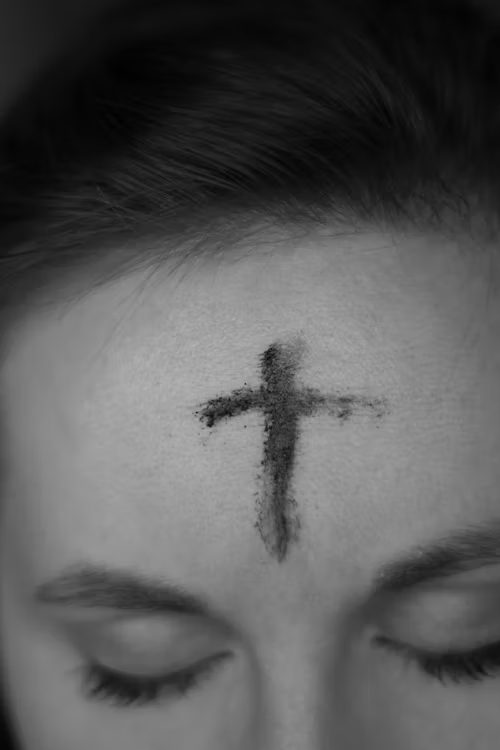
So, first of all, let’s all admit that it’s a story (a good one with lots of special effects but a story nevertheless).  I don’t think there was an Adam and Eve.  I don’t think there was some sort of secret utopian garden to which we’re trying to return.  And, for me, the jury is still out on the talking snake.  But the lessons?  The lessons are real.  The Truth is real.  Adam (Adamah) means “man” or “human” (or man of the earth).  So, this a wonderful parable or fable not about the birth of one man but rather an attempt to explain how we humans came to be.  Adamah is formed from dust (resembling that dust that was smeared on your forehead yesterday).  And Eve?  The name Eve (Chavah) means “living one” or “source of life”, perhaps even “breath of life”.  OK, that’s beginning to make sense.  Those are things we’ve seen before.

And then there’s this garden.  There they were in the garden, innocent, yes, but also unknowing, unthinking, not quite yet human.  See, it was the beginning.  It was not the place where we were meant to be.  God created us to go beyond where we are, to go beyond that “safe” place, rather than to live in some sort of controlled environment where nothing can touch us.  But the mistake that these “first humans” made was assuming there was a different way to do that.  According to the story, they jumped the gun a bit.  We all do it.  We think we know best.  We think we can figure it out on our own.  We think the rules are not for us because, obviously, we know better.  (Or maybe we’ve mistakenly listened to a talking snake!)

We are not called to be innocent.  That’s just dumb.  We’re human.  We’re complicated.  God made us that way, filled with dust and new life, darkness and light, regret and grace.  Again, we’re not called to be innocent.  We’re called to be redeemed, renewed, and recreated.  That story of that garden was only the beginning.  Several modern theologians and writings have referred to it as the “kindergarden of eden”.  It was how we began to understand ourselves.  And I think the point of it was not the creation of the human creature, the innocent and obedient one, but rather the realization by that creature that he or she was indeed human, that we are both flawed and glorious, that we are made of dust and the very breath of God.  The key is that we have to let go, breathe out, if you will, of the need to be in control, the need to go our own way.  Because, life is full of talking snakes.

Grace and Peace,

Shelli

Breathing Out

This is always such an odd day in our church calendar. In fact, if we were to back away from the notion of it a bit, far enough to watch ourselves getting the remnants of burned leaves smeared on our foreheads while at the same time told that we are no better than the very ashes that are dripping down into our eyes and settling on our shirt, we, too, would think that was a very, very weird practice.  Because in terms of where we stand in this society, in this culture, this is indeed very, very bizarre.

And I think that may be the point.  Just like the passage from the Gospel account by the writer known as Matthew that we read every Ash Wednesday, we are being reminded that the “normal” way we do things, the things that are accepted by our society are not the things that bring us closer to God, that bring us closer to the vision that God has for us.  We cannot align with the ways of this world and at the same time become the one that God envisions.  The two ways are incompatible.  Where the world wants to build walls and borders to control who is in and who is out, Jesus called us to welcome the stranger, release the prisoner, feed the hungry,…you know, all those Sermon on the Mounty-type things.  We cannot hold both ways within us.  We will metaphorically, spiritually, and certainly explode.  You cannot breathe everything in at once.

That is often the problem for many of us.  We breathe in when we should be breathing out.  It is, on some level, a sort of “spiritual asthma”.  When a person suffers from asthma, it is not, as many people think, that they cannot get air into their lungs; it is that they can’t get air out.  And, as a result, their lungs are too full to receive life-giving oxygen.  The breathing cycle is disrupted and the person, swelling with over-inflation, begins gasping for breath. 

This spiritual asthma is a similar dilemma.  If we hold onto those things with which we fill our lives, to our habits and our fears and our misconceptions of what our life should be, to those plans and those preparations that we’ve so carefully laid, there is no room left for the life-giving breath of God.  And we are left with dust and ashes.

But there is more.  This is not just a day of morose belittling of ourselves.  A rabbi once told his disciples, “Everyone must have two pockets, with a note in each pocket, so that he or she can reach into one or the other, depending on their needs.  When feeling high and mighty, sort of overinflated, if you will,one should reach into the left pocket, and find the words: “Ani eifer v’afar; I am dust and ashes.  But when feeling lowly and depressed, discouraged or without hope, one should reach into the right pocket, and, there, find the words: “Bishvili nivra ha’olam…For my sake was the world created.”  That is the breathing in and the breathing out.  And they are both necessary for the journey.

On this Ash Wednesday, breath out…breathe out the ways of this world. Breathe out the norms to which you are accustomed.  Do this so that there is room to breathe in…to breathe in who you are supposed to be, to breathe in life.  Lent is not just about giving things up; it is about emptying your life that you may be filled.  Lent is not just about going without; it is about making room for what God has to offer.  And today is not about clothing yourself in the morbidness of your humanity; it is about embracing who you are before God.

So…remember…you are dust and ashes…breathe out…..

For you the world was created…breathe in….

BIG BREATH…Amen.

Grace and Peace,

Shelli

The Cloud of Knowing

Seeing things differently is not a new theme for us.  I mean, think about it.  Here we have the story of a child born into anonymous poverty and raised by no-name peasants.  He grows up, becomes a teacher, probably a rabbi, a healer, and sort of a community organizer.  He asks a handful of people to become his followers, to help him in his mission.  They leave everything they have, give up their possessions and their way of making a living, they sacrifice any shred of life security that they might have had, and begin to follow this person around, probably often wondering what in the world they were doing. And then one day, Jesus takes them mountain climbing, away from the interruptions of the world, away from what was brewing below.  Don’t you think they were sort of wondering where they were going?  I mean, MOUNTAIN CLIMBING?  Don’t we have more important things to accomplish?  Shouldn’t we stay here where the action is?

We don’t really know what mountain this was.  There is speculation that perhaps it occurred on Mount Tabor or Mount Hermon, both of which are some of the tallest mountains in the Galilean area and both of which are prime spots in the Jezreel valley.  The Franciscans built their Church of the Transfiguration on Mt. Tabor, so perhaps you can now use the familiar words that “tradition holds” that that is where the mountain is.  But no one really knows.  Some even surmise that there IS no geographic location, presenting it as if it just rose up, uninterrupted, from the rough-hewed terrain.  Either way, the mountain is part of the topography of God.  Even for people, such as myself, who cannot claim a single, stand alone, so-called “mountain-top experience” that brought them to Christ but rather came year by year and grew into the relationship…even for us…this IS the mountain-top experience.  And there, on that mountain, veiled in a cloud, everything changes.

Now remember that for this likely Jewish audience, mountains were typically not only a source of grandeur, but also divine revelation.  And also remember that in their understanding, God was never seen.  I like that—allowing God to be awesome, allowing the mystery of God to always be. God was the great I AM, one whose name could not be said, one whose power could not be beheld.  And so, this cloud, a sort of veiled presence of the holiness of God, was something that they would have understood much better than we do.  In fact, they would have assumed that if Moses or anyone else actually saw God, they would die.

And there on the mountain, they see Jesus change, his clothes taking on a hue of dazzling, blinding white, whiter than anything they had ever seen before.  It wasn’t that light was suddenly shining on him, illuminating him.  Jesus WAS the light.  And on the mountain appears Moses and Elijah, standing there with Jesus—the law, the prophets, all of those things that came before, no longer separate, but suddenly swept into everything that Christ is, swept into the whole presence of God right there on that mountain.

So, Peter offers to build three dwellings to house them.  I used to think that he had somehow missed the point, that he was in some way trying to manipulate or control or make sense of this wild and uncontrollable mystery that is God.  I probably thought that because that’s what I may tend to do.  But, again, Peter was speaking out of his Jewish understanding.  He was offering lodging—a booth, a tent, a tabernacle—for the holy.  For him, it was a way not of controlling the sacred but rather of honoring the awe and wonder that he sensed.

And then the voice…”This is my Son, the Beloved; with him I am well pleased; listen to him!” OK…what would you have done?  First the mountain, then the cloud, then these spirits from the past, and now this voice…”We are going to die.  We are surely going to die,” they must have thought.   And then Jesus touches them and in that calm, collected manner, he says, “Get up and do not be afraid.”

And then, just as suddenly as they appeared, Moses and Elijah drop out of sight.  In Old Testament Hebrew understanding, the tabernacle was the place where God was.  Here, this changes.  Jesus stays with them alone.  Jesus IS the tabernacle, the Light of the world, the reality of God’s presence with us.  And all that was and all that is has become part of that, swept into this Holy Presence of God.

And so the disciples start down the mountain.  Jesus remains with them but he tells them not to say anything.  The truth was that Jesus knew that this account would only make sense in light of what was to come.  The disciples would know when to tell the story.  They saw more than Jesus on the mountain.  They also saw who and what he was.  And long after Jesus is gone from this earth, they will continue to tell this strange story of what they saw.  For now, he would just walk with them.  God’s presence remains. 

Jesus walked down the mountain with the disciples in the silence.  The air became thicker and heavier as they approached the bottom.  As they descended the mountain, they knew they were walking toward Jerusalem.  The veil that had been there all those centuries upon centuries was beginning to lift.  The Transfiguration is only understood in light of what comes next.  Yes, the way down is a whole lot harder.  We have to go back down, to the real world, to Jerusalem.  We have to walk through what will come. Jesus has started the journey to the cross.  We must do the same. The journey to Jerusalem awaits.

Grace and Peace,

Shelli

Just Go

Simon got up early that morning.  No big surprise there…he ALWAYS got up early.  He was always the first one up in the morning, hurriedly dressing and then going behind the house to untangle the still-damp nets from the day before.  As he got them ready for yet another day of fishing, he smelled the fish cooking in olive oil and the fresh bread baking in the oven.  It smelled good just like it does every morning.   He began to hear stirring in the house as the children got up and began to help their mother. It was just an ordinary day.

After breakfast he made his way the mile or so down to the shore where he and his brother had left the boat.  It was a good, sturdy boat and they felt so fortunate that they were finally doing well enough to buy it.  He carried the heavy nets that still smelled of yesterday’s catch.  As he approached the boat, he saw that Andrew was waiting for him and had already begun to untie the boat and ready it for the day.  So without even saying good morning to each other, they together hoisted the heavy nets up to the boat, Andrew got on, and Simon pushed the boat into the water, walking into the lake until it was about waste deep.  He then pulled himself up into the boat as it moved toward the middle of the lake.

This was his favorite part of the morning—that quiet trip from Bethsaida down the shores of the lake.  They were headed toward Tabgha this morning, near the Capernaum side of the lake but it was usually not near as busy.  The fog was lifting and you could see all around the lake itself.  Then they slowed and, without speaking, Simon and Andrew put their nets down into the lake to see what they could catch.  Yes, it was just another ordinary day.  

After about two hours of a really unbelievable catch, Simon steered the boat back toward the shores below Capernaum.   He looked up on the hill and saw the synagogue at the top of the hill.  It made him feel good just to look at it.  He hoped that someday he would be able to make the trip to Jerusalem and see the temple that it faced.  As they neared the shore, they began to drop their net again hoping to snare some of the common musht fish that tended to congregate there at the shore.  As the net went down, he looked up.  There on the shore was a man, a man he had seen before around the lake, a man that he thought they called Jesus. He had heard about this man, a rabbi, he thought.  Just then the man spoke:  “Follow me.”  Simon turned around expecting to see the one whom Jesus was calling standing behind him.   But there was only lake.  He touched Andrew’s arm and they both looked up.  “Follow me,” Jesus said again, “and I will make you fishers of people.”

But something happened.  Simon and Andrew looked at each other in disbelief.  You want me to do WHAT? After all, they were fishermen.  They had nothing to offer and no real gifts.  But Jesus repeated his call.  They knew that he was asking them to join him, to join him in ministry.  And they both knew that they would go.  They lifted up the nets, now filled with fish—more fish than they had seen in the last two weeks combined.  They pulled the nets up out of the water and then tied the boat to the shore.  As they stepped into the water, the sun seemed to shine brighter than ever.  The synagogue on the hill was radiant in light.  It was just an ordinary day.  But life would never be the same again.  And they couldn’t do anything else.

OK, I took a little poetic license with the story.  But the point is that Simon and Andrew were not especially gifted people.  In the first century around this lake called Galilee, Simon and Andrew were pretty ordinary.  But Jesus asked them to follow anyway.  And they went.  In fact, the text says they went immediately.  They didn’t wait until they had enough money or enough time or enough talent.  They didn’t hold back because they thought they were too old or too settled.  They just went.

Simon would become Peter, the “rock”, one of Jesus’ apostles and ultimately would be made a saint in the tradition of the church.  Frederick Buechner says, “Our calling is where our deepest gladness and the world’s deepest hunger meet.”  Think about what that means.  God calls us.  Sometimes it’s pretty scary.  Sometimes we want to run away.  Sometimes we try to hide on the back pew hoping no one will notice that we’re there.  Sometimes it means that we have to leave the life we’ve built behind.  And sometimes it just means that we need to do something different.  But following wherever God leads means that we will truly find joy.  We will finally know what it’s all about.  So, what about you?  Where is God calling you?  We are all called but it usually means that we have to fish in different waters and look at things in different ways.  And, if we’re honest with ourselves, we will find that we can’t do anything else.  God is calling you.  So, what now?  Just go…

Grace and Peace,

Shelli