Yearning to Fill a Restless Heart

Reaching for GodScripture Passage (Psalm 85:8)

8Let me hear what God the Lord will speak, for he will speak peace to his people, to his faithful, to those who turn to him in their hearts.


So, we’re on this journey, a journey toward who we are meant to be, a journey toward God with God, a journey where we are searching for God. The truth is, God is not lost. God is not up ahead waiting for us to catch up or up above waiting for us to clean up our act so we’ll get there! God is here and has been here all along, from the beginning (actually, even BEFORE the beginning). Actually, God IS the beginning (and the end and the middle and all the stuff around it.) So what exactly is this journey? What is our spiritual walk that we try so hard to maintain?


Maybe we need to go back to the basics. For what is it that you hunger? What brings you life? What gives you energy? All those questions are really close to the same. They all have to do with sustenance, with filling what is empty and satisfying what is wanting. St. Augustine said, “You have made us for yourself, and our heart is restless until it rests in you.” That’s our story—we are not evil; we are not bad; we are not unrighteous or ungodly or un-whatever; and we are certainly not “only human”. (I hate that…Jesus was human, fully human, so there’s no “only” about it. Maybe we’re inhumane sometimes, (maybe a lot!) but we’re not “only” human.) We’re not any of those things. We are beloved. God made us. We are part of God. But we just haven’t found our place yet. We are not bad; we are restless. We know there is something more. Our heart knows it. Our heart knows that there is an emptiness and a wanting that we almost cannot bear. It is that “God-shaped hole” again. Our hunger, our emptiness tells us that in our deepest being, we desire to be with God, to walk with God. And God, in God’s infinite love, is at the root of that hunger.


And so we journey. We walk and we walk and we walk and we search and we search and we search. This IS our spirituality. This IS our journey. This IS our Way. We all have it. Some of us struggle with it, muddying it with materialism and prejudice and fear that we will lose control or lose what we have. And some of us somehow, by God’s grace, actually travel further than we dared, into the unknown, into the wilderness. It is always a bit of a struggle, even for those that seem have their spirituality all together. If it wasn’t, then God would have just filled our heart and then hardened it up so it couldn’t go anywhere and never made the world at all. But God made us to journey, called us to journey, called us to search and wander and to, somehow, along the way, learn to trust that our real desire is to be with God, to fill our hearts with God and to, finally, have peace (not to be righteous, not to be holy, not to be perfectly and fully-versed in the ways of God, not to be the “best” at spirituality—just to have peace).


Our journey, our spiritual walk, is the way that God relates to us and the way we respond. It’s a dance. And the best dancers do not drag their partners across the floor or dance in front or over those in the line. The best dancers understand the rhythm that is not theirs but to which they belong. There are no easy directions to your spiritual journey. You will not find this in a self-help book. There is no quick fix, no shortcut, no road that is better paved or with less traffic. The Way is yours and God’s. And as you dance, your heart fills, and when it is full to what you thought was the brim, to the place where you cannot imagine it can fill anymore, you will find that you only yearn for God.


You called, you cried, you shattered my deafness. You sparkled, you blazed, you drove away my blindness. You shed your fragrance, and I drew in my breath, and I pant for you. I tasted and now I hunger and thirst. You touched me, and now I burn with longing for your peace. (St. Augustine of Hippo)


Thank you for sharing your Lenten journey with me!


Grace and Peace,


Shelli

To Hold Dear and Love

14-11-02-#6-Sermon-Thin PlaceScripture Passage (Genesis 15: 1-6)

After these things the word of the Lord came to Abram in a vision, “Do not be afraid, Abram, I am your shield; your reward shall be very great.” 2But Abram said, “O Lord God, what will you give me, for I continue childless, and the heir of my house is Eliezer of Damascus?” 3And Abram said, “You have given me no offspring, and so a slave born in my house is to be my heir.” 4But the word of the Lord came to him, “This man shall not be your heir; no one but your very own issue shall be your heir.” 5He brought him outside and said, “Look toward heaven and count the stars, if you are able to count them.” Then he said to him, “So shall your descendants be.” 6And he believed the Lord; and the Lord reckoned it to him as righteousness.


We are told over and over to not be afraid. But we still want a guarantee. We WANT to believe that God will work it all out; we WANT to believe that God will sustain us; we WANT to believe, but we’d like to know when things will get worked out to at least our satisfaction, if not our comfort and ease. Now this passage is probably better translated as “trust” than “believe”. Is it the same? Well, probably close. But we tend to think of believing in something as knowing that it’s right. That’s not really right, but it’s what most of us have fallen into. In the 16th century, the Saxon meaning depicted it as “to hold dear or love”. That’s different. That’s WAY different. Do you follow because you think it’s right or because you love it and hold it dear? So is belief more about facts or about the meaning it brings to your life?


When we are told not to be afraid, it seems to be more of a call to trust, rather than merely believe. You can believe something, maybe know it’s right in your deepest being, and yet not fully give yourself to it. But Abram was told to trust, to give himself to it. “Come, Abraham. Trust it. Follow it. Give yourself to it. Hold it dear and love it. Become it.” And the covenant, the relationship, came to be.


This journey that we’re on is not, of course, a straight and unhindered pathway. There are hills to climb and valleys to maneuver. There is a wilderness to traverse. There are things that come along and get in our way and change our whole schedule when we least expect it. (I had some of those the last few days, which is why I’m WAY behind on “daily meditations”. So, I owe you four extras somewhere along the way!) But we’re not just called to mindlessly and aimlessly follow what we believe to be true.  We are instead called to trust it in our deepest being, to turn ourselves over to it, if you will. It doesn’t mean that there won’t be “blips” along the way. After all, Abraham (formerly known as Abram) would become the father of three major world religions, but he was perfect. He probably wasn’t even trustworthy. We all know he tried to manipulate the outcome of it all a bit. But this faith journey is not about making us perfect humans; it’s not about our blind acceptance of what we do not understand; it’s about relationship. Faith is about realizing and trusting that we are part of a deep and abiding relationship between God and humanity, actually between God and all of Creation as the holy and the sacred pours into our being bit by bit. No, it makes no sense in terms of this world. That’s what makes it faith. That’s what Lent teaches us. So, do not be afraid. Follow what you love and hold dear and I’ll walk it with you.


Meaning does not come to us in finished form, ready-made; it must be found, created, received, constructed. We grow our way toward it. (Ann Bedford Ulanov)


Thank you for sharing your Lenten journey with me!


Grace and Peace,


Shelli

In Our Search for Belief

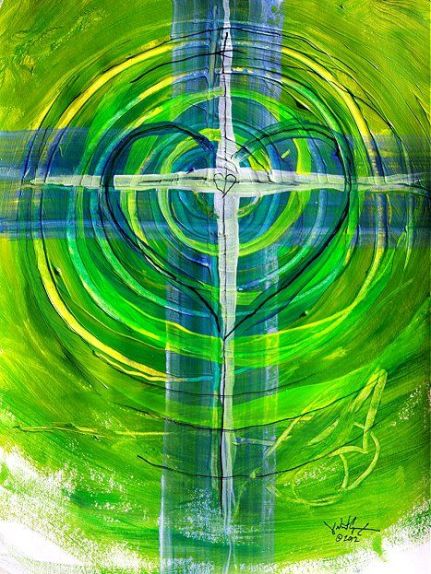
Cross-Abstract
“Faith, Day and Night”, J. Vincent Scarpace, 2012

Scripture Passage (Romans 10: 8b-13)


“The word is near you, on your lips and in your heart” (that is, the word of faith that we proclaim); 9because if you confess with your lips that Jesus is Lord and believe in your heart that God raised him from the dead, you will be saved. 10For one believes with the heart and so is justified, and one confesses with the mouth and so is saved. 11The scripture says, “No one who believes in him will be put to shame.” 12For there is no distinction between Jew and Greek; the same Lord is Lord of all and is generous to all who call on him. 13For, “Everyone who calls on the name of the Lord shall be saved.”


You know, this whole faith journey thing would be a whole lot easier if the rules were better laid out! So, are you supposed to confess your beliefs first or believe what you’re saying first? (because did you notice they get switched in this passage?) I mean, just make it easy! How DO we get this right? Just tell me what I’m supposed to do and I’ll do it! Just tell me what to say. I’m a pretty fast learner. I could probably remember enough to get through the initial exam anyway.


That’s what most of us want. That’s what those that Paul was first addressing wanted. Good grief, just tell us what we’re supposed to do to get this right! They wanted him to tell them what acts, what righteousness needed to happen so they could check off that they were following the law. We’re no different. We’re used to racking up points or grades or salary levels (or for churches, it would be members or attendees or giving patterns or apportionments—aaaagggghhhh!—there, I’m better!), all so that we can check off that we’ve achieved something. But when you read this, Paul isn’t even laying out what it is we’re supposed to believe. There’s no talk of original sin or not, no mention of which salvation theory Paul thought was the right one, and no list of rules or beliefs to which we needed to adhere to get “in”. Paul’s answer instead was to just believe. Just ask. Just open your mouth and pour out your heart and say it. That’s all. Because, see, it’s there. It’s all right there. Just call on the Lord and start walking.


But there’s another side to this. If we’re not told exactly what it is that we’re supposed to believe, then why would we think that our beliefs are the way everyone should believe? The passage says that “everyone—that means all of us—who calls on the name of the Lord shall be saved.” In other words, desiring God is enough. Desiring God is what leads us toward God. Wanting to pray is praying. Yearning to be with God is being with God. Confessing our belief is believing. It doesn’t mean that we won’t have what seem to be crises of faith. (I have one about every week lately!) It doesn’t mean that we will ever get to the point where we don’t have questions. (If you meet someone that tells you they don’t question God or question what they believe, personally, I’d run! I mean, are you really willing to stake your whole existence on what YOU’VE figured out God is going to do?)


Desiring God, wanting to be with God, wanting to follow is enough. Beginning is enough. I mean, I’ll be honest, if God had some prescribed list of rules and definitive beliefs in mind, why in the world would God have chosen Paul to be the head writer of the greatest treatise on salvation of all time, with his circular thoughts and grammatically incorrect run-on sentences? Maybe God’s whole idea is that we wander and we explore and we question and we journey not until we “get it” but until we realize that the journey IS the way we live with God, that this wilderness in which we find ourselves IS the Way to God and, at the same time, the way to ourselves. That is the reason that in this season, we find ourselves in the wilderness. It is not a punishment. It is a reminder that the God who created us has never left us. It is for us to realize that in the deepest part of our being, we desire to be with God almost as much as God desires to be with us. That is the reason that God came, Emmanuel, God-With-Us, to walk with us, to perhaps wake up our God-given desires to be with God. So, begin. Wanting to be with God IS being with God. And THAT is something in which you can believe.


There is a God-shaped hole in the heart of every [person] which cannot be filled by any created thing, but only by God, the Creator, made known through Jesus Christ. (Blaise Pascal)


Thank you for sharing your Lenten journey with me!


Grace and Peace,


Shelli

The Home We Have Inherited

wandering-arameanScripture Passage (Deuteronomy 26: 1-2, 5, 10-11)
When you have come into the land that the Lord your God is giving you as an inheritance to possess, and you possess it, and settle in it, 2you shall take some of the first of all the fruit of the ground, which you harvest from the land that the Lord your God is giving you, and you shall put it in a basket and go to the place that the Lord your God will choose as a dwelling for his name… 5you shall make this response before the Lord your God: “A wandering Aramean was my ancestor; he went down into Egypt and lived there as an alien, few in number, and there he became a great nation, mighty and populous… 10So now I bring the first of the fruit of the ground that you, O Lord, have given me.” You shall set it down before the Lord your God and bow down before the Lord your God. 11Then you, together with the Levites and the aliens who reside among you, shall celebrate with all the bounty that the Lord your God has given to you and to your house.


See, the problem with this whole Lenten wilderness excursion is that we’re really not ready, right? But have you ever considered that the problem might be that we’re TOO prepared. I mean, maybe we’ve overpacked, dragging what we think is ours, what we think defines us along this dusty road. Maybe we’re so walled off with our own preconceptions of who we are, who God is, what Jesus can do for us, how this whole journey will end up, that we’re not paying attention at all to where we are going or what God is trying to show us along the way.


Look around. We are not the first to travel this way. Oh, don’t get me wrong, it’s not an overly well-worn path, but there is a faint pathway that someone carved out long before we came along. This is not our pathway. This is not our land. This is not OUR country (arguing political pundits aside). This is not OUR church. We inherited what we have. It was handed down to us from those that came before. And it is ours not to possess, not to settle, but to hold, to hold for a season in time. What we have, all that surrounds us was entrusted to us for our care and our use (not for us to USE UP, just for our use.)


This Lenten journey is a reminder of not only where we are headed but also from where we have come. It is a way of our acknowledging that we are not self-made as we would like to think, that all that we are and all that we have is not only from God but IS God’s. But the passage also reminds us that we have time to digest all of that. God doesn’t expect to have all of this figured out or to be fully formed in faith. God is not standing at the doorway to our home like a holy ticket-taker. God is waiting for us to offer the fruits of what God has given us back to God. And then, together, we will celebrate the glorious bounty that belongs to us all. The journey is one that calls us to remember who and whose we are, to remember the place we began, to remember that that walked this path before, and to welcome those that are yet to come. Maybe Lent calls us to let go so that we will realize that what we are holding is not ours to possess.


Complete possession is proved only by giving. All you are unable to give possesses you. (Andre’ Gide)


Thank you for sharing your Lenten journey with me!


Grace and Peace,


Shelli

Oh, All This Talk About Sin!

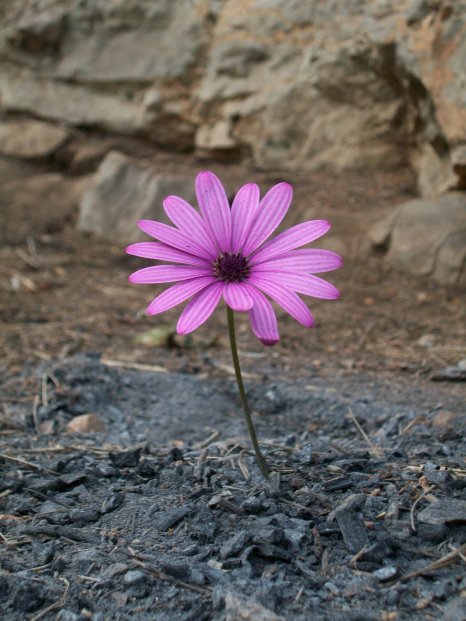
flower_ashes_by_dennisallendorfScripture Passage (Psalm 51: 1-3, 7-13)
1Have mercy on me, O God, according to your steadfast love; according to your abundant mercy blot out my transgressions. 2Wash me thoroughly from my iniquity, and cleanse me from my sin. 3For I know my transgressions, and my sin is ever before me….Purge me with hyssop, and I shall be clean; wash me, and I shall be whiter than snow. 8Let me hear joy and gladness; let the bones that you have crushed rejoice. 9Hide your face from my sins, and blot out all my iniquities. 10Create in me a clean heart, O God, and put a new and right spirit within me. 11Do not cast me away from your presence, and do not take your holy spirit from me. 12Restore to me the joy of your salvation, and sustain in me a willing spirit. 13Then I will teach transgressors your ways, and sinners will return to you.


I know, we’re not really ready for Lent yet. (I saw a Christmas tree still up less than two weeks ago. That was a whole lot more festive.) This season has come WAY too fast thanks to an apparent impatient spring on the calendar. So, the pancakes were all eaten last night and the masks have been removed and put away. We are ready to begin the journey again. It is a journey of giving up and giving in, of wandering in the wilderness, of stopping or at least slowing down enough to let God’s Spirit begin once again to seep into our being. But first, first, on this day of dust and ashes, we have to talk about sin.


Sin? Who wants to talk about sin? I mean, I’m Methodist. We are “grace” people, after all! We are forgiven people. Isn’t that what we’re told? God’s mercy is infinite. Jesus took care of all that, right? Really? So, you have no part in this? You just want to go on your merry way? The truth is, what relationship with God would we have if we truly thought we were either sinless or our sins were just hosed off of us without us even knowing what had happened? I mean, what in the world is forgiveness if there’s nothing to forgive? But the fact that God loves me not just in spite of me but BECAUSE of me is a much deeper understanding of God. This is a God who is not waiting for me to clean my act up so I can get on the yellow brick road toward a grace-filled life. This is a God who walks with me down this rocky, sometimes steep and treacherous trail through a wilderness I do not understand and showers me with grace even when I am muddied and worn by sin. This is a God who doesn’t just wait for me to return but takes me by the hand and leads me home even when I sin.


There I said it—sin, Sin, SIN! Hmmm! Steeple didn’t fall off, stained glass windows still there, me, still standing. (I just went and looked—yes, the sign out front still says United Methodist!) On this day of dust and ashes, it is our time to acknowledge that yes, we mess up; that yes, we make the wrong choices (I’m hoping God doesn’t yet regret that whole free will decision way back when!); that, yes, we sin. But this day is also the day that we choose—we CHOOSE to follow God on this journey. Now, at the risk of speaking for the Great I AM, I would much rather have a relationship with one who CHOSE to follow rather than one who knew nothing else. Choosing God and being innocent are not the same. This day, we acknowledge that we are both in need of God and that God loves us more than we will ever fathom. Now, you would think those two scenarios would fit together rather well. But somewhere along the way, we have somehow replaced our need for God with our need to be perfect. Albert Outler called it “overreaching”, getting in God’s business. See, God doesn’t need us to be perfect, or sinless, or innocent. God desires us to choose to follow. God desires us to be who God calls us to be.


And so, the pathway looms ahead. It’s not always familiar territory. And, in fact, we usually have to leave part of what we carry and hold so tightly behind. We usually tend to travel too weighted down to notice where we need to go. So, give up what you need to give up or take on what you need to take on. And feel the ashes on your skin to remind you who you are and also whose you are. Let them be a blessing and a beginning. And know that God calls you away from the self that you have imagined. And begin to walk. It is a journey that is hard and difficult and takes you through darkness. But it is a journey that leads to life, that leads to beginning again.


Meanwhile, sin is our only hope, because the recognition that something is wrong is the first step toward setting it right again. (Barbara Brown Taylor, in “Speaking of Sin”)


Thank you for sharing your Lenten journey with me!


Grace and Peace,


Shelli

O Holy Night

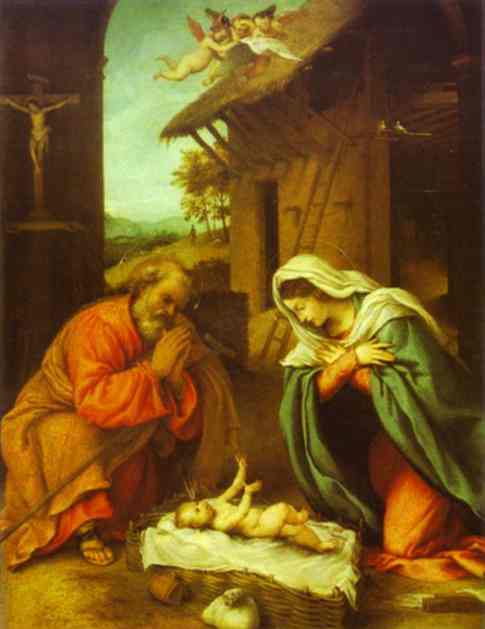
nativity-lorenzolotto-15431

And it came to pass in those days, that there went out a decree from Caesar Augustus that all the world should be taxed.  (And this taxing was first made when Cyrenius was governor of Syria.) And all went to be taxed, every one into his own city. And Joseph also went up from Galilee, out of the city of Nazareth, into Judaea, unto the city of David, which is called Bethlehem; (because he was of the house and lineage of David:) To be taxed with Mary his espoused wife, being great with child. And so it was, that, while they were there, the days were accomplished that she should be delivered. And she brought forth her firstborn son, and wrapped him in swaddling clothes, and laid him in a manger; because there was no room for them in the inn. And there were in the same country shepherds abiding in the field, keeping watch over their flock by night. And, lo, the angel of the Lord came upon them, and the glory of the Lord shone round about them: and they were sore afraid. And the angel said unto them, Fear not: for, behold, I bring you good tidings of great joy, which shall be to all people. For unto you is born this day in the city of David a Saviour, which is Christ the Lord. And this shall be a sign unto you; Ye shall find the babe wrapped in swaddling clothes, lying in a manger. And suddenly there was with the angel a multitude of the heavenly host praising God, and saying, Glory to God in the highest, and on earth peace, good will toward men. (Luke 2: 1-14, King James Version)


Mary and Joseph have arrived.  The crowds are almost too much to take, pushing and crushing as the couple makes their way through them.  Mary doesn’t feel well.  She really needs to just lie down and rest.  And when you don’t feel well, the last place you want to be is somewhere that is not home, somewhere foreign, somewhere so crowded, so unwelcoming.  They need to hurry.  There is not too much time left.


They stop at a small inn up on the hill overlooking the shepherds’ pastures down below.  Joseph leaves Mary for a moment and goes to make arrangements for a place to stay.  But when he returns, his face looks frustrated, almost in tears.  He tells Mary that the inn is full.  In fact, the whole town is full.  There is no place to stay.  There is no room.  But he tells Mary that the innkeeper has given them permission to at least go into the stableroom to keep warm.  He’s freshening the hay now.  He actually was very nice and was trying his best to make them comfortable.


So Mary and Joseph entered the stableroom and, surrounded by animals, tried to get some rest.   They could still hear the crowded city outside.  They could hear the Roman guards yelling as they tried to control the crowds.  It made the place feel every more foreign, even more foreboding.  But directly overhead, was the brightest star they had ever seen.  It was as if the tiny little stable was being bathed in light.  So Mary laid down and closed her eyes.  She knew that the time was almost here.  She knew that the baby was coming into the world.


And on this night of nights, into a cold, dirty stable in a small town filled with yelling and pushing crowds, into a place occupied by soldiers, into a place that did not feel like home, into a world that had no room, God comes.  The door to the Divine swings open and God and all of heaven burst into our little world, flooding it with Light and Life.  And yet, the child in the manger bathed in light, the very Incarnation of the Divine, Emmanuel, God With Us, the Messiah, is, still, one of us.  God takes the form of one of us–just an ordinary human–a human like you and me–to show us what it means to be one of us, to be human, to be made in the image of God.


God comes into a world that is unprepared for God, that has no room for God.  God comes into places that are unclean, unworthy, unacceptable for us, much less for the Divine.  God comes into places that most of us would not go, out of fear of the other, out of fear of the unknown, out of fear of the darkness. And there God makes a home.  The Divine begins to pour into the world and with it a vision of the world pouring into the Divine.  This night, though, is not the pinnacle of our lives but, rather, the beginning of a new chapter.  God comes, bathed in Light, in the humblest of disguises imaginable, into the lowliest of places we know, into the darkest night of the soul, that we might finally know that all of the world is of God, all of the world is bathed in the Divine.  God comes so that we might finally see life as we are called to see it and live life as we are called to live it, filled with mercy and compassion and awareness of our connectedness to all the world.  God comes so that we might finally be human, so that we might finally make room.


Perhaps the world will never be completely ready for God.  If God waited for us to be completely prepared, God would never come at all.  But this God doesn’t need our preparation. This God doesn’t need to come into a place that is cleaned up and sanitized for God.  Instead, God comes when and where God comes.  God comes into godforsakenness, into a world that is occupied by foreignness, where the need for God is the greatest, into a world that cries out for justice and peace, and there God makes a home.  God comes into the darkness and bathes it in light.


The time is here.  In this moment, the door to the Divine swings open and God and all of heaven are now bursting into the world.  If you stop and listen, just for a moment, you can hear the harps eternal in the distance as they approach our lives.  Can’t you feel it?  Doors opening, light flooding in, the earth filled with a new vision of hope and peace.  Maybe, just maybe, tonight will be different.  Maybe this is the night that the world chooses peace and justice and love.  Maybe this is the night that the world takes joy. Maybe this is the night when the world realizes that it is already filled with the Divine.  Maybe this is the night when we become human.  Maybe this is the night that we make room.


It gets darker and darker…and then Jesus is born. (Ann Lamott)


Merry Christmas!

Shelli


Bethlehem: The Road Ahead

Journey to Bethlehem-FinallyIn those days a decree went out from Emperor Augustus that all the world should be registered. This was the first registration and was taken while Quirinius was governor of Syria. All went to their own towns to be registered. Joseph also went from the town of Nazareth in Galilee to Judea, to the city of David called Bethlehem, because he was descended from the house and family of David. He went to be registered with Mary, to whom he was engaged and who was expecting a child.  (Luke 2: 1-5)


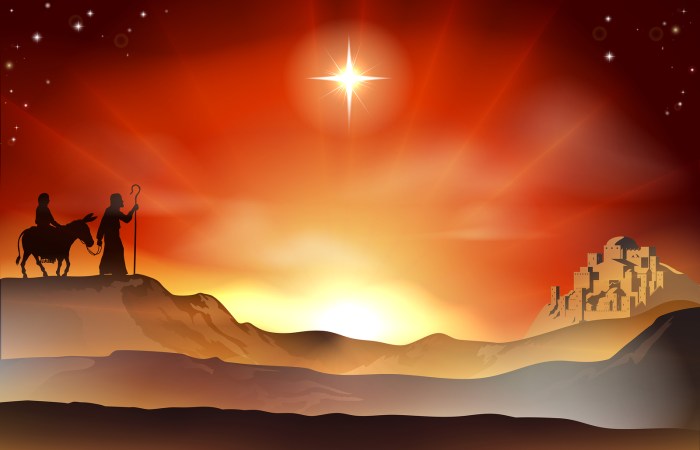
They felt like they had been climbing forever. The desert mountains seemed to be getting larger. They were doubting that they would make it in time. The looked up ahead and the mountain seemed to flatten out at the top. That would be good. It would give them a time to rest and try to get their bearings. As they stepped up to the flat part, they saw it. There…there it was…Jerusalem off in the distance. But there, right there, was Bethlehem. And in the still-darkened morning light, they saw a star that seemed to be right over the city. It was as if heaven and earth were coming together at that point. These hard days of journeying were coming to an end. But they also knew that things were changing. They knew that at this point they could never go back. But today…today would bring them to Bethlehem.

____________________________


Think of this day so long ago.  Bethlehem was in reach for this scared young couple who were so unsure of exactly what the world held for them.  They were rounding the final peaks of their journey.  But this day they found themselves no longer a part of their old lives and yet they didn’t really know what tomorrow would hold. But now, now they were traveling through a foreign land.  It was the land of Joseph’s family.  He had been there often as a child.  But the place was different somehow, full of those who followed this emperor, nothing like he really remembered.  The road was packed with travelers returning to the place of their ancestors to make their presence known to the government.  Joseph felt like he should know these people and, yet, they were all strangers to him.  Mary and Joseph did not feel like they were part of this new world and yet their old world did not exist.  There didn’t seem to be any room for them at all.


We are indeed standing on the edge of a brave new world, perched on a place that gives us view of what was and what is to come.  Oh sure, we do this once a year whether we’re ready or not. Once a year, the night of nights comes and we sing Silent Night and we light our candle and once again welcome the Christ Child into our lives.  Why is this year any different?  Because, in this moment, standing on this edge between who we are and who we will be has the possibility of changing everything.  This is the moment when we decide whether or not to turn toward Bethlehem or to turn and go back.  Standing in this place, a threshold of sorts, we see both roads, fully in our view.


We are not that different from that scared young couple or the myriad of folks that have answered God’s call through all time.  We find ourselves pulled between the life we’ve so carefully created and the life we’ve been promised.  It is hard to not hold so tightly to those structures that give us power and prestige and security.  And yet, God doesn’t call us to leave our lives behind but to live all that we are and all that we have within that vision that God holds for us.  And it is in this moment, standing here between the two ways that allows us to see how to do that, that allows us to see our lives the way that God sees them and journey on.  It is in this moment that God gives us new eyes and asks us to follow the star.  And if we do that, this year WILL be different.  We are standing in the threshold between a waiting world and one in which the Divine has already poured into our midst.  We live in the already and the not yet.  But for those who see with new eyes, the road ahead is the only one that makes sense anymore.  Because that is the way to Bethlehem.  Let us go and see this thing that has happened.  There’s a world about to be born in the form of a baby who is Christ the Lord.


This text speaks of the birth of a child, not the revolutionary deed of a strong man, or the breath-taking discovery of a sage, or the pious deed of a saint.  It truly boggles the mind:  The birth of a child is to bring about the great transformation of all things, is to bring salvation and redemption to all of humanity.

As if to shame the most powerful human efforts and achievements, a child is placed in the center of world history.  A child born of humans, a son given by God.  This is the mystery of the redemption of the world; all that is past and all that is to come.

All who at the manger finally lay down all power and honor, all prestige, all vanity, all arrogance and self-will; all who take their place among the lowly and let God alone be high; all who see the glory of God in the lowliness of the child in the manger:  these are the ones who will truly celebrate Christmas. (From Christmas With Dietrich Bonhoeffer, ed. By Manfred Weber)


Go humbly, humble are the skies, and low and large and fierce the Star; So very near the Manger lies that we may travel far. (G.K. Chesterton)


Grace and Peace,

Shelli