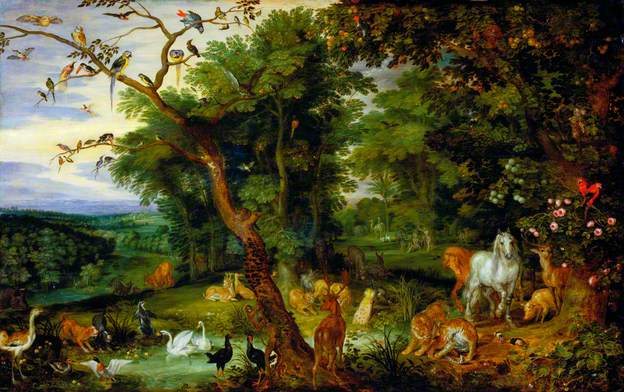
After the Garden


"The Garden of Eden with the Temptation in the Background", by Jan Brueghel the elder, c. 1600, (Victoria and Albert Museum, London)
“The Garden of Eden with the Temptation in the Background”, by Jan Brueghel the elder, c. 1600, (Victoria and Albert Museum, London)

Scripture Passage:  Genesis 2: 15-17, 3: 1-7 (Lent 1A)

The Lord God took the man and put him in the garden of Eden to till it and keep it.  And the Lord God commanded the man, “You may freely eat of every tree of the garden;  but of the tree of the knowledge of good and evil you shall not eat, for in the day that you eat of it you shall die.”…Now the serpent was more crafty than any other wild animal that the Lord God had made. He said to the woman, “Did God say, ‘You shall not eat from any tree in the garden’?” The woman said to the serpent, “We may eat of the fruit of the trees in the garden; but God said, ‘You shall not eat of the fruit of the tree that is in the middle of the garden, nor shall you touch it, or you shall die.’“ But the serpent said to the woman, “You will not die; for God knows that when you eat of it your eyes will be opened, and you will be like God, knowing good and evil.”  So when the woman saw that the tree was good for food, and that it was a delight to the eyes, and that the tree was to be desired to make one wise, she took of its fruit and ate; and she also gave some to her husband, who was with her, and he ate. Then the eyes of both were opened, and they knew that they were naked; and they sewed fig leaves together and made loincloths for themselves.

So at the beginning of this year’s Lenten season, the Lectionary propels us back into our somewhat sketchy past.  St. Augustine and myriads of theologians to follow would have called it the “original sin”, as if it is the cause of all other sins that follow.  Now, admittedly, I don’t like to get stuck on that idea of original sin.  I’m pretty sure that if the first humans had not messed up, someone soon after would have.  But this is the story we have.  We have images of humans walking in a beautiful garden hand in hand without a care in the world.  And then we have some sort of talking snake or prehistoric serpent or some other obnoxious creature that pulls them away from who they are and who they are meant to be.  And they give in.  They give in to the first temptation to be someone they are not.  Then they realize their mistake much too late to change the course of their action.  Well, we know the story.  (Oh, who are we kidding? We’re LIVING the story!)  They are no longer innocent and the beauty of the garden is lost forever.

This has always been an odd story to me.  Now, admittedly, I’m sure it is of no surprise to most of you that I tend to assume that this is fable rather than a literal historical account. But just because it probably isn’t “true” does not mean that it is not full of “Truth”.  In some respects, this is the rawest, most profound, most human Truth that there is.  After all, we all wander down the wrong road every now and again and some of us do it daily without even intending it.  And we all live with consequences of trying to overreach, trying to be someone we’re not, trying to assume things that are not ours to assume.  We all live with consequences of, essentially, overstepping and overreaching and trying to be the god of our own life.  And we all lose that innocence that we once had.

But, really, does God want a bunch of mindless innocents walking around in this world?  If that were the case, then God would never have shared the part of the Godself with us that is known as free will.  You see, God in God’s infinite wisdom gave up omnipotence for relationship.  God doesn’t want a bunch of robotic beings following the Great Divine because they know nothing else.  God created us to desire, to choose, to follow God of our own volition.  Innocence is way overrated.  You see, if God wanted us to stay in some sort of garden, fenced off from the rest of the world, I guess God would have left us there, protected from the world and, mostly, from ourselves.  I really don’t think that this journey we’re on returns us to the Garden, whatever that was.  That was our beginning.  The journey returns us to God, to who God envisions that we can be.  Think of the Garden as our womb, the place that protected and shielded us until we were ready for the journey, until we found that part of ourself that chose to follow, that chose God. 

So what do we do after the garden?  We follow where God leads us; we follow that innate sense that all of us have to return to God and to whom we are called to be.  You see, we have no more excuses.  Read the end of the passage.  Our eyes have been opened.  We know where we fall short; we know that we cannot do this by ourself; we know that God is God and we are not.  And in that is our beginning.  Thanks be to God!

Sin is our only hope, because the recognition that something is wrong is the first step toward setting it right again.  (Barbara Brown Taylor, Speaking of Sin:  The Lost Language of Salvation)

So on this Lenten journey, open your eyes.  Open your eyes and take a good hard look at yourself.  What do you need to choose to leave behind?  Where do you choose to go? What does your beginning, your escape from innocence, look like?

Grace and Peace,

Shelli

What Is Left

Flower in AshesScripture Passage: Joel 2: 1-3

Blow the trumpet in Zion; sound the alarm on my holy mountain! Let all the inhabitants of the land tremble, for the day of the Lord is coming, it is near— a day of darkness and gloom, a day of clouds and thick darkness! Like blackness spread upon the mountains a great and powerful army comes; their like has never been from of old, nor will be again after them in ages to come. Fire devours in front of them, and behind them a flame burns. Before them the land is like the garden of Eden, but after them a desolate wilderness, and nothing escapes them.

I know.  What a way to begin the season–darkness and gloom, devouring fire and flame, and desolate wilderness!  I know what you’re thinking.  Can we go back to that manger scene now?  Can we go back to being bathed in light with the hope of the world nestled in our arms?  Well, the problem, is that somewhere on this journey between seasons, we forgot.  We forgot who and whose we were.  Somewhere along the way we became self-sufficient and sure of ourselves.  Somewhere along the way, we thought we had figured it out, thought we were so right.  Somewhere along the way the trumpet announcing the birth of our Savior became our own horn.  Somewhere along the way we forgot that we were blessed not by what God has given us but by what God has called us to do.  You know–scattering the proud and bringing down the powerful, filling the hungry and sending the rich away.  (Hmmm, that sounds distantly and vaguely familiar.) And now we sit in ashes wondering what to do next.

Lent is our chance to begin again.  Because, think about it, those ashes that you are going to spread on your forehead today are what is left.  They are what has survived.  After all of the devouring fires scorching the gardens, they are left.  They are the remnant.  They are the hope for what will come next.  So we begin our Lenten journey in ashes because we repent for what we have done.  But that is not the end.  God does not leave us on the ash heap alone.  God picks us up and recreates us, walking us through the wilderness, through the valley of the shadow of death, through the Cross, to Life.  The ashes are the beginning.

I’ve used this before on Ash Wednesday (and for those who will hear me later in the day, you have two more chances to hear it in a sermon!), but it’s such a great reminder, I couldn’t resist.  A rabbi once told his disciples, “Everyone must have two pockets, with a note in each pocket, so that he or she can reach into the one or the other, depending on their needs.  When feeling high and mighty one should reach into the left pocket, and find the words: “Ani eifer v’afar; I am dust and ashes.  But when feeling lowly and depressed, discouraged or without hope, one should reach into the right pocket, and, there, find the words: “Bishvili nivra ha’olam…For my sake was the world created.”

So what will you do with what is left?  What will you do with your share of ashes?  Repent and turning–that is what this day is about.  No longer do we wallow in morbid shame and guilt; no longer do we pound ourselves down for our past mistakes; no longer do we sit on the ash heap sullen and morose.  This is the day when we begin to begin again.  Pick yourself up!  Dust yourself off!  And start.  This is the day when we begin the journey to life.  But we are called to travel light.  God has given what we need.

My soul magnifies the Lord, and my Spirit rejoices in God my Savior, for he has looked with favor on the lowliness of his servant.  Surely, from now on all generations will call me blessed; for the Mighty One has done great things for me, and holy is his name.  (Luke 1: 46b-49)

As you begin this Lenten journey, what things do you need to leave behind? What things do you need to take with you?  Remember, we are traveling light.  The wilderness journey is long and difficult.  But we are traveling with the one who created us and calls us to live life freely and blessed.

Grace and Peace,

Shelli


On the Way Down the Mountain

Jezreel ValleyScripture Passage:  Matthew 17: 1-9

Six days later, Jesus took with him Peter and James and his brother John and led them up a high mountain, by themselves. And he was transfigured before them, and his face shone like the sun, and his clothes became dazzling white. Suddenly there appeared to them Moses and Elijah, talking with him. Then Peter said to Jesus, “Lord, it is good for us to be here; if you wish, I will make three dwellings here, one for you, one for Moses, and one for Elijah.” While he was still speaking, suddenly a bright cloud overshadowed them, and from the cloud a voice said, “This is my Son, the Beloved; with him I am well pleased; listen to him!” When the disciples heard this, they fell to the ground and were overcome by fear. But Jesus came and touched them, saying, “Get up and do not be afraid.” And when they looked up, they saw no one except Jesus himself alone. As they were coming down the mountain, Jesus ordered them, “Tell no one about the vision until after the Son of Man has been raised from the dead.”

Boy, that was some trip up that mountain!  Who was ever going to believe this?  But it doesn’t matter because Jesus tells them to be quiet about it, tells them to go back to their lives, go back to their work.  Really?  How in the world can you just go back?  How in the world can you go back to things the way they were after basking in glory?  Well, maybe that’s the point.  Maybe we can’t.

I think that all of us are given glimpses of glory, tastes of the Divine, from time to time, if we only pay attention.  The Celts called them “thin places”, the places where heaven and earth, where the sacred and the ordinary, suddenly, if only for a moment, touch as if they are somehow part of each other, perhaps even dependent on each other.  It is a place of liminality, betwixt and between.  It is a place that belongs not to one or the other but instead is some sort of shared reality as the Sacred and the ordinary spill in to each other.  The people of whose journeys we read in the Torah believed that no one could ever see God without dying.  They talked of God as consuming fire and destructive wind, a rushing force that passes over the earth leaving little in its wake.  That thin place, the place where the earth meets the sky was one of no return.  They assumed that no one would ever come back down the mountain.

Maybe we’ve become a little too accustomed to this God we know.  Maybe our glimpses of glory have become a bit too pre-planned.  Maybe our thin places have gotten a little too thick with earthbound images of who God is in our lives, of how much of God we really want to encounter.  Because, you see, when you truly encounter those glimpses of the Sacred and the Holy, those you truly do not expect, when you let yourself be surprised by a cloud, you cannot help but be changed.  In a way, the early Hebrews were right.  When you encounter God, that you that you’ve made dies a little.  It has to, it has to make room for a God you never knew.

So on our way down the mountain, we realize that we cannot stay.  We cannot stay and bask in glory forever.  We were never called to that, to some sort of pious and righteous existence high above the world.  We were sent, sent down the mountain, back to the world.  But a part of us has died.  And from the ashes, we will rise.  Because, you see, that’s the only way it will happen.  So go, be careful where you walk.  We have to go down the mountain.  We have to go back.  Jerusalem is waiting.  But we are different; we have basked in glory.  For now, we will be quiet about it.  There are others waiting to join us on this journey.  Someday they will all understand.  Someday we will understand.  But in the meantime, we are just called to go.

As you prepare to begin this Lenten journey, where have you encountered those thin places, those moments of almost, just almost, touching the Sacred?

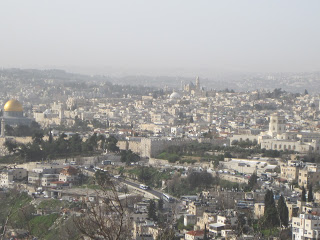
jerusalem04Let us go now to Jerusalem.

Grace and Peace,

Shelli


After

Wise MenLectionary Scripture Passage for Reflection:  Matthew 2: 1-12

In the time of King Herod, after Jesus was born in Bethlehem of Judea, wise men from the East came to Jerusalem, asking, “Where is the child who has been born king of the Jews? For we observed his star at its rising, and have come to pay him homage.” When King Herod heard this, he was frightened, and all Jerusalem with him; and calling together all the chief priests and scribes of the people, he inquired of them where the Messiah was to be born. They told him, “In Bethlehem of Judea; for so it has been written by the prophet: ‘And you, Bethlehem, in the land of Judah, are by no means least among the rulers of Judah; for from you shall come a ruler who is to shepherd my people Israel.’” Then Herod secretly called for the wise men and learned from them the exact time when the star had appeared. Then he sent them to Bethlehem, saying, “Go and search diligently for the child; and when you have found him, bring me word so that I may also go and pay him homage.”  When they had heard the king, they set out; and there, ahead of them, went the star that they had seen at its rising, until it stopped over the place where the child was. When they saw that the star had stopped, they were overwhelmed with joy. On entering the house, they saw the child with Mary his mother; and they knelt down and paid him homage. Then, opening their treasure chests, they offered him gifts of gold, frankincense, and myrrh. And having been warned in a dream not to return to Herod, they left for their own country by another road.

Happy New Year!  It’s almost over—this season of readying and wrapping, of decking the halls and visiting with friends and family, of over-running and over-eating and over-spending.   If you’re like me, you love all there is about Advent and Christmas but when it’s time for it to be over, you’re ready.  You’re ready to go back to normalcy, back to your usual schedule.  You’re ready to go back to your life.

When I was little, we had a manger scene that sat on the entry table of our home during the Advent and Christmas season.  I think that it was probably my favorite decoration.  Putting it out meant that Christmas was here.  And during the season, my brother and I would continually move it around and change the story a bit.  Sometimes the Mary and Joseph were in the stable and other times they were carefully but precariously placed on the roof.  Sometimes the Shepherds were herding the camel and the Wisemen were traveling with a sheep or an angel.  And sometimes the baby was in the manger and other times the character would show up in various other places throughout the house.  But, always, at the end of the season, it was sad to me to put the manger scene away, to rewrap all the characters in their tissue paper that they wore for most of the year, put away the baby, and close the box.  It was over.  It was time to go back.  Now is the time.  What now?  What do we do after it all ends?  The truth is, “after” is when it begins, “after” is when it becomes real, and “after” is the whole reason we do this at all.

In the Gospel text for this Sunday, we find the last (and maybe the main!) question of Advent.  It comes not at Christmas Eve in the midst of the candlelight and carols but after.  And, believe it or not, it’s not asked by those who had been waiting and hoping for it to happen.  It is asked by some who knew nothing of its happening before.  All they knew was what followed, what came after.  But they believe that the star (or, for some, an unusual conjunction of heavenly bodies that produces an especially bright light) marks the birth of a special child destined to be a king.  They ask, “Where is the child who has been born king of the Jews?

We all know the story of the Wise Ones from the East (Wisemen, or Magi, or Kings, or Zoroastrian followers, or whoever they were numbered in three or however many tradition holds).  They came at the request of King Herod.  They came supposedly to “pay homage”, but we know that that was not the case.  The truth is, Herod had heard that there was a new king in town and for him that was one king too many.  So, “paying homage” was only a precursory mission leading up to the demise of this new competing ruler.  We are told that they brought gifts, gifts fit for a king.  And then the passage tells us that, heeding a warning in a dream, these wise and learned (and probably powerful) members of the court of Herod, left Bethlehem and returned to their own country, a long and difficult journey through the Middle Eastern desert.  Rather than returning to their comfortable lives and their secure and powerful places in the court of Herod, they left and went a different way.  They knew they had to go back to life.  But it didn’t have to be the same.  So they slip away into the night.  Herod is furious.  He has been duped.  So he issues an order that all the children two years old and younger in and around Bethlehem should be killed.  The truth is that Jesus comes into the world as it actually is, not as we wish it to be.  Evil and greed are real and the ways of the world can and do crush life.

This passage moves the story beyond the quiet safety of the manger.  We realize that the manger is actually placed in the midst of real life, with sometimes dark and foreboding forces and those who sometimes get it wrong.   The primary characters are, of course, God and these visitors, these foreign Gentiles who did not even worship in the ways of the Jewish faith.  They were powerful, intelligent, wealthy, and were accustomed to using their intellect and their logic to understand things.  You know, they were a lot like us.  But they found that the presence of the Divine in one’s life is not understood in the way that we understand a math equation.  It is understood by becoming it.

Maybe that’s the point about Christmas that we’ve missed.  Maybe it’s not just about the nativity scene.  Maybe it’s more about what comes after.  We often profess that Jesus came to change the world.  But that really didn’t happen.  Does that mean that this whole Holy Birth was a failure, just some sort of pretty, romantic story in the midst of our sometimes chaotic life?  Maybe Jesus didn’t intend to change the world at all; maybe Jesus, Emmanuel, God with Us, came into this world to change us.  Maybe, then, there IS a new normal.  It has to do with what we do after.  It has to do with how we choose to go back to our lives.  Do we just pick up where we left off?  Or do we, like those wise men choose to go home by another way?   The point of the story is actually what comes after.  And that, my friend, is where you come in.

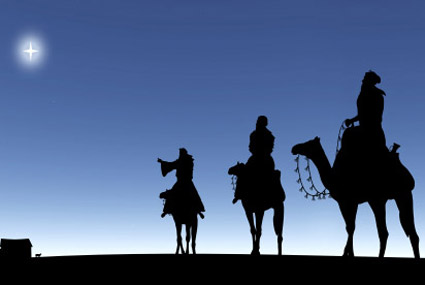
epiphany-germanySo, the baby cannot just be put away in the manger scene box.  The Incarnation of God happens over and over and over again.  Christmas day happens each and every time that we see God in each other, that we see the sacred in this world, and that we see that we have the Divine all over us.  We cannot go back to life as it was.  It doesn’t exist.  There is indeed a new normal that comes after all of the celebrations and after all of the birthing.  So, in these days after Christmas as you put the decorations away for another year, look around at your new normal.  Look around at what comes after.  What are you called to do?  How have you changed?  What other way will you travel home?

When the star in the sky is gone, When the Kings and Princes are home,

When the shepherds are back with their flocks, The Work of Christmas begins:

            To find the lost, To heal the broken,  To feed the hungry, To release the prisoner,

            To teach the nations, To bring Christ to all, To make music in the heart.

(Howard Thurman, “The Work of Christmas”)

Happy After!

Grace and Peace,

Shelli

Threshold

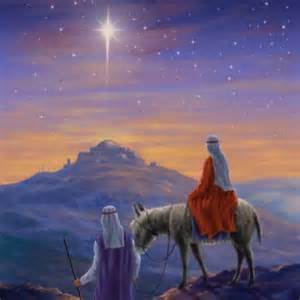
Journey to Bethlehem-colorScripture Passage for Reflection:  Luke 2: 1-5

In those days a decree went out from Emperor Augustus that all the world should be registered. This was the first registration and was taken while Quirinius was governor of Syria. All went to their own towns to be registered. Joseph also went from the town of Nazareth in Galilee to Judea, to the city of David called Bethlehem, because he was descended from the house and family of David. He went to be registered with Mary, to whom he was engaged and who was expecting a child. 

There is a word that we do not use much called “liminality”.  It is from the Latin word for threshold and is used to describe a state of being “betwixt and between”a point of being suspended between what has happened and what will be.  It is likened to being on an airplane flying over the ocean between two continents.  For a few hours, it is as if you are suspended between times, cultures, and nations.  It is as if you are nowhere and everywhere at the same time.  It is a place of enlarged vision, enlarged perspective and no real place to put down roots.  Liminality is a place that our souls crave, a place where our spiritual sense is somehow heightened, a place where se can see both who we are and who we will become.  On this eve of the Great Eve, we find ourselves a little “betwixt and between”.

Think of this day so long ago.  Bethlehem was in reach for this scared young couple who were so unsure of exactly what the world held for them.  They were rounding the final peaks of their journey.  But this day they found themselves no longer a part of their old lives and yet they didn’t really know what tomorrow would hold. But now, now they were traveling through a foreign land.  It was the land of Joseph’s family.  He had been there often as a child.  But the place was different somehow, full of those who followed this emperor, nothing like he really remembered.  The road was packed with travelers returning to the place of their ancestors to make their presence known to the government.  Joseph felt like he should know these people and, yet, they were all strangers to him.  Mary and Joseph did not feel like they were part of this new world and yet their old world did not exist.  There didn’t seem to be any room for them at all.

We are indeed standing on the edge of a brave new world.  Oh sure, we do this once a year whether we’re ready or not. Once a year, the night of nights comes and we sing Silent Night and we light our candle and once again welcome the Christ Child into our lives.  Why is this year any different?  Because, in this moment, standing on this edge between who we are and who we will be has the possibility of changing everything.  This is the moment when we decide whether or not to turn toward Bethlehem or to turn and go back.  Standing in this place of “betwixt and between”, we see both, fully in our view.

We are not that different from that scared young couple.  We find ourselves pulled between the life we’ve so carefully created and the life we’ve been promised.  It is hard to not hold so tightly to those structures that give us power and prestige and security.  And yet, God doesn’t call us to leave our lives behind but to live all that we are and all that we have within that vision that God holds for us.  And it is in this moment, standing here between the two that allows us to see how to do that, that allows us to see our lives the way that God sees them and journey on.  It is in this moment that God gives us new eyes and asks us to follow the star.  And if we do that, this year WILL be different.  We are standing in the threshold between a waiting world and one in which the Divine has already poured into our midst.  We live in the already and the not yet.  But for those who see with new eyes, the road ahead is the only one that makes sense anymore.  Because that is the way to Bethlehem.  Let us go and see this thing that has happened.  There’s a world about to be born.

This text speaks of the birth of a child, not the revolutionary deed of a strong man, or the breath-taking discovery of a sage, or the pious deed of a saint.  It truly boggles the mind:  The birth of a child is to bring about the great transformation of all things, is to bring salvation and redemption to all of humanity.

As if to shame the most powerful human efforts and achievements, a child is placed in the center of world history.  A child born of humans, a son given by God.  This is the mystery of the redemption of the world; all that is past and all that is to come.

All who at the manger finally lay down all power and honor, all prestige, all vanity, all arrogance and self-will; all who take their place among the lowly and let God alone be high; all who see the glory of God in the lowliness of the child in the manger:  these are the ones who will truly celebrate Christmas. (From Christmas With Dietrich Bonhoeffer, ed. By Manfred Weber)

Reflection:  On this eve of Eve’s, name those things that are holding you back from THIS year being different.

Grace and Peace,

Shelli

Last Minute Details

Last MinuteScripture Passage for Reflection:  Mark 1: 1-3

The beginning of the good news of Jesus Christ, the Son of God. As it is written in the prophet Isaiah, ‘See, I am sending my messenger ahead of you,  who will prepare your way; the voice of one crying out in the wilderness:    “Prepare the way of the Lord,  make his paths straight” ’…

One week left!  So how many emails did you get today promising free shipping or half off priority shipping or 35% off or 40% off or perhaps a gift card to use later?  Everyone is in the last minute crunch.  And just as we enter the final stretch of all this waiting, it sometimes gets a little difficult to remember why we do it at all.  How long have we waited?  Well, this year, we’re only 18 days into it.  Good thing we weren’t part of those who waited for centuries upon centuries, trying their best to ready the world and ready their souls.  Good thing we weren’t there.  We’re probably not that patient.  So, are you prepared for what will come?  Are you prepared for that for which we’ve been waiting?

I must admit that waiting is hard for me.  But it’s because it’s sort of a strange notion.  I want so badly for that which I’m waiting to come and yet, the “perfectionist” part of me knows I’m not ready.  I mean, there’s always so much more to do, right? So, what if you turn on your computer or your television or whatever it is that’s the first thing you look first thing in the morning at and find out, horror of horrors, that Christmas arrived 6 days early this year?  Ugh oh!  That would be bad.  After all, we’re not ready!

I wonder what it was like that first Christmas.  After all, they had had centuries of waiting behind them so surely, surely they were ready.  And yet, don’t you think Mary and Joseph spent at least a little bit of time talking to each other:  “Really?  Now?  Now is really not a good time.  Why can’t we wait until we’re married, maybe wait until we’ve got a little bit of savings in the bank, or perhaps we should have another child first and practice.  I mean, really, this is a lot to ask.  We’re really not ready.  Good grief, we don’t even have a reservation!”  And those shepherds?  “Now?  We have to go now?  What am I supposed to do, just leave these sheep wandering on the hillside.  SURELY, you can wait just until we’ve got everything together, everything worked out.”  And what about the innkeeper:  “Oh come now, NOW?  Good grief, this is the first time that we’ve boasted 100% occupancy!  And NOW you come?”  And those poor wise men from the East:  “OK, I thought I had made it.  I thought this was the job of jobs. And you want me to go where?  The other way.  NOW?  Oh, come on, let me do this for awhile, maybe stock some savings away.  It’s not all that bad.  That is not good planning.”

Do you really think the world was ready?  Do you really think that they were all that different from us?  When are you ready to have your foundations shaken to the core and your whole world turned upside down?  Maybe the lesson of Advent is not to make sure that all of the last minute details are done but to teach us to prepare to be surprised, prepare to follow wherever God leads.  That’s the way you prepare the Way.  God will come when God will come.  We don’t have to have everything perfect; we just have to pay attention.

God did not wait till the world was ready, till nations were at peace.  God came when the Heavens were unsteady and prisoners cried out for release.  God did not wait for the perfect time.  God came when the need was deep and great.  In the mystery of the Word made flesh, the maker of the Stars was born.  We cannot wait till the world is sane to raise our songs with joyful voice, or to share our grief, to touch our pain.  God came with Love.  Rejoice!  Rejoice!  And go into the Light of God. (“First Coming”, by Madeleine L’Engle)

Reflection:  OK, this one’s hard…What do you have left to do to prepare for Christmas?  Take a look at your last minute details.  Now cross one off.  Ignore it.  And instead of burying yourself in the details, look up.  THAT’S the way you prepare the WAY.

Grace and Peace,

Shelli

Beginning at the End

Closed CurtainAdvent 1A: Matthew 24: 36-44

36“But about that day and hour no one knows, neither the angels of heaven, nor the Son, but only the Father. 37For as the days of Noah were, so will be the coming of the Son of Man. 38For as in those days before the flood they were eating and drinking, marrying and giving in marriage, until the day Noah entered the ark, 39and they knew nothing until the flood came and swept them all away, so too will be the coming of the Son of Man. 40Then two will be in the field; one will be taken and one will be left. 41Two women will be grinding meal together; one will be taken and one will be left. 42Keep awake therefore, for you do not know on what day your Lord is coming. 43But understand this: if the owner of the house had known in what part of the night the thief was coming, he would have stayed awake and would not have let his house be broken into. 44Therefore you also must be ready, for the Son of Man is coming at an unexpected hour.

Oh, this can’t be right.  Our Gospel passage for the first reading in Advent is starting toward the end of the Gospel According to Matthew.  What happened to Mary?  Where are those angels announcing the coming birth?  After all, we need something joyful to think about it as we drag the boxes of Christmas decorations out of storage and begin to prepare for the season that most retailers have already proclaimed on the heels of the Jack-o-Lanterns!  I mean, really, first they tell us that we have to wait to sing Christmas carols and then they give us this perceived warning of a thief coming in the middle of the night.  Why in the world are we beginning at what feels like the end of the story?

There are those in our modern world who will pounce on this Scripture as a warning of what might happen if we do not act right or think right or live right.  There are those who will abuse it by holding over the heads of persons to scare them into religion.  I don’t think that’s what it’s about.  Faith is not about doing the right thing or living the right way or being scared into a place that does not feel welcoming and grace-filled.  Faith is about relationship.  And, as the Scripture says, it is about waking up so that God can gather us in.  God doesn’t want a bunch of zombies that have to be pulled kicking and screaming into faith.  God desires a relationship with those who desire a relationship with God.  And God has faith that in the deepest part of ourselves, there is faith enough for all.

Jesus is not standing at the edge of some far off place waiting for us to step over the line.  Jesus is here, ahead of time itself, calling and gathering and sanctifying each of us as we awake to the morning.  Remember last week’s Scripture that we read for Christ the King? We were again given the image of Jesus hanging on the Cross, minutes away from death.  It was the end.  And there, there beside him was the thief.  “But understand this: if the owner of the house had known in what part of the night the thief was coming, he would have stayed awake and would not have let his house be broken into. 44Therefore you also must be ready, for the Son of Man is coming at an unexpected hour.” The thief was not left behind but instead was gathered into the Reign of God.  Advent is not waiting to see whether or not you make the cut but rather waking up to the glorious Gathering that is happening all around us.

The curtain on the Advent season is about to rise.  Jesus is not waiting in the wings somewhere until the play is done; rather, Jesus is standing on the stage itself, inviting us in.  “Come, wait with me.  You do know when the Glory will come but this waiting is a holy place.  Come, all, wait with me.  Stay awake so that you won’t miss the inbreaking of Glory itself, the dawn of the fullness of the Kingdom of God.”  The reason that we begin at the end is because it is the same as the beginning.  God is the Alpha and the Omega.  Birth and death are all wrapped up together, needing each other to give life.  Awaken now that you do not miss one thing.  Open your eyes.  There is a baby coming!  The extraordinary miracle of what is about to happen is matched only by the moment before it does–this moment, this time.  The world awaits!  Awaken that you do not miss the story!

Awake! awake! and sing the blessed story; Awake! awake! and let your song of praise arise;                                                                       Awake! awake! the earth is full of glory, And light is beaming from the radiant skies;                                                                                  The rocks and rills, the vales and hills resound with gladness, All nature joins to sing the triumph song.

(Refrain)  The Lord Jehovah reigns and sin is backward hurled! Rejoice! rejoice! lift heart and voice, Jehovah reigns! Proclaim His sov’reign pow’r to all the world, And let His glorious banner be unfurled! Jehovah reigns! Rejoice! rejoice! rejoice! Jehovah reigns!

Ring out! ring out! O bells of joy and gladness; Repeat, repeat anew the story o’er again,                                                                             Till all the earth shall lose its weight of sadness, And shout anew the glorious refrain;                                                                                   Ye angels in the heights, sing of the great Redeemer, Who saves us from the pow’r of sin and death.

(Refrain)

“Awakening Chorus”, Charles H. Gabriel, 1905

Reflection:  Advent is our awakening season.  What do you need to do to no longer hit the “snooze button” of your faith?

Grace and Peace,

Shelli