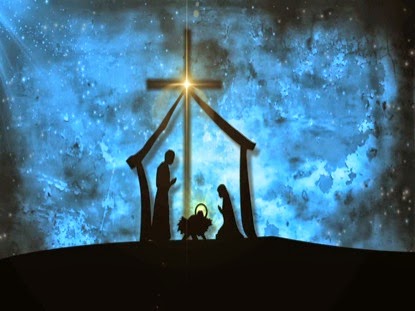
Pointing to the Light

zechariah-elizabeth-and-john-the-baptist-the-other-nativity-story57Now the time came for Elizabeth to give birth, and she bore a son. 58Her neighbors and relatives heard that the Lord had shown his great mercy to her, and they rejoiced with her. 59On the eighth day they came to circumcise the child, and they were going to name him Zechariah after his father. 60But his mother said, “No; he is to be called John.” 61They said to her, “None of your relatives has this name.” 62Then they began motioning to his father to find out what name he wanted to give him. 63He asked for a writing tablet and wrote, “His name is John.” And all of them were amazed. 64Immediately his mouth was opened and his tongue freed, and he began to speak, praising God. 65Fear came over all their neighbors, and all these things were talked about throughout the entire hill country of Judea. 66All who heard them pondered them and said, “What then will this child become?” For, indeed, the hand of the Lord was with him. (Luke 1: 68-80)


We don’t always pay attention to this story. It is not the story of a manger. It is not the story of an angel appearing to a young maiden. It is not the story of a star that leads its followers to the place they are called to go. It is the story of another baby, a baby named John. Born to older parents, parents who had never thought they would have a child, parents who were related to the young Mary, who held her in their arms after her encounter with the angel and told her that everything would be alright, that she was blessed, that she was not alone.


And so he became John. And, it says, they pondered what he would become. Of course, every parent does that, wonders what this child they hold will become. I’ve done it when I’ve held a baby that is only an hour old. You hold the baby and there is a sense that you are holding all the hopes of the world, the chance for things to change, to move just a bit closer to what God envisioned they could be. What then will this child become?  They may have dreamed that he would become a learned rabbi or a great leader or a successful businessman. They probably did not dream that he would make his way into the wilderness, cover himself with animal skins, and live off of the earth. They probably did not dream that he would place himself in the position he did that would eventually get him executed. They probably did not dream that this child they were holding would be the one that got it, would be the one that would point people to the Messiah, would be the one that would be the forerunner of the Messiah.


So, why do we read this during Advent when we are supposed to be preparing ourselves for the coming of Christ, for that manger birth of our Messiah? Because Jesus was not born out of or into a vacuum. Jesus, fully human just as he was fully Divine, had a mother and a father and, later, even siblings. And he had this cousin. Maybe they grew up together, played together, schemed and dreamed and played with their first-century toys. Maybe they came in muddied and torn and their mothers wondered where they’d been. See, God seldom sets us up to work alone. Even Jesus had the one that pointed people his way. His name was John. He was not the One, but he pointed to the One. So, “what then will this child become?” What the child became is exactly what God called him to be—the messenger, the forerunner, the One who would pave the path that God had outlined, who would give all that he was for Jesus and for what Jesus would bring the world.


So, then, why do we read this during Advent? Maybe because Jesus is not an historic figure for us to emulate; Jesus is not some future image that we aspire to one day meet; Jesus is God-With-Us, Emmanuel, here, now. And what, then, will we become? THIS Advent, let us become the one who points to the One, the one who helps pave the way for the world to know the Christ that comes. So are you almost ready?


I cannot create the light. The best I can do is put myself in the path of its beam. (Annie Dillard)


Grace and Peace,


Shelli

Blessed

Visitation of Mary and Elizabeth
Painting in the Church of El Sitio, Suchitoto, El Salvador

(Advent 4C)


39In those days Mary set out and went with haste to a Judean town in the hill country, 40where she entered the house of Zechariah and greeted Elizabeth. 41When Elizabeth heard Mary’s greeting, the child leaped in her womb. And Elizabeth was filled with the Holy Spirit 42and exclaimed with a loud cry, “Blessed are you among women, and blessed is the fruit of your womb. 43And why has this happened to me, that the mother of my Lord comes to me? 44For as soon as I heard the sound of your greeting, the child in my womb leaped for joy. 45And blessed is she who believed that there would be a fulfillment of what was spoken to her by the Lord.” (Luke 1: 39-45)

Remember the story. Mary, the young maiden, betrothed to Joseph, probably planning her wedding and dreaming of her life to come, was approached by an angel. Now the Scriptures seem to lead us to believe that an angel coming was not that extraordinary but I’m thinking that angel-coming stories are grossly over-represented in the Bible because, frankly, it’s at best a little surprising and, to be honest, downright disconcerting. So, the angel, after calming her down (our clue that this was NOT an ordinary incident), asked her to do one thing—just one thing—to birth the salvation of the world. (Sure, no problem!) Just one thing. But here’s the catch, Mary: your life will never again be what it is now; your life will be one of extremes—incredible joy and the most profound grief that you can possibly imagine; your life will be nothing like what you’ve planned for it to be. Your life will be one full of moving from place to place and really never again feeling at home. There will be times when you are running from things and times when you are searching. And it may be lonely, oh so lonely. And, no hurry, except that we really need to have an answer now because, frankly, all this time that we’ve waited, all this time that we’ve hoped, all this time that we’ve prepared has now ended. Now is the time. But, other than that, no hurry. Take your time. And the world stopped, if only for a moment…

So, Mary, not really sure of what she was getting into, agreed. This young maiden who the world doesn’t even know will birth the Savior, will become part of the redemption of the world. So, the angel left and Mary stood there. What in the world have I done? I mean, I love God and all, I want to serve God, but what in the world have I done? So, she runs. She runs to a place where she knew they would take her in, where they would hold her, where they would love her. Elizabeth would have been surprised. After all, it’s not like Mary could text her and tell her she was coming! And when Mary entered, she knew. The child inside her knew. The world knew. The angels’ gossip line was going crazy! After all, the world was with child.

And then Elizabeth took Mary in her arms. After all, this was not going to be easy. The world expects so much and is sometimes incredibly unforgiving, expecting too much, No one knew the road that lay ahead for the young girl but it didn’t matter. Elizabeth would be with her, to hold her, to love her, to listen to her as she worked things through.

You know, that’s really what it means to be blessed—not to be showered with riches or surrounded by happiness or, God forbid, to have our lives turn out the way we plan, but rather to be held and loved as you walk this journey that God has laid before each of us. Mary’s journey mirrors ours. God calls us to change our lives, to sometimes let go of our plans and our dreams and trade them in for what God envisions that we can be. And it is there that we will be blessed. So, THIS Advent, may you be truly blessed!

Here is the God I want to believe in: a Father who, from the beginning of Creation, has stretched out his arms in merciful blessing, never forcing himself on anyone, but always waiting; never letting his arms drop down in despair, but always hoping that his children will return so that he can speak words of love to them and let his tired arms rest on their shoulders. His only desire is to bless. (Henri J.M. Nouwen)


Grace and Peace,


Shelli

The Next Chapter

Manger and cross

(Advent 4C)

5Consequently, when Christ came into the world, he said, “Sacrifices and offerings you have not desired, but a body you have prepared for me; 6in burnt offerings and sin offerings you have taken no pleasure. 7Then I said, ‘See, God, I have come to do your will, O God’ (in the scroll of the book it is written of me).” 8When he said above, “You have neither desired nor taken pleasure in sacrifices and offerings and burnt offerings and sin offerings” (these are offered according to the law), 9then he added, “See, I have come to do your will.” He abolishes the first in order to establish the second. 10And it is by God’s will that we have been sanctified through the offering of the body of Jesus Christ once for all. (Hebrew 10: 5-10)

So why did God come? Why did the Divine make a way into the ordinary? Why did the Creator of the world, the Maker of all that is, come and dwell within Creation and hang around with the muck and mire of the world? So many times this passage is read as if God somehow traded one world for another, as if God somehow felt the need to start over on the grand plan that God had previously proclaimed as “Good”. Does that really make sense? Did Christ come into the world as a “do-over”, as if what God had so lovingly begun had somehow failed?

I don’t think God is throwing away the old order; I think God is continuing to create it. God is always continuing to create, not to exchange one way of being for another but to change one way of being into another. God was always coming into the world. There were incarnations all along the pathway, if we had only dared to open our eyes and notice. But then it was time for the next chapter for those of us who were called to that part of the story. And what had begun with God’s goodness and God’s mercy and the holiness of the Divine continued, bringing a new order to the whole story.

Christmas did not begin nor end with the manger. The shepherds and the visiting kings did not drop their baby presents off and go back to their lives. As Christians, Christmas is our entrance into the story, into something relevant, into faith, into a story that will take us to Golgotha and then home. It does not replace the part of the story that Abraham brought to us; rather, for us, it brings us into it. And from there, we continue on. So, in a way, Christmas is our birth as much as it is Jesus’. So, in eight days, on that holiest of nights, when you light your candle and sing “Silent Night”, do not look at it as the beginning of the story, but rather the chapter in which you come to be, the very dawn of redeeming grace spilling into a waiting story-filled earth.

Christmas did not come after a great mass of people had completed something good, or because of the successful result of any human effort. No, it came as a miracle, as the child that comes when his time is fulfilled, as a gift of God which is laid into those arms that are stretched out in longing. In this way did Christmas come; in this way it always comes anew, both to individuals and to the whole world. (Eberhard Arnold)


Grace and Peace,


Shelli


“It”

ItFor I am about to create new heavens and a new earth; the former things shall not be remembered or come to mind. But be glad and rejoice forever in what I am creating; for I am about to create Jerusalem as a joy, and its people as a delight. (Isaiah 65: 17-18)

On the twelfth day of Advent, my true love gave to me…Ugh oh…it’s not Advent, the song is about Christmas. The two are so easily confused in our world. Advent is not Christmas. Christmas is about the manger and Mary and Joseph and the shepherds and the beginning of life again. Christmas is about God’s coming into our little world to shake things up and change us and everything around us. But Advent? Well, Advent is about looking toward the horizon, looking toward that time when, yet again, our little world will be shaken to its core and we and everything around us will be changed. Do you see it? There…there just over the horizon. The light is beginning to peak over the clouds and dawn is beginning to come.

So, Advent reminds us that what we see, what we know, what we have so carefully constructed in our life is not “It”. (Sorry, it’s not!) Advent reminds us that there is always, always a horizon. When Jesus came into this world, God incarnate, so long ago, as much as we Christians with all our pretty lights and our comforting Christmas carols try to make that “It”, I don’t think it is. The “it” that happened in that manger on that dark night in Bethlehem was not “It”. It was not really the things for which the world had waited. Rather, it was the beginning of it. It was the thing that pointed to “It”.

You see, if our celebrations stop at Christmas (or, for that matter, even START there), we have missed it all. If our celebrations stop in the manger, they are nothing more than an historic remembrance of a beautiful, incredible night when God peeked into the world. But if we begin to see the manger as the beginning, as the “it” that points to the “It”, as the beginning of what we will find just over the horizon, then the coming of God, Emmanuel, into our little world is everything that it was meant to be.

So, on this twelfth day of Advent, raise your heads beyond the gift-buying and the tree-decorating, and all that this season holds. And open your eyes and see just over the horizon. There “It” is…we can’t see it all yet, but “It” is coming to be. There…there just over the horizon. That is “It”.

The Advent mystery is the beginning of the end in all of us that is not yet Christ. (Thomas Merton)

Grace and Peace,

Shelli

Finding What You’ve Waited For

dancing-joy(ADVENT 3C)

4Rejoice in the Lord always; again I will say, Rejoice. 5Let your gentleness be known to everyone. The Lord is near. 6Do not worry about anything, but in everything by prayer and supplication with thanksgiving let your requests be made known to God. 7And the peace of God, which surpasses all understanding, will guard your hearts and your minds in Christ Jesus. (Philippians 4: 4-7)

Do you remember a couple of years ago when that “don’t worry, be happy” slogan was everywhere? I hated that, to be honest. It always seemed a bit sappy to me. Just forget your worries and be happy. Just forget all your cares and skip down the yellow brick road of life. Ok, see, even Dorothy (of Wizard of Oz fame) had some issues along that road. The Scripture doesn’t tell us not to worry so that we can be happy. The Scripture tells us to not let our worries consume us.

Our culture spends a great deal of time searching for happiness. We watch TV and we see sitcoms and commercials and now those strange reality TV shows with happy people giving us their own clues as to how to get happy like they are. It seems to be our goal in life. After all, what makes you happy? Are you happy when you are with friends or family? Are you happy when you are traveling, seeing parts of the world that you do not know? Are you happy when you are eating ice cream? Or at the beach? Or shopping? Or surrounded by beauty? But anyone will tell you that happiness is fleeting. It’s not the same as joy. Joy is deep and abiding. It exists in the deepest part of our being and rather than covering us up with a sort of pink cloud temporary existence, joys comes from within and fills us. Think about it. Most happy people will describe themselves as happy. But to say that one is filled with joy is different. Joy is being filled with that which surpasses all understanding. Joy is being filled with something that makes no sense and doesn’t have to.

So, here is Paul, probably writing from a prison cell. It would be odd for him to fill his letters with words that might convince his readers that he is happy. He is NOT happy. In fact, Paul is frustrated beyond belief. He wants to be out there doing the work that he is called to do, helping the fledgling congregations that he has barely gotten off the ground. But here he sits. No, Paul is NOT happy. This was not the plan. But beyond what the world understands, beyond what the world can even imagine, beyond any happiness that may come about, is joy. Rejoice in the Lord always. Happiness is fleeting. Joy breeds joy.

So, no matter what is going on, give thanks to God for your life. Give thanks to God for the life in Christ that you have. Let it fill your life. Do not let your worries consume you. Do not let them turn you into someone that you are not. When it’s all said and done, this WILL come out alright. That’s the whole promise. So, when life gets rough, when happiness seems to elude you, talk to God. Pray for peace. Don’t worry about praying that God will fix what is wrong. Just pray for peace to wash over you. Pray for joy to fill you. That’s all you need. Because there you find the heart and mind of Christ.

Think about it. Jesus was born into a waiting world, a world that was sure that all it needed was someone to fix its problems and put its adversaries in their proper place, a world that had figured out what it needed to make itself a happy place. But Jesus showed up on a dark night in a dingy stable in the middle of the poverty of the land and almost immediately began a life that would consist of evading the status quo and those in charge. And roughly 2,000 years later, the world is still not a happy place. So, perhaps this season is not about what makes us happy but rather what gives us reason to rejoice, what makes us whole and fills us and makes us who we are. For into the darkness, came Light and into our dying days came Life. Rejoice in the Lord always!  And, there, there you will find everything for which you’ve waited.

Joy is the most infallible sign of the presence of God. (Pierre Teilhard de Chardin)


Grace and Peace,


Shelli


Why Are You Searching for Me?

Looking for God49He said to them, “Why were you searching for me? Did you not know that I must be in my Father’s house?” (Luke 2: 49)

 

This passage will come in a few weeks. I won’t go into it. But the question of “why were you searching for me?” begs a lot of additional questions. After all, in this season of Advent, for whom are we waiting? For whom are we searching? Why were you searching for me? Later, the adult Jesus invites us to come and see. It’s not necessarily a fulfillment of that or whom for which we are searching. It is an invitation to come and see what is there, come and see what is offered, come and see what you were not expecting.


For generations, God’s people waited for the Messiah. They waited for a Savior. What is that? What is that which saves you? Who is that above all others who gives you what you need? And they imagined a king, a monarch, one who was the leader of the world. They imagined one who would lead them to victory. They imagined one who would land them on top of the heap of the world. And then they got this baby in a manger. What is that about? This wasn’t what we planned.


Are we really any different? What is that that you imagine will save you? Who is that who above all others gives you what you need? Who do you imagine? For whom are you waiting? Maybe the whole point is that we, like those generations so long ago, are so sure of who the Messiah is that we miss the Messiah, we miss the Presence of God that shows up in places that we did not think it belonged. The question, “why were you searching for me?” remains. Is it to save you? Is it to fix your life? Is it to affirm that the life you’ve created is the way it should be? Is it to land you on top of the heap of the world? Or are you truly searching for that which brings Truth and Grace? Are we searching for One who will enter our life? Or are we searching for a Life that will lead us to God?


The baby in a manger wasn’t what anyone was expecting. Who would’ve imagined that God would enter this world through a feed trough? Maybe if we would open ourselves to the possibility, or even the probability, that God comes in ways we do not plan, in ways that we do not expect, and even through those that we do not think are “of God”, then we will be able to open ourselves to whatever way God comes. So, why are you searching for me? Don’t you know I’m here with you now, in every step, in every way? Don’t you know where I am? I am here. Just open yourselves to the notion that I’m not what you planned, that I don’t fit into to this world, and that I’m calling you to change your life and change your ways so that you will know who I am.


Never be so focused on what you’re looking for that you overlook the thing you actually find. (Ann Patchett)


Grace and Peace,


Shelli

And This is My Prayer

BlessingAdvent 2C

9And this is my prayer, that your love may overflow more and more with knowledge and full insight 10to help you to determine what is best, so that in the day of Christ you may be pure and blameless, 11having produced the harvest of righteousness that comes through Jesus Christ for the glory and praise of God. (Philippians 1: 9-11)


For what do you pray? For whom do you pray? Why do you pray? Do your prayers ever sound anything like the prayer that Paul writes in the epistle that we read for this week? After all, read it. This is not a prayer for comfort. This is not a prayer for healing. This isn’t a prayer for an easier life or more resources or a clear path to whatever it is for which we are searching. This isn’t even a prayer for peace. This is a prayer that the readers of this letter might grow, might move beyond themselves, might become better at being themselves than they are. This is a prayer for change. This is a prayer for us to get up and move from where we are. See, Paul’s image of praising God is people living changed lives and, in turn, changing lives around them.


Maybe this season of Advent is not, then, about just sitting and waiting for Jesus to show up. What if this was a season of prayer, a season of growth, a season of change? Those that came before us so long ago, those who longed for a Messiah, for someone to change the world (or perhaps just fix it once and for all), had a clear vision of how their prayers should be answered. And then the Messiah was born and was laid in a feed trough on a cold desert night because somehow the world just couldn’t seem to find the time or the space for anything else. And the Messiah grew up and asked the world to follow.   And instead of following, we dug in our heels and refused to change and went on with our important projects and our carefully planned lives. And the world trembled a bit when the Christ child died but for the most part, it went on the way it was. But we changed. Faith is being open to change. So this time, THIS time, let us not wait for what we think we know. Let us not be comforted by a baby in a feed trough or scared away by a man on a cross. Let us follow and be changed.


And this is my prayer, that the image of God that is within you will burst forth and become who you are called to be, taking all that you are—your heart, your mind, your body, your soul—and follow the Messiah not to the place you know, but to the place that God leads. My prayer is that you will follow the Christ and see nothing less than the Vision of God and that the world will know that you have been changed and will want to follow you and be changed too. May your vision not stop with the baby in the manger but may it grow to be the Savior of the World.


Authentic prayer changes us, unmasks us, strips us, indicates where growth is needed. (St. Teresa de Avila)


Grace and Peace,


Shelli