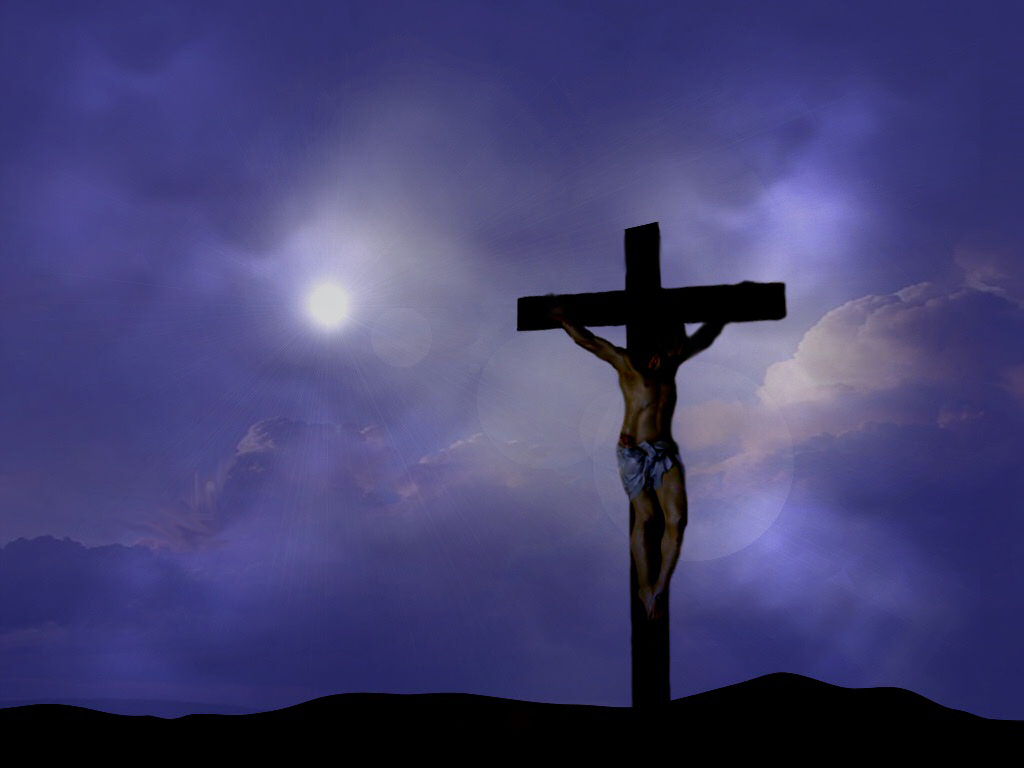
Shrive

Then Jesus said, “Father, forgive them; for they do not know what they are doing.” (Luke 23: 34)

Fat Tuesday, Pancake Tuesday, Mardi Gras, Shrove Tuesday–there are a plethora names for this day.  Most of us understand it as an eat-all-you-can, party-till-you-drop day before we enter our Lenten fast.  So, don your Mardi Gras beads and stuff yourself with rich syruppy pancakes and get it all out of your system.  Right?

Well, at the risk of interrupting your partying, I think it’s about something more.  (Don’t you hate that?)  The word “shrove” (as in “Shrove Tuesday”) comes, sadly, not from the word for over-the-top entertaining but from the English verb “shrive”, meaning confess.  (Oh, shoot, you say!)  I know, it’s a hard word for us, particularly when we’re drowning ourselves in pancakes.  But, yes, it is a day of preparation, a day when we leave behind what we know, those things to which we are accustomed, and begin the journey to the Cross.

It is sad that in our world, there are many of us (Christians, that is) that have equated confession with judgment.  And we want to run from it.  After all, sin is somewhat subjective when you think about it.  Try as we might, there are few “black and whites” when it comes to sin and history has shown that when a culture inflicts that notion, oppression of some type usually results.  So confession becomes a somewhat shaky ground on which we tread.

In Barbara Brown Taylor’s book, Speaking of Sin, she says that “sin is our only hope, because the recognition that something is wrong is the first step toward setting it right again.”  That is what this day represents–the invitation to set things right, to confess, to shrive.  It is the day to prepare, to begin that long and arduous turn away from who we have made ourselves to be and toward God and God’s vision for what we could become.  Forgiveness is not the thing that we are trying to attain.  It is the starting point, a gift from God for those who want to begin again.

So, in the midst of your Mardi Gras wildness and your pancake extravaganzas, as you don your masks for one more hidden transgression, remember to stop, to shrive, to begin the turn.  Lent begins tomorrow.

For this season, I will try (yes I will try!) to post at least a short devotional every day on this blog.  Many of you are part of the email group that gets it every time I post.  (For those who have signed up through this blog, you will get it but for some reason known only to Google, you will get it 12-18 hours later.  Go figure!)  So if there are others that would like to be part of the email group that gets it right away, just email me through the St. Paul’s website at stpaulshouston.org.  (Go to “About St. Paul’s”, then “staff”).

Additionally, I am reposting my “Bread and Wine” Lenten blog from several years ago.  It is located at http://breadandwine-lentenstudy.blogspot.com/ or you can let me know if you would like to be added to that email group.

AND another opportunity…I have been posting my Lectionary notes that many of you get emailed each Thursday on http://journeytopenuel.blogspot.com/  It’s a once-a-week post but if you’re interested, take a look.

Thanks for being a part of my Lenten journey!

Grace and Peace,

Shelli

Unveiled

Lectionary Passage:  Luke 9: 28-36 (37-43)
28Now about eight days after these sayings Jesus took with him Peter and John and James, and went up on the mountain to pray.29And while he was praying, the appearance of his face changed, and his clothes became dazzling white.30Suddenly they saw two men, Moses and Elijah, talking to him.31They appeared in glory and were speaking of his departure, which he was about to accomplish at Jerusalem.32Now Peter and his companions were weighed down with sleep; but since they had stayed awake, they saw his glory and the two men who stood with him.33Just as they were leaving him, Peter said to Jesus, “Master, it is good for us to be here; let us make three dwellings, one for you, one for Moses, and one for Elijah” —not knowing what he said.34While he was saying this, a cloud came and overshadowed them; and they were terrified as they entered the cloud.35Then from the cloud came a voice that said, “This is my Son, my Chosen; listen to him!”36When the voice had spoken, Jesus was found alone. And they kept silent and in those days told no one any of the things they had seen.  37On the next day, when they had come down from the mountain, a great crowd met him.38Just then a man from the crowd shouted, “Teacher, I beg you to look at my son; he is my only child.39Suddenly a spirit seizes him, and all at once he shrieks. It convulses him until he foams at the mouth; it mauls him and will scarcely leave him.40I begged your disciples to cast it out, but they could not.”41Jesus answered, “You faithless and perverse generation, how much longer must I be with you and bear with you? Bring your son here.”42While he was coming, the demon dashed him to the ground in convulsions. But Jesus rebuked the unclean spirit, healed the boy, and gave him back to his father.  43And all were astounded at the greatness of God. 

This passage requires that we open our mind and widen our souls; it requires that we strip away the things that we think we have figured out; it asks us to focus our attention on what is to be seen rather than on what we see.  In other words, it ask us to go further, to view our world in the light of God’s Presence—not the way we imagine God to be but the way God invites us to experience the holiness and the sacred that is all around us.  It calls us to see things differently, to remove the veil that we have created in our lives that shield us from things that are uncomfortable or do not make sense.  Seeing things differently is not a new theme for us. 

I mean, think about it.  Here we have the story of a child born into anonymous poverty and raised by no-name peasants.  He grows up, becomes a teacher, probably a rabbi, a healer, and sort of a community organizer.  He asks a handful of people to become his followers, to help him in his mission.  They leave everything they have, give up their possessions and their way of making a living, they sacrifice any shred of life security that they might have had, and begin to follow this  person around, probably often wondering what in the world they were doing. And then one day, Jesus takes them mountain climbing, away from the interruptions of the world, away from what was brewing below.  Don’t you think they were sort of wondering where they were going?

This story is told in all three of the Synoptic Gospels.  The mountain that Jesus and the disciples climb sounds a lot like Mount Sinai that Moses had ascended centuries before.  (The truth is, there is actually no historical mention of what mountain this might have been, or if there was a mountain at all.) Now remember that for this likely Jewish audience, mountains were typically not only a source of grandeur, but also divine revelation.  And also remember again that in their understanding, God was never seen.  God was the great I AM, one whose name could not be said, one whose power could not be beheld.  And so this cloud, a sort of veiled presence of the holiness of God, was something that they would have understood much better than we do. And there on the mountain, they see Jesus change, his clothes taking on a hue of dazzling, blinding white, whiter than anything they had ever seen before.  And on the mountain appear Moses (this time with no veil) and Elijah, standing there with Jesus—the law, the prophets, all of those things that came before, no longer separate, but suddenly swept into everything that Christ is, swept into the whole presence of God right there on that mountain.

So Peter offers to build three dwellings to house them.  I used to think that he had somehow missed the point, that he was in some way trying to manipulate or control or make sense of this wild and uncontrollable mystery that is God.  I probably thought that because that’s what I may tend to do.  But, again, Peter was speaking out of his Jewish understanding.  He was offering lodging—a booth, a tent, a tabernacle—for the holy.  For him, it was a way not of controlling the sacred but rather of honoring the awe and wonder that he sensed. And then the voice…”This is my Son, my Chosen:  listen to him!” OK…what would you have done?  First the mountain, then the cloud, then these spirits from the past, and now this voice…”We are going to die.  We are surely going to die,” they must have thought.  

And then, just as suddenly as they appeared, Moses and Elijah drop out of sight and Jesus was standing there alone, completely unveiled.  In Old Testament Hebrew understanding, the tabernacle was the place where God was.  Here, this changes.  Jesus stays with them and the cloud dissipates.  Jesus IS the tabernacle, the reality of God’s presence in the world.  And all that was and all that is has become part of that, swept into this Holy Presence of God.  And, more importantly, we are invited into it.  No longer are we shielded from God’s Presence.  We become part of it, a mirror for all to experience and encounter the living God. And so the disciples start down the mountain.  Jesus remains with them but they kept silent.  The truth was that Jesus knew that this account would only make sense in light of what was to come.  The disciples would know when to tell the story.  They saw more than Jesus on the mountain.  They also saw who and what he was.  And long after Jesus is gone from this earth, they will continue to tell this strange story of what they saw.  For now, he would just walk with them.  God’s presence remains.

The Hebrews understood that no one could see God and live.  You know, I think they were right.  No one can see God and remain unchanged.  We die to ourselves and emerge in the cloud, unveiled before this God that so desires us to know the sacred and the holy that has always been before us.   The truth is, when we are really honest with ourselves, we probably are a little like the disciples.  We’d rather not really have “all” of God.  We’d rather control the way God enters and affects our lives.  We’d rather be a little more in control of any metamorphosis that happens in our lives.  We’d rather be able to pick and choose the way that our lives change.  We’d rather God’s Presence come blowing in at just the right moment as a cool, gentle, springtime breeze.  In fact, we’re downright uncomfortable with this devouring fire, bright lights, almost tornado-like God that really is God.

This account of the Transfiguration of Jesus seems to us that it should be the climax of the Jesus story—the quintessential mountain-top experience.  After all, how can you top it—Old Testament heroes appearing, God speaking from the cloud, and Jesus all lit up so brightly that it is hard for us to look at him.  But there’s a reason that we read this on the last Sunday before we begin our Lenten journey.  In some ways, it is perhaps the climax of Jesus’ earthly journey.  Jesus tells the disciples to keep what happened to themselves, if only for now.  And then the lights dim.  Moses and Elijah are gone, and, if only for awhile, God stops talking.    

Have you ever been mountain climbing?  The way up is hard.  You have to go slowly, methodically even.  You have to be very careful and very intentional.  You have to be in control.  But coming down is oh, so much harder.  Sometimes you can’t control it; sometimes the road is slick and seems to move faster than your feet.  And sometimes, through no fault or talent of your own, you get to the bottom a little bit sooner than you had planned. Yes, it’s really harder to come down.

Jesus walked with the disciple in the silence.  The air became thicker and heavier as they approached the bottom.  As they descended the mountain, they knew they were walking toward Jerusalem.  The veil that had been there all those centuries upon centuries was beginning to lift.  One week from today, Lent begins.  The Transfiguration is only understood in light of what comes next.  Yes, the way down is a whole lot harder.  We have to go back down, to the real world, to Jerusalem.  (I think that’s why the verses following this account are there.  Life goes on…) We have to walk through what will come. Jesus has started the journey to the cross.  We must do the same.    

Grace and Peace,

Shelli

The Day Between

What do we do with this day, this Holy Saturday?  We are still grieving.  The reality of it all is beginning to sink in, beginning to be real.  Jesus is gone, dying alone on some hill that we don’t even know.  So, what do we do today?  How do we pick up the pieces in the midst of our pain and despair and just go on with our lives?  Oh, we 21st century believers know how the story ends.  We’ve already jumped ahead and read the next chapter many, many times.  (Don’t tell those that don’t read ahead, but it all works out in the end.)

And yet, we do ourselves no favors if we jump ahead to tomorrow.  After all, the Scriptures tell us that Jesus rose on the third day, the THIRD day, as in one-two-three.  The third day doesn’t happen without today.  It must be important, right?  But, oh, it’s just so painfully quiet.  The sanctuary is dark, awaiting to be redressed for its coronation.  The bells are quiet, hanging expectantly for tomorrow.  And we still sit here draped in black with our Easter brights hanging there ready for us to don.  What are we supposed to do today?

Tradition (and the older version of the Apostles’ Creed) holds that Jesus died, was buried, and descended into hell.  So is that what this day is?  Descent?  Good grief, wasn’t the Cross low enough?  The well-disputed claim is that Jesus descended into death, descended into hell, perhaps descended into Gehenna (Greek, Hebrew–Gehinnom, Rabbinical Hebrew–גהנום/גהנם), the State of ungodly souls.  Why?  Why after suffering the worst imaginable earthly death would Jesus descend into hell?  Well, the disputed part is that Jesus, before being raised himself, descended to the depths of suffering and despair and redeemed it, recreated it.  The sixth century hymnwriter, Venantius Fortunatus claimed that “hell today is vanquished, Heaven is won today.” Why is that so out of bounds of what God can do?  Don’t we believe that God is God of all?  Or does it give us some sense of comfort to know that we are not the worst of the bunch, that there are always Judas’ and Brutus’ that have messed up a whole lot worse than any of us and so are destined to spend eternity on the lowest rungs of hell?  But, oh, think about the power and grace and amazing love of a God who before the Divine Ascent into glory, descended into the depths of humanity and redeemed us all, perhaps wiped out the hell of each of our lives rung, by rung? 

And, yet, again, we cannot leave it all to Christ to do.  Just as we were called to pick up our cross yesterday, we are called to descend down into the depths, plunging into the unknown darkness, so that God can pick us up again, set us right, and show us a new journey.  And so this day, we stand between, between death and life, between hell and heaven, between a world that does not understand and a God who even in the silence of this day has begun the redeeming work.  In some ways, this is the holiest day of the week.  How often do we stand with a full and honest view of the world and a glimpse of the holy and the sacred that is always and forever part of our lives?  How often do we stand together and see ourselves as both betrayers and beloved children of God?  How often do we stand in the depths of our human state and yet know that God will raise us up.  This is a pure state of liminality, a state, as the Old English would say, “betwixt and between.”  It is where we are called to be.  It is the place of the fullness of humanity as it claims both human and divine.  In the silence of this day, we stand with God.  And we wait, we wait expectantly for resurrection, we wait for God to say us once again.  It is where we should always be.  We won’t though.  We won’t be there. (Remember, we’ve had this problem before.)  And maybe on some level, it’s too much for us to always be there, always be waiting expectantly for God.  But at least we can remember what this day feels like as we stand between who we were and what we will be. 

So, for today, keep expectant vigil.  Do not jump ahead.  We can only understand the glory of God when we see it behind the shadow of death.  But, remember, shadows only exist because of Light. 

“Welcome, happy morning!” age to age shall say:
“Hell today is vanquished, Heav’n is won today!”
Lo! the dead is living, God forevermore!
Him, their true Creator, all His works adore!

Refrain
“Welcome, happy morning!”
Age to age shall say.

Earth her joy confesses, clothing her for spring,
All fresh gifts returned with her returning King:
Bloom in every meadow, leaves on every bough,
Speak His sorrow ended, hail His triumph now.

Refrain

Months in due succession, days of lengthening light,
Hours and passing moments praise Thee in their flight.
Brightness of the morning, sky and fields and sea,
Vanquisher of darkness, bring their praise to Thee.

Refrain

Maker and Redeemer, life and health of all,
Thou from heaven beholding human nature’s fall,
Of the Father’s Godhead true and only Son,
Mankind to deliver, manhood didst put on.

Refrain

Thou, of life the Author, death didst undergo,
Tread the path of darkness, saving strength to show;
Come, then True and Faithful, now fulfill Thy Word;
’Tis Thine own third morning; rise, O buried Lord!

Refrain

Loose the souls long prisoned, bound with Satan’s chain;
All that now is fallen raise to life again;
Show Thy face in brightness, bid the nations see;
Bring again our daylight: day returns with Thee!

Refrain
Just wait…
Grace and Peace,
Shelli

Were You There at the End?

Today’s Scripture Passage: Mark 15: 34-47.
To read today’s portion of the account of the Passion, click on the below link:
http://bible.oremus.org/?ql=200678972

It’s 3:00.  The bells have begun to toll.  The sky is black and rumbling. After hanging there for hours, Jesus is nearing death.  He cries out from the depth of his forsakenness, the depth of his loneliness and abandonment.

Standing in the background, we want to help.  We want to bring comfort and a swift and painless death.  But we don’t.  Instead we stand by, not really knowing what to do, not really knowing if we should get involved, put our own selves at risk perhaps.  The truth is, we don’t really want to get our hands dirty.  Why do we think that because Jesus is our Savior, we should become nothing more than inert bystanders?  Well, we’ve never been told that.  No where in Scripture does it tell us to sit back while Jesus does all the hard stuff.  Oh, it would definitely be more palatable to just sort of walk way from this whole ugly mess and wait for it to pass, maybe show up Sunday morning for the grand processional with not even a bloodstain on us.

And then, it is over.  Jesus cries out and breathes his last breath on this earth.  The last piece of humanity that was at its fullest, the last shred that was what God envisioned, goes away in one last long and drawn out exhale.  God breathed us into being and is now exhaling and slipping away.  It is finished.  Jesus is gone.

Suddenly, the earth shakes and flashes of lightning cut across the darkened sky.  Torrential winds begin to blow across the earth and rain begins pouring onto the land.  The curtain of the temple, the veil that separates the Holy of Holies from us, that separates holiness from the earth, is torn in two and heaven and earth begin to spill together.  In some ways, they become almost undistinguishable from each other.  It is almost as if they somehow belong together, perhaps that they always belonged together. 

And then, from the shadows emerge the women.  They are those who are powerless, meaningless in society.  They are those whom Jesus loved.  And they were there even at the end.  Because the Sabbath was beginning, Joseph of Arimethea, an outsider in Jesus’ circle, asked for Jesus body.  And after anointing him, Joseph buried him in a borrowed tomb.  Even in death, Jesus had no home.  Even in death, the world did not make room.  And so the stone was rolled into place.  And those who loved him tried to go back to their lives.

So, were you there at the end?  Were you there when Jesus died, when the world changed, and when Jesus was buried in an unmarked grave?  The women knew where he was buried.  But no one else seemed to know.  They were not there.  So, what now?  We were always told to follow Jesus.  Where is he now?  Well you see, this would be the point at which we are compelled to pick up our cross and follow.  This would be the place where we die to self, where we leave our selves behind and go forward.  This would be the place where we experience the wholeness of who Jesus is.  This is the moment for which we’ve been preparing on this forty-day journey.  Just as the earth and heaven have spilled together, becoming undistinguishable, so have death and life.  No longer can we see where one ends and another begins because death has been recreated as life, death itself has had the breath of God breathed into it. The Protestant notion of the “empty cross” does not even make sense.  The cross is not empty; it is full of life–all of life. 

But we have to wait.  We have to enter the Cross on this day.  We have to follow Christ.  We have to die with Christ this day–die to self, die to greed and selfishness and putting ourselves ahead of others, die to prejudice and exclusion and a lack of compassion for our brothers and sisters in this holy earth.  Today we die.  And then we wait.  For God has gone on ahead.  God entered death first and asked us to do the same, asked us to follow, asked us to take up our cross.  So, take up your cross and follow.  For those who believe that God redeems, death is now part of life, earth is now part of heaven, and endings are now part of our beginning.  The birthing is not over.  It is never really finished.  On this night it all spills together and waits for God’s redeeming work.  On this night the earth once again waits with expectant hope for birth to happen.  But this time, it is ours!
 

Silent night! Holy night!
All is calm, all is bright,
Round yon Virgin Mother and Child!
Holy Infant, so tender and mild,
Sleep in heavenly peace!
Silent night!  Holy night!
Son of God, loves pure light
Radiant beams from Thy Holy Face
With the dawn of redeeming grace,
Jesus, Lord, at Thy Birth!

So, even as we wait in darkness, even as we grieve this night, God has only begun creating Life.  So, were you there at the end?  If we’re not there at the end, we’ll miss what comes next.  In the silence and holiness of this night, God is with us, walking us through to Life.
The point of Holy Week is to empty.  It is the completion of the process of Lent in which we have made room for our death…Resurrection is finding that place that is just for us.  In the beginning of Holy Week, we find ourselves spiritually homeless.  But when we are homeless, we are ready to be sheltered.  The shelter from death, in life, is on its way.  We don’t need to fear the emptiness.  (Donna E. Schaper, in Calmly Plotting the Resurrection, p. 80.)
Grace and Peace,
Shelli


Were You There When They Crucified My Lord?

Today’s Scripture Passage: Mark 15: 20-33
.
To read today’s portion of the account of the Passion, click on the below link:
http://bible.oremus.org/?ql=200598988

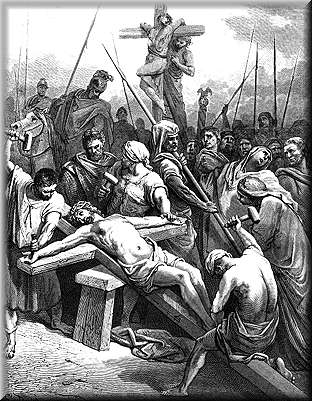
So they led him away and they hung him on the cross.  They chided him to save himself.  But Jesus was even too weak to carry his own cross.  They randomly pluck a man out of the crowd to help him carry it.  Now if we were doing the staging of this, we probably would have written in one of the disciples to do this, one of those who had traveled with Jesus these past years and received so much love and so much of life from Jesus.  It would have made more sense for one of those whom Jesus had stooped down below last night to wash his feet in a poetic depiction of incredible mutuality.  But that’s not what happened.  As it becomes more and more difficult for Jesus to carry his cross, it is a stranger who stoops to serve Jesus.  We really know very little about Simon—is he black, brown, white, olive-skinned?  Does it matter?  He was from Libya—a foreigner to the city of Jerusalem.  Anonymously plucked out of the crowd to help a bleeding dying man, he stooped and hoisted the cross that Jesus was carrying to his own shoulder.  Even at this late hour, God has orchestrated a Divine reversal in what the world expected.  Isn’t that just like God?  But, you have to wonder, where were the disciples?  Where were you?

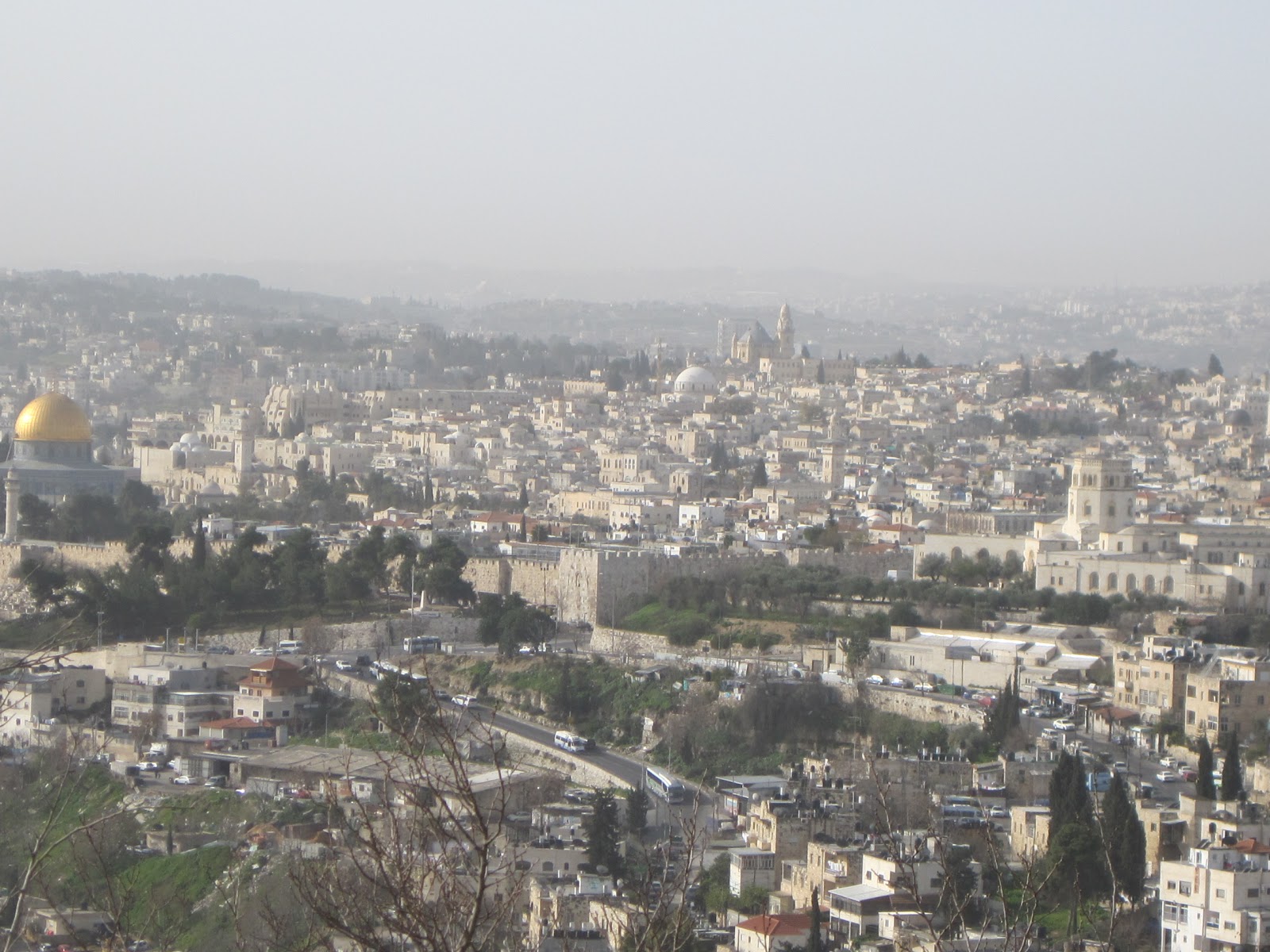
The account says that they brought Jesus to Golgotha.  The name derives from the Aramaic golgolta, meaning “skull” or “place of the skull”.  Early tradition assumed that this was a site west of the city.  And when the Lukan Scripture was translated into Latin, it became known as “Calvary.”  But somewhere in history, the site was lost.  Perhaps it wasn’t even a specific site at all but a sort of general area away from the bustle of the city where these crucifixions would occur.  In 330, the Emperor Constantine tore down a Roman temple to Aphrodite and built the Church of the Holy Sepulcher, which tradition now recognizes as the last stations of Jesus’ journey to the cross, the site of the Crucifixion, and the site of the burial.  The present structure, built by the Crusaders, still houses the Constantine structure and the tradition.  Maybe it’s best that it’s like that.  Maybe it’s best that the actual site of Jesus’ final moments is not really known and even that Jesus’ final resting place is more of a tradition than a known place.  After all, would you have been there anyway? Maybe the anonymity is the whole point, sort of a depiction of our faith journey as we wander with no real knowledge of where it is we’re going–only that God is calling us there.

So, accompanied by an anonymous person to an anonymous place, Jesus is crucified.  The one who not so long ago had been surrounded by friends and followers, who a short time ago had preached to thousands on a hillside near the Galilean lake, and who only days ago had been showered with palm-branches in acclaim for who he was, was totally alone.  The one who had come into the world to save the world was now going to die in a shroud of anonymity.  It’s pointless to ask the question as to whether or not you were there.  You weren’t.  I wasn’t.  No one was. 

The life that began in the humble anonymity of a rough-hewn manger was ending the same way on a rough-hewn cross.  Maybe that was the whole point.  We bring nothing into this world and we take nothing out.  We are here for but a short time that, by the very Grace of God, is hopefully so filled with life and love that when our life here has ended, love still remains.  We do not know exactly where Jesus was born and we can’t pinpoint the location where he died.  What we do know is that while Jesus hung on the cross waiting those agonizing hours to die, God had plunged down to the very depths of humanity, to the places of loneliness and despair, to the places of abandonment and darkness, to the places where we are sometimes afraid to go.  And there, God began to say Creation into being once again.  The cross is God’s highest act of Creation yet. And when it was all said and done, it was Love that remained.

H.J. Iwand said that “our faith begins at the point where atheists suppose it must be at an end.  Our faith begins with the bleakness and power which is the night of the cross, abandonment, temptation, and doubt about everything that exists!  Our faith must be born where it is abandoned by all tangible reality; it must be born of nothingness, it must taste this nothingness, it must taste this nothingness and be given it to taste in a way that no philosophy of nihilism can imagine.”  So, in all probability, the explanation of the Cross is that there is no explanation.  At humanity’s lowest point, whether or not we bother to show up at all, it is only God who can save us.

Were you there when they crucified my Lord?
Oh, sometimes it causes me to tremble, tremble, tremble.
Where you there whey they crucified my Lord?

When it was noon, darkness came over the whole land until three in the afternoon…

Grace and Peace,

Shelli

Where Were You As Jesus Stood Accused?

“Christ Accused by the Pharisees”
Duccio de Buoninsegna, (1308-11)

Today’s Scripture Passage: Mark 14: 53-72
.
To read today’s portion of the account of the Passion, click on the below link:
http://bible.oremus.org/?ql=200505621

Most of us don’t read this portion of The Passion a whole lot.  We like the image of Jesus’ Anointing and we love the notion of The Garden of Gethsemane but this…this is not to our liking.  This is the story of Jesus as The Accused.  And we all know that doesn’t make sense.  What did Jesus ever do wrong?  And yet, here he is, before the court.  But this man who had spent his ministry welcoming others in was alone.  Oh, wait a minute…there’s Peter behind that sleeping elderly Scribe with the bad complexion.  Peter, his friend, his confidante, his disciple (Peter, as in Saint!) is there, but keeping a safe distance.  Well, I suppose he has too.  After all, the future of the Christian church rests with him, right?  He has to keep up appearances, do the right thing.  The important thing is that he is here, that Jesus knows he is here.  The important thing is that, deep down, Jesus knows how much he loves him and supports him.

Oh, we’re good at this, aren’t we?  We’re good at figuring out how to keep up appearances, at figuring out how to offer love and support while still maintaining our own place in life.  It’s difficult to associate ourselves with certain people or certain issues, even though we agree.  You see, we have to maintain our position so, please, understand, I support you, but I can’t speak out just now.  I know you understand how much I love you.

COCK A DOODLE DOOOOOOO!

What was that?  That was a lot of noise!  But, seriously, it’s hard to associate with certain people.  I love them; I support them; you know, I even think that they’re treated badly by both the society and, sadly, the church, but I just can’t.  What good would it do for me to forego my position just to make a statement on their behalf?

COCK A DOODLE DOOOOOOO!

Geez!  What IS that noise?  This man is my friend.  I love him.  But I can’t.  I can’t be seen with him right now.  I know he understands.

COCK A DOODLE DOOOOOOO!

And so Jesus stood alone. And Peter wept.  Peter wept for his friend but probably more than that he wept for what he was not.

I have to say that I am not a “rabble rouser”.  I tend to live my life with as little drama as I can muster.  In fact, I have to admit that I would be often standing in the back of the courtroom silently supporting the accused but not wanting to put my own self in jeopardy.  We’re all like that.  Isn’t that interesting that we talk so much, cannot put our cell phones or our emails aside and, yet, we are silent?  It is a dangerous and destructive silence.  It is like standing in the back of the courtroom and watching the innocent of all innocents accused and not speaking out.  Because you see, it is silence that crucified Jesus; it is silence that allowed the religious Crusades of the Middles Ages exist; it is silence that created slavery as the blotch on our nation’s history; it is silence that closed its eyes to Auschwitz hoping against hope that it would go away; it is silence that allowed segregation to exist in this country until late in the 20th century; and it is silence that continues to allow our church and our nation to limit who is part of us, who is part of the Kingdom of God.

And so Jesus stood accused.  Peter was in the background, safely hidden away.  Where were you? 

So, on this Wednesday of Holy Week, how would you answer? Were you there as Jesus stood accused?  Were you in the back of the courtroom?  What things do you know are wrong but about which you are silent?  Where do you voice your passions?  Where do you voice your Passion?

Grace and Peace,

Shelli

Were You There in the Garden of Gethsemane?

The Garden of Gethsemane
February, 2010

Today’s Scripture Passage: Mark 14: 26-50

To read today’s portion of the account of the Passion, click on the below link:
http://bible.oremus.org/?ql=200418057

Those of us who know this story both love and fear this garden.  We dream about this garden.  We sing about this garden.  This is the garden of Jesus, this garden which is named “olive press”, an ordinary name for an ordinary place where the ordinary pours into the Divine, where Jesus’ Passion comes to be.  I’ve had the opportunity to visit this place.  It was one of the most profoundly moving places that I have been.  It is a holy space, a place that allows you to see beyond yourself, a space to breathe in the Divine.  Standing among the centuries-old olive trees, the past and the present spill together.  No longer is the garden an historic place; it is a place of the Divine, a place where the Divine begins to spill into the worst of what we do.

Traditional “Upper Room”
February, 2010

Jesus and the disciples had spent the evening together–talking and laughing and sharing in the community and the friendships that they had built.  And then Jesus had raised the bread and broken it and raised the cup and poured it and had said something about them being his body and his blood, his very essence.  But they were too busy to understand.  They loved Jesus.  He was their friend, their mentor, their confidante.  But they probably didn’t really understand what was about to happen.  And so they left the hot, stuffy second-floor room and, at Jesus’ suggestion, took a walk in the cool, arid night air.  They were probably thinking how much more comfortable this was than the dampness that they would have felt in Galilee.  They climbed down the outside stairs and headed toward the city gates.  And once outside the gates, they followed the dark path down Mt. Zion through the Kidron Valley and started up the Mount of Olives.  They crossed over the Palm Sunday Road where they had entered the city just a few short days ago.  If one could peer through the darkness, there were still palm leaves strewn about.  It really was just a short twenty minute walk.  And they came to the garden, the place of the Divine.  Isn’t it interesting that God always returns to a garden, returns to a place of wilderness, returns to a place of new life?  Isn’t it interesting that Creation stories begin in a garden and then spawn new life that no one imagined before?

The Garden of Gethsemane
February, 2010

As they entered the garden, the disciples collapsed under the olive trees, heavy with food and wine and good company.  And Jesus walked away, feeling compelled to pray alone.  He was not nervous about what was to happen.  He was ready.  He prayed that God would take the cup.  I don’t think it was a plea to end what was to come, but a point of resolve, a place of surrender.  “God, take this cup, it is yours.  It was always yours.  I have done what you asked me to do.”  Now is the time.

He returned to find the disciples sleeping.  Really?  Sleeping?  Tonight?  Are you kidding me?  Maybe that is the biggest challenge of discipleship–just staying awake, just staying attentive to God’s Presence and God’s Call.  But don’t you think Jesus wished that they were more ready, more ready to take on what they would be called to do?  He looked at the quiet of his friends, so peaceful, so drunk, so oblivious to what was about to transpire, and he knew that their lives would not be easy.  He knew that they would be called to be something that they were not ready to be. The truth is, God doesn’t create us ready; God creates us open to be.

But after a couple of returns, Jesus had had enough.  “Get up already!” he yelled.  Are you kidding me?  And then all of a sudden, everything changed.  Soldiers burst into the peacefulness brandishing newly-sharpened swords.  And with them was Judas.  Jesus was not surprised but the tears still came into his eyes.  Judas was his friend, his confidante, probably one of the smartest followers he had.  That is why he had given him the common purse.  Judas had so much potential.  But Judas was too smart for his own good.  He had it all figured out.  He thought he could manipulate the powers that be.  Now, the non-canonical Gospel of Judas would depict Judas’ act as a pre-conceived (and pre-ordained) plan.  I’m not sure about that.  I think Judas just screwed up.  I think he just resembled so many of us who fight like everything to control our lives.  I think he just thought that he knew better.  I think he possibly even thought that Jesus would pull it all out in the end and be depicted as nothing less than a great hero.  So Judas kissed him…the kiss heard round the world…the kiss that changed everything.

But, truth be known, it was too much for the sleeping friends.  And so they fled.  And Jesus, alone, already surrendering the cup, was ready.  There was no turning back.  The gates of Jerusalem had closed.

So, on this Tuesday of Holy Week, how would you answer? Were you there in the Garden?  Were you walking with your Lord or were you asleep?  And when it was all said and done, did you flee?  Or were you the one that betrayed our Lord with but a kiss?  Where were you?  Were you there in the Garden of Gethsemane?  And with this, what are you being called to do?  How are you being called to live?

Grace and Peace,

Shelli