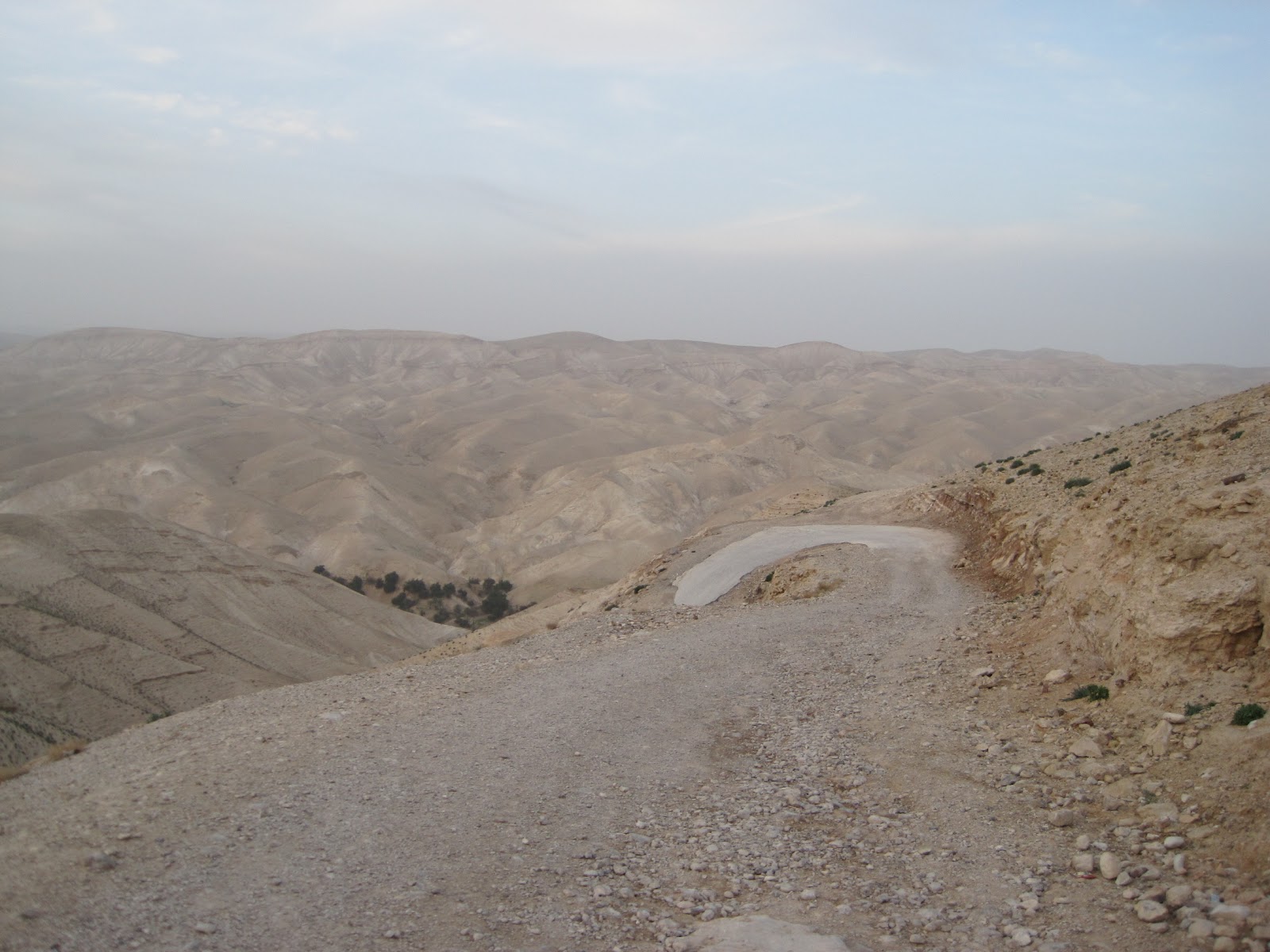
Poustinia


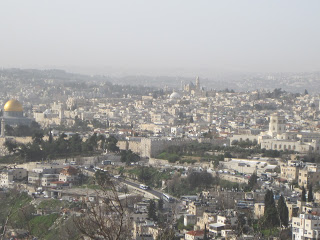
The Judean Wilderness, February, 2010

Scripture Passage:  Matthew 4: 1-11

Then Jesus was led up by the Spirit into the wilderness to be tempted by the devil. He fasted forty days and forty nights, and afterwards he was famished. The tempter came and said to him, “If you are the Son of God, command these stones to become loaves of bread.” But he answered, “It is written, ‘One does not live by bread alone, but by every word that comes from the mouth of God.’” Then the devil took him to the holy city and placed him on the pinnacle of the temple, saying to him, “If you are the Son of God, throw yourself down; for it is written, ‘He will command his angels concerning you,’ and ‘On their hands they will bear you up, so that you will not dash your foot against a stone.’” Jesus said to him, “Again it is written, ‘Do not put the Lord your God to the test.’” Again, the devil took him to a very high mountain and showed him all the kingdoms of the world and their splendor; and he said to him, “All these I will give you, if you will fall down and worship me.” Jesus said to him, “Away with you, Satan! for it is written, ‘Worship the Lord your God, and serve only him.’” Then the devil left him, and suddenly angels came and waited on him.

Well, you know it’s the first Sunday in Lent when you read of the temptation of Christ in the wilderness.  To be honest, most of us are incredibly uncomfortable with this passage.  After all, how can Jesus, Son of God and Son of Man, the gift of the father’s unfailing grace, Emmanuel, God With Us, the Savior of the World be tempted?  How can that even be possible? And why would someone like Jesus even risk it?  What, really, is Jesus doing out in the wilderness all by himself?  What, really, is the purpose at all?  I mean, it almost sounds like this was some sort of proof that Jesus was who he was.  I’ve always been just a bit distrustful of “proof” of the Divine.  So, what is this all about?

In Russian, the word poustinia means “a desert, a lonely and silent place”.  It is a place of solitude.  In the Russian Orthodox tradition, a poustinik was one who was called by God to live alone in the desert with God.  But the notion was not looked upon as a solitary life removed from the rest of the world.  Because it was there that he or she prayed, fasted, and made oneself available to humanity.  Think of the poustinik as humanity’s listener.  The idea was that even though the poustinik lived in solitude, there was always a part of him or her that was open to the world, a door to a life of solitude that invited the world in and sent the person forth.

And yet, this pilgrimage into the wilderness is not really part of the world in which most of us live.  Our culture may be a bit to goal-oriented and scheduled for that.  We tend to respond better to words like “connection”, “community”, and “fellowship”.  (Those are the words on which religious entities build good mission statements, aren’t they?)  Going out into the desert or the wilderness alone to find oneself or center oneself sometimes sounds to us a little selfish, as if the person is not participating with others, not caring for others.  Maybe our problem is that we’ve forgotten the door.  We forgot that there is always a door between solitude with God and the world, between the community of faith and that part of the Godself that each of us hold inside of us.  It is not an either-or.  The poustiniks understood that.  They stepped into the solitude to connect with God while at the same time keeping a foothold on the world, being available in case the world needed them or open to what God needed them to take into the world.  It was a way of listening and a way of active faith. 

Maybe that’s why this passage is so difficult for us.  We forgot that there was always a door.  Jesus was not shutting himself away from the world.  Jesus was called to the world (good grief, he was the Savior of the World, was he not?).  But in the bustling and noisy ways of the world, it is important to find the door, to listen to God, to enter the solitude of our deepest self so that we can finally hear where we are called to go.  There will always be voices pulling us away, pulling us toward things that we think we need, things that we think will help us in life, or things that will give us the power to do what we think we should do.  But deep within us is a holy place of solitude, a place where we can listen to God unencumbered by the voices of the world.   Some of us need to go into the wilderness to hear it; others need to only listen where we are.  Jesus trek into the wilderness was not because he needed to get away from the world but rather so that he could hear the world’s needs and God’s calling to fill them with grace.

The poustinia is within, and one is forever immersed in the silence of God. foreverlistening to the word of God, forever repeating it to others in word and deed.  (Catherine Doherty)

On this Lenten journey as we traverse through the wilderness, think of those place of solitude in your life.  Where are those place where you are at your best at listening to the needs of the world, at listening to what God is calling you to do?

Grace and Peace,

Shelli
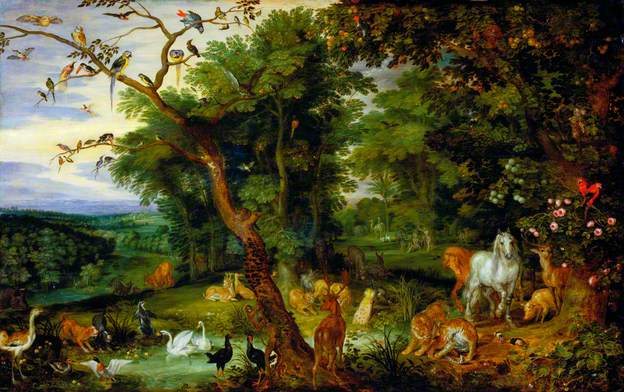
After the Garden


"The Garden of Eden with the Temptation in the Background", by Jan Brueghel the elder, c. 1600, (Victoria and Albert Museum, London)
“The Garden of Eden with the Temptation in the Background”, by Jan Brueghel the elder, c. 1600, (Victoria and Albert Museum, London)

Scripture Passage:  Genesis 2: 15-17, 3: 1-7 (Lent 1A)

The Lord God took the man and put him in the garden of Eden to till it and keep it.  And the Lord God commanded the man, “You may freely eat of every tree of the garden;  but of the tree of the knowledge of good and evil you shall not eat, for in the day that you eat of it you shall die.”…Now the serpent was more crafty than any other wild animal that the Lord God had made. He said to the woman, “Did God say, ‘You shall not eat from any tree in the garden’?” The woman said to the serpent, “We may eat of the fruit of the trees in the garden; but God said, ‘You shall not eat of the fruit of the tree that is in the middle of the garden, nor shall you touch it, or you shall die.’“ But the serpent said to the woman, “You will not die; for God knows that when you eat of it your eyes will be opened, and you will be like God, knowing good and evil.”  So when the woman saw that the tree was good for food, and that it was a delight to the eyes, and that the tree was to be desired to make one wise, she took of its fruit and ate; and she also gave some to her husband, who was with her, and he ate. Then the eyes of both were opened, and they knew that they were naked; and they sewed fig leaves together and made loincloths for themselves.

So at the beginning of this year’s Lenten season, the Lectionary propels us back into our somewhat sketchy past.  St. Augustine and myriads of theologians to follow would have called it the “original sin”, as if it is the cause of all other sins that follow.  Now, admittedly, I don’t like to get stuck on that idea of original sin.  I’m pretty sure that if the first humans had not messed up, someone soon after would have.  But this is the story we have.  We have images of humans walking in a beautiful garden hand in hand without a care in the world.  And then we have some sort of talking snake or prehistoric serpent or some other obnoxious creature that pulls them away from who they are and who they are meant to be.  And they give in.  They give in to the first temptation to be someone they are not.  Then they realize their mistake much too late to change the course of their action.  Well, we know the story.  (Oh, who are we kidding? We’re LIVING the story!)  They are no longer innocent and the beauty of the garden is lost forever.

This has always been an odd story to me.  Now, admittedly, I’m sure it is of no surprise to most of you that I tend to assume that this is fable rather than a literal historical account. But just because it probably isn’t “true” does not mean that it is not full of “Truth”.  In some respects, this is the rawest, most profound, most human Truth that there is.  After all, we all wander down the wrong road every now and again and some of us do it daily without even intending it.  And we all live with consequences of trying to overreach, trying to be someone we’re not, trying to assume things that are not ours to assume.  We all live with consequences of, essentially, overstepping and overreaching and trying to be the god of our own life.  And we all lose that innocence that we once had.

But, really, does God want a bunch of mindless innocents walking around in this world?  If that were the case, then God would never have shared the part of the Godself with us that is known as free will.  You see, God in God’s infinite wisdom gave up omnipotence for relationship.  God doesn’t want a bunch of robotic beings following the Great Divine because they know nothing else.  God created us to desire, to choose, to follow God of our own volition.  Innocence is way overrated.  You see, if God wanted us to stay in some sort of garden, fenced off from the rest of the world, I guess God would have left us there, protected from the world and, mostly, from ourselves.  I really don’t think that this journey we’re on returns us to the Garden, whatever that was.  That was our beginning.  The journey returns us to God, to who God envisions that we can be.  Think of the Garden as our womb, the place that protected and shielded us until we were ready for the journey, until we found that part of ourself that chose to follow, that chose God. 

So what do we do after the garden?  We follow where God leads us; we follow that innate sense that all of us have to return to God and to whom we are called to be.  You see, we have no more excuses.  Read the end of the passage.  Our eyes have been opened.  We know where we fall short; we know that we cannot do this by ourself; we know that God is God and we are not.  And in that is our beginning.  Thanks be to God!

Sin is our only hope, because the recognition that something is wrong is the first step toward setting it right again.  (Barbara Brown Taylor, Speaking of Sin:  The Lost Language of Salvation)

So on this Lenten journey, open your eyes.  Open your eyes and take a good hard look at yourself.  What do you need to choose to leave behind?  Where do you choose to go? What does your beginning, your escape from innocence, look like?

Grace and Peace,

Shelli

What Is Left

Flower in AshesScripture Passage: Joel 2: 1-3

Blow the trumpet in Zion; sound the alarm on my holy mountain! Let all the inhabitants of the land tremble, for the day of the Lord is coming, it is near— a day of darkness and gloom, a day of clouds and thick darkness! Like blackness spread upon the mountains a great and powerful army comes; their like has never been from of old, nor will be again after them in ages to come. Fire devours in front of them, and behind them a flame burns. Before them the land is like the garden of Eden, but after them a desolate wilderness, and nothing escapes them.

I know.  What a way to begin the season–darkness and gloom, devouring fire and flame, and desolate wilderness!  I know what you’re thinking.  Can we go back to that manger scene now?  Can we go back to being bathed in light with the hope of the world nestled in our arms?  Well, the problem, is that somewhere on this journey between seasons, we forgot.  We forgot who and whose we were.  Somewhere along the way we became self-sufficient and sure of ourselves.  Somewhere along the way, we thought we had figured it out, thought we were so right.  Somewhere along the way the trumpet announcing the birth of our Savior became our own horn.  Somewhere along the way we forgot that we were blessed not by what God has given us but by what God has called us to do.  You know–scattering the proud and bringing down the powerful, filling the hungry and sending the rich away.  (Hmmm, that sounds distantly and vaguely familiar.) And now we sit in ashes wondering what to do next.

Lent is our chance to begin again.  Because, think about it, those ashes that you are going to spread on your forehead today are what is left.  They are what has survived.  After all of the devouring fires scorching the gardens, they are left.  They are the remnant.  They are the hope for what will come next.  So we begin our Lenten journey in ashes because we repent for what we have done.  But that is not the end.  God does not leave us on the ash heap alone.  God picks us up and recreates us, walking us through the wilderness, through the valley of the shadow of death, through the Cross, to Life.  The ashes are the beginning.

I’ve used this before on Ash Wednesday (and for those who will hear me later in the day, you have two more chances to hear it in a sermon!), but it’s such a great reminder, I couldn’t resist.  A rabbi once told his disciples, “Everyone must have two pockets, with a note in each pocket, so that he or she can reach into the one or the other, depending on their needs.  When feeling high and mighty one should reach into the left pocket, and find the words: “Ani eifer v’afar; I am dust and ashes.  But when feeling lowly and depressed, discouraged or without hope, one should reach into the right pocket, and, there, find the words: “Bishvili nivra ha’olam…For my sake was the world created.”

So what will you do with what is left?  What will you do with your share of ashes?  Repent and turning–that is what this day is about.  No longer do we wallow in morbid shame and guilt; no longer do we pound ourselves down for our past mistakes; no longer do we sit on the ash heap sullen and morose.  This is the day when we begin to begin again.  Pick yourself up!  Dust yourself off!  And start.  This is the day when we begin the journey to life.  But we are called to travel light.  God has given what we need.

My soul magnifies the Lord, and my Spirit rejoices in God my Savior, for he has looked with favor on the lowliness of his servant.  Surely, from now on all generations will call me blessed; for the Mighty One has done great things for me, and holy is his name.  (Luke 1: 46b-49)

As you begin this Lenten journey, what things do you need to leave behind? What things do you need to take with you?  Remember, we are traveling light.  The wilderness journey is long and difficult.  But we are traveling with the one who created us and calls us to live life freely and blessed.

Grace and Peace,

Shelli


On the Way Down the Mountain

Jezreel ValleyScripture Passage:  Matthew 17: 1-9

Six days later, Jesus took with him Peter and James and his brother John and led them up a high mountain, by themselves. And he was transfigured before them, and his face shone like the sun, and his clothes became dazzling white. Suddenly there appeared to them Moses and Elijah, talking with him. Then Peter said to Jesus, “Lord, it is good for us to be here; if you wish, I will make three dwellings here, one for you, one for Moses, and one for Elijah.” While he was still speaking, suddenly a bright cloud overshadowed them, and from the cloud a voice said, “This is my Son, the Beloved; with him I am well pleased; listen to him!” When the disciples heard this, they fell to the ground and were overcome by fear. But Jesus came and touched them, saying, “Get up and do not be afraid.” And when they looked up, they saw no one except Jesus himself alone. As they were coming down the mountain, Jesus ordered them, “Tell no one about the vision until after the Son of Man has been raised from the dead.”

Boy, that was some trip up that mountain!  Who was ever going to believe this?  But it doesn’t matter because Jesus tells them to be quiet about it, tells them to go back to their lives, go back to their work.  Really?  How in the world can you just go back?  How in the world can you go back to things the way they were after basking in glory?  Well, maybe that’s the point.  Maybe we can’t.

I think that all of us are given glimpses of glory, tastes of the Divine, from time to time, if we only pay attention.  The Celts called them “thin places”, the places where heaven and earth, where the sacred and the ordinary, suddenly, if only for a moment, touch as if they are somehow part of each other, perhaps even dependent on each other.  It is a place of liminality, betwixt and between.  It is a place that belongs not to one or the other but instead is some sort of shared reality as the Sacred and the ordinary spill in to each other.  The people of whose journeys we read in the Torah believed that no one could ever see God without dying.  They talked of God as consuming fire and destructive wind, a rushing force that passes over the earth leaving little in its wake.  That thin place, the place where the earth meets the sky was one of no return.  They assumed that no one would ever come back down the mountain.

Maybe we’ve become a little too accustomed to this God we know.  Maybe our glimpses of glory have become a bit too pre-planned.  Maybe our thin places have gotten a little too thick with earthbound images of who God is in our lives, of how much of God we really want to encounter.  Because, you see, when you truly encounter those glimpses of the Sacred and the Holy, those you truly do not expect, when you let yourself be surprised by a cloud, you cannot help but be changed.  In a way, the early Hebrews were right.  When you encounter God, that you that you’ve made dies a little.  It has to, it has to make room for a God you never knew.

So on our way down the mountain, we realize that we cannot stay.  We cannot stay and bask in glory forever.  We were never called to that, to some sort of pious and righteous existence high above the world.  We were sent, sent down the mountain, back to the world.  But a part of us has died.  And from the ashes, we will rise.  Because, you see, that’s the only way it will happen.  So go, be careful where you walk.  We have to go down the mountain.  We have to go back.  Jerusalem is waiting.  But we are different; we have basked in glory.  For now, we will be quiet about it.  There are others waiting to join us on this journey.  Someday they will all understand.  Someday we will understand.  But in the meantime, we are just called to go.

As you prepare to begin this Lenten journey, where have you encountered those thin places, those moments of almost, just almost, touching the Sacred?

jerusalem04Let us go now to Jerusalem.

Grace and Peace,

Shelli


Can You Feel The Love Tonight?

last supperToday’s Lectionary Passage:  John 31: 1-17, 31b-35

Now before the festival of the Passover, Jesus knew that his hour had come to depart from this world and go to the Father. Having loved his own who were in the world, he loved them to the end.2The devil had already put it into the heart of Judas son of Simon Iscariot to betray him. And during supper3Jesus, knowing that the Father had given all things into his hands, and that he had come from God and was going to God,4got up from the table, took off his outer robe, and tied a towel around himself.5Then he poured water into a basin and began to wash the disciples’ feet and to wipe them with the towel that was tied around him.6He came to Simon Peter, who said to him, “Lord, are you going to wash my feet?”7Jesus answered, “You do not know now what I am doing, but later you will understand.”8Peter said to him, “You will never wash my feet.” Jesus answered, “Unless I wash you, you have no share with me.”9Simon Peter said to him, “Lord, not my feet only but also my hands and my head!”10Jesus said to him, “One who has bathed does not need to wash, except for the feet, but is entirely clean. And you are clean, though not all of you.”11For he knew who was to betray him; for this reason he said, “Not all of you are clean.”12After he had washed their feet, had put on his robe, and had returned to the table, he said to them, “Do you know what I have done to you?13You call me Teacher and Lord—and you are right, for that is what I am.14So if I, your Lord and Teacher, have washed your feet, you also ought to wash one another’s feet.15For I have set you an example, that you also should do as I have done to you.16Very truly, I tell you, servants are not greater than their master, nor are messengers greater than the one who sent them.17If you know these things, you are blessed if you do them.

31When he had gone out, Jesus said, “Now the Son of Man has been glorified, and God has been glorified in him.32If God has been glorified in him, God will also glorify him in himself and will glorify him at once.33Little children, I am with you only a little longer. You will look for me; and as I said to the Jews so now I say to you, ‘Where I am going, you cannot come.’34I give you a new commandment, that you love one another. Just as I have loved you, you also should love one another.35By this everyone will know that you are my disciples, if you have love for one another.”

Can you feel the love tonight?  Can you feel something beyond where you were?  It’s a hard night.  We know what is coming tomorrow.  We have read the story over and over again–the story of loss and betrayal, of the disciples sleeping, of Jesus’ surrender, of Jesus being dragged off to the house of Caiaphas on this very night.  We have over and over and over experienced regret and bewilderment and grief.  But, do we ever remember the love of this night?  They came together for a passover dinner.  I always thought that they were alone, gathered in some sort of stuffy upstairs room with Leonardo da Vinci standing on the side painting the scene for posterity.  But then I saw, even if it was a “traditional understanding” of the place, the Upper Room.  It was big, bigger than I had ever imagined.  What dawned on me was that this was Passover, the community gathering.  Jesus wasn’t just there crammed into some sort of painting with the disciples; he was there with the community, sharing life and and community and food.  But at some point, he sat down with his closest friends and it became intimate.  It become a dinner of love on that last night.  They shared food; they shared wine; and Jesus washed their feet.  Jesus showed them what intimacy and love for another human really meant–that one would become vulnerable, would do for another what perhaps was not the most comfortable thing to do.  Love became not a caring or a sharing but an entering, an entering into the life of another.

This foot washing thing is hard.  It is way too intimate for us westerners.  After all, we are pretty private, seemingly reserved; we honor each other’s imaginary space.  But once a year, St. Paul’s does this at the mid-day Maundy Thursday service.  It’s a small service, intimate really.  I remember the first year we did it.  We were retiscent, hesitant to trust that people would come through.  So, admittedly,  we had a couple of “ringers”.  Well, the ringers came and then the rest did.  I sat there on the floor moved by something that I had never experienced.  I was touching people’s feet.  They had removed their shoes at the pew and had walked barefoot to the seat where we had the plastic tub in which water would be poured over their feet.  It was incredible.

And then Caroline came.  Caroline–in her full Nigerian dress and her permanent posture of prayer.  She came and she sat and she placed her foot in the water.  I picked up her foot.  Caroline and her family were part of the Nigerian freedom movement.  She had come from the tribes and had wanted more.  She had worked hard, always putting aside her own desires for what she thought was important–others and God.   I looked at this older woman’s foot in my hands, deep with lines of life and passion, and I had tears my eyes.  I was holding life.  I was not holding someone’s foot.  I was holding their life.  I was affirming them, praying for them, washing away for them all the things that got in the way of what they so treasured.  As I was gingerly washing Caroline’s foot, she looked up into the ceiling and she began to pray.  They were words that I did not understand and composed a prayer that I understood completely.  It was incredible.  It was love at its deepest level–love for Christ, love for humanity, love for each other, love for God and all that we have together.  Caroline died a few years ago.  She left the most incredible love.  At her memorial service, I remembered that day.  I remembered that day that  was filled with love, that was filled with the Presence of Christ on that night.

You see, love is a funny thing.  It is not perfect.  Jesus knew that on that night.  He and the disciples did not sing “Kum-ba-yah” and then leave.  In Jesus’ life, love meant rejection and exile, frustration and misunderstanding, Presence and turning, welcome and redemption.  This very night, Love would be apathy and betrayal, surrender and pardon.  But, in this moment, love was a bunch of friends who had a dinner together and had their feet washed–feet filled with lines of life and passion.  Jesus washed their feet and held their life.  That’s all love is about.  Love is Life.  Love brings us together in a way that does not subdue us into one but embraces who we are.  Love takes all that we are and creates Love.  Nothing else can create itself.

Ruins of Caiaphas' House, Jerusalem, Israel, 2010
Ruins of Caiaphas’ House, Jerusalem, Israel, 2010

On this night, we take all that we are, sinners and saints, kings and vagabonds, the betrayer and the beloved, the anointed and the one who anoints, the nay-sayers and the ones who miss the signs of the sacred,  the pharisee and the rule-breaker, the faith-filled and the doubter, Caroline and me–we are all here, gathered together showered in the most incredible love imagineable.  Can you feel the love tonight?

Tomorrow we will kneel at the cross.  But, tonight, in this moment, can you feel the love?

Grace and Peace,

Shelli

Splitting Seeds

Public domain image, royalty free stock photo from www.public-domain-image.comToday’s Lectionary Passage: John 12: 20-36

20Now among those who went up to worship at the festival were some Greeks. 21They came to Philip, who was from Bethsaida in Galilee, and said to him, “Sir, we wish to see Jesus.” 22Philip went and told Andrew; then Andrew and Philip went and told Jesus. 23Jesus answered them, “The hour has come for the Son of Man to be glorified. 24Very truly, I tell you, unless a grain of wheat falls into the earth and dies, it remains just a single grain; but if it dies, it bears much fruit. 25Those who love their life lose it, and those who hate their life in this world will keep it for eternal life. 26Whoever serves me must follow me, and where I am, there will my servant be also. Whoever serves me, the Father will honor.  27“Now my soul is troubled. And what should I say—‘Father, save me from this hour’? No, it is for this reason that I have come to this hour. 28Father, glorify your name.” Then a voice came from heaven, “I have glorified it, and I will glorify it again.” 29The crowd standing there heard it and said that it was thunder. Others said, “An angel has spoken to him.” 30Jesus answered, “This voice has come for your sake, not for mine. 31Now is the judgment of this world; now the ruler of this world will be driven out. 32And I, when I am lifted up from the earth, will draw all people to myself.” 33He said this to indicate the kind of death he was to die. 34The crowd answered him, “We have heard from the law that the Messiah remains forever. How can you say that the Son of Man must be lifted up? Who is this Son of Man?” 35Jesus said to them, “The light is with you for a little longer. Walk while you have the light, so that the darkness may not overtake you. If you walk in the darkness, you do not know where you are going. 36While you have the light, believe in the light, so that you may become children of light.” After Jesus had said this, he departed and hid from them.

The twelfth chapter of John contains most of what Jesus had to say about his own death in that Gospel. And this is where we sort of start shutting down, isn’t it?  We liked sitting there listening to accounts of his birth, the stories of his calling the disciples, and those wonderful little parables that fill the Gospel-readings with drama and wisdom and sometimes leaving us with a knot in our stomach as we begin to see ourselves through Jesus’ eyes.  We even liked the beautiful story yesterday of the extravagant anointing of our Savior.  But this…this is coming a little too close to the edge.

Do you remember running through the sprinkler when you were kids?  You want to do it.  You want to feel that cool, refreshing feeling right after you do it.  But it’s that first blast of cold, paralyzing water that takes your breath away that you dread and so you put it off.  And then, finally, you hold your breath and run through it as fast as you can.  That’s almost what we have a tendency to do with the cross.  We dread it as we slowly walk toward it, dragging our feet a bit, not really wanting to experience it again—the memories and reliving of the horror, the violence, the suffering, the pain, the loss, the grief, the ending of all we know.  And as we approach, we then let our minds run quickly through it toward Easter morning when everything will be OK again.

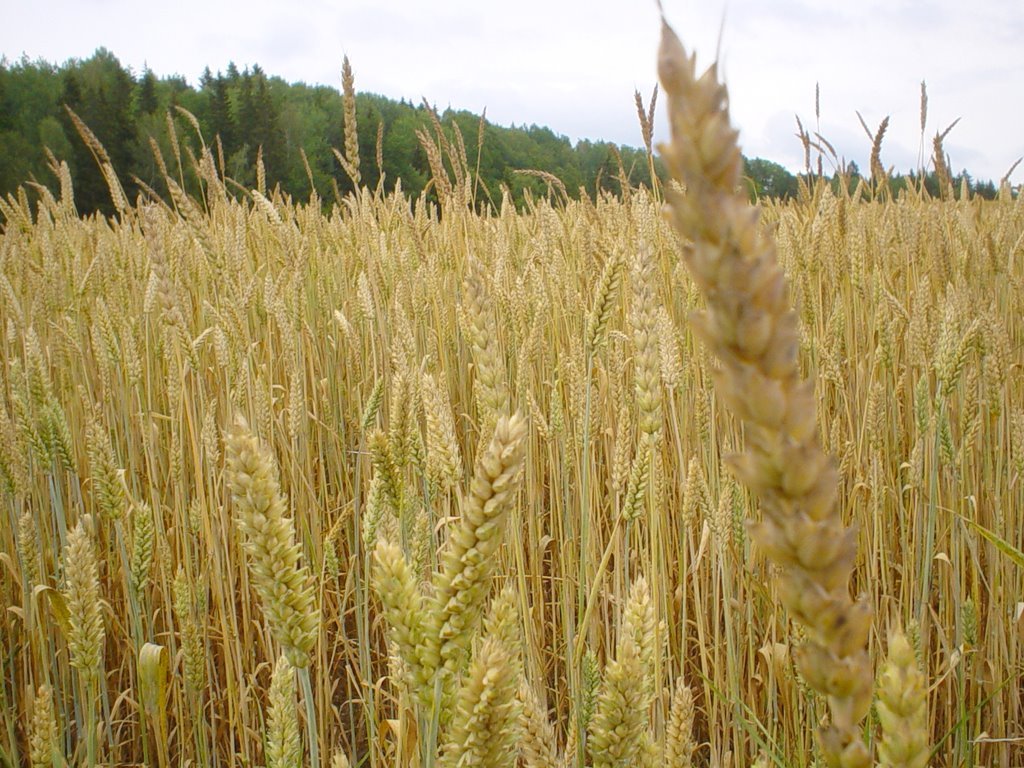
But now is the time for the Son of Man to be glorified.  For, as Jesus says, unless a grain of wheat falls to the earth and dies, it remains just single lone grain, worth nothing; but if it dies, it bears fruit and lives on.  You see, wheat is as a caryopsis, meaning that the outer “seed” and the inner fruit are connected.  The seed essentially has to die so that the fruit can emerge.  If you were to dig around in the ground and uproot a stalk of wheat, you would not find the original seed.  It is dead and gone.  In essence, the grain must allow itself to be changed. So what Jesus is trying to tell us here is that if we do everything in our power to protect our lives the way they are—if we successfully thwart change, avoid conflict, prevent pain; in other words, if we expect everything to go back to the way it was before—then at the end we will find that we have no life at all.

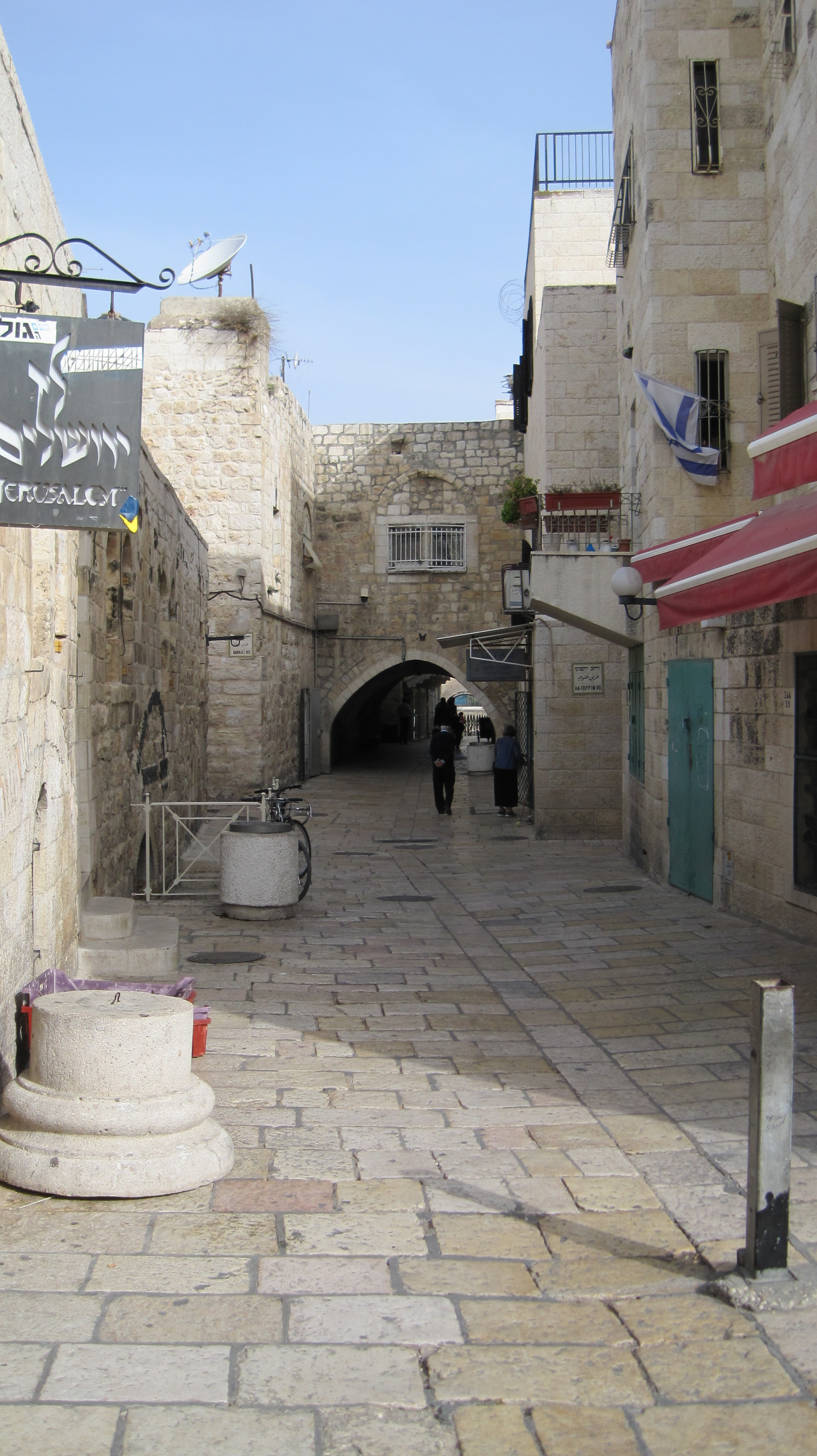
Jerusalem 17This week of remembering is not an historical accounting of the events so long ago;  this is not only Jesus’ journey to the cross; it is ours.  You see, the tide has turned.  Jerusalem is there before us, the cross probably almost fully constructed at this point.  The problem is that we’re supposed to believe without faltering in the cross. We look at that big gleaming cross in the front of the sanctuary.  We see them on the doors to the church and on the sign outside.  Good grief, we even hang them around our necks. But, contrary to what most of Christianity holds out there as “belief”, I don’t think we were meant to worship the cross.  We were meant to worship God, to hunger and thirst in the deepest parts of our being to encounter God.  Well, we can’t see God.  If we could there’d be no need for faith.  But we can see Jesus, the One who points the Way to God.  But this Jesus is more than a leader.  He is more than a teacher.  Jesus is the One on the Cross.  And at that moment, God will do something incredible.  God will take the worst of this world, the worst of humanity, the worst of proof or sensibility, at a cost that no one can fathom…and recreate it.  In that moment on the Cross, God takes the worst of us and the best of God and reconciles them, redeeming us into oneness with God, pouring the Divine into humanity for all time.  But you have to be willing to let go, willing to change; you have to allow that seed that you are right now holding so tightly die away.

So as we walk through this holiest of weeks, remember that this is not Jesus’ journey that you walk; it is yours.  Let go that you might finally see what God has in store.

Grace and Peace,

Shelli

How Much is Too Much?

anointing-jesus-feetLectionary Passage for Today: John 12: 1-11

Six days before the Passover Jesus came to Bethany, the home of Lazarus, whom he had raised from the dead.2There they gave a dinner for him. Martha served, and Lazarus was one of those at the table with him.3Mary took a pound of costly perfume made of pure nard, anointed Jesus’ feet, and wiped them with her hair. The house was filled with the fragrance of the perfume.4But Judas Iscariot, one of his disciples (the one who was about to betray him), said,5“Why was this perfume not sold for three hundred denarii and the money given to the poor?”6(He said this not because he cared about the poor, but because he was a thief; he kept the common purse and used to steal what was put into it.)7Jesus said, “Leave her alone. She bought it so that she might keep it for the day of my burial.8You always have the poor with you, but you do not always have me.”9When the great crowd of the Jews learned that he was there, they came not only because of Jesus but also to see Lazarus, whom he had raised from the dead.10So the chief priests planned to put Lazarus to death as well,11since it was on account of him that many of the Jews were deserting and were believing in Jesus.

Perhaps no one noticed when Mary got up and left the room.  Perhaps no one noticed when she quietly returned carrying a jar full of oil.  But then they noticed…With drama befitting a king, she raised the jar, broke the seal and in one movement, poured the entire bottle onto Jesus’ feet.  Then as the oil slowly runs down his feet and begins to drip to the floor, she wipes his feet with her hair.  The whole house is filled with this overwhelming fragrance. And the empty jar is cast aside.

In our faith understanding, the Sacrament of Baptism is the beginning of our life as a Christian, a new life in Christ, the beginning of a journey toward oneness with God, toward the life of Christ.  The waters of Baptism remind us of God’s ever-Presence in our lives, of God’s claim on us, and of the great love that God has for us that was revealed in Christ.  It is sacramental because it is God’s love made visible for us.  Through this sacrament, we enter this journey with God.  And the Eucharist is, for us, an entering into that Presence of God.  It makes God’s Presence real.  We don’t understand it.  It’s a wonderful holy mystery.  But somewhere in that bread, somewhere in that juice, is the very real Presence of God.

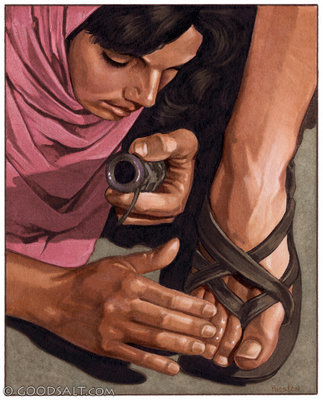
But you can’t help but listen to the story of Mary’s anointing without hearing the same language—Mary took, poured, and wiped.  We will hear those same words this Thursday in the account of Jesus’ last meal:  Jesus took the bread, poured out the wine, and wiped the feet of the disciples, and through these common gestures and such common touch, Jesus shows us what true love is.  And as Mary takes, and pours, and wipes, she shows that same love toward Christ, and as the storm clouds begin to gather outside, this small crowded house in Bethany becomes a cathedral, the bottle that held the oil becomes a font, and this simple meal becomes a Eucharist. Through her touch, through her love, the ordinary becomes sacred.  Mary enters Jesus’ life and he becomes part of her.  Her life becomes an extravagant sacrament that shows Jesus’ love to the world.  And she, with Jesus, is on the journey to the Cross.  And the whole world is now forever filled with the fragrance of that perfume.

So, how much is too much?  Where did Mary cross the line?  Where was the point when someone could have reasonably said, “stop, that’s enough”?  Well, the truth is, I wish I could be more like her, wish I could give all of myself without holding back, wish I could break the jar and break the rules, and do something extravagant for love rather than for the right reason.  Because in this moment, Mary began walking with Jesus to the cross.  In this moment, she abandoned herself and poured everything out.  In that moment she became sacrament.  I don’t think it was too much.

In this holiest of weeks, become sacrament.  Do not count the cost.  Break the seal and pour yourself out.

Grace and Peace,

Shelli