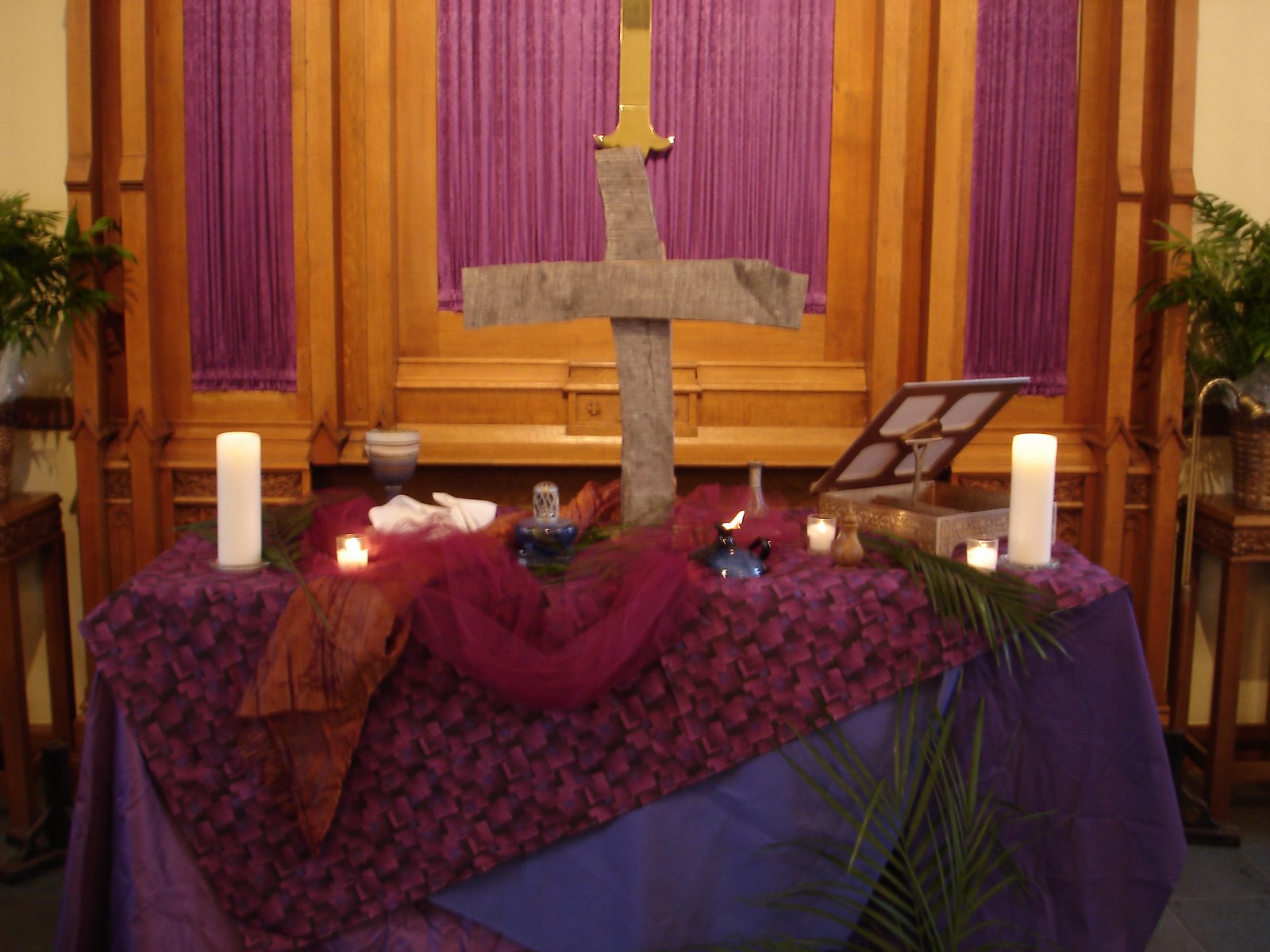
What is This Thing About Wheat?

Scripture Reading: John 12: 24-33 Very truly, I tell you, unless a grain of wheat falls into the earth and dies, it remains just a single grain; but if it dies, it bears much fruit. Those who love their life lose it, and those who hate their life in this world will keep it for eternal life. Whoever serves me must follow me, and where I am, there will my servant be also. Whoever serves me, the Father will honor. “Now my soul is troubled. And what should I say—‘Father, save me from this hour’? No, it is for this reason that I have come to this hour. Father, glorify your name.” Then a voice came from heaven, “I have glorified it, and I will glorify it again.” The crowd standing there heard it and said that it was thunder. Others said, “An angel has spoken to him.” Jesus answered, “This voice has come for your sake, not for mine. Now is the judgment of this world; now the ruler of this world will be driven out. And I, when I am lifted up from the earth, will draw all people to myself.” He said this to indicate the kind of death he was to die.

Do you remember running through the sprinkler when you were kids? You want to do it. You want to feel that cool, refreshing feeling right after you do it. But it’s that first blast of cold, paralyzing water that takes your breath away that you dread and so you put it off. And then, finally, you hold your breath and run through it as fast as you can. That’s almost what we have a tendency to do with the cross. We dread it as we slowly walk toward it, dragging our feet a bit, not really wanting to experience it again—the memories and reliving of the horror, and the violence, and the suffering, and the pain. And as we approach, we then let our minds run quickly through it toward Easter morning.

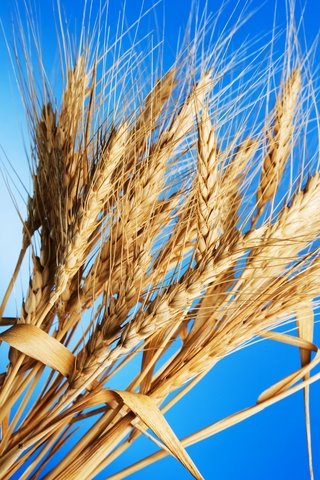
But now is the time for the Son of Man to be glorified. For, as Jesus says, unless a grain of wheat falls to the earth and dies, it remains just single lone grain, worth nothing; but if it dies, it bears fruit and lives on. You see, wheat is known as a caryopsis, meaning that the outer “seed” and the inner fruit are connected. The seed essentially has to die so that the fruit can emerge. If you were to dig around in the ground and uproot a stalk of wheat, you would not find the original seed. It is dead and gone. In essence, the grain must allow itself to be changed.

So what Jesus is trying to tell us here is that if we do everything in our power to protect our lives the way they are—if we successfully thwart change, avoid conflict, prevent pain—then at the end we will find that we have no life at all. He goes on…”Those who love their life lose it, and those who hate their life in this world will keep it for eternal life. Whoever serves me must follow me, and where I am, there will my servant be also. And whoever does this, God will honor.” This is the only time that the Gospel speaks of God honoring someone. And we begin to see the connection unfolding. Whoever follows Jesus through his death, will become part of his everlasting life.

Jesus wanted us to understand not just that he was leaving, not just that his death was imminent, but that this journey to the cross was not just his to make, but ours. Now is the time to walk with Jesus to the cross.

And, yet, we still struggle with the whole meaning of the cross. We still struggle over why Jesus had to die at all. Why couldn’t Jesus just figure out a way out of this whole sordid thing and stay around? The world needed to hear more from him. Because then it just would have stayed a seed. But, you see, because Jesus was willing to die, was willing to be changed; God could raise him from the dead and give fruit to the world.

And the cross…whether you believe that God sent Jesus to die, or that human fear and preoccupation with the self put Jesus to death, or whether you think the whole thing was some sort of colossal misunderstanding…the point of the cross is that God took the most horrific, the most violent, the worst that the world and humanity could offer and recreated it into life. And through it, everything—even sin, evil, and suffering is redefined in the image of God. By absorbing himself into the worst of the world and refusing to back away from it, Jesus made sure that it was all put to death with him. By dying unto himself, he created life that will never be defeated. And in the same way, we, too, are baptized into Jesus’ death and then rise to new life.

This is why we walk this journey toward the cross. This is why we spend time there before waking to the Easter lilies. This is the paschal mystery—that true life comes only through journeys through death where we come to understand who God is for us. Christ is died. Christ is risen. Christ will come again. God has given us a new consciousness and a new way of seeing life and in an act of ultimate divine love, the cross became God’s highest act of Creation. It is God’s recreation of everything. “But if it dies, it will bear much fruit.”

So go forth toward the cross, die to self, and bear much fruit in Christ!

Grace and Peace,

Shelli

Oil and Water


Scripture Reading: John 12: 1-11
Six days before the Passover Jesus came to Bethany, the home of Lazarus, whom he had raised from the dead. There they gave a dinner for him. Martha served, and Lazarus was one of those at the table with him. Mary took a pound of costly perfume made of pure nard, anointed Jesus’ feet, and wiped them with her hair. The house was filled with the fragrance of the perfume. But Judas Iscariot, one of his disciples (the one who was about to betray him), said, ‘Why was this perfume not sold for three hundred denarii* and the money given to the poor?’ (He said this not because he cared about the poor, but because he was a thief; he kept the common purse and used to steal what was put into it.) Jesus said, ‘Leave her alone. She bought it so that she might keep it for the day of my burial. You always have the poor with you, but you do not always have me.’ When the great crowd of the Jews learned that he was there, they came not only because of Jesus but also to see Lazarus, whom he had raised from the dead. So the chief priests planned to put Lazarus to death as well, since it was on account of him that many of the Jews were deserting and were believing in Jesus.

Holy Week has begun. We have walked this road to the cross throughout this Lenten season and now it is upon us. Most of us don’t really know what it is that we’re supposed to do with this week. We have gone through this season hearing its call to repentance, to emptying, to looking at things differently. But, still, the ending is beginning to loom bigger than we imagined it would be. What is it, exactly, that we’re supposed to do this week?

Henri Nouwen tells us that “passion is a kind of waiting—waiting for what other people are going to do.”[i] He claims that all of Jesus’ life leading up to this week—all of the teaching, all of the healing, all of the miracle-making, the welcoming of sinners, the turning of tables in front of the saints, every action that was part of who Jesus was ends in this week of passion. And the reason is that, as Nouwen says, “All action ends in passion because the response to our action is out of our hands. That is the mystery of work, the mystery of love, the mystery of friendship, the mystery of community…And that is the mystery of Jesus’ love. God reveals [Godself] in Jesus as the one who waits for our response.”[ii] This is the week when Jesus stops doing and waits to be handed over. This is the week when Jesus waits on others.

We are not used to a Christ who does nothing. We are, rather, more comfortable when Jesus is showing us how to do what we’re supposed to do as followers. We are not accustomed to such a passive Christ. I looked up the word “passive” in an etymological dictionary. The root is the Latin passiuus. And then, surprisingly enough, it says “See Passion.” The etymological root of passion, the term that we use to describe Jesus’ suffering journey to the cross, is the Latin passionem, or suffering. And it says “See Passive.” The two words are related. The “Passion”, this time of suffering and being “handed over”, is a movement from planned and intentional action to no longer being in control. All of Jesus’ actions are accomplished. It is finished. It is a time of waiting—waiting for others’ response.

In our lectionary Gospel reading for this Holy Monday, we find this passive Jesus. He visits the home of friends, the home of those whom he had served, those for whom he had done things. And, it says, they give a dinner for him. Jesus is the guest of honor. After all the doing, after all the action, after all the stuff, he now spends time with friends. And they serve him. And then the passage tells us that Mary takes a pound of costly perfumed nard, breaks the seal, and lavishly pours it onto Jesus’ feet. Then as the oil runs down his feet and begins to drip to the floor, she wipes his feet with her hair. The whole house is filled with this overwhelming fragrance.

Well, the disciples just couldn’t leave it alone. What in the world was she doing? Here is this man who has worked for years to bring peace and justice to the world, to heal others, to end poverty and oppression and you waste this oil by pouring it out on him! That oil could have been sold. Things could have been done with that money! We could have done great ministry with what you just poured on his feet! But you have wasted it! You have squandered it!
Then Jesus responds. “Leave her alone,” he says. You see, she gets it. She understands. I do not have long to be with you. She knows where I am going. And she responds. This woman loves Jesus. In fact, she loves Jesus so much that she defies the expected and instead pours out the abundance of her life and anoints Jesus for his burial. This is not the time to talk about budgets or the ways things are normally done. This is the time of Jesus’ waiting and her response. As she anointed Jesus, Mary entered Jesus’ Passion and understood what it meant to have a personal relationship with Christ.

There are those in our society that would describe that breakthrough as being “born again”. But that phrase, commonplace and probably overused and misused as it is today, was not even around over a hundred years ago. Instead, the words that were used to describe this coming into who Jesus is was to say that one was “seized by the power of a great affection.” Isn’t that an incredible phrase—to be “seized by the power of a great affection”? You see, we 21st century folks usually think we have it all figured out. We know what we’re called to do to make disciples of Jesus Christ. We live our lives as best we can within the framework of what God wants us to do. And we do what we can for others by reaching out in the name of Christ. All of that is wonderful. But are we truly “seized by the power of a great affection”? Why do you think Jesus did everything that he did while he was on this earth? Was it just to show us what it is we’re supposed to do? No, Jesus was more than merely an exemplary human being put here for us to emulate. Jesus came to reveal God’s love, to show us how much God loves each of us and how much God desires us, to make known once and for all the affection that God has for all of God’s Creation and for us as children of God. Jesus was God made known, Emmanuel.

There is a story from the Sufi mystical tradition of a disciple that comes to an elder for direction.

“Where shall I find God?” the disciple asked the elder. “God is with you,” the Holy One replied. “But if that is true,” the disciple asked, “why can I not see this Presence?” “Because you are like the fish who, when in the ocean, never notices the water.” It is not that God is not with us; it is that we are unaware of that incredible Presence.[iii]

When we finally stop doing what we think we should be doing and listen for that which God is calling us to be we will become aware of that extraordinary Presence that is God. And in that becoming, we enter the Christ-life.

In our faith understanding, the Sacrament of Baptism is the beginning of our life as a Christian, a new life in Christ, the beginning of a journey toward oneness with God, toward the life of Christ. The waters of Baptism remind us of God’s ever-Presence in our lives, of God’s claim on us, and of the great love that God has for us that was revealed in Christ. It is sacramental because it is God’s love made visible for us. Through this sacrament, we enter this journey with God.
In much the same way, Mary poured the oil upon Jesus. The act was sacramental. Mary understood that love. She entered that love. Indeed, she was “seized by the power of a great affection”. And in pouring the oil, she entered Jesus’ Passion. She became part of Jesus’ journey to the cross.

In Baptism, God uses water to make God’s love visible to us. And as Mary poured the oil on Christ, she made her love visible to God. And, do you remember your basic chemistry lesson? If you pour oil into the water, the oil is raised to the top. Oil and water…God uses both to make this incredible love visible to us. And immersed in that love, we will find ourselves “seized by the power of a great affection.”

This is the week when we come to the end of all our doing. This is the week when we walk with Christ through betrayal and suffering and last suppers and final endings. This is the week when we finally realize that we can do nothing else. And on that final day, as the passive Christ is handed over, there is nothing more for him to do other than wait for our response. Who will follow me? Who will come to me with all your misery and your sins, with all your trouble and your needs, and with all your longings to be loved. Who will follow me? Who will hand over their lives just as I have done that you too might be raised to new life? Because it is then that the oil will be poured out for you in much the same way as you are immersed in the waters of your Baptism.

This week is not an easy one to walk. Sometimes we are still not sure what it is that we’re supposed to do. But this week is not about us; it is not about what we do or how we do it; this week is the week that we are called to be “seized by the power of a great affection”, to become one with Christ, to enter Christ’s suffering and passion and waiting, to make our very lives a sacramental journey. And as we come closer and closer to what seems to be a final ending, we will finally be aware that we are never really alone. God calls us. God is waiting for our response.

In the Name of the One who journeys with us to the Cross!

Grace and Peace,

Shelli

[i] Henri J.M. Nouwen, “From Action to Passion”, in Bread and Wine: Readings for Lent and Easter (Maryknoll, NY: Orbis Books f/ Plough Publishing, 2003), 179-185.
[ii] Ibid.
[iii] Joan Chittister, There Is a Season (Maryknoll, NY: Orbis Books, 1995), 14.
From Palms to Silence


Scripture Reading: Mark 11: 1-11
When they were approaching Jerusalem, at Bethphage and Bethany, near the Mount of Olives, he sent two of his disciples and said to them, ‘Go into the village ahead of you, and immediately as you enter it, you will find tied there a colt that has never been ridden; untie it and bring it. If anyone says to you, “Why are you doing this?” just say this, “The Lord needs it and will send it back here immediately.” ’ They went away and found a colt tied near a door, outside in the street. As they were untying it, some of the bystanders said to them, ‘What are you doing, untying the colt?’ They told them what Jesus had said; and they allowed them to take it. Then they brought the colt to Jesus and threw their cloaks on it; and he sat on it. Many people spread their cloaks on the road, and others spread leafy branches that they had cut in the fields. Then those who went ahead and those who followed were shouting,‘Hosanna! Blessed is the one who comes in the name of the Lord! Blessed is the coming kingdom of our ancestor David! Hosanna in the highest heaven!’ Then he entered Jerusalem and went into the temple; and when he had looked around at everything, as it was already late, he went out to Bethany with the twelve.

Today is Palm Sunday. It was glorious this morning! The day was beautiful. While it was a little dark at the early service, by the time 11:00 rolled around, it was sunny with a little breeze. (Not like last year, when the gale-force winds wrapped a Lenten banner around me just as I was rounding the corner into the church! I’m sure I provided quite a show for the passersby on Main Street.) The crowds poured into the sanctuary, palms waving, while the brass ensemble played. We like parades. We like celebrations. Just for a moment, we are at the height of Jesus’ life–his triumphal entry into Jerusalem. Just for a moment, we feel like victory is about to be declared, that our player has won the game, that our beliefs have been proven right. We wave the palm branches and sing the triumphant hymns. And then….silence.

Just as quickly we move from the Palm Processional to the Passion. Just as quickly we move from triumphalism to surrender. We read through the account of Jesus’ Passion, suffering, and death. The palm branches now litter the sanctuary floor. We step on them to stand and sing “O Love Divine, What Hast Thou Done.” And reality sets in as the sheer purple fabric is draped over the cross.

I have not usually liked the idea of the whole Palm/Passion Sunday thing. It has always felt like we were trying to cram a whole week of despair and suffering into a few minutes and get it over with–sort of like swallowing bad-tasting medicine quickly before it causes any real damage to our palate. But I am struck with the rawness of juxtaposing the whole triumphalism thing with the images of hopelessness and despair. Perhaps it makes us wake up and take notice. Perhaps it makes us finally realize the ludicrousness of the way we sometimes lives our lives, of the way we sometimes think about things, in the face of what God is calling us to be, in the face of where God is calling us to follow.

And so we enter this week by moving quickly from triumphalism to silence, from celebrating to listening, from action to waiting, and from feeling justified because we believe the way we believe to the Passion of Christ crucified.

Our hosannas sung, our palms waved, let us go with passion into this week.
It is a time to curse fig trees that do not yield fruit,
It is a time to cleanse our temples of any blasphemy.
It is a time to greet Jesus as the Lord’s Anointed One,
to lavishly break our alabaster and pour perfume out for him

without counting the cost.
It is a time for preparation…

(From “Holy Week”, Kneeling in Jerusalem, by Ann Weems, p. 67.)
So go forth on your journey to the cross and prepare for your Christ!

Grace and Peace,

Shelli

Becoming Human

The time is almost here. In just a few hours, the door to the Divine will swing open and God and all of heaven will burst into the world. If you stop and listen, just for a moment, you can hear the eternal harps in the distance as they approach our lives. Oh, sure, it’s happened before. But can’t you feel it? Doors opening, light flooding in, the earth filled with a new vision of peace eternal. Maybe, just maybe, tonight will be different.

The child in the manger is, of course, no ordinary child, but God Incarnate, the Word made flesh. God took the form of a human–just an ordinary human–a human like you and me–and was born and dwelt with us–still Divine, but in every way human (because you see God in all of God’s wisdom and all of God’s mystery can do that!) This Holy Incarnation was not meant to show us how to be Divine but, rather, how to be human. We see ourselves as “only human”, as if that excuses us from being who God called us to be. But the point is that God calls us to be human, made in the image of God (not like God, but in the image–a reflection of God, Incarnate). Jesus the Christ was born human so that we would know what being human means. And when, like Jesus, we become fully human, our hearts are filled with compassion, connecting us to one another; our eyes are filled with a vision of what God made this world to be; and our lives become holy as they are shaped in the image of God Incarnate. And we, even as humans, can reach out and touch the Divine now that God has burst forth into this world.

On the eve of Christ’s birth, let us open our lives to receive this holy child and open our hearts and our eyes that we might finally know what we are called to become–human, made in the image of God, a reflection and an incarnation of God here on earth. This Christmas, let Christ be born in us. This Christmas, let us become fully human.

O holy Child of Bethlehem, descend to us, we pray;
Cast out our sin, and enter in, be born in us today.
We hear the Christmas angels the great glad tidings tell;
O come to us, abide with us, our Lord Emmanuel!
(Phillips Brooks)

The time is almost here. The door is opening and we see heaven beginning to pour in. Go forth and become human, become who God called you to be.

Grace and Peace on this Night of Nights,
Shelli

Becoming Mystery

The way that God comes into our being is not something for which we can plan or project. Think about it–what if rather than always falling on December 25th, Christmas Day came on different days each year and we weren’t told until after the day that it had happened? How would you prepare for it then? Because, really, that’s the way the first Christmas happened. What if, in the midst of your preparing and your becoming, the time was once again fulfilled, whether or not you were ready? The way that God comes is a mystery, a time fulfilled rather than a time scheduled.

And this day before the eve of Christ’s coming finds us on a threshold between darkness and light, between human and divine, between reality and mystery. As we approach Bethlehem, tired from our journey, there are great hoards around us preparing to be counted. It is dusty and crowded and unwelcoming and we are tired of fighting the journey. But there, there in the north, are the quiet stirrings of a door that is beginning to open, a door through which heaven will pour and through which our humanity will somehow mysteriously taste and experience the Divine. How is this happening? “Because,” as St. John Chrysostom said, “God is now on earth, and [humanity] in heaven; on every side all things commingle. [God] has come on earth, while being fully in heaven; and while complete in heaven, he is without diminution on earth…Though being the unchanging Word, he became flesh that he might dwell amongst us.” [i]

The time is approaching when it will be fulfilled. And the only way for us to enter it is to become mystery and count ourselves among those who reside on that threshold between our lives as they are and the mystery that God holds for us.

Go humbly, humble are the skies,
And low and large and fierce the Star;
So very near the Manger lies
That we may travel far.
(G.K. Chesterton)


So go forth and become mystery!

Grace and Peace,
Shelli

[i] St. John Chrysostom, from “The Mystery”, in Watch for the Light: Readings for Advent and Christmas (Plough Publishing)

Prepare to Be Surprised

I am a planner. I am a planner of the worst possible kind. Not only do I make lists; I have lists that I should make on my lists! And this season is one of the worst when it comes to planning. There is so much that needs to be done! Will I get it all done? You know as well as I do that part of the reason that we make lists is so that we won’t be surprised. We won’t be surprised by forgetting to purchase a gift for someone. We won’t be surprised by not having the necessary ingredients for that special holiday dish. (Yes, last year, I left the croissants that I needed for my holiday bread pudding at my house in the freezer. Have you ever tried to make bread pudding without the bread? I just wasn’t fully prepared so I spent Christmas afternoon running from store to store trying to find someone that was open–and found the store AND the croissants. Whew!) Being surprised is never a good thing, right?

Unless it’s Advent! Isn’t that what we’re working up toward–being surpised? The coming of Christ was planned and anticipated–for centuries. The plan was this: God in all of God’s mighty power would burst forth into the world laying all of our enemies to waste, subduing the powers that be as the winner of a mighty struggle, and taking over the rule of the major cities. Those who followed God would finally be on the winning side. And those who opposed God would be left in ruins. God would be in charge, finally!

And then God surprised us all, sneaking in the back door of a stable or through the darkness and dampness of a grotto, coming quietly in the midst of the great count of citizens, politics and earthly powers in their finest hour, and then…in case we had other plans…coming as a helpless, vulnerable baby born to unknown parents who were only in Bethlehem to be counted. And the surprise of all surprises: those who opposed God were given yet another invitation to God’s promises and God’s hope. You see, God surprised us on that first Christmas. Isn’t that enough for you to prepare to be surpised this year. Things do not go according to our well-laid plans. Thanks be to God!

So go forth and prepare to be surprised!

Grace and Peace,
Shelli

Embracing This Act of Preparation

Our culture tells us to “be prepared” from the time we are children. Even the Gospels hold stories and parables warning against unpreparedness. And in this season, in particular, the threat of being “unprepared” on Christmas morning–without the required number of gifts perfectly wrapped and under the tree, without all of the groceries to make what is certainly an over-abundance of food and treats, and without the house filled with tasteful decorations worthy of a spread in Martha Stewart’s Living–drives most of us who are level-headed throughout the other eleven months of the year into a certain frenzy of fearful shopping and wrapping, as if the Christ Child will not come if we do not trim that last hearth.

But think about what the Gospel is trying to say to us. Jesus never claims that perfection must be met to enter the Kingdom of God. God does not call us to be perfect; God calls us to “go on toward perfection” in a never-ending journey of pursuit that brings us nearer and nearer to the heart of God. It is not an “either-or” phenomenon that leaves us “in” or “out” but rather a walk of preparation throughout one’s life. Jesus’ admonitions to us to “be prepared” did not imply that we would not enter the Kingdom if we were not fully prepared but, rather, that journeying through the preparation itself would enable us to encounter the holy, the sacred, a glimpse of the incredible things to come even now. It does not have to be perfectly in order; it is the journey toward it that brings us closer to God. That is what Advent is about.

So go forth and prepare just for the act of preparing!

Grace and Peace,
Shelli