The Wilderness of Former Things

About to Do a New ThingScripture Text: Isaiah 43: 18-19

 18Do not remember the former things, or consider the things of old. 19I am about to do a new thing; now it springs forth, do you not perceive it? I will make a way in the wilderness and rivers in the desert.


I love old things. They are full of stories and ripe with history. They are real, full of pits and marks from the past. My house is full of antiques and, for want of a better word, “repurposed” antique wanna-be’s. I love history. I love old houses and antique shops and cemeteries. I love connecting with the past and those that came before me. I love old churches and especially those that honor and celebrate their rich histories. Our church just refabricated the historic stained glass windows in the sanctuary and the whole nave looks like it has been woken up. See, old things are not the problem; old ideas are not the problem; old notions of who God is and who we are before God are not the problem. The problem comes about when we find ourselves stuck with “the way it has always been”, not wanting to bring the past to life, wake it up, repurpose it so that it has life for us now and beyond. The problem comes when we find ourselves holding on, wandering in the wilderness of former things.
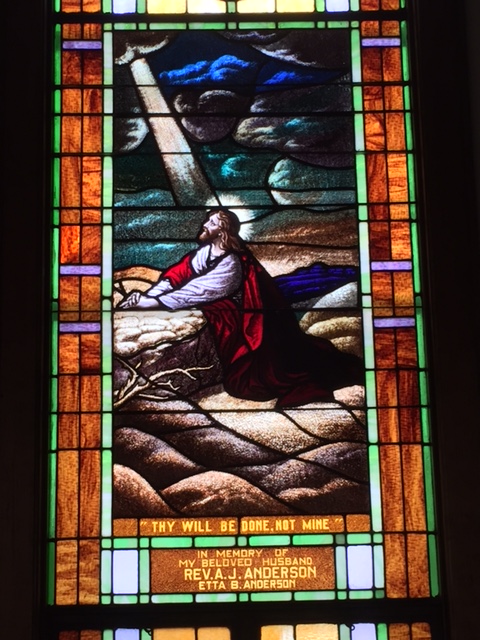
Gethsemane Window, First United Methodist Church, Cleveland, TX


I don’t think God wants us to forget the past. It is part of us. It is coursing through our DNA as we speak, making us who we are. It is what taught us to breathe, taught us to live, taught us to be. We always carry with us the echoes of what God created before. They are our beginnings. But beginnings are not meant to be held onto. It is to our detriment to pad our lives with the past, to clutch at the beginnings as if they are the end-all, and to miss the new thing that God is doing, the repurposing of the old into the new.

"The Good Shepherd Window", First United Methodist Church, Cleveland, TX
“The Good Shepherd Window”, First United Methodist Church, Cleveland, TX


Tradition is not a bad thing. It is a wonderful thing. It means to come into a conversation that began long before we got here and that will continue long after we are gone. It means realizing that there was something before we got here that is of value. It’s just not finished. We have to enter the conversation, embrace its riches, and then find what Truth is finally ready to be heard. Edna St. Vincent Millay said that “[Humanity] did not invent God, but developed faith to meet a God who is already there.” But the conversation must continue so that we can see the newness that God is doing as Creation is repurposed and Truth becomes fuller.


Lent is known as a season of the wilderness, a season of wandering into the unknown, of being vulnerable, of letting go. Maybe it’s not so much that we are entering wilderness, but that we are exchanging one wilderness for another, leaving the wilderness of former things behind and journeying on the way that God has made in the wilds of the new and untamed wilderness. But if we do things the “way we’ve always done it”, we will miss the newness springing forth. The wilderness is the place to begin but the beginning cannot be held for more than a moment or it is lost in the past.


Home is where your story begins. (Annie Danielson)


FOR TODAY: Begin again. Embrace the past and repurpose it as new.  On this 20th day of Lent, let your journey turn toward the new thing that God is doing.


Grace and Peace,

Shelli
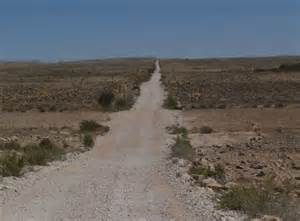
Under Construction in the Wilderness

Wilderness Road (Negev desert)Scripture Text: Isaiah 40: 3-5

3A voice cries out: “In the wilderness prepare the way of the Lord, make straight in the desert a highway for our God. 4Every valley shall be lifted up, and every mountain and hill be made low; the uneven ground shall become level, and the rough places a plain. 5Then the glory of the Lord shall be revealed, and all people shall see it together, for the mouth of the Lord has spoken.”


So, here we wander in the wilderness, hoping against hope that it will all be over soon, that things will finally, once and for all, get back to normal. So, what IS normal? Is it places that are not the wilderness? It is times that are not now? Is it ways of being that were before? Here, the exiles, just released from captivity, dripping with newfound freedom, are beginning to return. They are making their way through the wilderness, headed toward “getting back to normal”. But their city and their way of life lies in ruins. They can’t just go back and pick where they left off. They are looking for comfort, for solace, for a promise that God will put things back the way they were before.


But that is not the promise that has been made. Rather than repair, God promises re-creation; rather than vindication, God promises redemption, and rather than solace, God promises transformation. God is making something new—lifting valleys, lowering mountains, and, ultimately, when all is said and done, revealing a glory that we’ve never seen before. The truth is, there is no going back. So what is normal? Perhaps “normal” is newness, going forward, becoming re-created. What if THAT was normal?


I mean, have you ever really witnessed a highway being built? (If you haven’t, you don’t live where I do!) It’s not easy. It takes preparation and time and lots of heavy lifting. You have to recruit people to do it, you have to clear the way, you have to show people how to navigate through it. And once in a while (or every other week-end, as the case may be where I live), they have to close the road so that it can be made new. See, lifting valleys and lowering mountains is not an easy feat. God is not a magician. (Oh, sure, God could raise and flatten with the wave of a hand, I’m sure, but what fun is that?) In fact, I’m thinking the world, all of Creation, is even now groaning and shaking with all the movement that is happening, wanting at its very core to burst forth into being, to ignore God’s prodding to wait and be patient. And, no, it will never be like it was before. There is no going back. There is never any going back. In this life of faith, “normal” is newness, it is going forward through the wilderness toward a new normal.


At the end of the exile, the people realized that their former lives did not exist. And so, in this new normal, they had to rethink and recast their image of God. They had to find God again in the midst of a strange, new world. They had to discover that God was not in the repair business, that God was not there to clean up their mess and fix their woes, that God loves us too much to put things back the way they were before.


We are no different. This wilderness journey that we are on is not a “break” from our lives. Lent is not a season of denying ourselves and giving up sweets and talking about sin and suffering and repentance over and over and then sliding into to Easter morning with a “whew, glad THAT’S over…now we can go back.” If that were the case, there would be no point. If that’s what you think, there is a chocolate bunny that you can have right now! See, the deal is, the wilderness changes you; it changes your life; it changes the world. God is doing something new. There is a new normal. You can never, ever go back. But you CAN go home again. THAT’S what the wilderness teaches you.


If you always imagine God in the same way, no matter how true and beautiful it may be, you will not be able to receive the gift of the new ways he has ready for you. (Carlos Valles)


FOR TODAY: Think about your Lenten practices that you are doing. What new normal is coming to be?    


Grace and Peace,

Shelli