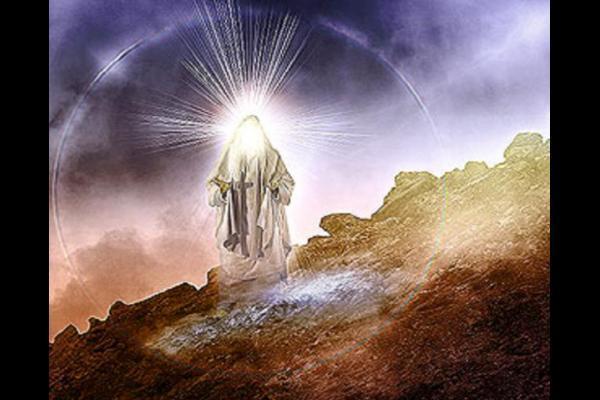
LENT 5B: Re-Ordering

Lectionary Passage:  Hebrews 5: 5-10
So also Christ did not glorify himself in becoming a high priest, but was appointed by the one who said to him, “You are my Son, today I have begotten you”; as he says also in another place, “You are a priest forever, according to the order of Melchizedek.” In the days of his flesh, Jesus offered up prayers and supplications, with loud cries and tears, to the one who was able to save him from death, and he was heard because of his reverent submission. Although he was a Son, he learned obedience through what he suffered; and having been made perfect, he became the source of eternal salvation for all who obey him, having been designated by God a high priest according to the order of Melchizedek.

The order of who?  Melchizedek is mentionted twice in the Old Testament Scriptures–once in Genesis and then again in Psalm 110.  He was a priest of the Most High in the time of Abraham.  The name means “righteous king” or “King of Righteousness.”  Some have claimed that these passages refer to a literal human; others claim that it is a priestly order superior to even the Levitical priests.  But it’s not an apostolic designation that is handed down through the church.  It is an eternal one.

Essentially, here, it probably refers not to a “priestly” order of the world but rather an ongoing continuation of God’s relationship in humanity.  In Genesis, Melchizedek came to the side of Abraham when Abraham needed help the most.  And Abraham is blessed and offered bread and wine.  This is God’s plan.  God desires to be in relationship with humanity. And as part of that relationship, we, too, are brought into this ongoing priesthood.  We, too, are blessed and offered bread and wine.  And as priests of this highest order, we serve each other.  We enter relationship with humanity just as God has entered humanity in the form of Christ.  This is the order into which we are born, into which God brings us to be.  And this is the order that we fully enter, relinquish our perceived self, and emerge new and recreated.  This is the highest order of the priesthood.  And this is the one to which we are all invited.

Iraneus (2nd century bishop in Gaul) is supposed to have claimed that “the glory of God is humanity fully alive.”  What does that mean?  What does that mean to be “fully alive”?  I think it means that we embrace everything that God has given us to make our lives be what they are called to be.  That means that we all have gifts, that God calls us all, that we all have a part in building and being the Kingdom of God.  Our only hope of becoming “fully alive” is a humanity, a whole humanity, “fully alive.”

But this is dreadfully hard for us.  Face it–we are a hierarchical people.  We want whatever is due us.  We operate based on tenure rather than gifts, youth rather than wisdom, and power rather than calling.  But, despite what we try to project onto the Creative force that is God, God is not hierarchical.  There are not levels of God’s love or classes in God’s Kingdom.  And, Dante notwithstanding, I don’t even think that there’s an “either / or”.   (What if we someday find that Judas and Brutus are right there with the rest of us?)

The thing is, this “order of Melchizedek” is not hierarchical.  It is an order of those who are called.  It is an order of all of us.  We are all moving to perfection in Christ.  And perhaps the goal is not to reach the height of it all, but to reach the point at which we are fully alive, the point at which we realize that we are part of a whole and the whole is the Kingdom of God.  It is a new order, something we’ve never seen before.  So open your minds and open your hearts and quit trying to get ahead!

So on this twenty-fifth day of Lenten observance, think about what it means to be “fully alive”.  What is is that “gives you life”?  And what is it that gives your neighbor life?  Do something to bring life!

Grace and Peace on this Lenten Journey,

Shelli
Impersonalization of Faith

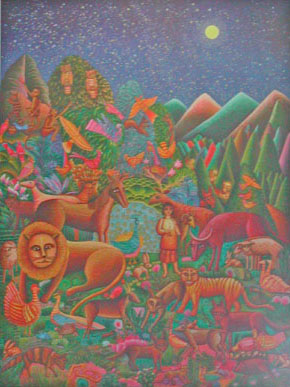
“The Peaceable Kingdom”
John Swanson, 1994

This journey of faith is a personal one, right?  Isn’t that what we’re told?  We’re suppose to find some way to connect to God, some way to find our own path to God, some way to express our own faith.  We are told that we’re supposed to have a personal faith in Jesus Christ.  And so we spend our time to trying to find our way, trying to find that one thing or that one way that makes us feel the most connected to God, makes us feel like we’re finally once and for all getting this faith thing figured out.

But ARE we called to a personal faith?  ARE we called to “find our own way?  I thought we were called to make disciples, to love one another, and to put down our lives.  Those don’t really sound all that individual and personal, when you really think about it.  They sound like community.  They sound like connection.  They sound like Communion.  We are called to be the Body of Christ.  It’s hard to do that by yourself.  I really do think that God envisioned us together.  Perhaps God even envisioned this bantering and this arguing and even this war of words and wits that so many of our religious denominations (including my own United Methodist one) are experiencing.  Maybe it’s part of what we’re meant to do.  It’s painful; it’s hurtful; it sometimes pulls us apart. 

We all have our own vision of what God’s Kingdom looks like.  I know I do.  I envision a world where all of us are welcomed, all of us are fed, and all of us are valued for the gifts that God has placed in each of us.  But do I?  Do I welcome those with whom I disagree?  Do I feed those with whom I am uncomfortable?  And do I truly value those gifts that God has placed in those persons that have a vision that is different from mine?  I don’t think that unity is about sameness.  I’ve come to think that it’s not even about agreement.  Unity has more to do with recognizing that the Kingdom of God, the Body of Christ is bigger than any one group, or one view, or one way of experiencing God.  It has to do with leaving the door open, with sensing that there’s something more, something beyond what we think and what we believe.  And together in faith, we will have to discern when we are called to be patient and when we are called to be persistent, when we are called to be open to moving and when we are called to stand firm, and, finally, when we are called to go into the wilderness, into the unknown and face our demons and prepare ourself for what is to come, and when we are called to go as a people to Jerusalem.  Perhaps this Lenten journey is a call not to strengthen our faith but to impersonalize it and realize that we are called, together, to be the Body of Christ.

So on this twenty-fourth day of Lenten observance, get out of yourself.  Impersonalize your faith a bit and open yourself to someone else on this journey.

Grace and Peace on this Lenten Journey,

Shelli

LENT 4B: But…

Lectionary Passage:  Ephesians 2:1-10
You were dead through the trespasses and sins in which you once lived, following the course of this world, following the ruler of the power of the air, the spirit that is now at work among those who are disobedient. All of us once lived among them in the passions of our flesh, following the desires of flesh and senses, and we were by nature children of wrath, like everyone else. But God, who is rich in mercy, out of the great love with which he loved us even when we were dead through our trespasses, made us alive together with Christ—by grace you have been saved— and raised us up with him and seated us with him in the heavenly places in Christ Jesus, so that in the ages to come he might show the immeasurable riches of his grace in kindness toward us in Christ Jesus. For by grace you have been saved through faith, and this is not your own doing; it is the gift of God— not the result of works, so that no one may boast. For we are what he has made us, created in Christ Jesus for good works, which God prepared beforehand to be our way of life.

There’s actually two parts to this passage.  There’s a “before” and there’s an “after”.  BEFORE you were dead…and AFTER you weren’t.  That’s probably enough.  We can just stop there. 

BUT the writer of this letter (who is more than likely not the Apostle Paul but rather a later follower or disciple of Paul’s) seems to be really focused on continuing this separation between this world and God, between the “sinful” world and God’s promise of grace and life.  Paul had introduced the notion of being justified by grace through faith, the notion that God was a redemptive God, that it was a process by which we traversed the experience of this world and along the way encountered God.  BUT, here, that word “saved” appears, as if it’s past tense, as if it is some badge of honor that we earn and wear as we continue to be forced to live in this sin-filled world in which we live.  Somewhere along the way eschatology became realized, “already”, rather than something to which we look and live into.

Now keep in mind that this letter was probably written in the late first century.  Jesus had come, died on the cross, and the Resurrection on which everything that is “Christian” is based had happened.  And Jesus had promised to return.  That had been imminent for Paul.  BUT that hadn’t happened yet.  The first century Christian followers (it still wasn’t “Christianity”, per se, the way we think of it today) were wondering if perhaps they had misunderstood, perhaps they had gotten the whole thing wrong.  So the emphasis for the writer of Ephesians (as well as others), was a notion of echatology that had already happened, an emphasis on the crowned Jesus sitting at the right hand of God.  And for those of us who are still mired in the throes of worldly evil and worldly despairs, there became a separation, a dualism that was put into place that pretty much exists even today.  So many of us live in this world, burdened by sin, and hope against hope that God will swoop in and save us. 

Really?  Is that it?  What happened to “God did not send the Son into the world to condemn the world, BUT in order that the world might be saved through him.“?  (But…but…but) God’s vision of the Kingdom of God is not to shun the world or even to rid us of all things worldly.  God’s vision of the Kingdom of God is to recreate the world into what it is called to be–BUT the whole world, not the ones who follow the rules or the ones who are “good”, but everyone.  So in this life of faith, we do not magically crossover to being “saved” from being “unsaved” and then sit back and wait for God to pluck us out of our miserable existence.  Rather, we yield to new meanings and new circumstances as God recreates our lives into Life and brings about the fullness of the Kingdom of God throughout this wonderful created world in which we live.

That’s what Lent is about–new meanings and new circumstances.  Maybe it’s about dropping the “but” in life.  God created the life that each of us has.  Why would God call us to leave it behind?  Rather God is recreating it as we speak, bringing it into being, into the image that God envisions for it.  You know, if we look at things with the eyes of a world where God is not, a world that waits for God to return, there is always a “but”;  BUT if we look at all of Creation with the eyes of faith, with the eyes of those who believe in a God who came into our midst to show us how much we are loved, everything has an AND.

On this nineteenth day of Lenten observance, look around you.  Where are you being called to surrender to new meanings in this life that God has created?

Grace and Peace on this Lenten Journey,

Shelli

Lent 3B: Everybody Plays the Fool

Lectionary Text:  1 Corinthians 1: 18-20 (21-24) 25
For the message about the cross is foolishness to those who are perishing, but to us who are being saved it is the power of God. For it is written, “I will destroy the wisdom of the wise, and the discernment of the discerning I will thwart.” Where is the one who is wise? Where is the scribe? Where is the debater of this age? Has not God made foolish the wisdom of the world?..For God’s foolishness is wiser than human wisdom, and God’s weakness is stronger than human strength.

In this Season of Lent, as we come closer and closer to the cross, we get a better and better sense of its meaning.  You know, Paul’s really the only one that really ever dared to speak of the foolishness of the Cross, of the foolishness of God.  And he’s right, because in terms of the world, the Cross is utter foolishness.  The world says “mind your own business”; Jesus says “there is no such thing as your own business”.  The world says “buy low, sell high”; Jesus says “give it all away”.  The world says “take care of your health”; Jesus says “surrender your life to me”.  The world says “Drive carefully—the life you save may be your own”; Jesus says “whoever would save his life will lose it, and whoever loses his life for my sake will find it.”  The world says “get what you are due”; Jesus says, “love your neighbor as yourself”.

In his book, The Faces of Jesus, Frederick Buechner says that “if the world is sane, then Jesus is mad as a hatter and the Last Supper is the Mad Tea Party…In terms of the world’s sanity, Jesus is crazy as a coot, and anybody who thinks he can follow him without being a little crazy too is laboring less under a cross than under delusion.” (Buechner, The Faces of Jesus, p. 61)  Think about it.  It is really pretty ludicrous.  In fact, it’s probably downright absurd.  Here in this season, we are called to enter Christ’s suffering, called to follow Christ to the Cross.  Are we nuts?  That could kill someone!

And yet, there…there up on the altar every single Sunday is that beautiful gleaming cross.  Yeah, we all have them.  We polish them, we wear them, and we hang them on our walls.  (Have you SEEN my cross collection in my office?)  In fact, I think I remember seeing one on top of a cupcake the other day. (You know, I guess you can put anything on top of a cupcake!)  But maybe sometimes we clean it (the cross, not the cupcake) up too much.  Maybe we have forgotten the stench of death emanating from it or the sight of a mangled body hanging from it.  Maybe we have forgotten the foolishness of it all.  Maybe it is just too much for us.  After all, we’re good Methodists, people of the “empty cross”.  But it’s NOT empty; it’s full of life–life born from death, life recreated from despair and hopelessness and the end of all we knew.  But this promise of life did not just pop out of a cupcake.  It did not just appear in the midst of an array of carefully-placed lilies one Easter morning.  God took something so horrific, so dirty, so unacceptable and recreated it into Hope Everlasting.  Daniel Migliore calls it God’s greatest act of Creation yet.  But in terms of what we know, what we expect, even what we deserve, it is an act of utter foolishness.  Who writes this stuff?  In terms of this world, it is fool’s gold; but in terms of God’s Kingdom coming into being, it is the Gold of Fools because it takes us and turns us into the wise.  But perhaps wisdom is not about worshipping a gleaming, pristine cross but rather looking at an instrument of death and seeing the life it holds.  I know…none of it makes sense.  If it all made sense, we wouldn’t need it at all.

And, truth be told, the Scriptures are full of accounts of the wise and powerful ones mocking and getting mocked, never really understanding this lowly carpenter’s son from a no-name town.  But notice that it is the ones who are considered fools–the outsiders, the shunned, the ones who do not measure up to society’s standards–that get it.  So, maybe you have to be a fool. Go ahead.

Everybody plays the fool, sometime,
There’s no exception to the rule, listen baby,
It may be factual, it may be cruel, I ain’t lying,
Everybody plays the fool.
How can you help it, when the music starts to play
And your ability to reason is swept away
Oh, heaven on earth is all you see, you’re out of touch with reality
And now you cry, but when you do, next time around someone cries for you.
Everybody plays the fool, sometimes,
There’s no exception to the rule, listen baby,
It may be factual, it may be cruel, I ain’t lying,
Everybody plays the fool.
(K. Williams, R. Clark, J.R. Bailey, songwriters

http://www.youtube.com/watch?v=8Ni6iB3thsg

So, continuing with our act of giving up so that we can take on, on this thirteenth day of Lenten observance, do something blatantly foolish.  Give up needing to have a life that makes sense.  Feel the freedom of being recreated.   

Grace and Peace on this Lenten Journey,

Shelli

LENT 3B: Tablets From the Sky

“The Ten Commandments” Movie (1956)

Lectionary Passage:  Exodus 20: 1-3 (4-6) 7-8 (9-11) 12-17
Then God spoke all these words: I am the Lord your God, who brought you out of the land of Egypt, out of the house of slavery; you shall have no other gods before me…You shall not make wrongful use of the name of the Lord your God, for the Lord will not acquit anyone who misuses his name. Remember the sabbath day, and keep it holy….Honor your father and your mother, so that your days may be long in the land that the Lord your God is giving you. You shall not murder. You shall not commit adultery. You shall not steal. You shall not bear false witness against your neighbor. You shall not covet your neighbor’s house; you shall not covet your neighbor’s wife, or male or female slave, or ox, or donkey, or anything that belongs to your neighbor.

Things were hard.  Here they were in the middle of the wilderness, hungry, tired, struggling, quarreling, and wondering what in the world they were doing here.  Until now, they had no real identity, no purpose for being here, no point to life.  But this is the point where that all changes.  This is the point at which their lives and their long, horrendous journey become meaningful.  And God gives them a covenant.

Now, contrary to the name of this post, I’m pretty sure that the Ten Commandments did not just drop out of the sky.  It is much more likely that these specific laws were selected from among the gathered moral and social laws of generation upon generation.  In essence, they grew out of a people’s understanding about God and their own relationship with God.  The people are first reminded that God has already saved them before, bringing them out of slavery, bringing them into relationship with God.  But you can’t help noticing that these commandments are formative of who one is before God and how one lives in response to God.  The first four commandments related to one’s relationship with God and the remaining six have to do with the relationship between human beings.  It is really very simple:  You shall love the Lord God with all your heart, and with all your soul, and with all your mind. (with all that you are, with every essence of your being)  And…you shall love your neighbor as yourself.

But in our modern-day society, there are those who have tried to make these words “law” in the judicial sense, simply by displaying them in courthouses or public buildings.  But they are missing the fact that these are not laws to obey but the natural way that we are called to respond to the freedom of God.  In fact, these laws, unlike many others, do not sanction a certain type of government or a specific king.  Rather than dictating what we should do, they depict who we are as a people of God.  They are less about behavior than they are about identity—who God is, who the people are, and who we are as people of God.  It is about how we relate to God, how we relate to each other, and, even, how we provide sustenance and nourishment for our faith journey.  And regardless of whether or not we believe they actually dropped out of the sky, they are like manna in the wilderness, providing sustenance and life.  Think of them as declarations of freedom to become who we are called to be, rather than a set of rules or regulations that force us into becoming what someone else wants us to be.

Now, admittedly, I don’t think they belong on the courthouse lawn or on the walls of a schoolroom.  I think they’re bigger than that and I don’t think they can be contained.  They are, yet again, the very breath and essence of the God who dances with us rather than holds court over us to make sure we follow the rules.  The Decalogue is, once again, God with us.  And this Season of Lent is not about following the rules or being burdened with regulations. It is about experiencing the freedom of this God who dances with us—this one God, who, alone, drives our life with a Spirit of steadfast love and the integrity of respect; this one God who offers us rest and reflection that we might delight in Creation and that we might enjoy the best that it has to offer; this one God who knows that we can only understand the love we are given if we love in return, if we honor the ones from whom we came, if we honor life and love and all of Creation; if we are honest with ourselves and with each other, and if we want the very best for our brothers and sisters.  In this way we will understand this God who offers us life and all that it entails.  Hmmm…that’s fairly far-fetched for us.  Maybe it WAS written on a tablet from the sky.

So, continuing with our act of giving up so that we can take on, on this eleventh day of Lenten observance, let go of needing to have it all defined, of needing to have narrow rules that outline our moral and societal standards, and begin to live your life loving God and loving neighbor in the way that God calls you to live.   
Grace and Peace on this Lenten Journey,

Shelli

The First Day: And Heaven and Nature Sing!

Joy to the World , the Lord is come!
Let earth receive her King;
Let every heart prepare Him room,
And Heaven and nature sing,
And Heaven, and Heaven, and nature sing.

Joy to the World, the Savior reigns!
Let men their songs employ;
While fields and floods, rocks, hills and plains
Repeat the sounding joy,
Repeat, repeat, the sounding joy.

No more let sins and sorrows grow,
Nor thorns infest the ground;
He comes to make His blessings flow
Far as the curse is found,
Far as, far as, the curse is found.


He rules the world with truth and grace,
And makes the nations prove
The glories of His righteousness,
And wonders of His love,
And wonders, wonders, of His love.

(Isaac Watts, 1719)

The day has dawned!  Sometime in the night, God tiptoed into the world and made a home.  And the world will never be the same again.  Most of us barely noticed.  Most of the world wakes this morning and goes on with their lives.  That’s OK.  If God had wanted fanfare, then I supposed God would have come with a bit more flourish and drama.  But instead, God enters as one of us, quietly slipping the Divine into our midst with as little noise as possible.  (Although I suppose it’s hard to enter quietly with a multitude of angels in tow!)

When Isaac Watts first wrote the familiar Christmas carol “Joy to the World”, he didn’t mean for it to be a carol at all.  The words were originally written to celebrate the triumphant second coming of Christ rather than the birth that we celebrate this morning.  I think that’s the reason it works, though.  God’s coming into the world is not merely something that happened more than 2,000 years ago.  Today is not the celebration of the anniversary of Jesus’ birth as if it is some sort of historic relic that we hold; rather, today–THIS day–IS the coming of God into our midst, the realization that even now, Heaven is spilling into our lives, making a home, and Heaven and Nature are singing together.

God comes quietly, tiptoeing into our lives each and every day of our existence.  A new Light has dawned and every day is Christmas!  So when the Holy and Sacred dawn in our life, are we called to join in loud acclaim, or are we called to silently open our our lives and let the Divine spill in?  With all respect to Mr. Watts, I’m not a big watcher of the “Second Coming” of Christ.  I don’t know what that looks like and the Scriptures are not that specific about it.  I think the point of Christmas is that the Lord is come!  God came quietly into our world as the Christ child more than 2,000 years ago.  It was the First Day of the new dawn.  And the Light has been rising each every day since.  And for every heart that quietly opens and makes room for God to tiptoe in and make a home, the Light becomes brighter.  Rather than waiting for God’s coming, let us see that God is here.  Let us see that every day is Christmas.  (And, along the same lines, perhaps every day is the triumphant coming for which we are looking until God’s Kingdom and the recreation of all is complete!)  Joy to the World!  The Lord is come!

The Lord is come!  Let us now go and see this thing that has taken place!


On this First Day of Christmas, open the gift of the Holy and the Sacred, the gift of the Christchild and then open your heart that you might prepare room for God to come each and every day!

Merry Christmas!

Shelli     

For the Sake of the World

Mary and Joseph have been traveling for a couple of days.  It’s so hard.  The days are sweltering; the nights are cold.  The wind hasn’t stopped.  It’s just that time of year.  Why are we doing this?  Why are we trying so hard to do the right thing?

The truth is, “God With Us? ” is just sometimes a little uncomfortable.  How can we comfortably live our lives with Emmanuel hanging around?  I mean, really, what are we supposed to do?  I saw a bumper sticker several years ago that said, “God is coming; Look busy!” You laugh (because, granted, it’s funny!), but isn’t that what many of us think deep down? No matter what we say intellectually (that God is with us, that God is everywhere, that God is everything), the truth is that we STILL sort of think of God as some sort of far-away supervisor that is “up there” keeping score of our lives. 

Maybe that’s the point!  Maybe Emmanuel, God With Us, means that we ARE to get busy, that we ARE supposed to do something.  Maybe God just got tired of being relegated to scorekeeper and wanted to show us how to play the game!  The miracle of God’s coming is not about a manger, or a star, or a baby.  It’s not about whether or not Mary was a literal virgin or not! (Really, does it matter that much?) And it’s DEFINITELY not about making sure that we buy each person the same number of presents!  The miracle of God’s coming is that the Divine, conceived as removed and secure from the muck of the world, poured into our midst.  God came that the world might change and that we might change along with it.

So do I know Jesus Christ as my personal savior?  (OK, I’ll probably get in trouble here!)  God didn’t come in the form of Jesus to be my brother, or my friend, or even my personal savior.  God came for the sake of the world.  God came bursting into the struggles of this world so that people like me would wake up, recollect myself, and go forward to do what God calls me to do.  God came that we might be for the other.  In all truth, the meaning of Emmanuel, God With Us, is that God’s coming means that it is time for us to go to others, to the world, to wherever God is calling us to go. God’s coming is our call to going.  We hear it over and over in the Scriptures that will come after this story as the child grows and enters ministry–“rise, take up your bed and go home,” “you give them something to eat,” “love your enemies,” “let your light shine,” “love one another,” “take, eat,” “they know not what they do.”  These are as much a part of the Christmas story as “in those days, a decree went out…”, or “laid in a manger,” or “no room in the inn.”  In fact, this is the way that Emmanuel comes over and over and over again.  God came to us as “fully human” and yet still remains as “fully divine.”  Both are made in the image of God, the image of the God’s unfailing and unfathomable grace in the world.

So, is Jesus my personal savior?  For the sake of the world, I pray so.  It’s not about being on my best behavior; it’s about birthing the Savior of the world into the world for the world. 

Lift up your heads, ye mighty gate; behold the King of glory waits;
the King of kings is drawing near; the Savior of the world is here.

Fling wide the portals of your heart; make it a temple, set apart
from earthly use for heaven’s employ, adorned with prayer and love and joy.

Redeemer, come, with us abide; our hearts to thee we open wide;
let us thy inner presence feel; thy grace and love in us reveal.

Thy Holy Spirit lead us on until our glorious goal is won;
eternal praise, eternal fame be offered, Savior, to thy name.

(Georg Weissel, 1642, trans. by Catherine Winkworth,, 1855)
 
God is coming!  Give yourself the gift of being God With Us, of being God in the world!  Give yourself the gift of making Jesus your personal Savior by being Christ for the sake of the world. 

Grace and Peace,

Shelli