Advent 2A: Troublemaker

Mandela
Nelson Mandela
(1918-2013)

In those days John the Baptist appeared in the wilderness of Judea, proclaiming, 2“Repent, for the kingdom of heaven has come near.” 3This is the one of whom the prophet Isaiah spoke when he said, “The voice of one crying out in the wilderness: ‘Prepare the way of the Lord, make his paths straight.’” 4Now John wore clothing of camel’s hair with a leather belt around his waist, and his food was locusts and wild honey. 5Then the people of Jerusalem and all Judea were going out to him, and all the region along the Jordan, 6and they were baptized by him in the river Jordan, confessing their sins.  7But when he saw many Pharisees and Sadducees coming for baptism, he said to them, “You brood of vipers! Who warned you to flee from the wrath to come? 8Bear fruit worthy of repentance. 9Do not presume to say to yourselves, ‘We have Abraham as our ancestor’; for I tell you, God is able from these stones to raise up children to Abraham. 10Even now the ax is lying at the root of the trees; every tree therefore that does not bear good fruit is cut down and thrown into the fire. 11“I baptize you with water for repentance, but one who is more powerful than I is coming after me; I am not worthy to carry his sandals. He will baptize you with the Holy Spirit and fire. 12His winnowing fork is in his hand, and he will clear his threshing floor and will gather his wheat into the granary; but the chaff he will burn with unquenchable fire.”

Oh, John!  Shhh!  Really, you’re causing problems.  Why are we reading this during Advent?  What happened to Mary?  What happened to Joseph?  What happened to that wonderful story of the journey to Bethlehem leading up to the Holy Birth?  Well, the truth is, John was just a troublemaker.  He came onto the scene with his outlandish dress and his unconventional diet and his loud, brash behavior and his ideas that went totally against the establishment.  This really does not fit with the season, don’t you think?  Yeah, John was a troublemaker.  John was preaching something that the world had not ever heard, preaching something that most did not want to hear, preaching something that could shatter and take down what we knew.  Shhh!  Really, you’re causing problems.  Really, you’re truly a troublemaker.

Fast forward…On July 18, 1918 in the village of Mvezo on the banks of the Mbashe River in Transkei, South Africa, was born a child.  He was named Rolihlahla.  In the Xhosa language, the name means “pulling the branch of a tree,” but more commonly is translated as “troublemaker”.  Attending a Methodist school as a child, he was given the English name of “Nelson”.  And today…today is the end of an era as Nelson Mandela passed away.  He was not always who he was.  Early on, he was brash and impatient and even prone to violence.  Born into an almost aristocratic clan, he was brought up to despise the white people that shunned him.  But as he grew, he realized that his calling was not to hate the whites but to hate the system, the establishment, that separated him from them.  And so he began a lifetime journey of change, speaking something that the world had not ever heard, speaking something that most did not want to hear, speaking something that could shatter and take down what we knew.  Shhhh!  Really, you’re causing problems.  Really, you’re truly a troublemaker.

The world is gathering as I write this, standing in moments of quiet silence, honoring Mandela, remembering, standing on the edge of a new era, hoping that the change will continue and on some level afraid that it will.  Mandela’s beginning would carry him through years of imprisonment from which would emerge one of strength and calm with a playful bend and a resolve toward non-violent revolution.  The world is better because he walked among us.  His legacy is one of peaceful resistance, one of change.

Although his life was cut short earlier on, I’m not convinced that John was that unlike Mandela.  (OK, probably Mandela didn’t eat locusts.  I don’t know.)  In very different ways and in very different contexts, both stepped forward and banged the door of the establishment, daring to disturb the sleeping giants of acceptable society and insert themselves as instruments of change.  Both were troublemakers, shaking the walls that had been so carefully built around their lives, refusing to be silent in the face of injustice, in the face of the acceptance of that which flies in the face of change.

Perhaps Advent is the time that calls troublemakers.  Perhaps it is a time that makes us uncomfortable enough to think about another way of being, another way of doing things, another way of life.  Perhaps it is that for which we are getting ready in this long season of waiting.  At the end of the day, most tributes would pray that Nelson Mandela rest in peace.  Do you think that’s really what he would want?  I think that he would much rather that we keep shaking the walls and banging the doors and knocking down those systems that are unjust and unfair.  I think he and John would both be much more pleased with us becoming troublemakers, with our awakening.  Thanks be to God!

There is nothing like returning to a place that remains unchanged to find the  ways in which you yourself have altered. (Nelson Mandela)

Reflection:  Where do you need to be a troublemaker?  Where are you called to be an instrument of change?

Grace and Peace,

Shelli



Waiting For Each Other

waitingPassage for Reflection:  Isaiah 30: 18-20

18Therefore the Lord waits to be gracious to you; therefore he will rise up to show mercy to you. For the Lord is a God of justice; blessed are all those who wait for him. 19Truly, O people in Zion, inhabitants of Jerusalem, you shall weep no more. He will surely be gracious to you at the sound of your cry; when he hears it, he will answer you. 20Though the Lord may give you the bread of adversity and the water of affliction, yet your Teacher will not hide himself any more, but your eyes shall see your Teacher.

So, what are we supposed to be doing while we’re doing all this waiting?  I think that Advent may be the Master Teacher in waiting, dangling unlit candles each week and angels coming to a young girl and a world that is not ready.  And, of course, the rest of the world decorates the Christmas trees and covers the houses with lights and pressures us to get everything done (Hurry, hurry, hurry…Cyber Monday-Tuesday-Wednesday-Thursday is almost over!!!).  But Advent quietly calls us to wait.  OK, which is it?  Do we wait or do we follow that vision of God and change the world, the vision that has been in front of us all this time?

There’s our problem.  The act of waiting to which we are called, the waiting that Advent teaches us over and over again, year after year, is not your run-of-the-mill-twiddle-your-thumbs kind of waiting.  The waiting to which we are called is active.   It is indeed a waiting that changes the world.  So what, then, are we waiting for?  Well, see, we wait for the time to be right; we wait for our galaxy of stars to perfectly align; we wait for the world to accept the change that we offer, to need the gifts that we have to give.  And all this time, the One for which you were waiting has been waiting for you.

So in this season of Advent, we are told to wait.  We are not told to stop, just to wait.  Perhaps it is our time to let go of the plans that we had made, to let go of what or who we envisioned would save us.  Perhaps it is the time to return to the One that envisioned us in the first place, the One that is waiting for us to return, the One that calls us to act, to work, to build the Kingdom of God.  Advent is not about stopping what you are doing but just rethinking it.  We are called to be a part of bringing God’s vision into being but we have to wait long enough to know what the vision is.  God is waiting for us to realize that…And we are called to realize that all this time God has been there…waiting, waiting for us to wait for God.  All this time we were waiting for each other…

Click to listen…

http://www.youtube.com/watch?v=lIY_2t0ZKPU

Reflection:  For what are you waiting?  Are you waiting on the God who is waiting on you?  What part of God’s vision are you being called to change?  Perhaps you’ll have to wait on the other parts, but is there something that you are called to do now?  Is there something that God is waiting for you to do?

Grace and Peace,

Shelli

Advent 2A: Shoots and Stumps

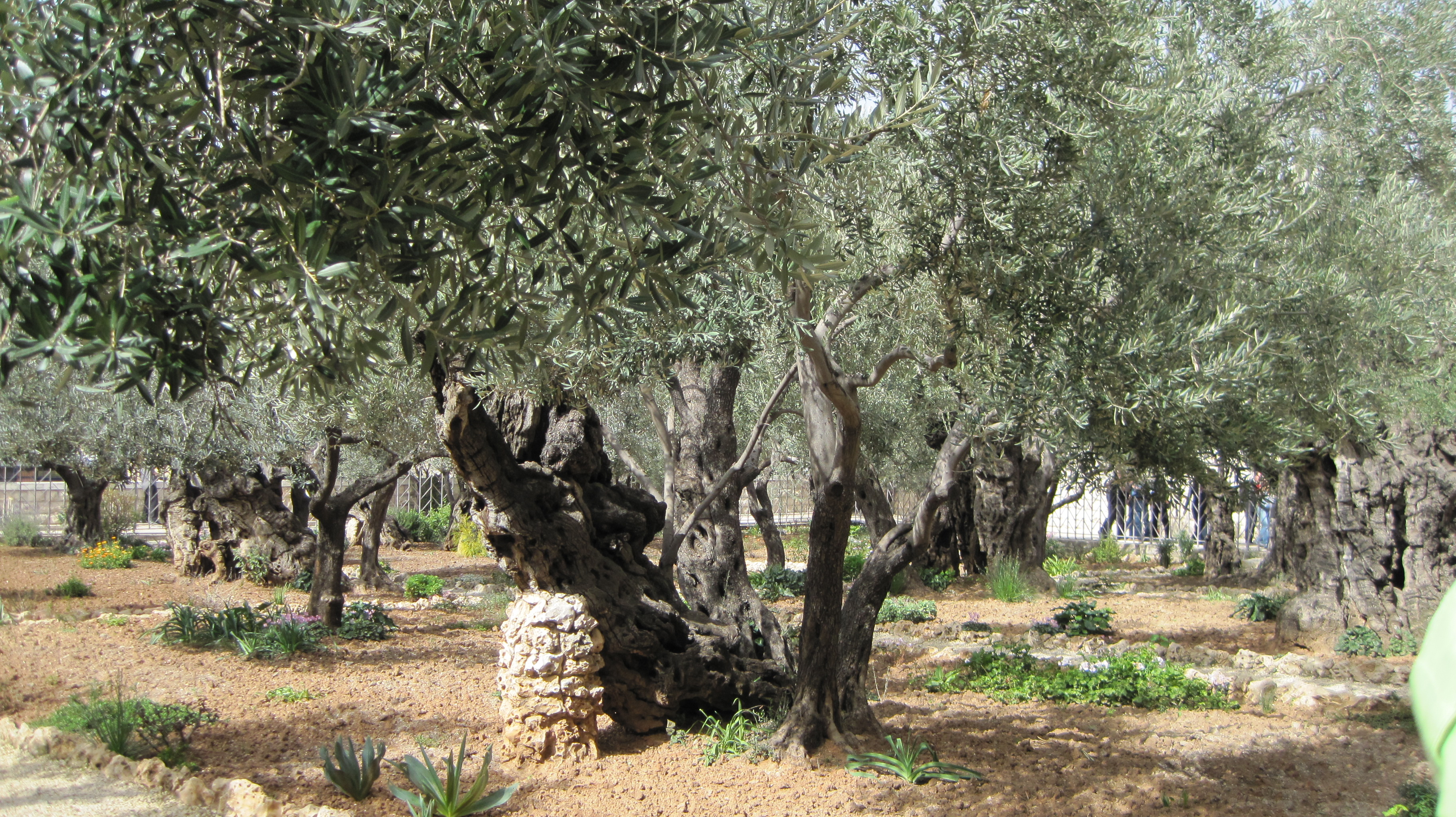
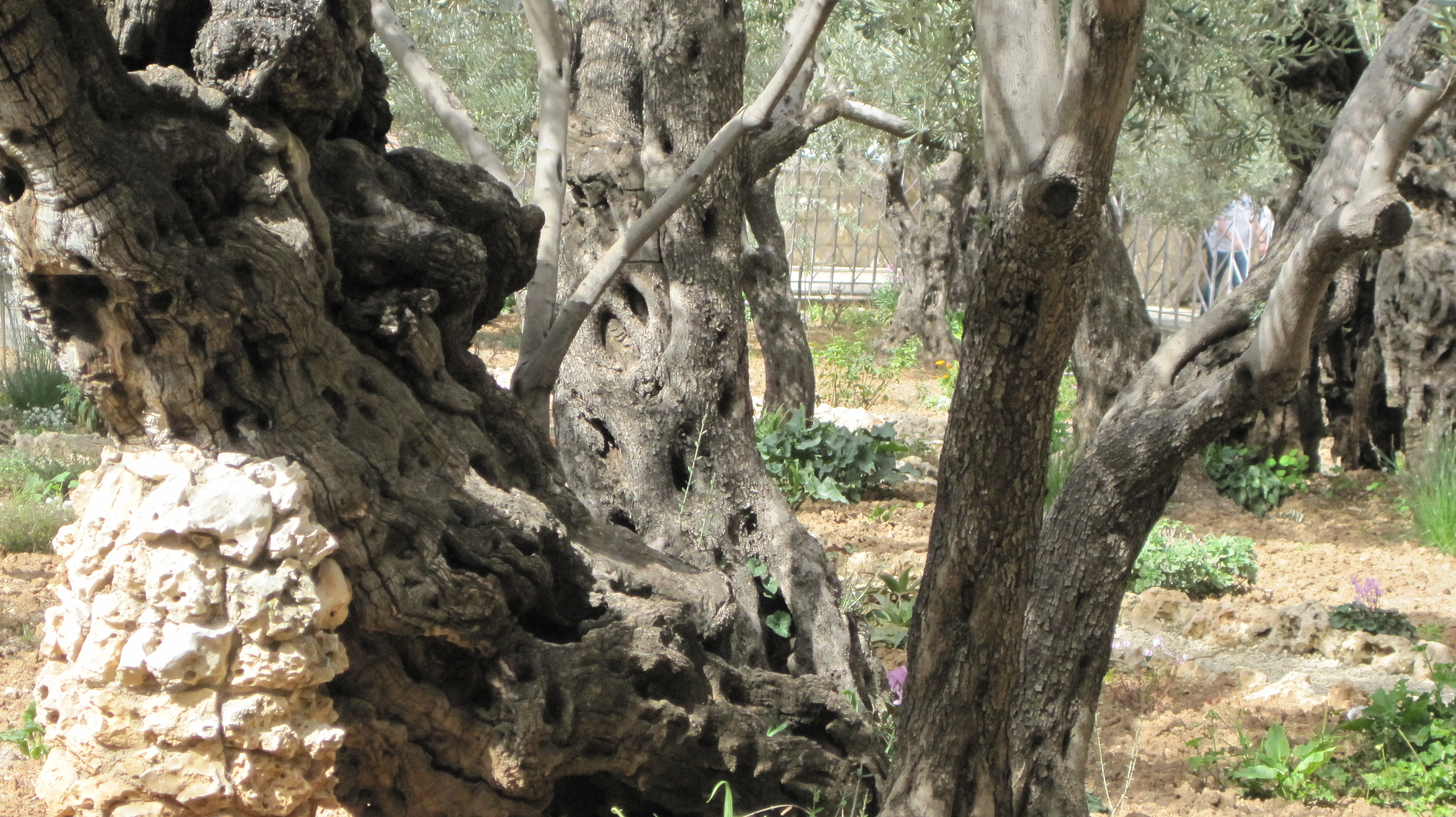
Garden of Gethsemane 07 (New Shoots)Advent 2A Old Testament Passage: Isaiah 11: 1-10

A shoot shall come out from the stump of Jesse, and a branch shall grow out of his roots. 2The spirit of the Lord shall rest on him, the spirit of wisdom and understanding, the spirit of counsel and might, the spirit of knowledge and the fear of the Lord. 3His delight shall be in the fear of the Lord. He shall not judge by what his eyes see, or decide by what his ears hear; 4but with righteousness he shall judge the poor, and decide with equity for the meek of the earth; he shall strike the earth with the rod of his mouth, and with the breath of his lips he shall kill the wicked. 5Righteousness shall be the belt around his waist, and faithfulness the belt around his loins. 6The wolf shall live with the lamb, the leopard shall lie down with the kid, the calf and the lion and the fatling together, and a little child shall lead them. 7The cow and the bear shall graze, their young shall lie down together; and the lion shall eat straw like the ox. 8The nursing child shall play over the hole of the asp, and the weaned child shall put its hand on the adder’s den. 9They will not hurt or destroy on all my holy mountain; for the earth will be full of the knowledge of the Lord as the waters cover the sea.  10On that day the root of Jesse shall stand as a signal to the peoples; the nations shall inquire of him, and his dwelling shall be glorious.

We Christians tend to read this with our own Christ-centered lens.  The shoot–newness, replacing the old sad stump–and the branch–us, growing from the foundations that have been laid.  And yet, this Scripture is purely Old Testament, purely Hebrew Scripture.  It speaks of a vision, a vision when life will be what God calls it to be, when the earth and all that it holds will finally once and for all live together just as the Lord intended.  Jesse was the father of David, the pinnacle of the great dynasty of Israel.  But dynasties and kingdoms have life spans just as people do.  And what was once a thriving political powerhouse becomes a stump, seemingly useless for the world, a shadow of the past.  And yet, from what we thought was dead suddenly springs forth life, providing a foundation for a new shoot.  It creates a new order, a new way of seeing the world, a time of peace and unity for all the world.  The people of Israel expected this from their king.  This was what God intended–an order of justice and righteousness and peace.  They long for a dynasty such as this, one with all the solid foundations of the past but one that grows in righteousness.

So, back to the Christ-centered lens…new order, justice, righteousness, peace…isn’t that the thing for which we hope?  In this season of Advent, we once again remember and live that hope of the people of Israel for the Messiah, the Savior of the World.  And we prepare for this year’s coming that will once again push us just a little bit closer to who we are meant to me.  And at the same time we wait for our own Advent, our own coming of God in its fullness.  Advent is all these things.  We long for that new creation.  We long for the day when  warriors will sit down with those that they now attack, when predators will live in peace with their victims, and when those that consume more than they need just because they can finally come to the realization that the resources of this world belong to all.  We hope against hope for a world without poverty and homelessness, without the threat of annihilation from weapons of all kinds, a world where each and every child has enough nutrition and education and healthcare to grow and flourish into who God calls him or her to be.

So, are we the shoot or the stump?  Are we the newness bursting forth or are we the foundation from whence it comes?  The answer is yes.  The two are so inter-connected that they cannot be separated.  The shoot does not just drop out of the sky but is born into generations upon generations of waiting and hoping for the Light to come.

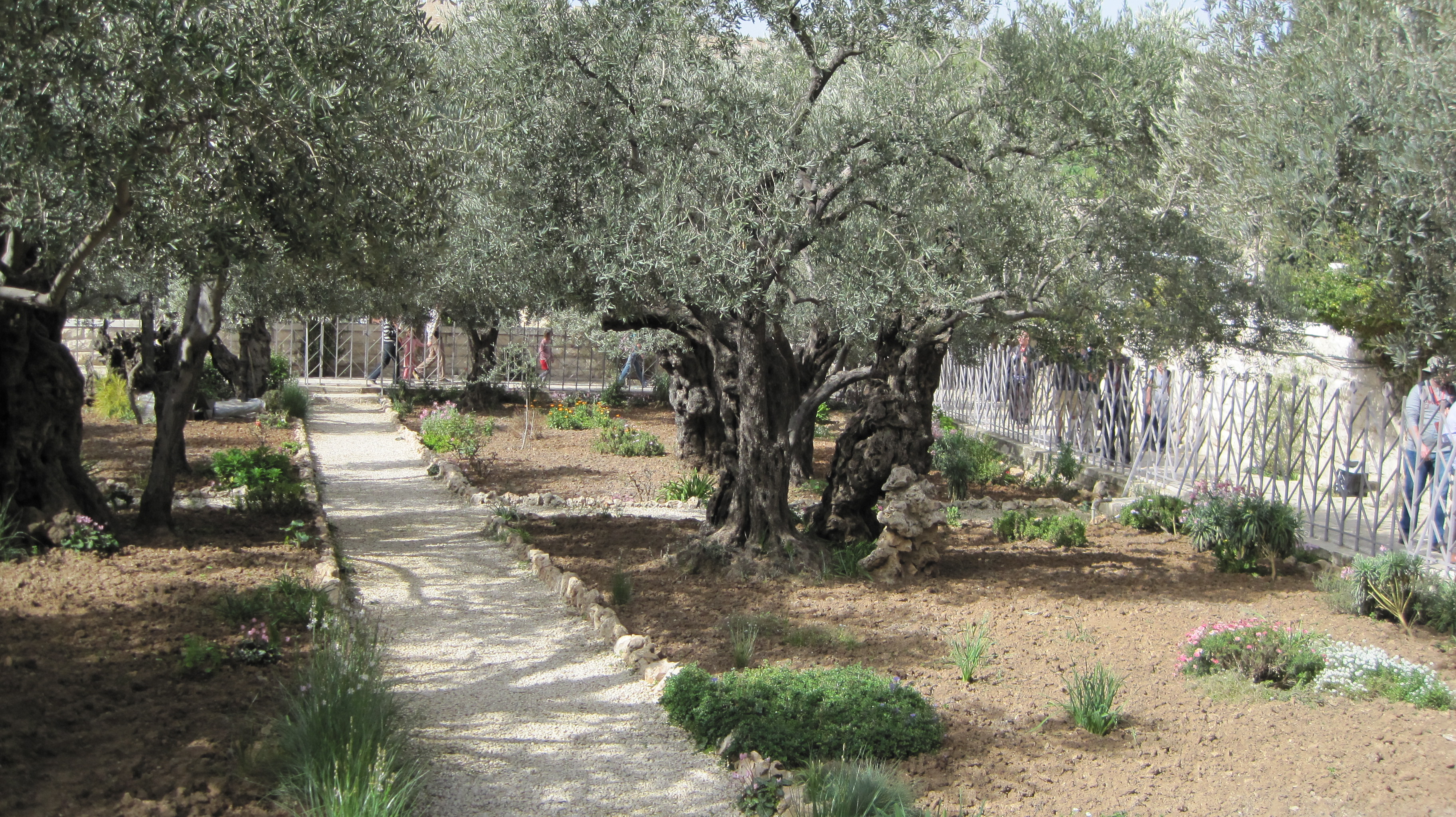
Garden of Gethsemane 08 (New Shoots)When I was in Israel a few years ago, I was fascinated with the olive trees.  You see, they live hundreds or perhaps even a thousand years.  And then they die, they leave what seems to be a mere stump.  But the root system gives way to something new.  So one of the oldest trees has a stump that is thousands of years old, almost petrified from the eons of weathering.  But shooting from its foundation is another tree that is hundreds of years old.  And shooting from it is another younger tree.  And shooting from it is yet another brand new shoot.  The tree is both a stump and a shoot, embracing the foundations of the past but leaving room for newness and recreation, leaving room for God’s work.  And they exist together there in the garden, the Garden of Gethsemane.

God did not create a disposable world, regardless of what we do with it.  God created an earth that would sustain itself not as individual lives making their way on others but as solid foundations giving way to new life.  Both shoots and stumps are part of God’s vision for what will be.  God is not replacing but recreating, redeeming, and resurrecting over and over again.

The fullness of joy is to behold God in everything. (Julian of Norwich)

Reflection:  Where are the stumps in your life?  Now look closer.  What shoots do you see emerging from them?  Are there parts of your life that you have discarded before God was finished working on them?

Grace and Peace,

Shelli

To see my full notes for this week’s Lectionary passages, go to http://journeytopenuel.com/.  If you’d like to get them each week, just follow the blog!

If I Could Turn Back Time

Judas BetrayalToday’s Lectionary Passage:  John 13: 21-32

21After saying this Jesus was troubled in spirit, and declared, “Very truly, I tell you, one of you will betray me.” 22The disciples looked at one another, uncertain of whom he was speaking. 23One of his disciples—the one whom Jesus loved—was reclining next to him; 24Simon Peter therefore motioned to him to ask Jesus of whom he was speaking. 25So while reclining next to Jesus, he asked him, “Lord, who is it?” 26Jesus answered, “It is the one to whom I give this piece of bread when I have dipped it in the dish.” So when he had dipped the piece of bread, he gave it to Judas son of Simon Iscariot. 27After he received the piece of bread, Satan entered into him. Jesus said to him, “Do quickly what you are going to do.” 28Now no one at the table knew why he said this to him. 29Some thought that, because Judas had the common purse, Jesus was telling him, “Buy what we need for the festival”; or, that he should give something to the poor. 30So, after receiving the piece of bread, he immediately went out. And it was night.  31When he had gone out, Jesus said, “Now the Son of Man has been glorified, and God has been glorified in him. 32If God has been glorified in him, God will also glorify him in himself and will glorify him at once.

Poor Judas!  We take this story so literally most of the time, pinning all the bad in all the world on the one that Biblical translations and exegetical interpretations have branded the betrayer, the bad seed, the evil one, the poster child for the worst sin imagineable.  In fact, Dante’ puts Judas in the fourth level of the ninth circle of hell, the lowest rung of the inferno, along with Brutus and Brutus’ co-hort Cassius.   Me?  I tend to err more on the side of mercy.  Because truth be known, don’t you think that Simon Peter was nervous when he was asking that question.  “Lord, who is it?”  In other words, “is it I”?  “Am I the one that will betray my Lord?”  After all, I’m not sure than any of the disciples really came to the forefront.  None of them stood out that night or the next day as glowing examples of who God calls us to be.  They were scared; they were unsure about their own well-being; and they were certainly unsure what life would hold next.  Maybe some had begun to figure out what was about to happen.  I think most of them were like us, living in some sort of state of denial thinking that we are doing the right thing and that everything will turn out alright.

And don’t you think that all of them, Judas included, looked back on the night the next morning and thought, “If only…if only I could turn back time.”?  (yeah, I know that’s a Cher song!) So why did Judas do it?  Oh, please, why do any of us do what we do?  We all have regrets; we’ve all made mistakes; we’ve all wished that somehow we could turn back time.  The truth is, there is a little Judas in all of us.  But in this same passage, there is another character introduced:  “the one whom Jesus loved”.   This is the epitome of light against the foil of Judas in his darkest hour as his actions usher in the time that brings Jesus’ presence as the light of this world to a close.  There is all kinds of speculation.  Was it someone that we don’t know?  Was it Mary Magdelene?  Or was it, perhaps, even Judas? 

Judas could not live with what he had done. The writer of Matthew’s Gospel says that Judas would end his own life that next morning.  (Matthew 27: 3-5)

When Judas, his betrayer, saw that Jesus was condemned, he repented and brought back the thirty pieces of silver to the chief priests and the elders. 4He said, “I have sinned by betraying innocent blood.” But they said, “What is that to us? See to it yourself.” 5Throwing down the pieces of silver in the temple, he departed; and he went and hanged himself. 

And yet, Jesus, knowing what was about to happen, welcomed Judas to the table; in fact, Jesus welcomed all of them, that motley crew of misfits that never really could get it together and were always in competition with each other, that lot of sinners and saints.  The truth is we are all both–the betrayer and the beloved, the sinner and the saint.   God does not love us in spite of who we are; God loves us because of who we are.  The question that we should ask ourselves is whether or not we believe that anyone is ever beyond God’s redemption, beyond God’s love, beyond God’s power to pick up and recreate.  This night of betrayal does not end that way.  This night ends with love and with life.  Because, you see, when it’s all said and done, God really does turn back time.

Madeleine L’Engle tells an old legend that after his death Judas found himself at the bottom of a deep and slimy pit.  For thousands of years he wept his repentance, and when the tears were finally spent he looked up and saw, way, way up, a tiny glimmer of light.  After he had contemplated it for another thousand years or so, he began to try to climb up towards it.  The walls of the pit were dank and slimy, and he kept slipping back down.  Finally, after great effort, he neared the top, and then he slipped and fell all the way back down.  It took him many years to recover, all the time weeping bitter tears of grief and repentance, and then he started to climb again.  After many more falls and efforts and failures he reached the top and dragged himself into an upper room with twelve people seated around a table.  “We’ve been waiting for you, Judas.  We couldn’t begin till you came. (From “Waiting for Judas”, by Madeleine L’Engle, in Bread and Wine:  Readings for Lent and Easter (Maryknoll, NY:  Orbis Books, 2003), 312.)

Garden of Gethsemane, Jerusalem, 2010

So, as you walk through this week, remember that we are all Judas but, more importantly, we are all beloved.  And, remember, that God really does turn back time, so to speak, gathering all of us to the table and recreating us into the fullness of God’s vision for all.  But God cannot begin until you come.

“If I Could Turn Back Time” (Cher)

Grace and Peace,

Shelli

Repurposed

Coal BucketThis Week’s Lectionary Passage:  Isaiah 43: 16-21
16Thus says the Lord, who makes a way in the sea, a path in the mighty waters,17who brings out chariot and horse, army and warrior; they lie down, they cannot rise, they are extinguished, quenched like a wick:18Do not remember the former things, or consider the things of old.19I am about to do a new thing; now it springs forth, do you not perceive it? I will make a way in the wilderness and rivers in the desert.20The wild animals will honor me, the jackals and the ostriches; for I give water in the wilderness, rivers in the desert, to give drink to my chosen people,21the people whom I formed for myself so that they might declare my praise.

I am about to do a new thing…Wake up! Pay attention!  This is going to be incredible!  Remember the context of this passage.  It is probably toward the end of the exile, the end of a time of great loss and despair.  They have lost everything–homes, land, their way of making a living, even their very sense of who they were.  And now this…a new thing.  Let it go…leave it behind…let us go forward toward something new.  Let us begin again.

God is a God of beginning again.  It happens over and over throughout our story.  God takes us from a garden that we threw away and places us in a world.  God takes us from a world that we let get away and placed us on an ark to sail to a new way of being.  God takes us from exile and sends us to freedom.  God takes us from death and heads us toward life.  God is a God of beginning again.  The thing is God is always and forever about to do a new thing.  It is the story of our faith.  Our problem is that we don’t pay attention.  We don’t trust enough to let go.  Our faith tells us that the new creation will be better, will be something that we can’t even fathom right now.  But we stay, attached to our old way of being, to being comfortable and predictable and seemingly in control.

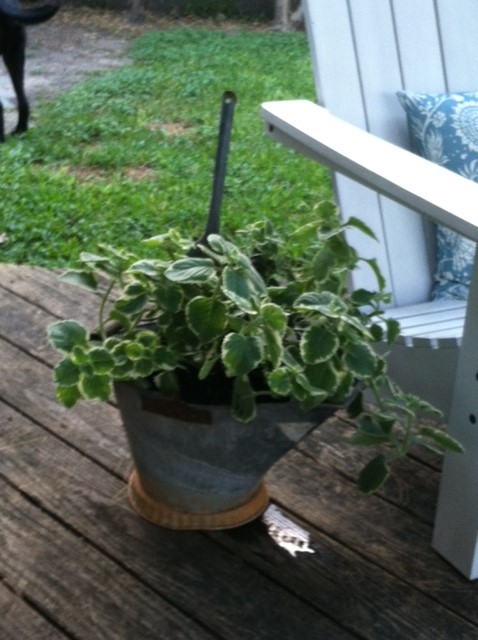
I love old things.  My house and my yard are filled with them.  In fact, I suppose that my house IS one of them.  But living and decorating with old things requires a few tricks.  You want them to look old.  (In fact, I have new things that I want to look old.)  You want them to look old but have a new purpose.  The trick is not to have old things but rather to repurpose them, to bring them in to a new way of being, to perhaps use them in a new way.  So I have an old rusty coal bucket with Cuban Oregano planted in it.  I have an old rusty metal lawn chair that sits out by the bird feeders.  I have old wire baskets that have become shelves.  And I have an old wooden ice chest that is a coffee table.  And my 1920 bungalow has central air, a modern kitchen, and a new bathroom.  Perhaps doing a new thing is not starting over but beginning again with what you have.  Perhaps doing a new thing is repurposing rather than replacing.   Maybe that’s hard for us to embrace.  We live in a disposable society in a temporary world.  The thing that we have is always in need of being replaced by the thing that we want.  So what would it mean to live a life of repurposing?

God created us and calls us into being.  But there is not some new me out there that God is waiting to slip into place.  God is a God of repurposing, of making new what is already here, of giving it new meaning and a new purpose, of giving it new life.  You just have to believe that God is about to do something new with who you are.  That is what faith is all about–believing in repurposing.

Grace and Peace,

Shelli

Station VIII: Lament

"The Women:  Veronical Wipes Jesus' Face and Jesus Meets the Women of Jerusalem, St. Mary's Church, Barton-on-Humber, April 4, 2007
“The Women: Veronical Wipes Jesus’ Face and Jesus Meets the Women of Jerusalem, St. Mary’s Church, Barton-on-Humber, April 4, 2007

Scripture Passage: Luke 23: 27-31

27A great number of the people followed him, and among them were women who were beating their breasts and wailing for him.28But Jesus turned to them and said, “Daughters of Jerusalem, do not weep for me, but weep for yourselves and for your children.29For the days are surely coming when they will say, ‘Blessed are the barren, and the wombs that never bore, and the breasts that never nursed.’30Then they will begin to say to the mountains, ‘Fall on us’; and to the hills, ‘Cover us.’31For if they do this when the wood is green, what will happen when it is dry?”

The eighth station on this holy walk is marked by a stone with a Latin cross on the wall of a Greek Orthodox church.  Near the cross, an inscription reads, “Christ the Victor.”  Tradition has designated this as the place where Jesus encounters the women of Jerusalem.  The women were convinced of his holiness.  I don’t think they understood it completely.  After all, who did?  (After all, who does?)  But they knew that he was something special.  After all, he had paid attention to them, these women, these ones who were given no place in society other than to birth babies.  He saw them as something more.  And they were grateful.  And today they grieved.

As Jesus and the crowd moved closer to the end, the wailing got louder and louder.  Jesus, covered in dirt and sweat and near death, lifted his head and looked into their eyes.  “Do not weep for me,” he said, “but weep for the world.”  Weep for the world; cry for the world; grieve for the world. In other words, those that suffer in the world, those parts of the world that are not life-giving, those part of people’s lives that are not the vision that God holds–those things should bother you.  Those are the things for which you should weep.

Weeping is hard for us.  Our culture is pretty well emotionally controlled, for the most part.  In fact, there are those that grow up thinking that tears and grief and crying are a sign of weakness.  We do not know how to lament.  And, yet, think of all those psalms of lament.  They are prayers.  Laments are prayers.  Weeping is prayer.  These are prayers for what could be and is not, prayers for what should have been that fell short, and prayers for the hurting in our world.  Jesus is telling these women to pray, to wake up, and to work to change the world.  He is acknowledging that they understand this vision and that, now, they have work to do.  It is a way of putting others before self.  It is a way of engaging yourself and your faith in bringing the Kingdom of God in its fullest into being.  It is a way of continuing the life of Jesus Christ.

I saw a feature news story by NBC’s Brian Williams last night on Camden, New Jersey.  A bustling boomtown in the first half of the 20th century, Camden is now America’s poorest city and the one with the highest crime rate.  Surrounded by relatively affluent suburbs, it is the place that we drive by, wondering why no one does anything.  Its residents that fill the inner city row houses seldom venture outside for fear of the safety of themselves and their children.  It is the way we hide poverty and despair in plain sight.

http://www.nbcnews.com/video/rock-center/51110367

So on this Lenten journey, learn what it means to weep for the world.  Pray for the world and for others who hurt and grieve and bleed, those who fear and cry and need.  Learn to lament, an active lament that will make you part of bringing the world into that vision that God holds.  Open your eyes to see the pain that exists in plain sight.  Our Lenten journey calls us to do something to change the world.

Grace and Peace,

Shelli

The Sacred “And”

The Creation of Adam [Humanity], Michelangelo, segment of The Sistine Chapel, c. 1512
This Week’s Lectionary Passage:  2 Corinthians 5: 16-21

16From now on, therefore, we regard no one from a human point of view; even though we once knew Christ from a human point of view, we know him no longer in that way. 17So if anyone is in Christ, there is a new creation: everything old has passed away; see, everything has become new! 18All this is from God, who reconciled us to himself through Christ, and has given us the ministry of reconciliation; 19that is, in Christ God was reconciling the world to himself, not counting their trespasses against them, and entrusting the message of reconciliation to us. 20So we are ambassadors for Christ, since God is making his appeal through us; we entreat you on behalf of Christ, be reconciled to God. 21For our sake he made him to be sin who knew no sin, so that in him we might become the righteousness of God.

Paul starts right off acknowledging Jesus as both divine and human.  That in and of itself is hard for us.  I mean, we like the idea of Jesus coming and walking around in our midst, giving us a much clearer way of understanding what it is we’re supposed to be about.  We like the idea of what sometimes seems to us to be a sort of “semi-human” leading us around and in some satisfactory way “proving” to us that God really does exist.  We like the idea of having someone to emulate.  But, see, Jesus is not a textbook or proof of God’s existence or even a super-hero that we can aspire to be like.  Jesus is fully human, that fully-developed image of the Godself in which we were all created.  Jesus came not to start a religion or even a belief system; Jesus came into our midst, Emmanuel, God With Us, that we might, finally, become human.

But in order to be fully human, in order to become this New Creation about which Paul writes, we have to let go, have to open ourselves to the Divine pouring into us, filling us.  The New Creation is not a denial of humanity.  The coming of God’s Kingdom into our being does not mean that we will become Divine; it means, rather that God’s Spirit, the essence of the Divine will pour into our lives and make us fully human.  St. Athanasius of Alexandria (4th century) supposedly claimed that “Christ became human that we might become divine.”  Now that used to bug me a bit.  It even bugs me when someone refers to another person (or themself!) as “godly”.  I don’t think of myself or anyone else as “like God”.  I actually believe that God pretty much has a monopoly on that way of being.  And yet, if Jesus had NOT come as human, as one of us, then God’s Spirit, the essence of the Divine, would have remained pretty removed and unapproachable for our limited capabilities.  Perhaps Jesus came as human to show us how to open ourselves to the Divine, how to leave room for this pouring in of the sacred and the holy into our lives, how to relate to a God that was never really removed and unapproachable at all. 

The statement says that Jesus came as fully human and fully divine.  The two cannot be separated; otherwise, humanity is removed from God and the Divine remains aloof and inaccessible.  But together, intertwined, eternally connected with a sacred “and”, we become fully human.  We become the one that God created us to be.  We become a new creation, reconciled to God.  We become righteousness, become sacredness, become the essence of God’s Spirit.

So in this Lenten season, be fully human.  Open yourselves to the Spirit of the Divine pouring into your life.  Embrace the sacred “and” of you and God together, Emmanuel, God With Us. 

Grace and Peace,

Shelli